
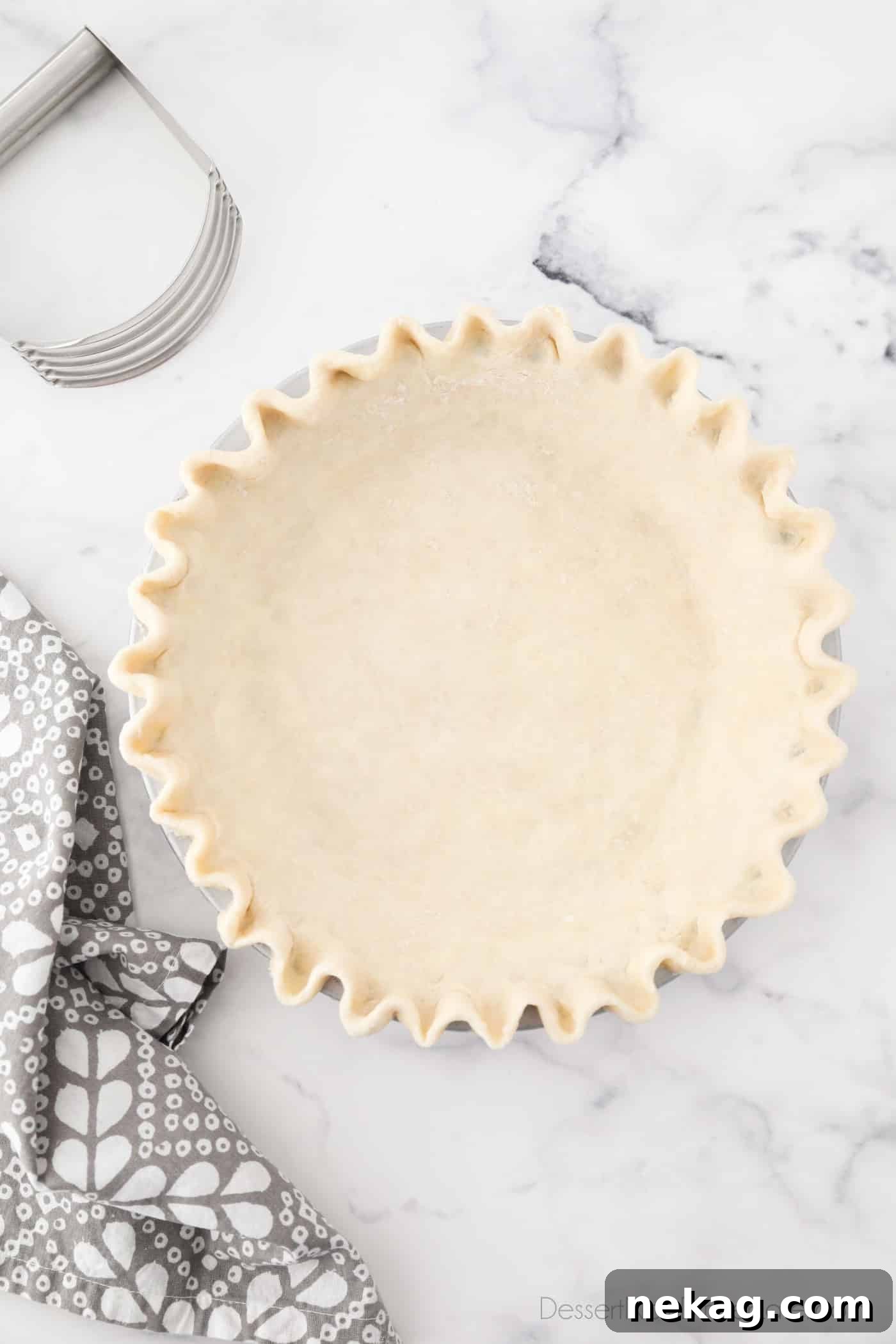
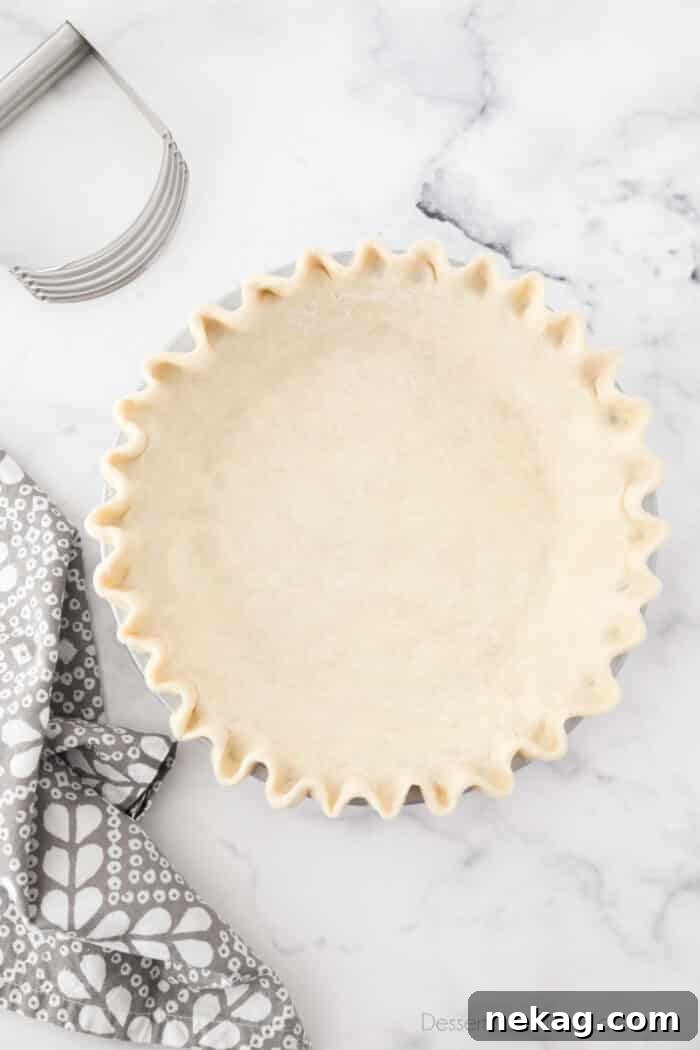
This flaky all butter pie crust is perfect for fruit pies, cream pies, or savory pot pies. Step-by-step photos show how to make this easy pie dough. Use this recipe for all your favorite pies.
Bakery Pies
When I worked in a large bakery we sometimes made up to 100 pie crusts by hand in a single day. That taught me efficiency and respect for technique. We used a bench scraper to portion butter and a sheeter to roll dough at scale, but the methods are the same as home baking—just faster.
All Butter Pie Crust
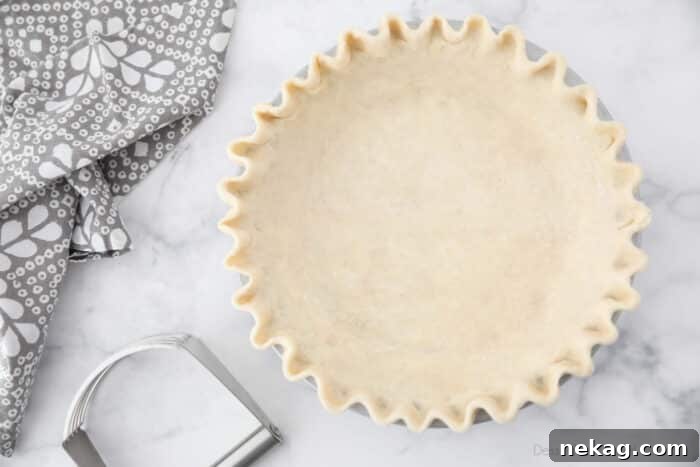
This is a classic butter pie crust, also called Pâte Brisée. It’s simple, reliable, and highlights the flavor of butter. The technique below is how I learned in culinary school and how we prepared pastry in the bakery, adapted here for a home kitchen.
Making Pie Crust By Hand vs. Food Processor
There are two common ways to make pie dough: by hand with a bowl and pastry blender (or fingers), or in a food processor.
Making dough by hand gives you tactile feedback so you can better judge readiness. It’s not always easier, but it reduces the chance of overworking the dough. If butter is cut too fine and the processor runs too long, the dough can become crumbly or tough instead of tender and flaky.
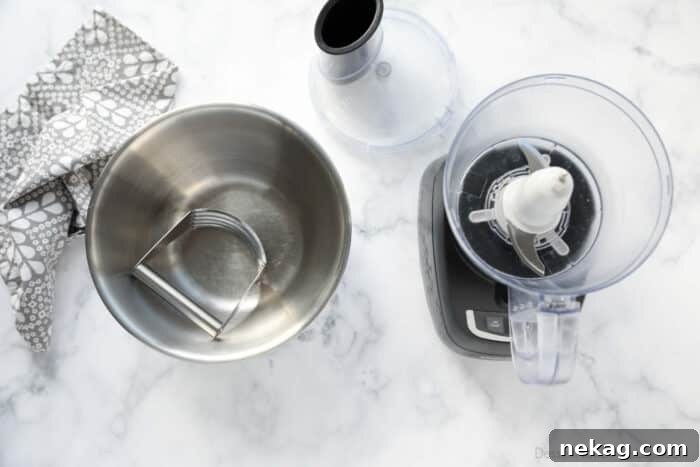
Some home bakers grate butter, but that can warm the butter and require extra chill time. Grating works but usually needs more handling and cooling to avoid melting the butter into the flour.
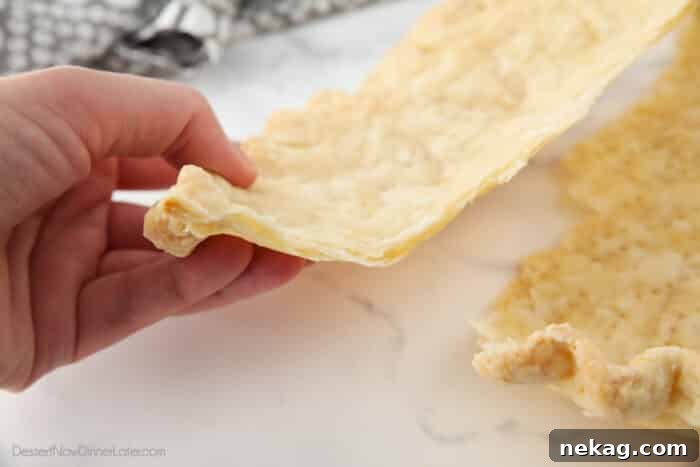
Ingredients
For this flaky all-butter pie crust you only need a few ingredients:
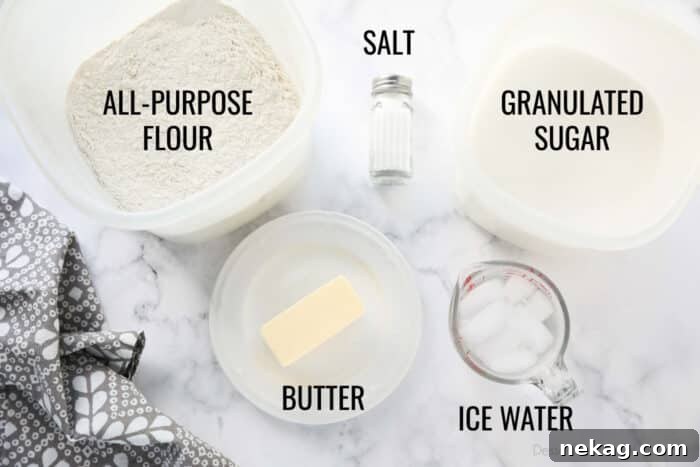
- All-Purpose Flour – provides structure.
- Salt – enhances flavor. Table salt is fine.
- Granulated Sugar – optional; helps with browning but crust shouldn’t be sweet.
- Unsalted Butter – for flavor and flaky layers. Use cold butter straight from the refrigerator so it doesn’t melt while you work. If using salted butter, reduce or omit the added salt.
- Ice Cold Water – just enough to bring the dough together while keeping fats cold.
Pro tip: Chill bowls and tools before you start. Keeping everything cold protects the butter so it creates steam pockets during baking and yields a flaky crust.
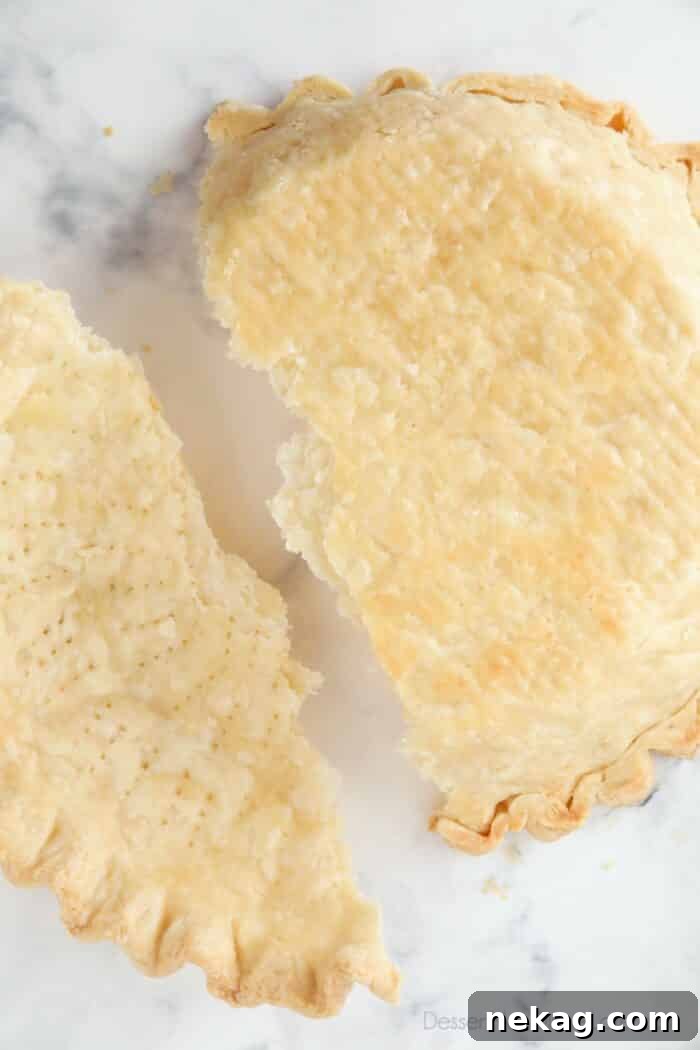
How to Make Butter Pie Crust (Pâte Brisée)
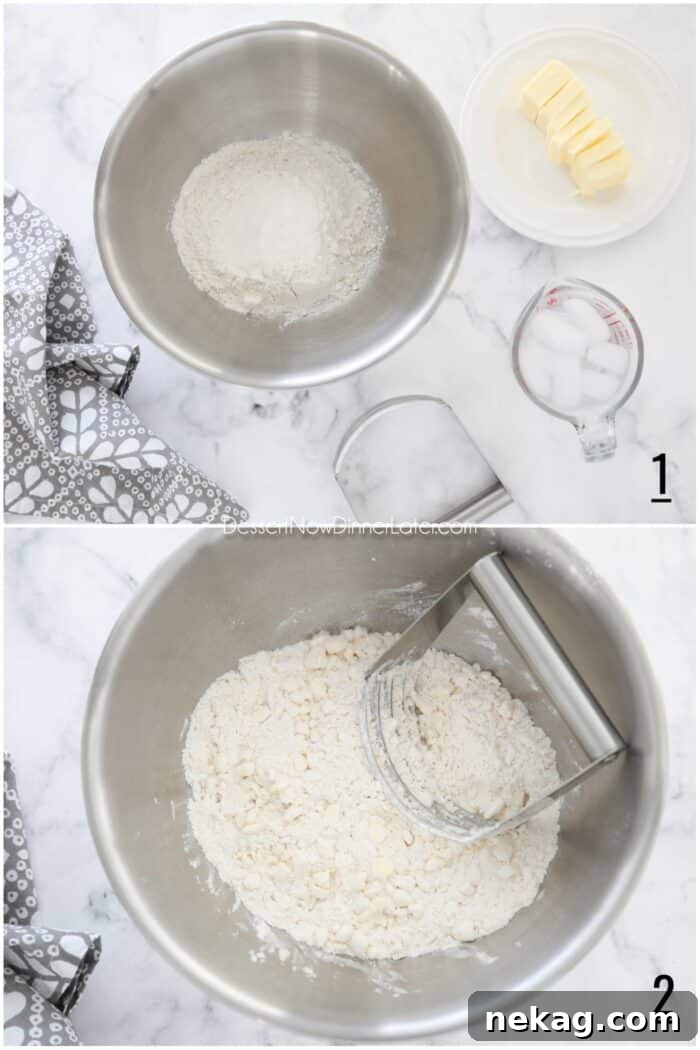
- Mix flour, salt, and sugar in a large bowl. Cut cold butter into tablespoon pieces and add to the flour.
- Use a pastry blender, two knives, or fingertips to cut the butter into the flour until pieces are about the size of peas with some coarse crumbs remaining. Avoid turning all the butter into fine crumbs.
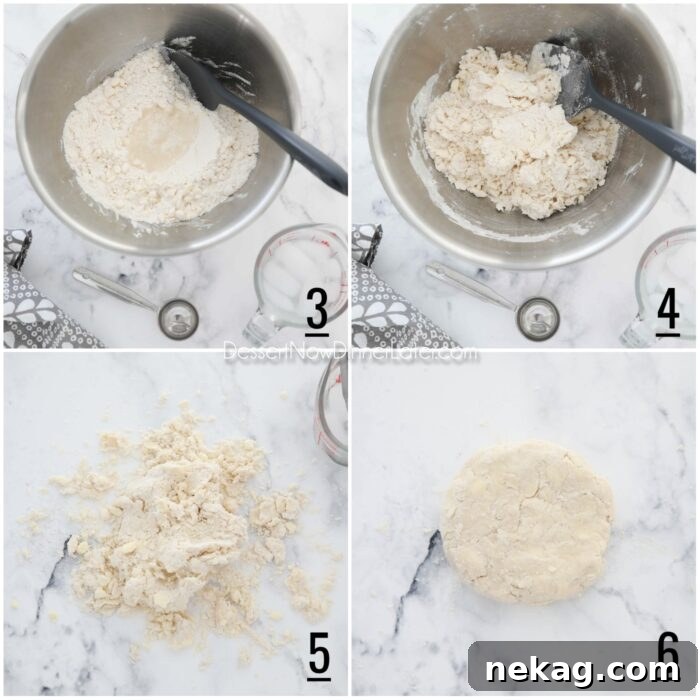
- Add 2–3 tablespoons of ice cold water and stir with a spatula.
- Turn the mixture onto the counter and press the dough together. Add additional water one tablespoon at a time (usually 1–2 tbsp more) until the dough just holds together.
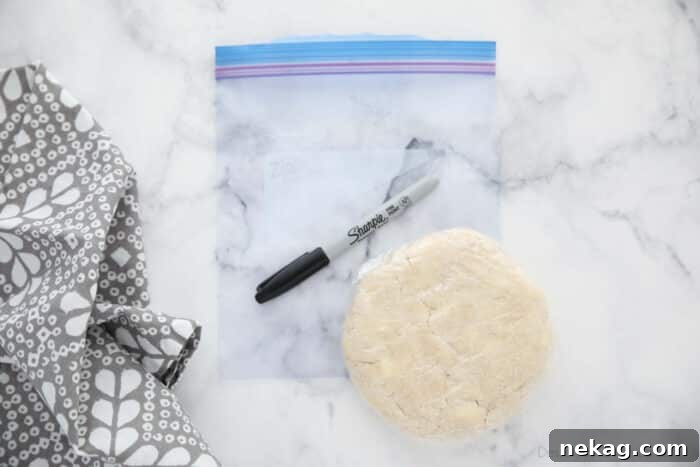
- Shape the dough into a flat disk, wrap tightly in plastic, and refrigerate at least 1 hour before rolling.
Don’t add too much water or overwork the dough; excess gluten will make the crust tough rather than tender and flaky.
Chilling and Freezing Pie Crust
Chilling the dough is essential. It relaxes the gluten and allows the liquid to distribute, which reduces cracking and tearing. It also firms the butter for better flake formation.
Chill the dough a minimum of 30 minutes; 1 hour is ideal. The dough will keep in the refrigerator up to 3 days. For longer storage, double-wrap disks in plastic and freeze up to 3 months—thaw overnight in the refrigerator before using.
Pro tip: If chilled longer than an hour, let the dough sit 10 minutes at room temperature before rolling to ease cracking.
How to Roll Pie Crust
When chilled, roll the dough as follows:
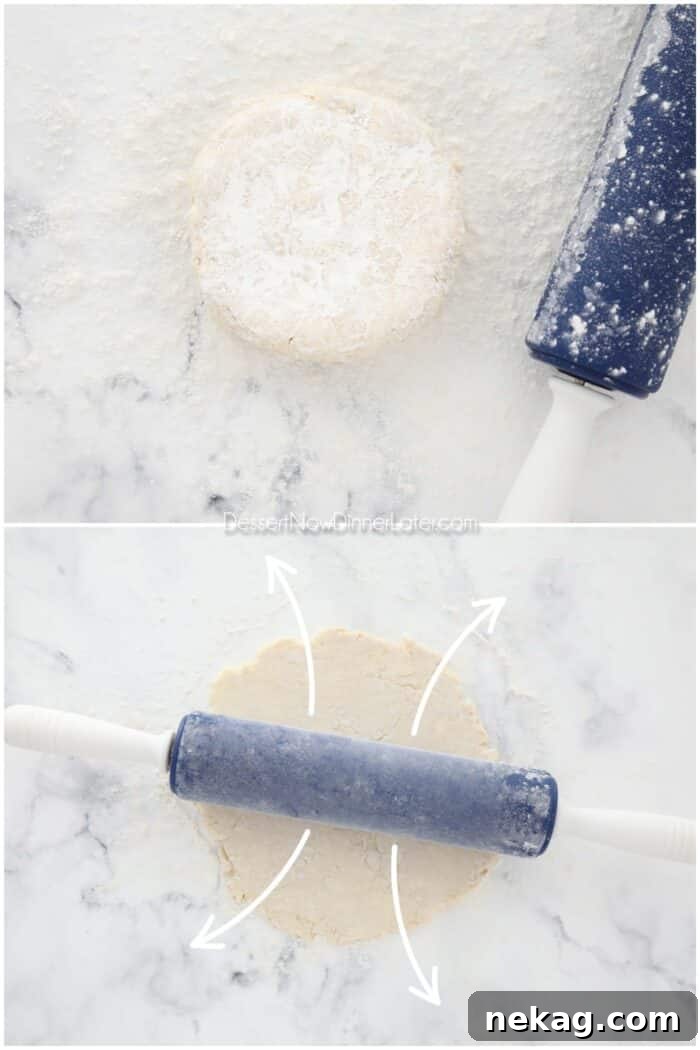
- Lightly flour the countertop, rolling pin, and dough.
- Press the edges of the disk with your knuckles to prevent cracking.
- Roll from the center outward in all directions, rotating the dough often and adding flour as needed.
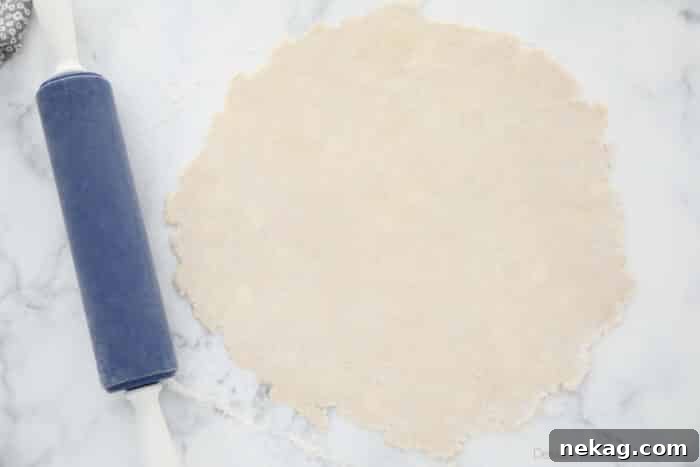
- Roll until the dough is about 1/8-inch thick and roughly 14 inches in diameter for a standard 9-inch pie pan. Flip and roll both sides if cracks appear.
You should see small flecks of butter throughout; those will become flaky layers when baked.
How to Transfer Pie Dough to Pan
To transfer the rolled dough to your pie pan:
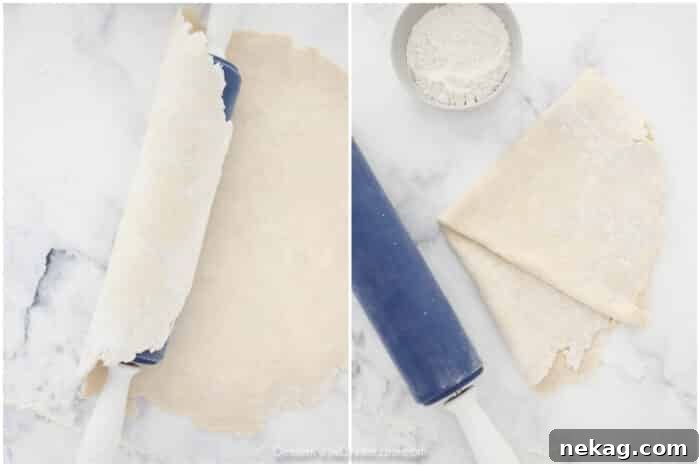
- Roll the dough around the rolling pin and unroll it over the pan, or
- Fold the dough into fourths, lift it into the pan, and gently unfold it.
Shaping the Crust
Fit the dough snugly into the bottom and sides of the pan:
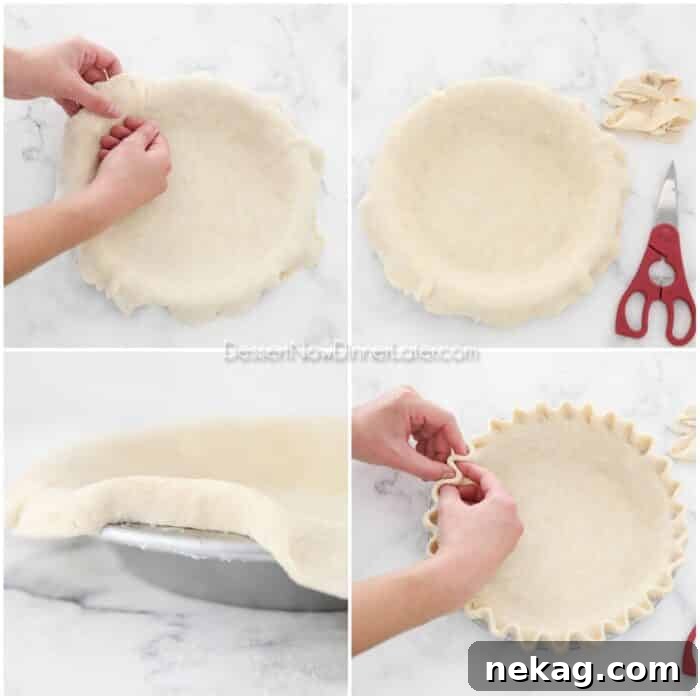
- Lift the edge with one hand while pressing the dough into the side with your knuckles.
- Trim excess, leaving about a 1-inch overhang.
- Tuck the overhang under to form a rim and pinch to seal.
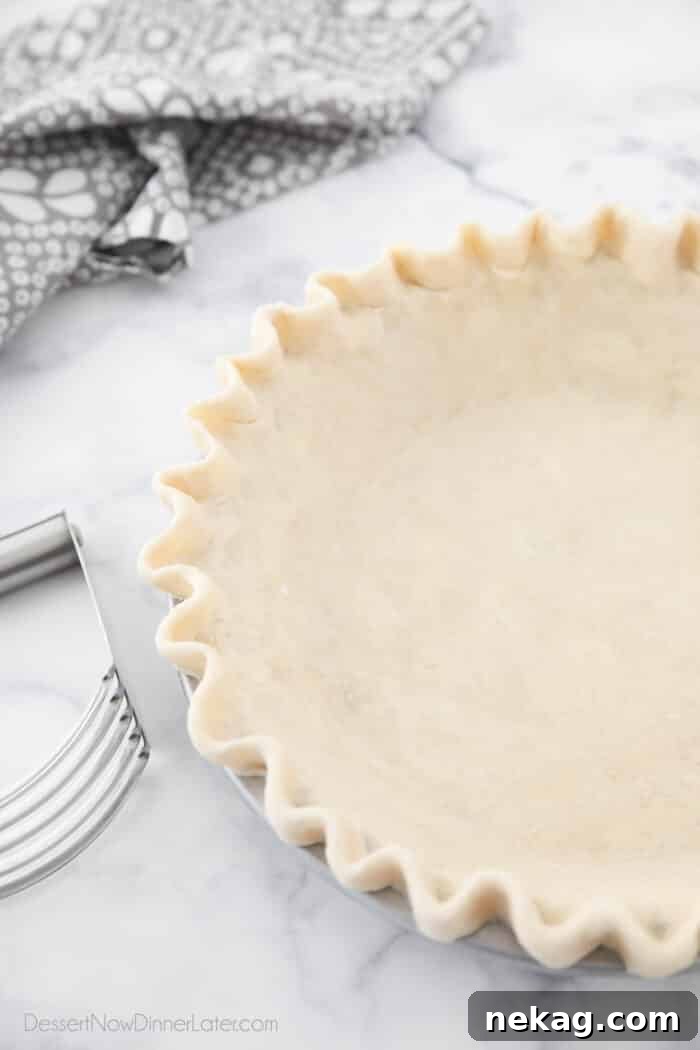
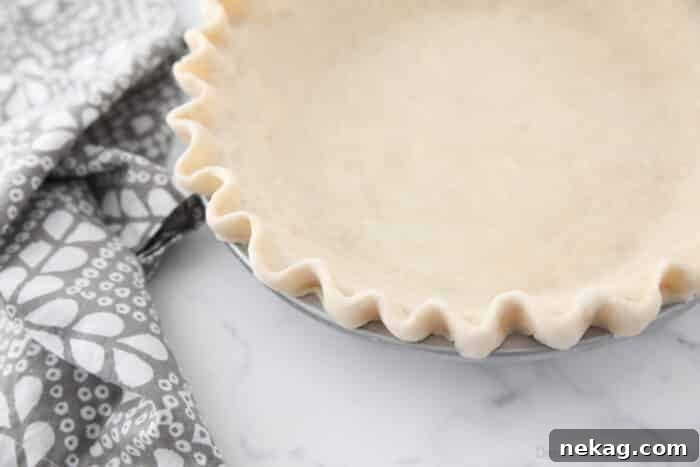
- Crimp the edge with thumb and forefinger to form a decorative flute.
If the dough becomes too warm, chill it on a tray in the freezer for 5–8 minutes before baking or filling.
Single Crust Pie Ideas
This all-butter crust works well with many fillings, including chocolate cream, blueberry cream cheese, cherry with crumb topping, Dutch apple, fresh peach, coconut cream, and fruit crumble pies. For a double-crust pie, double the recipe and make two disks, chilling thoroughly before assembling.
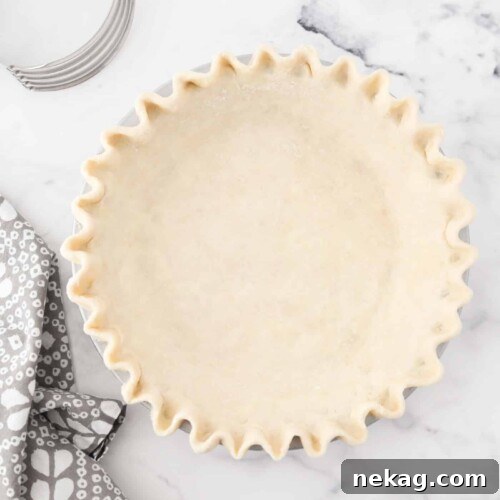
All Butter Pie Crust
Ingredients
- 1 ¼ cups (150 g) all-purpose flour
- ½ tsp salt
- ½ tsp granulated sugar
- ½ cup (113 g) unsalted butter
- 4 Tbsp (+/-) ICE COLD water
Equipment
- Rolling Pin
- Pastry Blender
- Mixing Bowl
- Measuring Cups and Spoons
- Spatula
Instructions
To Make the Pie Crust:
- Mix flour, salt, and sugar in a large bowl. Cut cold butter into tablespoon pieces and add to the flour.
- Cut butter into flour with a pastry blender until the mixture has pea-sized pieces and some coarse crumbs.
- Add 2–3 tablespoons ice cold water and stir with a spatula.
- Turn the mixture onto the counter and press the dough together. Add extra water 1 tablespoon at a time if needed until dough holds together.
- Flatten into a disk, wrap tightly, and refrigerate for 1 hour before using.
To Roll the Pie Crust:
- Lightly flour the work surface, rolling pin, and dough.
- Press the edges with your knuckles to reduce cracking.
- Roll from the center outward, rotating dough frequently and adding flour as needed.
- Roll to about 1/8-inch thickness and 14 inches in diameter. Flip and roll both sides if cracks form.
- Roll the dough around the pin and unroll into a 9-inch pie pan, or fold into fourths and place into the pan.
- Press the dough into the pan, trim to leave a 1-inch overhang, tuck under, and crimp the edges.
- If dough is soft, chill 5–8 minutes before baking.
Notes
- Make ahead: Freeze a crust in the pan wrapped with plastic for several hours to overnight. Pull 10–20 minutes before baking so it’s cold but not rock solid.
- To freeze long term: Shape dough into a disk, double-wrap, label, and freeze up to 3 months. Thaw in the refrigerator overnight.
- Double crust pie: Double the recipe, divide into two disks, and chill thoroughly before rolling.
- For double-crust pies bake at 350°F until the filling bubbles and the crust is golden, usually about 1 hour or more. If the top browns too quickly, cover it with foil.
Nutrition
Disclaimer: Nutritional values are estimations.
Sharing this recipe with a link is encouraged. Content and photographs are copyright protected.
Did you make this?
Leave a rating below and share your results on social media if you like.