
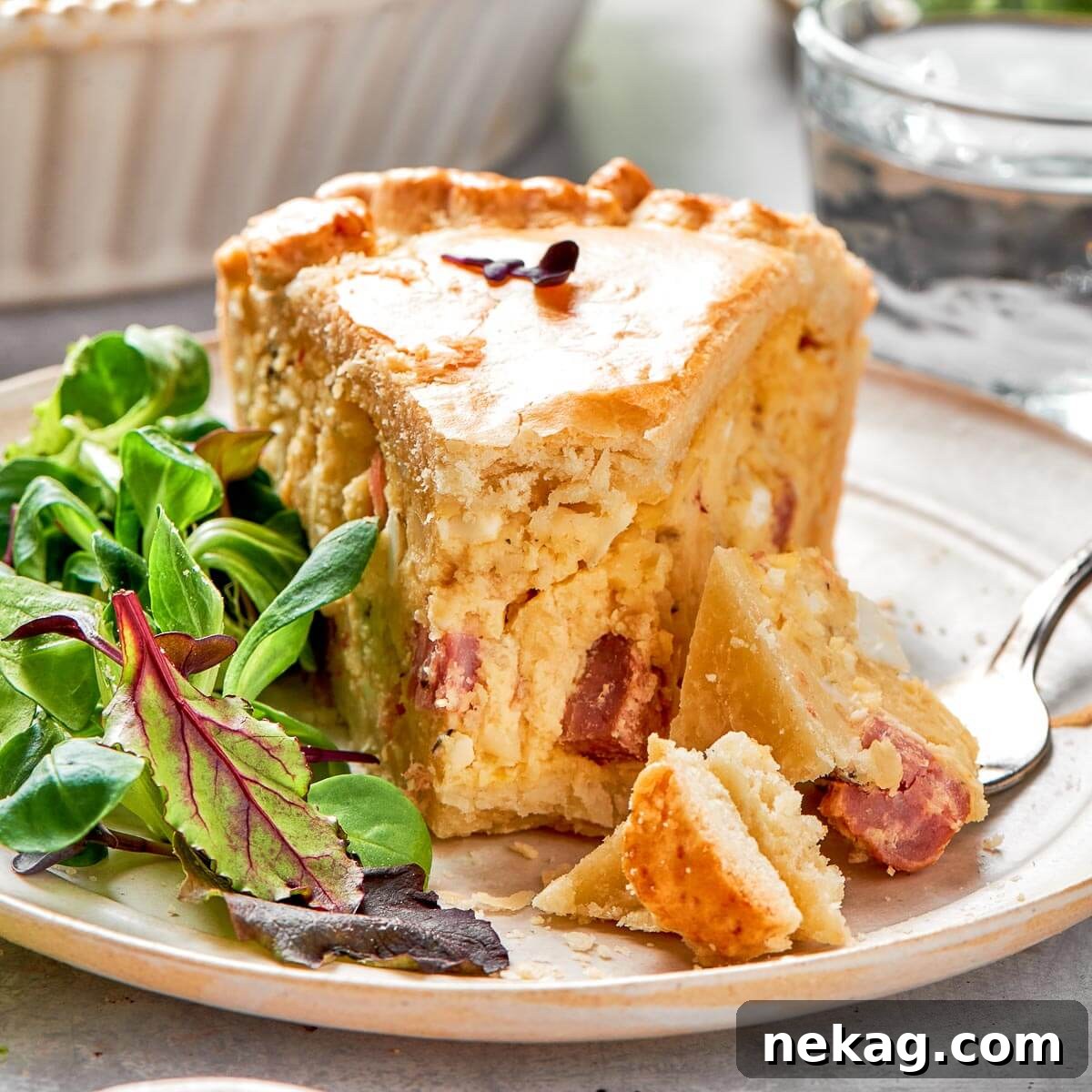
Embark on a culinary journey to the heart of Italy with this cherished Pizza Rustica recipe, an exquisite savory pie that beautifully marries generations of tradition with exceptional flavor. Also known by endearing regional names such as Italian Easter Pie, Pizza Chiena, or Pizza Ripiena, this hearty dish features a luxuriously creamy ricotta filling, generously studded with melted fresh mozzarella and a rich assortment of high-quality cured meats. All these delightful components are lovingly encased within a tender, flaky, all-butter pie crust. Baked to a magnificent golden hue in a springform pan, its impressive height and rustic charm evoke the appearance of a grand deep-dish pizza, guaranteeing it will be a show-stopping centerpiece at any festive gathering, particularly during the revered Easter celebrations.
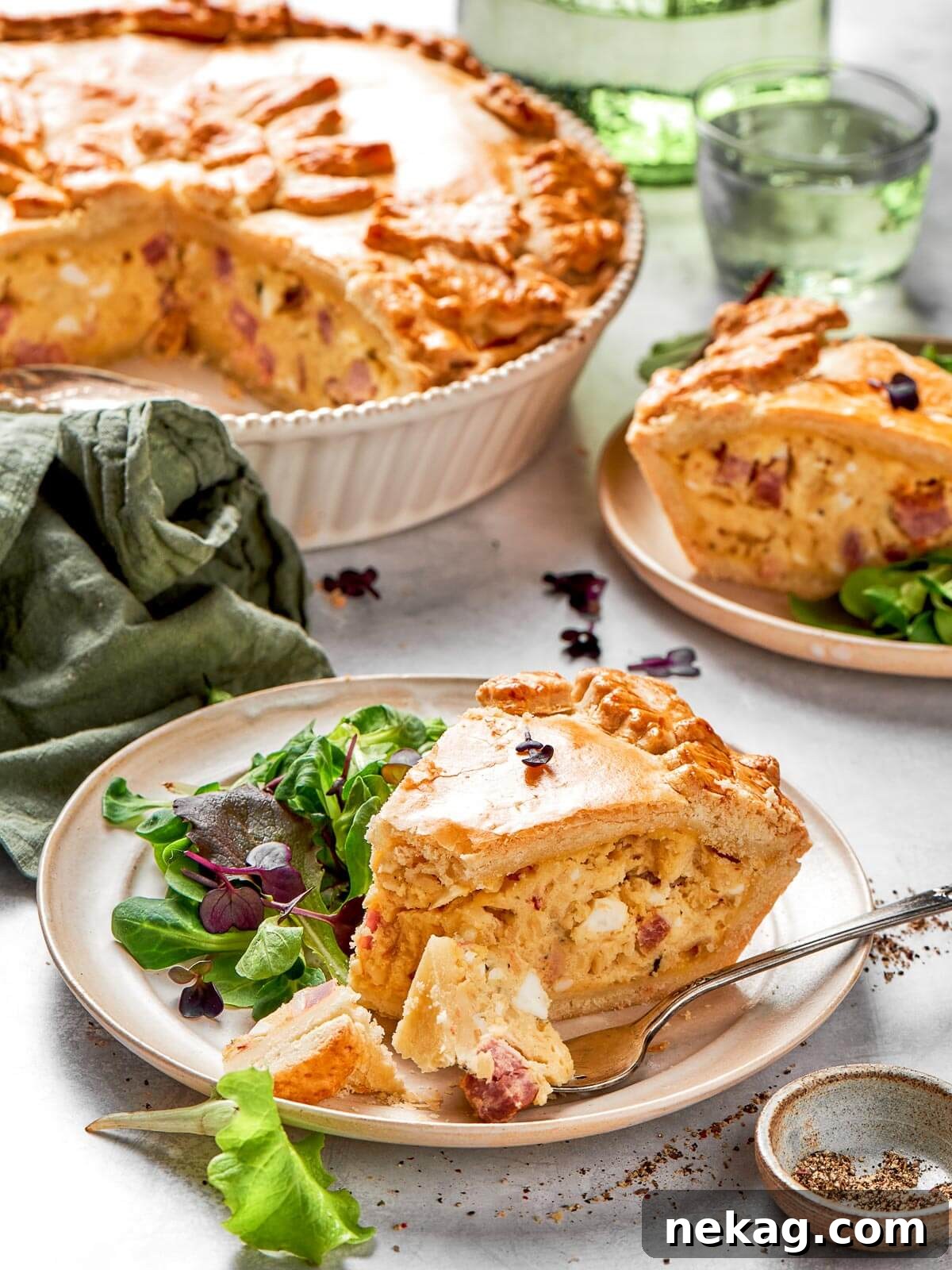
This authentic Italian Easter pie is far more than just a meal; it’s a testament to Italy’s rich gastronomic heritage. The harmonious blend of creamy, wholesome ricotta, the delightful stretch of melted mozzarella, and the robust, salty notes of cured meats creates a symphony of flavors that is both profoundly comforting and incredibly satisfying. The delicate, all-butter pie crust provides a flaky, rich counterpoint to the substantial filling, ensuring that every single bite is a revelation. While traditionally enjoyed with great anticipation on Easter morning, its irresistible taste and satisfying texture will undoubtedly have you yearning for it throughout the entire year.
My profound love for authentic Italian cooking and baking has been a lifelong passion, meticulously honed through years of dedicated culinary exploration and extensive professional experience. If you, like me, share this deep appreciation for genuine Italian flavors, I extend a heartfelt invitation to explore some of my other cherished recipes. I highly recommend you begin your journey with my recipe for real Italian meatballs, a true taste of classic comfort and tradition. For a sweet conclusion to any meal, indulge in my exquisite pignoli cookies, or savor the wonderfully soft and almond-infused amaretti cookies. To further immerse yourself in time-honored Italian holiday traditions, do not miss the opportunity to bake this delightful and aromatic panettone bread recipe, a true classic for special occasions.
Why You Will Love This Pizza Rustica Recipe
This particular Pizza Rustica recipe is distinguished by several compelling attributes, guaranteeing a culinary experience that is not only profoundly rewarding to prepare but also utterly delicious to savor:
- Authentic and Time-Honored Excellence: This recipe transcends a simple list of ingredients; it represents the culmination of dedicated culinary artistry and a profound respect for tradition. Meticulously developed during my tenure as an executive pastry chef in a prestigious Italian restaurant, I invested years in refining this Pizza Rustica to achieve the quintessential balance of exquisite flavor and perfect texture. Every single element, from the rich, flaky crust to the savory, abundant filling, authentically reflects true Italian tradition and a professional’s unwavering commitment to quality. You’re not just baking a pie; you are creating a cherished piece of edible history, perfected through rigorous testing and an intimate understanding of nuanced Italian culinary principles.
- Perfectly Seasoned, Harmonious Filling: The very essence of any truly great savory pie resides within its filling, and in this regard, our Easter Pie unequivocally excels. We achieve an intricately sophisticated flavor profile by meticulously balancing fresh, aromatic herbs like fragrant basil and pungent oregano. A bright, zesty lift from fresh lemon zest cuts through the richness, while a subtle, inviting warmth is introduced by red pepper flakes. These thoughtfully selected ingredients expertly meld with the creamy ricotta, the savory cured meats, and the rich, melting mozzarella, creating a filling that is complex, deeply satisfying, and yet perfectly harmonious, ensuring no single flavor dominates another. It stands as a testament to thoughtful, professional seasoning that will undoubtedly delight even the most discerning palate.
- Impressive, Delectable, and Remarkably Accessible: Despite its undeniably show-stopping appearance and gourmet quality, this double-crust savory pie has been specifically designed with clarity and ease of preparation in mind. I have painstakingly broken down the entire process into simple, intuitive, step-by-step instructions, complemented by invaluable professional tips and tricks that effectively demystify even the most intricate baking techniques. You will be expertly guided through every single stage, from preparing the dough to assembling and baking the pie, ensuring that even a home baker with limited experience can achieve a truly impressive, beautifully golden-brown crust and a rich, profoundly satisfying filling. Prepare to effortlessly astound your guests with a dish that appears incredibly intricate and challenging but is, in reality, surprisingly straightforward to create, leaving you feeling like a confident and seasoned Italian chef.
Ingredients & Substitutions for a Perfect Pizza Rustica
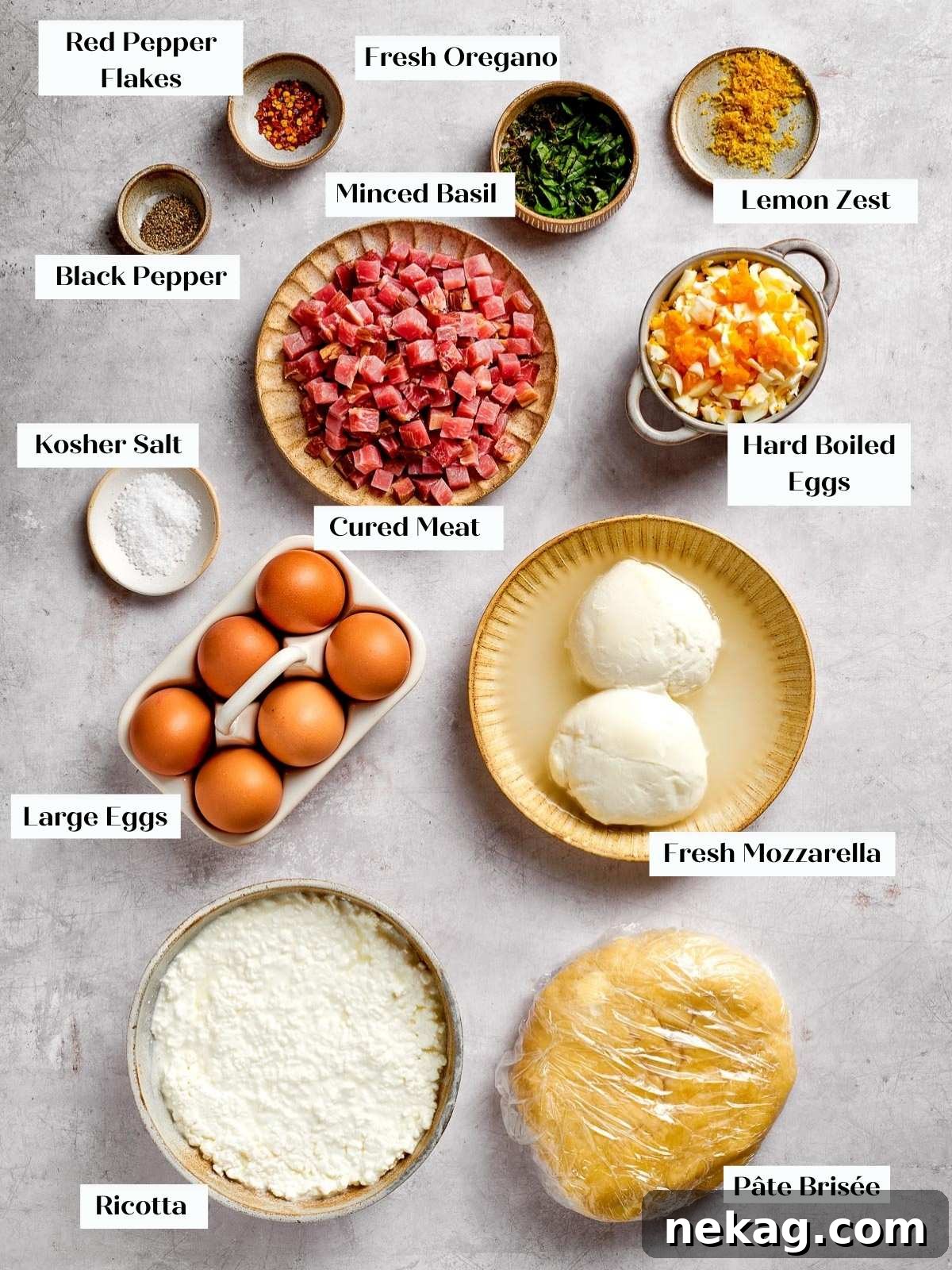
The foundation of an truly exceptional Pizza Rustica lies in the careful selection of high-quality ingredients. Each component plays a vital and distinct role in developing the complex, rich, and deeply satisfying flavors that are the hallmark of this traditional Italian Easter pie. Here’s an in-depth exploration of what you’ll need, along with invaluable insights into potential substitutions:
- Pâte Brisée (Pie Crust): This recipe demands a robust and utterly delicious crust that can stand up to the rich filling. I enthusiastically recommend preparing a double batch of either my highly acclaimed all-butter pie crust recipe, celebrated for its classic richness and flakiness, or my equally excellent vodka pie crust, known for its exceptional tenderness and ease of handling. A double batch effectively yields enough dough for “four” single-crust pies, which is absolutely essential because a large springform pan is often considerably larger than many imagine. Having an abundance of dough is always far preferable to running short, ensuring you can generously line the pan’s bottom and sides, and still have enough for a beautiful top crust, including any desired decorative elements. Any meticulously trimmed leftover scraps can be ingeniously transformed into delightful pie crust cookies or frozen flat in a zip-top bag for future pie embellishments.
- Ricotta Cheese: For a filling that is both sumptuously creamy and utterly luxurious, whole milk ricotta is an indispensable ingredient. The recipe specifically calls for approximately 2 pounds, or the contents of two standard 15-ounce containers, of whole milk ricotta. Please don’t be concerned if you can only procure 15-ounce containers and find yourself a mere couple of ounces short; this recipe is remarkably forgiving, and such a minor difference will not perceptibly compromise the final texture or profound flavor. The inherent richness of whole milk ricotta is crucial in preventing the filling from becoming dry or crumbly, contributing significantly to the pie’s decadent and moist mouthfeel.
- Fresh Mozzarella: The intrinsic quality of your mozzarella will directly and significantly impact the melt, stretch, and overall texture of your finished Pizza Rustica. Always make the effort to shred your own fresh mozzarella cheese rather than relying on pre-grated varieties. Pre-shredded cheeses are frequently coated with anti-caking agents, such as cellulose, which can severely inhibit proper melting, often resulting in a disappointingly rubbery or grainy texture. Grating fresh mozzarella ensures a beautifully smooth, uniformly creamy melt that seamlessly integrates with all the other exquisite filling ingredients.
- Large Eggs (for filling): These eggs serve a singular, yet profoundly vital, function within our Pizza Rustica filling: they act as the essential binder. As the pie bakes to perfection, the well-beaten eggs undergo coagulation, effectively holding the delicate ricotta, savory meats, and all other components together. This process creates a perfectly cohesive, firm, and easily sliceable filling that maintains its integrity without crumbling. Without their binding power, the filling would regrettably lack the necessary structure and consistency.
- Hard-Boiled Eggs: Finely chopped hard-boiled eggs are a time-honored and cherished inclusion in many authentic Southern Italian Easter pies, contributing a unique textural contrast and a subtle, yet distinct, richness to the filling. Their presence adds to the rustic charm and overall substance of the pie. For perfectly cooked, easy-to-peel eggs, I highly recommend consulting my comprehensive guide on how to hard boil an egg.
- Cured Meat: The judicious selection and variety of cured meats are absolutely paramount, as they are responsible for imparting much of the savory, salty, and wonderfully spicy character to the dish. A diverse and flavorful mix of soppressata, salami, and salame is enthusiastically recommended to achieve a complex profile. Strive for a thoughtful ratio of approximately 1/3 spicy to 2/3 sweet or mild cured meats to ensure a beautifully balanced flavor profile that pleases a wide array of palates. It is best to reserve overtly fiery or intensely spiced meats for dishes where extreme heat is the undeniable star, such as a pepperoni pizza. Crucially, ensure all paper or fibrous casings are completely removed, and the meats are uniformly diced for even distribution throughout the entire filling.
- Kosher Salt: An absolutely essential ingredient, kosher salt is used to enhance and deepen all the other magnificent flavors present in the pie. Utilize kosher salt specifically for its pure, clean taste and its easily measurable flakes, which make seasoning precise.
- Black Pepper: While its inclusion is technically optional, freshly ground black pepper introduces a wonderfully complementary flavor and a subtle, invigorating bite that truly elevates the dish. I consistently advocate for using freshly ground pepper; whether sourced directly from a quality pepper mill filled with whole kernels or by grinding them yourself just before use. The aromatic intensity and vibrant freshness of freshly ground black pepper are vastly superior to pre-ground versions, which, sadly, tend to rapidly lose their potency and complex aroma.
- Fresh Basil: Fresh basil is a key and indispensable player in this recipe, offering an earthy, intensely fragrant, and delicately sweet aroma that is absolutely crucial for achieving an authentic Italian flavor profile. Its vibrant, anise-like notes elegantly elevate the entire pie. While dried basil can be reluctantly substituted in a dire pinch, be forewarned that its flavor is significantly less potent, often presenting as flat or even off-puttingly bitter. If fresh basil is genuinely unavailable, a prepared basil paste, commonly found in the refrigerated section of most supermarkets’ produce aisles, offers a far superior and more palatable alternative.
- Fresh Oregano: Another quintessential Italian herb, fresh oregano contributes a distinctly peppery, herbaceous, and slightly pungent flavor that is utterly characteristic of classic Mediterranean cuisine. It forms a sublime pairing with fresh basil and the savory cured meats, adding depth and complexity.
- Lemon Zest: A bright, unexpected, and utterly brilliant addition, finely grated lemon zest masterfully cuts through the inherent richness of the cheese and meats. It introduces a vibrant, fresh citrus note that astonishingly brightens the overall flavor profile of the entire pie. It is a subtle yet powerful touch that makes an incredibly significant and memorable difference.
- Red Pepper Flakes: For those who genuinely appreciate a delightful hint of warmth and spice, red pepper flakes are a fantastic and highly recommended optional addition. They introduce a gentle, lingering heat that perfectly complements the robust savory ingredients without ever overwhelming them. You possess complete control to adjust the quantity to precisely match your personal spice preference, or you can opt to rely solely on the nuanced spice notes already present in your chosen cured meats, should you desire.
- Egg (for egg wash): A single, well-beaten egg is employed to create a beautifully golden, glossy finish on the pie crust. This not only enhances its visual appeal, giving it a professional sheen, but also contributes to the development of a wonderfully crisp and inviting texture as it bakes.
For precise measurements, detailed quantities, and comprehensive instructions on all ingredients, please refer to the complete recipe card provided below.
Creative Variations for Your Pizza Rustica
While the traditional Pizza Rustica recipe stands as a masterpiece in its own right, its inherent versatility invites you to explore and adapt it to your unique taste preferences and dietary considerations. Here are some truly delightful variations to consider, allowing you to personalize this beloved classic Italian pie and make it uniquely your own:
- Enrich with Leafy Greens: To introduce a refreshing dimension of freshness and boost the nutritional content, consider gently sautéing a selection of leafy greens. Excellent choices include tender kale, vibrant spinach, robust collard greens, or earthy Swiss chard. Crucially, ensure these greens are thoroughly drained after sautéing to eliminate any excess moisture, which could otherwise make the pie’s filling watery. Once prepared, gently fold them into the creamy ricotta mixture. This thoughtful variation introduces a pleasant earthy counterpoint that beautifully balances the richness of the cheese and meats. Alternatively, for a lighter accompaniment, prepare a vibrant and zesty chopped kale salad to serve exquisitely on the side of your hearty pie.
- Experiment with Diverse Meats and Cheeses: The true beauty of Pizza Rustica lies in its remarkable adaptability to various flavor profiles. You have the creative freedom to entirely or partially swap out the traditional mozzarella with other flavorful Italian cheeses, each offering a distinct character. Options include sharp Parmesan for a salty bite, firm caciocavallo for a unique tang, or mild provolone for a creamy texture. For the cured meats, expand your horizons by exploring alternatives such as spicy capicola, delicate prosciutto for a sweet and salty note, classic Virginia ham, or robust, cooked, and crumbled Italian sausage. This interchangeability allows for an endless array of delicious flavor combinations tailored perfectly to your individual palate.
- Craft with Artisan Pizza Dough for a Unique Crust: For those seeking a distinctly different crust texture and an intriguing flavor profile, you can ingeniously substitute the traditional pie dough with pizza dough. I highly recommend making a double batch of my sourdough pizza dough recipe, which imparts a wonderful tangy complexity and yields a characteristically chewier crust. This creates a more substantial and overtly “pizza-like” experience for your savory pie, adding another layer of authenticity for pizza aficionados. Remember that pizza dough typically handles differently than pie dough and may require a slightly extended baking time to ensure the crust is thoroughly cooked through and golden.
Professional Tips for Crafting a Perfect Pizza Rustica
To truly elevate your Pizza Rustica from good to utterly exceptional, incorporating a few professional insights can make a significant difference in both the baking process and the final outcome. These invaluable tips, born from years of hands-on experience in a professional kitchen, are designed to ensure your pie is not only incredibly delicious but also impeccably presented:
- Tailor the Spice Level to Your Exact Tolerance: The amount of red pepper flakes specified in the recipe serves as a thoughtful guideline, not an unyielding rule. It is absolutely crucial to adjust this quantity precisely according to your personal spice tolerance and preference. If you prefer a milder pie, you can confidently reduce the flakes significantly or even omit them entirely, choosing instead to rely solely on the subtle, natural heat that may be present in certain cured meats. Conversely, for those who crave a bolder, more fiery kick, feel completely free to increase the amount of red pepper flakes. Always bear in mind that the inherent spice notes tend to gently intensify and meld further as the pie bakes and its flavors concentrate, so a little can often go a remarkably long way.
- Condition Your Pastry Dough for Optimal Handling: Before you even attempt to delicately line your springform pan, allow the prepared pastry dough to rest out at room temperature for a mere few minutes. While it is absolutely vital for the dough to remain sufficiently cold to maintain its desirable flakiness and prevent premature melting of the butter, it also crucially needs to be just pliable enough to work with without exhibiting any cracking or tearing. A dough that is excessively stiff will stubbornly resist shaping, making it incredibly challenging to achieve a seamless lining and sharp, defined edges within the pan. This brief, strategic softening period ensures that the dough can be easily manipulated and gracefully molded, resulting in a perfectly lined pan that will steadfastly hold its structure throughout the entire baking process.
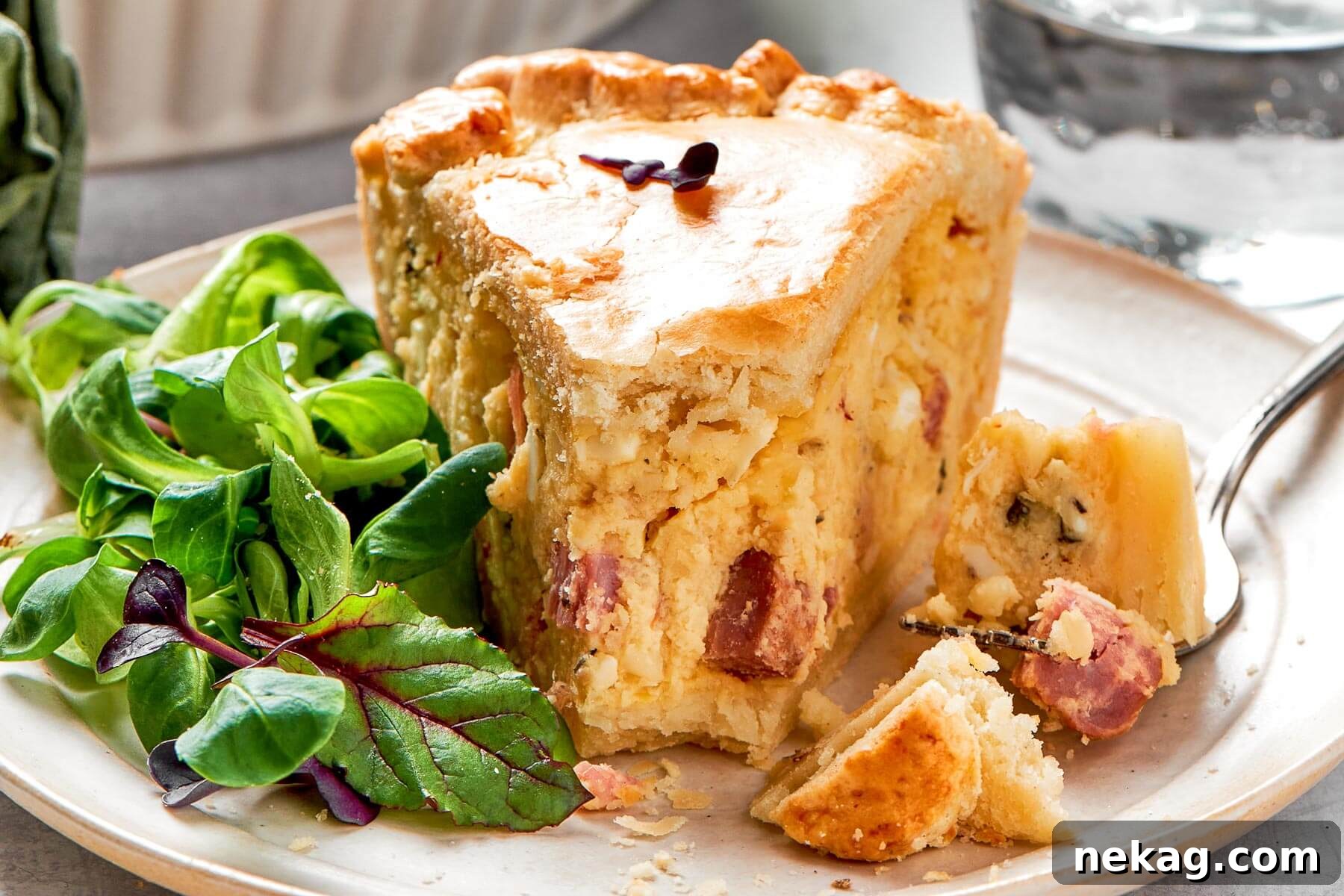
- Prioritize Overnight Chilling for Flawless Slices: When it comes to serving a truly elegant Pizza Rustica, patience is indeed a profound virtue, especially once it has emerged from the oven. It is absolutely essential to allow the pie to chill thoroughly, ideally overnight, before you even contemplate attempting to slice it. The rich filling, though fully cooked, requires ample time for all its diverse components to set and firm up completely. Impatiently slicing a warm, or even only slightly cooled, pie regrettably risks a “hot mess”—a crumbling, ungraceful slice with a disappointingly runny filling. By thoughtfully baking it the day before, allowing it to cool completely at room temperature, and then meticulously wrapping and refrigerating it overnight, you are virtually guaranteed to achieve beautifully clean, impeccably neat, and picture-perfect slices. You can then allow these perfectly chilled slices to gently come to room temperature before serving, which is the time-honored and traditional way to truly savor Pizza Rustica.
How to Make Pizza Rustica: A Comprehensive Step-by-Step Guide
Follow these detailed, easy-to-understand instructions to craft your very own festive and incredibly flavorful Pizza Rustica. For more precise measurements and exact ingredient quantities, please consult the complete recipe card provided at the bottom of this page.
Making the Pizza Rustica:
- Prepare Your Pastry Dough: Begin your culinary masterpiece by preparing a double batch of your preferred pastry dough. You may choose either my highly recommended all-butter pie crust recipe, celebrated for its exquisite richness and delicate flakiness, or the equally excellent vodka pie crust recipe, renowned for its superior tenderness and ease of handling. The double batch is essential to ensure you have an ample supply of dough to adequately line a generously sized springform pan and create a beautiful top crust, with extra for any desired decorative embellishments.
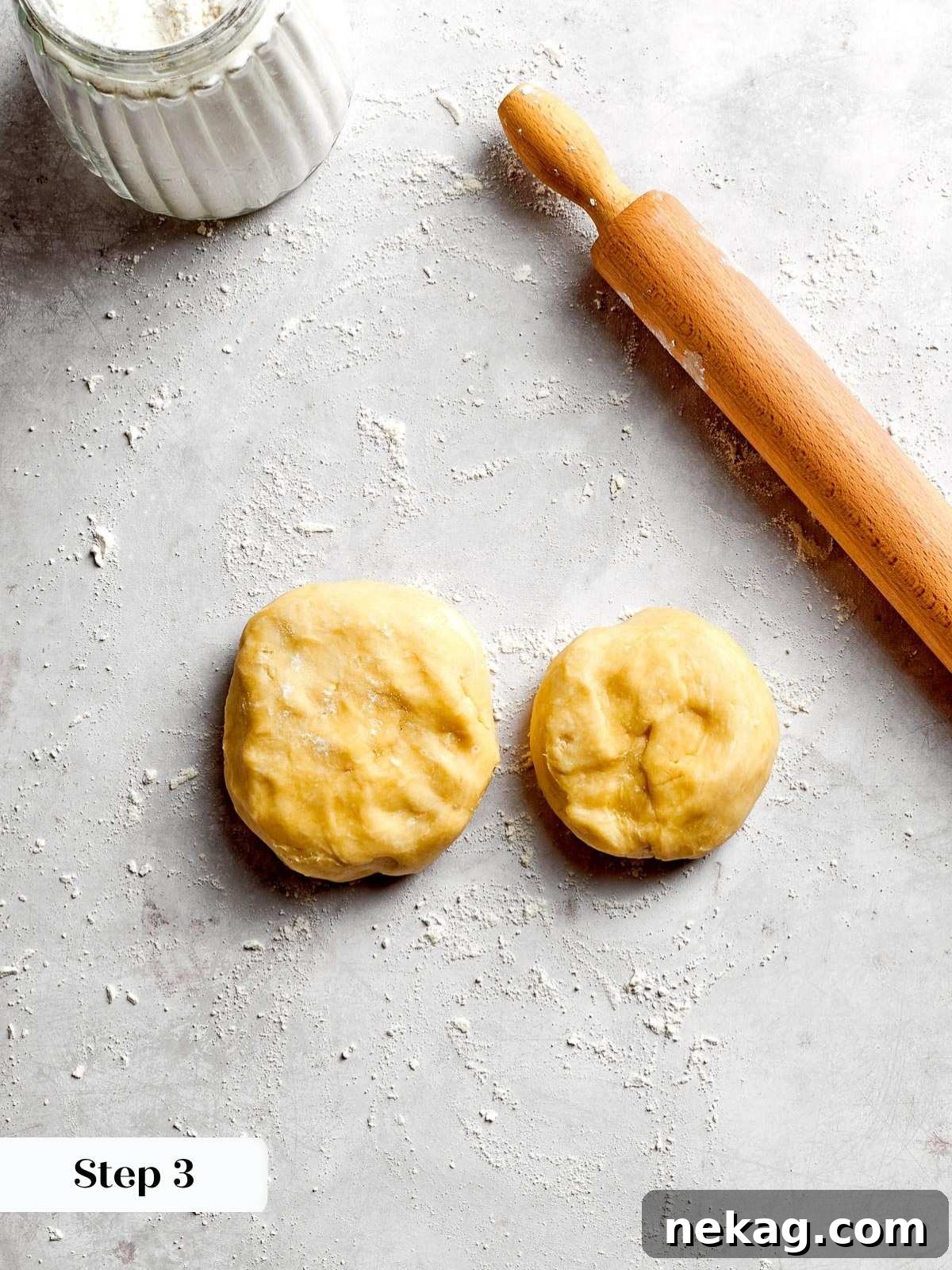
- Portion and Chill the Dough: Once your chosen pastry dough is meticulously prepared, carefully divide it into two unequal portions. Aim for a precise ratio of approximately 2:1, reserving the larger 2/3 portion for gracefully lining the bottom and extending up the sides of the pie, and the smaller 1/3 portion for creating the top crust. Wrap each portion snugly in plastic wrap to rigorously prevent any drying, and then chill them in the refrigerator for a minimum duration of 2 hours. This crucial chilling period is vital for allowing the gluten to relax, which makes the dough significantly easier to roll out and is absolutely paramount for achieving an ultimately flaky and tender crust.
- Roll Out the Dough: When you are fully prepared to meticulously assemble your magnificent pie, retrieve each chilled dough portion and carefully roll it out on a lightly floured work surface. Roll with consistent, even pressure until each section reaches an approximate thickness of 1/8 inch. For significantly easier handling and to prevent any undesirable sticking, it is highly recommended to refrigerate the rolled-out dough sheets, nestled between layers of parchment paper, for at least 30 minutes before attempting to line the pan. This brief refrigeration will firm up the butter within the dough, making transfer much simpler and reducing the risk of tearing.
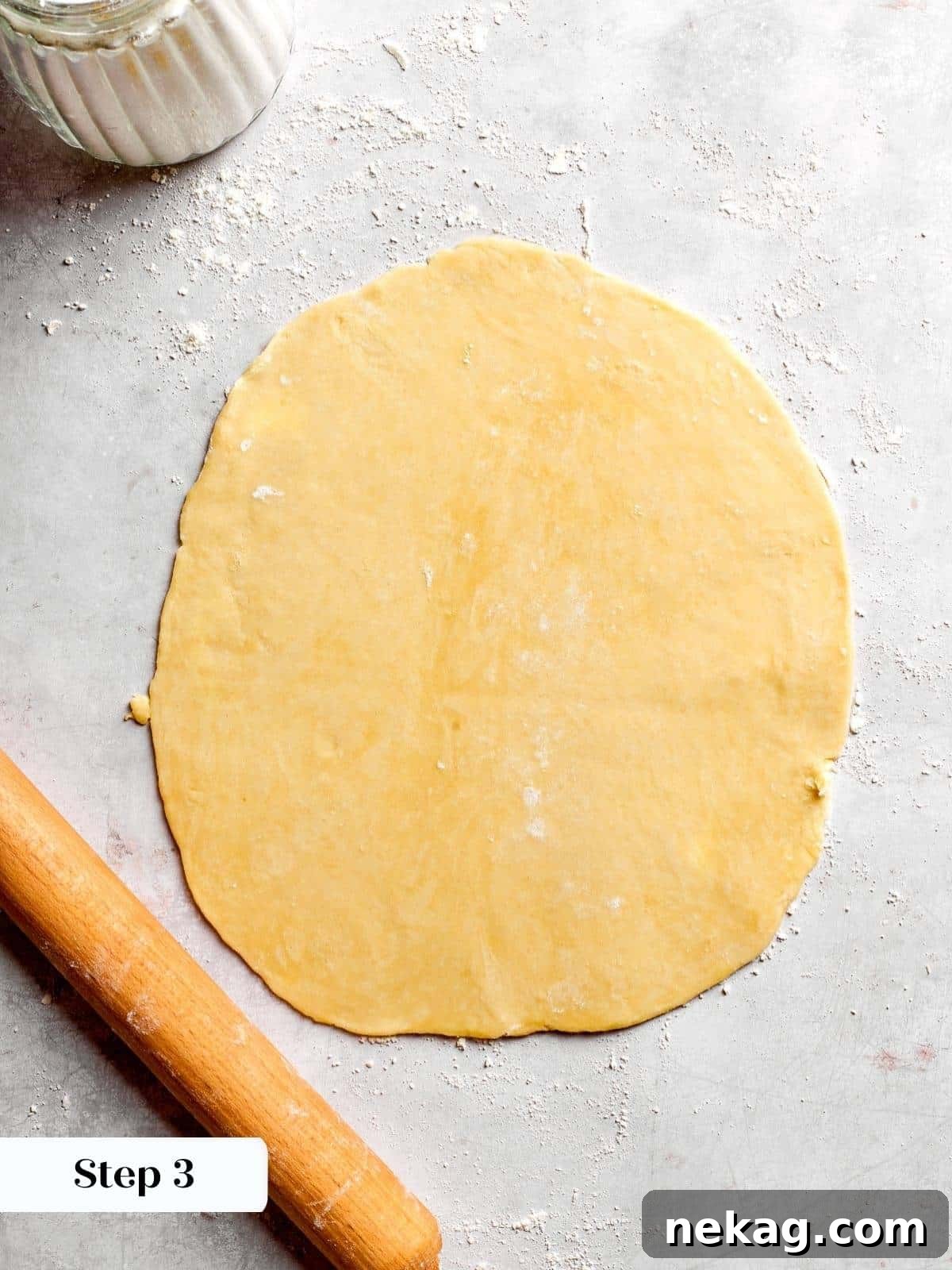
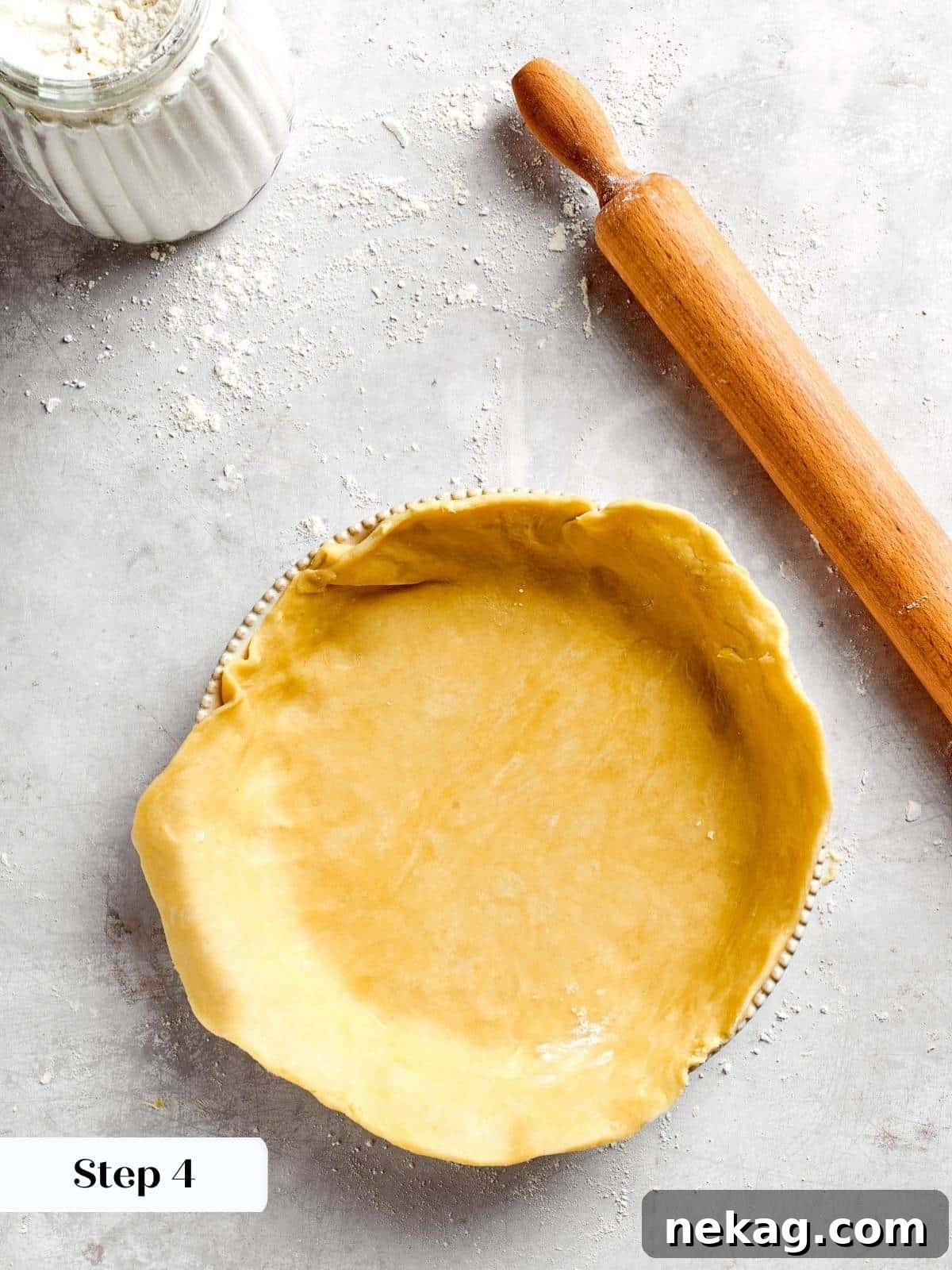
- Line the Springform Pan: Allow the larger piece of dough to gently warm up slightly at room temperature; this critical step makes it more pliable and significantly easier to handle. Carefully transfer it to your springform pan, meticulously pressing it against the bottom and extending it gracefully up the sides. Ensure that the dough creates a generous overlap of approximately ½ inch beyond the pan’s edge. This overlapping portion will be strategically used to securely seal the top crust later. Any excess dough can be neatly trimmed and thoughtfully reserved for crafting decorative elements.
- Prepare and Add the Filling: In a generously sized mixing bowl, combine all the designated ingredients for the rich and savory filling: the creamy ricotta, shredded mozzarella, beaten large eggs, chopped hard-boiled eggs, diced cured meats, kosher salt, black pepper, fresh basil, fresh oregano, bright lemon zest, and red pepper flakes. Mix all these components thoroughly until they are uniformly incorporated and evenly distributed throughout the mixture. Carefully spoon this abundant, savory filling into the dough-lined springform pan, meticulously spreading it out to create an even layer.
Chef’s Tip for Seasoning: For the most precise and perfectly balanced seasoning, you may choose to initially mix all the filling ingredients, withholding the beaten eggs. At this stage, taste the mixture for seasoning and adjust any components as needed. Once you are thoroughly satisfied with the flavor profile, then gently stir in the beaten eggs. Always keep in mind that the inherent spiciness from red pepper flakes and certain cured meats will often subtly amplify and deepen in flavor during the baking process, so season thoughtfully.
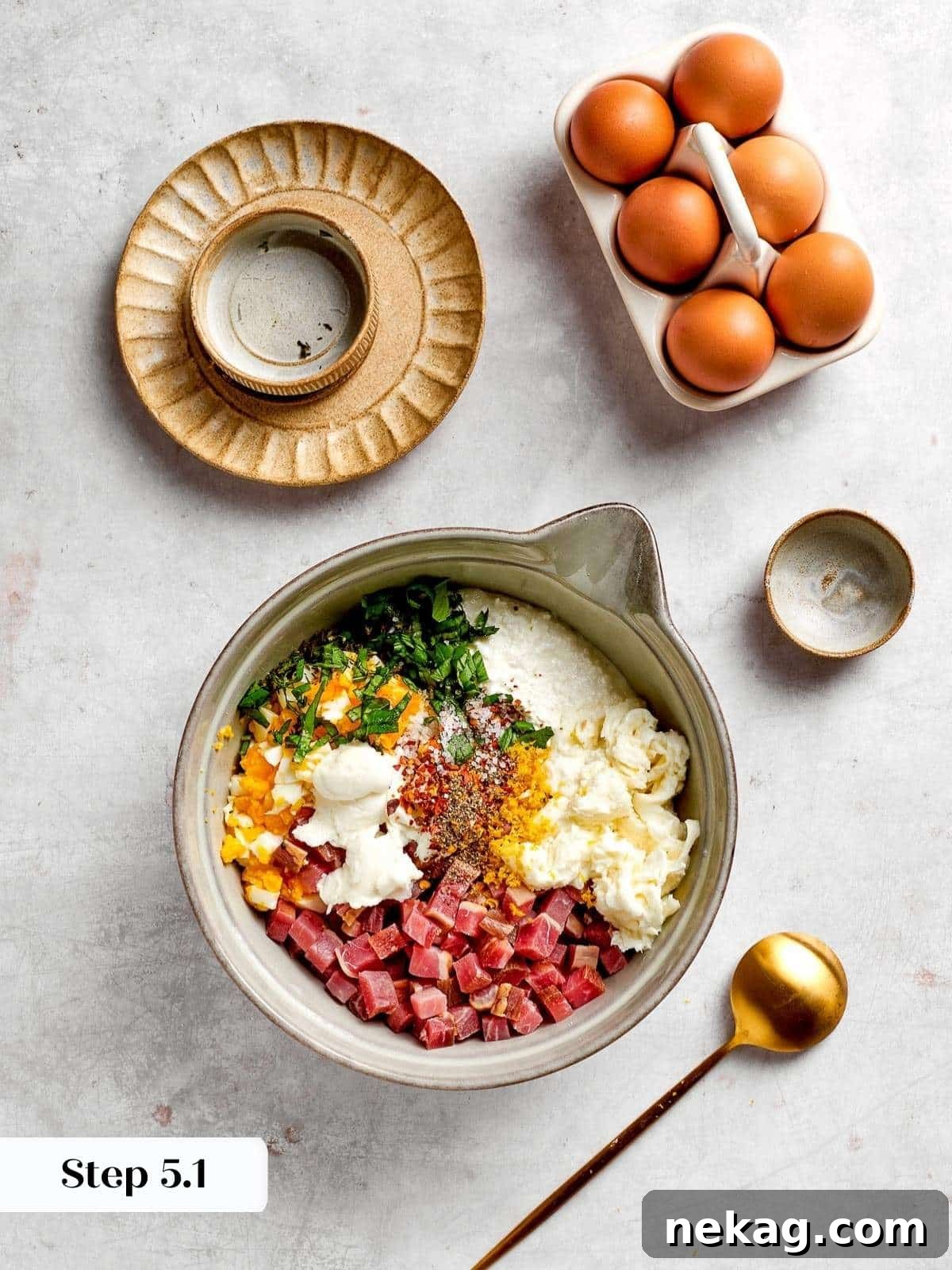
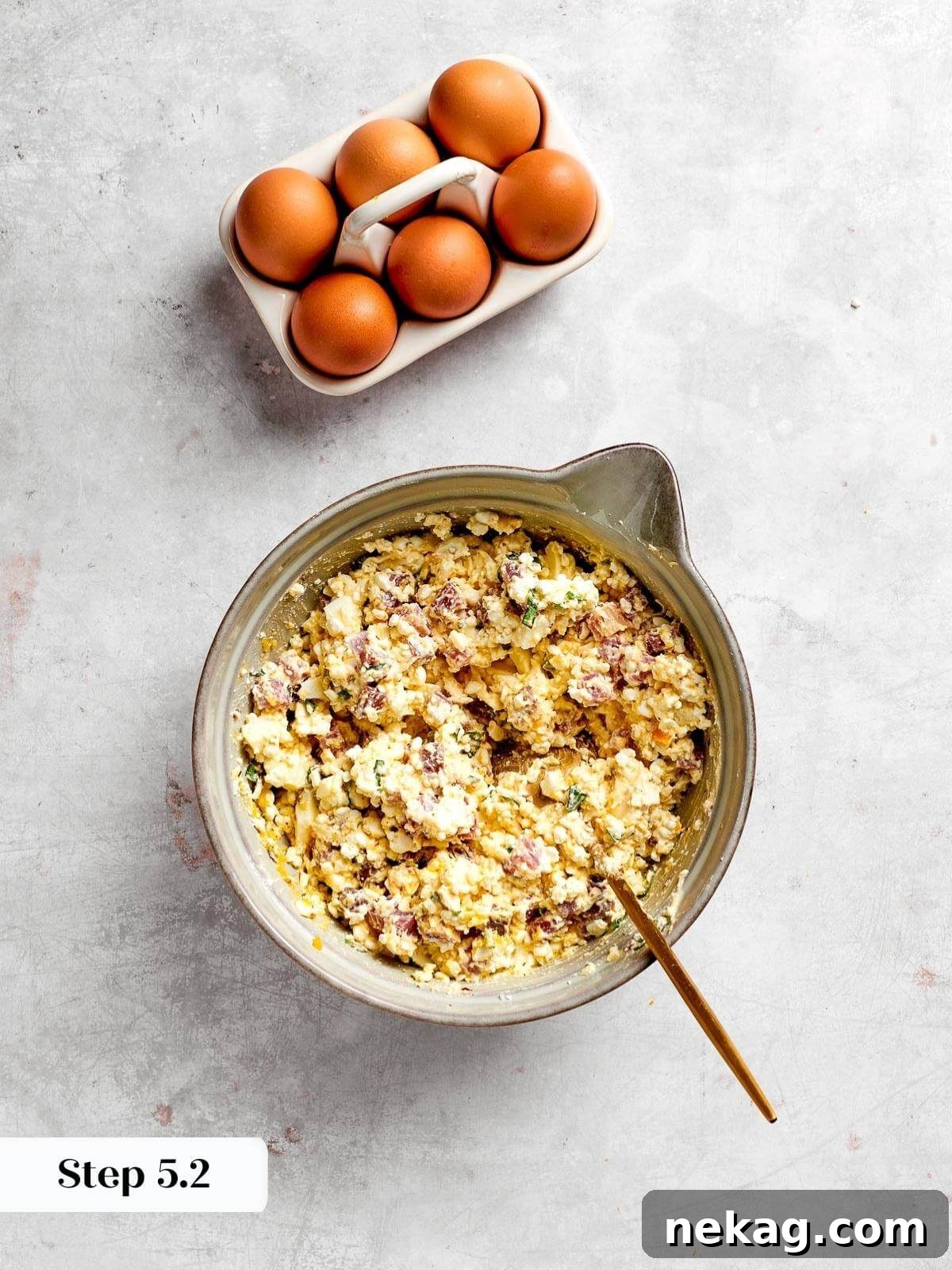
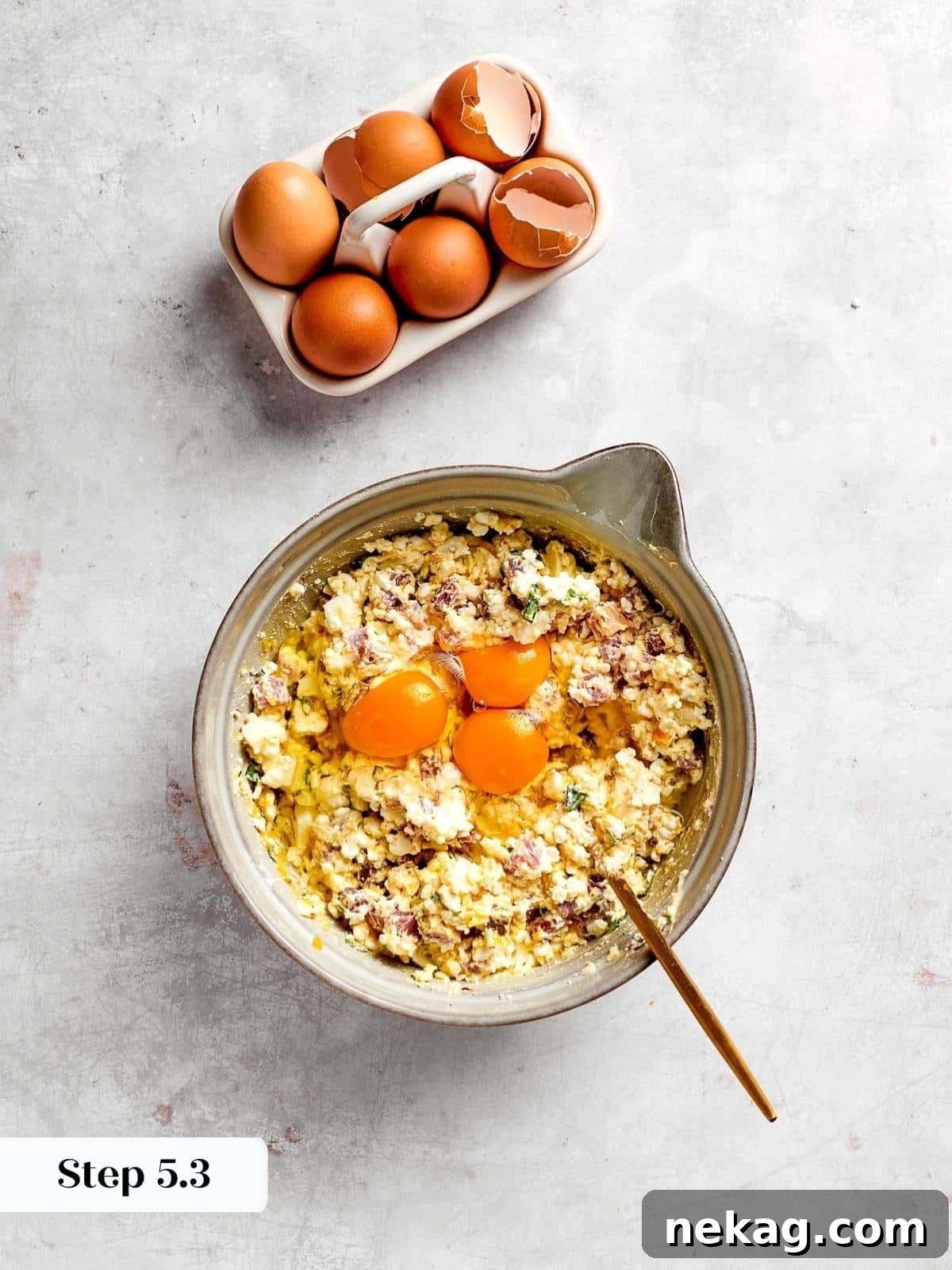
- Smooth the Filling: Once the meticulously prepared filling is spooned into the pan, use the back of a spoon or a small offset spatula to gently and evenly smooth the entire top surface. This careful step ensures an impeccably flat layer and contributes to a clean, professional presentation once the top crust is applied and the pie is baked.
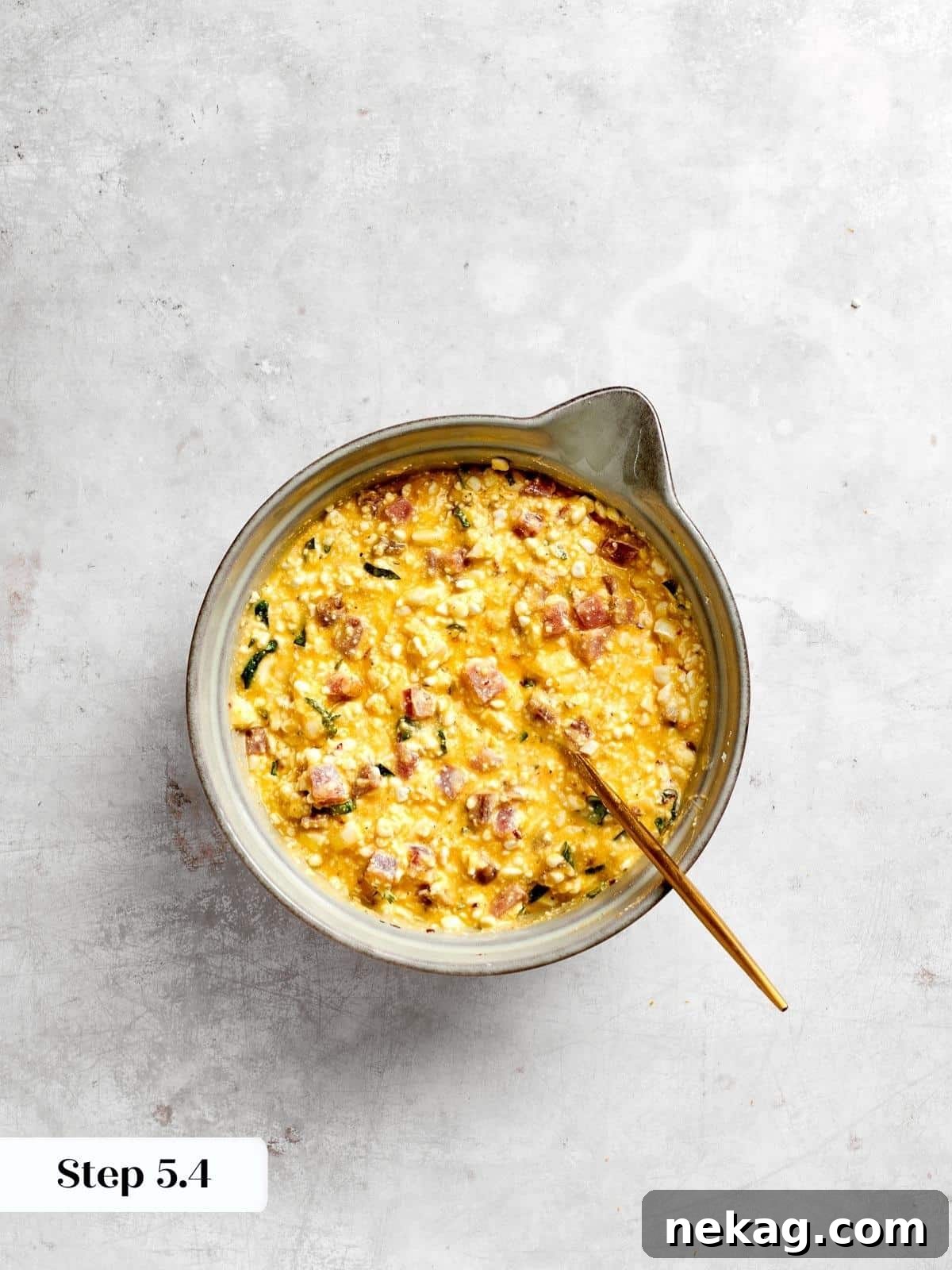
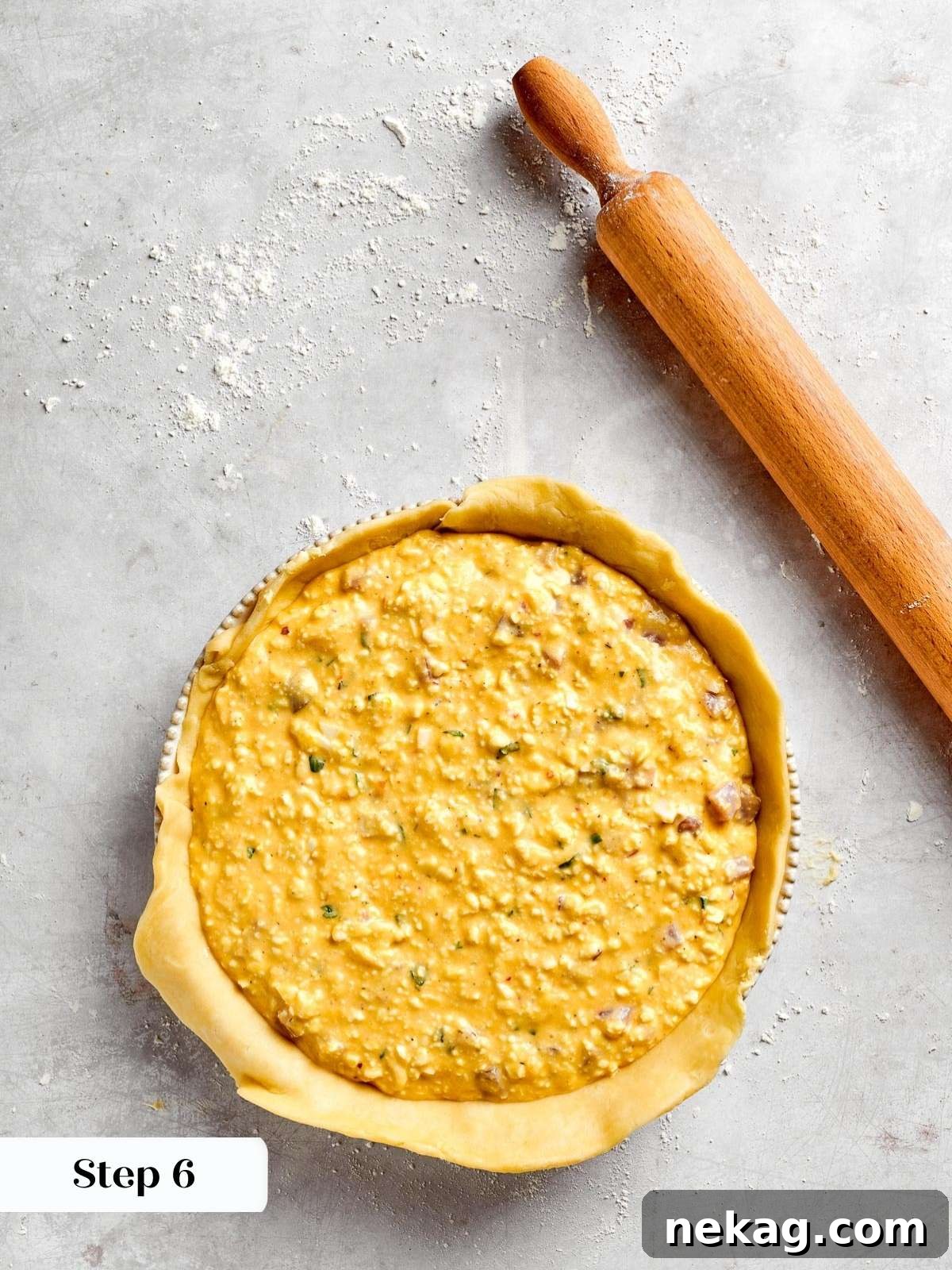
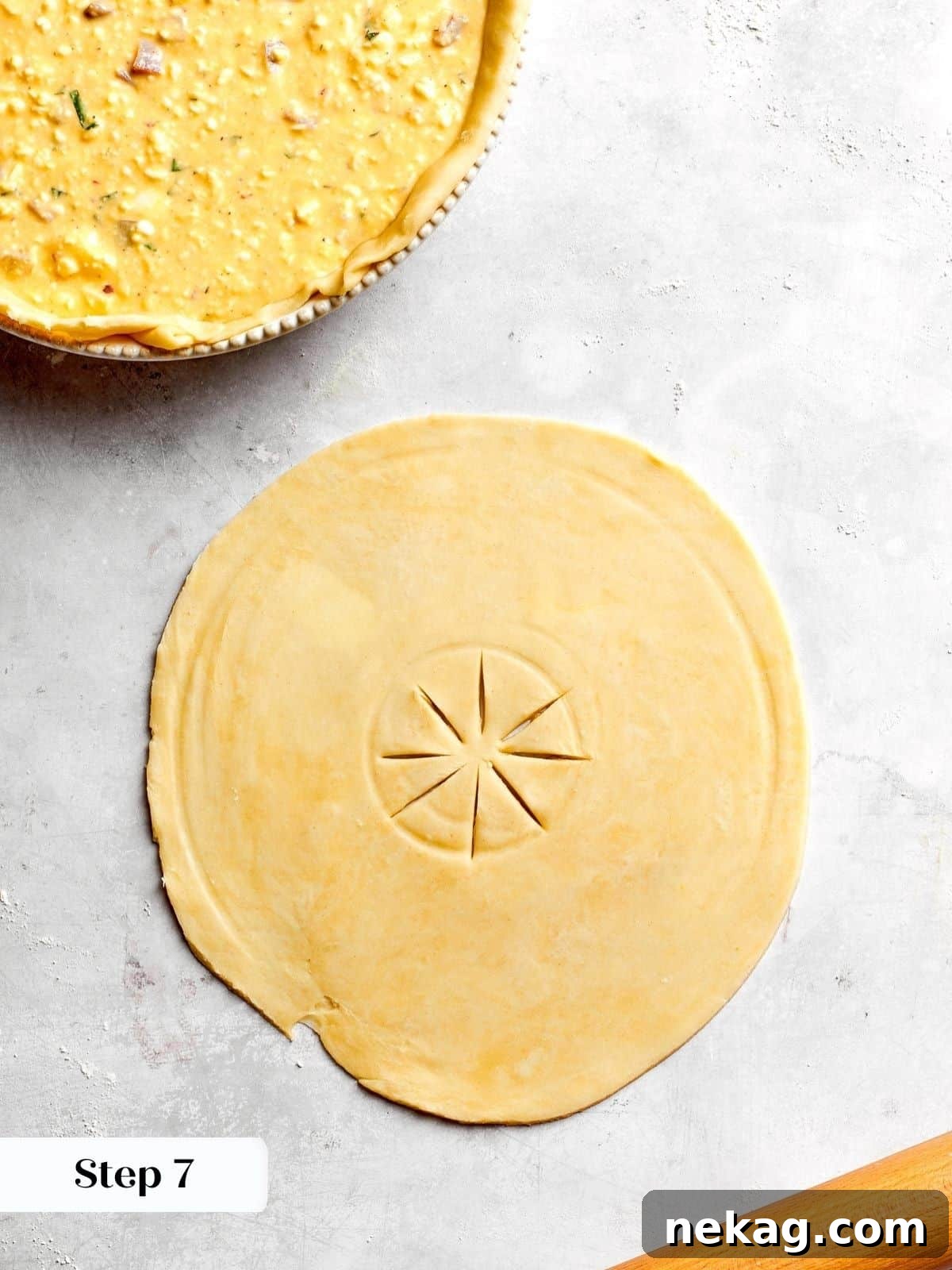
- Apply the Top Crust and Vents: If you desire, take the smaller, reserved pastry round and carefully cut decorative vents or slits into it. These strategic vents are not merely for aesthetics; they serve the crucial purpose of allowing steam to escape efficiently during the baking process, thereby preventing the top crust from puffing up excessively or becoming soggy. Gently and carefully place this smaller, vented round of pastry directly on top of the smooth filling, ensuring it is perfectly centered.
- Securely Seal the Pie: Gently bring the generous overlapping ½-inch portion of the bottom dough up and gracefully over the edge of the top crust. Proceed to meticulously pinch and roll both the upper and lower pieces of dough inwards, moving precisely towards the center of the pizza rustica.
Professional Tip for Sealing: It is absolutely crucial to roll and press the dough pieces together very tightly and firmly. This creates an incredibly secure and robust seal that will rigorously prevent the dough from unrolling or separating during the baking process, which could otherwise lead to disappointing filling leakage. For an extra layer of assurance and to achieve an aesthetically pleasing, artisanal finish, I highly recommend using your finger to gently crimp the edges, creating a decorative yet remarkably strong seal.
- Chill Before Decorating: Once the pie is assembled and sealed, place the entire pizza rustica into the refrigerator to chill for a period. This allows the dough to firm up slightly before you proceed with any intricate dough decorations, making it easier to handle and ensuring the decorations hold their shape.
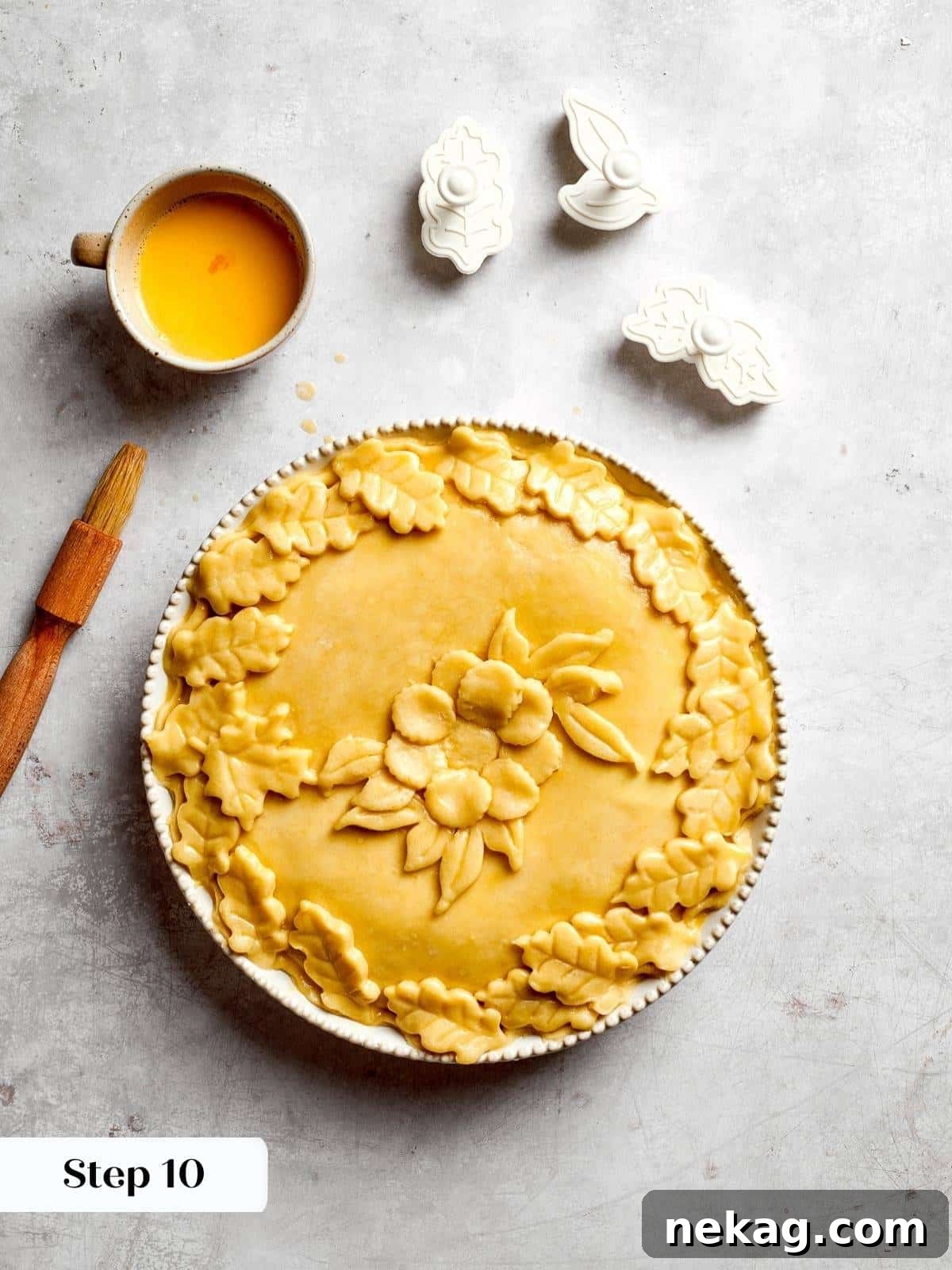
- Decorate and Apply Egg Wash: In a small, clean mixing bowl, beat the remaining single egg to create a glossy egg wash. Using a pastry brush, lightly and evenly brush the entire top surface of the pizza rustica with this beaten egg wash. If you have prepared any decorative elements from the excess pie dough (such as elegant braids, charming twists, or intricate cut-outs), use the egg wash as a natural adhesive to carefully attach them to the top crust. Unleash your creativity with your designs; these beautiful embellishments add a captivating, artisanal touch to your magnificent finished pie.
- Final Chill: After all decorations have been meticulously applied, return the entire dish to the refrigerator for a final chilling period of 30 minutes to a full hour. This critical step ensures that the dough is thoroughly cold before it enters the oven, which significantly contributes to the development of a beautifully flaky crust and helps all the intricate decorative elements retain their sharp, defined shape throughout the baking process.
- Preheat the Oven: Preheat your oven to a precise 350°F (175°C) if you are utilizing a convection oven (which typically includes a fan for even heating) or 375°F (190°C) for a conventional oven (one without a fan). Achieving and maintaining the correct oven temperature is absolutely vital for ensuring even baking and the development of a perfect, golden-brown crust.
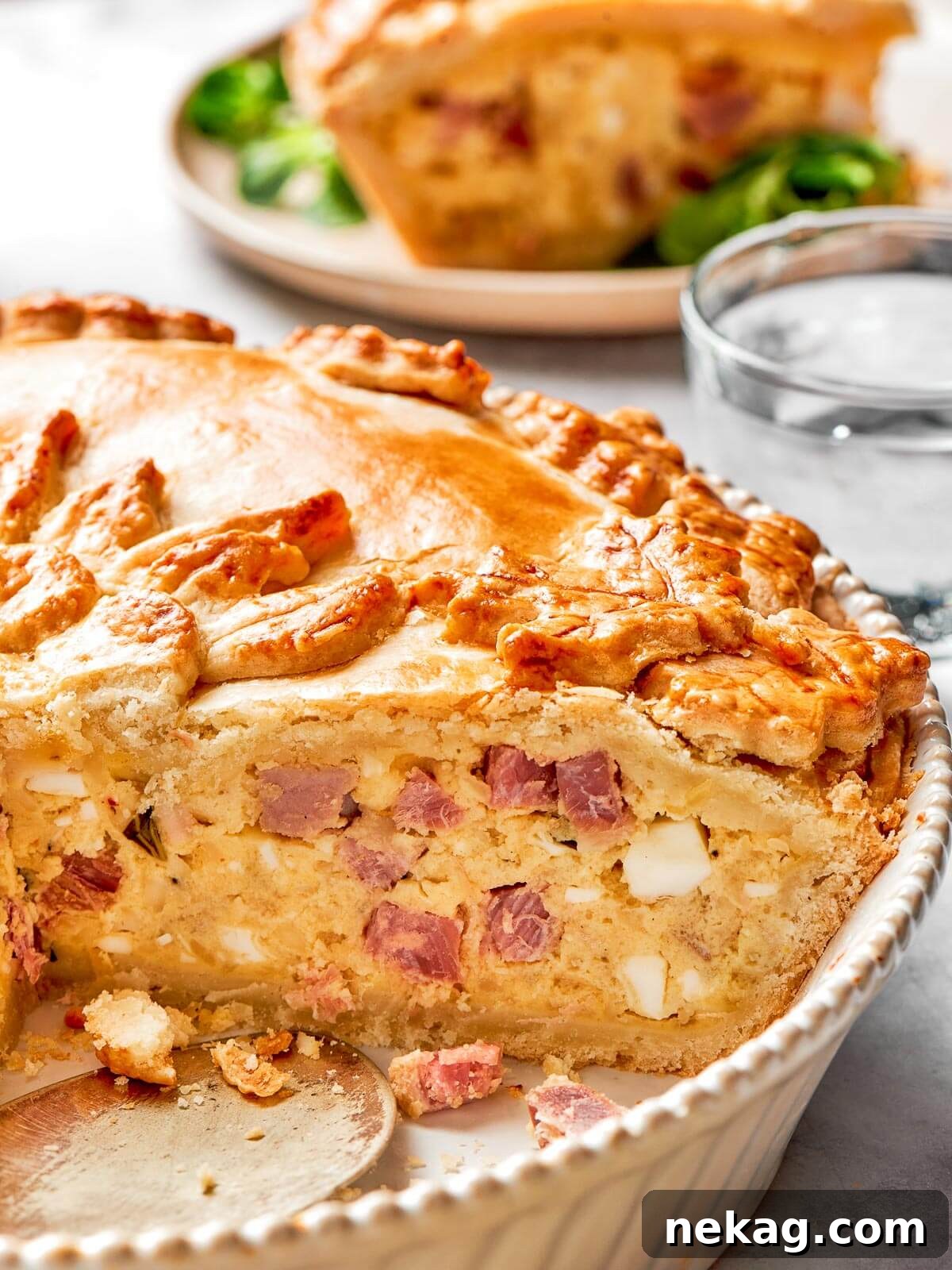
- Bake to Golden Perfection: Carefully place the thoroughly chilled pizza rustica into the preheated oven and bake for approximately 45 minutes to 1 hour. The precise baking time may vary slightly depending on the specific calibration and efficiency of your oven. To definitively determine if the pie is fully cooked, gently insert a clean cake tester or a thin, sharp knife directly into the center of the pie; it should emerge perfectly clean, without any wet batter or uncooked filling attached. Crucially, ensure that the entire top crust has achieved a beautiful, rich golden-brown color—as truly, no one appreciates raw or underbaked pie dough! Once baked to perfection, carefully remove the pie from the oven and allow it to cool completely at room temperature before serving.
Chef Lindsey’s Expert Recipe Tip
A crucial detail to note about the spiciness in the Pizza Rustica filling is that it tends to gracefully increase and deepen in intensity as the ricotta mixture rests and, most notably, during the baking process. While it’s always prudent to taste the mixture for initial seasoning adjustments before you incorporate the eggs, be keenly aware that the flavors, especially the warmth from red pepper flakes and any spicy cured meats, will become distinctly more pronounced and integrated in the final, beautifully baked product. Therefore, plan accordingly for your desired spice level, perhaps opting for a slightly milder initial mix if you are sensitive to heat.
Frequently Asked Questions (FAQs) About Pizza Rustica
- How do I store my Pizza Rustica effectively?
- Once your Pizza Rustica is impeccably baked and has thoroughly cooled to comfortable room temperature, it can be stored in several convenient ways. For short-term enjoyment, it will keep beautifully, tightly wrapped in plastic, at room temperature for up to 3 days. For a slightly longer period, refrigerate it for up to a full week. If you plan to savor it much further in the future, it freezes exceptionally well for up to 3 months. To gracefully reheat, simply preheat your oven to 350°F (175°C) and bake until the center is thoroughly warmed through, ensuring it retains its savory appeal.
- From which region of Italy does Pizza Rustica originate?
- Pizza Rustica, affectionately known by various regional names such as Torta Rustica, Pizza Chiena, or Pizza Ripiena, proudly hails from the vibrant and rich culinary traditions of Southern Italy. Its esteemed origins can be meticulously traced back to the 17th century, with strong ties particularly to the illustrious Naples region. Historically, this rich, substantial, and incredibly satisfying savory pie was prepared to mark the joyous and anticipated conclusion of Lent, serving as a grand celebration to welcome the abundant arrival of spring, offering a hearty and much-anticipated feast after a period of fasting.
- How can I definitively know when my Pizza Rustica is perfectly done baking?
- The key indicators for a perfectly baked Pizza Rustica are a beautifully golden-brown and delightfully flaky top crust, coupled with a thoroughly set filling. To unequivocally confirm doneness, gently insert a clean cake tester or a thin, sharp knife directly into the very center of the pie. If the tester emerges perfectly clean, without any wet batter or uncooked filling clinging to it, your pie is triumphantly ready! It is crucial to avoid underbaking, as a raw or doughy crust can unfortunately be quite unappetizing and detract from the overall experience.
- What are the best accompaniments to serve with Pizza Rustica?
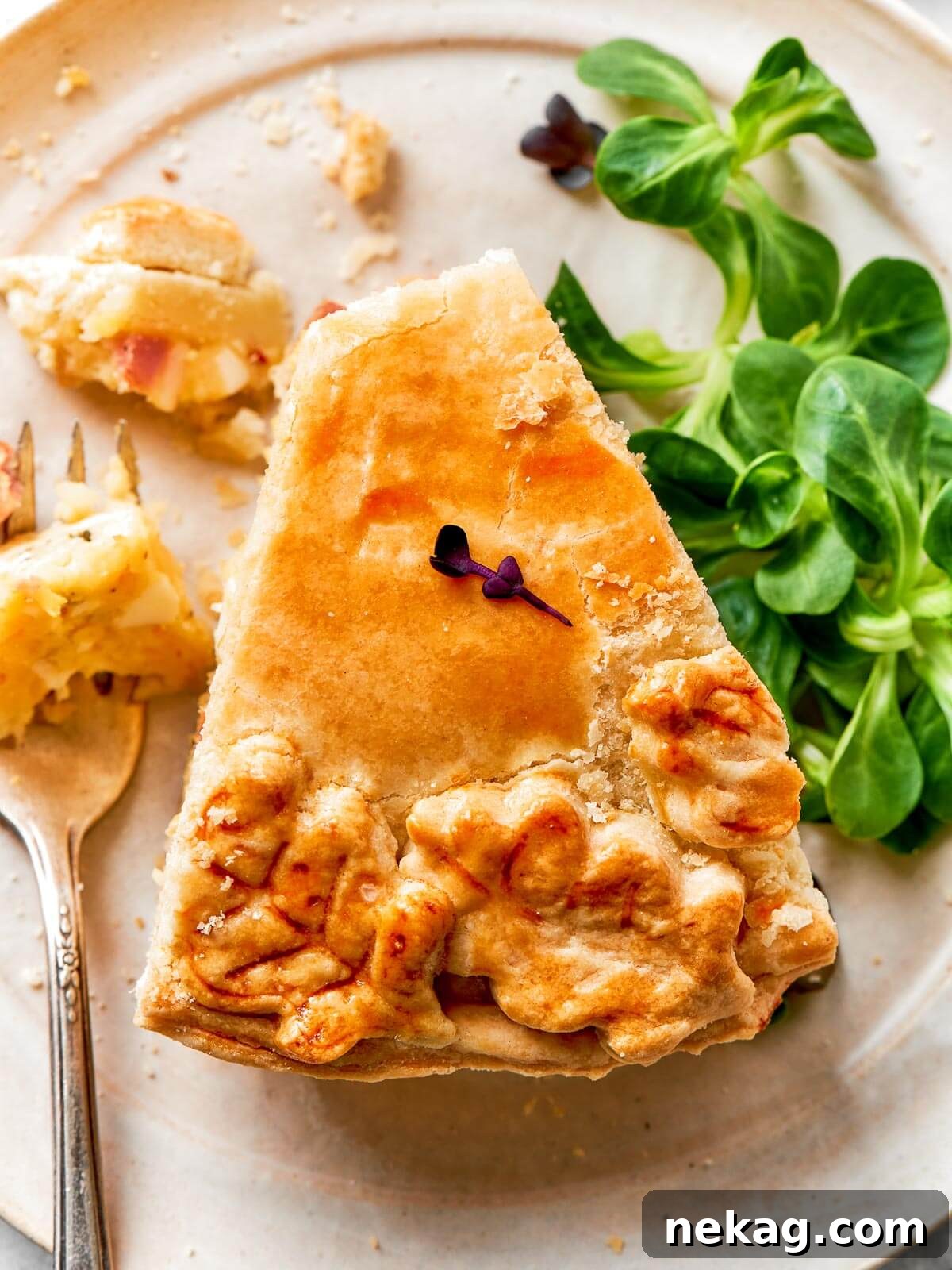
- Pizza Rustica is traditionally served at room temperature and is substantial enough to be savored entirely on its own as a fulfilling main course, or as a centerpiece within a larger, celebratory culinary spread. However, it pairs exceptionally well with a simple, crisp green salad, lightly dressed with a zesty vinaigrette, to elegantly cut through its inherent richness. Consider serving it alongside warm, crusty rosemary sourdough rolls for a truly complete and satisfying meal. For an even more elaborate and memorable spread, I highly recommend trying my flavorful rosemary lemon roasted cauliflower or a refreshing and vibrant big Italian salad, which both complement its robust flavors beautifully.
Recommended Pizza & Savory Pie Recipes to Try Next
Dinner Recipes
Classic Pepperoni Pizza
Sauces & Condiment Recipes
The Best Homemade Pizza Sauce Recipe
Sourdough Bread Recipes
Artisan Sourdough Pizza Dough Recipe
Date Night
Savory Tomato Goat Cheese Galette
If you had the pleasure of trying this exquisite recipe and absolutely loved it, please take a moment to leave a ⭐️ star rating and share your experience in the comments section below. I genuinely adore hearing from you; your valuable feedback and thoughtful comments truly brighten my day!
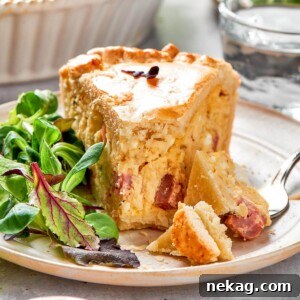
Authentic Pizza Rustica
by Chef Lindsey
This traditional Italian Pizza Rustica recipe delivers a rich, savory, and deeply flavorful ricotta filling, all expertly baked within a tender, flaky all-butter pie crust. This classic Easter dish is traditionally prepared in a springform pan, lending it the impressive appearance of a hearty deep-dish pizza, making it perfect for any festive table or family gathering.
Prep Time: 30 mins
Cook Time: 45 mins
Chill Time: 3 hrs
Total Time: 4 hrs 15 mins
Servings: 10 slices
Comment
Print Recipe
Ingredients
- 2 crusts pâte brisée (double batch of all-butter pie crust recipe)
- 30 ounces ricotta (whole milk preferred, approximately two 15 oz containers)
- 6 ounces fresh mozzarella, shredded (avoid pre-grated for best results)
- 6 large eggs, well beaten (specifically for the filling)
- 3 hard-boiled eggs, finely chopped
- 3/4 pound cured meat (e.g., a mix of soppressata, salami, salame), with paper/casings removed and diced
- 3/4 teaspoon kosher salt
- 2 teaspoons freshly ground black pepper (optional, but highly recommended for flavor depth)
- 1 1/2 tablespoons fresh basil, finely minced
- 1 1/2 teaspoons fresh oregano, finely chopped
- 1 tablespoon lemon zest (from one large lemon)
- 2 teaspoons red pepper flakes (adjust to your personal taste, optional for heat)
- 1 egg (for preparing the egg wash)
Instructions
- Prepare a double batch of your chosen pie crust recipe: either my all-butter pie crust or vodka pie crust.
- Divide the pastry dough into two unequal portions (approx. 2:1, 2/3 for bottom/sides, 1/3 for top). Wrap in plastic wrap and chill for at least 2 hours.
- When ready to assemble, roll out each dough section on a lightly floured surface to about 1/8 inch thick. Refrigerate between parchment paper for at least 30 minutes.
- Allow the larger dough piece to warm slightly for pliability. Line a springform pan with this dough, ensuring sides overlap ½ inch. Trim excess dough for decorations if desired.
- In a large mixing bowl, thoroughly combine all filling ingredients. Spoon the mixture evenly into the dough-lined pan.
- Smooth the top of the filling with the back of a spoon or a small offset spatula.
- Optionally, cut decorative vents into the smaller pastry round. Place this round on top of the filling, centering it carefully.
- Bring the lower and upper dough pieces together, pinching and rolling them inwards towards the pie’s center to create a secure, crimped seal.
- Chill the entire pizza rustica in the refrigerator while you prepare any desired dough decorations.
- Beat the final egg for an egg wash. Brush the pie’s top with egg wash and use it to adhere any dough decorations.
- Return the entire dish to the refrigerator for a final chill of 30 minutes to an hour.
- Preheat the oven to 350°F (175°C) for convection (with fan) or 375°F (190°C) for conventional (no fan).
- Bake for 45 minutes to an hour, or until a cake tester comes out clean and the crust is a beautiful golden brown. Serve at room temperature for optimal flavor and texture.
Chef’s Notes & Expert Tips
- Yield: This recipe typically yields one impressive 9-inch Pizza Rustica, providing approximately 10 generous and satisfying slices.
- Presentation Perfection: For the most beautiful and structurally sound slices, it is absolutely paramount to allow the Pizza Rustica to rest for a minimum of two hours at room temperature after baking. This crucial resting period allows the filling to fully set and firm up. For truly impeccable, clean cuts, chilling the entire pie overnight in the refrigerator is even better.
- Enhanced Flavor Tips: While dried spices can be used in a pinch, fresh herbs are overwhelmingly superior in imparting vibrant flavor. The difference, for instance, between fresh and dried basil is immense; dried varieties can often be bitter and less aromatic. If fresh basil is unavailable, consider using prepared basil paste, commonly found in the refrigerated section of most supermarket produce aisles, as a far more palatable and flavorful alternative.
- Optimal Storage: Once the Pizza Rustica is baked and has completely cooled to room temperature, it can be stored, meticulously well-wrapped, at room temperature for up to 3 days. For extended freshness, it can be safely refrigerated for up to a week. For long-term preservation, it freezes exceptionally well for up to 3 months.
Nutritional Information (per serving)
Serving: 1 slice
Calories: 409 kcal
Carbohydrates: 5g
Protein: 27g
Fat: 31g
Saturated Fat: 15g
Polyunsaturated Fat: 3g
Monounsaturated Fat: 11g
Trans Fat: 0.01g
Cholesterol: 254mg
Sodium: 1191mg
Potassium: 311mg
Fiber: 0.4g
Sugar: 1g
Vitamin A: 880 IU
Vitamin C: 1mg
Calcium: 300mg
Iron: 2mg
Course: Lunch, Appetizer, Holiday Main
Cuisine: Italian, Southern Italian
Calories per serving: 409
Before You Go: Explore More Delicious Recipes!
I sincerely hope you thoroughly enjoyed the rewarding experience of creating and savoring this authentic professional chef recipe for Pizza Rustica. It’s truly a dish that brings a cherished piece of rich Italian tradition, history, and incredible flavor directly into your home kitchen. Should you find yourself yearning for more delightful baked goods, I warmly invite you to explore the extensive collection of other delicious pie and tart recipes proudly featured on my site. Perhaps your next baking adventure could be trying my refreshingly simple and vibrant easy key lime pie for a burst of tropical tang, or indulging in the exquisitely rich and velvety decadence of a French silk pie. Happy baking, and may your culinary explorations always be filled with joy and delicious discoveries!