
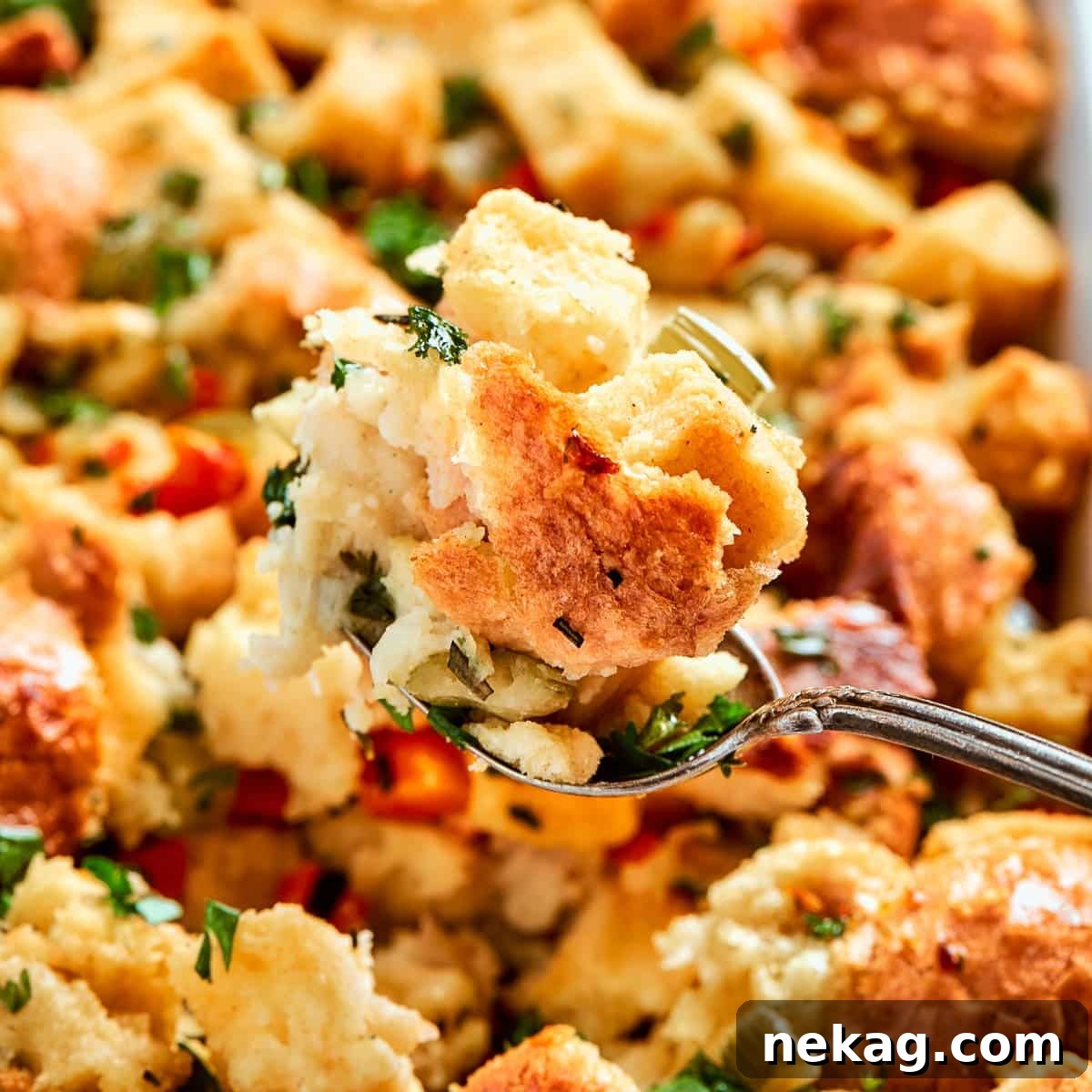
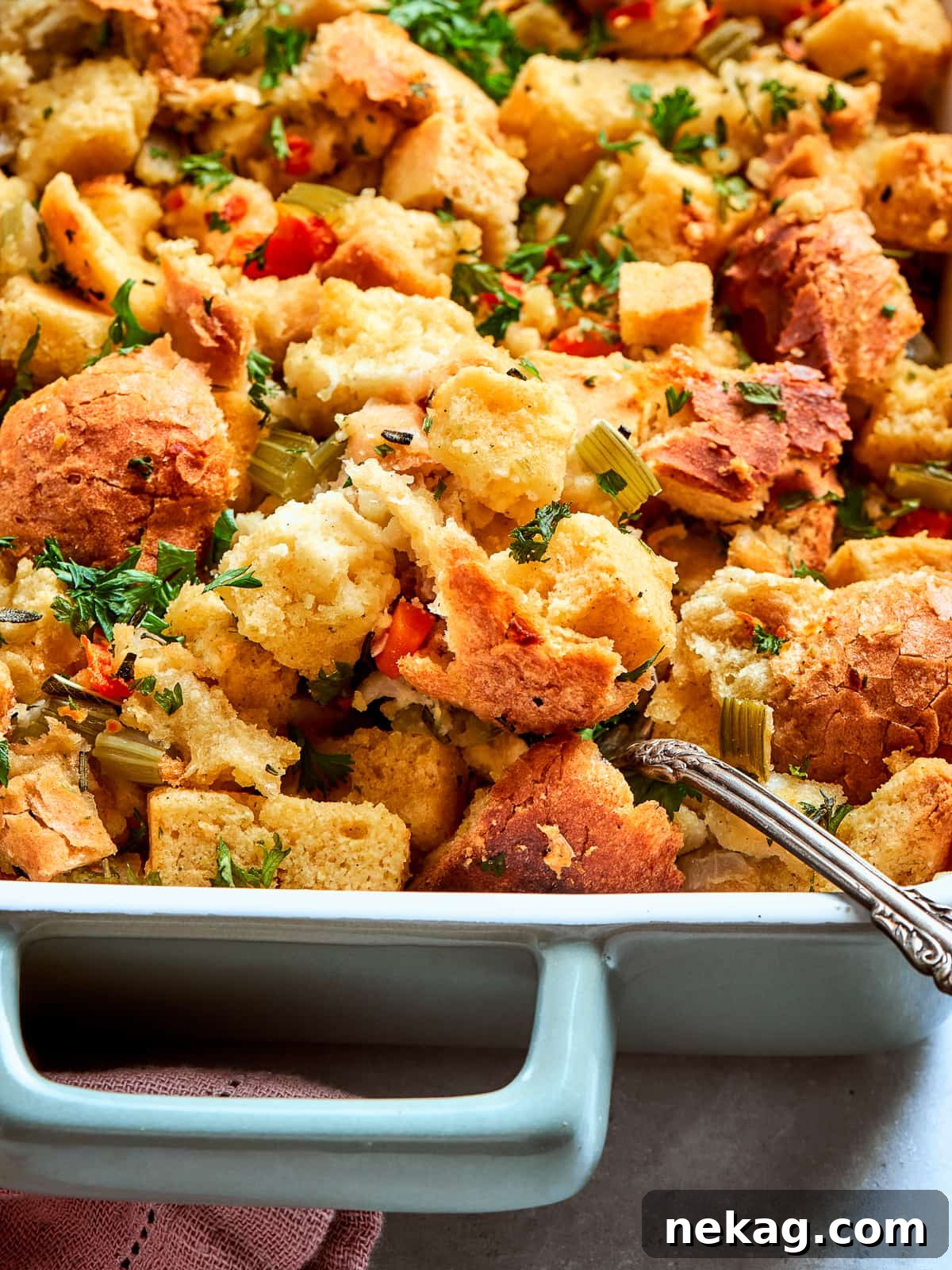
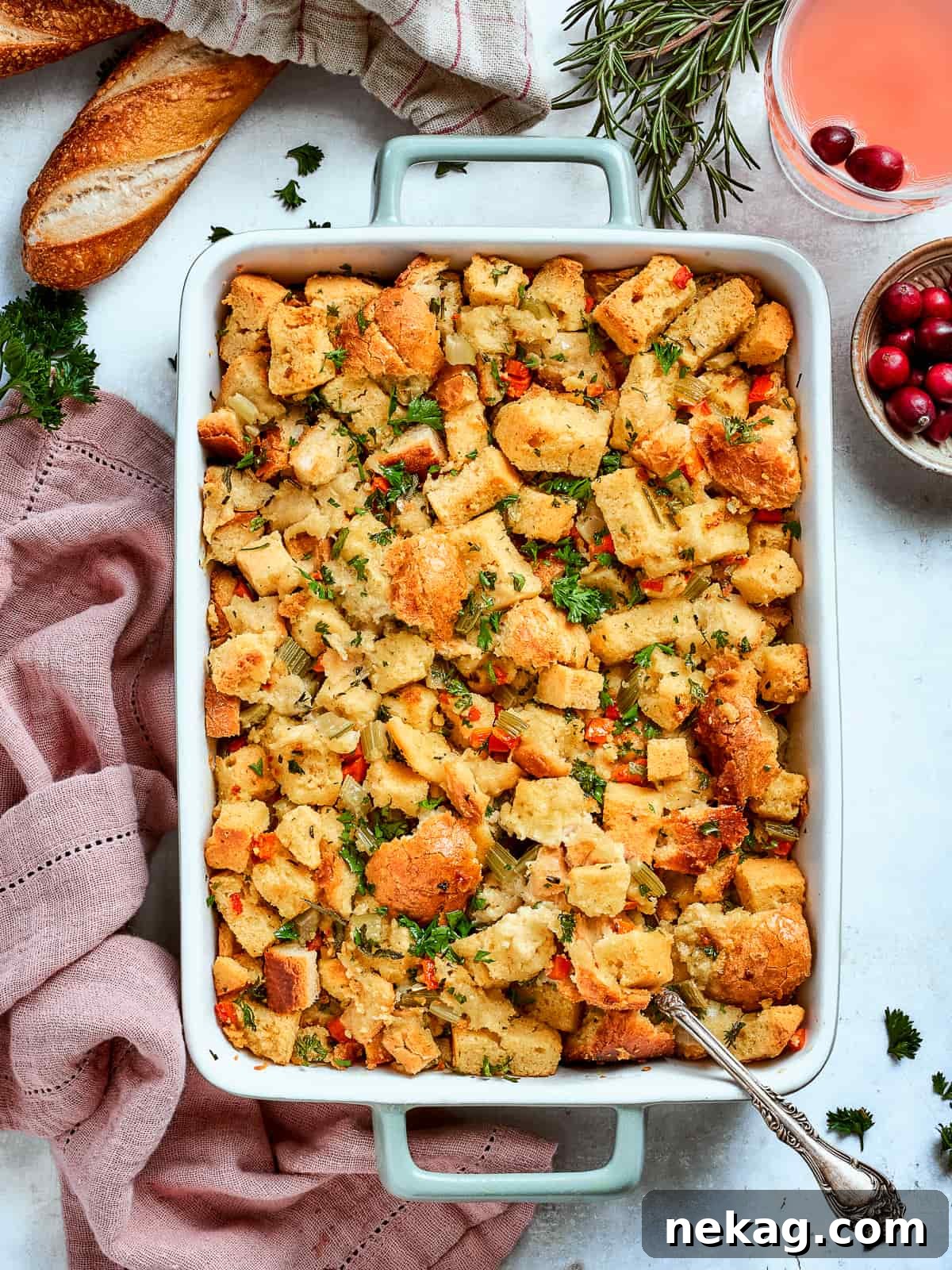
Southern Cornbread Dressing is a cherished holiday staple, baking up golden, rich, and bursting with the savory goodness of buttery homemade cornbread and aromatic fresh herbs. This classic Southern side dish is not just a recipe; it’s a tradition, promising comfort in every forkful. Perfect for making ahead, it’s an indispensable part of any festive spread, especially for Thanksgiving, bringing a taste of authentic Southern heritage to your table.
Imagine tender, moist cornbread infused with savory seasonings, crisp vegetables, and a medley of herbs, all baked to golden perfection. This isn’t just stuffing; it’s dressing – a dish with a distinct character, celebrated for its unique texture and profound depth of flavor. Whether you’re a seasoned Southern cook or new to the tradition, this recipe guides you to create a memorable dish that will be requested year after year.
A Quick Look at This Beloved Recipe
- Difficulty: Easy for any home cook, making it an accessible and rewarding project for holiday meal preparation.
- Prep Time: Approximately 20 minutes (plus an essential overnight drying period for the cornbread to achieve the best texture). This makes it an ideal make-ahead component for busy holiday schedules.
- Cook Time: About 40 minutes in the oven, ensuring a beautifully browned top and a moist, flavorful interior.
- Total Time: Roughly 1 hour of active time, but plan for at least 8-24 hours for the cornbread to properly dry, which is key to its perfect consistency.
- Servings: Generously serves 10 to 12 people, making it perfect for family gatherings and festive celebrations.
- Calories: Approximately 441 kcal per serving (based on nutritional data), offering a hearty and satisfying addition to your meal.
- Technique: The process involves baking a dedicated Southern cornbread, cubing and drying it to optimize broth absorption, then combining it with perfectly sautéed aromatic vegetables and savory broth for a final bake.
- Flavor Profile: Expect a rich, buttery, and deeply savory taste with delightful crisp edges that yield to a soft, custardy, and wonderfully moist center, showcasing classic Southern comfort.
Why This Southern Cornbread Dressing Recipe Shines Above the Rest
While many recipes for holiday dressing exist, this Southern Cornbread Dressing stands out for several compelling reasons, meticulously crafted to deliver unparalleled flavor and texture:
- Authentic Cornbread Crafted from Scratch, Not a Mix: The foundation of exceptional cornbread dressing begins with real, homemade cornbread. Unlike commercial mixes that often result in a dense or overly sweet base, our scratch-made Southern cornbread recipe is specifically designed for dressing. It boasts a robust flavor, maintains its structural integrity without turning to mush, and critically, absorbs liquids perfectly, ensuring every bite is moist and flavorful. This commitment to fresh, quality cornbread truly elevates the entire dish.
- Aromatics Masterfully Sautéed in Butter for Enhanced Flavor: The secret to unlocking the full potential of woody herbs like rosemary and sage lies in proper cooking. By gently sautéing these herbs along with celery and onions in rich butter before combining them with the cornbread, we allow their essential oils and complex flavors to fully develop and meld. This process creates a deeply fragrant and savory base, imbuing the dressing with an irresistible aroma and taste that is truly impactful. This step prevents the herbs from tasting raw and ensures maximum flavor infusion.
- Achieving the Quintessential Moist and Crispy Texture: Bid farewell to dry, crumbly stuffing! This recipe is engineered for an ideal texture profile. The combination of our superior homemade cornbread, crusty rustic bread cubes, and ample chicken stock ensures that the dressing remains wonderfully moist and custardy throughout. The strategic use of butter and proper baking techniques also guarantees those highly coveted crisp, golden edges, offering a delightful contrast to the tender interior. This balance of moistness and crispness is the hallmark of truly outstanding Southern cornbread dressing.
Table of Contents
- A Quick Look at The Recipe
- Why This is the Best
- Essential Ingredients & Smart Substitutions
- Creative Variations for Your Cornbread Dressing
- Professional Tips for Perfect Dressing
- Step-by-Step Guide: How to Make Southern Cornbread Dressing
- Chef Lindsey’s Expert Recipe Tip
- Common Questions About Southern Cornbread Dressing (FAQs)
- Recommended Thanksgiving Side Dish Recipes
- Full Southern Cornbread Dressing Recipe Card
- Before You Go
This particular recipe for Southern Cornbread Dressing holds a special place, harkening back to a time when I would meticulously pore over cooking magazines and cookbooks, driven by a serious mission to discover and perfect the ultimate stuffing recipe. Through countless tests, tweaks, and retests, I arrived at this magnificent creation. It’s a culinary journey that culminates in a dish truly worthy of your holiday table.
What makes this moist, buttery, and herb-filled Southern cornbread dressing truly perfect? The undeniable secret lies in the foundation: real, homemade Southern cornbread. Baked entirely from scratch, it’s perfectly seasoned, offering that coveted balance of a crisp, golden top and a tender, yielding center. This carefully prepared base is what allows the dressing to absorb all the rich flavors without becoming soggy, ensuring a delightful texture in every bite.
Elevate your holiday feast by serving this exquisite dressing alongside other beloved culinary creations. It pairs beautifully with my succulent roasted herb turkey, bright and tangy cranberry chutney, and the comforting sweetness of a sweet potato casserole with pecans. For those seeking even more cozy and comforting holiday sides, consider adding my fragrant rosemary sourdough rolls, a batch of sweet and tender sweet cornbread (if you prefer a touch of sweetness in your bread), or the creamy indulgence of maple mashed sweet potatoes. Each dish is designed to complement this incredible dressing, creating an unforgettable classic Thanksgiving experience.
Essential Ingredients & Smart Substitutions for Southern Cornbread Dressing
Crafting the perfect Southern Cornbread Dressing begins with understanding your ingredients. Each component plays a crucial role in achieving the desired flavor and texture. Here’s a detailed look at what you’ll need and how you can adapt if necessary:
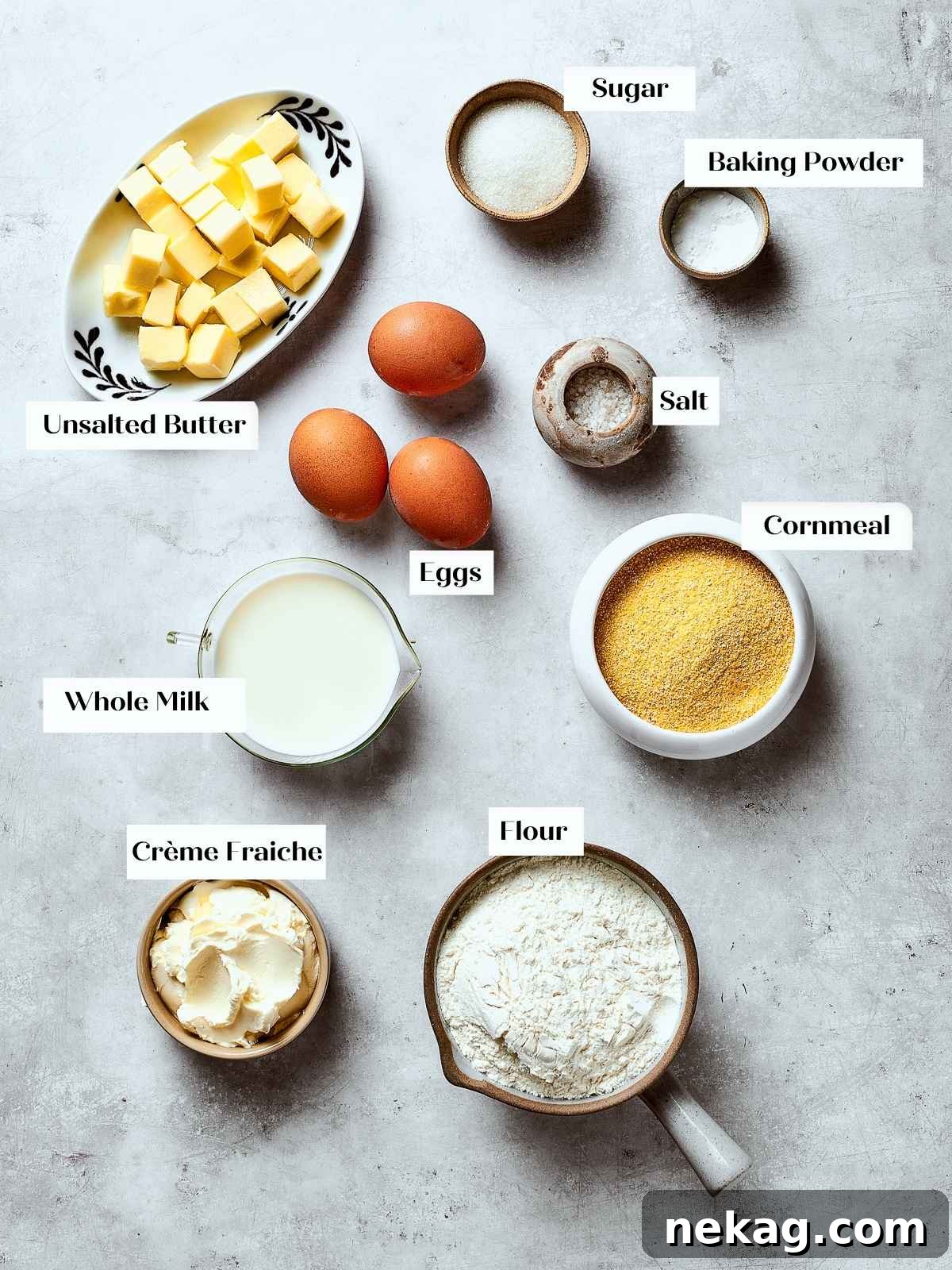
- Cornmeal: For the most authentic Southern cornbread, I recommend using finely ground, mass-produced yellow cornmeal. This type is widely available and affordable, and it’s what we typically used in professional kitchens. While self-rising cornmeal mix might seem convenient, it contains leavening agents and salt that can alter the recipe’s balance. However, if you prefer, artisanal, stone-ground cornmeal (like Bob’s Red Mill) also works beautifully and offers a richer flavor profile. If using stone-ground, you might consider omitting the granulated sugar as it can have a naturally sweeter taste. Both medium and finely ground varieties are suitable, and white cornmeal can be substituted for yellow without issue, primarily affecting color rather than taste.
- Granulated Sugar: A touch of granulated sugar in cornbread is a Southern tradition that enhances flavor and promotes a golden crust. However, for savory dressing, some prefer less sweetness. You can easily omit the sugar entirely if you desire a truly savory profile, or reduce the amount to suit your taste.
- Crème Fraîche or Sour Cream: Crème fraîche is my top choice for making the best cornbread due to its higher fat content and lower moisture compared to sour cream, resulting in an incredibly tender crumb. Its milder tang also contributes to a more balanced flavor. That said, full-fat sour cream or even thick Greek yogurt are excellent and readily available substitutes that will still yield delicious results. Feel confident using what you have on hand.
- Milk: I typically opt for whole milk in this recipe to ensure maximum moisture and richness in the cornbread. However, you can successfully use any cow’s milk (such as 2% or skim) or even non-dairy alternatives like almond milk. Be aware that using lower-fat milk might result in a slightly less moist cornbread, so adjust your expectations accordingly.
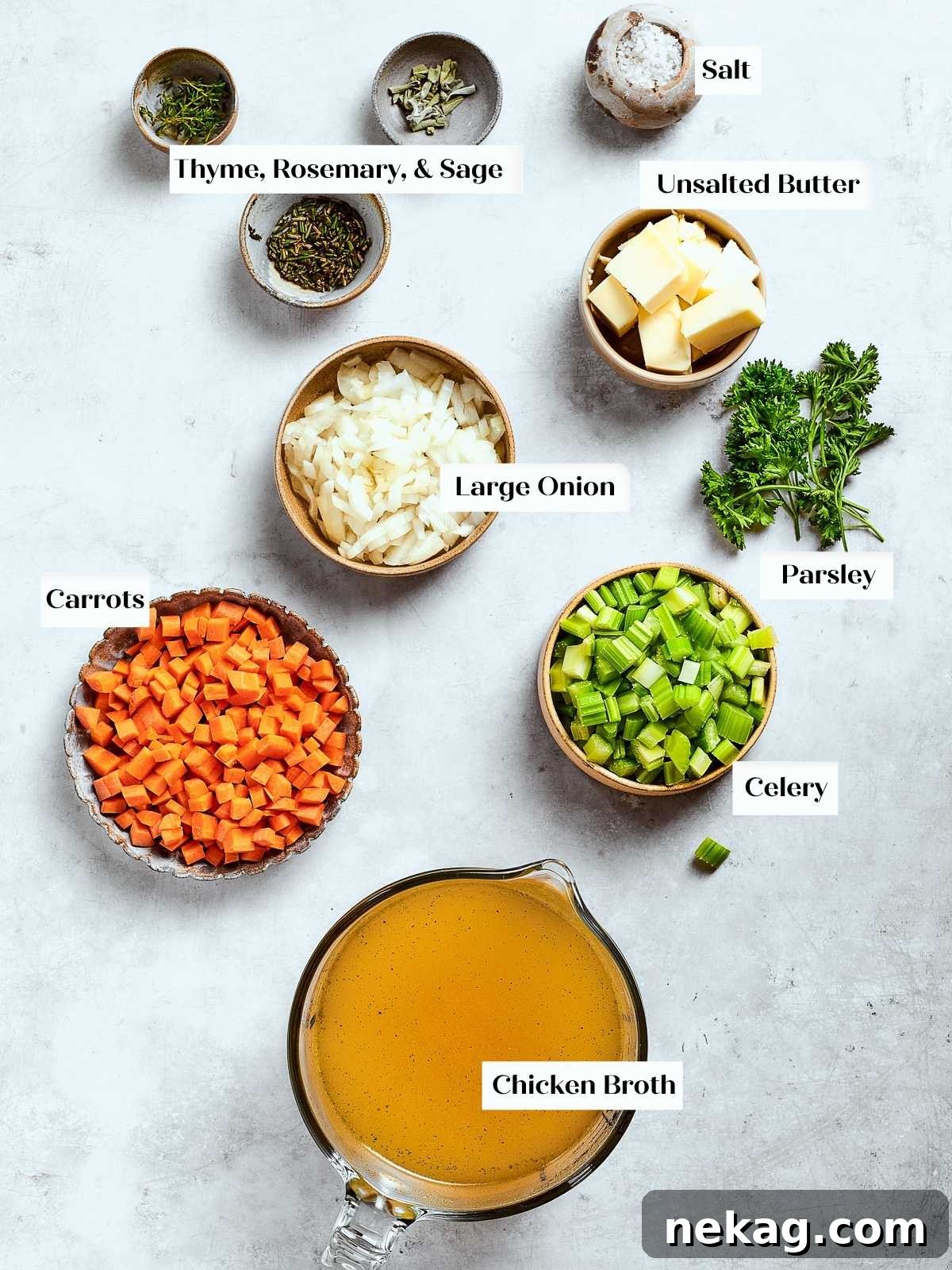
- Crusty Bread (French or Sourdough): Incorporating day-old, crusty bread alongside the cornbread is a game-changer for texture. Leaving the bread out for a day (or even two) allows it to dry out naturally, creating cubes that are perfect for absorbing the rich liquid mixture without dissolving into a soggy mess. This is a phenomenal way to utilize leftover sourdough bread or a robust French baguette, adding another layer of flavor and satisfying chewiness to the dressing.
- Chicken Stock: Chicken stock forms the savory liquid base of our dressing. You can use either chicken stock, chicken broth, or even turkey stock if you have it available, especially after cooking a holiday bird. For superior flavor and control over sodium, I highly recommend using homemade chicken stock. If purchasing from the grocery store, always opt for a low-sodium option to allow you to season the dressing to your exact preference without it becoming overly salty.
- Aromatics (Celery, Carrots, Onion): These classic mirepoix vegetables are essential for building the foundational savory flavor. Finely dicing them ensures they cook evenly and integrate seamlessly into the dressing.
- Herbs (Thyme, Rosemary, Sage, Parsley): The combination of these herbs provides the quintessential Thanksgiving flavor profile. Fresh rosemary and parsley are highly recommended for their vibrant taste, while dried thyme and sage offer deep, earthy notes. Ensure your dried herbs are fresh for the best potency.
- Unsalted Butter: Generous amounts of unsalted butter are used throughout the recipe, from preparing the cornbread to sautéing the aromatics. This not only adds incredible richness but also aids in achieving that desired golden-brown crust and moist interior.
- Eggs: Eggs act as a binder, helping to create the custardy texture of the dressing. They also add richness and contribute to the browning of the crust.
- Kosher Salt & Baking Powder: Essential for seasoning the cornbread and ensuring proper leavening, giving it a light, airy texture.
See the recipe card below for full information on specific quantities and detailed instructions.
Creative Variations for Your Southern Cornbread Dressing Recipe
While the classic Southern Cornbread Dressing is perfect as is, it’s also wonderfully adaptable! Don’t hesitate to experiment with these variations to tailor the dish to your personal taste or dietary needs:
- Achieve Crispier Southern Cornbread: For those who adore a truly crispy cornbread base, preheat your cast iron skillet with a tablespoon (or two!) of butter or bacon grease before adding the batter. The hot fat will create an incredibly crispy, flavorful crust and also help the cornbread achieve a better rise. This method elevates the texture of the dressing’s foundation.
- Optimizing Your Cornbread Choice for Dressing: While my moist Southern cornbread recipe is ideal for all stuffing and dressing recipes, including a flavorful mushroom cornbread stuffing recipe, you can absolutely use store-bought cornbread to save time. The key is to select one that isn’t overly sweet, as it can throw off the savory balance of the dressing. Regardless of whether it’s homemade or store-bought, always ensure your crumbled cornbread is thoroughly dried out before baking! Stale cornbread acts like a sponge, soaking up the broth perfectly and preventing a soggy outcome.
- Experiment with Coarse Cornmeal: If you prefer a more rustic texture in your cornbread, feel free to use coarse cornmeal. When substituting, you may need to add about 2 tablespoons of extra cornmeal to achieve the right consistency, aiming for a batter that resembles thick pancake batter. Remember that every brand of cornmeal can differ slightly in absorbency, so don’t stress too much about exact measurements; rely on visual cues for consistency.
- Add a Savory Protein Boost: For a heartier dressing, consider incorporating cooked and crumbled breakfast sausage, finely diced ham, or even oysters (a traditional Southern addition). Sauté these proteins with your aromatics to infuse the entire dish with their rich flavors.
- Introduce More Vegetables: Beyond the traditional celery, carrots, and onions, sautéed mushrooms, bell peppers, or even finely chopped collard greens can add additional depth and nutrition.
- Incorporate Nuts or Dried Fruit: For an added layer of texture and a hint of sweetness, stir in toasted pecans, walnuts, or dried cranberries/apricots. These additions provide a delightful chew and a complex flavor profile.
- Enhance with Different Spices: While rosemary, sage, and thyme are classic, don’t be afraid to add a pinch of smoked paprika, a dash of cayenne pepper for a subtle kick, or a hint of nutmeg for warmth.
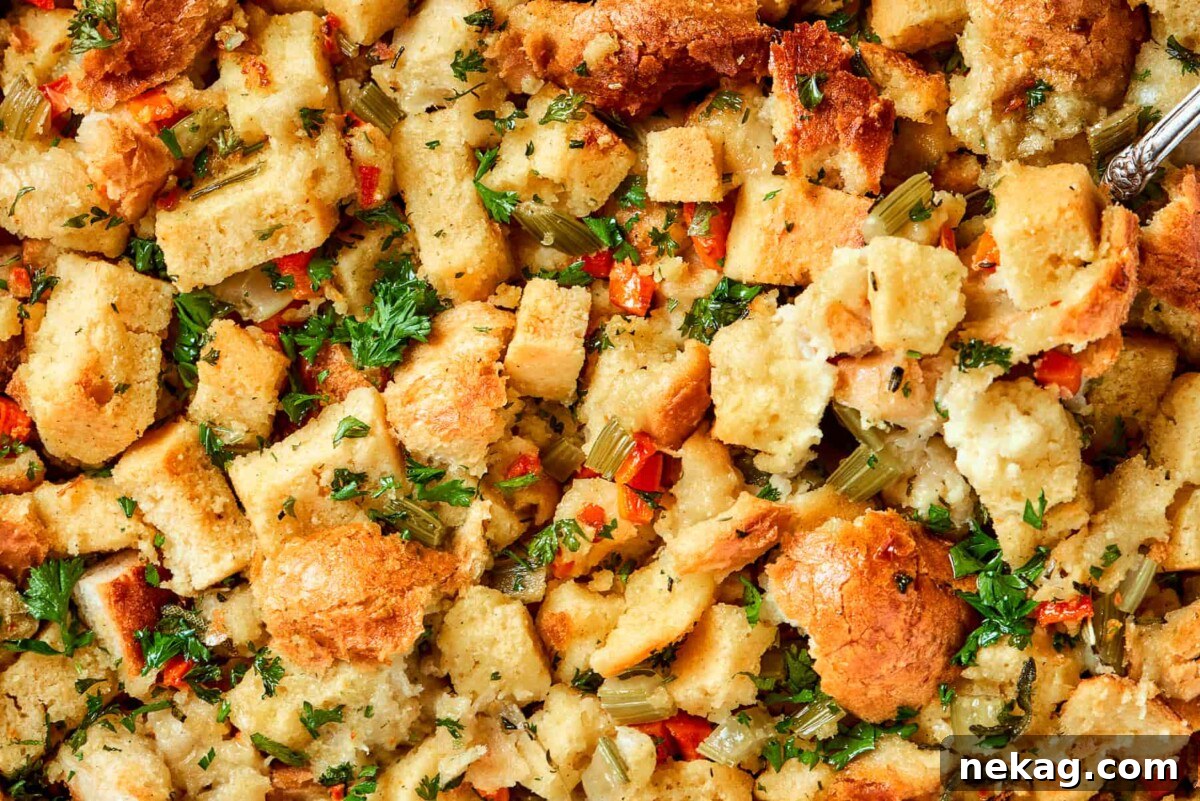
Professional Tips for Crafting the Perfect Southern Cornbread Dressing
Achieving a truly outstanding Southern Cornbread Dressing involves a few key techniques that professional chefs swear by. These tips will help you avoid common pitfalls and ensure your dressing is moist, flavorful, and perfectly textured every time:
- Layer in Your Broth Gradually for Even Moisture: Resist the urge to dump all the broth into your bread mixture at once. Instead, ladle it in gradually, tossing the bread gently between additions. This methodical approach ensures that every piece of cornbread and rustic bread has the opportunity to absorb moisture evenly. It prevents unintentionally soggy patches in some areas and dry spots in others, resulting in a consistently moist and custardy dressing throughout. Keep adding broth until the mixture is thoroughly moistened but not swimming in liquid.
- Utilize Stale or Day-Old Bread for Optimal Absorption: This is arguably one of the most crucial tips for any successful dressing or stuffing. Drier bread is paramount because its cellular structure is more open, allowing it to absorb significantly more of the flavorful egg and broth mixture. This absorption is what gives the finished casserole that wonderfully delicious, custard-like texture, rather than a dense, heavy one. If you only have fresh bread on hand, don’t despair! You can easily dry out bread cubes by spreading them on a baking sheet and toasting them in a 400°F (200°C) oven for 10-15 minutes, or until they are lightly golden and firm. Let them cool completely before proceeding.
- Monitor Baking Carefully to Prevent Overbaking: While we’re making a hearty casserole, overbaking is the enemy of a moist and tender dressing. The baking time will vary widely depending on the type and size of the dish you choose. For instance, dressing baked in a shallow sheet pan or a preheated cast iron skillet will cook faster than in a deep glass baking dish. Begin checking for doneness after about 20-25 minutes. The dressing is ready when the top is golden brown and a knife inserted into the center comes out clean or with moist crumbs attached, but not wet. An internal temperature of 165°F (74°C) is ideal. Overbaking can lead to a dry, crumbly texture, so keep a close eye on it!
Step-by-Step Guide: How to Make Southern Cornbread Dressing
Creating this classic Southern Cornbread Dressing is a two-part process, starting with the homemade cornbread. Patience with the drying step ensures the best texture!
Further details and precise measurements for each ingredient can be found in the recipe card below.
Part 1: Prepare the Cornbread (Ideally the Day Before)
Step 1: Preheat and prepare your baking vessel. Begin this step the day before you plan to assemble and bake the dressing. Preheat your oven to 350°F (175°C). Prepare an 8-inch baking dish or cast iron skillet by buttering it generously. If you’re aiming for that extra-crispy cornbread, melt an additional 2 tablespoons of butter (or bacon grease) in a cast iron skillet over medium heat on the stovetop, then transfer this hot, buttered skillet directly to the preheated oven for a few minutes while you prepare the batter. This ensures a hot, buttery surface for the batter, promoting a superior crust.
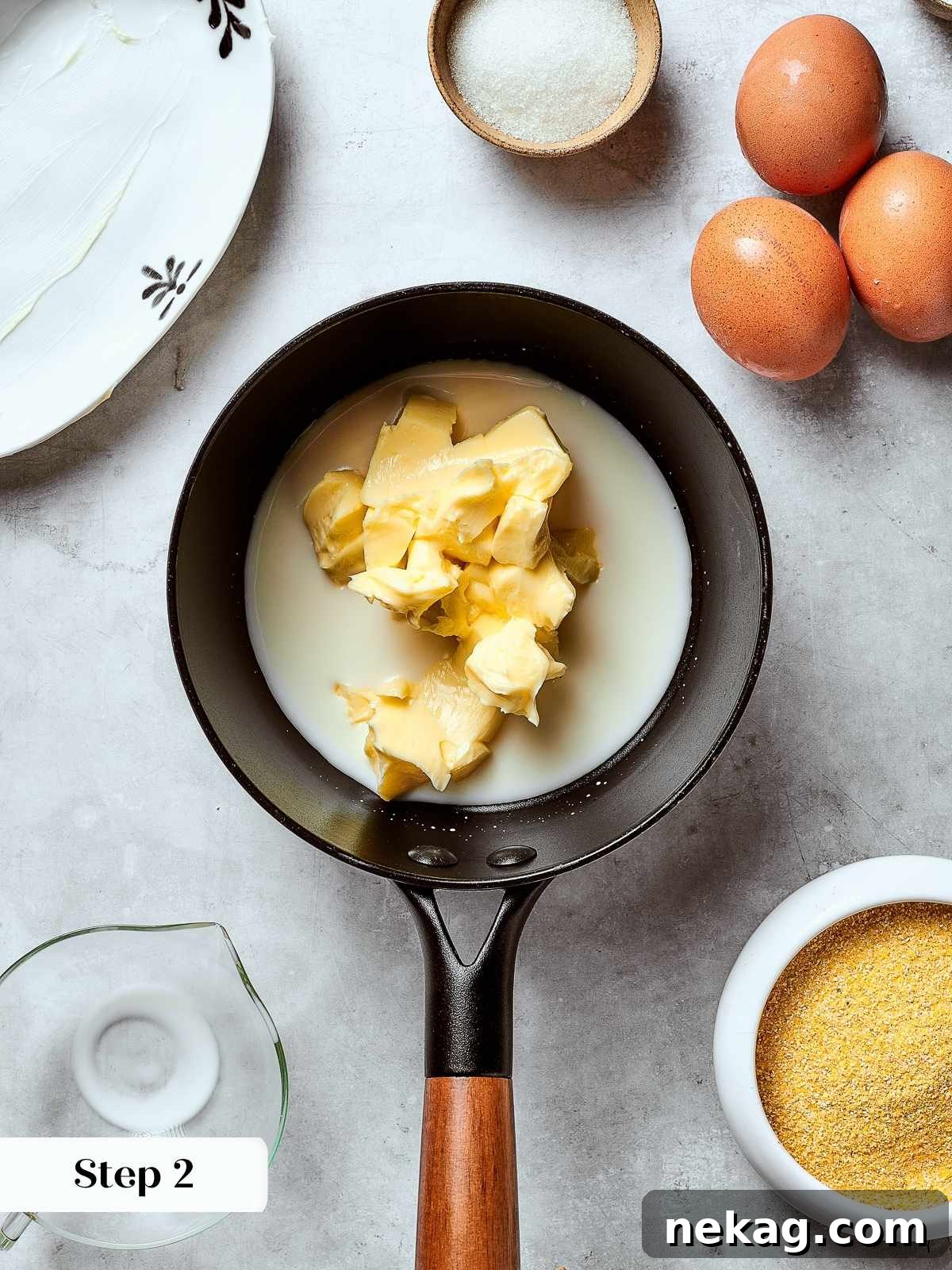
Step 2: Prepare the liquid base for the batter. In a small saucepan, gently melt the milk with the cubed butter over low heat on the stovetop, or carefully in the microwave. The goal is just melted and warm, not hot. Be sure the mixture is only warm to the touch and not simmering or boiling; if it’s too hot, it will scramble your eggs in the next step. Allow it to cool slightly if necessary. This step ensures the butter is fully incorporated and the mixture has the right temperature for combining with the eggs (refer to photo 1 for visual guidance).
Chef’s Note: It is crucial that the milk and butter mixture cools until it’s just warm to the touch. If it’s too hot, when combined with the eggs, it can cause them to cook prematurely, resulting in a lumpy or undesirable batter texture.
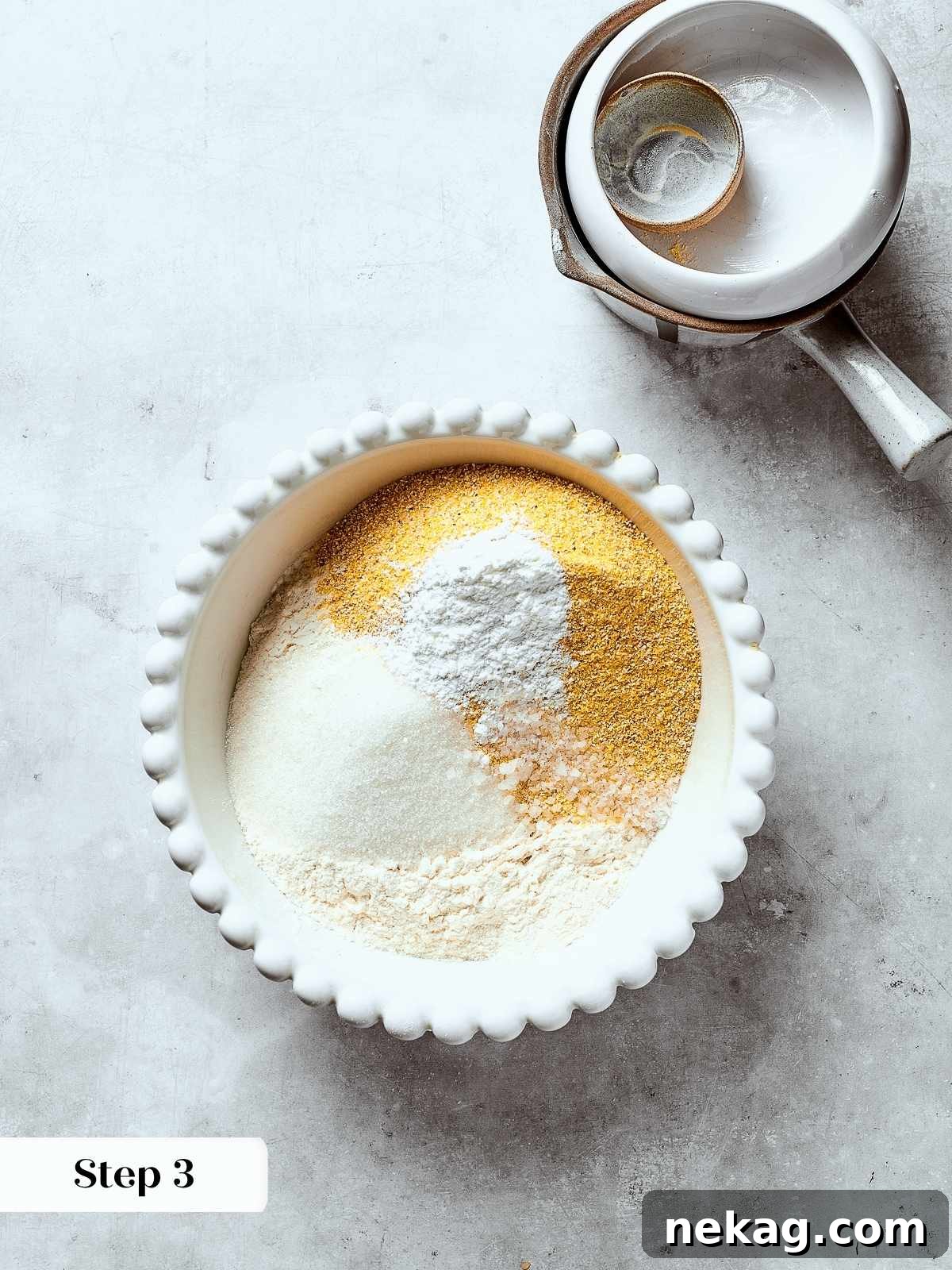
Step 3: Combine dry ingredients. In a separate medium-sized bowl, thoroughly whisk together all the dry ingredients: all-purpose flour, granulated sugar, cornmeal, baking powder, and kosher salt. Whisk vigorously for about 30 seconds to ensure everything is evenly distributed. Set this bowl aside (see photo 2 for reference).
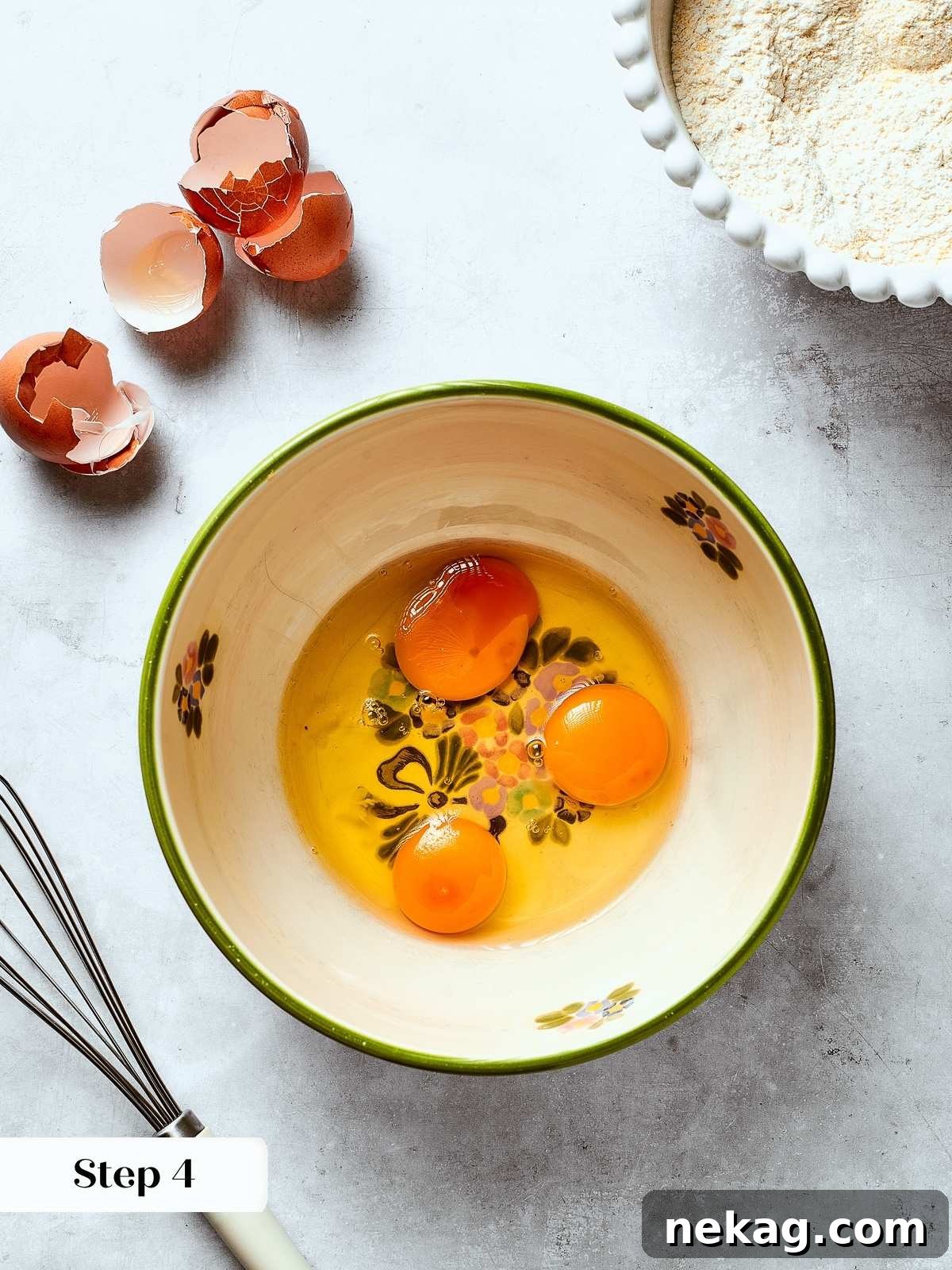
Step 4: Prepare the egg mixture. In a large mixing bowl, whisk the large eggs until they are completely smooth and no streaks of egg white or yolk remain (as shown in photo 3). Then, incorporate the crème fraîche or sour cream, whisking until the mixture is uniform and creamy.
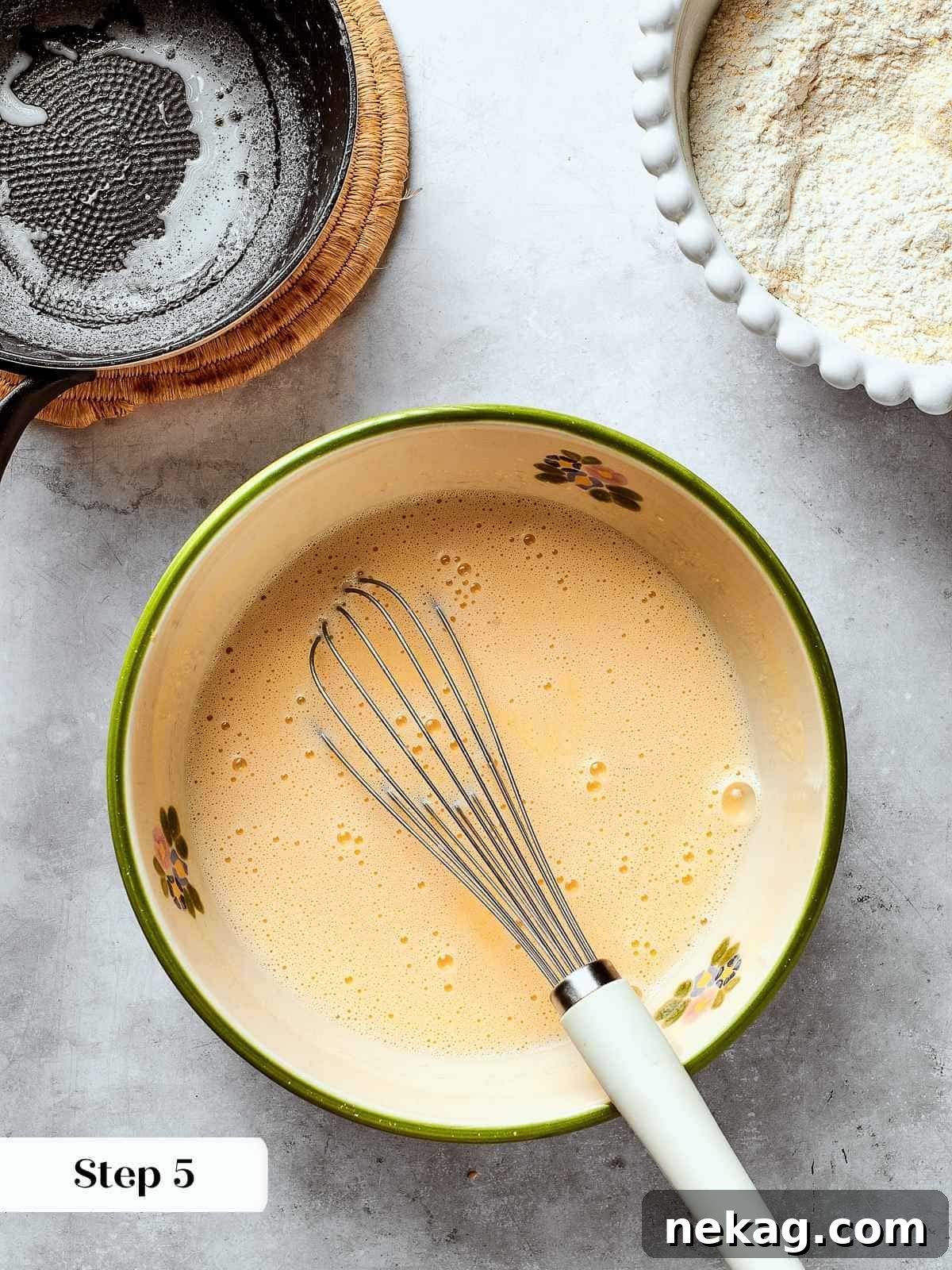
Step 5: Gradually combine wet ingredients. Slowly and steadily pour the warm milk and butter mixture into the egg and crème fraîche mixture (refer to photo 4). It is vital to do this slowly while continuously whisking to temper the eggs. This prevents the warmer milk from cooking the eggs, ensuring a smooth, consistent liquid base for your cornbread batter.
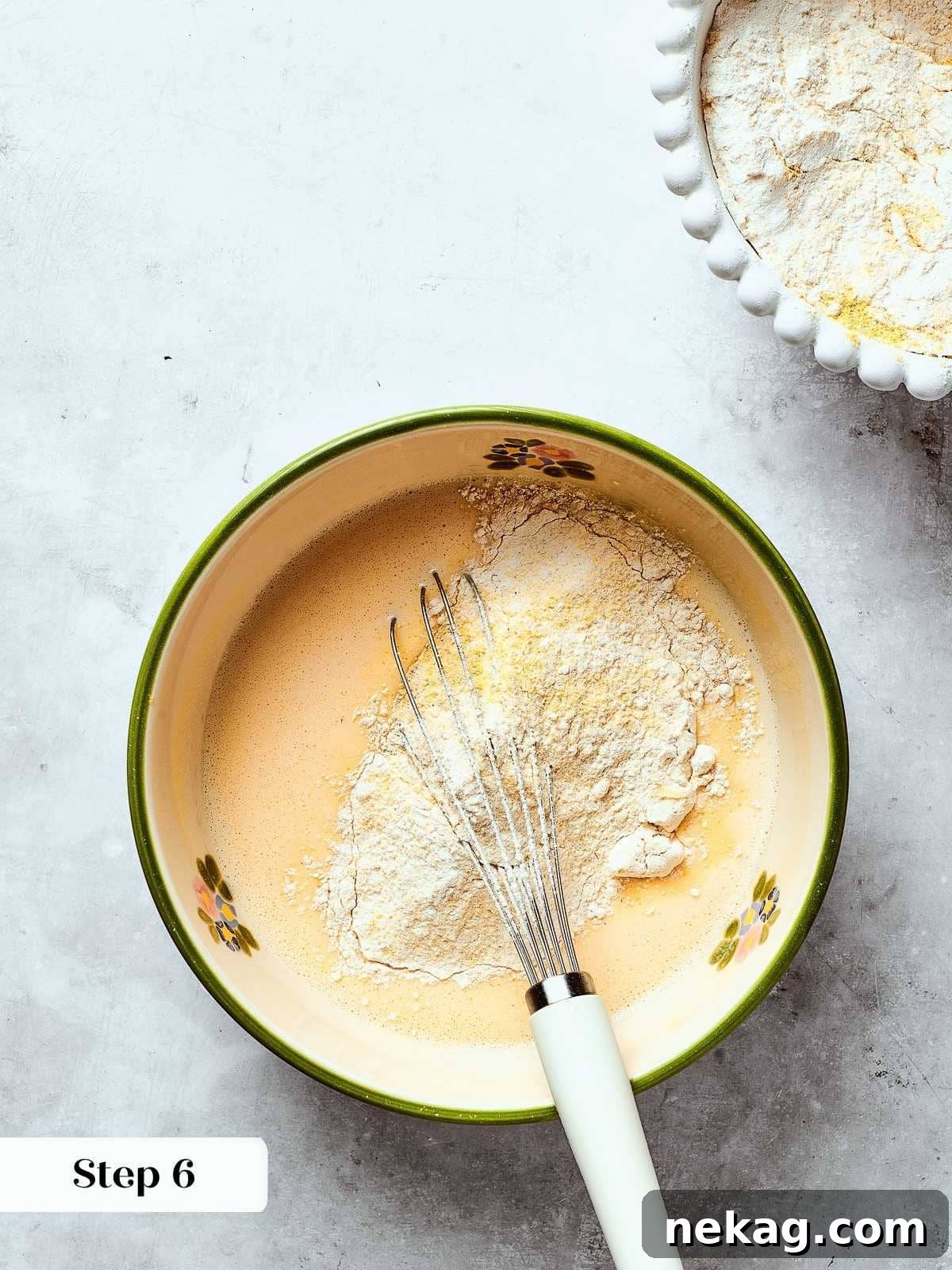
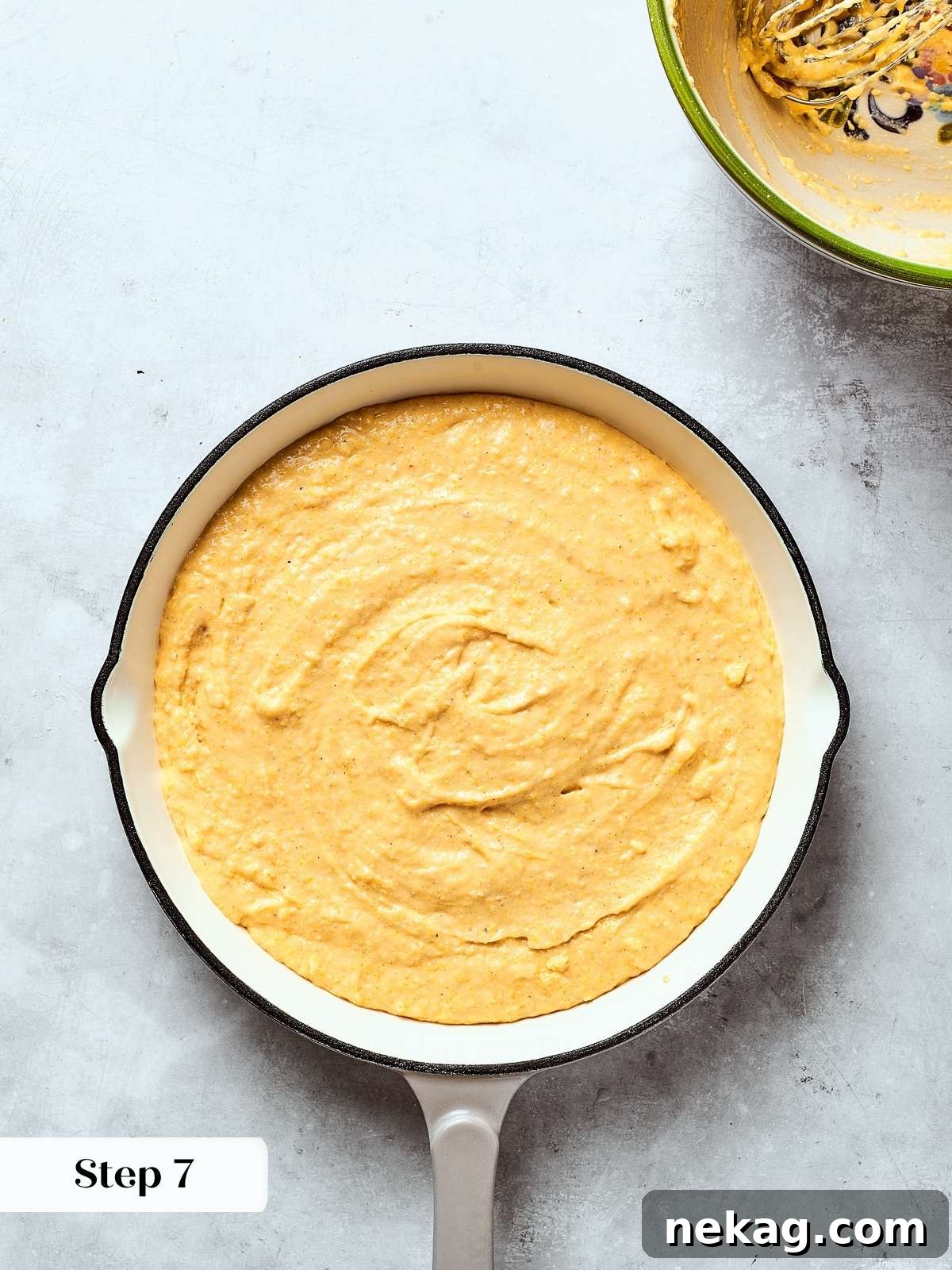
Step 6: Incorporate dry into wet for the batter. Begin to gradually whisk the reserved dry ingredients into the wet mixture. It is important to add the dry ingredients slowly at first, whisking constantly, to prevent lumps from forming in the batter (see photo 5). Continue adding in batches, mixing only until the last addition is almost incorporated before adding the next. This prevents overmixing, which can lead to a tough cornbread. The final batter should be smooth but not overworked.
Step 7: Pour and spread the batter. Carefully pour the prepared cornbread batter into your buttered baking pan or hot cast iron skillet. Use a spatula to gently spread the batter out evenly across the bottom of the pan, ensuring a consistent thickness. This will help the cornbread bake uniformly (illustrated in photo 6).
Step 8: Bake the cornbread. Transfer the pan to your preheated 350°F (175°C) oven and bake for approximately 15-20 minutes. Baking time can vary based on your pan type and oven calibration. Check for doneness when the top appears light golden brown and offers a slight resistance when pressed lightly in the center. A cake tester or toothpick inserted into the center should come out with a few moist crumbs attached, but not completely wet. If baking in a preheated cast iron skillet, the bake time may be shorter, so start checking after 10 minutes. While we’re making this for dressing, overbaking will result in dry cornbread, so pay close attention!
Baking Tip: The ideal cornbread for dressing should have a light golden-brown top and, when tested, produce a few moist crumbs, indicating it’s perfectly cooked without being dry. This slightly under-dry state is perfect for absorbing the dressing liquid.
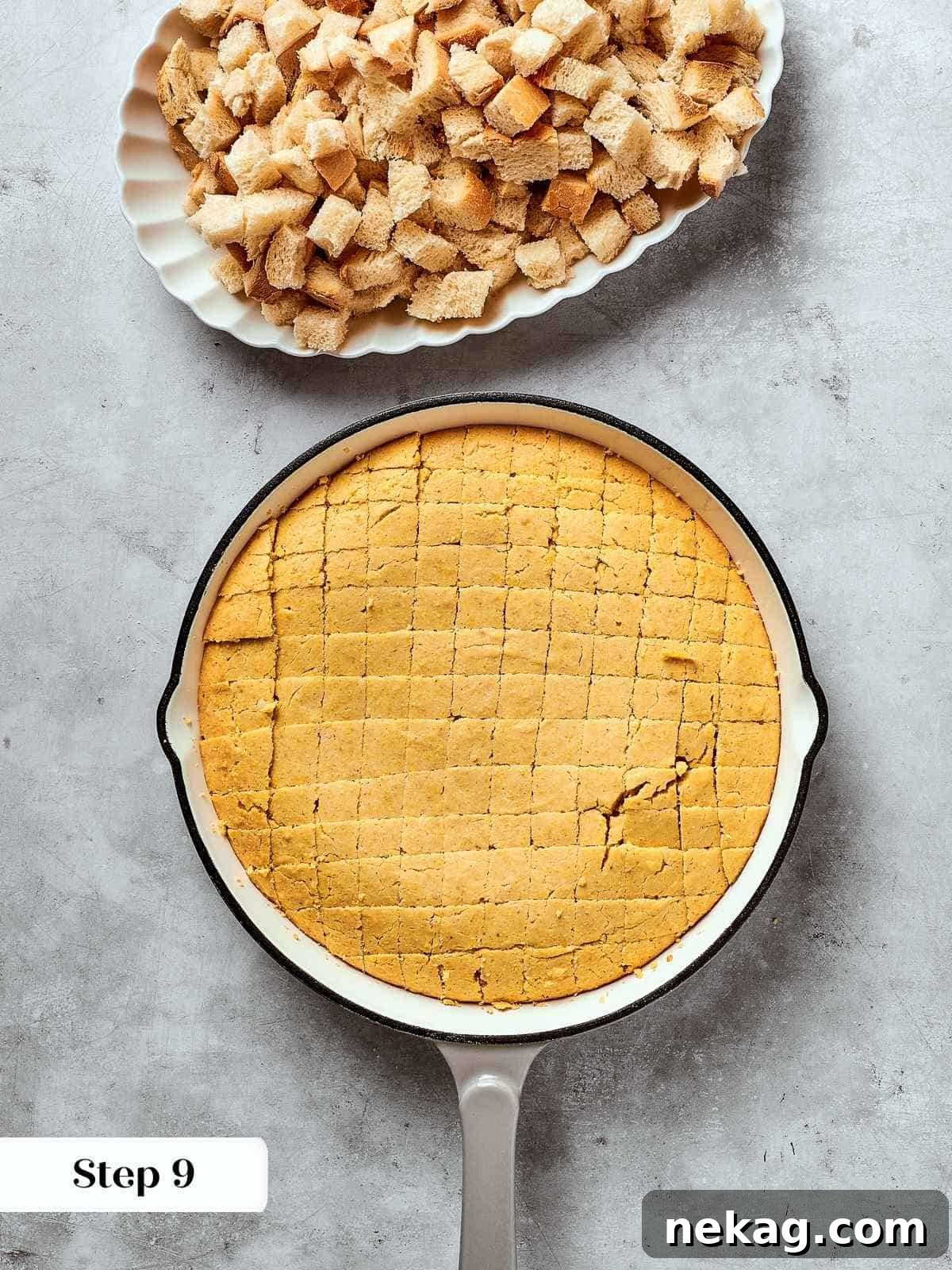
Step 9: Cool and cube the cornbread. Once baked, remove the cornbread from the oven and let it cool completely in the skillet or baking dish. This allows it to firm up before cutting. Once cool, cut the cornbread into 1-inch cubes (or smaller, if you prefer a finer texture in your dressing) (as seen in photo 7).
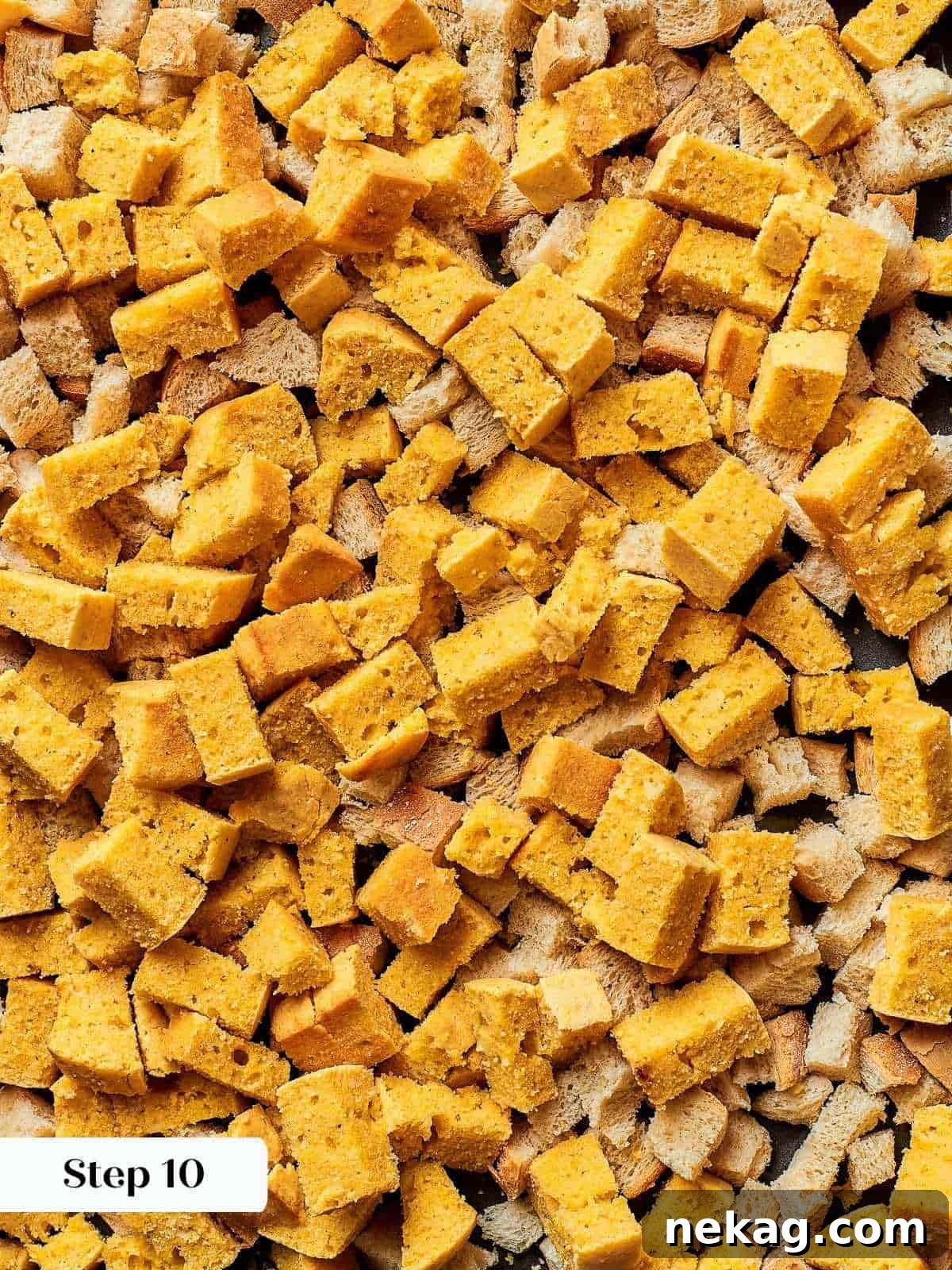
Step 10: Dry the bread cubes. This is a crucial step for the best dressing texture. Spread the cubed cornbread along with your cubed French bread (or sourdough bread) onto two large baking sheets in a single layer. Leave them uncovered at room temperature to dry overnight, or for approximately 24 hours. The goal is for the bread cubes to become notably crisp and somewhat stale. This dryness is key to preventing a soggy dressing, as it allows the bread to absorb the liquid without falling apart (refer to photo 8).
Step 11: Prepare for mixing. Once the bread cubes are perfectly dried, transfer them into a very large mixing bowl. Give them a gentle toss to combine the cornbread and rustic bread cubes evenly.
Part 2: Prepare and Bake the Southern Cornbread Dressing
Step 12: Preheat oven and melt butter for aromatics. Preheat your oven to 350°F (175°C). In a large, heavy-bottomed skillet or a Dutch oven, melt the full stick of unsalted butter over medium heat. This butter will be the base for sautéing your vegetables and infusing them with rich flavor.
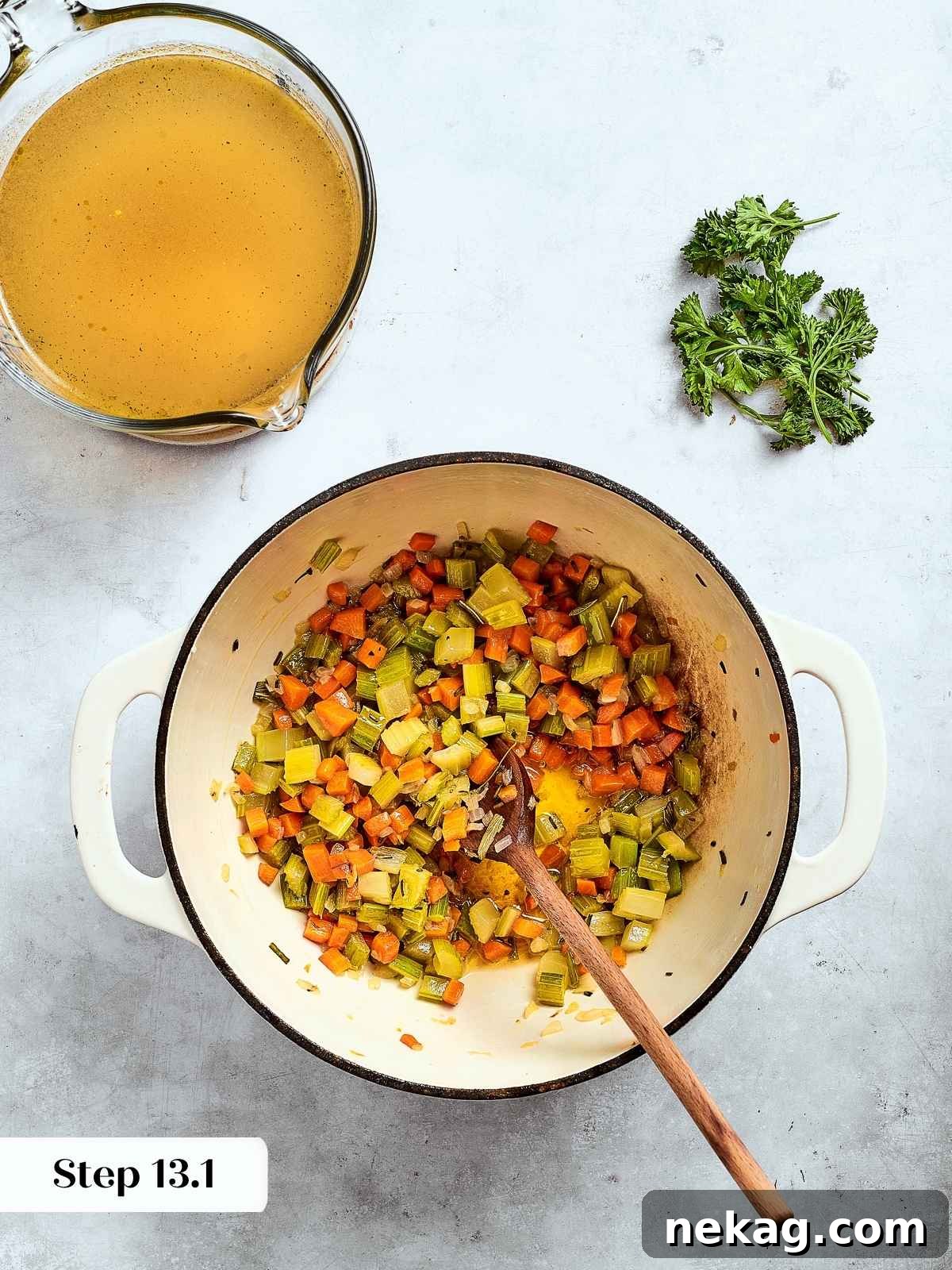
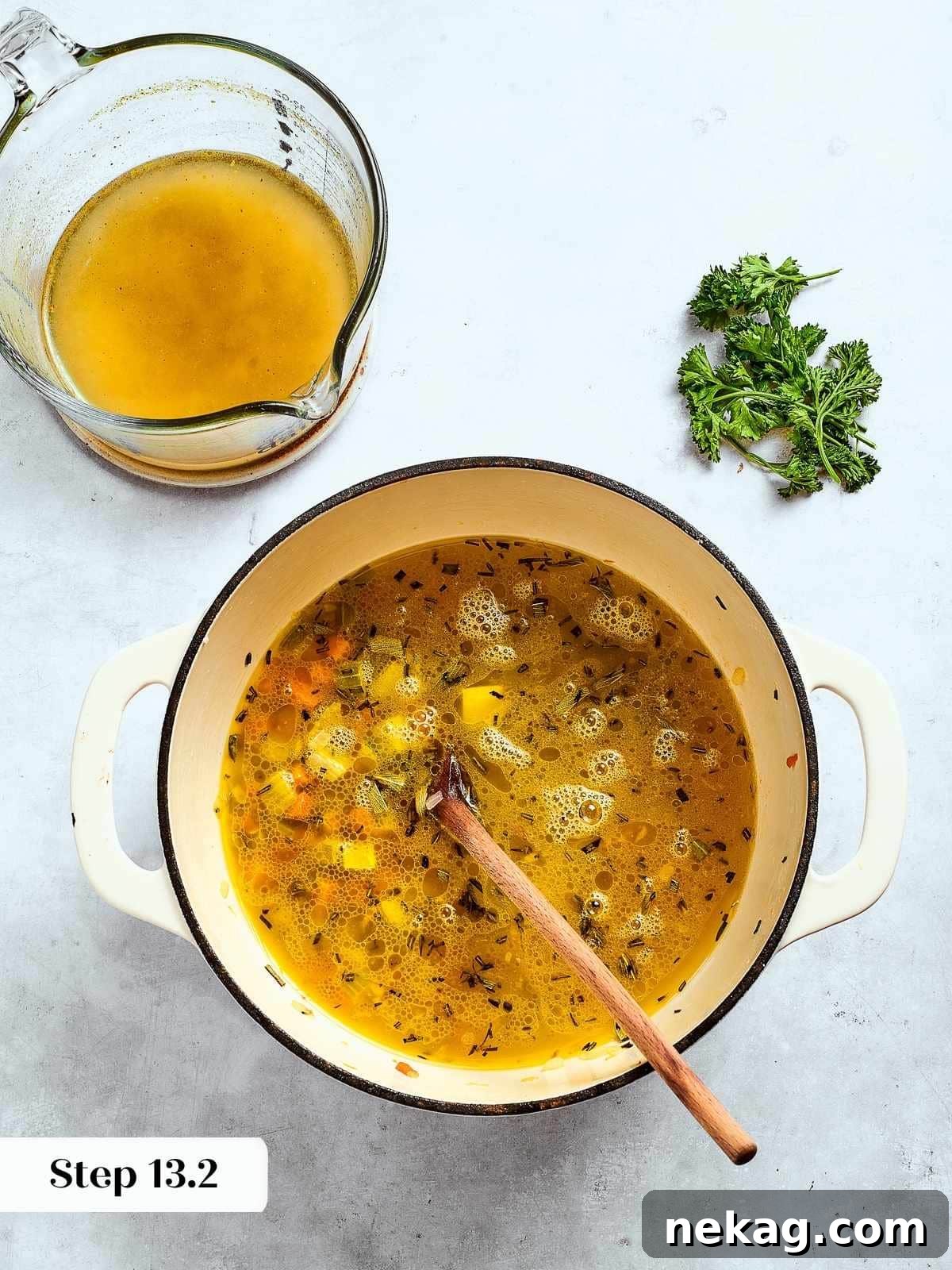
Step 13: Sauté the vegetables and infuse with herbs. Add the finely diced celery, carrots, and onion to the melted butter in the skillet. Cook, stirring occasionally, until the onion becomes almost translucent and the vegetables have softened, about 8-10 minutes. Then, stir in the thyme, chopped fresh rosemary (or dried), and dried sage. Cook for another 1-2 minutes until the herbs are fragrant. This process gently releases their aromatic oils (as seen in photo 9). Pour in the chicken broth and bring the mixture to a boil (see photo 10). Once boiling, reduce the heat to low and let it simmer for 2 minutes to allow the flavors to meld beautifully. Taste the broth and add a little kosher salt as desired, remembering that the broth will be absorbed by the bread.
Flavor Fusion: Reducing the heat and simmering the broth mixture with the sautéed vegetables and herbs for a few minutes is essential. This allows all the individual flavors to fully integrate and deepen, creating a more cohesive and robust taste for the dressing.
Step 14: Moisten the bread mixture. Carefully begin to ladle the hot broth and vegetable mixture into the large bowl containing your dried cornbread and rustic bread cubes. Add the liquid gradually, tossing the bread gently with a large spoon or your hands (ensuring it’s cool enough) to ensure even distribution. Continue adding broth until the bread is thoroughly moistened and has a pleasingly soft, but not mushy, consistency. You might not need all the broth, or you might need a little more, depending on the dryness and absorbency of your bread. Finally, stir in the fresh chopped parsley for a bright, herbaceous finish.
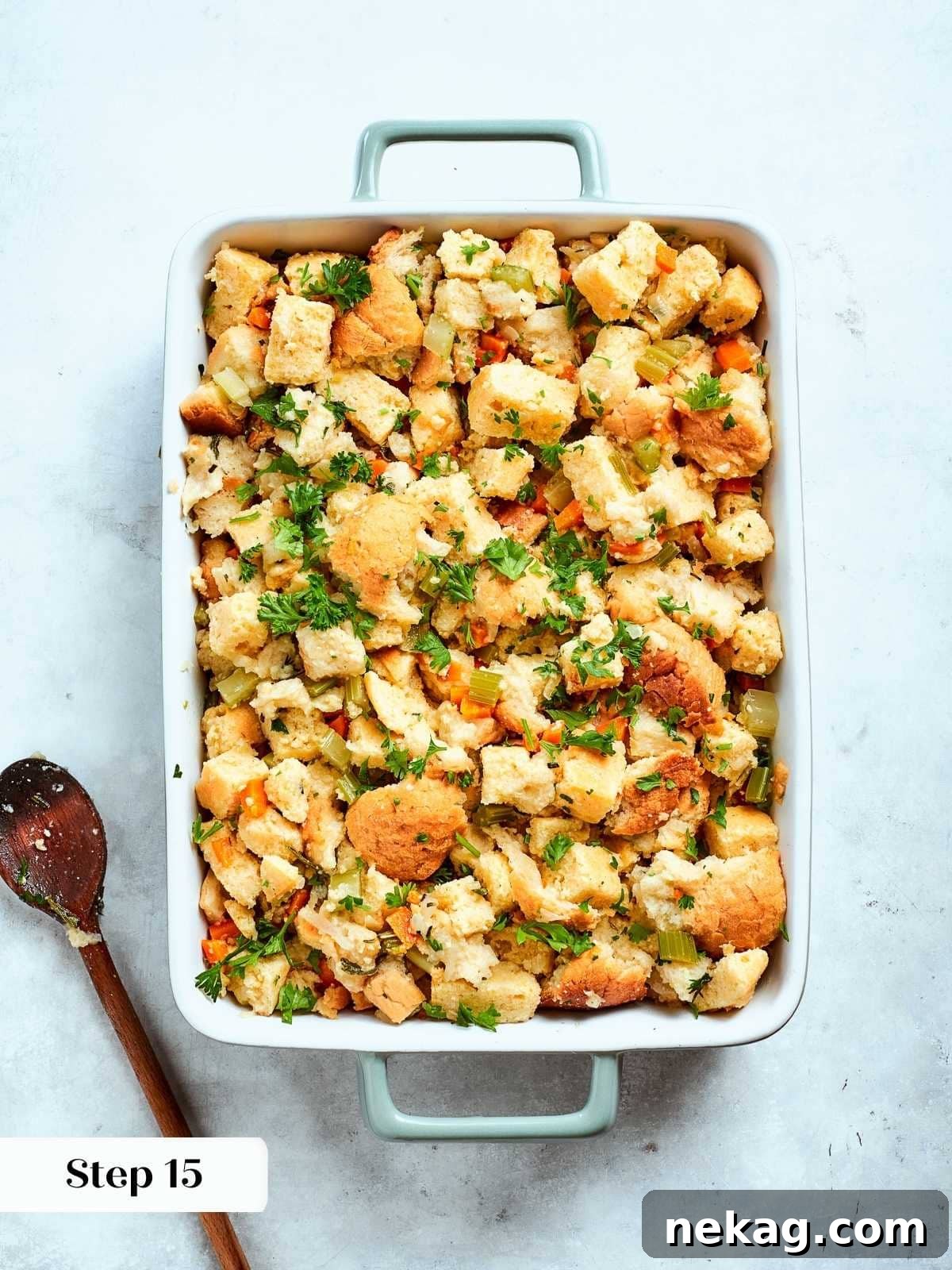
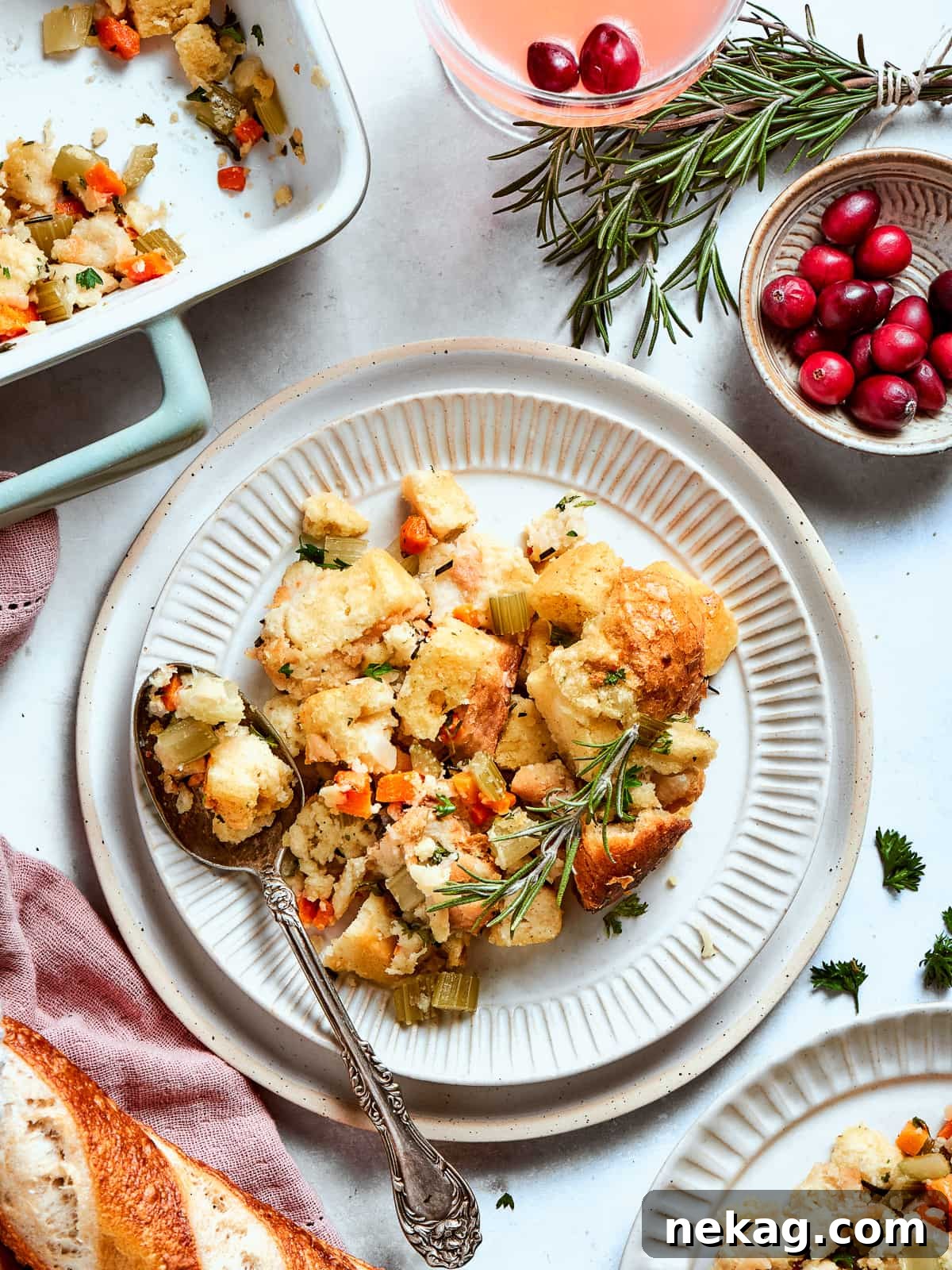
Step 15: Bake to golden perfection and serve. Transfer the moistened dressing mixture evenly into a 9×13 inch baking dish or a large cast iron skillet. Place it in the preheated oven and bake for 20 to 25 minutes, or until the top is beautifully golden brown and the edges are slightly crispy (as depicted in photo 11). Once baked, remove the dressing from the oven and let it rest for at least 10 minutes before serving. This resting period allows the dressing to set and makes for easier, cleaner serving (see photo 12 for the final dish).
Crispy Top Secret: For those who love an extra-crispy top, remove any foil or cover during the last 5 minutes of baking. This exposure to direct heat will create a delightfully browned and crunchy surface.
Chef Lindsey’s Expert Recipe Tip
Always Taste for Seasoning as You Go! This is the number one lesson I learned in a professional kitchen: tasting is paramount at every stage. Don’t wait until the very end to season. Taste the broth mixture before adding it to the bread, and then taste the dressing mixture before it goes into the oven. Pay close attention to the salt level and also to the moisture content. Depending on the variety, age, and dryness of the bread you use, you might need to adjust the amount of stock, adding a little more if the mixture feels too dry, or holding back slightly if it’s already quite moist. Trust your palate!
Common Questions About Southern Cornbread Dressing (FAQs)
Absolutely, making Southern Cornbread Dressing in advance is not only possible but highly recommended for optimal flavor and texture! You can bake the cornbread and cube all your bread a full day or two before you plan to assemble the dressing. The overnight drying of the bread is crucial for texture. For maximum convenience, you can mix the entire dressing (cornbread, rustic bread, sautéed aromatics, and broth) up to a whole day in advance. Simply cover it tightly with foil and refrigerate. When you’re ready to serve, just pop it into the oven for its final bake. This advanced preparation can significantly reduce stress on a busy holiday!
Yes, Southern Cornbread Dressing freezes beautifully, making it an excellent option for meal prepping or enjoying leftovers much later. To freeze, allow the baked dressing to cool completely to room temperature. Then, you can either wrap individual portions tightly in plastic wrap and foil, or place the entire cooled dressing (if using a freezer-safe dish) in a zip-top plastic bag or an airtight freezer-safe container. It will keep well in the freezer for up to 1 month. When you’re ready to enjoy it, thaw the frozen dressing overnight in the refrigerator. Reheat leftovers gently in the microwave or, for a crispier result, in a casserole dish in a moderate oven (around 300-325°F or 150-160°C) until thoroughly heated through.
Proper storage is key to enjoying your delicious Southern Cornbread Dressing for days after your meal. Once the leftover dressing has cooled completely to room temperature, transfer it to an airtight container or simply cover the baking dish tightly with foil or plastic wrap. Refrigerate promptly, and it will keep safely for up to 3-4 days. If you find the stuffing has become a bit dry upon reheating, you can easily revive it by stirring in a small amount of extra chicken broth or stock before warming it up. This will restore its moisture and ensure it’s just as delightful as the first serving.
The perfect dressing texture is a balance. If your dressing turns out too dry, it likely needed more broth during the mixing stage. Next time, ensure the bread cubes are thoroughly moistened. For a quick fix, you can gently stir in a bit more warm chicken broth before reheating. If it’s too soggy, it might have been over-saturated with broth, or the bread wasn’t dry enough initially. To remedy, you can try baking it uncovered for a longer period at a slightly higher temperature (around 375°F or 190°C) to allow some moisture to evaporate and the edges to crisp up.
Absolutely! Adding meat is a popular variation for Southern Cornbread Dressing. Cooked and crumbled breakfast sausage, finely diced ham, or even traditional oysters can be excellent additions. If using sausage or ham, sauté it in the skillet with the celery, carrots, and onions to infuse the dressing with its savory flavors. For oysters, you can gently fold them into the mixture just before baking to prevent them from becoming overcooked and rubbery.
Recommended Thanksgiving Side Dish Recipes to Complete Your Feast
Easy Side Dish Recipes
Mushroom Cornbread Stuffing Recipe
Easy Side Dish Recipes
The Ultimate Southern Cornbread Recipe
Recipe Roundups
35 Best Thanksgiving Side Dishes
Recipe Roundups
Traditional Thanksgiving Dinner Menu with Recipes
If you tried this delightful Southern Cornbread Dressing recipe and loved it, please take a moment to leave a 🌟 star rating and share your experience in the comments below. Your feedback truly brightens my day and helps other home cooks discover this amazing dish!

Southern Cornbread Dressing
Comment
Print Recipe
Ingredients
For the Cornbread:
- 10 tablespoons unsalted butter cubed
- 2 cups all-purpose flour
- 1 tablespoon granulated sugar
- ¾ cup cornmeal
- 2 teaspoons baking powder
- 2 teaspoons kosher salt
- 3 large eggs
- ⅔ cup crème fraiche or sour cream
- ⅔ cup whole milk
- 2 tablespoons unsalted butter for the pan
For the Dressing:
- 1 loaf crusty bread such as French bread or sourdough bread, cut into 1-inch cubes and dried overnight
- 1 stick unsalted butter
- 4 stalks celery finely diced, leaves included
- 2 carrots finely diced
- 1 large onion finely diced
- 4 cups chicken broth or more as needed, bonus points for homemade!
- 2 teaspoon thyme
- 1 tablespoon fresh rosemary chopped, or 1 teaspoon dried
- 2 teaspoons dried sage
- kosher salt for seasoning
- ¼ cup fresh parsley chopped
Instructions
Prepare the Cornbread:
-
The day before making the dressing, prepare the cornbread. Melt 2 tablespoons butter in a cast iron skillet over medium heat. Preheat the oven to 350°F (175°C) and butter an 8-inch baking dish or cast iron skillet. If making crispy cornbread, place that pan in the oven to heat up.
-
In a small saucepan or microwave-safe bowl, gently melt the milk with the remaining cubed butter until just warm. Ensure it is not too hot to avoid scrambling the eggs.
-
In a medium bowl, whisk together the dry ingredients: all-purpose flour, sugar, cornmeal, baking powder, and salt. Set aside.
-
In a large bowl, whisk the eggs until smooth. Then, whisk in the crème fraîche or sour cream until well combined.
-
Slowly pour the warm milk mixture into the egg mixture, whisking constantly to prevent the eggs from cooking.
-
Gradually whisk the dry ingredients into the wet ingredients. Add them slowly to prevent clumping and mix only until just combined to avoid overmixing.
-
Pour the batter into the prepared buttered pan and spread it out evenly.
-
Bake at 350°F (175°C) for 15-20 minutes, or until the top is lightly golden and a cake tester comes out with moist crumbs. Check earlier if using a preheated skillet.
-
Let the cornbread cool completely in the skillet, then cut it into 1-inch cubes (or smaller, to your preference).
-
Spread the cornbread cubes and 1-inch French bread cubes onto two baking sheets. Allow them to dry uncovered overnight (approximately 8-24 hours) at room temperature until they are crisp.
-
Once dry, transfer all the bread cubes into a very large bowl and toss gently to mix.
Prepare the Dressing:
-
Preheat the oven to 350°F (175°C). Melt the stick of butter in a large skillet or Dutch oven over medium heat.
-
Add the finely diced celery, carrots, and onion to the skillet. Sauté until the onion is almost translucent, about 8-10 minutes. Stir in the thyme, rosemary, and dried sage. Cook for another minute until fragrant. Pour in the chicken broth and bring to a boil. Reduce heat to low and simmer for 2 minutes to meld flavors. Taste and add salt as desired.
-
Gradually ladle the hot broth and vegetable mixture into the large bowl with the dried bread cubes, tossing gently to moisten. Continue adding broth until the mixture is uniformly moist but not soggy. Stir in the chopped fresh parsley.
-
Transfer the dressing mixture to a 9×13 inch baking dish or a cast iron skillet. Bake for 20 to 25 minutes, or until golden brown and heated through. For a crisper top, uncover during the last 5 minutes. Let rest for 10 minutes before serving.
Notes
Variations – Feel free to use store-bought cornbread to save time, ensuring it is not overly sweet. Consider adding cooked sausage or other vegetables for variety.
Storage – Allow leftover Southern Cornbread Dressing to cool completely before covering and refrigerating for up to 3-4 days.
Nutrition
Before You Go: Explore More Holiday Favorites
I sincerely hope you enjoyed preparing and sharing this professional chef-tested recipe for Southern Cornbread Dressing. It’s a dish that embodies the warmth and tradition of holiday gatherings, and I’m confident it will become a cherished part of your family’s festive menu for years to come.
As you continue your culinary journey, I invite you to explore more of our delicious, chef-developed Thanksgiving recipes. Discover other delectable side dishes, succulent main courses, and delightful desserts designed to make your holiday meals truly extraordinary. For another fantastic stuffing option, be sure to try my hearty apple sausage stuffing, which offers a different yet equally comforting flavor profile. Happy cooking and happy holidays!