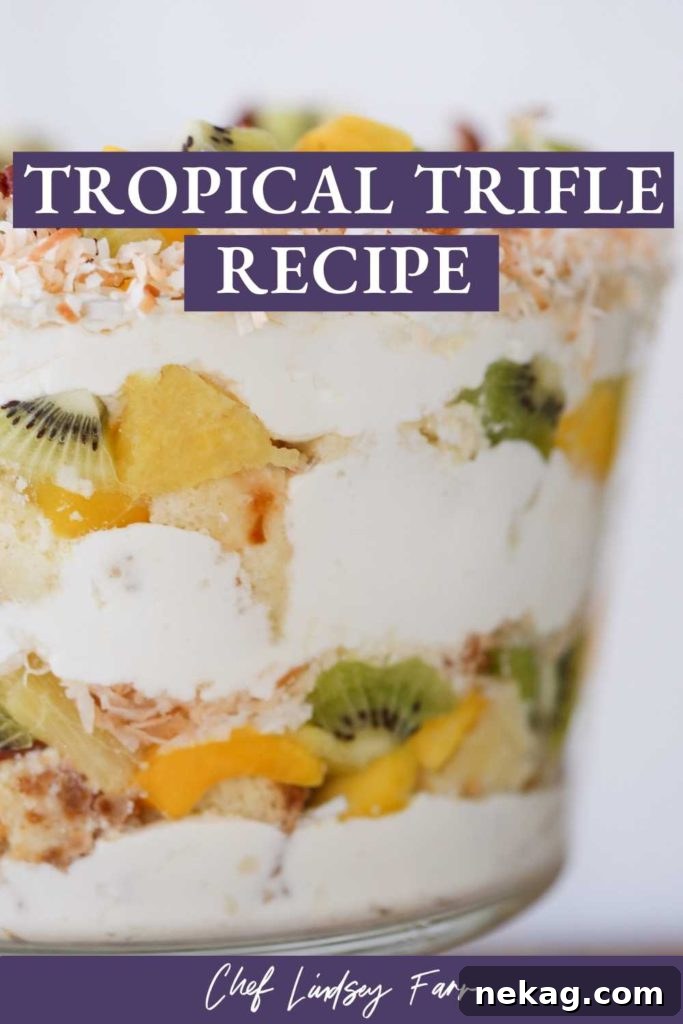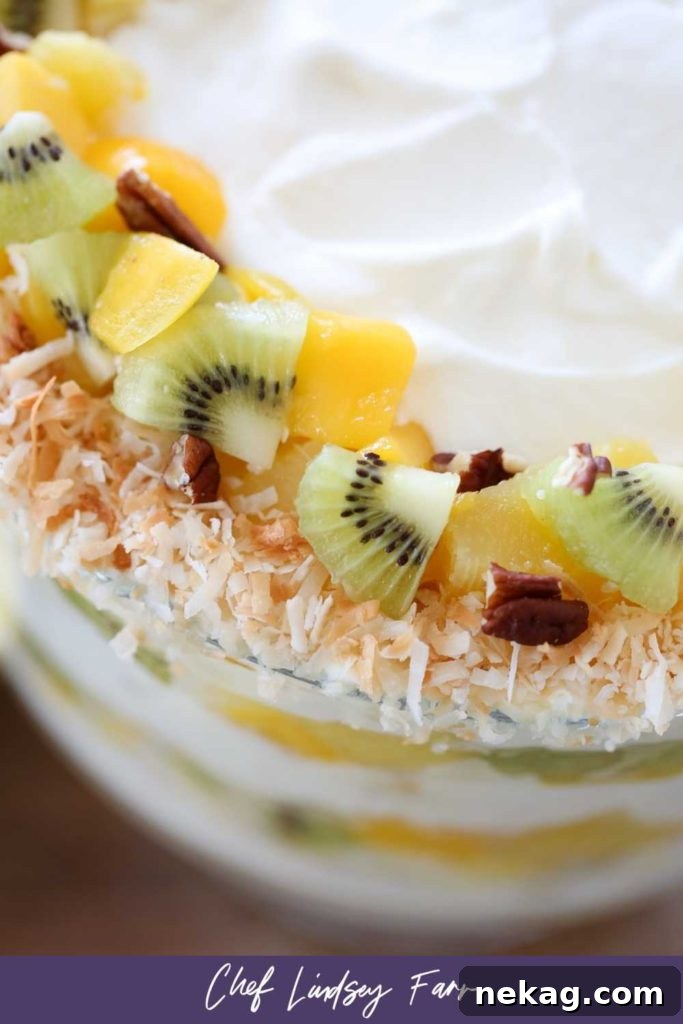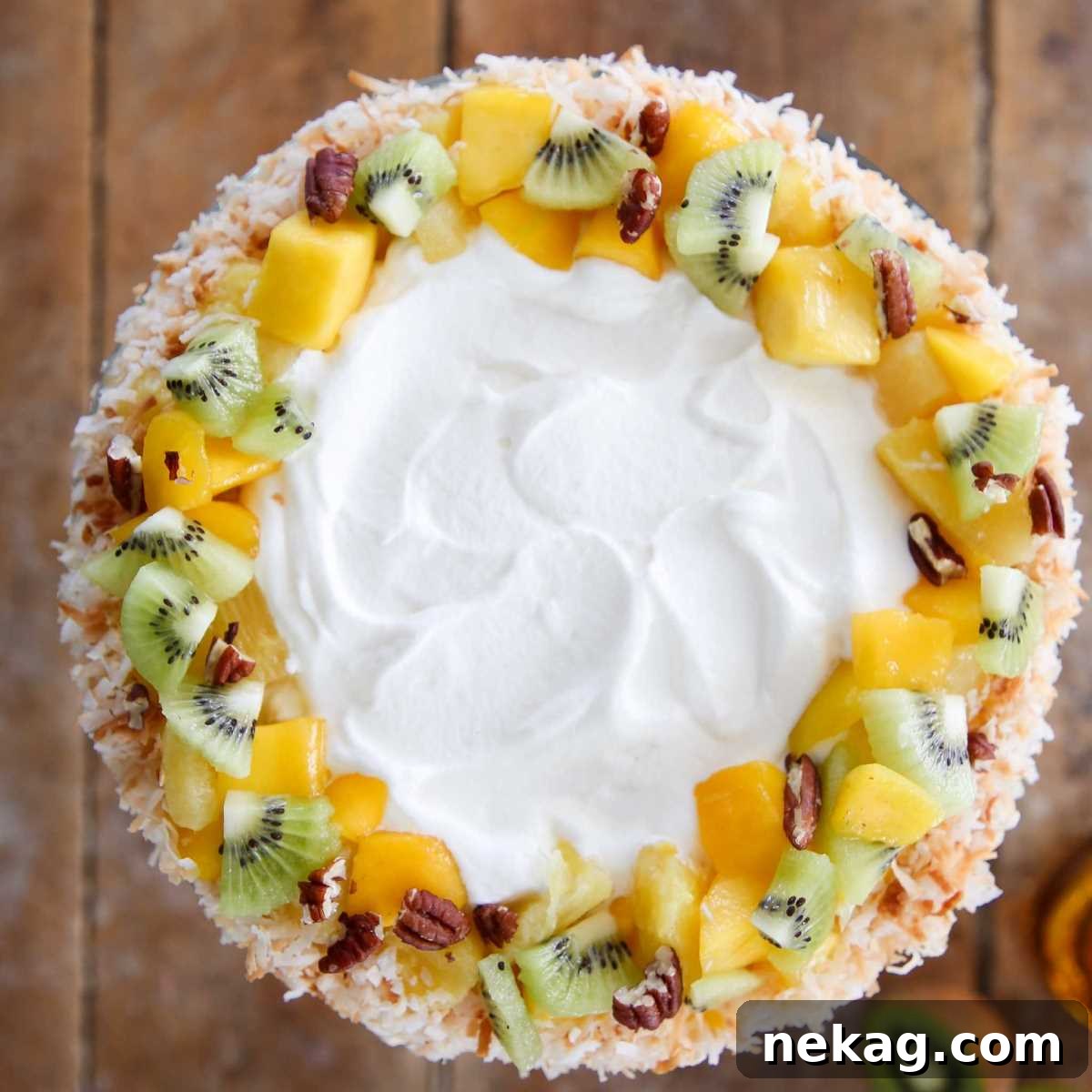
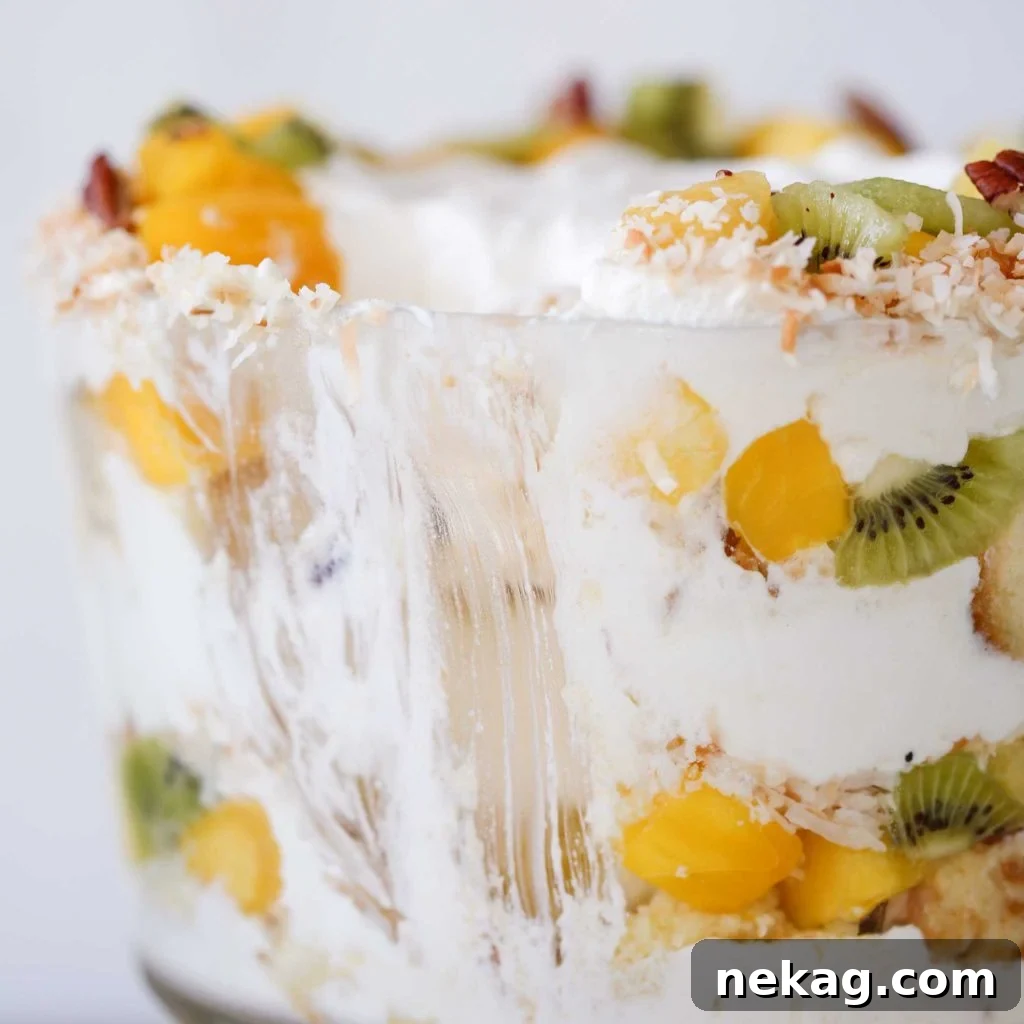
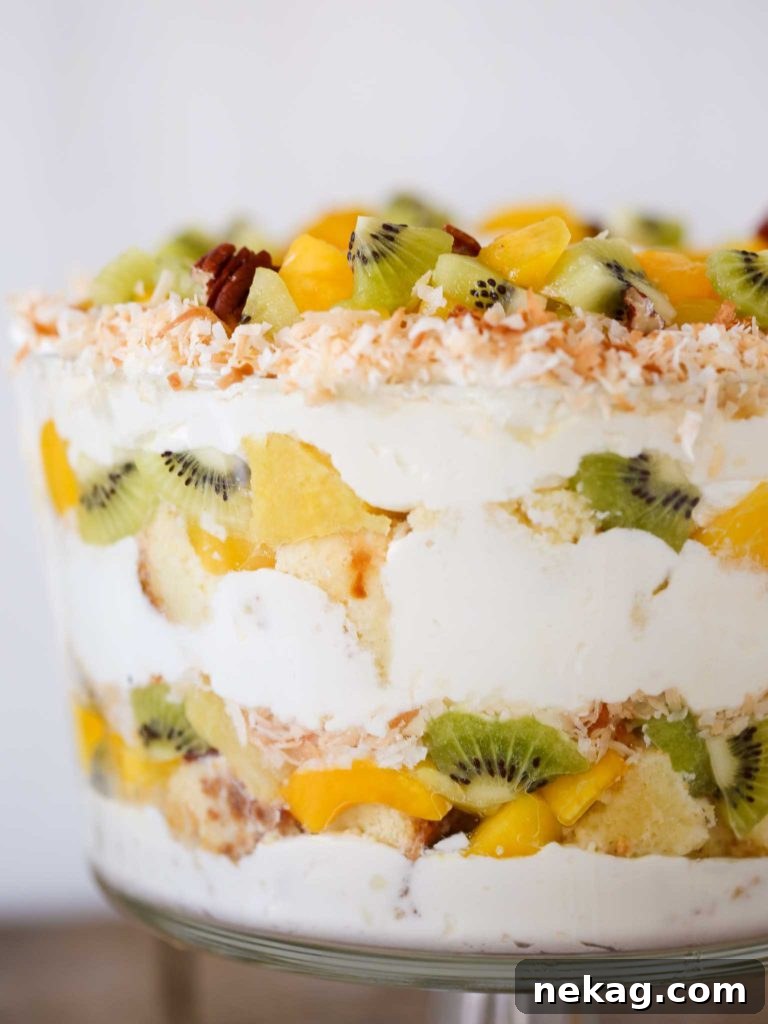
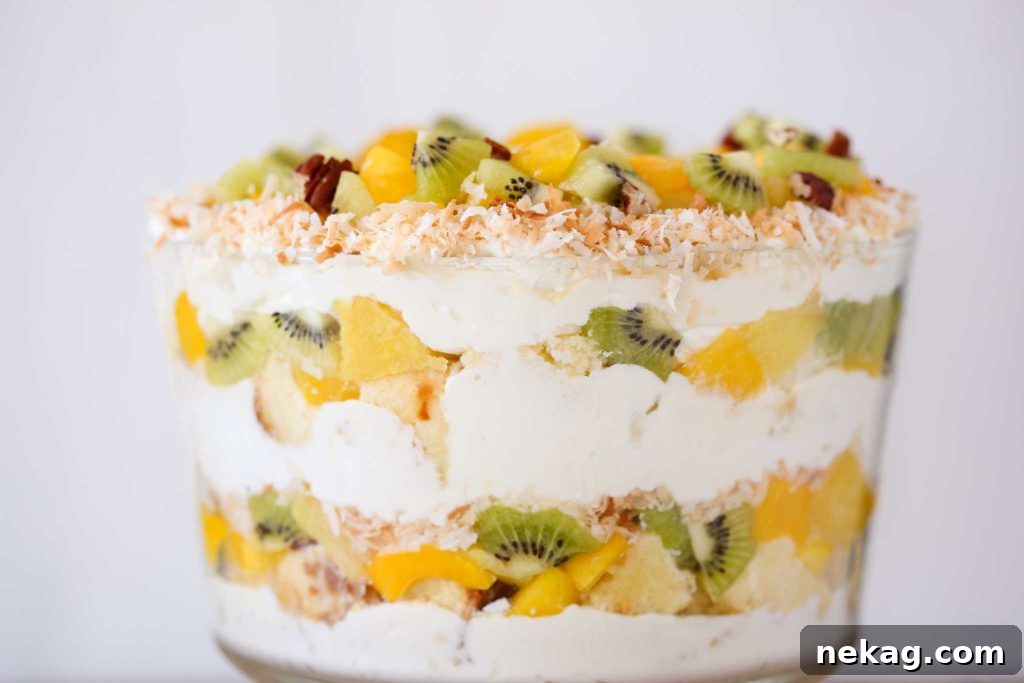
Get ready to elevate your dessert game with this truly showstopping Tropical Trifle Recipe! Imagine layers of moist, rum-soaked cake, velvety coconut cream, and a vibrant medley of fresh, juicy tropical fruits like mangoes, kiwi, and pineapple. This dessert isn’t just easy to make; it’s an explosion of flavors and textures that will transport you straight to a sun-drenched island paradise with every spoonful.
If you’re anything like me, a fantastic trifle is a beloved classic. My lemon berry trifle has been a huge hit, proving that these layered beauties are always in demand. And for good reason! Trifles offer a delightful balance of textures and flavors, making them perfect for entertaining, potlucks, or simply as an impressive treat for your family.
One of my favorite hacks for creating a spectacular trifle is to utilize leftover pound cake. It happens more often than you’d think – baking a whole pound cake and having a generous portion left. Instead of letting it go to waste, I simply wrap it up, pop it into the freezer, and wait for the perfect moment to transform it into something magical. This strategy not only saves time but also ensures you always have the base for a spontaneous trifle creation ready to go.
The beauty of this particular tropical trifle lies in its relative simplicity. While it looks incredibly impressive, the actual effort involved is surprisingly minimal. The most hands-on part of the process is crafting the silky coconut pastry cream, which is absolutely worth the small amount of time it takes. Beyond that, the most challenging part is simply exercising patience as the flavors meld together overnight – a crucial step that allows all the individual components to truly harmonize and create an unforgettable dessert experience.
Mastering the Art of Silky Smooth Coconut Pastry Cream for Your Tropical Trifle
A truly exceptional trifle hinges on a perfectly smooth and luscious pastry cream. No one wants lumpy cream in their dessert! Beyond the risks of burning or undercooking, lumps are a common pitfall. But with a few expert tips, you can guarantee a consistently smooth and rich coconut pastry cream every time. Here’s how to stay vigilant and avoid those pesky lumps:
- Strategic Sugar Addition from the Start: In this tropical trifle recipe, I advocate for adding all the sugar to the coconut milk right at the beginning, rather than splitting it between the milk and eggs. There are a couple of excellent reasons for this. Firstly, sugar acts as a shield, preventing the milk from scorching as it heats. The more sugar present, the less closely you need to monitor the pot, freeing you up to tackle other kitchen tasks – an industrious pastry chef is always multitasking! Secondly, adding sugar to the eggs too early can denature the proteins in the yolks, leading to immediate lump formation. This is similar to the effect you get when eggs sit in salt or sugar; those lumps, once formed, are incredibly difficult, if not impossible, to remove.
- The Art of Tempering for Perfection: Tempering is a critical step that prevents your eggs from scrambling when hot liquid is introduced. Begin by whisking together your eggs, egg yolks, and cornstarch until completely smooth. Then, slowly and in a controlled manner, drizzle the hot coconut milk mixture into the egg mixture while continuously whisking. This gradual addition allows the eggs to gently come up to the temperature of the milk without cooking them prematurely. The result? A beautifully smooth emulsion – no lumps in sight!
- Constant Whisking During Cooking: Once the tempered mixture is returned to the pot, your whisk becomes your best friend. Whisk constantly, especially as the pastry cream begins to thicken. This continuous movement prevents any part of the cream from coagulating and sticking to the bottom of the pot, which can quickly lead to burnt bits and, you guessed it, lumps.
- Avoid Overcooking and Excessive Heat: Cooking your pastry cream at too high a heat or for too long can lead to a lumpy texture. The goal is to bring it to a gentle boil for just about one minute, whisking all the while, to ensure the cornstarch fully thickens the mixture without overcooking the eggs. A medium heat setting is usually ideal for this process.
- Rapid Cooling is Key: After cooking, it’s essential to cool the pastry cream quickly and correctly to maintain its smooth texture and prevent a skin from forming. I recommend pouring it out onto a baking sheet lined with plastic wrap and spreading it into a thin, even layer. Then, cover it directly with another sheet of plastic wrap, pressing it down so it touches the surface of the cream. This prevents a skin from forming. Don’t forget to poke a few holes in the top plastic wrap to allow steam to escape. Pop it directly into the refrigerator, and it will cool down rapidly.
Now that you’ve successfully created a lump-free coconut pastry cream for your tropical trifle, there’s one final, crucial step before assembly: you need to “refresh” or “condition” it. After cooling, pastry cream can become quite firm. This conditioning process simply means beating it, either with a stand mixer or by hand with a rubber spatula, until it becomes smooth, silky, and pliable once more. While this step won’t miraculously remove any lumps that formed earlier, it will dramatically improve the cream’s texture, making it far more pleasant to eat and much easier to work with, especially when combining it with whipped cream. Trust me, trying to fold unconditioned, stiff pastry cream into whipped cream is a recipe for frustration!
You can condition your pastry cream using a stand mixer fitted with a paddle attachment for effortless smoothness, or if you prefer a more tactile approach, a sturdy bowl and a rubber spatula will also do the trick.
If the idea of making pastry cream from scratch seems a little too ambitious for your current mood, don’t despair! There are always delicious alternatives. You could opt for a bright and zesty perfect lemon curd instead, or perhaps even give it a tropical twist by making it lime-flavored. Imagine yourself lounging in a tropical paradise, sipping a piña colada, and enjoying a dessert that reflects that carefree spirit!
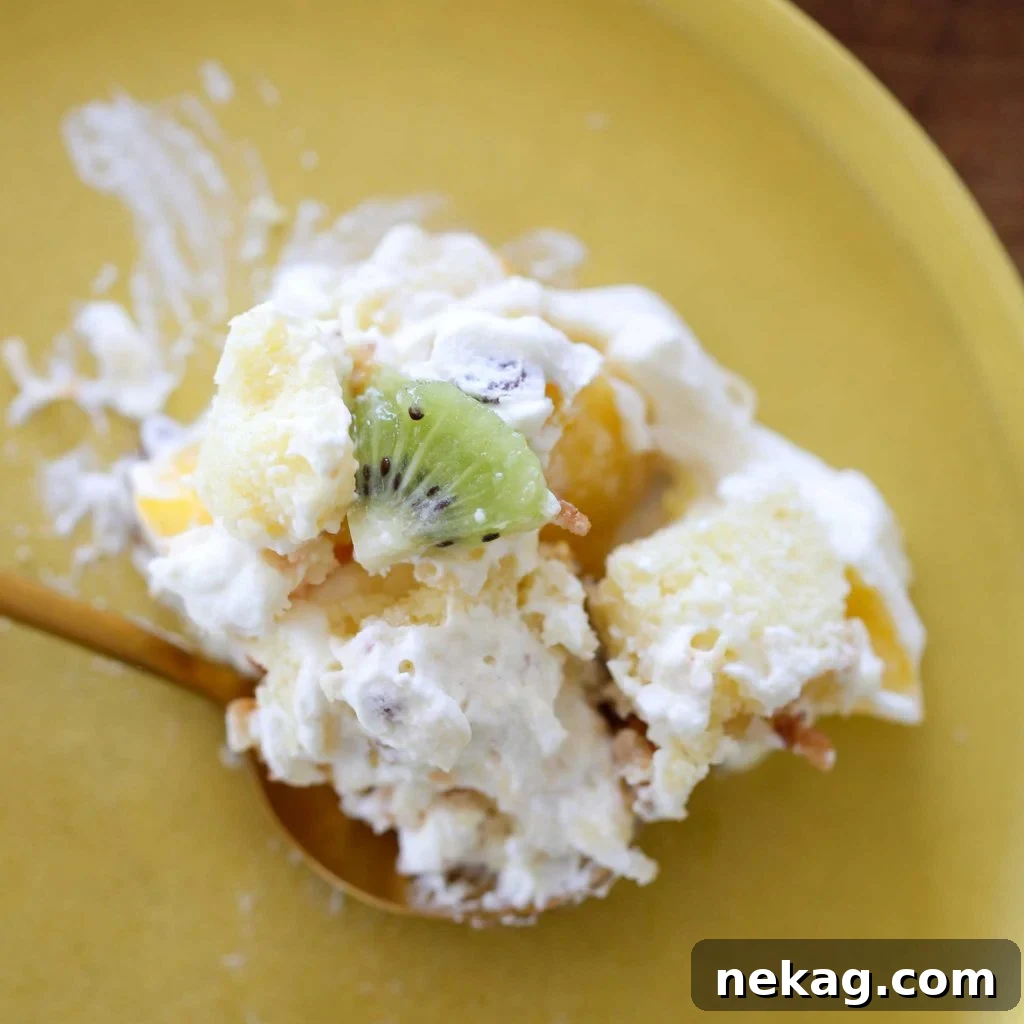
For this specific tropical trifle recipe, I chose to incorporate my Bacardi Rum Cake, meaning the cake itself already boasts a delightful rum flavor. Following the philosophy of “in for a penny, in for a pound,” I further enhanced this by soaking the cubed cake in a special mixture. This soak consists of a delicate simple syrup, a generous glug of good quality rum (adjust to your taste!), and for an extra layer of tropical essence, the accumulated juices from the freshly cubed pineapple. A moist, flavorful cake is absolutely paramount to achieving trifle heaven – it ensures every bite is soft, fragrant, and perfectly balanced with the creams and fruits.
While the Bacardi Rum Cake is a fantastic choice, you’re not limited to it. Feel free to use a plain vanilla sour cream pound cake, or even a good quality store-bought pound cake for convenience. The key is to select a heartier cake, like a pound cake or a sturdy sponge cake. This type of cake provides the structural integrity needed to stand up to the generous fruit layers, the rum soak, and the rich coconut cream filling without becoming a soggy, unappealing mess. A hard pass on soggy messes from me! You definitely won’t find that in my Tropical Trifle Recipe.
Tropical Trifle Recipe
Chef Lindsey
30 minutes
30 minutes
12
people
Comment
Print Recipe
Ingredients
For the Coconut Pastry Cream:
-
260 g Coconut Cream (1 cup) -
56 g Sugar (¼ cup) -
1 Whole egg -
1 Egg Yolk -
25 g Cornstarch (6 ¼ teaspoons)
For the Rum Simple Syrup:
-
½ cup Sugar -
½ cup Water -
¼ cup Rum (more or less to taste) -
2 tablespoons Pineapple juice (accumulated from the cubed pineapple)
For the Assembly:
-
2 cups Heavy Cream -
6 cups Pound Cake (cubed, about half a 12 cup bundt cake) -
12 oz Mangoes (2 bags frozen, thawed, or equivalent fresh) -
6 oz Pineapple (1 bag frozen, thawed, or equivalent fresh) -
3 Kiwi fruits (sliced) -
½ cup Pecans (toasted, optional) -
½ cup Sweetened Shredded Coconut (toasted)
Instructions
Prepare the Pastry Cream:
-
Heat coconut milk (remember to shake the can well before opening to combine the cream and liquid) and sugar in a heavy-bottomed saucepan. Bring the mixture to a gentle boil, stirring occasionally to ensure the sugar fully dissolves and prevents scorching.
-
Once boiling, remove the saucepan from the heat.
-
While the milk is heating, whisk together the whole egg, egg yolk, and cornstarch in a separate bowl until completely smooth and no lumps remain. As soon as the milk mixture comes to a boil, slowly pour a thin stream of the hot milk into the egg mixture while whisking constantly. This tempering process gently raises the temperature of the eggs without scrambling them.
-
Return the tempered egg-and-milk mixture to the saucepan over medium heat. Whisk continuously and vigorously until the cream begins to thicken and returns to a boil. Continue to boil for 1 full minute while constantly whisking to ensure proper thickening and to cook out any starchy flavor.
-
Immediately pour the hot pastry cream onto a baking sheet lined with plastic wrap. Spread it into an even, thin layer. Cover the surface directly with another piece of plastic wrap, pressing it down to prevent a skin from forming. Poke a few small holes in the top plastic to allow steam to escape. Refrigerate promptly until thoroughly chilled, preferably for several hours or overnight.
Make the simple syrup:
-
In a small saucepan, combine sugar and water. Bring the mixture just to a boil over medium heat, stirring occasionally until the sugar is completely dissolved. Remove from heat and allow to cool completely.
-
This simple syrup can be made up to a month in advance and stored in an airtight container in the refrigerator. This recipe yields more simple syrup than you’ll need for one trifle, but it’s difficult to make a smaller batch where the sugar dissolves properly. Save the extra for future trifles, iced teas, or delicious cocktails!
-
In a small bowl or liquid measuring cup, combine 3 tablespoons of the cooled simple syrup with the rum and pineapple juice. Taste and adjust the amount of rum to your personal preference for intensity.
Prepare to Assemble:
-
Cut your chosen pound cake into bite-sized cubes. Gently toss the cake cubes with the prepared rum simple soak until each piece is lightly moistened. Be careful not to over-soak, as this can lead to a mushy texture.
-
Before using the chilled coconut pastry cream, it’s essential to “refresh” or “condition” it. This means beating it until it becomes smooth, silky, and pliable again. This step significantly improves its texture for eating and makes it easier to fold into whipped cream.
-
Transfer the chilled coconut pastry cream to a stand mixer fitted with the paddle attachment. Beat on medium-high speed until it is smooth and creamy. Avoid beating for too long, as this can cause it to loosen and the cornstarch to lose its thickening power, resulting in a runny filling when chilled again.
-
Scoop the conditioned pastry cream out of the stand mixer bowl and into a medium bowl. Pour the cold heavy cream into the now-empty stand mixer bowl. Using the whisk attachment, beat the heavy cream on medium speed until stiff peaks form. Be mindful not to overwhip, which can turn it grainy.
-
Now, it’s time to combine the whipped cream and coconut pastry cream to create a delightful crème légère. If you have coconut extract and wish for an even more intense coconut flavor, you can add a small amount at this stage. First, spoon about a third of the whipped cream into the pastry cream and fold it in quite aggressively to lighten the pastry cream. This initial step makes incorporating the remaining whipped cream much easier.
-
Gently fold the rest of the whipped cream into the lightened pastry cream with care and love, using a spatula. Your goal is to maintain as much air as possible for a light, fluffy final cream. Congratulations! You’ve just made a perfect crème légère!
It’s time to assemble!
-
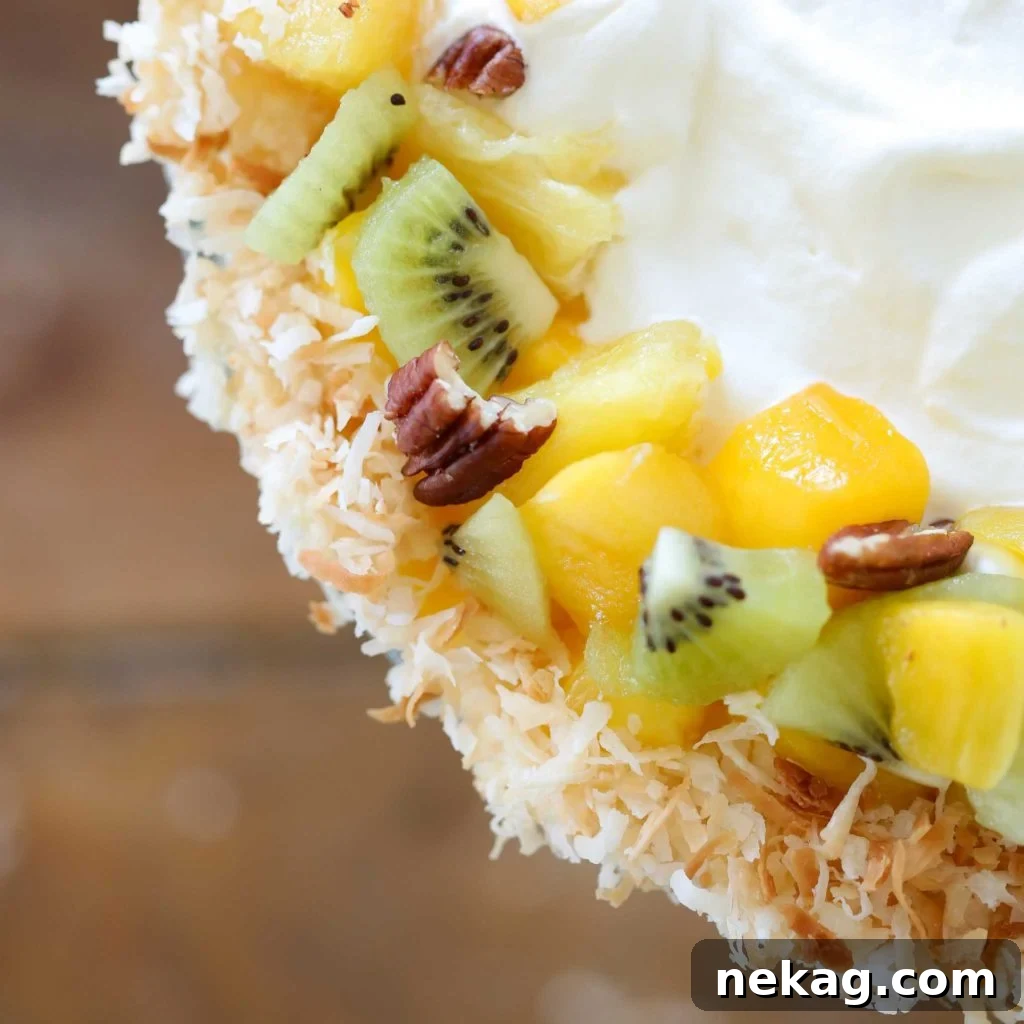
Begin by spreading a small, thin amount of the coconut crème légère in the very bottom of your trifle dish. This acts as a foundation. Next, arrange a layer of the rum-soaked cake cubes. Follow with a generous layer of your colorful tropical fruit assortment, then sprinkle with toasted coconut and pecans (if using).
-
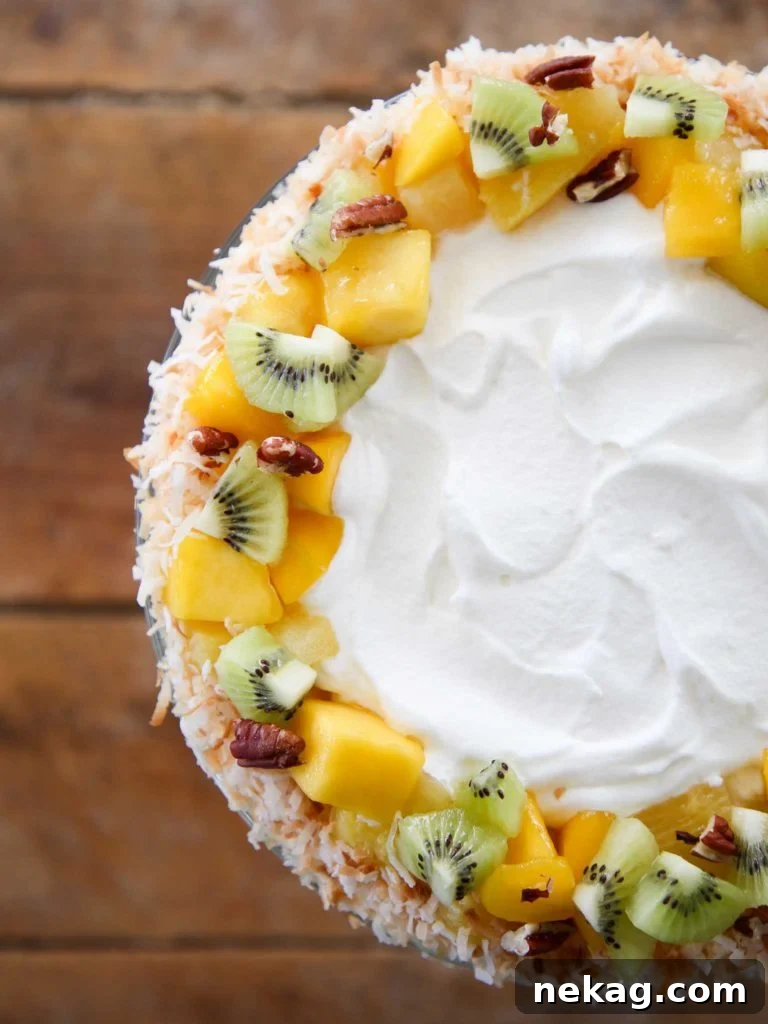
Repeat these layers: coconut crème légère, cake, fruit, toasted coconut, and pecans, until your trifle dish is beautifully filled. Make sure to finish with a final, smooth layer of the coconut crème légère for that perfect photo-ready top. For an even whiter finish, I sometimes add a thin layer of plain whipped cream on top of the coconut cream, but this is entirely optional.
-
For a truly showstopping presentation, arrange some of your reserved fresh fruit, extra toasted coconut, and pecans artfully around the top edge of the trifle. Allow the trifle to chill in the refrigerator for at least 4-6 hours, or preferably overnight, to allow the flavors to fully meld and the layers to set.
Video
Notes
I used half of my Bacardi Rum Cake. You could also use 1 large loaf of store-bought pound cake or any sturdy cake of your choice.
Nutrition
Carbohydrates: 102g |
Protein: 10g |
Fat: 30g |
Saturated Fat: 18g |
Polyunsaturated Fat: 2g |
Monounsaturated Fat: 7g |
Trans Fat: 1g |
Cholesterol: 195mg |
Sodium: 767mg |
Potassium: 373mg |
Fiber: 3g |
Sugar: 67g |
Vitamin A: 1144IU |
Vitamin C: 35mg |
Calcium: 133mg |
Iron: 4mg
Dessert
British
715
Like this? Leave a comment below!
Tips for Success & Variations for Your Tropical Trifle
Choosing Your Tropical Fruits
While mango, kiwi, and pineapple offer a classic and vibrant combination, feel free to get creative with your fruit selection. Passion fruit pulp can add a wonderful tang, lychees provide a unique sweetness, and carambola (star fruit) makes for a beautiful garnish. Always choose ripe, fresh fruits for the best flavor and texture. If fresh isn’t an option, high-quality frozen fruit (thawed and drained) works perfectly.
Make-Ahead Magic
Trifles are the ultimate make-ahead dessert, and this tropical version is no exception. In fact, it’s encouraged! Allowing the trifle to chill for several hours, ideally overnight, gives the rum-soaked cake time to fully absorb the flavors, and the coconut cream to set perfectly. This also ensures all the vibrant flavors have a chance to meld and deepen, resulting in a more harmonious and delicious dessert. Simply assemble the day before your event, cover loosely with plastic wrap, and refrigerate. Garnish just before serving for the freshest look.
Non-Alcoholic Version
If you prefer a non-alcoholic dessert, simply omit the rum from the simple syrup. You can replace the rum with an equal amount of additional pineapple juice, orange juice, or even a splash of coconut water to keep the tropical essence. The cake itself can be a plain pound cake or even a vanilla sponge cake.
Storage Suggestions
Store any leftover tropical trifle in the refrigerator, covered loosely with plastic wrap, for up to 2-3 days. The flavors will continue to develop, but the texture of the fruit and cake may soften slightly over time. For best results, consume within 2 days of assembly.
Serving Suggestions
This tropical trifle is a showstopper on its own, but consider serving it alongside a scoop of coconut sorbet or a light vanilla bean ice cream for an extra treat. It’s perfect for summer gatherings, holiday celebrations, or any occasion where you want to impress with minimal fuss.
Looking for more amazing No-Bake Desserts? As a professional pastry chef, I’ve got you covered! You might also love this simple yet indulgent Nutella Truffles Recipe.