
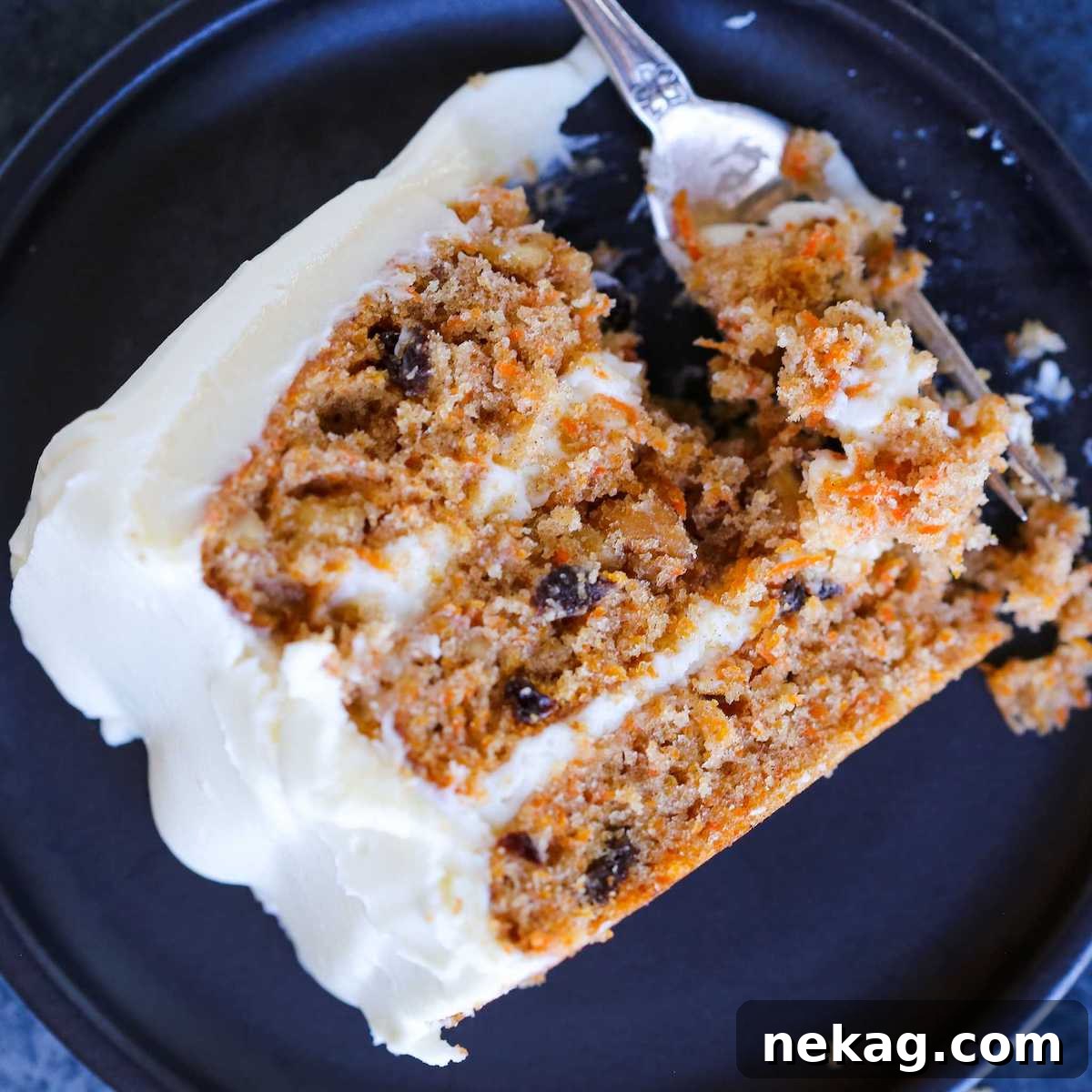
Discover the ultimate recipe for a truly unforgettable carrot cake! This easy carrot cake recipe is crafted to be exceptionally tender, moist, and bursting with incredible flavor. Baked in a single bowl, it simplifies the baking process without compromising on taste or texture. When layered with our signature cream cheese buttercream frosting, it transforms into an epic dessert that’s sure to impress. Best of all, no electric mixer is required—just a whisk and your enthusiasm!
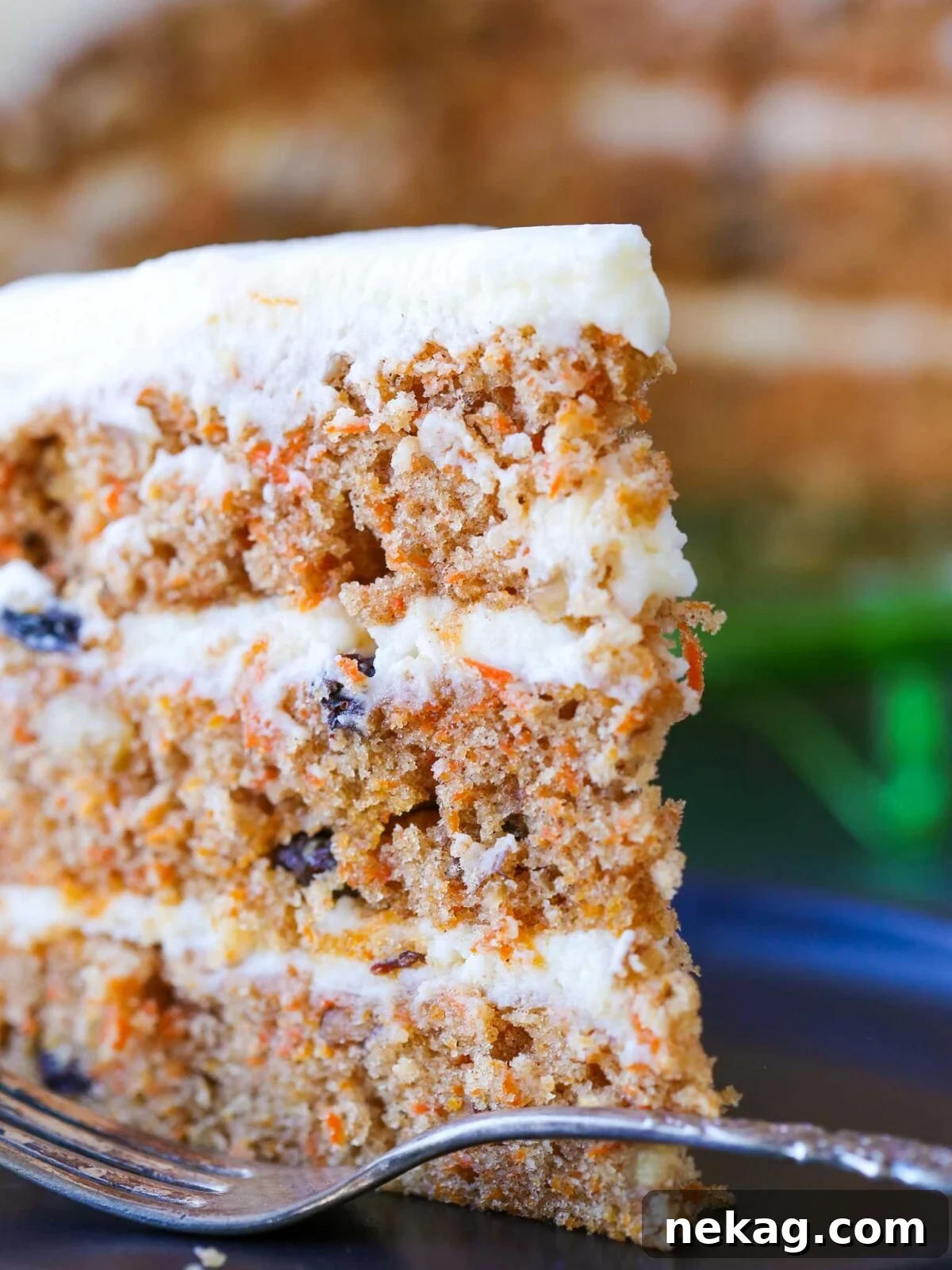
Get ready for the simplest yet most delicious carrot cake you’ve ever made! This recipe is designed for maximum ease, allowing you to whip up a gourmet-quality cake using just one bowl and a whisk. Carrot cake holds a special place in my heart; it’s my husband’s absolute favorite dessert (and he’s my favorite human!). This particular rendition is a wonderfully moist, tender, and aromatic cinnamon-spiced cake, generously packed with freshly grated carrots, sweet raisins, and crunchy walnuts.
For those who consider themselves carrot cake purists, feel free to omit the raisins, much like I do in my acclaimed best carrot cake recipe – a recipe so exceptional it even beat Bobby Flay in a culinary showdown! If you skip the raisins, save them for another delightful treat, such as my chewy oatmeal raisin cookies. Looking for a breakfast-friendly twist on this classic? My delightful carrot cake scones are the perfect solution. Once you experience the effortless preparation and sublime texture of this cake, you’ll undoubtedly want to try my equally moist and simple applesauce cake next.
Table of Contents
- Why You Will Love This Easy Carrot Cake Recipe
- Expert Baking Tips for the Best Carrot Cake
- Key Ingredients for Your Perfect Carrot Cake
- Exciting Variations for Your Carrot Cake
- How to Serve Your Homemade Carrot Cake
- Step-by-Step Guide: How to Make Easy Carrot Cake
- Chef Lindsey’s Recipe Tip for Doneness
- Frequently Asked Questions About Carrot Cake
- Complete Easy Carrot Cake Recipe Card
- Explore More Delicious Cake Recipes
Why You Will Love This Easy Carrot Cake Recipe:
- Effortless Preparation – No Fancy Equipment Needed! Just like my popular one-bowl brownies and easy moist chocolate cake, this incredible carrot cake comes together beautifully in a single bowl with nothing more than a whisk. This means less cleanup, less fuss, and more time to enjoy your delicious creation. Say goodbye to heavy stand mixers and complicated setups; simplicity is the key to this recipe’s charm and convenience.
- A Symphony of Flavor and Texture in Every Bite. This isn’t just a cake; it’s a delightful experience. The batter is just substantial enough to perfectly encase an abundance of sweet, shredded carrots, crunchy walnuts, and plump raisins (if you choose to include them). Each slice offers a harmonious blend of textures and is generously spiced with warm cinnamon, then crowned with a luscious, tangy-sweet cream cheese buttercream. It’s a cake that truly captivates the senses and leaves a lasting impression.
- Remarkably Flexible and Adaptable. This tried-and-true recipe is incredibly versatile, making it perfect for any occasion. Feel free to experiment with its format – thinking of cupcakes for individual servings? Or perhaps a delightful sheet cake for a crowd? You can also play around with different mix-ins and even swap out the frosting for another favorite. The core mixing method, however, is your secret to consistently achieving a light, airy, and wonderfully moist cake every single time.
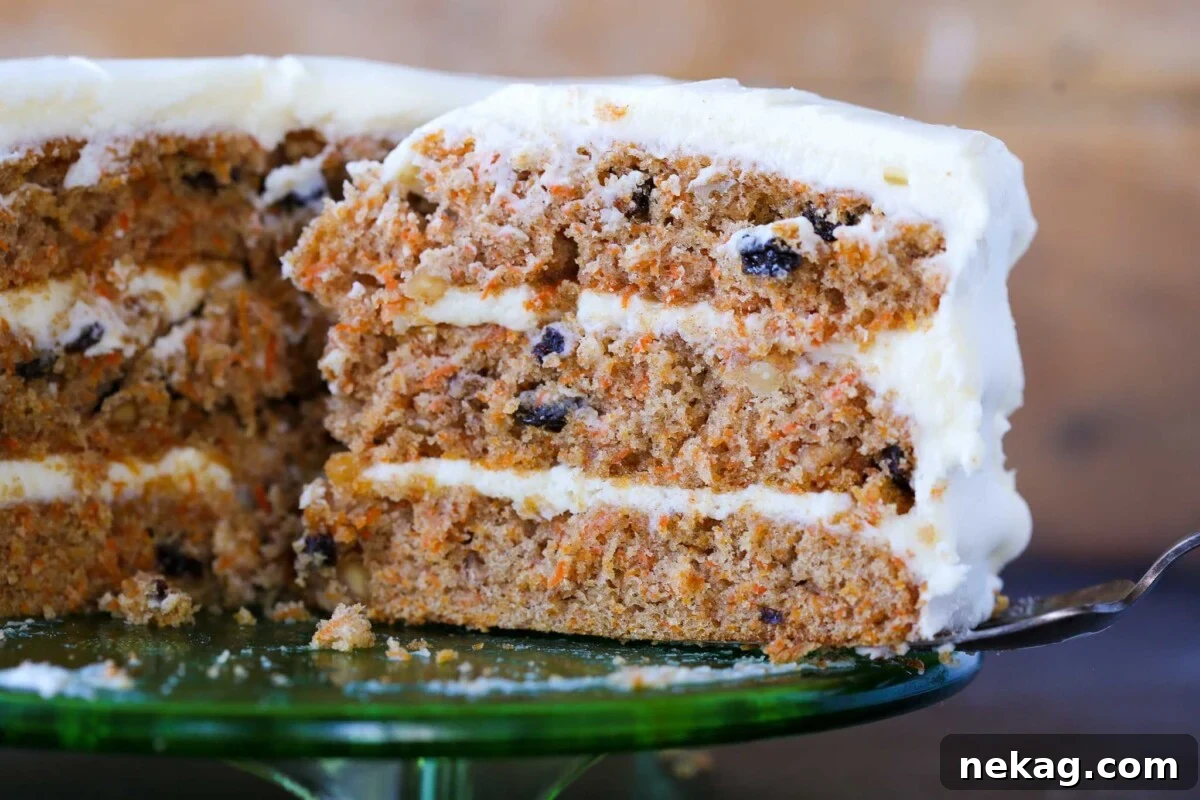
Expert Baking Tips for the Best Carrot Cake
Achieving a truly outstanding carrot cake often comes down to a few expert techniques. Incorporating these professional tips will elevate your baking experience and ensure a consistently delicious result:
- Always Grate Your Own Carrots for Superior Flavor and Moisture. This is perhaps the most crucial tip for any carrot cake. While pre-shredded carrots from a bag might seem convenient, they often lack the freshness, moisture, and vibrant flavor of freshly grated carrots. These packaged varieties can also be inconsistent in size and tend to be drier, which can impact the cake’s texture. For the best results, buy whole, fresh carrots – bonus points if you can find “horse carrots,” which are larger, juicier, and more flavorful. Grate them yourself using a box grater or food processor, and crucially, gently squeeze out any excess moisture before adding them to the batter. This prevents a soggy cake and concentrates that delicious carrot essence. I highly recommend this same practice for my best carrot cake recipe too.
- Pre-Whisk Your Dry Ingredients for Even Distribution. Although it means briefly using a second bowl, this small step makes a significant difference. Thoroughly whisking your flour, baking powder, cinnamon, and salt together ensures that the leavening agents and spices are perfectly and evenly distributed throughout the flour mixture. This prevents pockets of unmixed ingredients, guaranteeing a consistent rise and uniform flavor in every bite. When you add this pre-whisked mixture to your wet ingredients, it incorporates quickly and smoothly, minimizing the risk of overmixing.
- Allow Your Cake to Cool for 10 Minutes in the Pan Before Inverting. Patience is a virtue in baking, especially when it comes to cooling cakes. After baking, your cake needs a critical period to set and firm up before being removed from the pan. Ten minutes is the sweet spot. During this time, the cake’s structure stabilizes, and it slightly pulls away from the sides of the pan. If you try to remove it too soon, the warm, delicate layers might stick or tear, even with properly prepared pans. Cooling it too long in the pan, however, can lead to condensation and a soggy bottom. After 10 minutes, gently invert the cakes onto a cooling rack to cool completely.
Key Ingredients for Your Perfect Carrot Cake
Each ingredient in this recipe plays a vital role in creating a moist, flavorful, and perfectly textured carrot cake. Here’s a closer look at what you’ll need and why:
- All-purpose flour: The foundation of our cake. All-purpose flour provides just the right amount of gluten development to create a tender, soft, and stable cake crumb, ensuring it’s not too dense or too crumbly.
- Baking Powder: Our primary leavening agent. Double-acting baking powder activates twice – once when mixed with wet ingredients and again when exposed to oven heat – resulting in a much more consistent and even rise throughout the cake compared to baking soda alone.
- Cinnamon: The signature spice. Warm and aromatic, cinnamon is essential for that classic carrot cake flavor, complementing the sweetness of the carrots and sugars beautifully.
- Kosher Salt: A flavor enhancer. Kosher salt doesn’t just add saltiness; it subtly amplifies all the other flavors in the cake, balancing the sweetness and making every ingredient truly shine.
- Eggs: For structure and emulsification. Whole eggs act as a binder, provide richness, and help emulsify the oil into the batter. This emulsification is key to creating a wonderfully moist (not greasy) cake with a fine crumb.
- Vegetable Oil: The secret to ultimate moisture. Vegetable oil is crucial for an exceptionally moist and tender cake crumb. By emulsifying it with the sugar and eggs, we ensure the batter is rich and dewy without feeling greasy. It’s important to choose a neutral-flavored oil (like canola or sunflower) as its presence is substantial enough that a strong-flavored oil, such as olive oil, would be noticeable. For certain recipes, like my pumpkin olive oil cake, distinct oils are welcome!
- White Sugar: For sweetness, tenderness, and stability. I use granulated sugar not only for its obvious role in sweetness but also for its contribution to the cake’s delicate texture, moisture retention, and structural stability.
- Light Brown Sugar: Adds depth and moisture. Light brown sugar brings a lovely caramel note and additional moisture, further enhancing the cake’s tender crumb and complex flavor profile.
- Grated Carrots: The star ingredient! I insist on freshly peeled, grated, and squeezed carrots for the best carrot cake. If you can find them, “horse carrots” are a fantastic choice – they are larger, juicier, and typically more flavorful than the smaller, pre-bagged varieties. Look for loose fresh carrots at your grocery store. Use a box grater or a food processor for consistent shredding, and remember to squeeze out excess moisture to avoid a soggy cake.
- Walnuts: For a delightful crunch and nutty flavor. Walnuts are an optional but highly recommended mix-in. When I use them, I lightly toast them first to deepen their flavor and enhance their crunch, adding another layer of texture to the cake.
- Raisins: For bursts of sweetness and chewiness. Raisins provide pockets of natural sweetness and a pleasant chewiness that many traditional carrot cake enthusiasts adore. Feel free to omit if you prefer a simpler cake.
- Cream Cheese (for frosting): The essential frosting component. For all my baked goods, especially frostings and buttercreams, I rely on original Philadelphia Cream Cheese. It provides the ideal tang and richness. While reduced-fat options can be used, avoid whipped cream cheese as its lighter texture will result in an unstable and overly soft buttercream. Ensure it’s at room temperature for smooth mixing.
- Butter (for frosting): For stability and richness in the frosting. I always use unsalted butter in baking and frostings to precisely control the salt content. In cream cheese buttercream, butter contributes significantly to the frosting’s stability and creamy texture, firming up beautifully when chilled.
- Powdered Sugar (for frosting): Creates a silky-smooth finish. Confectioners’ sugar, with its incredibly fine texture, is indispensable for making a smooth, lump-free, and silky buttercream without the need for heating or complicated steps.
- Lemon Juice (for frosting): Adds a bright tang. A touch of lemon juice cuts through the richness of the cream cheese and butter, adding a refreshing tartness that perfectly balances the sweetness of the frosting and enhances the overall flavor profile.
- Vanilla Extract (for frosting): For classic warmth. Vanilla extract rounds out the flavors in the buttercream, adding a comforting and familiar warmth that complements the spiced carrot cake beautifully.
For precise measurements and full instructions, please refer to the comprehensive recipe card below!
Exciting Variations for Your Carrot Cake
One of the best things about this easy carrot cake recipe is its versatility. Feel free to unleash your creativity and tailor it to your personal preferences. Here are some fantastic ways to customize your cake:
- Experiment with a Medley of Mix-ins! The beauty of carrot cake lies in its adaptability. While raisins and walnuts are classic, don’t hesitate to make it your own. You can easily omit them if they’re not to your taste, or substitute them with other dried fruits like cranberries, chopped dates, or even candied ginger for a spicy kick. For nuts, pecans or almonds would also be delicious. For an added layer of sweetness and tropical flair, consider folding in a little crushed pineapple, similar to what I do in my delightful hummingbird cake!
- Go for an Adorable Cupcake Rendition. This recipe is incredibly versatile and translates beautifully into a batch of charming cupcakes. Carrot cake cupcakes are perfect for parties, bake sales, or simply as a delightful individual treat. They offer the same moist texture and rich flavor in a convenient, portable format. For detailed information on adjusting bake times and specific frosting techniques for cupcakes, be sure to check out my dedicated carrot cake cupcakes recipe.
- Swap Out the Buttercream for a New Flavor Experience. While I’m undeniably a huge fan of my luscious cream cheese buttercream – it truly is the perfect pairing – this versatile carrot cake base can also shine with alternative frostings. Imagine the bright, zesty notes of a lemon buttercream frosting, providing a wonderful contrast to the cake’s warm spices. Or, for a sophisticated twist, a rich and buttery caramel Swiss meringue buttercream would add an exquisite depth of flavor and silky texture.
- Infuse Your Cake with Different Spices. Cinnamon is a must, but why stop there? Elevate the aromatic profile of your carrot cake by introducing other warming spices. A pinch of nutmeg (⅛ to ¼ teaspoon), a dash of ground ginger, or a hint of allspice can deepen the complexity. You could even incorporate a prepared spice blend like my comforting pumpkin pie spice or my cozy homemade apple pie spice mix for an autumnal twist. A touch of pure vanilla extract in the cake batter itself also enhances all the other flavors.
How to Serve Your Homemade Carrot Cake
Serving your homemade carrot cake is an art in itself, enhancing the experience for you and your guests. For the neatest, cleanest slices, I recommend serving your cake chilled. However, for the absolute best flavor experience, allow the cake to come to room temperature for about 30-60 minutes before serving. This lets the frosting soften slightly and the cake’s spices and moisture truly develop their full potential.
This delightful cake pairs beautifully with a freshly brewed cup of coffee or a comforting mug of tea, making it an ideal afternoon treat or an elegant end to any meal. To elevate the experience even further, try serving it with a generous scoop of my rich bourbon cherry caramel ice cream, or a luxurious drizzle of salted maple caramel sauce to highlight its warm, spiced notes. For a refreshing zing and an extra layer of flavor, consider adding a thin layer of my bright easy lemon curd between your cake layers. A sprinkle of lightly toasted walnuts on top not only adds an appealing visual but also a wonderful textural contrast. Whether it’s a birthday celebration, a holiday gathering, or simply a treat “just because,” this carrot cake is versatile enough to grace any occasion.
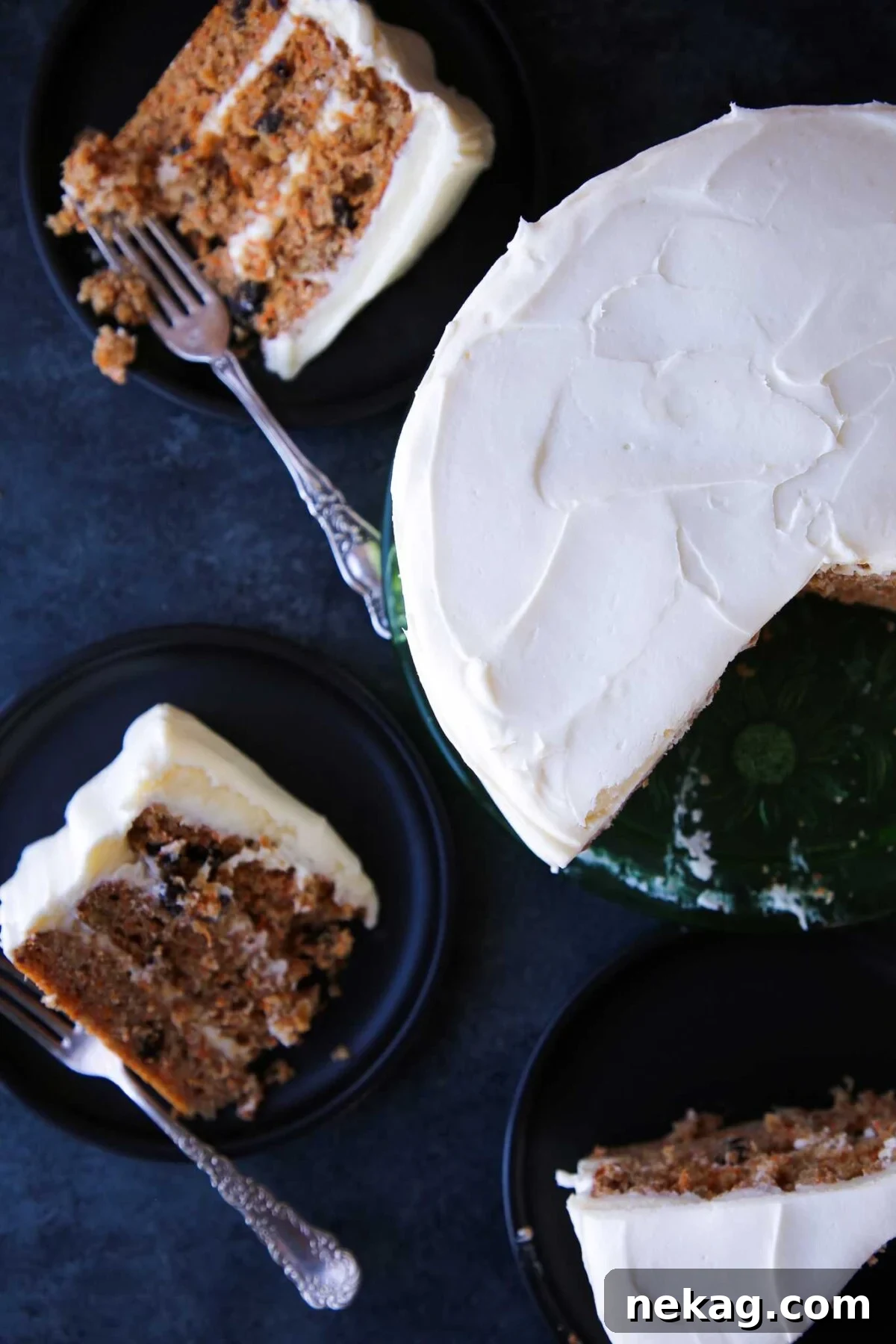
Step-by-Step Guide: How to Make Easy Carrot Cake
This one-bowl carrot cake is incredibly simple to prepare, ensuring a delicious result every time. Follow these steps for a perfectly moist and flavorful cake. Further details and precise measurements can be found in the recipe card below!
Prepare the Cake Layers:
Step 1: Begin by preheating your oven to 350℉ (175°C) in conventional bake mode. Prepare your cake pans by lining the bottoms with parchment paper circles and lightly coating them with nonstick cooking spray. This crucial step ensures your cake layers release easily and perfectly.
To effortlessly create your own parchment circles, simply trace the bottom of your cake pan onto a piece of parchment paper, then cut it out. This small effort makes a big difference in preventing sticking!
Step 2: In a medium-sized bowl, thoroughly whisk together all your dry ingredients: the all-purpose flour, baking powder, ground cinnamon, and kosher salt. Whisking ensures these ingredients are well combined and evenly distributed, which is vital for a consistent rise and flavor. Set this mixture aside.
Step 3: In a large mixing bowl (this is your one-bowl wonder!), whisk the eggs until they are smooth and lightly aerated. While continuously whisking, slowly pour in the vegetable oil in a steady stream. Continue whisking until the mixture is completely emulsified, meaning you no longer see any distinct oil separation. The mixture will lighten in color and deflate slightly, but it should still resemble a light, creamy yellow cloud.
Step 4: Add both the white granulated sugar and the light brown sugar to the egg and oil mixture. Whisk these in until they are fully incorporated and the mixture is smooth. Next, gently fold in your pre-whisked dry ingredient mixture using a spatula until just combined. Be careful not to overmix.
Step 5: Finally, fold in your prepared grated carrots, toasted walnuts (if using), and plump raisins (if using). Continue folding just until these mix-ins are evenly distributed throughout the batter. Overmixing at this stage can lead to a tough cake.
Resist the urge to overmix your batter! Once the ingredients are just combined and no streaks of flour remain, stop mixing. If you think it’s done, it most likely is!
Step 6: Divide the batter evenly among your prepared cake pans. For perfectly uniform layers, use a kitchen scale to ensure each pan receives the exact same amount of batter. Bake in the preheated oven for 15-20 minutes. The cake is done when a cake tester or a toothpick inserted into the center comes out with only a few moist crumbs clinging to it, indicating it’s cooked through without being dry.
For bakery-worthy, even cake layers, always use a kitchen scale to accurately divide the batter among your pans. This simple step ensures consistent baking and a beautifully level cake.
Step 7: Once baked, allow the cakes to cool in their pans for precisely 10 minutes. This crucial cooling period helps the cake layers set and prevents them from sticking or breaking. After 10 minutes, carefully turn them out onto a wire cooling rack and let them cool completely upside down. This method helps to flatten any doming and keeps the layers level. Ensure they are fully cooled before frosting.
Prepare My Favorite Cream Cheese Frosting:
Step 8: In a large bowl, cream together the softened cream cheese, unsalted butter, and powdered sugar until the mixture is completely smooth, light, and fluffy. Ensure all ingredients are at room temperature for the best consistency.
Step 9: Add the fresh lemon juice and pure vanilla extract to the creamed mixture. Beat until well combined. If at any point your frosting becomes too warm or soft (which can happen in a warm kitchen), simply chill the entire bowl with the attachments in the refrigerator for about an hour. This will help it firm up for easier handling.
Step 10: If using a stand mixer, beat the frosting with the paddle attachment on medium speed until it’s light, airy, and spreadable. Take a deep breath; remember, it’s just buttercream! Even if it seems a bit challenging, a little patience will yield perfect results.
Cake Assembly:
Step 11: Once your cake layers are completely cool to the touch, it’s time for the delicious task of layering with your prepared cream cheese buttercream! Starting with your first cake layer on a serving plate or cake stand, spread an even amount of frosting.
For a beautiful three-layer cake, add approximately ⅓ cup of frosting to the first layer and spread it evenly to the edges. Gently place the second cake layer on top, repeating the frosting process. Once all layers are stacked, use the remaining buttercream to generously cover the entire outside of the cake, smoothing it as desired. Don’t worry about perfection; rustic charm is always in style!
Step 12: For the cleanest, most precise slices, chill your assembled cake in the refrigerator for at least 30 minutes before serving. However, for an optimal flavor and texture experience, allow the cake to come to room temperature for about 30-60 minutes before slicing and enjoying. This allows the frosting to soften and the cake’s flavors to fully blossom.
Chef Lindsey’s Recipe Tip
This particular carrot cake is renowned for its incredibly light, fluffy, and exceptionally moist texture, which can sometimes make it tricky to gauge when it’s perfectly done. To test for doneness, gently press the center of the cake with your finger; it should offer a slight spring or resistance. Alternatively, a toothpick inserted into the center should emerge with only a few moist crumbs, not wet batter. When in doubt, err on the side of baking it for two more minutes. Trust me, it will turn out perfectly fine!
Frequently Asked Questions About Carrot Cake
Proper storage is essential to keep your carrot cake fresh and delicious. If the cake is unfrosted, it can be stored at room temperature, tightly covered, for up to 3 days. For longer storage, you can wrap the unfrosted cake layers tightly in plastic wrap and freeze them for up to 2 months. Once frosted, the cake should be refrigerated after 3 days to maintain its freshness and the stability of the cream cheese frosting. Always store frosted cake in an airtight container to prevent it from drying out.
Absolutely! Carrot cake is a fantastic dessert to prepare in advance, as its flavors actually deepen and improve on the second day. The moisture in this particular recipe ensures it will remain perfectly delicious for at least 3 days when stored correctly. If you need to make it further in advance, you can freeze the entire cake (frosted or unfrosted) for up to a month. Thaw it slowly in the refrigerator before bringing it to room temperature for serving.
While both oil and butter contribute richness, they affect the cake differently. For carrot cake, oil is generally preferred as it results in a significantly moister and more tender crumb than a cake made with melted butter. Oil remains liquid at room temperature, contributing to that desirable moist texture, whereas butter solidifies, which can sometimes lead to a slightly drier or denser cake. Butter, however, provides a distinct flavor that oil doesn’t. In this recipe, the chosen oil provides superior moisture, and the cream cheese frosting adds plenty of buttery flavor.
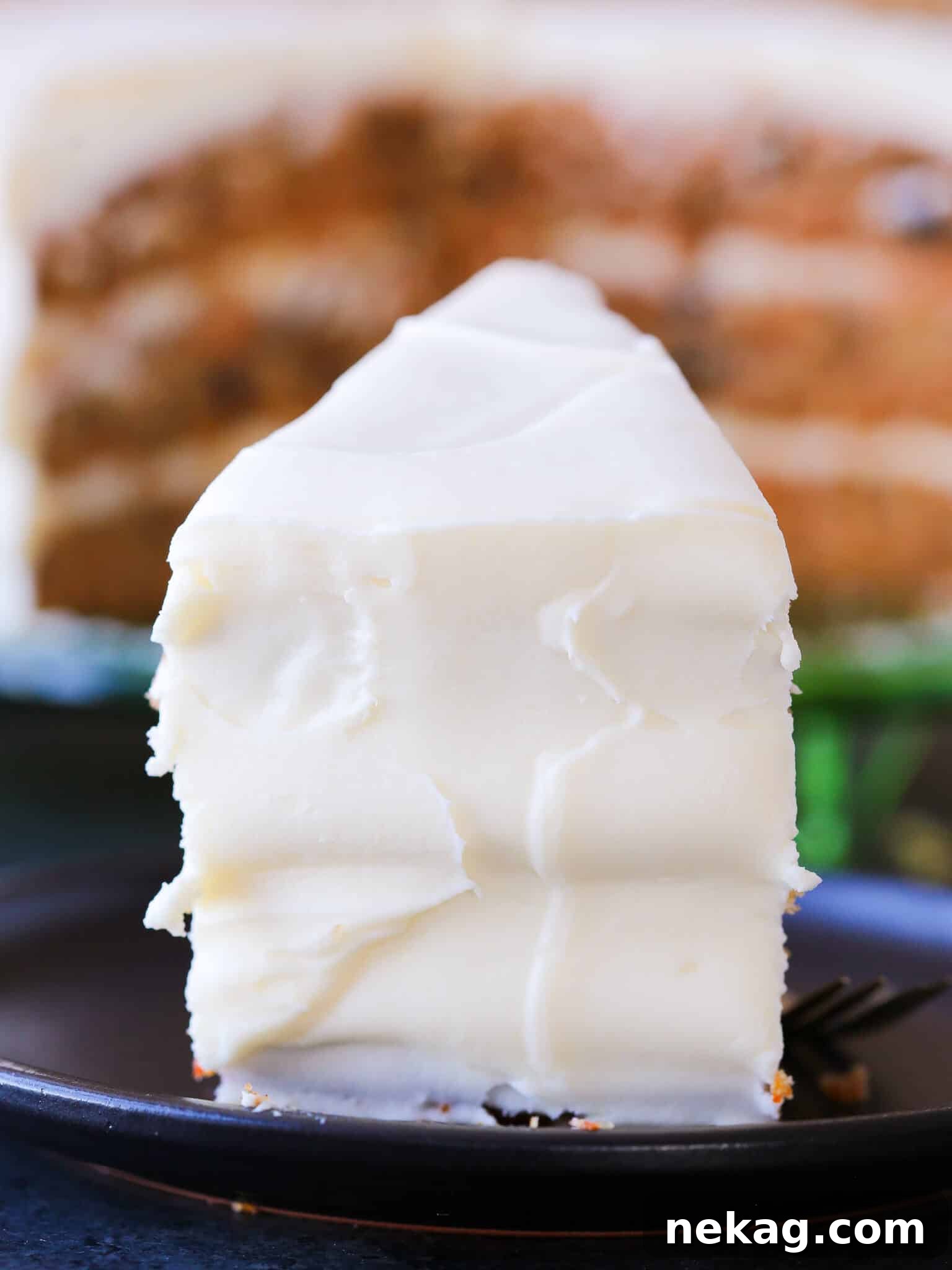
If you tried this recipe and absolutely loved it, please take a moment to leave a 🌟 star rating and share your thoughts in the comments section below. I genuinely love hearing from you, and your feedback truly makes my day!
Easy Carrot Cake
Pin Recipe
Comment
Print Recipe
Ingredients
Carrot Cake
- 2 cups all purpose flour
- 2 teaspoons baking powder
- 1 tablespoon cinnamon
- 1 teaspoon kosher salt
- 4 eggs
- 1 cup vegetable oil
- ½ cup sugar
- ½ cup light brown sugar
- 4 cups carrots shredded and squeezed
- ½ cup walnuts toasted and chopped
- ¾ cup raisins
The Best Cream Cheese Buttercream
- 21 ounces cream cheese room temperature
- 18 tablespoons unsalted butter room temperature
- 2 cups powdered sugar
- 2 tablespoons lemon juice
- 1 teaspoon vanilla extract
Instructions
Prepare the Cake:
-
Preheat the oven to 350℉ conventional. Prepare cake pans with parchment paper and nonstick cooking spray.
-
In a bowl, whisk together flour, baking powder, cinnamon, and salt. Set aside.
-
In a large bowl, whisk eggs until smooth. With the whisk running, slowly pour in the vegetable oil and stir until completely emulsified (you can’t see any oil). It will deflate a bit but should still look like a light, yellow cloud.
-
Whisk in the sugars, then fold in the dry ingredient mixture.
-
Fold in the carrots, walnuts, and raisins.
-
Divide between the prepared cake pans and bake in the preheated oven for 15-20 minutes, or until a cake tester or toothpick comes out with only a few clinging crumbs.
-
Allow to cool in pans for 10 minutes, then turn out onto a cooling rack and cool upside down. Let cool completely.
Prepare My Favorite Cream Cheese Frosting:
-
Cream together cream cheese, butter, and sugar until smooth.
-
Add lemon juice and vanilla extract. If it gets too warm, chill it—just pop the whole bowl and attachments in the fridge for an hour.
-
Beat with the paddle attachment on your stand mixer. Breathe. It’s just buttercream.
Assembly:
-
Once the cake is cool, layer with buttercream!
-
For the easiest slicing, chill before serving. This cake is also delightful at room temperature.
Notes
Flavor Tips – Use horse carrots if you can find them. They are bigger, juicier, and more flavorful than the skinny ones in the bags!
Variations – You can omit the raisins and walnuts, or substitute for another dried fruit or nut of your choosing.
Storage – Unfrosted cake can be stored at room temperature for up to 3 days or frozen for up to 2 months. Frosted cake should be refrigerated after 3 days.
Nutrition
Explore More Delicious Cake Recipes
I sincerely hope you enjoyed creating and tasting this professional chef-tested recipe for an easy carrot cake. It’s truly a delight! Don’t let your baking adventure end here. I invite you to explore our other delicious, chef-developed cake recipes. Perhaps you’ll be inspired to try an elegant classic, like our timeless white cake recipe, or discover a new favorite for your next special occasion. Happy baking!