
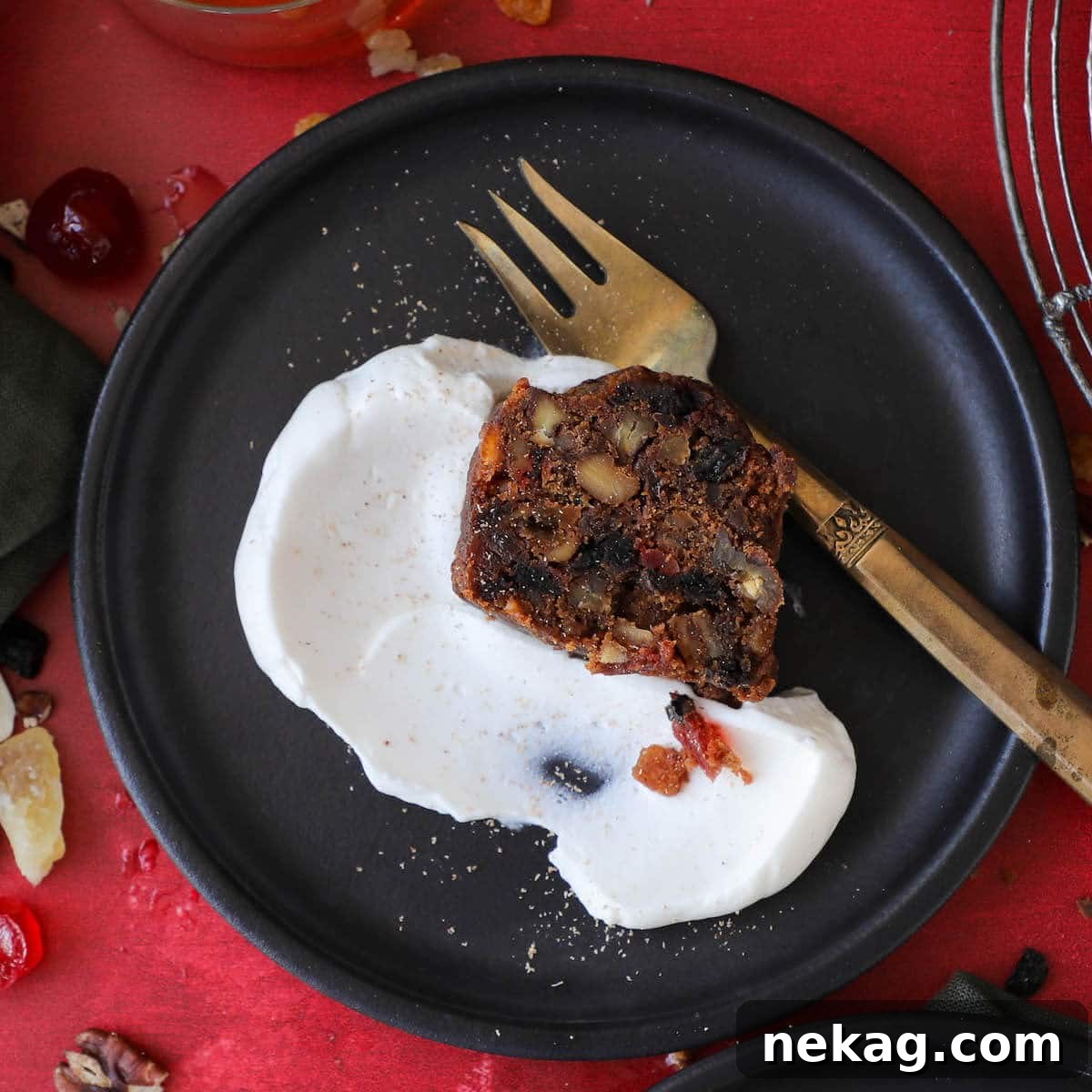
Prepare to rediscover fruit cake! This Old Fashioned Fruit Cake recipe is a symphony of flavor and texture – a deeply moist, heavily spiced cake brimming with an abundant medley of dried fruits, vibrant candied citrus, and crunchy nuts. If your previous experiences with fruitcake have been less than stellar, be ready to have all your preconceived notions shattered. This particular recipe promises an extraordinarily flavorful, rich, and utterly irresistible experience that celebrates the true potential of this classic dessert.
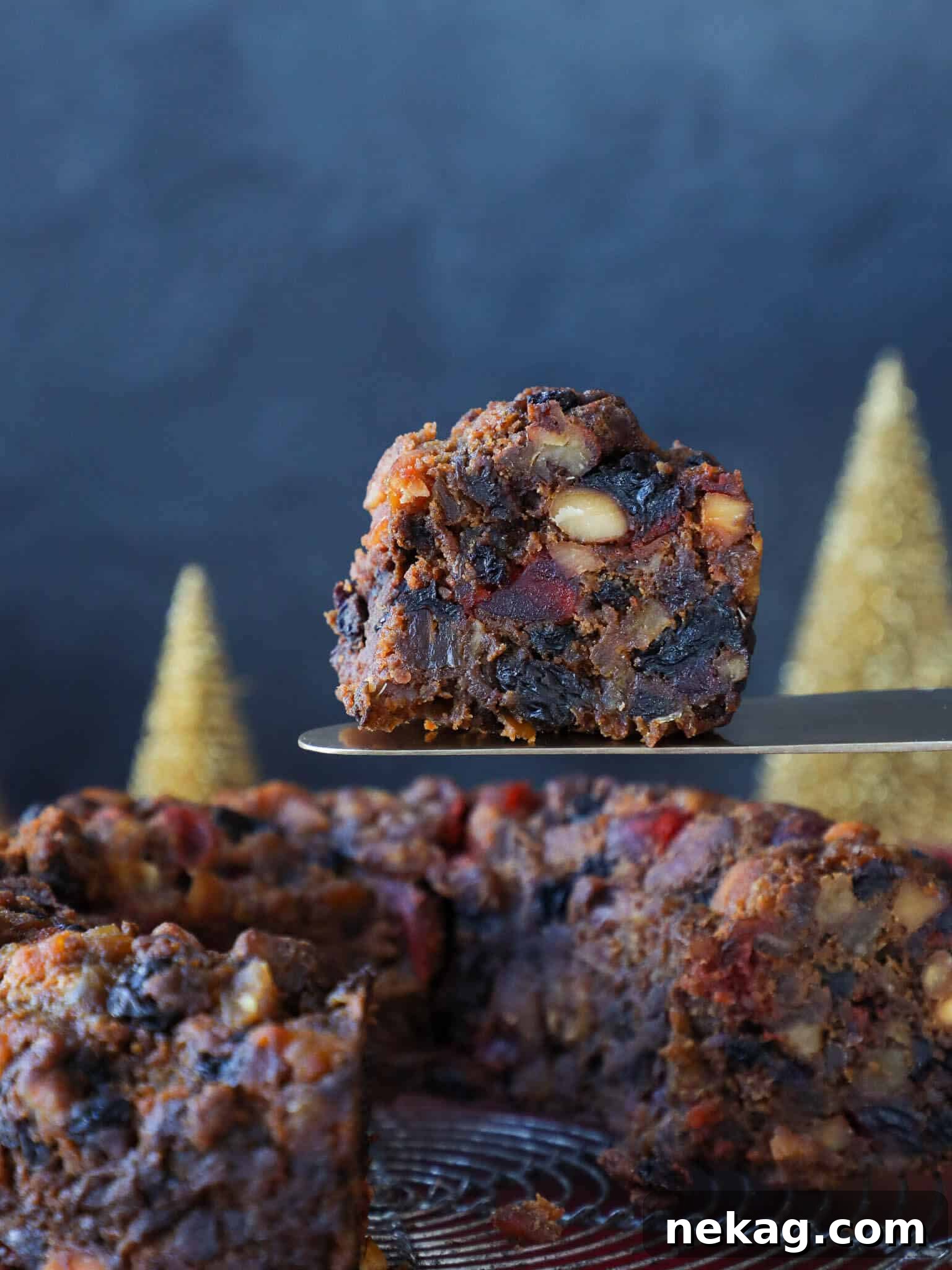
Today, we proudly present a truly fantastic Old Fashioned Fruit Cake! Often the subject of jest and frequently overlooked, we believe it’s high time to give this magnificent creation the respect it deserves. This isn’t just any fruit cake; it’s a culinary marvel bursting with complex flavors and intriguing depths. How many other cakes can claim such an impressive repertoire of ingredients and character? The sheer variety of components in this recipe is truly astonishing, promising a delightful surprise in every bite.
Our recipe calls for an impressive array of 7 types of dried fruits, 2 distinct varieties of nuts, and a fragrant blend of 4 warming spices. But the indulgence doesn’t stop there. We elevate this cake further with molasses for deep richness, apple cider for a touch of tang, and, of course, a generous splash of brandy for its characteristic warmth and preserving qualities. And yes, a secret weapon: luscious strawberry preserves! Dare you to resist the curiosity and temptation of this extraordinary cake.
For the preserves, I personally used my Quick Strawberry Jam, which adds a bright, homemade touch. However, for an even broader spectrum of fruity notes, you could also opt for my Mixed Berry Jam. A key technique in this recipe that sets it apart is the careful folding of beaten egg whites, whipped to stiff peaks, into the batter after it’s fully prepared. This simple step introduces a much-needed lightness, balancing the otherwise naturally dense character of the cake. This density, a hallmark of traditional fruit cake, primarily stems from the incredible ratio of flavorful mix-ins to actual cake batter – a delightful characteristic also found in my Sourdough Raisin Bread and Thick Chewy Chocolate Chip Cookies, where the add-ins truly steal the show!
Table of Contents
- What is Old Fashioned Fruit Cake?
- The Unforgettable Taste of Traditional Fruit Cake
- Essential Ingredients for Your Fruit Cake
- Creative Substitutions for Your Fruit Cake
- Frequently Asked Questions About Fruit Cake
- Serving Your Decadent Fruit Cake
- Old Fashioned Fruit Cake Recipe
- Chef’s Notes & Pro Tips
What is Old Fashioned Fruit Cake?
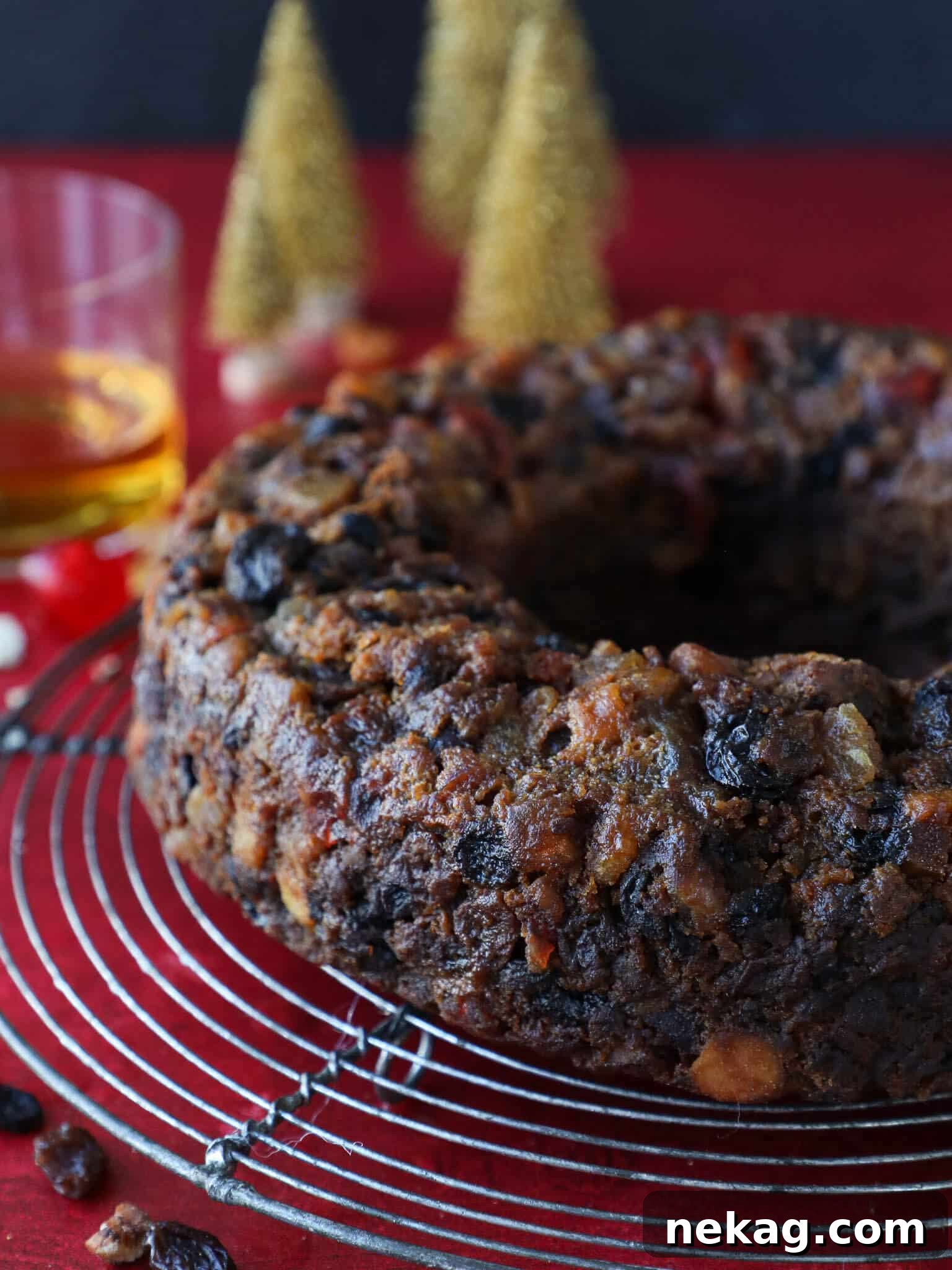
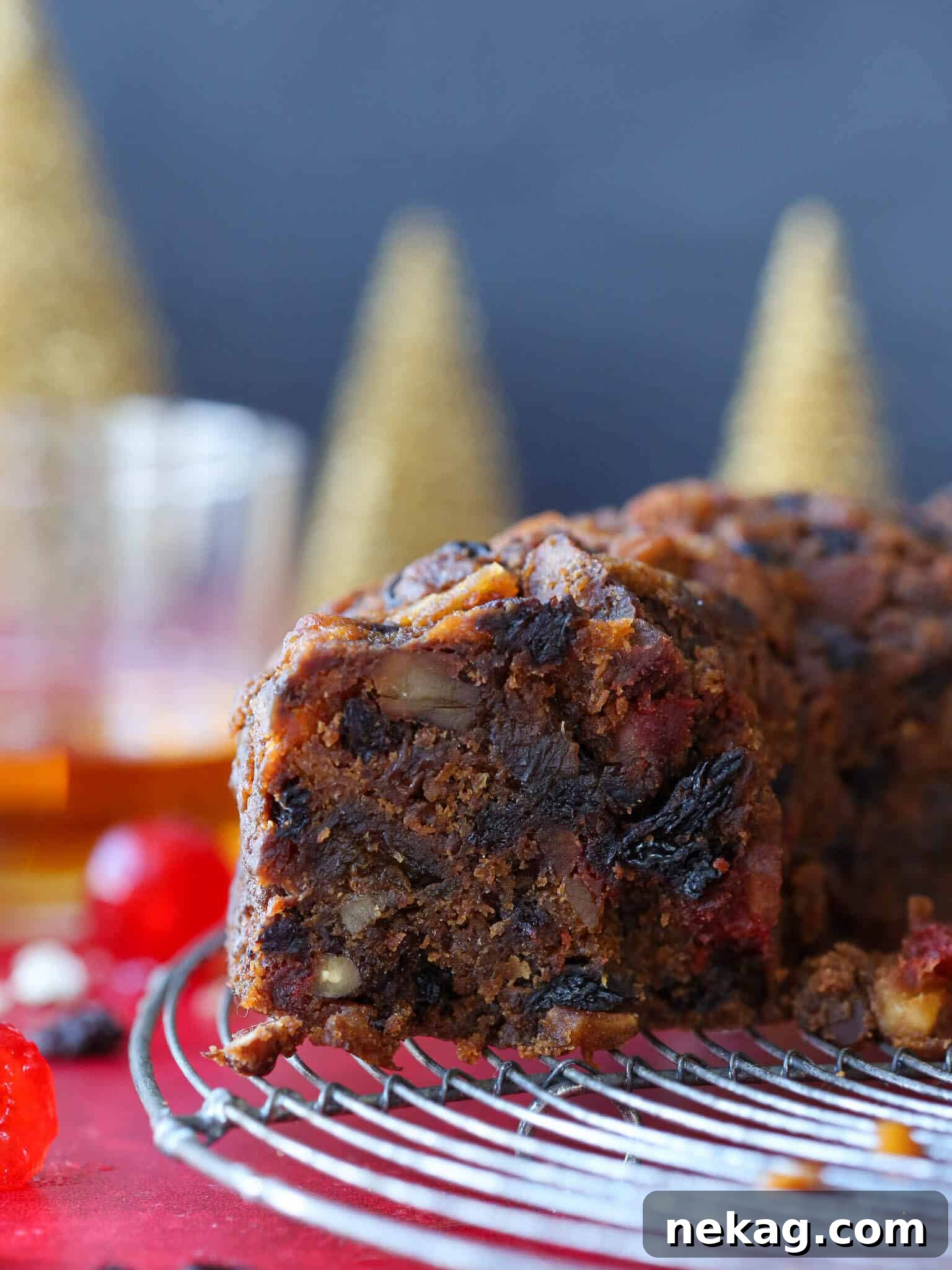
Old fashioned fruit cake is far more than just a simple cake; it’s a rich, dense confection steeped in history and flavor. Traditionally, this cake is heavily spiced and often infused with a choice spirit like brandy, creating a dessert that is both decadent and complex. Its defining characteristic is the generous inclusion of candied fruits, dried fruits, and nuts, which contribute to its signature moistness and substantial texture. Unlike lighter, fluffier cakes, fruit cake is designed to be weighty and satisfying, a true centerpiece for special occasions.
What truly distinguishes an “old-fashioned” fruit cake is the tradition of “feeding” or soaking it with brandy (or another spirit) over an extended period, often weeks or even months. This meticulous process not only preserves the cake beautifully, allowing it to be enjoyed long after baking, but also profoundly deepens its flavor profile. The alcohol tenderizes the cake, ensuring it remains incredibly moist, while its own complex notes meld with the spices and fruits to create an aroma and taste that are truly unparalleled. It’s a testament to patience and a celebration of rich, evolving flavors.
The Unforgettable Taste of Traditional Fruit Cake
A traditional fruit cake offers an intense and captivating flavor experience that truly stands apart. The first sensation is a heady aroma, a harmonious blend of aromatic spices, the concentrated sweetness of dried fruits, and the subtle, warming undertones of alcohol. With each bite, you’re treated to a delightful interplay of textures and tastes: the chewiness of various dried fruits, the vibrant burst of candied citrus peels, the satisfying crunch of nuts, and the comforting warmth of a complex spice blend. This isn’t a cake of simple, singular flavors; it’s a tapestry woven with many threads, each contributing to a rich and evolving palate.
The texture of an authentic fruit cake is dense and substantial, a direct result of the sheer volume of fruits and nuts packed into the batter, further enhanced by the traditional soaking process. This density ensures a moist, tender crumb that avoids dryness, allowing the intricate flavors to linger on your palate. Over time, as the cake ages and is “fed” with brandy, these flavors meld and deepen, transforming into a profoundly aromatic and exquisitely nuanced dessert that truly embodies the spirit of indulgence and tradition.
Essential Ingredients for Your Fruit Cake
Crafting the perfect old fashioned fruit cake requires a carefully selected medley of ingredients, each playing a vital role in achieving its signature flavor and texture. Here’s a detailed breakdown of what you’ll need and why:
- Dried Fruit: This recipe harnesses the sweet, concentrated flavors of various dried fruits, specifically a combination of raisins, golden raisins, and currants. These small powerhouses not only impart natural sweetness but also act as “slow-release moisture vessels,” absorbing some of the brandy and fruit juice to keep the cake incredibly moist over time.
- Candied Fruit: For a burst of vibrant color and zesty flavor, use a mix of candied orange peel, candied lemon peel, candied cherries, and candied pineapples. While commercially available options are convenient, consider making your own candied citrus peels for a superior, fresher taste. Simply drain them from their syrup, chop, and add to the mix.
- Nuts: Untoasted pecans and almonds provide a crucial textural contrast, adding a delightful crunch that balances the chewiness of the fruits and the cake’s overall sweetness. They also contribute a subtle, earthy richness.
- All-Purpose Flour: This flour type, with its balanced gluten content, is ideal for creating a tender and soft cake crumb. To prevent a tough cake with undesirable “tunnels,” it’s crucial to avoid overmixing the batter. Incorporate the flour in several additions, gently folding it in. When in doubt, always finish folding the flour by hand to ensure a delicate touch.
- Baking Soda: A reliable leavening agent, baking soda helps the cake rise. Always check its freshness – it loses potency over time. An easy test: mix a teaspoon with a bit of vinegar; if it fizzes, it’s good! Otherwise, it’s best reserved for cleaning purposes.
- Cinnamon: The warm, inviting aroma of cinnamon is fundamental to a classic fruit cake. I prefer Saigon cinnamon for its bold flavor, but any good quality ground cinnamon will be lovely.
- Ground Allspice: Allspice is a potent spice, so use it with a light hand to avoid it overpowering the other delicate flavors in your fruit cake. Its complex profile, reminiscent of cloves, nutmeg, and cinnamon, is essential when used judiciously.
- Mace: Mace is derived from the protective outer webbing of the nutmeg seed. While sharing a similar flavor profile with nutmeg, ground mace offers a distinctly more delicate, often described as more floral and subtle, aroma, contributing an elegant nuance to the spice blend.
- Ground Nutmeg: This recipe is calibrated for pre-ground nutmeg. If you opt for freshly grated nutmeg, which boasts a superior, more potent flavor, remember to reduce the quantity by half or even two-thirds to achieve the desired balance.
- Butter: Unsalted butter is my choice for baking, allowing precise control over the overall salt content in the recipe. Always ensure your butter is softened to room temperature for optimal creaming with sugar, leading to a lighter batter.
- Light Brown Sugar: Light brown sugar not only provides sweetness but also adds a crucial element of moisture to the cake. Its natural molasses content contributes a rich, caramel-like flavor, ensuring a softer crumb and deeper taste.
- Whole Eggs: Eggs contribute structure, richness, and moisture to the cake. By separating them and whipping the whites, we introduce additional leavening and a lighter texture.
- Molasses: A dark, viscous sweetener, molasses is indispensable for its robust, complex flavor and deep, rich color. It adds a unique depth that cannot be replicated by other sweeteners, making it a cornerstone of old fashioned fruit cake.
- Fruit Juice: Acting as a primary liquid, any fruit juice you have on hand, or specifically apple cider, will work beautifully. It’s vital for providing moisture and contributing its own subtle fruity notes to the cake’s overall flavor profile.
- Brandy: Beyond its role in flavoring, brandy (or other spirits) is crucial for moisture and preservation. Alcohol hydrates the gluten in flour differently than water, resulting in a remarkably tender crumb. It also acts as a natural preservative, allowing the cake to age gracefully.
- Preserves: The addition of strawberry preserves, or any fruit preserves, further enhances the cake’s moisture and introduces another layer of vibrant fruit flavor. For the best results, choose a preserve that isn’t excessively sweet, allowing the fruit’s natural tartness to shine. My Quick Strawberry Jam is an excellent choice.
Creative Substitutions for Your Fruit Cake
While the classic recipe offers a time-tested flavor profile, feel free to personalize your old fashioned fruit cake with these thoughtful substitutions:
- Dried Fruit: While I adore raisins and currants, the beauty of fruit cake lies in its adaptability. Substitute any dried fruit you prefer! Chopped dried apricots, pears, or apples would introduce a delightful new texture and flavor dimension. For a welcome burst of tartness to balance the cake’s sweetness, consider adding dried tart cherries.
- Candied Fruit: Create your perfect blend of candied fruits. Next time, I plan to use an all-candied citrus mix, omitting the cherries and pineapple for a more zesty profile. Experiment with candied ginger for a spicy kick or mixed peel for convenience.
- Nuts: Any of your favorite nuts will work wonderfully! Besides almonds and pecans, walnuts, pistachios, or even hazelnuts make excellent choices, each adding its unique flavor and crunch. For a truly tropical twist, macadamia nuts would be phenomenal.
- Fruit Juice: I often use orange juice because it’s readily available, but I believe apple cider would lend an exceptional, comforting flavor. Grape juice or cranberry juice could also offer interesting variations.
- Fruit Preserves: My Quick Strawberry Jam and Mixed Berry Jam are fantastic, but you can certainly use any store-bought preserves you adore. For a sophisticated twist, orange marmalade would introduce a lovely bitterness and citrus aroma.
- Alcohol: Instead of brandy, consider dark rum for a Caribbean flair, whiskey for a smoky depth, or even port wine for a rich, fruity note. Each spirit will impart a distinct character to your cake. For non-alcoholic alternatives, see the FAQ section below.
Frequently Asked Questions About Fruit Cake
If you prefer a non-alcoholic fruit cake, you can effectively soak it in apple cider, strong brewed tea (like Earl Grey or black tea), or a simple syrup infused with spices. For similar results, you can also omit soaking the entire baked cake and instead soak just the dried fruits in your chosen non-alcoholic liquid before incorporating them into the batter. Remember that non-alcohol-soaked fruit cakes will not be shelf-stable for extended periods and should always be refrigerated.
The “best” alcohol for soaking fruit cake is truly a matter of personal preference, as different spirits impart unique flavors. Brandy is a classic choice, offering a rich, warm, and subtly sweet profile. However, dark rum brings a caramel-like sweetness and tropical notes, while whiskey or Bourbon will lend a robust, smoky, or vanilla-tinged Southern charm. Consider fruit brandies like apple or pear for a distinct twist. Choose an alcohol whose aroma and taste you genuinely enjoy.
Alcohol-soaked fruit cakes are remarkably resilient. Store them well-wrapped in several layers of plastic wrap or foil, or in an airtight container, at cool room temperature for up to 6 months. To maintain moisture and continue flavor development, you can “feed” the cake with a tablespoon or two of brandy once or twice a month. After a couple of months, if not re-soaked, it may begin to dry out. Once you decide you’re done soaking, store the fruitcake wrapped tightly in plastic wrap in the refrigerator.
Absolutely! Fruitcake freezes exceptionally well. For freezing, ensure the cake is completely cooled, then wrap it securely in multiple layers of plastic wrap, followed by a layer of aluminum foil. Store it in the freezer for up to 6 additional months. Thaw in the refrigerator overnight before serving.
Yes, this recipe is quite scalable and can be multiplied to yield larger batches of cake. Your primary limitation will be the capacity of your stand mixer and the size of your baking pans. When increasing the recipe, ensure all ingredients are accurately measured to maintain the proper ratios.
For a fruit cake with such bold flavors, a complementary icing is key. A tangy Cream Cheese Buttercream would be a marvelous choice, as its creaminess and slight tartness provide a beautiful contrast to the cake’s richness and spices. Traditional options also include a simple, smooth royal icing or a marzipan coating, which both seal in moisture and add an extra layer of sweetness and almond flavor.
While the ingredient list for fruit cake can appear extensive, the process itself is more about patience and careful measuring than complex techniques. It’s not inherently difficult, but it does require ample time for preparation, baking, and especially for the traditional aging process. New bakers should feel confident tackling this recipe; just follow the steps diligently, and you’ll be rewarded with a spectacular cake.
For the best flavor development, an old fashioned fruit cake should be aged for at least two weeks, though many enthusiasts prefer aging theirs for one to three months, or even longer. During this period, the flavors meld, deepen, and the alcohol fully permeates the cake, resulting in an exceptionally moist and complex dessert. Consistent “feeding” during this time is crucial for optimal results.
The common perception of fruit cake being dry often stems from a few key factors: overbaking, baking at too high a temperature, or insufficient moisture. Traditional recipes like this one mitigate dryness by incorporating a high ratio of moisture-rich fruits, using ingredients like molasses and preserves, and crucially, through the ongoing “feeding” or soaking with spirits. Proper baking technique, especially using a water pan as suggested, also prevents excessive moisture loss.
Serving Your Decadent Fruit Cake
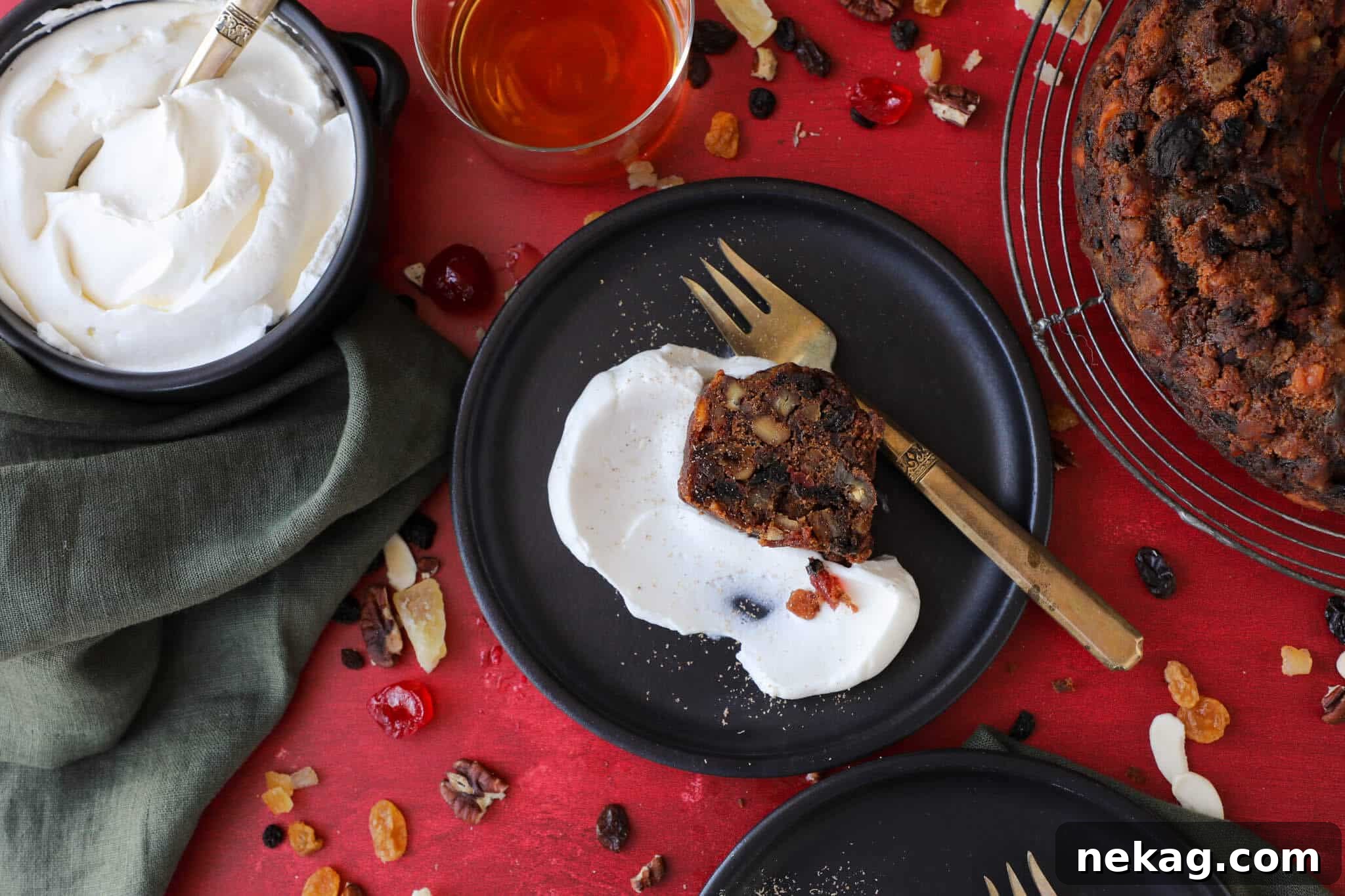
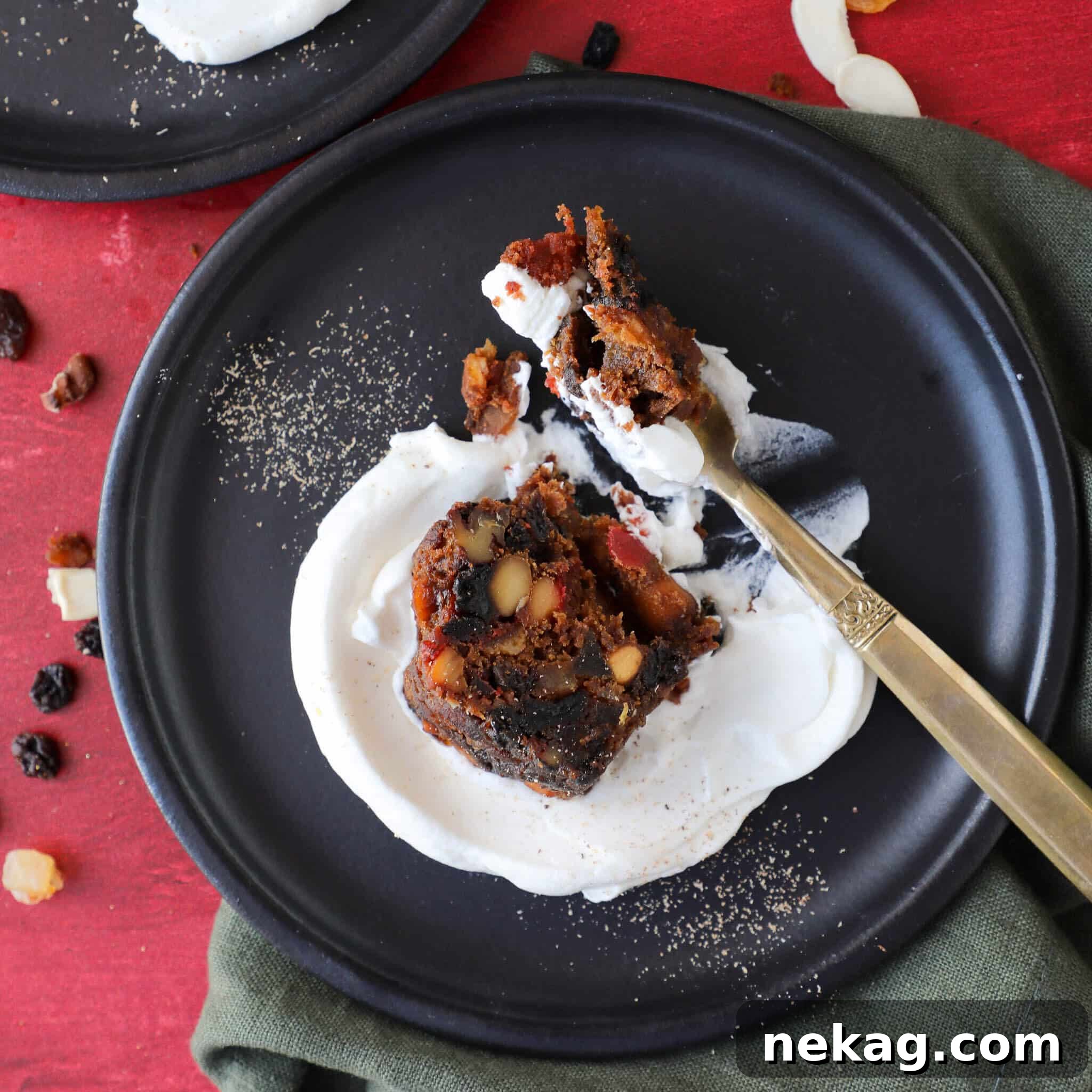
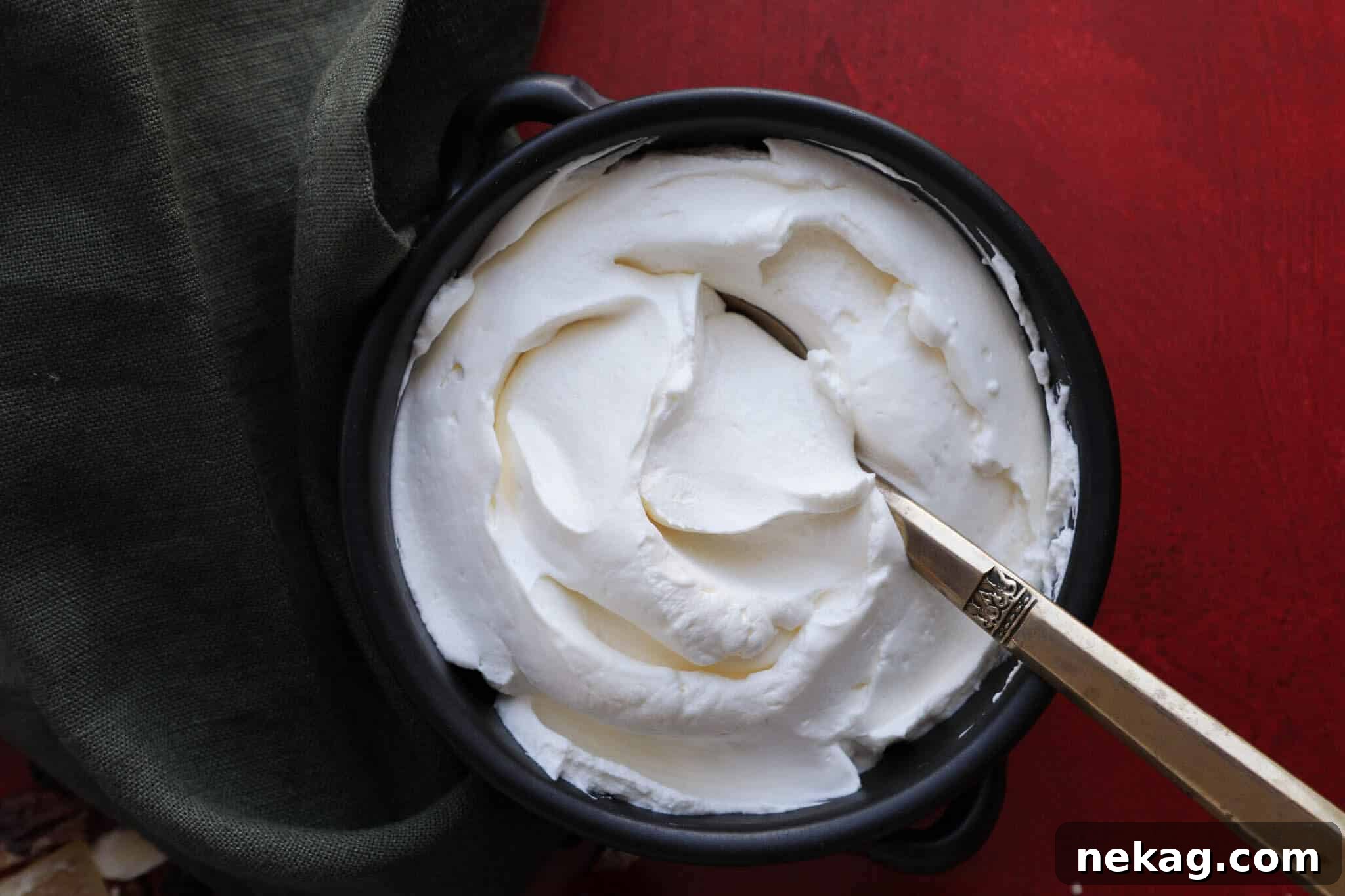
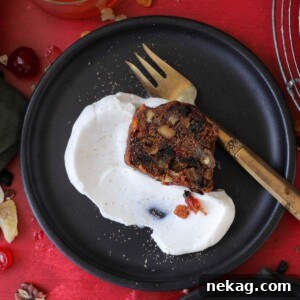
This old fashioned fruit cake is a showstopper on its own, but pairing it with the right accompaniments can elevate the experience even further. I love serving it with a simple swoosh of lightly sweetened whipped cream, whose delicate airiness and mild sweetness provide a beautiful contrast to the cake’s richness. A crème fraîche whipped cream would also be an excellent pairing, offering a subtle tang that cuts through the cake’s intensity.
While I generally avoid garnishes that add excessive sweetness, such as caramel, a generous scoop of creamy vanilla bean ice cream or a delicate vanilla bean anglaise would be a welcome addition. The cool, creamy dairy mellows the strong, spiced flavors of the fruit cake, allowing individual notes of the spices and fruits to truly shine. For a more adventurous and traditional British pairing, consider a slice of mature cheddar cheese or even a mild blue cheese; the savory, sharp notes create an unexpectedly delightful harmony with the sweet, rich cake. Don’t forget a warm cup of coffee, a glass of port wine, or a small snifter of brandy to complete the luxurious experience.
Old Fashioned Fruit Cake
Chef Lindsey
30 mins
2 hrs
2 hrs 30 mins
5 pounds of cake
Comment
Print Recipe
Ingredients
- 1 cup raisins
- 1 cup golden raisins
- 1 cup currants
- 3 oz candied lemon peel chopped
- 3 oz candied orange peel chopped
- 8 oz candied cherries chopped
- 8 oz candied pineapple chopped
- 8 oz citron sliced (optional, can be omitted)
- 1 cup pecans chopped
- 1 cup almonds blanched, chopped
- ⅓ cup all-purpose flour for coating fruit and nuts
- 1 ⅓ cups all-purpose flour for the batter
- ¼ teaspoon baking soda
- 1 teaspoon cinnamon
- 1 teaspoon allspice
- ¼ teaspoon mace
- ¼ teaspoon nutmeg
- ⅔ cup unsalted butter softened
- ⅔ cup light brown sugar packed
- 4 eggs separated into yolks and whites
- ⅓ cup molasses
- 3 tablespoons fruit juice or apple cider
- 3 tablespoons brandy
- ⅔ cup strawberry preserves (I used my quick strawberry jam)
Instructions
- Preheat oven to 250°F (120°C).
- Spray and line a tube pan with parchment paper. Use the bottom of the pan to trace concentric circles and then cut them out to fit the bottom and sides.
- In a large bowl, combine all dried fruits and chopped nuts. Toss with ⅓ cup flour until well coated and set aside.
- In another bowl, whisk together the remaining 1 ⅓ cups flour, all the spices (cinnamon, allspice, mace, nutmeg), and baking soda. Set aside.
- In the bowl of a stand mixer fitted with the paddle attachment (or using a hand mixer), cream the softened butter and light brown sugar until the mixture is lightened in color and fluffy.
- Add the egg yolks one at a time, beating well after each addition. Incorporate the molasses, fruit juice, and brandy, beating thoroughly. Add the strawberry preserves and beat until well combined. Reduce the mixer speed to low and gradually add the dry ingredients, being careful not to overmix. Gently fold in the flour-coated fruit and nuts.
- In a separate clean bowl, using a whisk attachment, beat the egg whites to stiff peaks.
- Carefully fold the beaten egg whites into the cake batter in two additions, taking care not to deflate the mixture.
- Pour the batter into the prepared tube pan. The pan should be about ¾ full. Cover the top of the pan with heavy waxed paper or parchment paper that extends approximately 1 inch over the edge. Secure it tightly with kitchen twine, a large rubber band, or cinch it down with aluminum foil.
- Place the covered cake pan in the preheated oven. Position a large roasting pan containing about 1 inch of hot water on the rack below the cake. Do not place the cake pan directly in the water; this creates a humid environment, not a water bath.
- Bake for about 2 hours, or until a cake tester inserted into the center comes out clean. After 1 ½ hours, you may remove the covering from the cake pan to allow the top to brown slightly, if desired.
- Allow the cake to cool in the pan for 1 hour before carefully turning it out onto a wire rack to cool completely.
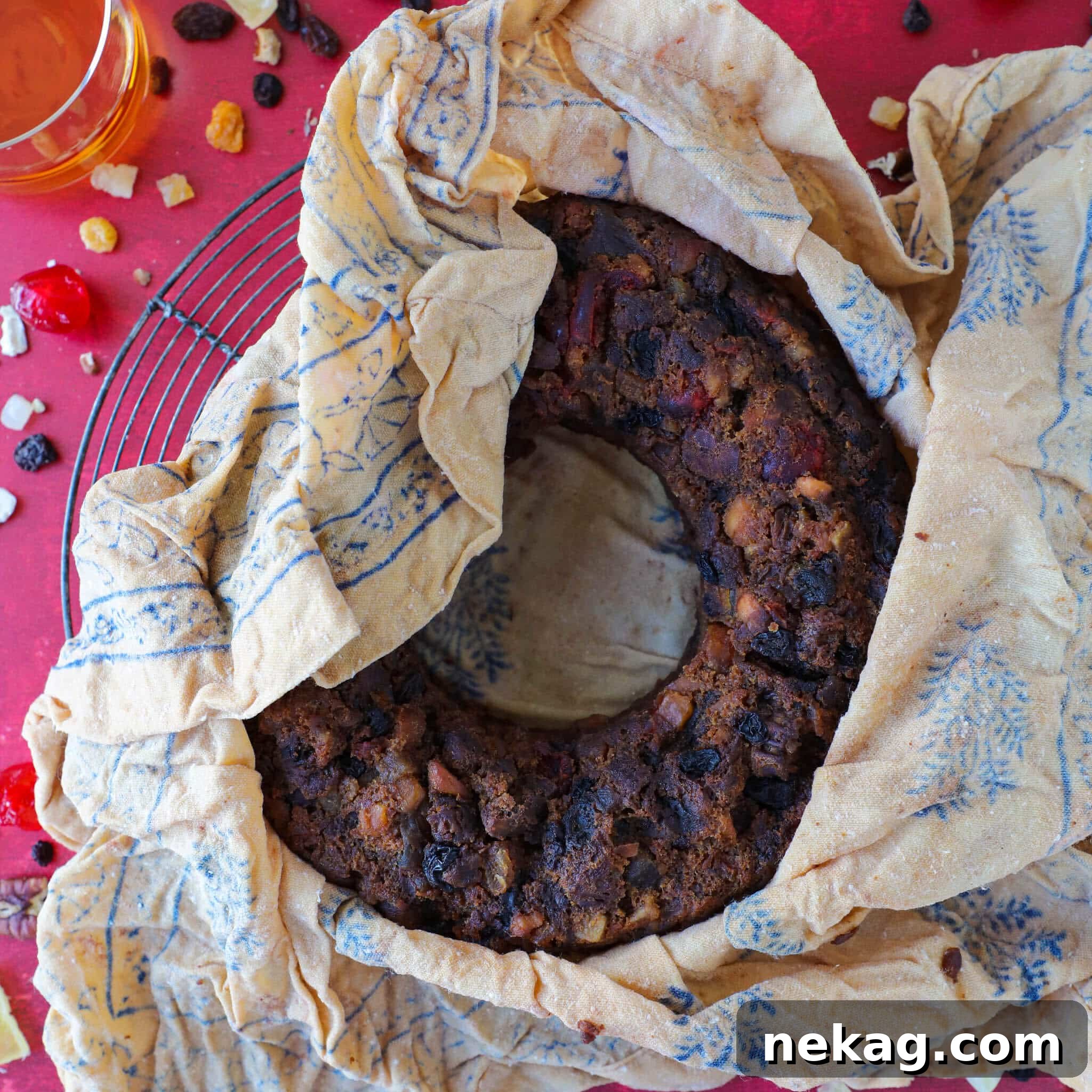
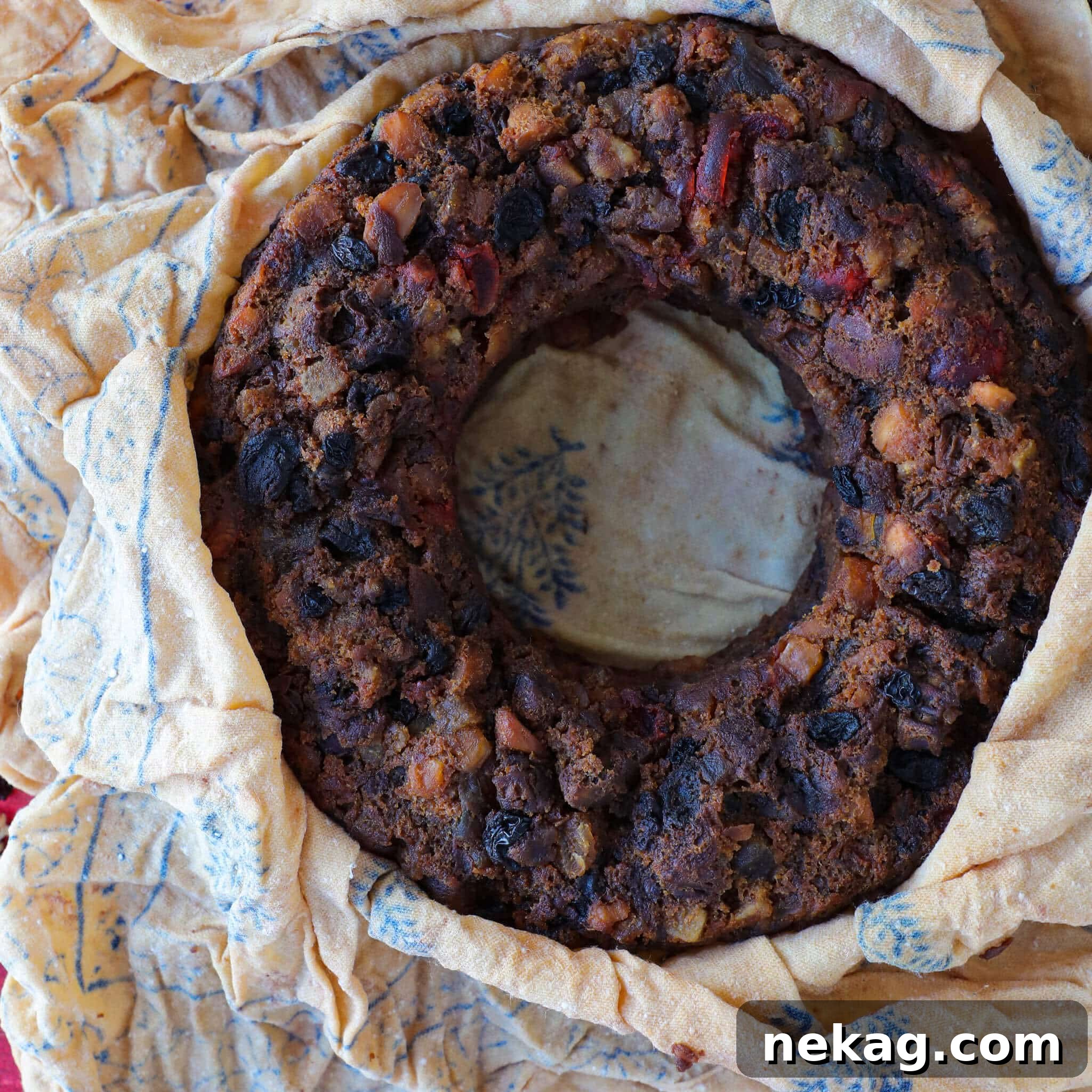
- While the cake is still warm, soak a clean kitchen cloth in brandy and wrap the cake entirely. Then, wrap the brandy-soaked cloth and cake in waxed paper or plastic wrap. If desired, you can remoisten the cloth with brandy 1-2 times per month as the cake absorbs the moisture. For best flavor, I recommend doing this once a month for at least 3 months.
Notes and Chef’s Pro Tips
Presentation – For a stunning presentation, I often top this fruit cake with a light cream cheese glaze. Serving it alongside a dollop of lightly sweetened whipped cream or a vibrant crème fraîche whipped cream creates a beautiful contrast. I generally advise against overly sweet garnishes like caramel, which might overwhelm the cake’s complex flavors. Instead, consider a scoop of rich vanilla bean ice cream or a silky vanilla bean anglaise. The creamy texture of dairy helps to mellow the cake’s robust spices and highlights its individual flavor notes.
Flavor Development (Soaking & Aging) – The true magic of an old fashioned fruit cake often comes with time and proper “feeding.” To enhance flavor, soak a clean kitchen towel in about ½ cup of brandy. Wrap the cooled cake in this towel, optionally placing a few apple slices in the center (these help maintain humidity and impart a subtle freshness), then wrap the entire package tightly in plastic wrap. Allow it to sit for at least 2 weeks before unwrapping and serving. For deeper flavor, my grandmother would traditionally soak her fruit cakes twice a month for 3-4 months. The duration depends entirely on how “boozy” and aged you desire your cake to be!
Baking Technique – Homemade fruit cake is commonly perceived as dry, often due to overbaking, baking in an oven that’s too hot, or insufficient moisture. This recipe, when eaten fresh and un-soaked, is already delightfully moist. The original instructions for this 1946 recipe called for steaming the cakes in a steamer for 3 ½ hours before baking, which is a significant time commitment! To simplify, I found that placing a roasting pan full of hot water in the bottom of the oven during the entire baking time effectively creates a humid baking environment, mimicking a steamer’s effect without the extra steps and producing a perfectly moist cake in less time.
Helpful Tools – For best results, a non-removable bottomed 10-inch tube pan is ideal for this recipe, ensuring even baking and easy removal. Lining it meticulously with parchment paper is crucial to prevent sticking. Bonus points if your pan is nonstick.
Variations – Feel free to customize your fruit cake! You can omit certain dried fruits like raisins and pecans, or substitute them with any other dried fruit or nut of your choosing, such as figs, dates, or pistachios. For a non-alcoholic version, you can soak the fruit cake in apple cider or strong tea instead of alcohol. Alternatively, you can soak just the dried fruits in apple cider prior to baking, for a similar effect without saturating the entire cake. Note that non-alcohol soaked cakes are not shelf-stable and require refrigeration. If you prefer to serve the cake within a few days of baking, you can forgo the soaking process entirely. While I baked the full recipe in one tube pan, you could also divide the batter into 4 smaller loaf pans or mini tube pans, which would require a shorter baking time of approximately 2 hours.
Storage – An alcohol-soaked fruit cake, properly wrapped, can be stored at cool room temperature for up to 6 months. To prevent drying out, it’s beneficial to re-soak the cake with brandy once a month. Once you’ve completed the soaking process, store the fruitcake well-wrapped in plastic wrap in the refrigerator or freezer. For longer preservation, fruitcake freezes exceptionally well; just ensure it’s wrapped tightly in plastic wrap and stored for up to 6 additional months.
Recipe adapted from Woman’s Home Companion, 1946 Edition.
Please note: The photos shown in this article depict a half-recipe of the fruit cake. The recipe provided above is the full recipe, yielding approximately 5 pounds of cake.
Nutrition Facts (per serving)
Carbohydrates: 292 g |
Protein: 21 g |
Fat: 58 g |
Saturated Fat: 19 g |
Polyunsaturated Fat: 10 g |
Monounsaturated Fat: 25 g |
Trans Fat: 1 g |
Cholesterol: 196 mg |
Sodium: 244 mg |
Potassium: 1533 mg |
Fiber: 15 g |
Sugar: 191 g |
Vitamin A: 1032 IU |
Vitamin C: 21 mg |
Calcium: 288 mg |
Iron: 8 mg
Dessert
British
1719
Like this? Leave a comment below!
Before You Go!
Check out our other delicious, chef-developed recipes for Cakes and Cupcakes!