
Disclaimer: This post is an in-depth chronicle of my intense culinary journey, not for the faint of heart or those short on time! I may have outdone myself with the word count, but every experience deserves its due.
My journey through culinary school has been a rollercoaster of intense learning, challenging projects, and unexpected turns. This particular update began forming in my mind over a month ago, during a period when the academic pace at school seemed to decelerate significantly. It was an abrupt change, akin to cruising at 100 mph and then suddenly slamming on the brakes. The curriculum had shifted almost exclusively to showpieces – elaborate, edible sculptures that were, admittedly, not my strongest suit. This unexpected lull left me feeling under-stimulated, a sensation I rarely tolerate for long.
True to my spontaneous nature, or as I like to call it, “Lindsey Logic,” I decided to fill this perceived gap by picking up an internship. My intention was to maintain momentum, to keep my hands busy, and to learn even more. However, the universe, it seems, has a wicked sense of humor. The “school gap” I sought to fill closed approximately five nanoseconds after I committed to the internship, leaving me with a truly overflowing plate.
Imagine your plate at Thanksgiving – piled high, with not an inch of ceramic visible beneath the mountains of deliciousness. Can you even see your plate? (Please say no, or we can’t be friends; friends don’t let friends diet on Thanksgiving!) That’s precisely how my proverbial plate feels right now: brimming with commitments, each vying for attention and energy. The demands of advanced pastry techniques, the intricate work of showpiece creation, and the added responsibilities of an internship have conspired to create a schedule so packed it leaves little room for anything else.
Regrettably, my beloved blog, AHC, has borne the brunt of this hectic period. It has been relegated to the back burner, and this fact genuinely saddens me; it’s a physical ache. I deeply miss the vibrant exchange with fellow bloggers, the joy of sharing new recipes, culinary insights, and personal stories with all of you. It’s hard to believe that I have less than a week left of school, and every single one of those remaining days is dedicated to final exams and projects. If you’re just joining my culinary journey, you can catch up on my progress by reading culinary school update one, culinary school update two, and pastry school update three! There are even more croissants discussed in those posts, a topic I approach with a deep, conflicted breath, as croissants and I are currently not on speaking terms.
Mastering the Art of Culinary Showpieces
With the exception of two invigorating units on plated desserts, the latter half of my culinary school experience settled into a somewhat predictable pattern: we would learn a set of key pastry techniques, then immediately apply them to construct an elaborate showpiece. These creations, designed to demonstrate advanced artistry and skill, often seemed to defy every known law of physics, pushing the boundaries of what is possible with edible materials.
Let’s embark on a little journey through the fascinating, often frustrating, world of 100% edible showpieces, shall we? Yes, every single component you’re about to see is entirely edible, though I can assure you, you might not necessarily *want* to eat it after all the effort!
Chocolate I: The Book-Themed Candy Stand
The International Culinary Center (ICC), being the exceptional institution it is, eased us into the realm of showpieces with a chocolate candy stand project. The requirements were straightforward: it needed to be at least a foot high and include some form of vessel for candy. Beyond that, the canvas was blank – pure imagination. Unaccustomed to conceptualizing and constructing anything in 3D, my mind naturally gravitated towards my other passions outside of the kitchen. What do I truly love?
Chocolate? Check. Working out? Hmm, not exactly inspirational for a showpiece. Eating? Definitely not helping with the structural integrity. But then it hit me: Books. Ah, now we’re talking. If you’ve ever had the pleasure of meeting me, you’ll know that my passion for reading and collecting books borders on the irrational and obsessive. (I genuinely miss my extensive book collection back home; it’s a strange attachment, I know, please stop judging.)
So, the obvious choice was to construct a candy stand made entirely of chocolate books. #obvi. My initial thought process, perhaps fueled by a touch of overconfidence, led me to believe that since we could build a simple chocolate box with a bow in a single day, I could easily create five intricate book-shaped boxes, a sturdy base, a delicate chocolate teacup, and an open book with actual chocolate pages in less than two days. Oh, the optimism! #hopespringseternal. This ambitious vision soon collided with the reality of working with chocolate, a medium that demands patience, precision, and respect.
Despite the tight deadline and the complexity of the design, I absolutely adored working on this showpiece. The open book with its meticulously crafted pages was, without a doubt, one of my favorite moments of showpiece genius – perhaps my only one! But hey, we all peak sometime, right? The satisfaction of seeing my vision come to life in chocolate, even with its imperfections, was immense. Shortly after this, we actually got to bake a cake! This delightful, bow-topped flourless chocolate cake served as my practical exam for Chocolate I, a sweet reprieve from the structural challenges of showpieces.
Plated Desserts I: A Sweet Overload
Next, we dove headfirst into Plated Desserts I! The primary takeaway from this unit, one that etched itself permanently into my memory, is that consuming five meticulously crafted plated desserts every single day for an entire week is a surefire recipe for both culinary burnout and, inevitably, tighter pants. Our days were a whirlwind of creating, presenting, and then tasting an incredible variety of sweets: mini galettes, crispy churros, fluffy beignets, delicate crêpes, rich pot de crème, elegant vacherins, classic cheesecakes, molten chocolate cakes, and even bread pudding (which, to my dismay, was utterly awful, and you know how much I usually adore a good bread pudding!), creamy crème caramel, and rustic clafoutis.
Honestly, just recounting the sheer volume and variety of these desserts makes me feel a little nauseous again. And I haven’t even gotten to the soufflés yet! But look at that thing – behold the incredible power of perfectly whipped egg whites! Let me share a little secret with you (I can already feel the hate mail from seasoned pastry chefs rolling in): soufflés are actually quite easy. Shhh! With just a little gentle folding of the meringue and careful handling, that towering, cloud-like greatness could be all yours any day of the week. The key is in the technique, not some elusive magic.
Sugar I: Beyond the Sweet Taste
You cannot imagine how excited I was to move on to Sugar I. Despite its name, this unit involved absolutely no eating. Praise be! It was a welcome, much-needed break for my palate and my waistline. Our first foray into this unit brought us to the adorable world of marzipan fruits. The sheer cuteness! I couldn’t even. The pliability of marzipan, a sweet almond paste, allowed us to sculpt miniature apples, pears, peaches, and grapes with incredible detail. It’s a truly delightful medium to work with, offering both aesthetic appeal and a charming, delicate flavor.
Okay, I lied – I’m so sorry, please forgive me. Marzipan is, in fact, entirely edible, as is the caramel almond nougatine I skillfully shaped into a basket. Marzipan holds a special place in my heart; it’s one of my absolute favorites. I will, however, respectfully decline to disclose precisely how much marzipan I have consumed over the past five months. Some things, dear readers, must remain private. #Ifeelsick #forshame. Moving swiftly on to the less appetizing, but equally fascinating, items that actually helped me relax and fit back into my skinny jeans!
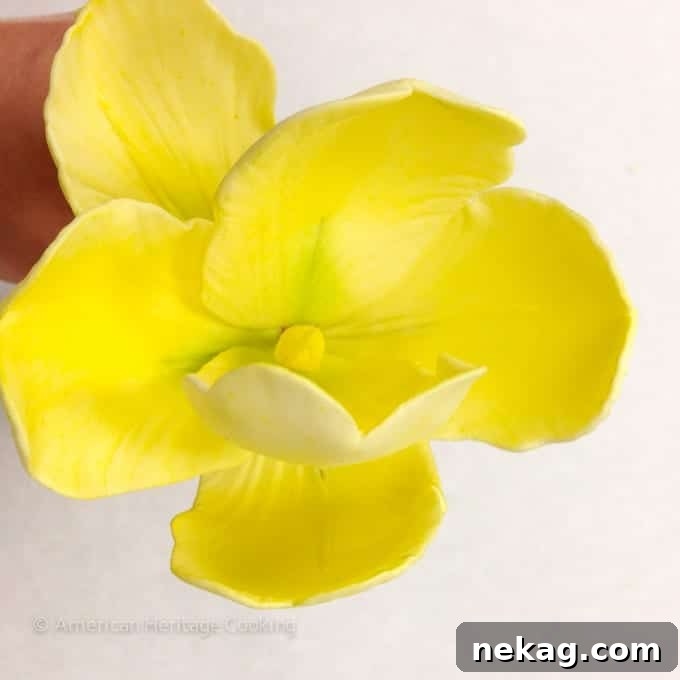
I found immense satisfaction in creating delicate sugar paste flowers and working with pastillage. Pasty-what, you ask? Let me break it down for you: pastillage and sugar paste (like the beautiful roses pictured below and the vibrant tulip) are both very similar mixtures of sugar and gelatin. However, sugar paste includes additional gums that give it superior pliability and elasticity. This allows it to be rolled incredibly thin and shaped into intricate, lifelike flowers and other decorative elements. Pastillage, on the other hand, is a notorious pain to work with. It tends to dry out at an alarming rate, often before you can even roll it thin enough to cut precisely. It rarely dries exactly how you want it, and its inherent fragility means it seems to break if you so much as look at it with too much intensity.
The Pastillage Gauntlet: A Battle with Fragility
This brings me to my pastillage showpiece, a project that tested my patience and resilience to their limits. Prior to attempting this two-foot-tall, gravity-defying sculpture, my total experience with pastillage amounted to a single, simple rocking horse cutout. If I had known the true scope of the challenge ahead, I might have significantly toned down my design. On second thought, I probably wouldn’t have, because “underachiever” simply isn’t in my DNA. I am perpetually drawn to pushing boundaries, even if it means risking structural integrity.
The first half-day was dedicated to making my pastillage and completing all the necessary cutouts for my ambitious design. I admit, I was a little concerned that my painstakingly crafted lizard looked more like a rat, but given my limited experience and the late hour (midnight the night before, to be precise), it was the absolute best I could achieve. The second day offered only an hour, a frantic sprint during which I constructed my base, meticulously sanded my pastillage cutouts for a smoother finish, and attempted to airbrush my pieces. This last task met with only a moderate degree of success; let’s just say my fine motor skills do not naturally extend to operating an airbrush gun with artistic precision.
Then came the final day: assembly. This was the moment of truth, the culmination of all the previous steps. I meticulously pieced together my pastillage showpiece, adhering each delicate component with royal icing. Ten minutes before the deadline to present to the chef, disaster struck. My entire showpiece disassembled itself. Pastillage reeds and leaves lay shattered on the floor, along with my heart and what little sanity I had left. There was no time for a pity party, no time to even catch my breath. I had to quickly pivot to the “B-team”: rejected pieces that weren’t as pretty, or didn’t quite flow in the direction I had originally intended, but were nonetheless intact. It was a harrowing, but ultimately character-building, experience.
Chocolate II: Sculpting with Cacao
From the depths of pastillage despair, we moved swiftly into Chocolate II. This unit was a fascinating exploration of cacao’s versatility, delving into modeling chocolate, the unique texture of chocolate granite, and the almost magical process of making chocolate pliable and moldable in a food processor (I still don’t fully grasp the scientific explanation, but it works, and it’s awesome!). We also delved into the delicate art of making bon bons, and, of course, embarked on yet another showpiece.
Our class collectively decided on movies as the theme for this chocolate showpiece, and for me, there was only one choice: Beauty and the Beast. It’s an all-time favorite, encompassing so many elements I adore: books, delicious food, the romantic allure of France, a timeless love story, handsome princes, and enchanting castles. It truly combines all of my favorite things!
Naturally, this meant more books. And since I had successfully (if frantically) constructed five chocolate books in a day and a half last time, my ambition scaled new heights. For this project, I envisioned seven books, each a third of the thickness of the previous ones, a tiny teacup with a charmingly realistic chip, a delicate chocolate rose, and a precarious two-toned cutout placed at the very top. Are you noticing a theme here? No, not the books – rather, my certifiable insanity when it comes to designing showpieces. My chef, upon seeing my detailed sketch, simply stated, “There is no way you can do all of that in two days.”
Well, I did it. I had never attempted to make a rose out of modeling chocolate before, and I’ll admit, the result was just a shade away from hideous. But despite the challenging elements and the chef’s skepticism, I actually finished the entire showpiece with two precious minutes to spare. The adrenaline, the focus, the sheer determination to prove it could be done – it all converged in a triumphant, albeit slightly imperfect, chocolate creation.
Advanced Sugar: The Pinnacle of Sweet Artistry
Next came Advanced Sugar. So much sugar. And they were absolutely not kidding about the “advanced” part. If pastillage was a challenge, it was a breezy stroll compared to the precision and danger involved in blown sugar, poured sugar, and pulled sugar techniques. These are true forms of edible art, requiring immense heat control, speed, and artistic vision.
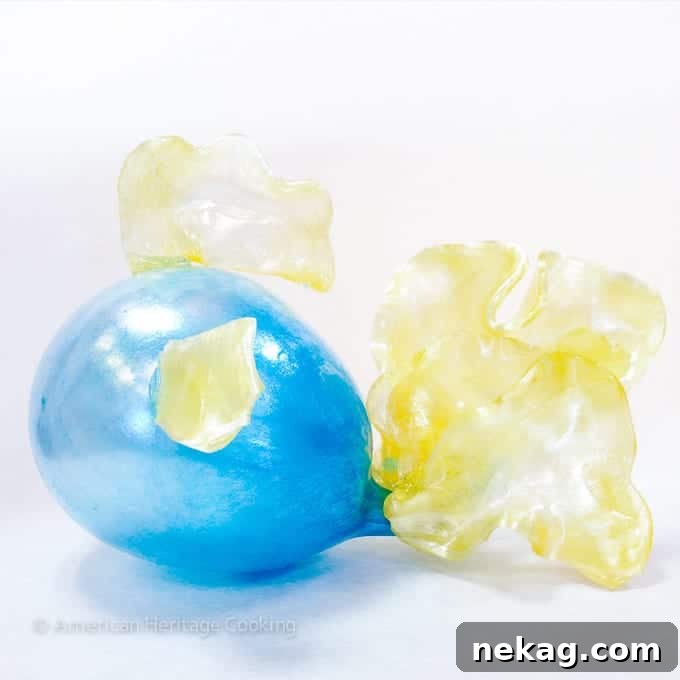
True to form, our days were packed: we poured a majestic sugar owl on one day, skillfully pulled sugar flowers and ribbons on the next, and then attempted to blow a delicate sugar fish on the third. The fourth day? That’s when you were expected to start your final showpiece. Say what now?! The timeline for creating such intricate, multi-technique sugar sculptures was incredibly compressed, demanding rapid assimilation of new skills and flawless execution.
My poor sugar owl, captured in a brief moment of glory, before I accidentally broke it for the fourth and final time! For my advanced sugar showpiece, an ambitious “Under the Sea” theme, I utilized no less than ten different sugar techniques. Yes, ten, all to be completed within a mere two days. Every single component on this showpiece, from the intricate coral to the shimmering fish, was made entirely of sugar. Our old friend pastillage made a welcome reappearance, forming the sturdy white base and structural “shell” of the piece. Happy to see you, stability!
What was I saying earlier? Certifiably insane. I won’t bore those of you who are still reading (is anyone still reading this detailed account?!) with each and every minute component of my design. Just know that half of it began to melt from the oppressive humidity of the kitchen; the elaborate background almost collapsed on itself and required three people to hold it steady while it cooled enough to stand independently (you have to shape sugar while it’s still dangerously hot); and those delicate blown sugar fish were crafted by hand a mere fifteen minutes before the final presentation deadline. It was absolute insanity, a true test of nerve and skill.
But there it is, a testament to what can be achieved under extreme pressure and with sheer will.
Are you thoroughly sick of showpieces yet? Because I certainly am. My mind yearns for the comforting familiarity of puff pastry. Mmmm, puff pastry.
The Wedding Cake Challenge: Crafting a Masterpiece Under Pressure
I have one more showpiece saga for you: a wedding cake, unexpectedly themed with an Indian design. I am not entirely certain what possessed our class to choose this specific theme, but I am unequivocally certain that I never, ever want to pipe a henna design on a cake again. The intricate details, the steady hand required, the sheer volume of piping – it was a monumental undertaking.
At this point in my culinary journey, it had become a given that any project I designed would inherently require twice as long as the allotted time. That’s just how my creative process works. And it should come as absolutely no shock that something, somewhere, went terribly wrong – catastrophically wrong, in fact.
Our wedding cake project unfortunately spanned over a weekend, with the final presentation scheduled for a Monday. My ideal plan for that Monday was relatively straightforward: merely assemble my cake tiers, prepare and color the royal icing, pipe my intricate henna design, pour my sugar base and accompanying edible gems, create the delicate green beaded border for each layer, and finally, arrange the cascading, draped sugar element. Only that. A perfectly manageable list for a normal person.
However, my cakes were not wrapped well enough, and the moist, humid air circulating within the refrigerator actually caused a hole to melt through my fondant and buttercream on all three tiers. I should have taken a picture of the devastation, but I was so utterly shocked and dismayed that all I could do was immediately spring into action, desperate to fix it. This meant I had to carefully remove all the damaged fondant, refresh my buttercream (thankfully, I had just enough left), meticulously re-mask and square off my cakes, and then re-cover all three tiers with fondipan (a unique mixture of fondant and marzipan – yes, more marzipan, and no, I won’t pretend I didn’t sample some during the process…). AND then, after all that unforeseen repair work, I still had to accomplish everything else I had originally planned for the day. It felt impossible, an insurmountable mountain of work.
Despite the immense setback and the ticking clock, I am incredibly proud to say that I not only finished on time but also executed my wedding cake almost exactly like my initial diagram. I piped that intricate henna design entirely freehand in under twenty minutes, racing against an unforgiving deadline. On my initial itinerary, I had allocated a generous two hours for piping, because that is what a normal, rational person would require. Adrenaline, my friends, is a powerful and miraculous thing.
Of course, looking back, there are always details I wish I could have perfected: I don’t love the poured sugar gems on the draping; I wish I had more time to meticulously play with the exact positioning of the sugar paste flowers and the elegant sash; I had dreamt of painting my intricate piping in a luxurious gold; and I certainly wish I had had the time to gently tap down the tiny tails on the piped dots for a cleaner finish. These are the small, precise details that haunt a perfectionist. But given the circumstances, I consider it a monumental success.
The Final Stretch and Beyond
Now, I only have the remainder of Plated Desserts II and my final exams left to conquer. One more showpiece stands between me and the completion of this incredible adventure. Next time, I promise to share more about my exciting next chapter and where this culinary journey will take me from here. But for now, I need to immerse myself in studying and sketching for my remaining assignments! And I am quite sure that after this exhaustive account, you are bored to tears and ready for a break too!
Be sure to follow me on Instagram for more daily pictures of the sweet and savory creations I develop, and the delectable treats and culinary delights I discover in my New York City adventures!