
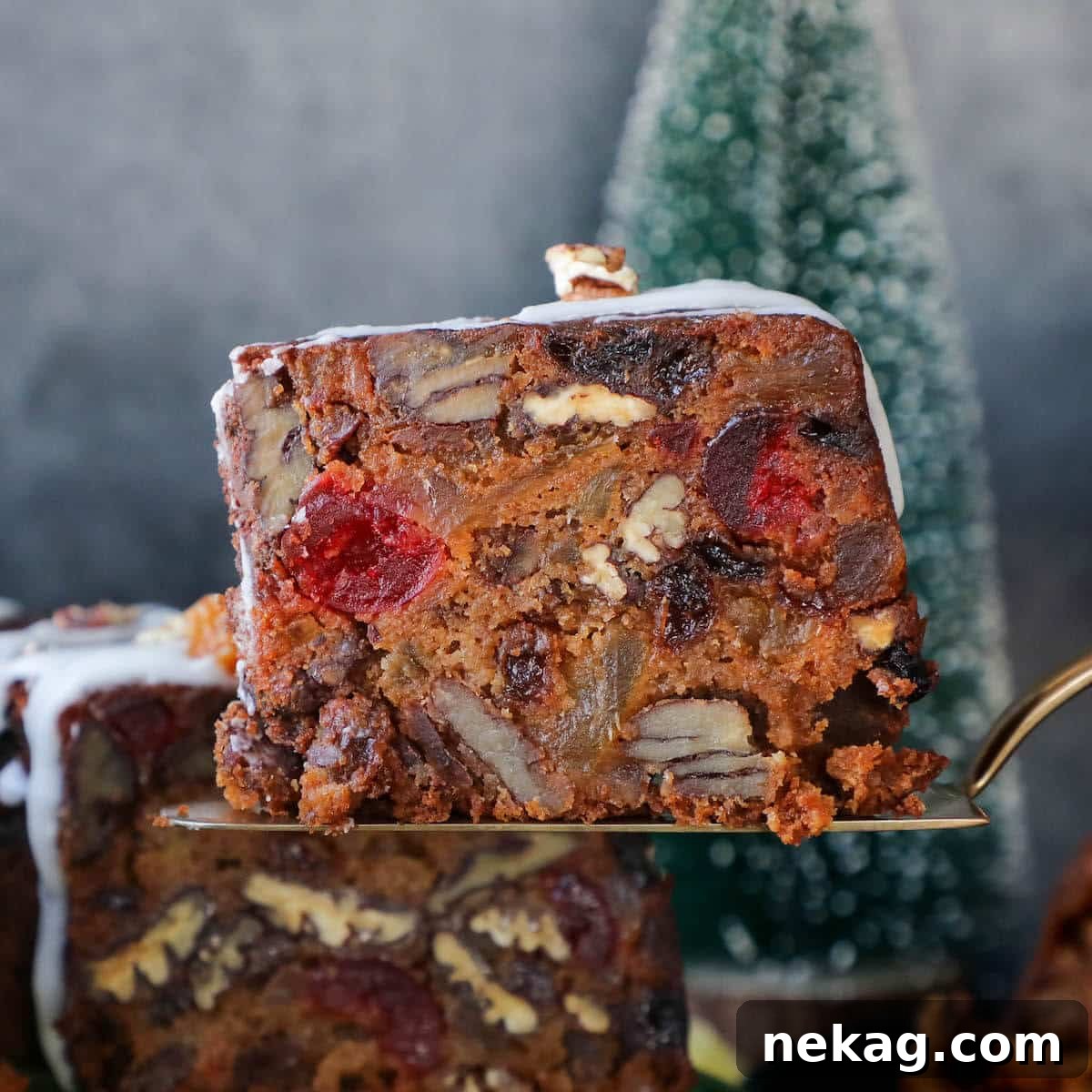
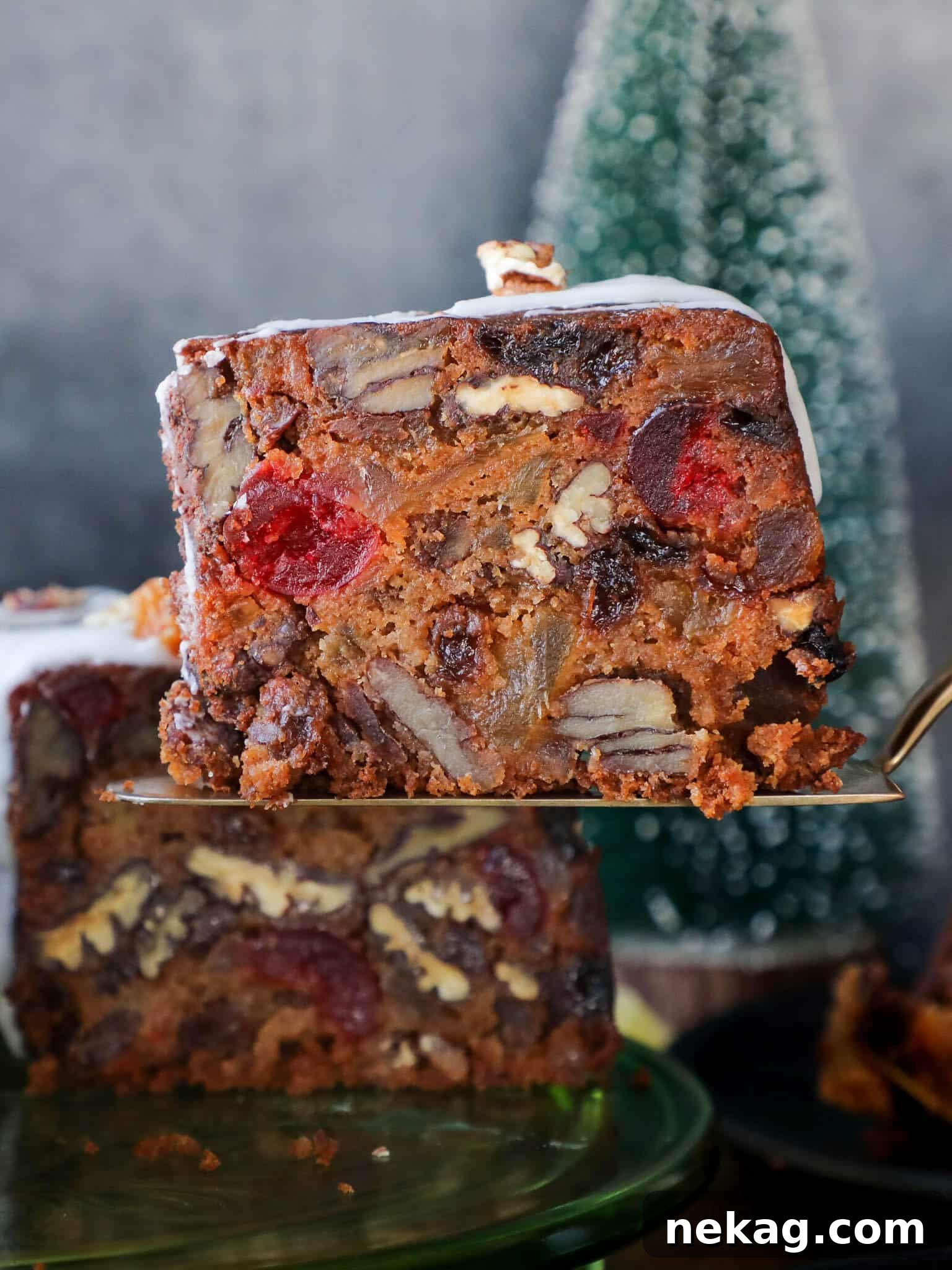
Delight in the rich tradition of festive baking with my grandmother’s treasured **fruit cake recipe**. This exceptional recipe yields an incredibly moist and profoundly flavorful cake, generously spiced with aromatic cinnamon and nutmeg, then lavishly packed with a vibrant medley of dried fruits and crunchy nuts. What sets this recipe apart is its inherent moisture; it’s so rich and tender that it doesn’t even require soaking to be enjoyed. You can serve it fresh from the oven, making it a delightfully easy yet impressive Christmas cake that everyone will adore. Forget the dry, overly dense fruitcakes of the past – this is a recipe that will redefine your expectations and become a cherished part of your holiday traditions.
A Quick Look At The Recipe
This is a brief summary of the recipe’s key details and preparation time. For complete, step-by-step instructions and ingredient quantities, please jump to the full recipe card below.
Jump to Recipe
Prep Time
40 minutes
Cook Time
2 hours
Total Time
2 hours 40 minutes
Servings
16 slices
Difficulty
Easy
Calories *
591 kcal per serving
Technique
Prepare batter using the creaming method, gently fold in a generous mix of fruits and nuts, then bake until golden. For traditional aging, wrap in a spirit-soaked cloth, changing weekly, for 1-8 weeks, though delicious fresh.
Flavor Profile
A beautifully balanced, lightly spiced, and wonderfully dense cake, brimming with the natural sweetness of candied fruits and the satisfying crunch of nuts. Each bite offers a harmonious blend of festive flavors.
* Based on nutrition panel, approximate values.
This is my second year making this fruitcake and the recipe makes a great fruit cake. I wrap it in cheesecloth dipped in Peach brandy but it is wonderful right out of the hot pan. ⭐⭐⭐⭐⭐
Deborah Owens
Indeed, this truly stands as the ultimate fruit cake recipe, meticulously crafted to be exceptionally moist, perfectly dense, and wonderfully mellow. It defies the common misconception that fruitcake must be dry or heavy. You can savor this delightful creation fresh, straight from the oven, making it an ideal choice for a last-minute yet impressive Christmas treat. Its flavor profile is notably lighter and less intensely spiced compared to my old-fashioned fruit cake recipe, appealing to a broader palate while still retaining that classic festive charm.
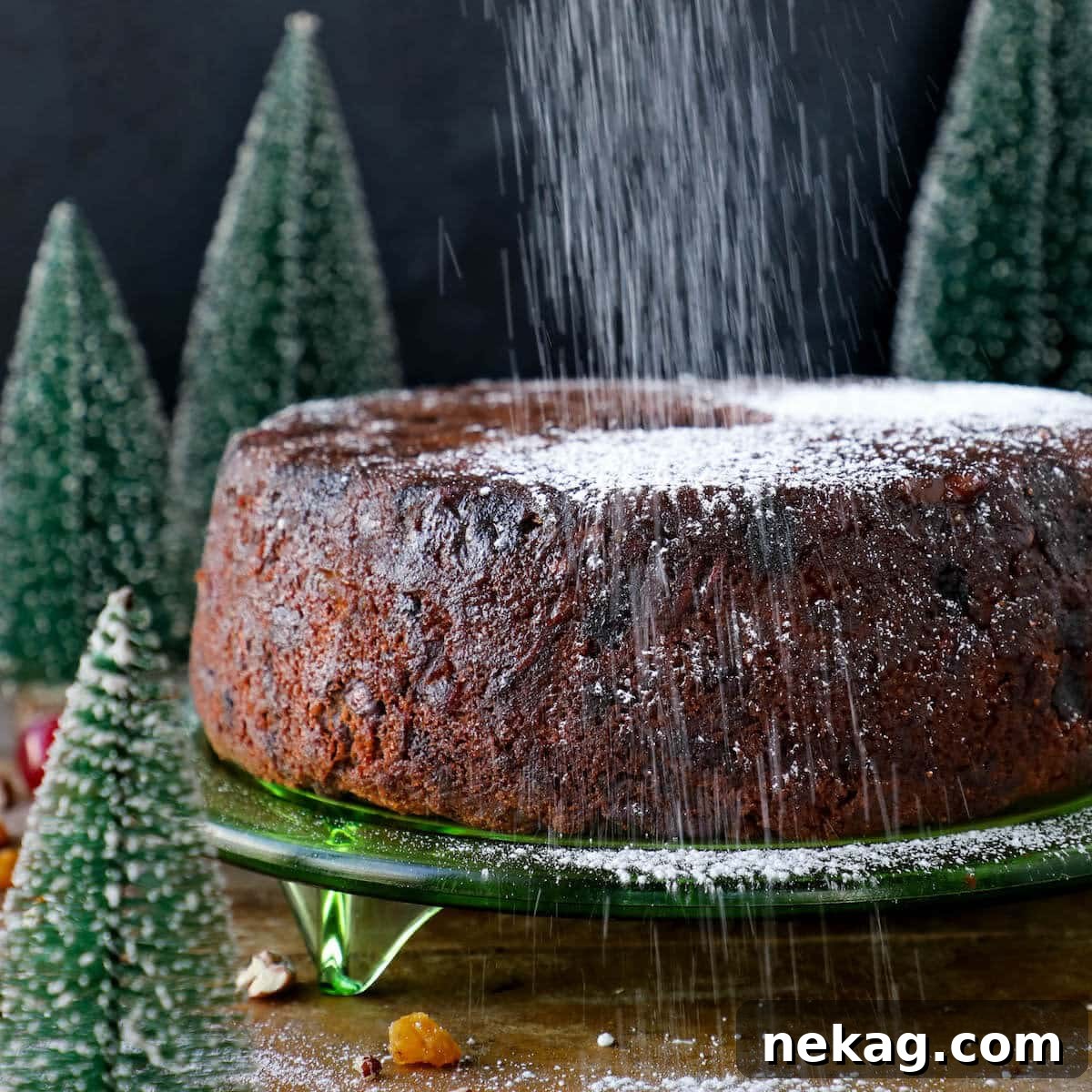
While this fruit cake is undeniably delicious on its own, it also serves as a fantastic canvas for various toppings. It doesn’t strictly need an icing, but for an elevated experience, consider a delicate dusting of powdered sugar, a simple yet elegant cream cheese glaze—as I’ve prepared here—or indulge in the best cream cheese buttercream for an extra touch of decadence. As you immerse yourself in the joyful spirit of holiday baking, explore other delightful cake recipes such as this comforting caramel molasses cake, a fragrant gingerbread cake, or our famously chewy molasses sugar cookies!
For those who love the flavors of fruitcake but prefer a bite-sized format, I also offer a wonderful old-fashioned fruit cake cookies recipe. These cookies capture all the beloved spices, dried fruits, nuts, and textures you crave in a convenient and delightful cookie form, complete with a brandy cream cheese frosting that’s simply irresistible.
Table of Contents
- Why This is the Best Fruitcake Recipe
- Professional Tips for Making Fruit Cake
- What is Fruit Cake? History & Tradition
- Essential Ingredients for Your Fruit Cake
- Fruit Cake Substitutions & Creative Variations
- Step-by-Step Guide: How to Make Fruit Cake
- Chef Lindsey’s Expert Recipe Tip
- Troubleshooting: Why is My Homemade Fruit Cake Dry?
- Frequently Asked Questions About Fruit Cake
- The Best Fruit Cake Recipe Card
- Before You Go! Explore More Recipes
Why This is the Best Fruitcake Recipe You’ll Ever Make
- Unbelievably Moist Without Soaking: Unlike many traditional fruitcakes that demand weeks of soaking, this recipe produces a cake that is exceptionally rich and moist right out of the oven. While soaking in brandy can further enhance its complex flavors, add even more moisture, and extend its shelf life, it’s not a prerequisite for enjoyment. This means you can bake and serve it on the same day for an effortless holiday treat.
- No Pre-Soaking Dried Fruit Required: Bid farewell to the tedious step of soaking dried fruits for days or even weeks in advance. With this recipe, the dried fruits are incorporated directly into the batter and baked into the cake. This simplifies the preparation process significantly, allowing you to enjoy a homemade fruit cake with less fuss and more convenience, without compromising on flavor or texture.
- Light Yet Luxuriously Dense with Fruit and Nuts: This recipe achieves a perfect balance that often eludes other fruitcakes. We start by creaming together butter and sugar, a technique that introduces air into the batter, resulting in a lighter, more tender crumb. Subsequently, an abundant proportion of dried fruits and nuts is folded in, transforming the cake into a rich, substantial, and satisfyingly dense confection. It’s the best of both worlds – a tender cake base supporting a vibrant, flavor-packed interior.
- A Cherished Family Legacy: This isn’t just any recipe; it’s Nana’s cherished creation, a recipe so beloved that family and friends would eagerly anticipate it every single Christmas. I am honored to share her secret techniques, along with my own professional expertise and all the valuable lessons I’ve learned through trial and error. You’re not just getting a recipe; you’re getting a piece of culinary history, perfected over generations.
Professional Tips for Crafting the Perfect Fruit Cake
- Choosing the Ideal Baking Pan: For a fruit cake that boasts unparalleled moisture and even baking, a standard tube pan is your best friend. The central tube design allows the dense cake batter to bake more uniformly and in less time, preventing overcooked edges and an underdone center. While loaf pans also work effectively, I strongly advise against using a bundt pan or a removable-bottomed tube pan. I learned this the hard way – bundt pans can make unmolding difficult due to the cake’s density, and removable bottoms risk leakage with the moist batter. Stick to a solid tube pan for optimal results.
- Baking Above a Water Bath, Not In It: This unique baking method is crucial for achieving a tender, moist crumb. Instead of placing the cake pan directly in a water bath, bake it in a low oven with a separate pan of steaming hot water placed on the rack *below* it. This creates a humid environment within the oven, which prevents the cake from drying out during its long baking time. It promotes even baking and keeps the cake wonderfully moist without the risk of water seeping into the batter. It’s a double win for moisture and texture!
- Nana’s Secret for Extra Moisture: Wrap with Apple Slices: Before you begin the soaking and wrapping process, incorporate my grandmother’s ingenious trick for making the fruit cake exceptionally moist and flavorful. Place a few thin slices of fresh apple into the center cavity of the cooled fruit cake (where the tube of the pan was). The apple slices gradually release moisture and subtle fruity notes into the cake as it rests, contributing to an even more tender crumb and a delightful depth of flavor. This simple step elevates the fruit cake from great to truly unforgettable.
What is Fruit Cake? History & Festive Tradition
Fruit cake is a revered rich cake, traditionally infused with a symphony of warm spices and often deepened with the elegant notes of brandy or other spirits. It is characterized by its substantial texture, derived from a generous proportion of candied and dried fruits, along with a medley of nuts, all baked directly into the dense cake batter. Historically, fruit cake has a rich and storied past, dating back to ancient Roman times when pomegranates, pine nuts, and raisins were mixed into a barley mash. Over centuries, it evolved across Europe, becoming a symbol of festivity and celebration.
In many traditions, fruit cake is lovingly “fed” or “soaked” several times a month with brandy, rum, or another chosen spirit. This process not only infuses the cake with complex, mature flavors but also significantly preserves it, allowing it to be stored for extended periods – sometimes even for months or a year! This decadent soaking also contributes immensely to the cake’s signature moistness, ensuring every slice is rich and tender. While once a popular choice for wedding cakes in earlier eras, fruit cake has largely transformed into a beloved Christmas cake in modern baking, eagerly anticipated during the holiday season. It stands as a testament to enduring culinary traditions, offering a taste of history and comfort with every bite.
Essential Ingredients for Your Moist Fruit Cake
Crafting the perfect fruit cake begins with selecting the finest ingredients. Each component plays a vital role in achieving the moist texture, balanced sweetness, and rich, spiced flavor that defines this classic holiday treat. Here’s a closer look at what you’ll need:
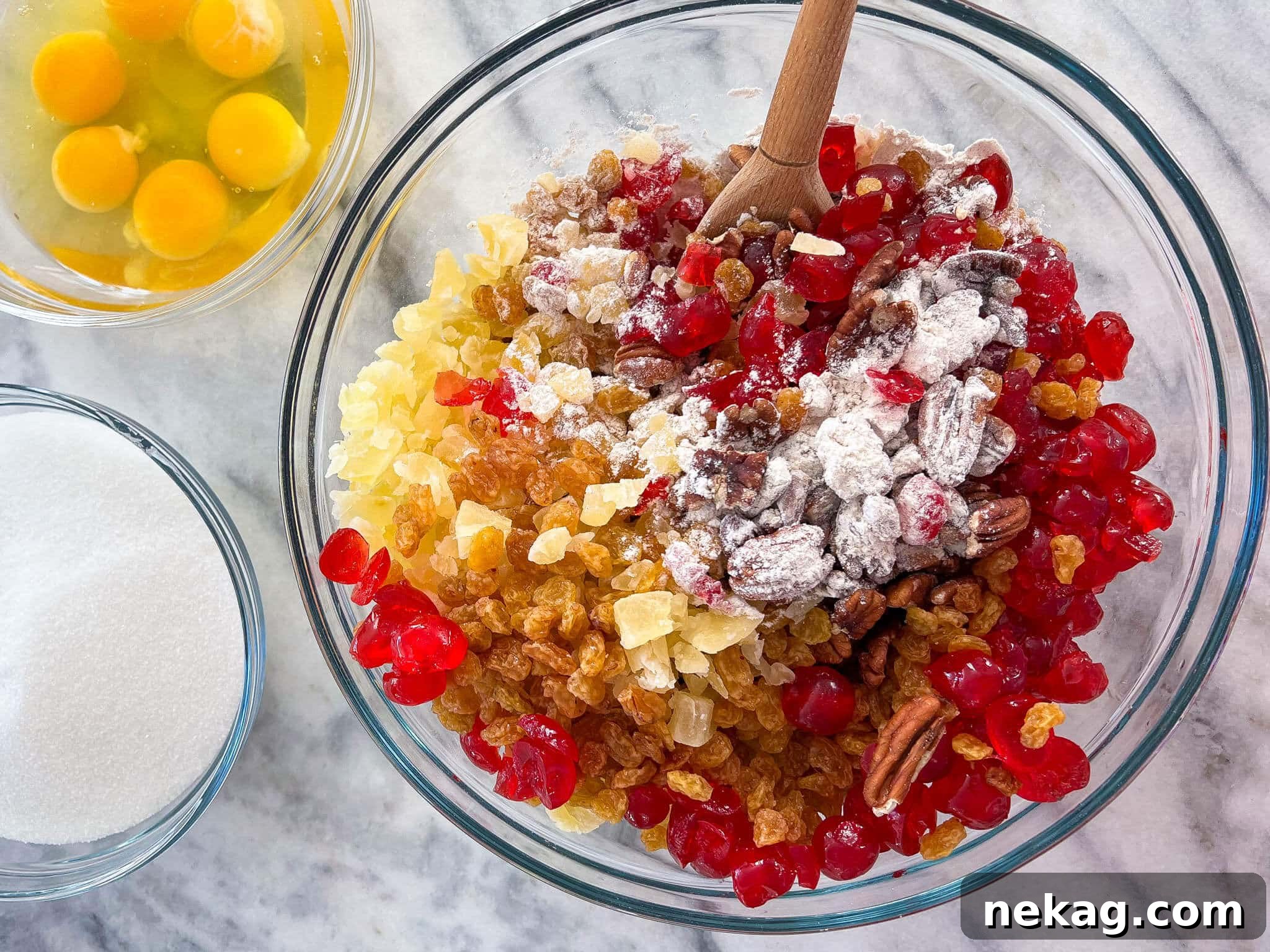
- Dried & Candied Fruit: This recipe calls for a delightful combination of golden raisins, vibrant candied pineapple, and ruby-red candied cherries. These fruits are more than just flavor enhancers; they act as tiny, slow-release moisture vessels, soaking up the brandy and imparting their natural sweetness throughout the cake. They contribute to the cake’s dense yet moist texture and characteristic chewiness. If you’re looking for a cake with fresh fruit, my Orange Upside Down Cake offers a different but equally delicious experience!
- All-purpose flour: The backbone of our cake, all-purpose flour contains just the right amount of gluten to create a tender, soft crumb without becoming tough. To ensure a delicate texture and prevent the formation of undesirable “tunnels” in your cake, it’s crucial to avoid overmixing the batter. Incorporate the flour in several additions, folding gently until just combined. When in doubt, finish folding in the flour by hand to maintain control and prevent overdevelopment of gluten.
- Baking Powder: We use double-acting baking powder in this recipe. This type of leavening agent provides two stages of lift: an initial reaction when mixed with liquid and an acid, and a secondary, more powerful rise when exposed to heat in the oven. This dual action ensures a consistent and stable rise for our dense fruit cake, giving it a beautifully light structure within its richness.
- Kosher Salt: Often overlooked, salt is a flavor multiplier in baking. Kosher salt, with its larger crystals, is less concentrated than table salt, allowing for more controlled seasoning. It plays a critical role in heightening the overall flavors of the cake, ensuring it tastes bright and well-rounded, preventing it from tasting dull or flat. Never skip the salt!
- Cinnamon: A cornerstone of warm, festive spice, cinnamon brings depth and aromatic complexity to the fruit cake. I personally prefer Saigon cinnamon for its bold, sweet, and pungent flavor, but any good quality ground cinnamon will provide a wonderful warmth.
- Ground Nutmeg: Nutmeg adds a distinctive, woody, and slightly sweet spice profile that is essential for a traditional fruit cake. This recipe is formulated for pre-ground nutmeg. If you opt for freshly ground nutmeg, which offers a superior, more potent flavor, remember to adjust the quantity. You’ll likely need only half or even two-thirds of the amount specified for pre-ground, as fresh nutmeg is considerably stronger and more aromatic.
- Pecans: The rich, buttery crunch of pecans is indispensable in this fruit cake. I have a soft spot for plump, fresh Southern pecans for their exceptional flavor and texture. However, any high-quality pecan halves will do the job beautifully. To maintain their freshness and prevent them from turning rancid, especially if you plan to store them for longer than a month or if your kitchen is consistently warm, it’s best to keep them in the freezer.
- Butter: Unsalted butter is my go-to for baking, and for good reason. Using unsalted butter allows you to precisely control the amount of salt in your recipe, which can vary significantly between different butter brands. Softened butter is key for the creaming method, contributing to the cake’s tender crumb and rich flavor.
- Sugar: Granulated sugar is not just for sweetness in this cake. Beyond its obvious role in flavor, granulated sugar aids in leavening by creating air pockets when creamed with butter, contributes to the cake’s moistness by attracting and holding water, and influences its final texture and stability, ensuring a perfect bake.
- Large Eggs: Eggs are multi-functional powerhouses in baking. Whole large eggs are essential for emulsifying the fats into the batter, which results in a wonderfully moist cake that isn’t greasy. They also play a crucial role in leavening, trapping air when beaten with sugar and contributing to the cake’s structure and tenderness.
- Brandy: Adding brandy or another alcohol to a fruit cake serves dual purposes: it imparts a distinctive, complex flavor and significantly enhances moisture. Alcohol does not hydrate the gluten in flour in the same way water does, which actually helps create a more tender, less chewy cake. The spirit also acts as a natural preservative, especially when the cake is soaked over time.
- Honey: Used for brushing the cake while baking, honey adds a beautiful golden sheen and a subtle, additional layer of sweetness, helping to keep the crust soft and flavorful.
See the full recipe card below for precise measurements and quantities of each ingredient.
Fruit Cake Substitutions & Creative Variations
One of the joys of fruit cake is its versatility! Feel free to customize this recipe to suit your taste preferences or to use ingredients you have on hand. Here are some fantastic substitution and variation ideas:
- Dried Fruit Alternatives: If the specified dried fruits aren’t to your liking, or if you simply want to experiment, feel free to substitute them with any dried fruits you enjoy. Chopped dried apricots, succulent pears, tiny currants, or even rehydrated dried apples would make for a delicious and intriguing twist. For a welcome burst of tartness to beautifully balance the cake’s sweetness, consider adding dried tart cherries.
- Candied Fruit Combinations: The world of candied fruit offers endless possibilities. Use any combination that speaks to you! While this recipe uses candied pineapple and cherries, you might prefer a mix of citrus peel, citron, or even ginger. For a future bake, I’m considering using all dried fruit and omitting the candied cherries and pineapple entirely for a different flavor profile.
- Nutty Variations: Don’t limit yourself to pecans! This fruit cake welcomes any of your favorite nuts. Almonds (slivered or chopped), walnuts, and vibrant green pistachios all make excellent choices, each adding its own unique texture and flavor. For a delightful tropical touch, you could even incorporate macadamia nuts. Plus, if you have macadamia nuts in your pantry, you’re halfway to baking a batch of irresistible White Chocolate Macadamia Nut Cookies!
- Non-Alcoholic Options: For a delicious fruit cake without alcohol, you have several excellent alternatives. Substitute the brandy with an equal amount of flavorful non-alcoholic liquids such as orange juice, apple juice, or robust apple cider. You can still soak the cake in apple cider for added moisture and flavor, or simply serve it fresh and completely forgo the soaking process. It will remain wonderfully moist and delightful. Remember, non-alcoholic fruit cakes should be refrigerated for optimal freshness and shelf life.
Step-by-Step Guide: How to Make the Best Fruit Cake
Follow these detailed instructions to create a truly exceptional fruit cake that will impress everyone. For precise measurements and quantities, please refer to the comprehensive recipe card located further below.
Preparing the Cake:
Step 1: Prepare Your Pan. Begin by thoroughly spraying a 10-inch tube pan with baking spray, then line the bottom and sides with parchment paper. A non-removable bottomed tube pan is highly recommended for its reliability and ease of handling with dense batters. For an even smoother experience, opt for a nonstick pan. If a tube pan isn’t available, two standard loaf pans will also work well, but ensure they are also lined with parchment paper for easy release.
Step 2: Preheat Your Oven. Set your oven to a gentle 275°F (135°C). The low temperature is key for slowly baking this dense cake, ensuring it cooks thoroughly without drying out or burning the edges. This long, slow bake contributes significantly to the cake’s ultimate moistness.
Chef’s Pro Tip: Convection Baking! For an even faster bake and a beautifully golden brown top crust, I highly recommend using the convection setting on your oven, if available. This circulates hot air more efficiently, resulting in a more uniform and quicker bake for your fruit cake.
Step 3: Combine Dry Ingredients and Fruits. In a generously sized mixing bowl, whisk together the all-purpose flour, baking powder, kosher salt, ground cinnamon, and nutmeg until thoroughly combined. This ensures the spices are evenly distributed throughout the cake. Next, add the chopped pecans, candied pineapple, candied cherries, and golden raisins to this dry mixture. Toss everything together gently until all the fruits and nuts are lightly coated with flour. This crucial step prevents the heavy fruits and nuts from sinking to the bottom of the cake during baking, ensuring they are beautifully dispersed throughout.
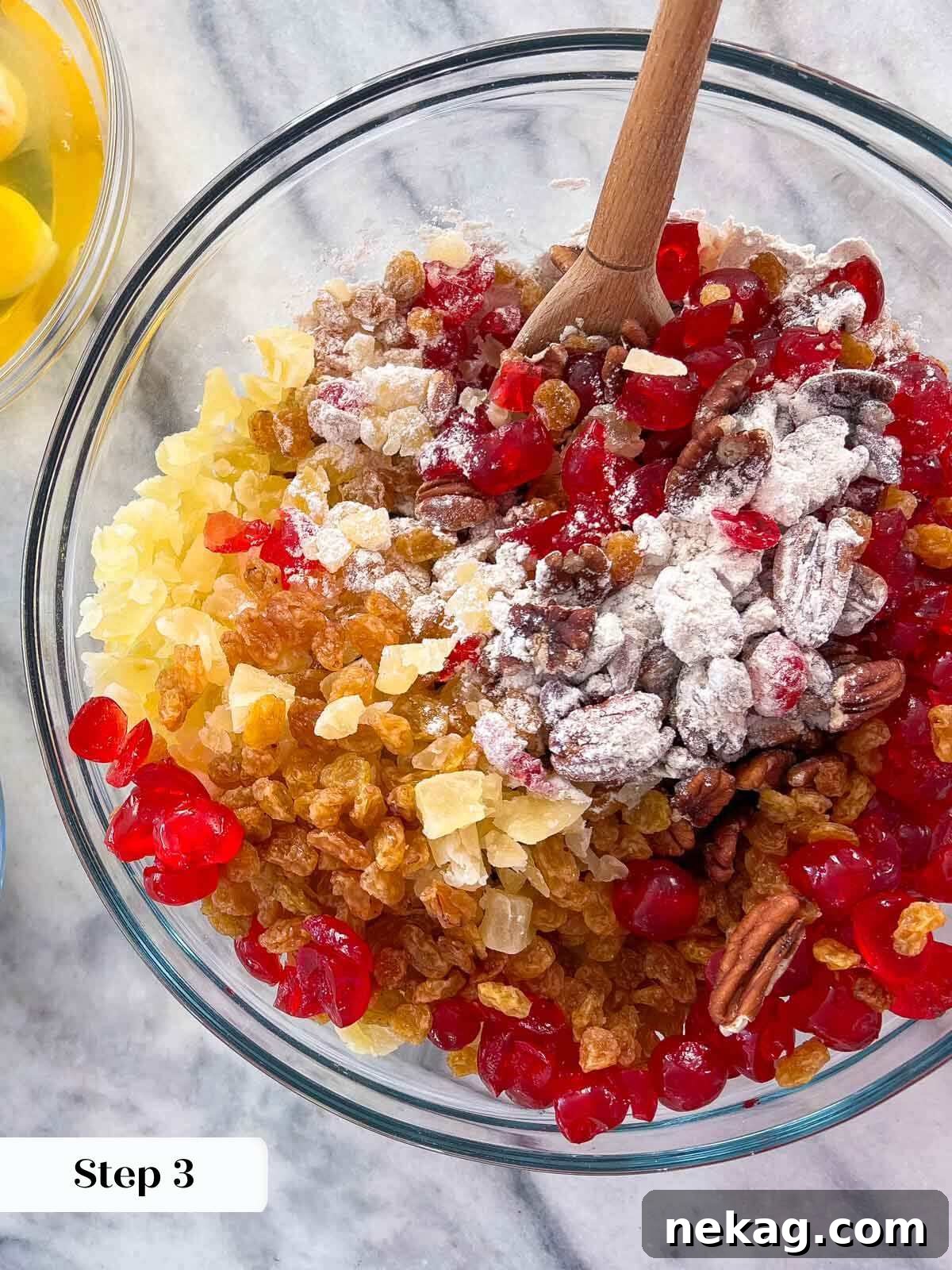
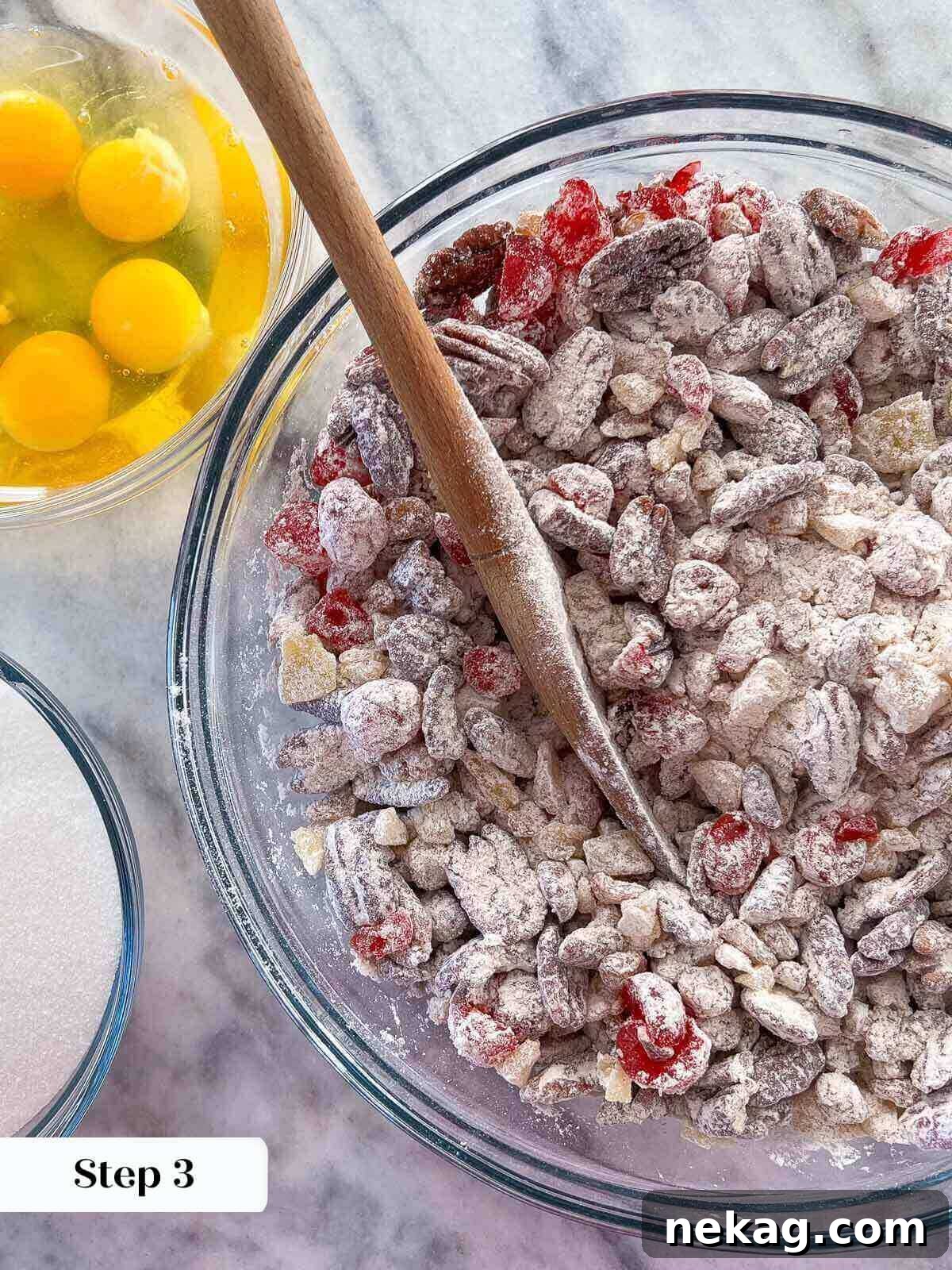
Step 4: Cream Butter and Sugar. In the bowl of a stand mixer fitted with the paddle attachment, or using a large bowl and a hand mixer, cream together the softened unsalted butter and granulated sugar. Beat them on medium-high speed for several minutes until the mixture becomes light, fluffy, and noticeably pale in color. This creaming process incorporates air, which is vital for the cake’s texture and lightness.
Step 5: Incorporate Eggs and Brandy. Reduce the mixer speed to low. Add the large eggs one at a time, ensuring that each egg is fully incorporated into the butter-sugar mixture before adding the next. This prevents the batter from curdling and ensures a smooth emulsion. Once all eggs are mixed in, beat in the brandy (or your chosen non-alcoholic substitute).
Step 6: Fold in Dry Ingredients. Remove the bowl from the mixer. Add the flour-coated fruit and nut mixture to the wet batter. Using a spatula, gently fold the ingredients until just combined. Be careful not to overmix at this stage, as overworking the gluten can lead to a tough cake. A few streaks of flour are acceptable; final incorporation can happen during pouring.
Step 7: Prepare for Baking. Pour the fruit cake batter evenly into your prepared tube pan. Gently tap the pan on the counter a few times to release any trapped air bubbles and level the surface. Place the pan into your preheated oven.
Step 8: Set Up the Water Bath (Below). On the oven rack directly below the cake, place a large baking dish or roasting pan filled with hot water. This creates a humid atmosphere within the oven, which is essential for baking a wonderfully moist fruit cake. Remember: **Do not bake the cake directly in the water.** The steam is what we are after.
Step 9: Bake to Perfection. Bake the fruit cake for approximately 2 hours, or until a cake tester (a wooden skewer or toothpick) inserted into the center comes out clean. The long baking time at a low temperature is crucial for thoroughly cooking this dense cake.
Honey Glaze for a Golden Finish: After about 90 minutes of baking, once the top crust has set but the cake isn’t fully cooked, gently brush the top surface of the cake with warmed honey. This will give your fruit cake a beautiful golden sheen and a wonderfully soft, slightly sticky crust, adding another layer of flavor and moisture. Continue baking until done.
Step 10: Cool and Unmold. Once baked, remove the cake from the oven and let it cool in the pan on a wire rack for about 15-20 minutes. Then, carefully unmold the cake and transfer it directly to the wire rack to cool completely. Once cool, you can choose to proceed with the optional soaking process, or enjoy it fresh!
How to Traditionally Soak a Fruit Cake (Optional):
Soaking a fruit cake with spirits is a time-honored tradition that deepens its flavor, enhances moisture, and extends its shelf life significantly. Here’s a simple and effective method:
Step 1: Prepare Your Workspace. Lay out a large sheet of plastic wrap on your counter. This will serve as your wrapping base. Place the cooled fruit cake upside down on the plastic wrap. This orientation helps the liquid penetrate more evenly into the cake’s base.
Step 2: Prepare the Soaking Towel. Measure out ½ to ¾ cup of brandy or rum into a large measuring cup or shallow bowl. Submerge a clean kitchen towel or tea towel into the spirit until it is fully saturated. Squeeze out any excess liquid, so the towel is damp but not dripping.
Step 3: Apply the Soaked Towel. Carefully place the brandy-soaked towel over the bottom (which is currently facing up) of the fruit cake. Gently flip the cake over, holding the towel securely against its sides, so the towel now covers the top surface of the fruit cake.
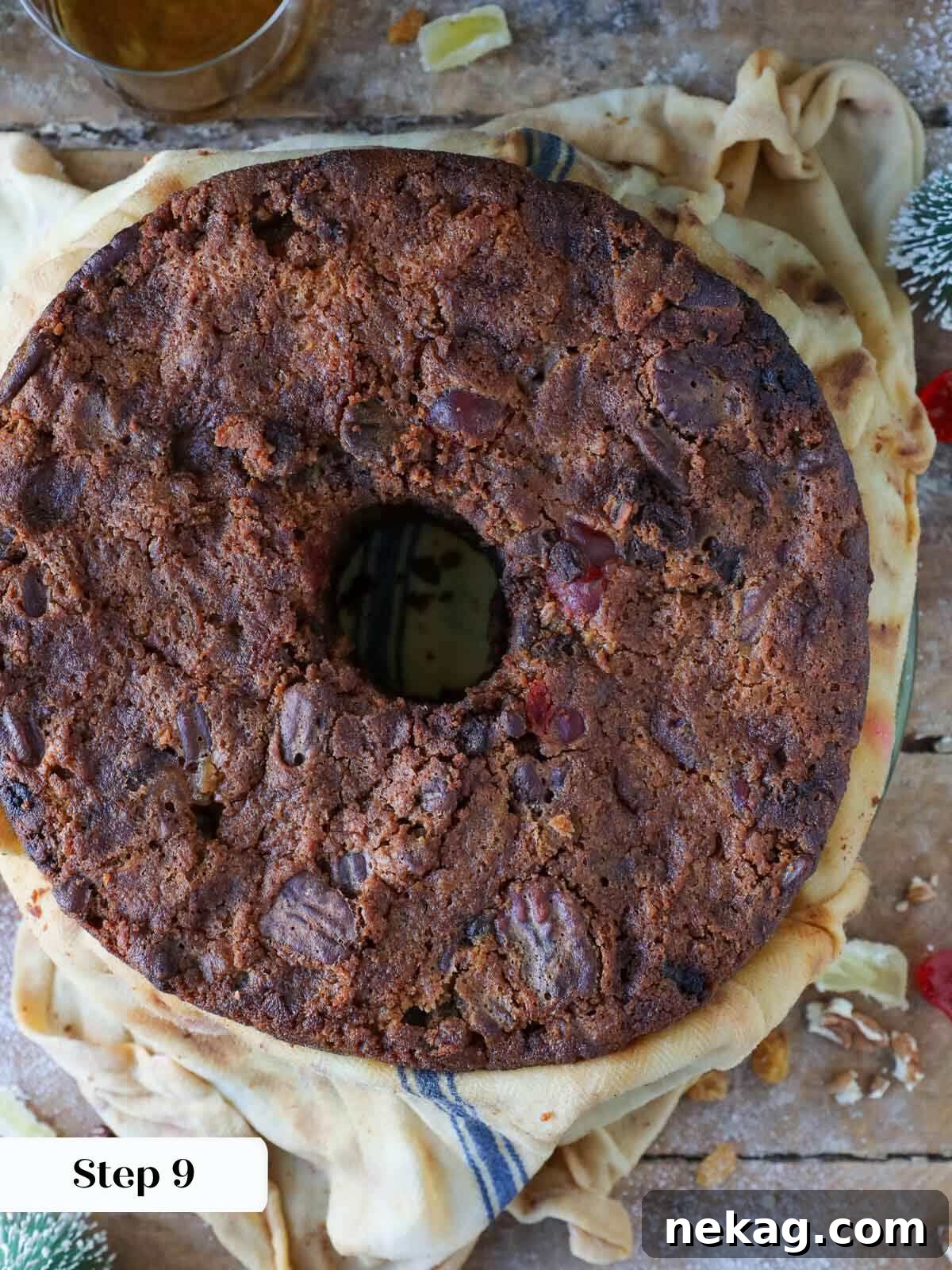
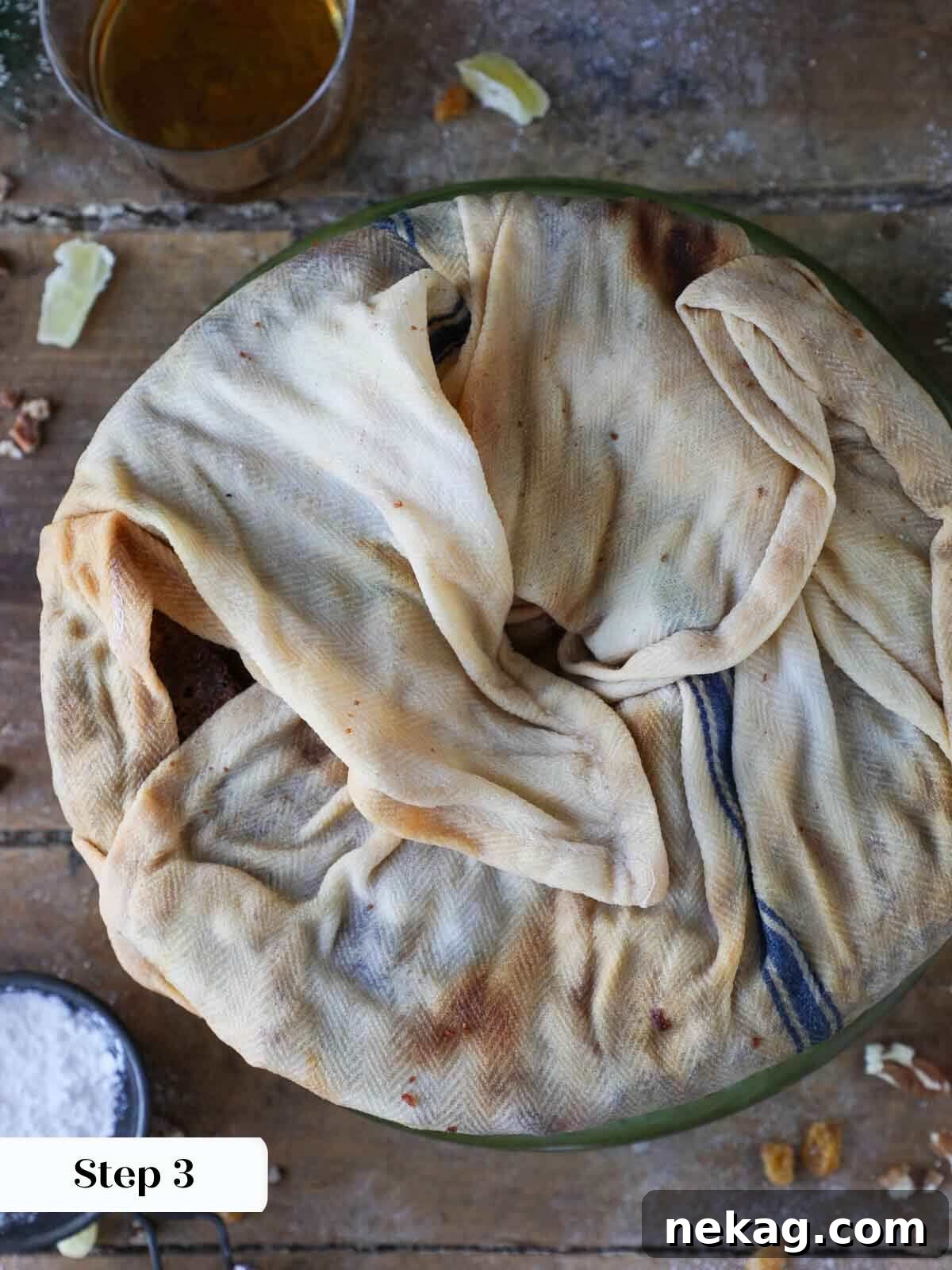
Step 4: Seal for Aging. Using the plastic wrap already underneath the cake, begin to tightly wrap the cake. Add additional layers of plastic wrap, ensuring it is completely sealed and airtight. This prevents moisture loss and allows the flavors to meld beautifully. Store the wrapped cake in a cool, dark place.
Nana’s Aging Wisdom: My grandmother would traditionally soak her fruit cake twice a month for an impressive 3-4 months, allowing the flavors to truly mature. I typically soak my cake twice, about one month apart, for a delightful balance of flavor and freshness. The longer you soak, the deeper and more complex the flavor becomes!
Chef Lindsey’s Expert Recipe Tip
For an effortlessly perfect release of your fruit cake, always line the bottom of your tube pan with parchment paper! Here’s a simple trick: trace the outer circumference of the pan bottom, then reach your marker down the tube and trace a smaller circle inside. Fold the paper and cut just inside these two marker lines for a perfectly shaped donut-like parchment liner. This ensures your beautiful cake slides out without a hitch!
Troubleshooting: Why is My Homemade Fruit Cake Dry?
It’s a common frustration to end up with a dry fruit cake, but it’s usually due to a few identifiable factors. Homemade fruit cake most frequently turns out dry because of over-baking, baking in an oven that is too hot, or not incorporating sufficient moisture through soaking. The long baking time required for dense fruit cakes makes them particularly susceptible to drying out if not managed correctly. An oven set too high will quickly evaporate moisture from the cake, leading to a brittle texture.
This fruit cake recipe is specifically designed to be moist even without soaking, thanks to its carefully balanced ingredients and baking method. If you choose not to soak your fruit cake in spirits, it’s best enjoyed within about a week of baking to appreciate its optimal flavor and texture. However, with the right techniques—like baking at a lower temperature and utilizing a water bath for humidity—you can ensure your un-soaked fruit cake remains wonderfully delightful and tender when eaten fresh!
Frequently Asked Questions About Fruit Cake
The best alcohol for soaking fruit cake is truly a matter of personal preference! I adore the warm, inviting aroma and rich flavor of traditional brandy, which complements the spices beautifully. However, fruit brandies like apple or peach brandy would also be absolutely fabulous choices, adding another layer of fruity complexity. For a distinct Southern twist, you could even opt for whiskey or Bourbon, which impart a smoky, caramelly depth. Choose an alcohol whose aroma and taste genuinely appeal to you to ensure you’ll love the final result.
Absolutely! You can easily make a delicious fruit cake without alcohol. For soaking, a wonderful alternative is apple cider, which adds a lovely sweetness and tartness. Alternatively, you can simply soak the dried fruit in apple cider or another fruit juice before incorporating it into the cake batter, yielding similar moist and flavorful results. For the 1 ½ tablespoons of brandy specified in the batter of this recipe, you can substitute it directly with apple cider or any other fruit juice. If you choose to forgo soaking the entire cake, simply serve the fruit cake within a few days of baking for optimal freshness. It will still be wonderfully delightful! Please note that a fruit cake made without alcohol, or soaked in non-alcoholic liquids, will not be shelf-stable and should be stored in the refrigerator to maintain freshness and prevent spoilage.
Proper storage is key to enjoying your fruit cake for an extended period. An alcohol-soaked fruit cake, when wrapped meticulously (preferably in multiple layers of plastic wrap and then foil or an airtight container), can be stored at cool room temperature for up to 6 months. To maintain its moisture and flavor over this period, it’s recommended to re-soak the cake with your chosen spirit once a month, as it may begin to dry out after about two months. For long-term storage after the initial soaking period is complete, or for non-alcoholic versions, wrap the fruitcake exceptionally well in plastic wrap and then store it in the refrigerator for up to a month, or in the freezer for up to a year. Thaw in the refrigerator before serving.
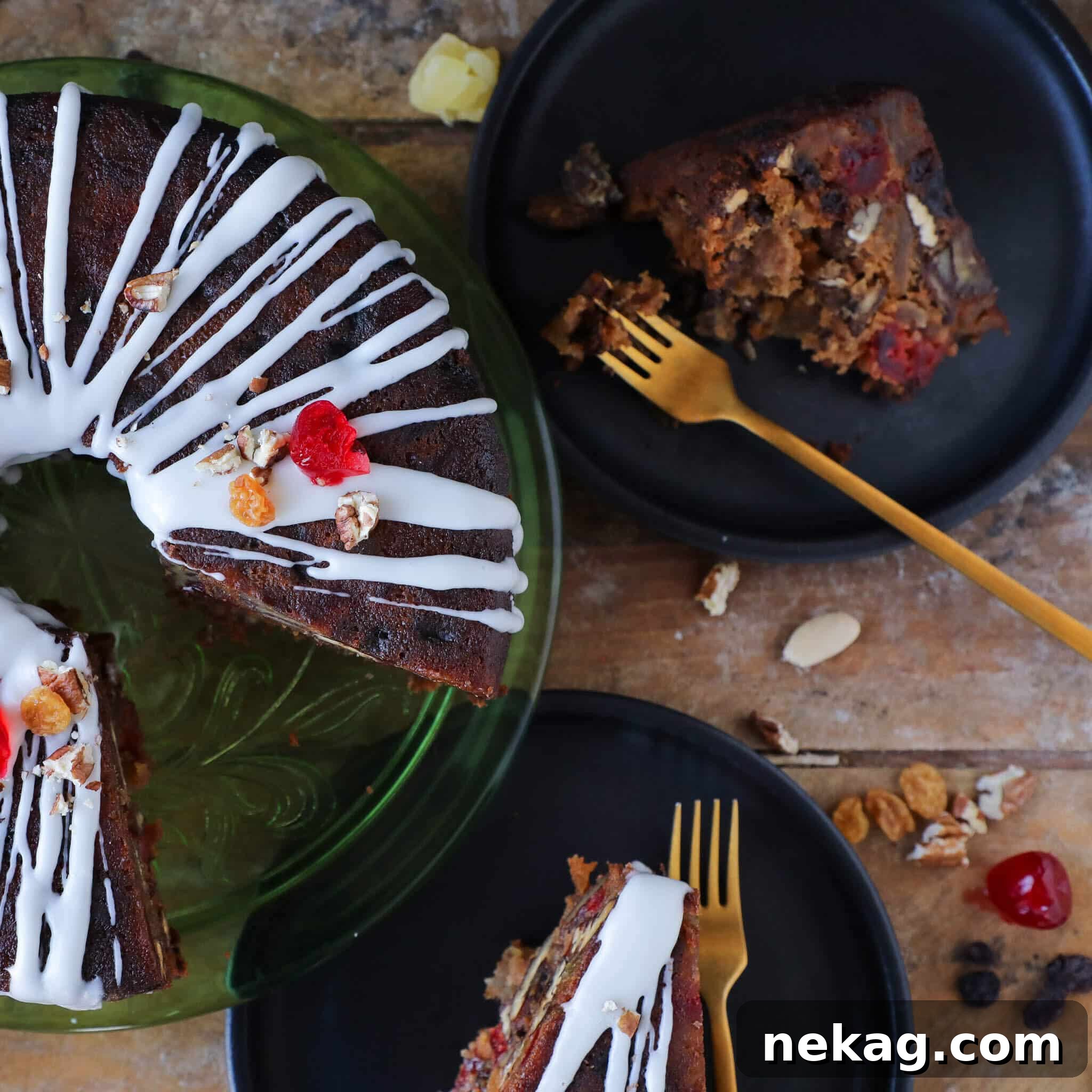
While this fruit cake is delicious on its own, a well-chosen icing can elevate the experience. For this particular fruit cake recipe, I used an easy cream cheese glaze, which provides a lovely creamy texture and a slight tang that perfectly balances the cake’s strong, spiced flavors. Another excellent option would be a simple orange glaze, made with fresh orange juice and confectioner’s sugar, which adds a bright citrus note and helps to lock in moisture. For a more traditional approach, a rich marzipan layer followed by royal icing is also a classic choice that adds both flavor and preservation.
To truly enhance the experience of this superb fruit cake, consider a thoughtful accompaniment. I served this fruit cake with a light cream cheese glaze and a generous dollop of lightly sweetened homemade whipped cream. A crème fraîche whipped cream would also offer a delightful tang and richness. I would generally avoid garnishes that add excessive sweetness, such as caramel. Instead, a scoop of luxurious vanilla bean ice cream or a delicate crème anglaise would be a most welcome addition. The cool creaminess of dairy complements the warm spices and tames the cake’s richness beautifully, creating a harmonious and indulgent dessert experience.
If you tried this wonderful fruit cake recipe and absolutely loved it, please take a moment to leave a 🌟 star rating and share your experience in the comments below. Your feedback truly brightens my day, and I love hearing how my recipes become part of your celebrations!
The Ultimate Moist Fruit Cake Recipe
Chef Lindsey
40 minutes
2 hours
2 hours 40 minutes
16 slices
Comment
Print Recipe
Ingredients
For the Cake:
-
2 cups all-purpose flour -
½ teaspoon baking powder -
1 ½ teaspoons kosher salt -
1 ½ teaspoons cinnamon -
1 teaspoon ground nutmeg -
3 ½ cups pecans chopped -
1 ½ cups candied pineapple ¾ lb -
2 cups candied cherries ¾ lb -
1 ½ cups golden raisins ½ lb -
½ cup unsalted butter softened -
2 ¼ cup granulated sugar -
6 large eggs -
1 ½ tablespoons brandy for the batter -
2 tablespoons honey for brushing cake -
1 cup brandy for soaking, optional -
½ apple peeled & sliced, for storing, optional
For the Optional Glaze:
-
2 tablespoons cream cheese softened -
1 cup powdered sugar -
2 tablespoons milk or more to achieve desired consistency
Instructions
Make the Cake:
-
Spray and line a 10-inch tube pan with parchment paper. A non-removable bottomed tube pan works best for dense cakes. Bonus points if it’s nonstick.
-
Preheat oven to 275°F (135°C). For a golden top and faster bake, convection setting is recommended if available.
-
In a large bowl, whisk together flour, baking powder, salt, cinnamon, and nutmeg. Add pecans, pineapple, cherries, and golden raisins. Toss gently to coat thoroughly.
-
In the bowl of a stand mixer (with paddle attachment) or with a hand mixer, cream the softened butter and granulated sugar until light and fluffy.
-
Beat in the eggs one at a time, ensuring each is fully incorporated before adding the next to maintain a smooth batter.
-
Beat in the brandy (or non-alcoholic substitute).
-
Add the dry ingredient/nut mixture to the batter and fold gently with a spatula until just incorporated. Avoid overmixing.
-
Pour the batter into the prepared pan and place in the preheated oven.
-
Fill a large baking dish or roasting pan with hot water and place it on the rack below the cake in the oven. Crucially, do not bake the cake directly in the water; the steam creates moisture.
-
Bake for 2 hours or until a cake tester inserted into the center comes out clean. After about 90 minutes, once the top crust has set, brush the top with warmed honey for a beautiful glaze. Continue baking until fully done.
-
Cool the cake in the pan for 15-20 minutes, then unmold onto a wire rack to cool completely. Proceed with optional soaking if desired.
Optional Soaking
-
Soak a clean kitchen towel in about ½ cup of brandy (or apple cider for a non-alcoholic version). Wrap the cooled cake snugly in this damp towel. For Nana’s extra touch, place a few thin slices of peeled apple into the center cavity before wrapping. Finally, wrap the entire cake tightly in multiple layers of plastic wrap to seal. Allow to sit for at least 2 weeks before unwrapping and serving for flavors to develop. For deeper flavor, I typically repeat this soaking process one additional time after a month. My grandmother’s tradition involved soaking the cake twice a month for 3-4 months.
Optional Cream Cheese Glaze
-
Whisk together the softened cream cheese, powdered sugar, and milk until the mixture is completely smooth and free of lumps.
-
Add additional milk sparingly, a teaspoon at a time, until you achieve your desired glaze consistency. I prefer a thicker glaze, which I then artfully drizzle across the top of the cake with a spoon, allowing it to slowly cascade down the sides.
Video
Notes
Make it non-alcoholic – This fruit cake can easily be made alcohol-free. For the 1 ½ tablespoons of brandy in the batter, substitute with an equal amount of apple cider or another fruit juice. If opting out of alcohol entirely, simply omit the soaking process or soak the cake in apple cider instead. Please note that non-alcoholic fruit cakes will not be shelf-stable for long periods and must be refrigerated.
Storage Guidelines – An alcohol-soaked fruit cake, when wrapped exceptionally well in multiple layers of plastic wrap and stored at cool room temperature, can last for up to 6 months. To prevent it from drying out over time, it’s advisable to re-soak it monthly. Once the soaking process is complete, or for non-alcoholic fruitcakes, store the well-wrapped fruitcake in the refrigerator for up to a month, or in the freezer for up to a year for prolonged freshness.
Nana’s original recipe was lovingly adapted from the classic Best Loved Foods of Christmasbook by Pillsbury, a true testament to its enduring appeal.
Nutrition
Carbohydrates: 85g |
Protein: 6g |
Fat: 23g |
Saturated Fat: 6g |
Polyunsaturated Fat: 5g |
Monounsaturated Fat: 11g |
Trans Fat: 0.2g |
Cholesterol: 77mg |
Sodium: 317mg |
Potassium: 249mg |
Fiber: 4g |
Sugar: 61g |
Vitamin A: 285IU |
Vitamin C: 1mg |
Calcium: 49mg |
Iron: 2mg
Dessert, Christmas Cake
American, Traditional
591
Enjoyed this recipe? Share your thoughts!
Before You Go! Explore More Festive Recipes
Don’t let the baking joy end here! Be sure to explore our extensive collection of other delicious, chef-developed Cake Recipes. You might particularly love my authentic gooey butter cake for a rich, comforting treat, or dive deeper into our delightful Christmas Dessert Recipes to find more inspiration for your holiday table. Happy baking, and happy holidays!