
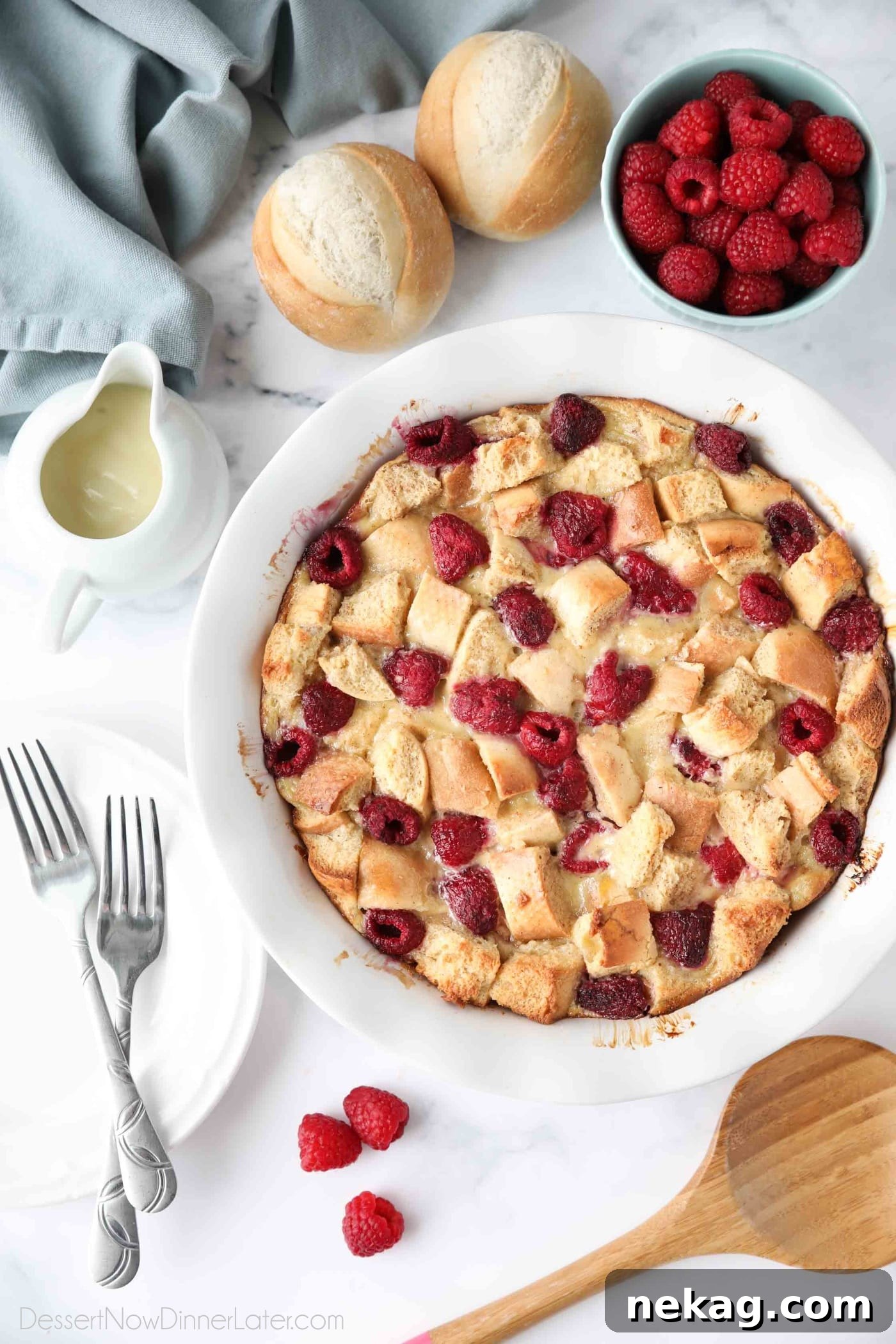
Delight your senses with this exquisite Raspberry Bread Pudding, a versatile dish that beautifully blurs the lines between a comforting breakfast casserole and an indulgent dessert. Imagine baked French toast elevated to new heights, studded with vibrant raspberries and bathed in a luxurious vanilla cream sauce. Best served warm, this recipe draws inspiration from the beloved Kneaders’ version, yet it’s cleverly crafted with fewer calories, allowing you to savor every spoonful guilt-free. Prepare to transform simple ingredients into an unforgettable culinary experience that’s perfect for brunch gatherings, holiday mornings, or a cozy evening treat.
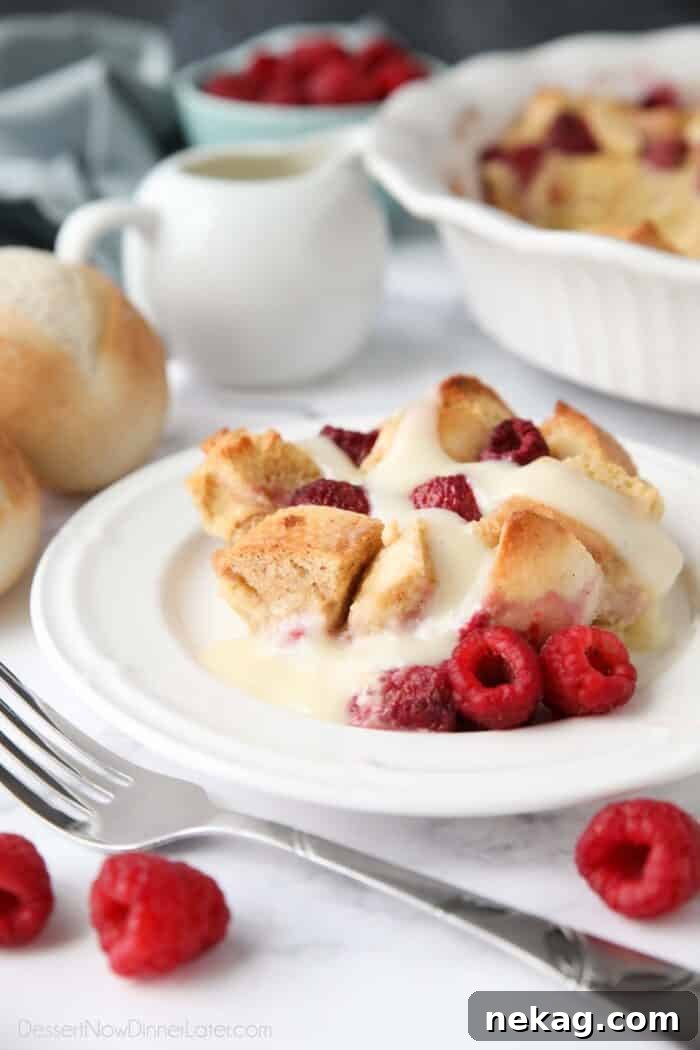
What Exactly is Bread Pudding? A Culinary Classic
At its heart, bread pudding is a classic comfort food, often hailed as the original “waste not, want not” dessert. It’s essentially a clever way to repurpose stale bread, transforming it into something incredibly delicious. Picture cubed, dried bread infused with a rich, creamy egg custard, then baked until golden brown and puffed to perfection. While many instantly think of sweet variations, this humble dish boasts remarkable versatility. There are delightful savory bread puddings too, often featuring cheeses, herbs, and meats, proving that this bread-based creation can adapt to any meal. Its charm lies in its simplicity and the heartwarming satisfaction it delivers with every bite.
Raspberry Bread Pudding: Your Ultimate Baked French Toast Casserole
Our Raspberry Bread Pudding takes the concept of baked French toast to an entirely new level, making it an ideal choice for a special breakfast or a delightful dessert. What sets this recipe apart is the generous inclusion of fresh, juicy raspberries. Their sweet and tart notes cut through the richness of the custard, creating a beautifully balanced flavor profile that’s both comforting and refreshing. Think of it as a vibrant upgrade to your favorite French toast casserole, with bursts of berry goodness in every bite.
One of the many reasons to adore this raspberry bread pudding is its incredible flexibility. You can prepare the mixture and bake it immediately for instant gratification, or, for ultimate convenience, assemble it the night before and let it chill in the refrigerator overnight. This make-ahead option makes it a dream for busy mornings, effortlessly turning into a stunning breakfast casserole that’s ready to bake when you wake. While delicious on its own, we highly recommend serving it warm with our luscious vanilla cream sauce, which adds an extra layer of indulgence, transforming it into a truly decadent dessert experience.
This particular recipe is a loving homage to the famed Kneader’s Raspberry Bread Pudding, but with a conscious effort to make it a bit lighter without sacrificing any of the decadent flavor. We’ve achieved this by significantly reducing the amount of heavy cream and sugar, while thoughtfully adding extra eggs and a blend of warm spices like cinnamon and nutmeg. These adjustments not only enhance the depth of flavor and richness but also result in a dessert that contains fewer calories – roughly half the amount of the original. The outcome is a bread pudding that still feels incredibly indulgent and satisfying, just as a classic bread pudding should be, but with a lighter touch you’ll appreciate.
The Art of Toppings: Enhancing Your Bread Pudding Experience
While a perfectly baked bread pudding is certainly delicious all on its own, it truly shines when paired with the right topping. Think of toppings as the crowning glory, adding another layer of flavor and texture to this already delightful dish. Beyond simply enjoying it as-is, the possibilities for customization are endless.
Classic choices include a generous drizzle of warm caramel sauce, a pour of rich maple syrup, or a luxurious blanket of chocolate sauce. Each brings its own unique character to the pudding, allowing you to tailor it to your personal preference or the occasion.
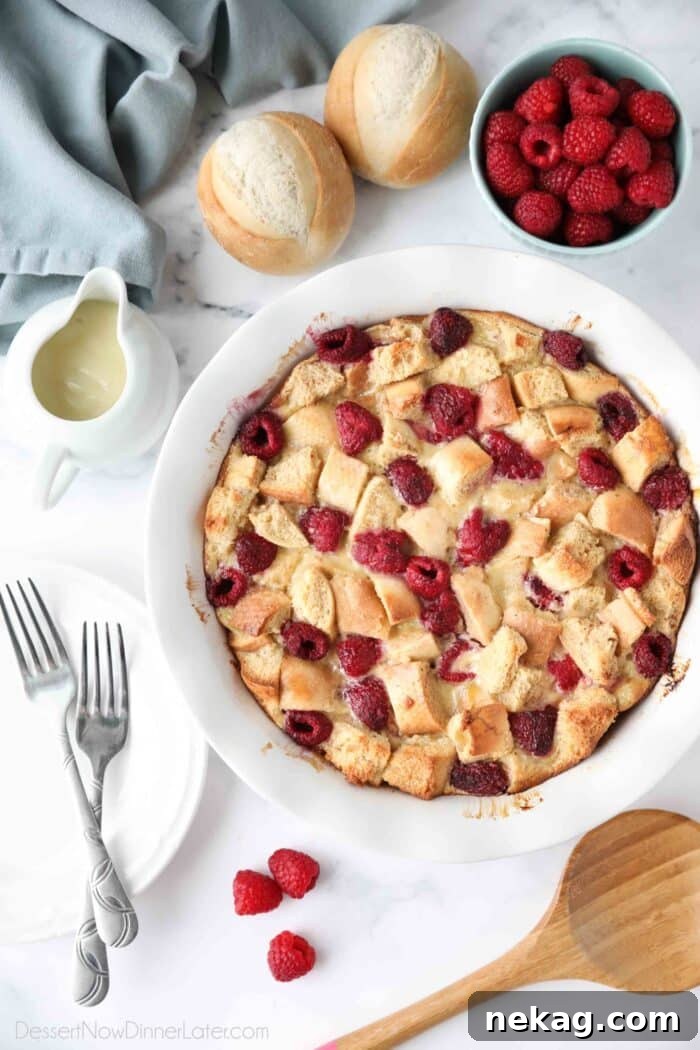
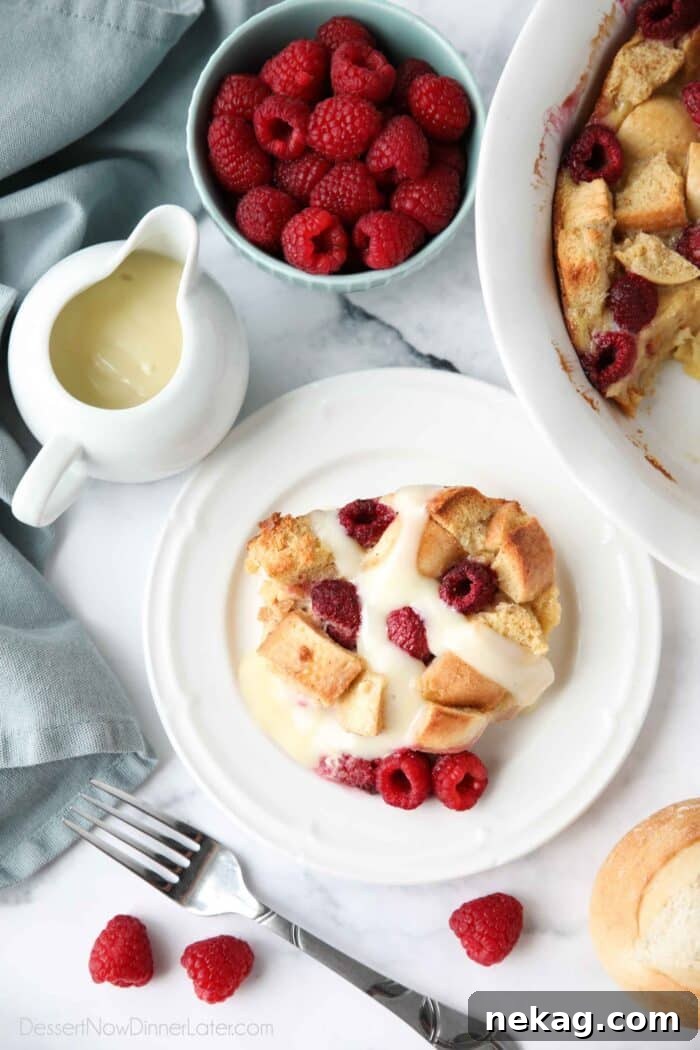
For this raspberry bread pudding, our quick and easy vanilla cream sauce is an absolute game-changer. It’s thick, velvety, and subtly sweet, with just the right hint of vanilla that perfectly complements the tartness of the raspberries. This sauce doesn’t just sit on top; it melds with the warm pudding, creating a harmony of flavors and textures that elevate the entire experience. It’s like having a delicate vanilla custard specifically designed for your bread pudding – truly the “icing on the cake,” or rather, the “sauce on the pudding.”
However, if time is short or you prefer a simpler approach, a mere dusting of powdered sugar can provide a beautiful finish and a touch of sweetness without the effort of making a sauce. You could also opt for a dollop of whipped cream, a scoop of vanilla ice cream, or even a sprinkle of toasted nuts for added crunch. The key is to choose a topping that enhances the natural flavors of the bread pudding, making each bite an absolute pleasure.
Choosing the Right Bread for Bread Pudding: The Foundation of Flavor and Texture
The success of any bread pudding recipe largely hinges on the type and condition of the bread you use. It’s a common misconception that any bread will do, but selecting the right loaf and ensuring it’s properly prepared is crucial for achieving that ideal soft, spongy texture and full flavor.
What kind of bread should you use for bread pudding? The golden rule is to use stale bread. Yes, that slightly firm, day-old loaf that might otherwise be destined for the bin is exactly what you need. Bread pudding thrives on the combination of dried bread and a rich custard. Once baked, the custard infuses the bread, resulting in a delightfully soft, almost custardy texture within, while often developing a beautifully golden, slightly crisp top.
Why does bread pudding need stale bread? This isn’t just a tradition; it’s a fundamental principle of the dish. Stale bread has lost much of its moisture, making it significantly more absorbent. When introduced to the liquid custard mixture, dry bread acts like a sponge, soaking up every drop without disintegrating. This allows the cubed bread pieces to maintain their distinct shape and contribute to the pudding’s structure, creating a lovely interplay of texture. In contrast, fresh bread, with its higher moisture content, tends to become mushy when soaked in custard. Instead of defined pieces, you often end up with a dense, uniform slab of bread pudding, lacking the characteristic soft interior and charming texture variations.
TIP: If you find yourself without stale bread and an urgent craving for bread pudding strikes, don’t despair! You can easily “cheat” the staleness process by toasting your fresh bread cubes in the oven. This quick drying method achieves a similar effect, ensuring your bread is ready to soak up the delicious custard. Detailed instructions for this quick-staling technique are provided in the recipe card.
While theoretically, any stale bread can be used, certain varieties are particularly well-suited for bread pudding due to their sturdy crumb and flavor profile. Popular choices include rich and airy French bread, the slightly tangy complexity of Sourdough, the buttery richness of Brioche, or the subtly sweet and eggy texture of Challah. These types of bread hold up beautifully during soaking and baking, contributing significantly to the overall taste and texture.
For this specific Raspberry Bread Pudding recipe, we’ve found that Rhodes Warm & Serve Artisan French Rolls are an exceptional choice. Their robust and sturdy texture ensures they absorb the custard perfectly without becoming overly soft, and their subtle flavor complements the raspberries beautifully. Plus, their convenience is unmatched – stored frozen, you can simply thaw, cube, and toast them to achieve the ideal dryness. We’ve even used these versatile rolls for recipes like campfire sandwiches, proving their resilience and deliciousness under various conditions. The slightly open crumb structure of these rolls is particularly fantastic for soaking up every last bit of that rich milk and egg custard, ensuring a moist and flavorful pudding.
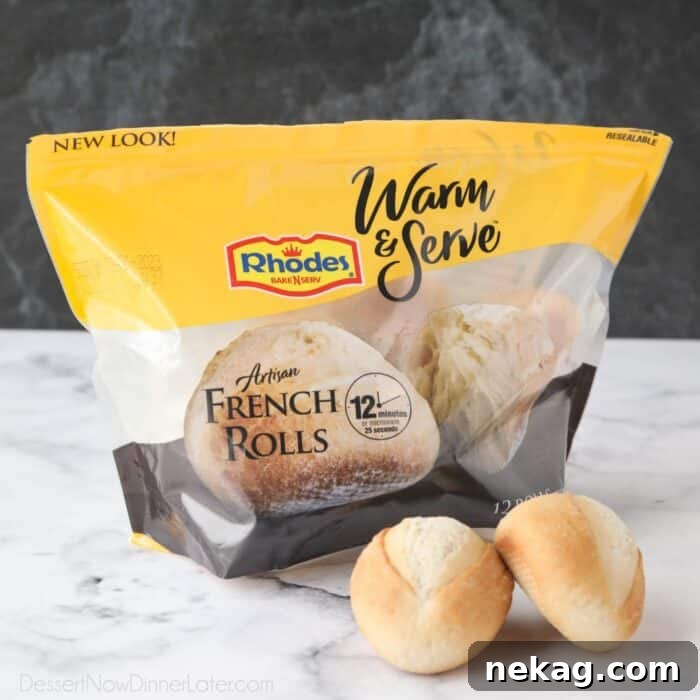
These Rhodes Artisan French Rolls are renowned for how beautifully they crisp up on the outside when warmed in the oven, all while maintaining a soft and fluffy interior. This dual texture, when dried out, becomes the perfect foundation for our bread pudding. Simply thaw the frozen rolls, cut them into even cubes, and then toast them lightly in the oven to achieve that crucial dryness. The slightly open crumb structure of these rolls is specifically beneficial, as it allows for optimal absorption of the sweet and creamy milk and egg custard, guaranteeing a rich and moist final product. These convenient warm & serve dinner rolls are typically found in the freezer aisle, allowing you the flexibility to use just the quantity you need, warming the rest for another occasion. For this delicious raspberry bread pudding, we utilized four rolls, yielding approximately 4 cups of perfectly cubed bread.
Essential Ingredients for Your Raspberry Bread Pudding
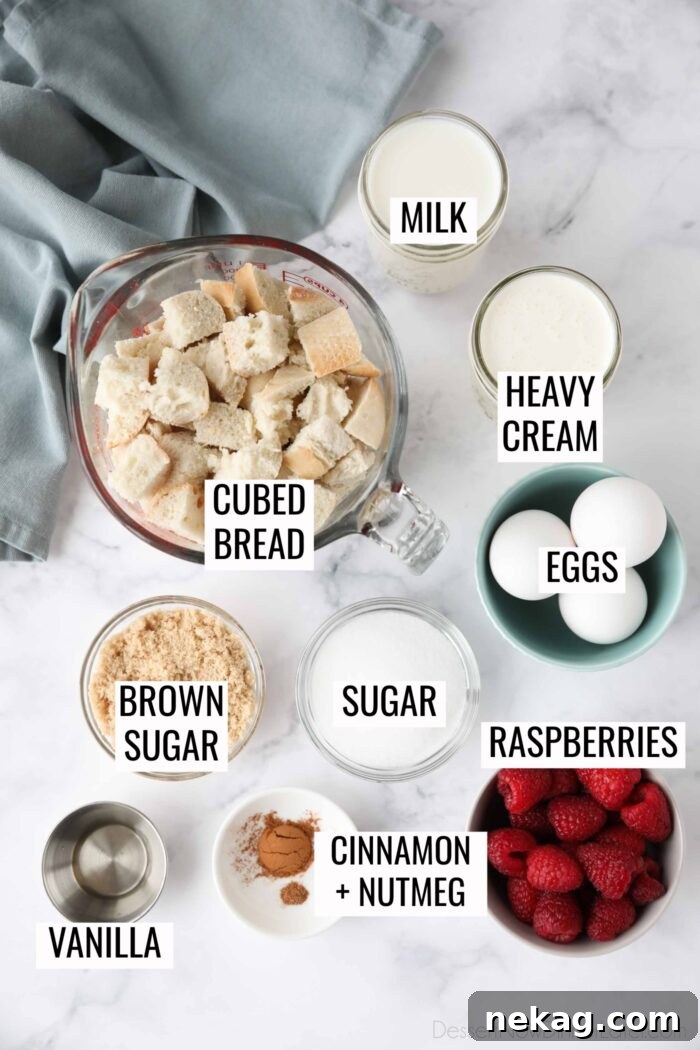
Crafting this delightful raspberry bread pudding requires a harmonious blend of 10 key ingredients, each playing a vital role in creating its rich flavor and comforting texture:
- Rhodes Artisan French Rolls, thawed and cubed: The foundational bread, offering a sturdy yet absorbent base.
- Whole Milk: Contributes to the creamy richness of the custard.
- Heavy Cream: Adds an extra layer of decadence and silky texture to the pudding. (For convenience, a single carton of “half & half” can be substituted for both whole milk and heavy cream.)
- Brown Sugar: Imparts a warm, molasses-like sweetness and a hint of caramel flavor.
- Granulated Sugar: Provides balanced sweetness to the custard.
- Eggs: Essential for binding the ingredients and creating the custardy texture.
- Vanilla Extract: A touch of pure vanilla enhances all the other flavors.
- Ground Cinnamon: Adds a warm, aromatic spice that pairs beautifully with raspberries.
- Ground Nutmeg: A pinch of nutmeg brings a subtle, earthy warmth and depth to the spice profile.
- Fresh Raspberries: The star of the show, offering bright, tart bursts of fruitiness. (If using frozen raspberries, ensure they are thawed and thoroughly drained to prevent excess moisture.)
Step-by-Step: How to Prepare Your Raspberry Bread Pudding
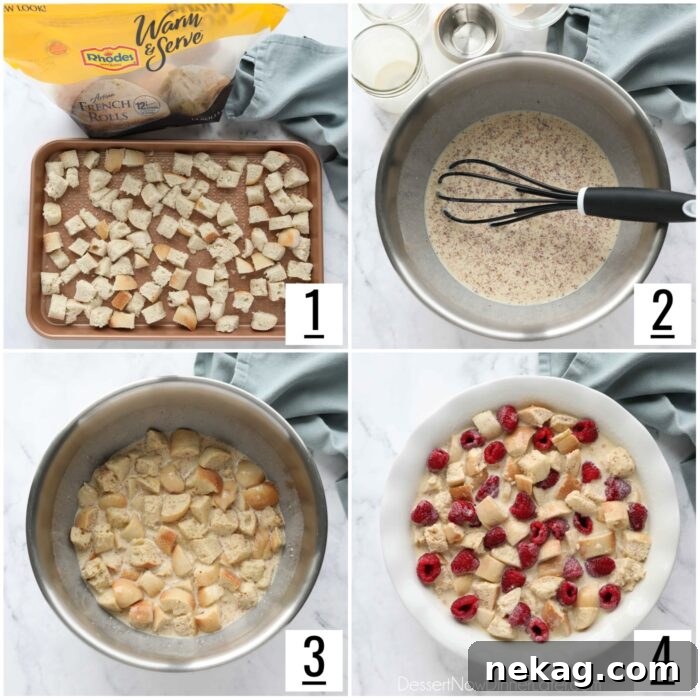
- **Prepare the Bread:** Begin by thawing four Rhodes Artisan French Rolls. Once thawed, cut them into uniform cubes, aiming for approximately 4 cups of cubed bread. Spread these bread cubes in a single layer across a baking sheet. Preheat your oven to 275˚F (135˚C) and bake the bread cubes for 15-20 minutes. This crucial step helps to dry out and stale the bread, ensuring it properly absorbs the custard without becoming mushy.
- **Craft the Custard:** In a large mixing bowl, whisk together the whole milk, heavy cream, both brown and granulated sugars, large eggs, vanilla extract, ground cinnamon, and a pinch of ground nutmeg. Continue whisking until the mixture is completely smooth and well combined. After preparing the custard, increase your oven temperature to 350˚F (175˚C) for the main baking step.
- **Soak the Bread:** Add the dried bread cubes directly into the prepared egg custard mixture. Gently mix to ensure all the bread pieces are thoroughly coated. Allow the mixture to rest for at least 20 minutes, giving the bread ample time to absorb the liquid. You may need to periodically press the bread down to ensure it remains submerged and soaks evenly, rather than floating on top.
- **Assemble and Bake:** Lightly grease a 9-inch oven-safe baking dish (either round or square works perfectly). Carefully transfer the soaked bread pudding mixture into the prepared dish. Evenly distribute fresh raspberries throughout the mixture, gently tucking some beneath the surface. Bake in your preheated 350˚F (175˚C) oven for 45-55 minutes, or until the top is beautifully golden brown, the pudding is visibly puffed up, and a knife inserted into the center comes out clean, indicating it’s baked through.
Ingredients for the Luscious Vanilla Cream Sauce
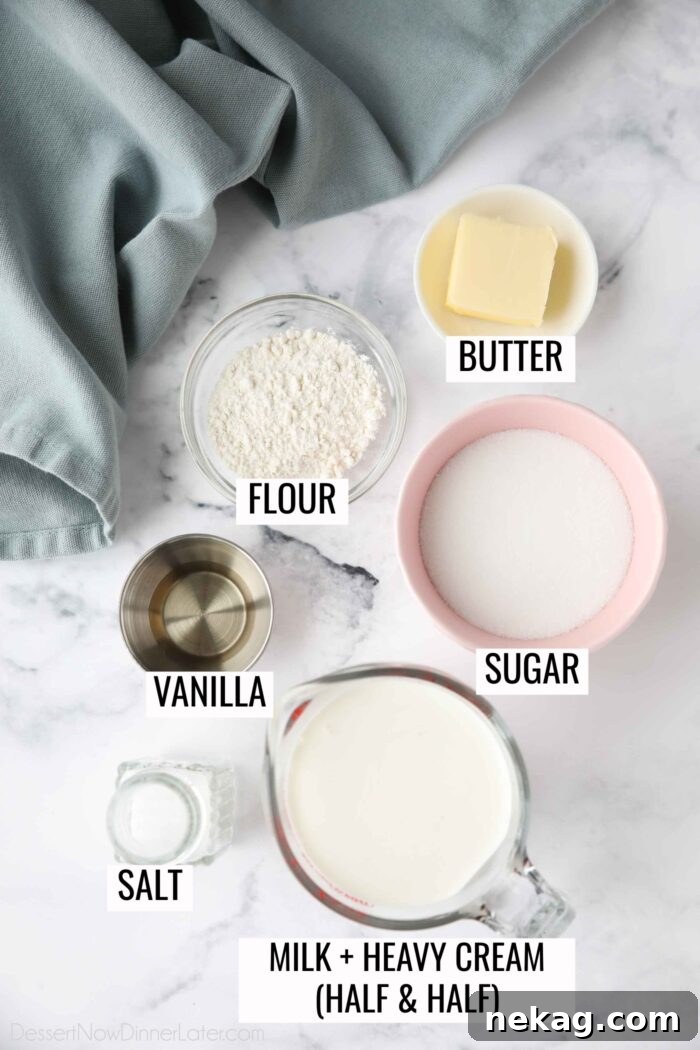
This quick and easy vanilla cream sauce is the quintessential accompaniment for your warm raspberry bread pudding, adding a layer of rich, smooth sweetness. To prepare this delightful topping, you will need the following simple ingredients:
- Butter: Forms the base of our roux, adding richness and flavor.
- All-Purpose Flour: The thickening agent for the sauce, creating a smooth consistency.
- Granulated Sugar: Provides the perfect amount of sweetness.
- Vanilla Extract: Infuses the sauce with its classic, comforting aroma and flavor.
- Whole Milk: Contributes to the creamy base.
- Heavy Cream: Adds an extra touch of luxuriousness and thickness. (As with the pudding, you can conveniently use “half & half” in place of both the whole milk and heavy cream if preferred.)
- Dash of Salt: A tiny pinch to balance and enhance the sweet flavors.
Crafting the Vanilla Cream Sauce: A Simple Guide
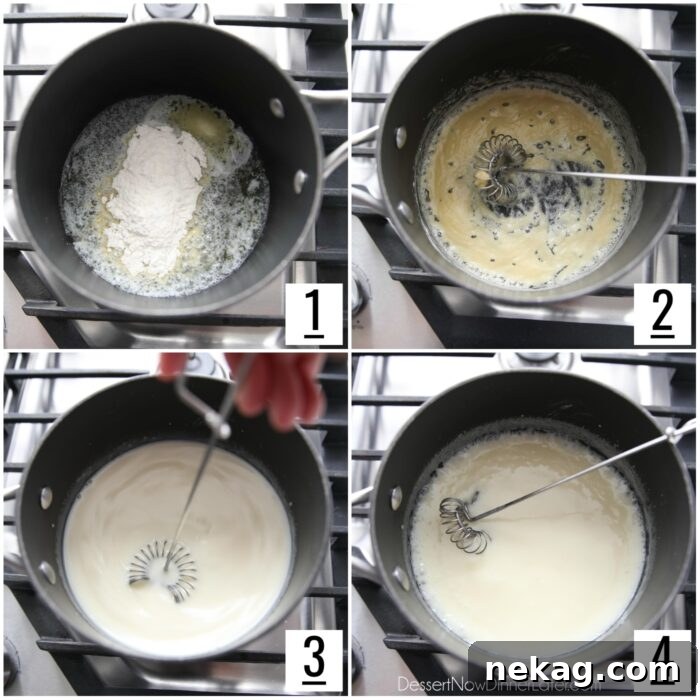
Creating this smooth and luscious vanilla cream sauce is a straightforward process, ensuring you have the perfect accompaniment for your bread pudding:
- **Begin the Roux:** In a small saucepan, melt the butter over medium heat. Once fully melted and shimmering, add the all-purpose flour.
- **Form the Roux:** Whisk the butter and flour together constantly to form a smooth paste, known as a roux. Continue to cook this mixture, whisking, until it starts to bubble gently, typically within 30-60 seconds. This step cooks out the raw flour taste.
- **Add Liquids and Flavor:** Gradually whisk in the granulated sugar, vanilla extract, whole milk, heavy cream, and a small dash of salt. Ensure everything is thoroughly combined, dissolving the sugar.
- **Thicken the Sauce:** Continue whisking constantly as the mixture heats. It will begin to simmer and thicken, sometimes quite suddenly. Once it reaches your desired creamy consistency, immediately remove the saucepan from the stove to prevent it from becoming too thick or scorching. Cover the saucepan to keep the sauce warm until you’re ready to serve.
Serving and Storing Your Raspberry Bread Pudding
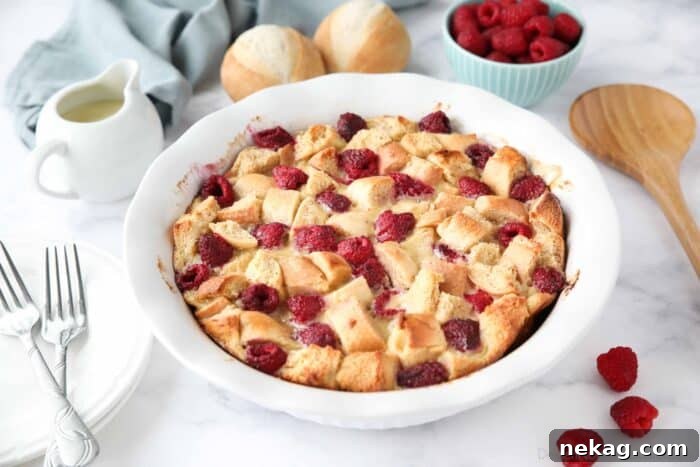
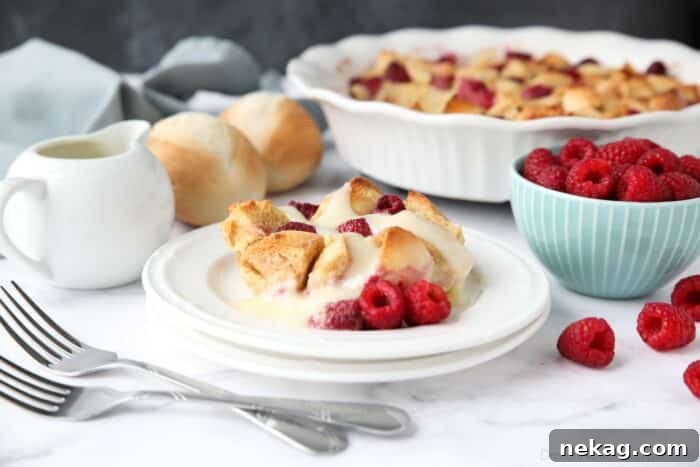
To fully appreciate its comforting warmth and tender texture, always serve this delightful Raspberry Bread Pudding warm. A generous drizzle of the homemade vanilla cream sauce over each serving will complete the experience, adding a layer of creamy sweetness that perfectly complements the tart raspberries. For an extra touch, garnish with a few fresh raspberries or a sprig of mint.
If you find yourself with leftovers, storing them properly ensures you can enjoy this treat for days to come. Store any remaining bread pudding covered tightly in the refrigerator for up to 5 days. For longer storage, it can be frozen for up to 3 months. When freezing, it’s best to store the bread pudding and the vanilla cream sauce separately to maintain their optimal textures. Reheat individual portions gently in the microwave or oven until warmed through.
Troubleshooting Common Bread Pudding Problems
Even seasoned bakers can encounter issues with bread pudding. Here’s a guide to common problems and how to solve them:
How do you make bread pudding moist? The key to a wonderfully moist bread pudding lies in adequate absorption. Ensure that the bread cubes have enough time to soak up most, or ideally all, of the liquid custard mixture before baking. If your schedule allows, letting the bread pudding soak in the refrigerator overnight can dramatically improve its moisture content. Additionally, covering the baking pan with aluminum foil for the initial portion of the baking time can help trap steam and moisture, preventing the pudding from drying out prematurely.
Why is my bread pudding watery? A watery bread pudding usually indicates that the bread didn’t have sufficient time to absorb the custard, or there wasn’t enough bread relative to the amount of liquid. Make sure your bread is properly staled (either naturally or by oven-drying) to maximize its absorbency. Also, ensure the ratio of bread to custard is balanced as specified in the recipe. Undercooking can also lead to a watery center, so always bake until the center is set.
Why is my bread pudding dry? A dry bread pudding is often the opposite problem of a watery one, typically occurring when there’s an insufficient quantity of custard to fully saturate the bread, or the bread wasn’t given adequate time to absorb the custard. Overcooking is another common culprit. Baking too long or at too high a temperature can evaporate too much moisture, leaving you with a dry result. If your bread pudding tends to be dry, consider increasing the soaking time, or slightly adjusting your baking duration and temperature for your specific oven.
Dairy Alternatives for Bread Pudding: A Healthier Twist
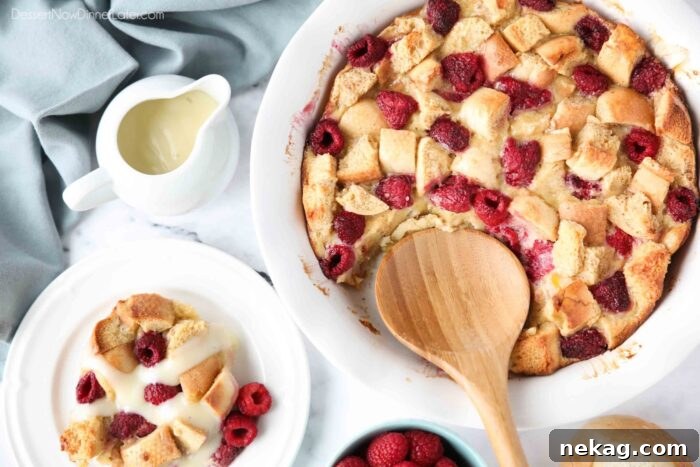
Bread pudding is traditionally known for its rich and indulgent nature, often deriving much of its decadent texture and flavor from a generous combination of whole milk and heavy cream (or sometimes half & half). However, if you’re looking to enjoy this comforting dessert with a healthier or lighter profile, there are several dairy alternatives you can explore.
For a slightly less rich option, you can opt to skip the heavy cream entirely and use all whole milk for your custard base. This will still provide a good amount of creaminess without the added fat of heavy cream. If you’re aiming for an even lighter version, you can certainly experiment with lower-fat dairy options such as 2% milk, 1% milk, or even skim milk. For those avoiding dairy altogether, unsweetened almond milk can be a fantastic plant-based alternative.
NOTE: It’s important to be aware that using lower-fat milk or non-dairy alternatives like almond milk may result in a bread pudding that is less dense and less “pudding-like” in texture. The higher fat content in whole milk and heavy cream contributes significantly to the custardy, rich mouthfeel that is characteristic of traditional bread pudding. While the flavor will still be delicious, the texture might be slightly lighter and less creamy. Feel free to experiment to find the perfect balance that suits your dietary preferences and taste!
Creative Alternative: Individual Bread Pudding Cups
For an elegant presentation or simply for portion control, baking your bread pudding in individual servings is a fantastic alternative. This Raspberry Bread Pudding recipe is perfectly suited for this format and should yield approximately 12-15 delightful muffin-sized cups. You can use a standard muffin tin or even small ramekins for a more sophisticated touch.
To make bread pudding cups, simply scoop the prepared bread pudding mixture into a greased muffin tin, ensuring that the liquid custard is evenly distributed among each cup. This prevents some cups from being too dry and others too wet. Bake these individual portions in a preheated 350˚F (175˚C) oven for a shorter duration, typically around 30-35 minutes. Keep an eye on them, as smaller portions cook faster. They should be golden brown on top and set in the center. As a practical tip, always place a baking sheet underneath your muffin tray(s) to catch any potential drips or spills during baking, ensuring a clean oven.
Enjoy your homemade Raspberry Bread Pudding – whether it’s a grand casserole or charming individual cups, it’s sure to be a hit!
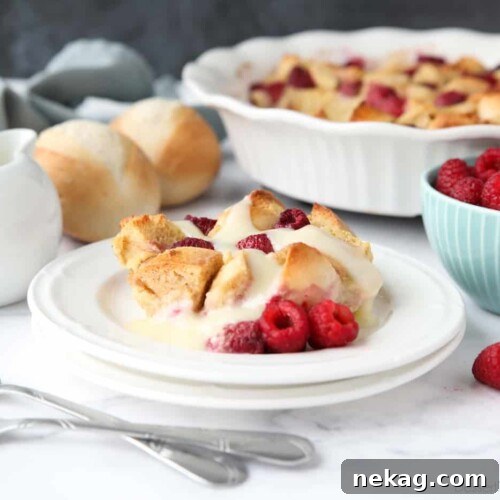
Raspberry Bread Pudding
Created by Amber Brady
Prep: 10 mins | Cook: 1 hr 5 mins | Inactive Time: 20 mins | Total: 1 hr 35 mins
Sweet bread pudding studded with fresh tart raspberries topped with a vanilla cream sauce.
Yields: 6 servings
Ingredients
Bread Pudding:
- 4 Frozen Rhodes Warm & Serve Artisan French Rolls, thawed and cubed (4 cups cubed bread)
- 1 cup (237 ml) whole milk
- 1 cup (237 ml) heavy cream
- ⅓ cup (68 g) light brown sugar, packed
- ⅓ cup (68 g) granulated sugar
- 3 large eggs
- ½ tsp vanilla extract
- ½ tsp ground cinnamon
- pinch nutmeg
- 1 cup (140 g) raspberries, (if using frozen, thaw & drain liquid first)
Vanilla Cream Sauce:
- 2 Tbsp (29 g) butter
- 3 Tbsp all-purpose flour
- ½ cup (100 g) granulated sugar
- 2 tsp vanilla extract
- ½ cup (118 ml) whole milk
- ½ cup (118 ml) heavy cream
- dash salt
Equipment
- Aluminum Half Sheet Tray (2 Pack)
- Nylon Whisk
- 6-Quart Steel Mixing Bowl
- White Pie Plate 9″
- 9-inch square baking dish
- Wilton 12-cup Muffin or Cupcake Pan (Set of 2)
Instructions
- Preheat oven to 275 degrees Fahrenheit.
- Thaw 4 frozen Rhodes Artisan French Rolls, cut them into cubes (should equal 4 cups). Spread the cubed bread into a single layer on a baking sheet. Bake bread cubes at 275˚F for 15-20 minutes to dry out/stale the bread.
- Whisk together the milk, cream, both sugars, eggs, vanilla, cinnamon and nutmeg in a large bowl until smooth. Increase oven temperature to 350 degrees Fahrenheit.
- Add the dried bread cubes to the egg custard and mix to coat. Let rest for 20 minutes to absorb the liquid. (May need to press bread down periodically so it doesn’t stay floating on the top.)
- Empty bread pudding into a greased 9-inch oven-safe dish. (A round or square dish is fine.) Tuck/insert raspberries randomly throughout the mixture in the pan.
- Bake at 350˚F for 45-55 minutes or until golden brown on top, puffed up, and baked through in the center.
For the Vanilla Cream Sauce:
- Melt the butter in a small saucepan, then add the flour.
- Whisk together to form a roux. Cook until it bubbles, about 30-60 seconds.
- Whisk in the the sugar, vanilla, milk, heavy cream, and a dash of salt.
- Whisk constantly until the mixture simmers and thickens. (May bubble and rise suddenly.) Remove from stove immediately. Cover and keep warm.
- Serve bread pudding warm topped with vanilla cream sauce.
Notes
- May purchase “half & half” in place of milk and heavy cream.
- Store leftovers covered in the fridge up to 5 days or in the freezer up to 3 months. (As long as the bread and sauce are frozen separately.)
- (Alternative) Bread Pudding Cups: Scoop mixture into greased muffin tin(s), making sure the liquid is evenly distributed amongst each cup, and bake at 350˚F for about 30-35 minutes. Make sure you place a baking sheet underneath the muffin tray(s) to catch any possible spills.
Nutrition
Serving: 1 serving | Calories: 498kcal | Carbohydrates: 50g | Protein: 8g | Fat: 30g | Saturated Fat: 18g | Polyunsaturated Fat: 10g | Trans Fat: 1g | Cholesterol: 177mg | Sodium: 162mg | Fiber: 2g | Sugar: 43g
Disclaimer: Nutritional values were calculated using a third-party tool and are provided as an estimation only.
Sharing this recipe with a link is both encouraged and appreciated. Copying/pasting and/or screenshots of full recipes to any social media is strictly prohibited. Content and photographs are copyright protected.
Did you make this?
Don’t forget to leave a rating below and make sure to follow on Pinterest and Instagram for more!