
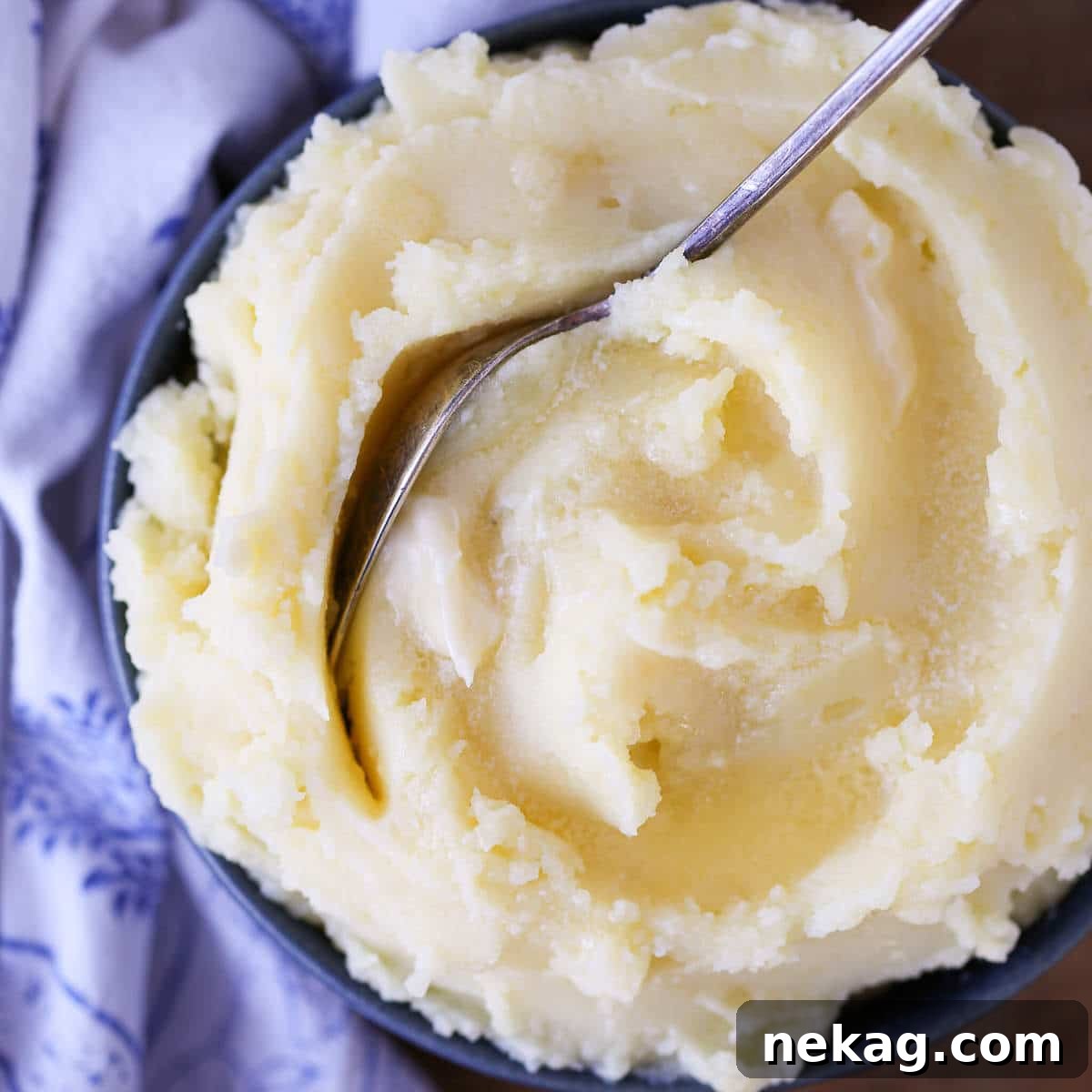
Welcome to the ultimate guide for creating the most **creamy mashed potatoes** you’ve ever tasted! This incredibly simple recipe, honed by a professional chef, requires just three core ingredients and is so straightforward, it’s perfect for even the busiest weeknights. Forget complicated techniques or endless ingredient lists – we’re stripping it back to basics to achieve rich, smooth, and utterly delicious mashed potatoes that will elevate any meal.
The Secret to Unforgettable Creamy Mashed Potatoes
Mashed potatoes are more than just a side dish; they are a culinary canvas, a comforting embrace, and, for many, a true guilty pleasure. While I don’t whip them up every night, certain meals simply *demand* that velvety, buttery texture. They are the quintessential companion for dishes with rich sauces that beg to be soaked up, creating that perfect, harmonious bite. Imagine them alongside the best meatloaf recipe, these savory breaded mushroom pork chops, my effortless tomato chicken bake, or elegant baked halibut. The way they capture every drop of gravy or pan sauce is simply magical.
Think about my spicy peach pork chops, where the sweet and savory sauce practically melts into the potatoes, or the tender baked chicken and shallots, creating a symphony of flavors and textures. Mashed potatoes aren’t just an accompaniment; they are an integral part of the experience.
Beyond serving them fresh, consider making a larger batch! Extra mashed potatoes can be transformed into delightful potato dinner rolls. Simply cool them down and refrigerate for up to a week, making them a brilliant make-ahead strategy for a busy Tuesday night or a grand traditional Thanksgiving dinner menu. Their versatility truly knows no bounds, making them a staple in any home cook’s repertoire.
Table of Contents
- Why This Creamy Mashed Potato Recipe is the Best
- Choosing the Right Potatoes for Mashing
- The Science of Perfect Mashed Potato Texture
- How to Fix Loose Mashed Potatoes?
- To Peel or Not to Peel Before Boiling Potatoes?
- Reheating Mashed Potatoes Like a Pro
- Essential Ingredients for Creamy Mashed Potatoes
- Delicious Variations & Substitutions
- Professional Chef Tips for Mashed Potatoes
- Creamy Mashed Potatoes Recipe
- Frequently Asked Questions (FAQ)
- Before You Go
A Quick Look At The Recipe
This is a brief summary of the recipe. Jump to the recipe to get the full details.
Jump to Recipe
Prep Time
5 minutes
Cook Time
30 minutes
Total Time
45 minutes
Servings
8 People
Difficulty
Easy
Calories *
287 kcal per serving
Technique
Boil potatoes, strain, puree, add butter and milk and serve!
Flavor Profile
Creamy mashed potatoes perfectly seasoned with salt, butter and milk.
* Based on nutrition panel
Summarize & Save this content on
google ai
perplexity
grok
This mashed potato recipe is the best I have been using it as a base recipe for a while. I like to add a bit of garlic powder, and sometimes I use heavy cream instead of milk. They always turn out perfect! ⭐⭐⭐⭐⭐
Mara
Why This Creamy Mashed Potato Recipe is the Best
In a world saturated with complex recipes, this one stands out for its elegant simplicity and consistently delicious results. As a professional chef, I’ve seen countless iterations of mashed potatoes, but I always return to this foundational method. Here’s why it works:
- **Minimal Ingredients, Maximum Flavor:** You only need three core ingredients – potatoes, butter, and milk – plus salt and pepper to taste. This minimalist approach allows the natural flavors of the potatoes and the richness of the dairy to truly shine.
- **Effortless Preparation:** This recipe is designed for ease. With just a few simple steps, you can achieve restaurant-quality mashed potatoes without fuss or extensive cooking skills.
- **Foolproof Technique:** Each step is carefully considered to prevent common mashed potato pitfalls like gumminess or blandness. We focus on proper cooking and gentle mashing for that coveted fluffy, creamy texture.
- **Incredible Versatility:** While perfect on their own, these mashed potatoes are also a fantastic base for endless variations, allowing you to customize them to any meal or preference.
Choosing the Right Potatoes for Mashing
The type of potato you choose is crucial for the texture and flavor of your mashed potatoes. Not all potatoes are created equal when it comes to mashing! Here’s a quick guide:
- **Yukon Gold Potatoes (Recommended):** These are my absolute favorite for mashed potatoes. Their naturally buttery flavor, moist flesh, and thin skin make them ideal. They break down beautifully when cooked, resulting in a smooth, creamy, and naturally golden-hued mash without becoming gummy. Their richness adds complexity to the dish.
- **Russet Potatoes (Good Choice):** Also known as Idaho potatoes, russets are high in starch and have a fluffy, dry texture when cooked. This makes them excellent for light, airy mashed potatoes. However, they can sometimes be a bit drier, so you might need a touch more liquid to achieve extreme creaminess.
- **Red Potatoes (Acceptable, but different):** Red potatoes have a waxy texture and lower starch content. If mashed with the skin on, they provide a lovely rustic texture and appealing color. However, if you’re aiming for a super smooth, uniform mash, their waxy nature can sometimes lead to a slightly gluey consistency if over-mashed.
- **New Potatoes/Small Round Varieties (Not Ideal):** These are generally too waxy and tend to result in gluey or pasty mashed potatoes due to their high moisture and low starch content. Save these for roasting or potato salads.
For this recipe, I specifically recommend Yukon Gold Potatoes for their superior flavor and texture, ensuring that coveted rich and creamy result.
The Science of Perfect Mashed Potato Texture
Achieving the perfect creamy, fluffy, yet smooth texture is an art, but it’s one rooted in science. Understanding how potatoes behave when mashed is key to avoiding common pitfalls like gummy or gluey potatoes.
- **Don’t Overcook:** Cook the potatoes just until they are easily pierced with a cake tester or knife. Overcooked potatoes absorb too much water, leading to a watery mash. Undercooked potatoes will be lumpy.
- **Mash While Hot:** Potatoes are best mashed immediately after draining. The starches are still swollen and soft, making them easier to break down into a smooth consistency. As they cool, the starches firm up, making it harder to achieve smoothness without over-working.
- **Add Fats First:** Incorporate all the cubed butter into the hot potatoes first. The fat coats the starch molecules, helping to create a barrier that prevents them from linking up too much when liquid is added, thus minimizing gumminess.
- **Warm Milk, Gradually:** Always use hot or warmed milk. Cold milk will cool down your potatoes, making them harder to incorporate smoothly and potentially impacting the texture. Add the milk slowly, a little at a time, until you reach your desired consistency. You can always add more, but you can’t easily take it away!
- **Avoid Over-mixing:** This is perhaps the most critical rule. Over-mixing or beating potatoes too aggressively with a mixer will activate the starches, causing them to break down and release pectin. This leads to a sticky, gummy, or gluey texture, transforming your dream mash into a culinary nightmare. Mash just until smooth and creamy.
How to Fix Loose Mashed Potatoes?
Accidentally added a bit too much milk or broth? Don’t despair! You can often salvage loose mashed potatoes. The easiest trick is to add potato flakes (instant mashed potatoes). These dehydrated potato pieces will quickly absorb excess liquid and thicken your mash. While discerning palates might notice a slight difference in taste and texture, most people won’t be any the wiser! In a pinch, you could try adding a small amount of potato starch, but be warned: raw starch will have a noticeable, unpleasant taste and texture if not properly cooked out, which is difficult to do in already mashed potatoes. Potato flakes are definitely the superior option here.
To Peel or Not to Peel Before Boiling Potatoes?
This is a common question, and my answer is usually no, I do not cut my potatoes before boiling them, especially when making mashed potatoes for a recipe like potato bread or these creamy mashed potatoes. Here’s why this method is preferred for the best results:
- **Minimize Water Absorption:** When you cut potatoes into smaller pieces before boiling, they expose more surface area to the cooking water. This leads to increased water absorption. This excess water will be retained in your mashed potatoes, diluting their natural flavor and potentially making them watery or gluey, rather than rich and creamy.
- **Retain Nutrients and Flavor:** Boiling whole or in larger pieces helps to preserve more of the potato’s natural starches, nutrients, and inherent flavor. This is particularly true if you choose to boil them with the skin on.
- **Even Cooking:** Larger pieces tend to cook more evenly than small, irregularly shaped chunks, preventing some pieces from becoming mushy while others remain undercooked.
For truly authentic and flavorful creamy mashed potatoes, boil them whole or in very large halves. You can always peel them after they’re cooked and cooled slightly, which is often easier anyway. While I peeled them for the accompanying photos, I frequently leave the skins on for added fiber, texture, and nutritional value, ensuring a thorough wash beforehand.
Reheating Mashed Potatoes Like a Pro
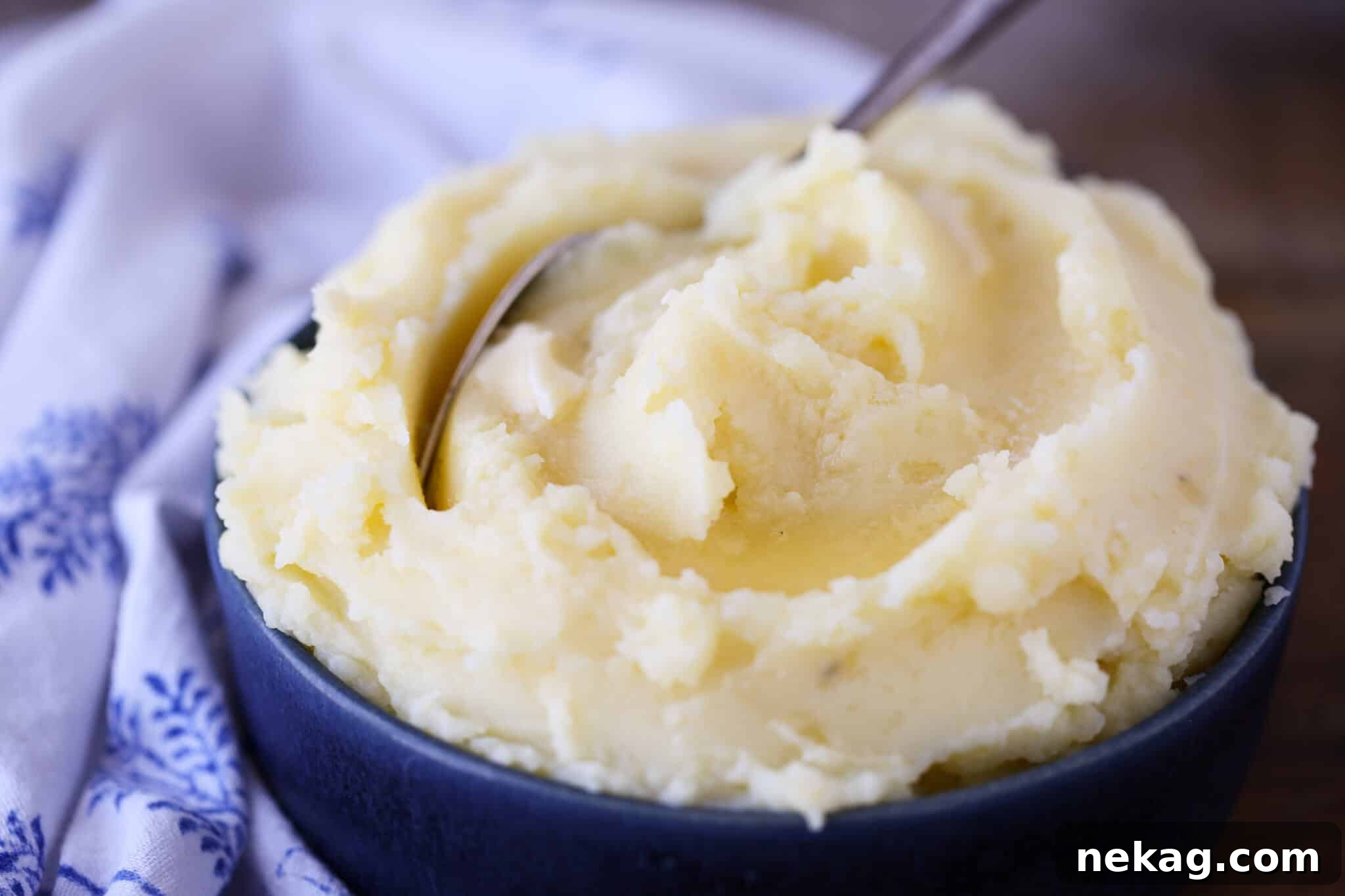
Mashed potatoes are notorious for thickening as they cool, transforming into a dense block of starchy goodness. While delicious, this texture isn’t ideal for reheating. The key to revitalizing them to a near-fresh state is to introduce moisture and warmth gently. Have a little extra warmed milk, cream, or even chicken broth on hand to stir in. Add it gradually, a tablespoon at a time, while gently reheating over low heat on the stovetop or in the microwave, stirring frequently, until the desired smooth and creamy consistency is achieved. While the texture may never be *exactly* the same as when they were freshly made – a subtle difference is inevitable due to starch retrogradation – you can get remarkably close with this simple trick. Avoid high heat, which can dry them out or scorch them.
Best Methods for Reheating:
- **Stovetop (Recommended):** Place mashed potatoes in a saucepan over low to medium-low heat. Add a splash of warmed milk or broth. Stir frequently, breaking up any lumps, until heated through and smooth.
- **Microwave:** For smaller portions, microwave on medium power, stirring every minute, adding a tablespoon of warmed milk each time, until hot and creamy.
- **Oven:** For larger batches, place in an oven-safe dish, add a few pats of butter and a splash of milk over the top, cover with foil, and bake at 300°F (150°C) for 20-30 minutes, or until heated through. Stir well before serving.
Essential Ingredients for Creamy Mashed Potatoes
My philosophy for the best mashed potatoes is simple: use quality ingredients and let them shine. Here’s a breakdown of the key players in this recipe:
- Yukon Gold Potatoes: As discussed, these are my top choice. Their inherent buttery flavor and smooth texture create a luxurious base. While red potatoes can work, Yukon Golds deliver a richer, more complex flavor profile that elevates the entire dish.
- Unsalted Butter: Always opt for unsalted butter when cooking. This gives you complete control over the seasoning of your dish. Cubing the butter allows it to melt and incorporate more easily into the hot potatoes, ensuring even distribution of richness.
- Whole Milk: Since I don’t make mashed potatoes every day, when I do, I go for the luxurious richness of whole milk. It contributes significantly to the creamy texture and decadent flavor. If you prefer a lighter version, low-fat or skim milk can be used, but adjust expectations for the level of creaminess. For an even richer experience, consider using heavy cream or a mix of milk and cream.
- Kosher Salt: Salt is not just about making things salty; it’s a flavor enhancer. Kosher salt brings out the natural sweetness and earthy notes of the potatoes. Seasoning the cooking water is a crucial step; it infuses the potatoes with flavor from the inside out, meaning less additional salt is needed at the end.
- Freshly Ground Black Pepper: This is an optional but highly recommended addition. Freshly ground pepper offers a pungent, aromatic counterpoint to the richness of the potatoes. I always recommend buying whole peppercorns and grinding them yourself (I love this no-mess pepper grinder), as the flavor is vastly superior to pre-ground pepper.
Delicious Variations & Substitutions
This creamy mashed potato recipe is a fantastic starting point, but don’t hesitate to get creative! Here are some ideas to customize your mash:
- Herb Infusions: Elevate the aromatic profile by adding fresh herbs to the cooking water. Rosemary, thyme, oregano, and sage sprigs infuse the potatoes with subtle, earthy notes. You can also add whole spices like bay leaves or garlic cloves to the pot, just remember to remove them before mashing. For a brighter flavor, stir in finely chopped chives or parsley at the very end.
- Extra Creamy & Tangy: For an even richer, more decadent texture with a hint of tang, mix in a dollop of cream cheese, crème fraîche, or sour cream before adding the milk. This adds depth and a luxurious mouthfeel.
- A Little Bit Healthier: If you’re looking to lighten things up without sacrificing flavor, consider blending in other root vegetables. Try making mashed potatoes and parsnips for a unique sweetness and added nutrients. Roasted cauliflower can also be mashed and incorporated for a lower-carb option.
- Extra Smooth: For a truly ethereal, lump-free mash, transfer the hot, drained potatoes into a potato ricer. Process them directly into your mixing bowl. A ricer separates the starch granules more effectively than a mixer, resulting in an incredibly fine and smooth texture.
- Flavorful Mix-Ins: The possibilities are endless!
- Loaded Mashed Potatoes: Turn them into a meal by folding in crispy bacon bits, shredded cheddar cheese, sliced green onions, and an extra dollop of sour cream, transforming them into loaded mashed potatoes.
- Garlic Lover’s Mash: Roast several heads of garlic until soft and caramelized, then squeeze the paste directly into the hot potatoes before mashing. The sweet, mellow garlic flavor is irresistible.
- Cheesy Goodness: Incorporate your favorite cheeses like sharp cheddar, Gruyere, Parmesan, or a creamy blue cheese. The cheese will melt into the hot potatoes, creating a gooey, flavorful delight. You could even go all the way and make Broccoli Cheddar Mashed Potatoes!
- Spicy Kick: Add a pinch of cayenne pepper, a dash of hot sauce, or finely chopped jalapeños for those who enjoy a little heat.
- Browned Butter Mash: Brown your butter gently on the stovetop until it smells nutty before adding it to the potatoes for an extra layer of sophisticated flavor.
Professional Chef Tips for Mashed Potatoes
Beyond the ingredients and basic technique, here are a few insider tips to take your creamy mashed potatoes from good to absolutely phenomenal:
- The Right Tool for the Job: While a hand masher works fine, for the smoothest mashed potatoes possible with minimal effort, a stand mixer fitted with the **paddle attachment** is a game-changer. Even better, if your paddle attachment has a rubber scraper on the side, use it! This scrapes down the bowl as it mixes, ensuring every bit of potato is incorporated evenly without over-working the starch.
- Seasoning the Cooking Water: As mentioned, don’t just boil potatoes in plain water. Season the water generously with kosher salt, making it taste like seawater. This infuses the potatoes with flavor from the inside out and helps prevent blandness in the final dish.
- Warm Your Dairy: Always use warmed milk or cream. Adding cold liquid to hot potatoes can cool them down quickly, making them harder to mash smoothly and affecting the overall texture.
- Taste and Adjust: The most important tip of all! Always taste your mashed potatoes before serving and adjust seasoning as needed. A pinch more salt, a grind of fresh pepper, or a tiny bit more milk can make all the difference.
Creamy Mashed Potatoes Recipe
Chef Lindsey
5
30
45
8
People
Comment
Print Recipe
Ingredients
Instructions
-
Place potatoes in a large pot and fill with cold water, ensuring the potatoes are just covered. Season the water generously with kosher salt until it tastes like seawater. This crucial step seasons the potatoes from within.
-
Bring the pot to a boil uncovered and continue to cook until the potatoes are very tender. They should pierce easily with a fork, paring knife, or a cake tester.
-
Once cooked, carefully drain the potatoes using a colander or large sieve. Allow them to steam for a minute or two to release excess moisture.
-
Transfer the hot, drained potatoes to the bowl of a stand mixer fitted with the paddle attachment (or use a potato ricer for an even smoother texture, or mash by hand with a wooden spoon). Mix on low speed until a smooth puree has formed. Be careful not to over-mix.
-
Add all the cubed unsalted butter to the hot potatoes and continue mixing on low until the butter is completely melted and thoroughly incorporated.
-
Remove the bowl from the stand mixer. Gradually add the warmed milk a little at a time, gently folding or mixing by hand until the desired creamy consistency is achieved. Remember, the potatoes will thicken slightly as they cool.
-
If you accidentally add too much milk and your mashed potatoes become too loose, you can gently stir in a tablespoon or two of potato flakes until they reach your preferred thickness. While it may slightly alter the taste and texture for some, it’s an effective fix.
-
Taste the mashed potatoes and season generously with additional kosher salt and fresh cracked pepper to your liking. Serve immediately and enjoy!
Notes
Peeling the potatoes is optional. I personally love the added fiber, rustic texture, and nutrients that come from leaving the skins on. If you choose to leave them on, ensure you wash the potatoes thoroughly before cooking. For the photos accompanying this recipe, the potatoes were peeled.
To make this dish vegan, simply substitute plant-based butter and unsweetened plant-based milk (like almond or oat milk).
Nutrition
Calories:
287kcal
|
Carbohydrates:
25g
|
Protein:
4g
|
Fat:
20g
|
Saturated Fat:
12g
|
Polyunsaturated Fat:
1g
|
Monounsaturated Fat:
5g
|
Trans Fat:
1g
|
Cholesterol:
52mg
|
Sodium:
165mg
|
Potassium:
625mg
|
Fiber:
3g
|
Sugar:
2g
|
Vitamin A:
615IU
|
Vitamin C:
28mg
|
Calcium:
41mg
|
Iron:
1mg
Side Dish
American
287
Like this? Leave a comment below!
Frequently Asked Questions (FAQ)
Here are answers to some common questions about making perfect creamy mashed potatoes:
What makes mashed potatoes gluey?
Mashed potatoes become gluey when they are over-mixed or over-processed. Potatoes contain starch granules. When these are ruptured too much, especially when the potatoes are cold or if too much liquid is added at once, the starches release pectin and become sticky and gummy. Always mash hot potatoes gently and only until smooth, avoiding aggressive beating.
Can I make mashed potatoes ahead of time?
Yes, you can make them a few hours in advance and keep them warm in a slow cooker on the “warm” setting with a little extra milk or cream stirred in. For longer storage, refrigerate and reheat following the instructions above. While fresh is always best, proper reheating can bring them very close!
What kind of salt is best for mashed potatoes?
Kosher salt is excellent for mashed potatoes. Its larger crystals provide a clean, less intensely salty flavor compared to fine table salt, making it easier to season accurately. It also dissolves well in the cooking water and when mixed into the hot potatoes.
Can I add herbs to my mashed potatoes?
Absolutely! Fresh herbs like chives, parsley, rosemary, thyme, or even roasted garlic cloves can be added to your mashed potatoes for extra flavor. For delicate herbs like chives, stir them in at the very end. For robust herbs like rosemary, you can infuse them into the milk as it warms, or add sprigs to the boiling water.
Before You Go
Once you master this incredibly versatile recipe for creamy mashed potatoes, a world of culinary possibilities opens up! These potatoes would be absolutely dreamy alongside my Tuna Melt Recipe for a comforting lunch, or as a hearty side to any main course. Don’t stop here – explore our other delicious, chef-developed Side Dish Recipes to find more perfect pairings for your meals. Happy cooking!