
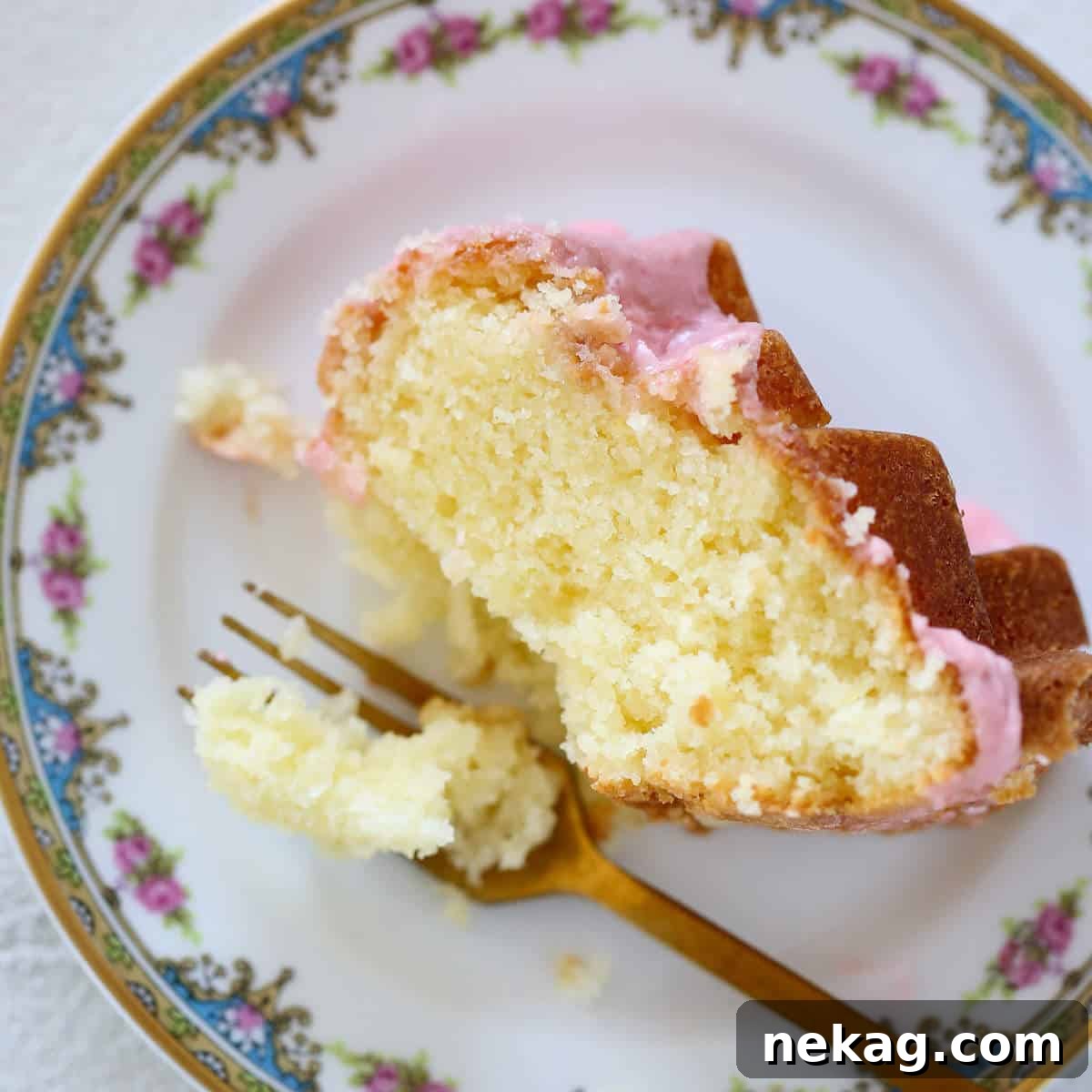
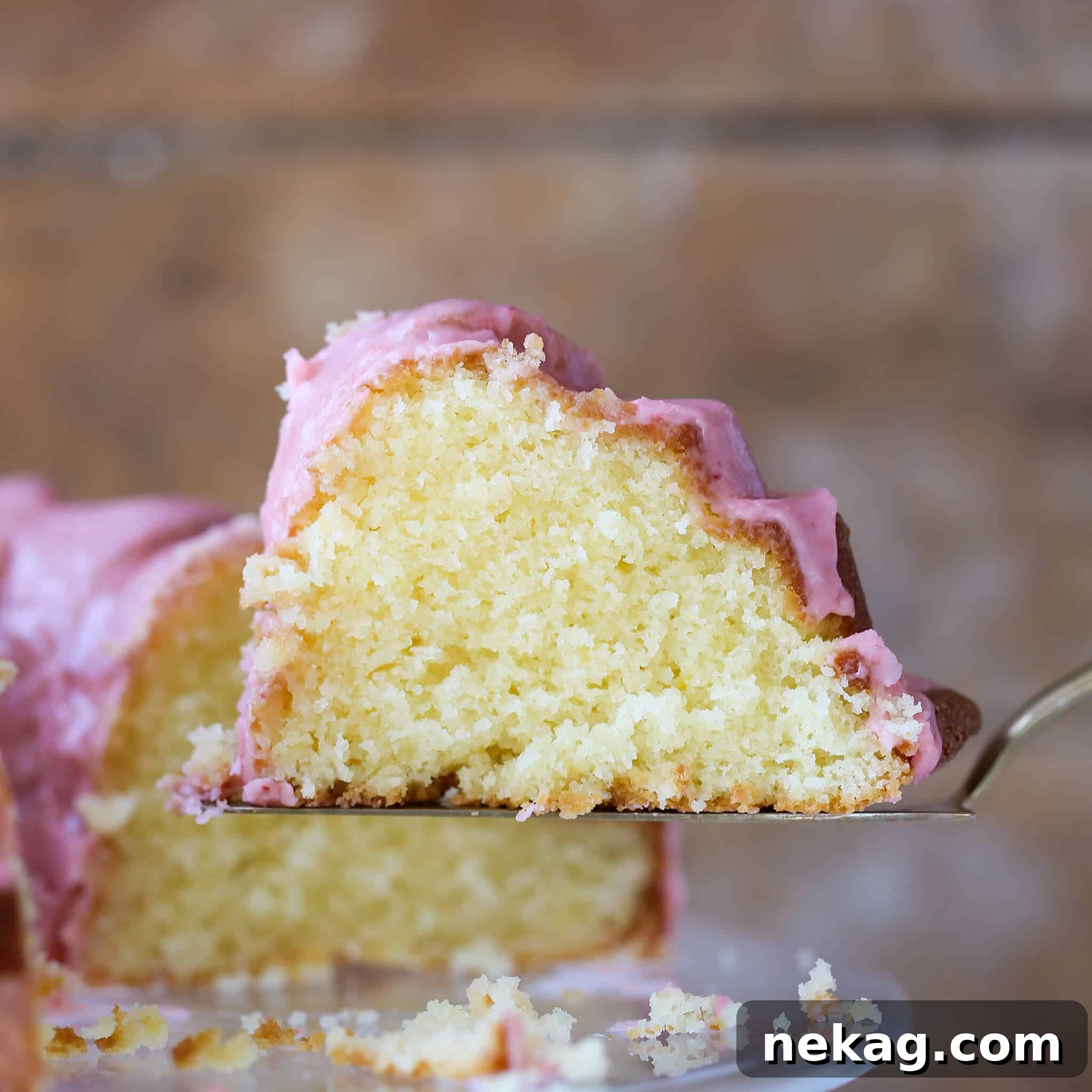
Prepare to be enchanted by a slice of our incredibly moist Lemon Pound Cake, generously topped with a luscious fresh strawberry icing. This dessert is truly irresistible, bursting with bright, zesty lemon flavor derived from both fresh lemon juice and fragrant lemon zest. The accompanying easy strawberry glaze boasts a stunning natural pink hue, courtesy of real strawberries, elevating the lemon notes to an even more floral and delightful level. It’s a perfect harmony of sweet and tart, creating a memorable treat that captures the essence of spring and summer.
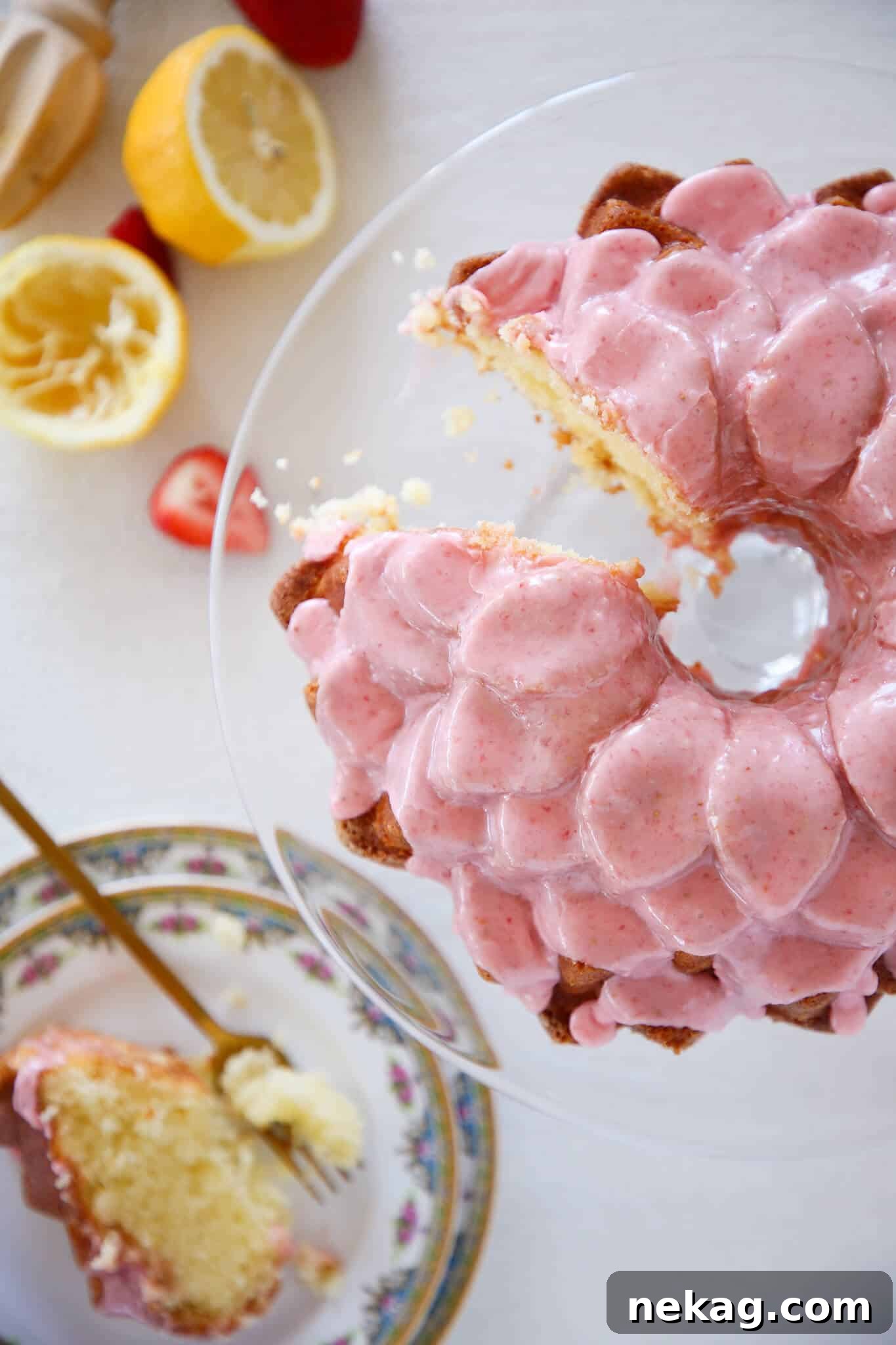
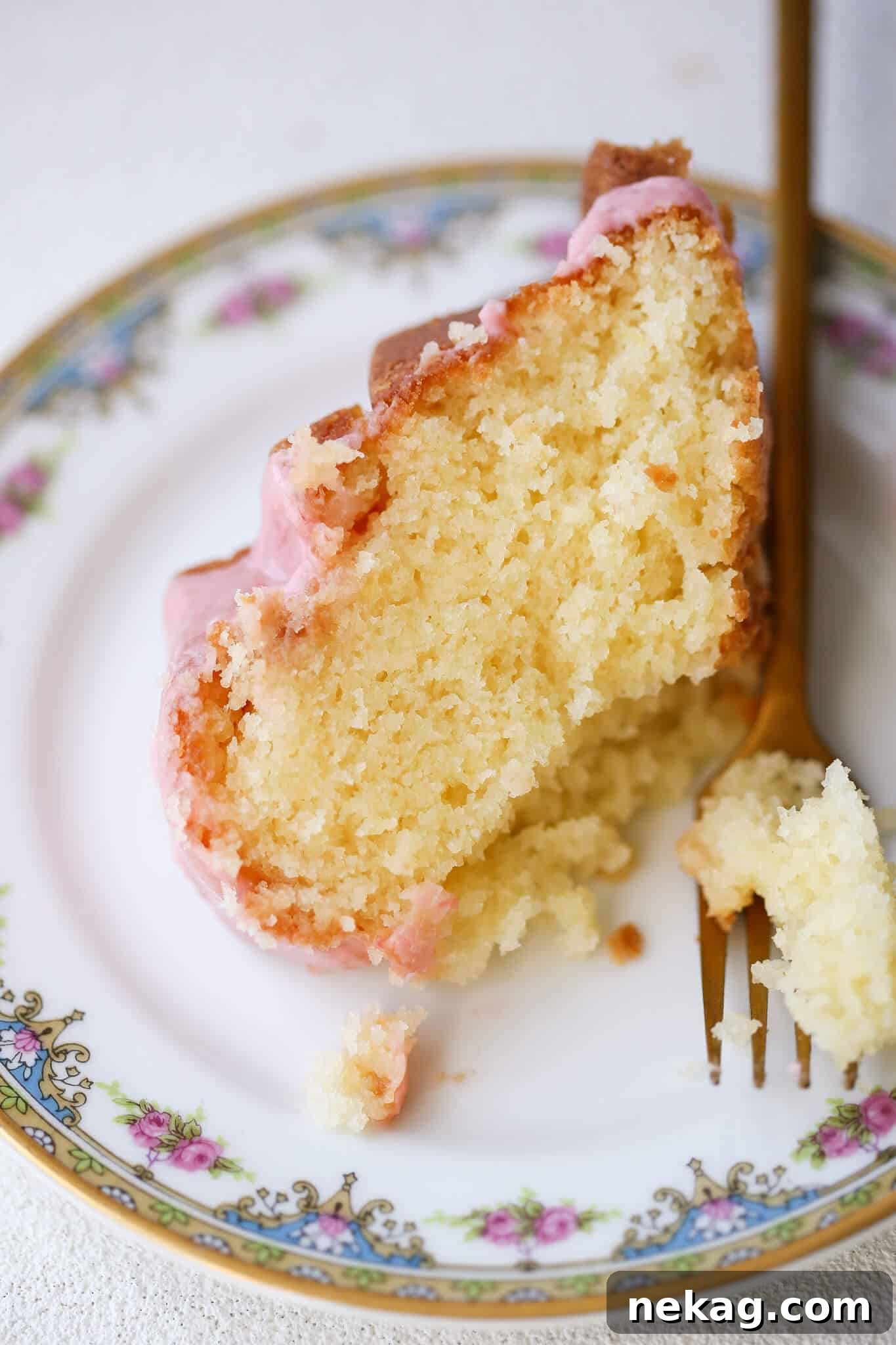
Imagine a dense, dreamy lemon pound cake, its delicate pale yellow crumb subtly tinted by fresh lemon, culminating in an unforgettable melt-in-your-mouth experience. The sweetness of the cake is perfectly balanced by the vibrant, sweet-tart strawberry icing, which not only provides beautiful color but also infuses every bite with the pure taste of sun-ripened strawberries. This exquisite pairing of lemon and strawberry is a classic for a reason, reminiscent of the beloved flavors found in a classic strawberry shortcake. For those moments when you’re feeling extra indulgent, consider garnishing your pound cake with white chocolate-covered strawberries, dollops of creamy lemon curd, or a scattering of fresh berries around the edges for an added touch of elegance. This Lemon Pound Cake, much like our popular strawberry pound cake or rich chocolate pound cake recipe, is so utterly delicious that it rarely lasts long!
Table of Contents
- Why You Will Love This Cake
- What is Lemon Pound Cake Made Of?
- Creative Variations
- Professional Baking Tips
- How to Make Lemon Pound Cake
- How to Prevent Bundt Cake from Sticking to the Pan
- Chef Lindsey’s Baking Insight
- Recipe FAQs
- Recommended Cake Recipes
- Lemon Pound Cake Recipe
- Before You Bake
Why You Will Love This Lemon Pound Cake with Strawberry Icing:
- Pure, Natural Flavor & Color: This lemon pound cake recipe celebrates genuine flavors. We use ample lemon zest and fresh lemon juice to achieve an authentic, bright lemon punch in the cake. That gorgeous pink glaze? It gets its vibrant hue and delicious taste exclusively from fresh strawberries, without a single drop of artificial coloring or flavoring. It’s a truly wholesome and delightful treat.
- Perfected by a Professional Pastry Chef: Rest assured, this recipe isn’t just good – it’s professional-grade. It has been rigorously tested and refined by a pastry chef to ensure a flawless, no-fuss baking experience for you. We provide precise ingredient ratios, both by weight and by volume, guaranteeing consistent, perfect results every time you bake. Say goodbye to baking guesswork!
- Effortless with Everyday Pantry Staples: You don’t need exotic or specialty ingredients to create this incredibly moist and dense cake. Forget about buttermilk or sour cream – this recipe relies on common pantry items you likely already have. And while the strawberry glaze adds an exquisite touch, the lemon pound cake is absolutely stunning and delicious even on its own, offering versatility for any occasion.
What is Lemon Pound Cake Made Of?
Crafting the perfect Lemon Pound Cake starts with understanding the role each ingredient plays. Here’s a detailed look at what goes into this delectable dessert:
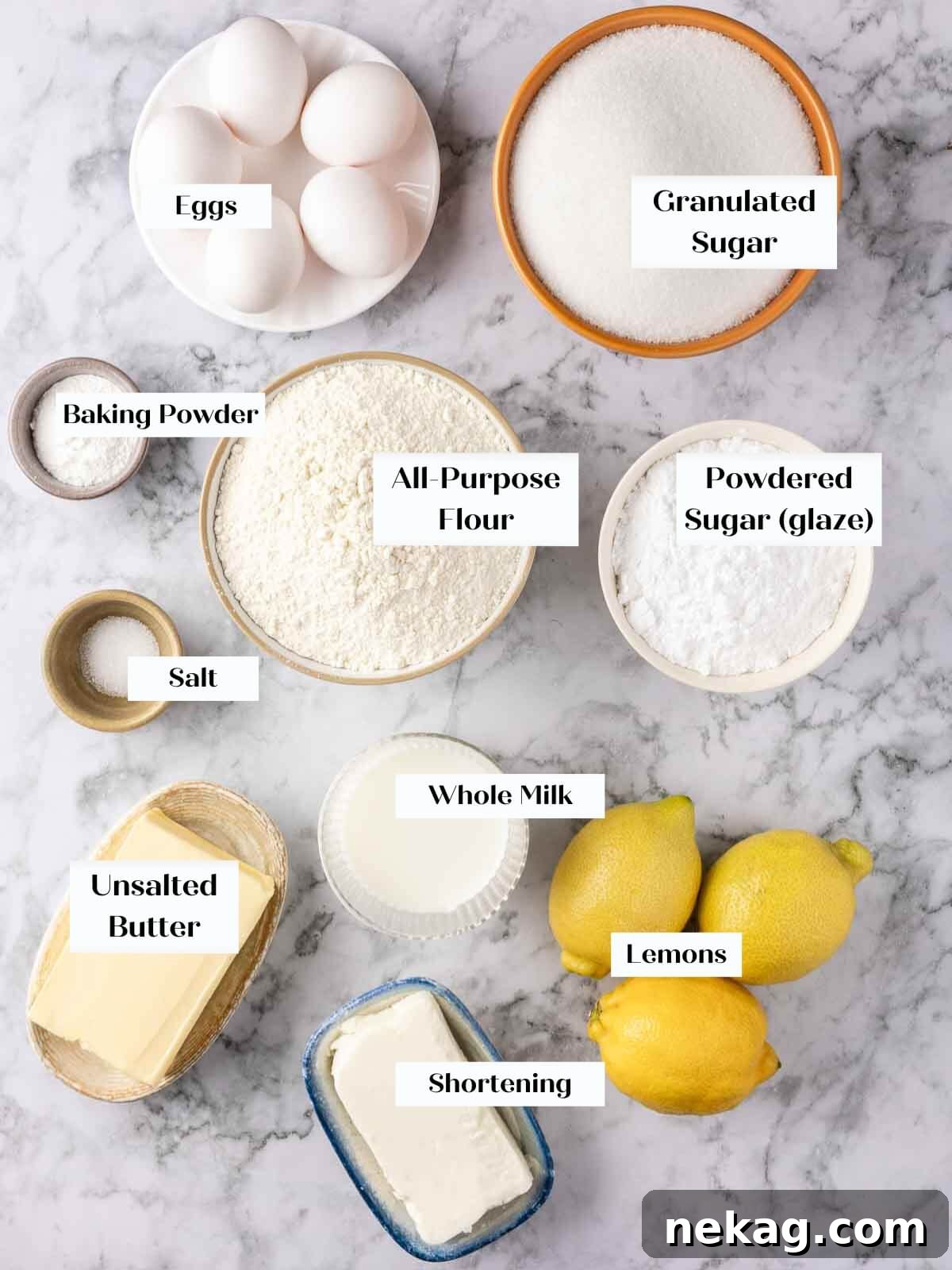
- All-Purpose Flour: This is our go-to choice for its versatility and common availability. It provides the foundational structure for the cake. If you desire an even finer, more tender crumb, you can substitute with cake flour.
- Baking Powder: Essential for leavening, baking powder ensures a consistent and even rise throughout the baking process. Unlike baking soda, which reacts quickly with acids, baking powder offers a more controlled lift, allowing the gluten structure to properly set and trap air pockets, resulting in a perfectly textured pound cake.
- Kosher Salt: A pinch of kosher salt is crucial for balancing the sweetness and enhancing the overall flavor profile of the cake, bringing out the bright notes of lemon.
- Granulated Sugar: Beyond its sweetening properties, sugar plays a vital role in creating a moist and tender crumb by attracting and retaining moisture. When creamed with butter and shortening, it also helps aerate the batter, contributing to the cake’s structure.
- Unsalted Butter: Using unsalted butter allows for precise control over the salt content in the recipe. Butter contributes rich flavor and moisture, creating a luxurious mouthfeel. Ensure it’s at room temperature for optimal creaming.
- Shortening: This ingredient is key to achieving an exceptionally tender and soft pound cake. Shortening is 100% fat (unlike butter, which contains about 20% water), which means it introduces no additional water into the batter, resulting in a denser, more velvety texture that truly melts in your mouth.
- Whole Eggs: Eggs serve multiple purposes: they add richness and fat, contribute essential moisture, and act as a leavening agent, helping the cake rise and bind the ingredients together. Using large eggs at room temperature is recommended for best results.
- Vanilla Extract: While a delightful flavor on its own, vanilla extract also acts as a flavor booster, intensifying the taste of the lemon and other ingredients in the cake.
- Whole Milk: The fat content in whole milk adds to the rich, dense texture and deep flavor profile of this pound cake. While low-fat milk can be used, whole milk is recommended for the most authentic and luxurious result.
- Lemons (Fresh): You’ll need about 3-4 large, juicy lemons for both the cake and the glaze. Freshly squeezed lemon juice is paramount here; it provides a brighter, more vibrant, and subtly floral flavor that bottled juice simply cannot replicate. Bottled lemon juice often contains preservatives and salt, which can detract from the fresh taste. Don’t forget the zest – it’s packed with essential oils for intense lemon aroma.
- Strawberries (Fresh): The star of our vibrant icing! Fresh strawberries are essential for both their natural sweetness and the beautiful, authentic pink color they impart to the glaze.
- Powdered Sugar: Also known as confectioners’ sugar, this finely milled sugar is crucial for achieving a smooth, lump-free glaze that sets beautifully.
- Light Corn Syrup: This secret ingredient for the glaze creates a lovely shine and a slight chewiness, improving the final texture of the icing. While optional, it’s highly recommended if you have it on hand for that professional finish.
Refer to the detailed recipe card below for precise quantities and additional information on these ingredients.
Creative Variations to Elevate Your Pound Cake
While this Lemon Pound Cake with Strawberry Icing is perfection on its own, don’t hesitate to experiment! Here are some delightful variations to customize your next bake:
- Explore Different Glazes or Toppings: A simple dusting of powdered sugar is often all this cake truly needs to shine. However, if you’re looking for extra excitement, consider a vibrant lemon glaze, similar to one you might find on a lemon bundt cake. For a richer, creamier topping, a classic cream cheese buttercream frosting would also be a fantastic complement.
- Switch Up the Citrus Profile: The beauty of citrus pound cakes lies in their adaptability. You can easily substitute the lemon juice and zest with other citrus fruits. Imagine the bright notes of orange, the sophisticated tang of grapefruit, or the stunning color and flavor of blood orange. For an extra zing, Key limes offer a unique tartness, much like they do in our easy key lime pie.
- Infuse with Fresh or Frozen Fruit: Add another layer of fruity goodness by folding berries or other diced fruits directly into the batter. Fresh blueberries are a classic choice, creating beautiful pockets of burst-in-your-mouth flavor. You can also incorporate chopped strawberries, diced pineapple, blackberries, or raspberries. If using frozen fruit, there’s no need to thaw; just fold them in. They might “bleed” a bit into the cake, creating lovely swirls of color that no one will mind. Get inspired by our tropical trifle for more fruity ideas!
- Add a Boozy Twist: For an adult-friendly version, consider adding a touch of your favorite spirit to either the batter or the glaze. Brandy, as used in our sour cream pound cake, or rum, like in the glaze of our famous Bacardi rum cake, would be excellent choices. Limoncello would also perfectly complement the lemon notes. When adding alcohol to the batter, substitute up to 60 grams (¼ cup) of milk with the spirit. Alcohol doesn’t hydrate gluten in the same way water does, which contributes to an even more tender and moist cake.
Professional Tips for the Perfect Lemon Pound Cake
Achieving a truly outstanding pound cake requires a few key techniques. As a professional pastry chef, I’m happy to share my insider tips to ensure your Lemon Pound Cake turns out perfectly every time:
- Always Opt for Fresh Lemon Juice: This might seem obvious, but it makes a world of difference. Just like with any dessert, especially those featuring lemon like our recipes with lemon curd, fresh-squeezed lemon juice provides an unparalleled brightness, complexity, and vibrant flavor that bottled alternatives simply cannot match. Trust me, it’s worth the extra effort!
- Weigh Your Ingredients for Precision: While pound cake appears straightforward, it’s a delicate balance of ingredients. The size of eggs can vary, and a cup of flour can differ by as much as 50 grams depending on how it’s measured. For consistent, professional results, I highly recommend weighing your ingredients. If you must measure by volume, always fluff your flour in its bag, then spoon it gently into your measuring cup until mounded. Use a straight edge, like a knife, to level off the excess without tapping or compressing the flour. This method helps prevent over-measuring.
- Avoid Over-Creaming Butter and Sugar: For a dense, classic pound cake crumb, cream your butter and sugar just until they are combined and form a light paste. The mixture should be smooth and free of lumps. Over-creaming incorporates too much air, which can lead to a lighter, more open crumb – great for fluffy cakes like these lemon cupcakes, but not ideal for the rich, tight texture we seek in a pound cake.
- Cool Your Cake in Two Stages: Patience is a virtue when cooling baked goods. Allow your pound cake to cool in its pan for 20-30 minutes after baking. This crucial step allows the cake to firm up and pull away from the sides of the pan naturally. After this initial cooling, gently invert the cake onto a wire rack to cool completely. Cutting into a warm cake can cause the crumb to crumble and appear underbaked, as the structure hasn’t had enough time to fully set.
How to Make Lemon Pound Cake with Strawberry Icing
Creating this delicious Lemon Pound Cake is a rewarding experience. Follow these detailed steps for a perfect bake. Further measurements and full ingredient list can be found in the comprehensive recipe card below!
Make the Lemon Pound Cake Batter:
Step 1: Preheat your oven. Set a conventional oven to 350°F (175°C) or a convection oven (with fan) to 325°F (160°C). This ensures your oven is at the correct temperature for even baking.
Step 2: Prepare your lemon-infused sugar. Zest the large lemon directly into your granulated sugar. Using your fingertips, gently rub the zest into the sugar for a minute or two. This technique helps to release the aromatic oils from the lemon peel, infusing the sugar with intense lemon flavor, which translates to a more fragrant and flavorful cake than simply adding zest to the batter.
Step 3: Prepare your bundt pan (or loaf pans). Lightly spray your bundt pan with a non-stick cooking spray, ensuring full coverage, especially in intricate designs. Then, dust the pan thoroughly with flour, tapping and rotating the pan until every interior surface is coated. Firmly tap out any excess flour to prevent white patches on your baked cake. This recipe is designed for either one standard 12-cup bundt pan or two large loaf pans. Proper pan preparation is crucial for easy release.
How to Prevent Bundt Cake from Sticking to the Pan
Never underestimate the importance of a meticulously greased and floured pan, especially when working with beautifully detailed bundt molds. For extra insurance, I often add my flour, tap it around to coat, then add a bit more flour and tap it again in the opposite direction. This double coating ensures every millimeter of the surface is covered. After coating, firmly tap out all excess flour. This technique helps prevent those unsightly flour patches on the exterior of your finished cake, ensuring a clean release and a perfect presentation.
Step 4: In a large mixing bowl, whisk together the dry ingredients: all-purpose flour, baking powder, and kosher salt. Whisking ensures these ingredients are evenly distributed, leading to a consistent rise and texture in your cake. Set this mixture aside.
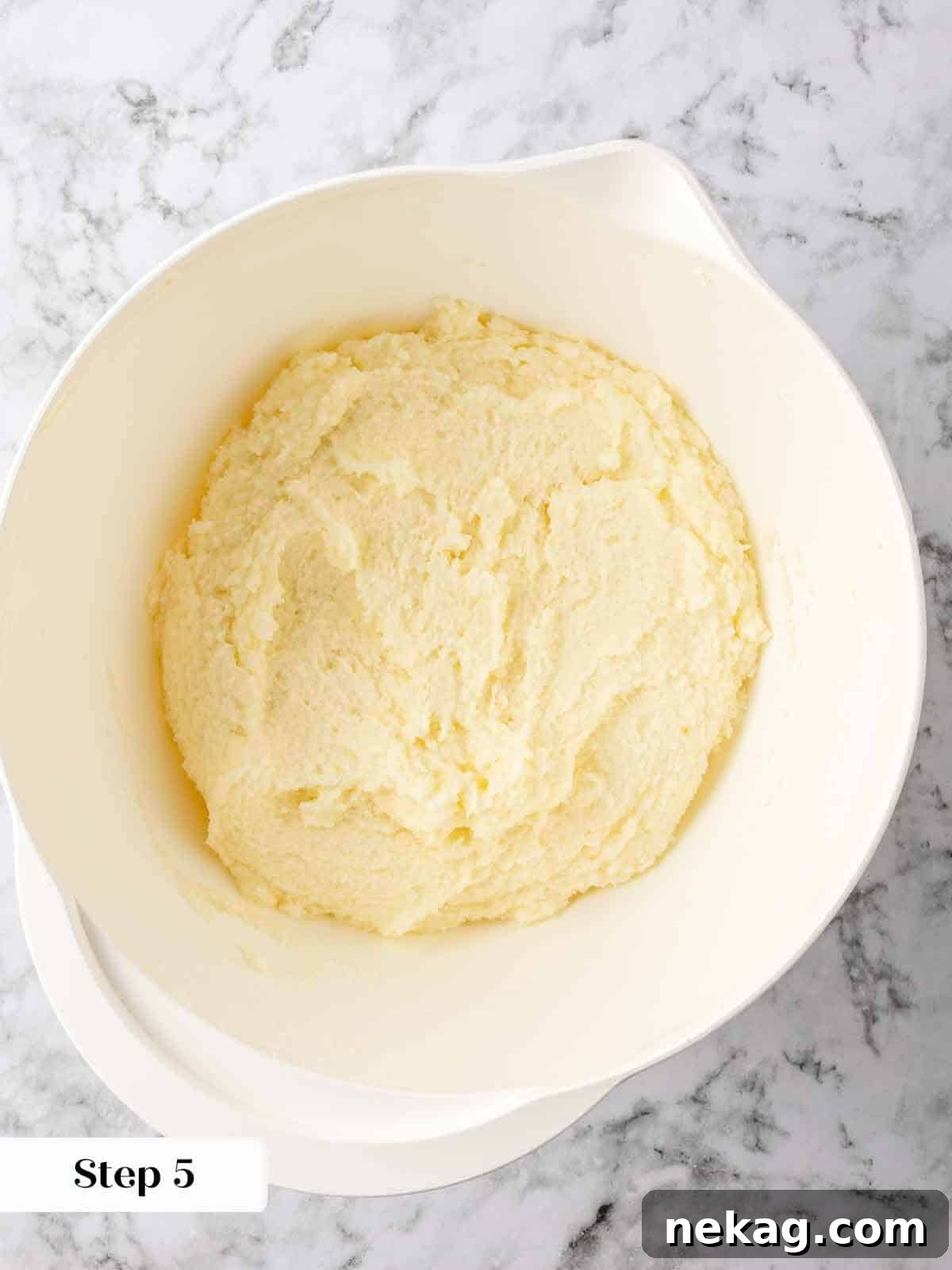
Step 5: In the bowl of a stand mixer fitted with the paddle attachment (or using a large bowl and an electric hand mixer), combine the room temperature unsalted butter, shortening, and the lemon-infused granulated sugar. Beat these ingredients together on medium speed just until they are fully combined, and the mixture forms a smooth, light paste. It should no longer be lumpy or clumpy. Be careful not to over-cream at this stage, as we want a dense pound cake crumb, not a light, airy one.
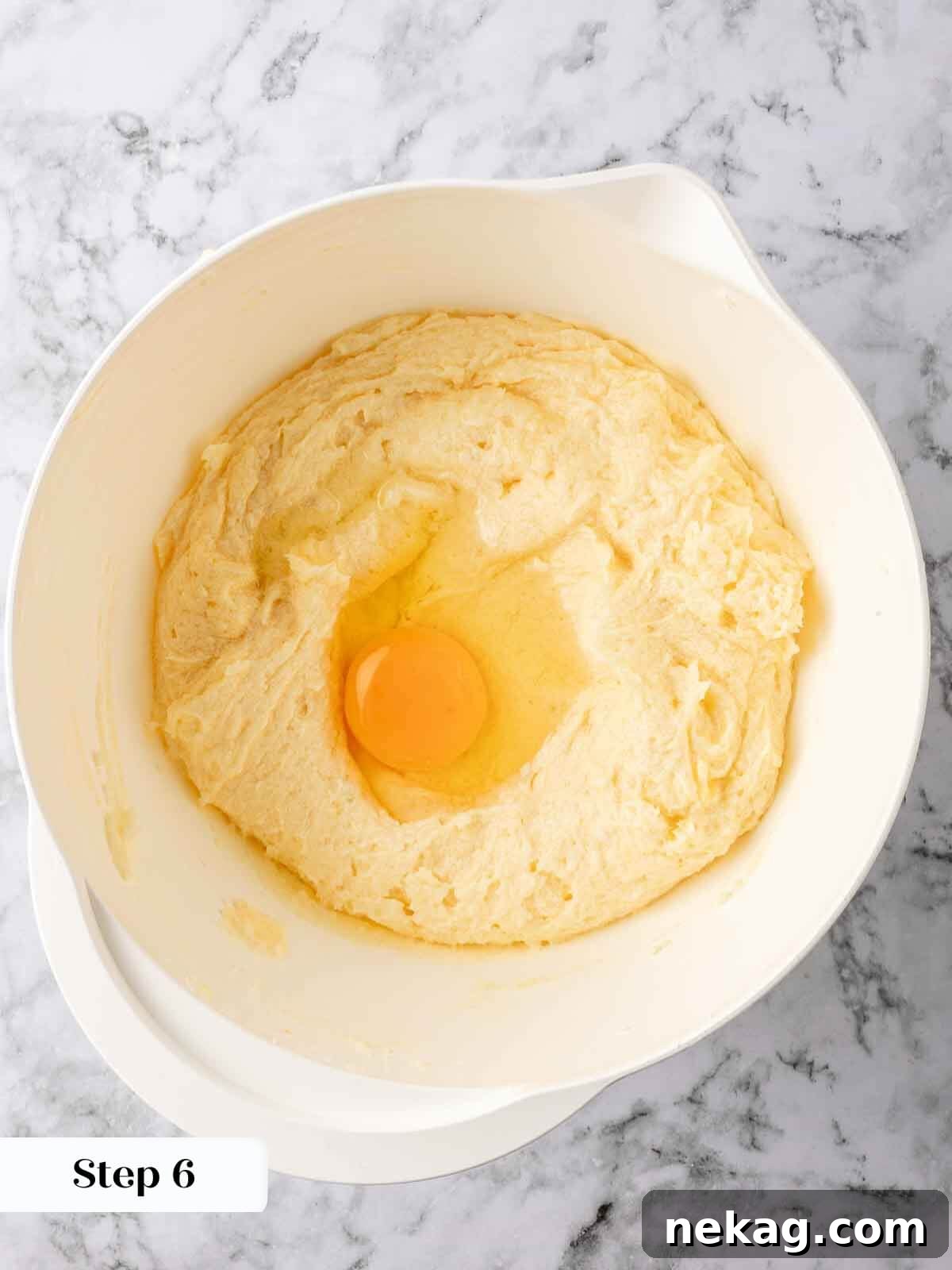
Step 6: Add the large eggs to the creamed mixture, one at a time. Beat thoroughly after each addition until the egg is just incorporated before adding the next. This allows the eggs to emulsify properly into the batter. Remember to stop the mixer periodically and scrape down the sides and bottom of the bowl with a rubber spatula after every few eggs to ensure all ingredients are fully mixed.
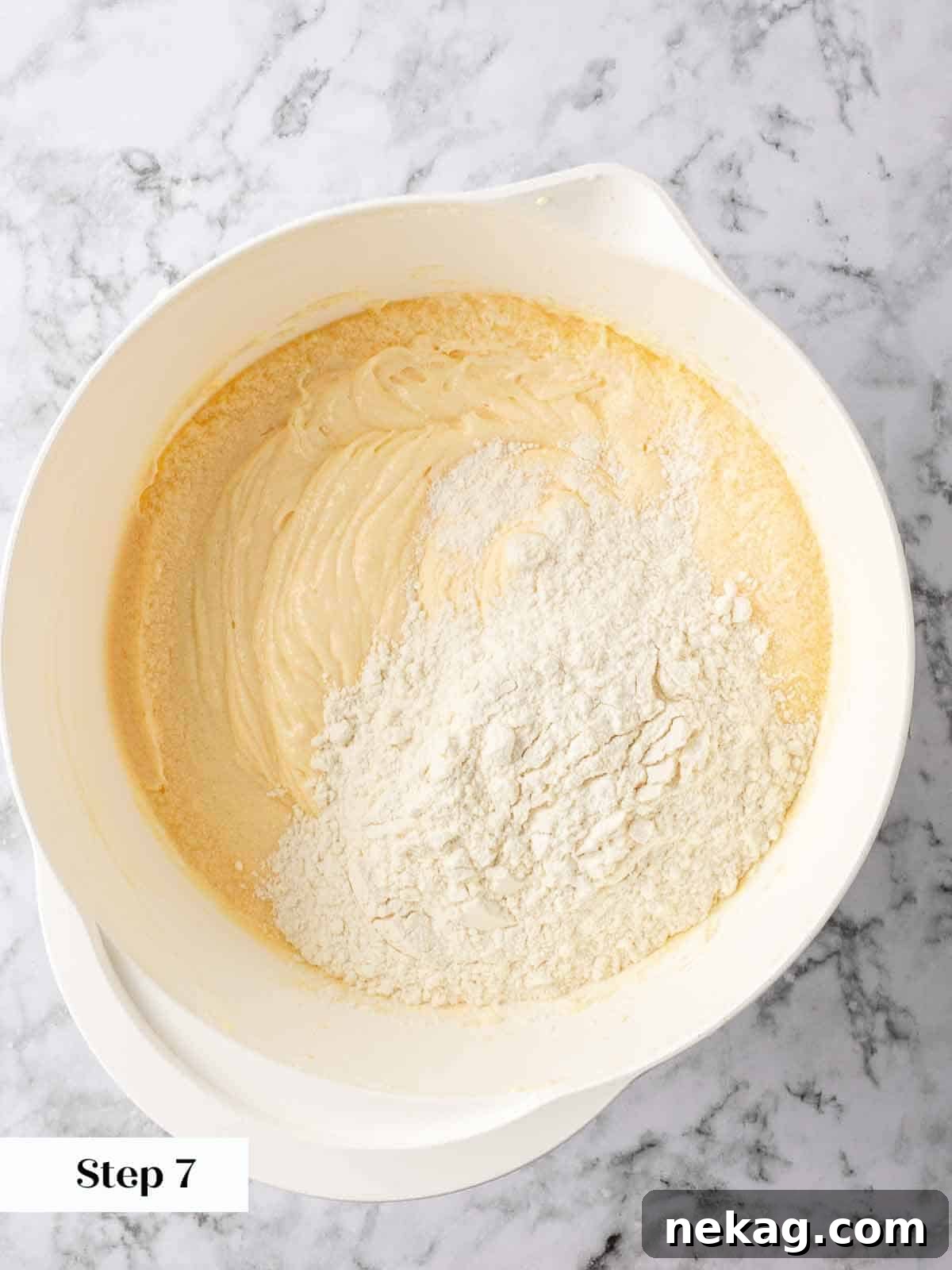
Step 7: Alternate adding your dry ingredients with the liquids. Begin by adding about a third of the flour mixture, mixing on low speed until just blended. Then, add half of the lemon juice, followed by half of the whole milk, mixing gently after each addition. Repeat this pattern, adding another third of the flour, then the remaining lemon juice and milk, and finally the last third of the flour. Always start and end with the flour mixture. Mix only until the ingredients are just combined to avoid overworking the gluten, which can result in a tough cake.
A Note on Batter Consistency: Don’t be alarmed if your batter appears slightly curdled after adding the milk – this is perfectly normal due to the different fat and water content interacting. Just continue mixing gently until everything is just blended. This phenomenon is also less likely to occur if all your ingredients, especially dairy and eggs, are at proper room temperature.
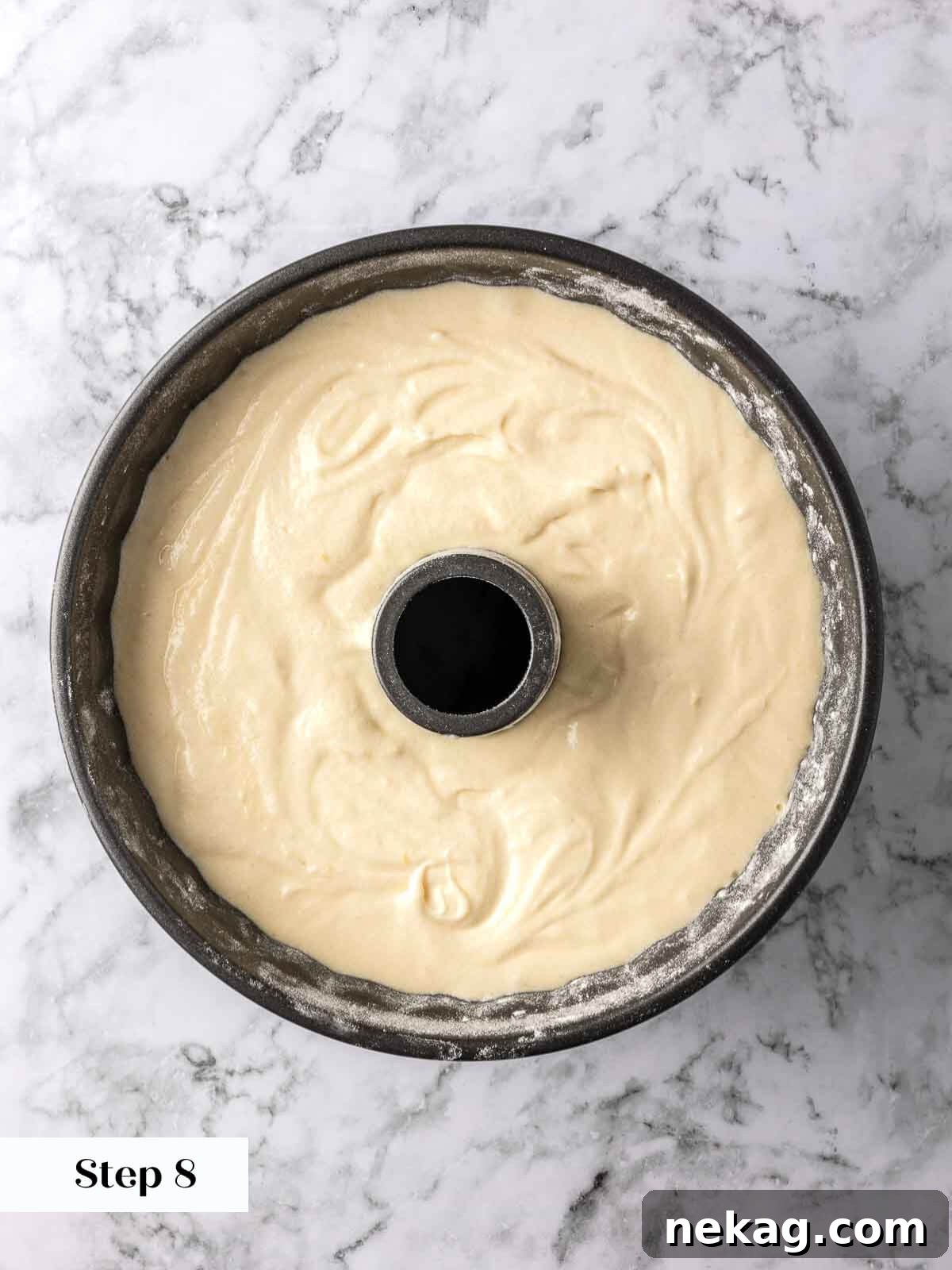
Step 8: Carefully pour the prepared batter into your greased and floured pan(s). Fill the pan(s) a little more than three-quarters full, ensuring there’s at least one inch of space between the top of the batter and the rim of the pan. Overfilling can cause the cake to overflow during baking. Gently tap the pan on the counter a few times to release any large air bubbles.
Act Swiftly! It’s important to work quickly and efficiently once the batter is mixed and poured into the pan(s) (Step 8). If you delay too long, the leavening agents can lose their potency, causing the cake to fall and result in a dense, sad texture. We only want happy cakes here!
Step 9: Bake the cake in your preheated oven. Baking times will vary depending on the pan size: approximately 55-65 minutes for a large 12-cup Bundt pan, and about 35-45 minutes for two standard loaf pans. The cake is done when a wooden skewer or cake tester inserted into the deepest part comes out with only a few moist crumbs clinging to it, indicating it’s cooked through but still moist. Avoid overbaking, as this is the primary cause of dry pound cake.
Step 10: Once baked, allow the cake to cool in its pan for 20-30 minutes. This essential cooling period allows the cake to firm up and naturally pull away from the sides. After this time, carefully invert the cake onto a wire rack to cool completely. Ensure it is entirely cool before icing for the best results.
Troubleshooting a Stuck Bundt Cake: If your cake doesn’t release easily from the pan after the initial cooling, don’t panic! First, try gently running an offset spatula around the outer edges and the center tube to loosen any sticking points, then try inverting it again. If it still resists, let the cake cool completely in the pan. Often, a fully cooled cake will contract slightly and release more easily. Try again. If it’s truly stubborn, you might be able to identify where it’s sticking (often the top inverted surface of the mold). Minor “surgery” might be needed to piece back any small bits that cling. Remember, a beautiful glaze can hide many imperfections! In the absolute worst-case scenario, if the cake is structurally compromised, it makes a fantastic base for a berry trifle – delicious regardless!
Make the Strawberry Icing and Ice the Cake:
Step 11: Prepare your strawberries. Coarsely chop and hull your fresh, room-temperature strawberries. Place the chopped strawberries, ¼ cup of the powdered sugar (from the total amount for the icing), and ½ teaspoon of lemon zest into a food processor. Process until the strawberries are completely pureed into a smooth mixture.
For the Smoothest Glaze: To ensure your glaze is extra smooth and free of lumps, I highly recommend sifting your powdered sugar before adding it to the strawberry mixture.
Step 12: Refine the strawberry puree. Using a wooden spoon or spatula, press as much of the strawberry puree mixture through a fine-mesh sieve as possible. This step removes the strawberry seeds, resulting in a silky-smooth, elegant glaze. Discard the strained seeds.
Step 13: Combine the wet glaze ingredients. Into the strained strawberry juice, stir in the very soft (but not melted) unsalted butter, light corn syrup, and vanilla extract. Mix until thoroughly combined.
Achieving a Homogeneous Glaze Base: If your butter is too firm or the mixture isn’t blending smoothly, you can gently warm it. I often place the bowl in the microwave on a low power setting (e.g., level 2) and microwave in short 10-second increments, stirring after each, until the butter is fully incorporated and no distinct pieces remain. Be careful not to overheat it!
Step 14: Achieve the perfect glaze consistency. Gradually stir the remaining powdered sugar into the strawberry mixture until a smooth glaze forms. If the icing appears too thin for your liking, add a bit more powdered sugar, a tablespoon at a time, until the desired thickness is reached. Conversely, if it’s too thick, add a tablespoon of water or a few drops of lemon juice until it thins out appropriately.
Customizing Glaze Thickness: Remember, the thinner your icing, the more translucent and delicate the coating on your cake will be. A thicker icing will provide a more opaque and substantial covering. Adjust to your personal preference!
Step 15: Prepare for icing. Place your completely cooled pound cake on a wire rack. Position this wire rack over a sheet of parchment paper or a rimmed baking sheet. This setup will catch any excess glaze, making cleanup a breeze.
Step 16: Glaze your masterpiece. Drizzle or pour the prepared strawberry icing over the cooled cake. You can opt for elegant, decorative drips cascading down the sides or a smooth, even coating, depending on the design of your bundt pan and your aesthetic preference. Allow the glaze to set slightly – typically 10-15 minutes – before carefully transferring the cake to a serving plate or cake stand.
Chef Lindsey’s Baking Insight
For large bundt cakes, I always recommend starting to test for doneness earlier than the recipe suggests, around the 35-minute mark. Look for the center to no longer appear wet. Over-baking is the quickest way to end up with a dry pound cake, and we definitely want to avoid that! Always use a reliable cake tester inserted into the very middle of the cake to confirm. While the outside might look perfectly golden and done, the interior often needs more time to fully bake through.
Recipe FAQs for Lemon Pound Cake
To keep your lemon pound cake at its best, store the cooled cake in an airtight container at room temperature for up to 5 days. For extended freshness, it can be refrigerated for up to 10 days. For longer storage, wrap individual slices or the entire cake tightly in plastic wrap and then in aluminum foil, and freeze for 2-3 months. Freezing individual glazed slices and thawing them as needed helps retain that fresh-baked taste.
Absolutely! Pound cake is an excellent make-ahead dessert. Bake the cake as directed and allow it to cool completely. Once cool, wrap it very well in multiple layers of plastic wrap, then an additional layer of aluminum foil, and freeze for up to 2 months. When you’re ready to serve, remove the plastic and foil and thaw the cake at room temperature. It’s best to glaze the cake just before serving, as freezing simple glazes can sometimes cause them to lose their shine, dull, or even crack. While the taste remains excellent, a freshly glazed cake will always have the most beautiful presentation.
This lemon pound cake is wonderfully versatile. It’s fantastic on its own as a delightful snack or dessert, especially when paired with a fresh cup of coffee or tea. For a more decadent experience, serve it with a generous dollop of homemade whipped cream or a bright lemon curd whipped cream. For a truly elegant presentation, consider accompanying it with a spoonful of our easy lemon curd and a scoop of rich homemade vanilla ice cream, or a delicate drizzle of crème anglaise.
Several factors can contribute to a dry pound cake. One common culprit is over-creaming the butter and sugar, which incorporates too much air, leading to a less dense, drier result. Similarly, overmixing the batter after adding the flour can develop the gluten too much, making the cake tough and dry. The most frequent reason for dryness, however, is over-baking or an oven temperature that is too high. Always use an oven thermometer to ensure accuracy and start checking for doneness early. Lastly, improper storage can lead to a dry cake; ensure it’s tightly wrapped or kept in an airtight container to retain moisture.
Recommended Cake Recipes
If you loved this Lemon Pound Cake, explore more delicious, chef-developed cake recipes:
Date Night
Lemon Olive Oil Cake
A sophisticated and moist cake with rich olive oil notes and bright lemon flavor, perfect for a special occasion.
Cake Recipes
Sour Cream Pound Cake
Experience the incredibly tender and rich crumb of this classic sour cream pound cake recipe.
Cake Recipes
American Flag Cake
A festive and flavorful patriotic cake, perfect for celebrations, featuring delicate lemon Swiss meringue buttercream.
Date Night
Cherry Almond Pound Cake
A delightful pound cake with the sweet, nutty combination of cherries and almond, finished with a beautiful pink glaze.
If you tried this recipe and loved it, please consider leaving a 🌟 star rating and share your experience in the comments below. Your feedback truly brightens our day and helps others discover this wonderful recipe!

★
★
★
★
Lemon Pound Cake
Chef Lindsey
30
1
1 30
20 Slices
Comment
Print Recipe
Ingredients
For the Lemon Pound Cake:
- 3 cups all-purpose flour
- 1 tablespoon baking powder
- ¾ teaspoon salt
- 3 cups granulated sugar
- 1 cup unsalted butter room temperature
- ½ cup shortening room temperature
- 5 large eggs
- 1 cup whole milk
- 6 tablespoons lemon juice fresh squeezed, please!
- 1 extra large lemon zested (3/4 teaspoon)
For the Strawberry Icing:
- 1 cup strawberries at room temperature
- ½ teaspoon freshly grated lemon zest
- 4 cups powdered sugar divided
- 2 tablespoons unsalted butter very soft but not melted
- 1 ½ tablespoons light corn syrup
- ½ teaspoon vanilla extract
Instructions
Make the lemon pound cake batter:
-
Preheat the oven to 350°F conventional or 325°F convection (with fan).
-
Zest the lemon into your sugar. Rub it gently between your fingers to start releasing the oils in the skin. This will draw out more flavor than simply adding it to the batter!
-
Spray your bundt pan with cooking spray and then dust it with flour, tapping the flour around until every inch is covered. This recipe makes either one large Bundt pan or two large loaf pans.
-
In a large mixing bowl, whisk together flour, baking powder, and salt. Set aside.
-
In the bowl of a stand mixer fitted with the paddle attachment or in a large bowl with an electric mixer, beat butter, shortening and sugar just until the mixture comes together and it is no longer lumpy or clumpy. It will look like a paste.
-
Add eggs to the mixer bowl, one at a time, beating after each one until just incorporated. Be sure to stop and scrape down the sides and bottom of the bowl after every few eggs.
-
Add dry ingredients in three additions alternating with first the lemon juice then the milk, starting and ending with the flour mixture. Mix after each addition only until just blended.
-
Pour batter into prepared pan(s) until they are a little more than ¾ full. There should be 1 inch between the top of the pan and the top of the batter. If you fill more than that, the cake will overflow.
-
Bake cake in a preheated oven until the tester comes out with a few clinging crumbs. Approximately 55 minutes for a 12 cup Bundt pan and 35 minutes for small pans.
-
Allow to cool 30 minutes in the pan then turn out on a wire rack to cool completely.
Make the strawberry icing and ice the cake:
-
Coarsely chop and hull your strawberries. Add strawberries, ¼ cup powdered sugar, and lemon zest to a food processor. Process until the strawberries are completely pureed.
-
Using a wooden spoon, press as much of the strawberry mixture through a fine sieve as possible. Discard seeds.
-
Stir the butter, corn syrup and vanilla extract into the strawberry juice.
-
Stir the remaining powdered sugar into the strawberry mixture. If it is too thin, add more powdered sugar. If it’s too thick, add a tablespoon of water.
-
Place cake on a wire rack set over a piece of parchment or in a rimmed baking sheet.
-
Pour the icing over the cake either in decorative drips or as one smooth coating. It depends on the bundt pan you used. Let the glaze set slightly before transferring to a cake plate or cake stand.
Video
Notes
Bundt Pans – Be sure to leave ¾ inch from the top of the bundt pan. Depending on the pan you choose, you might have extra batter. The petal bundt pan that I used in these photos is only a 10 cup bundt, so I had extra which I baked into mini loaves!
Technique – Make sure there is an inch between the batter and the top of your pan or you might have an overflow situation.
Storage – Store cooled lemon pound cake in an airtight container at room temperature for up to 5 days, refrigerated for 10 days or frozen for 2-3 months.
Lemon pound cake recipe adapted from The Plain Chicken.
Strawberry glaze recipe adapted from The All-American Dessert Book by Nancy Baggett.
Nutrition
Carbohydrates: 71g |
Protein: 4g |
Fat: 17g |
Saturated Fat: 8g |
Polyunsaturated Fat: 2g |
Monounsaturated Fat: 5g |
Trans Fat: 1g |
Cholesterol: 70mg |
Sodium: 175mg |
Potassium: 74mg |
Fiber: 1g |
Sugar: 56g |
Vitamin A: 399IU |
Vitamin C: 6mg |
Calcium: 65mg |
Iron: 1mg
Dessert
American
445
Like this? Leave a comment below!
Before You Bake: Final Thoughts
Thank you for exploring this professionally tested recipe for Lemon Pound Cake with Strawberry Icing. We are confident that with these detailed instructions and chef-approved tips, you’ll create a dessert that delights everyone who tries it. We love sharing our passion for baking, and we hope this recipe brings a touch of joy to your kitchen.
Don’t stop here! Be sure to check out our other delicious, chef-developed cake recipes, including classics like this elegant white cake recipe, or explore a variety of other baking inspirations on our site. Happy baking!