
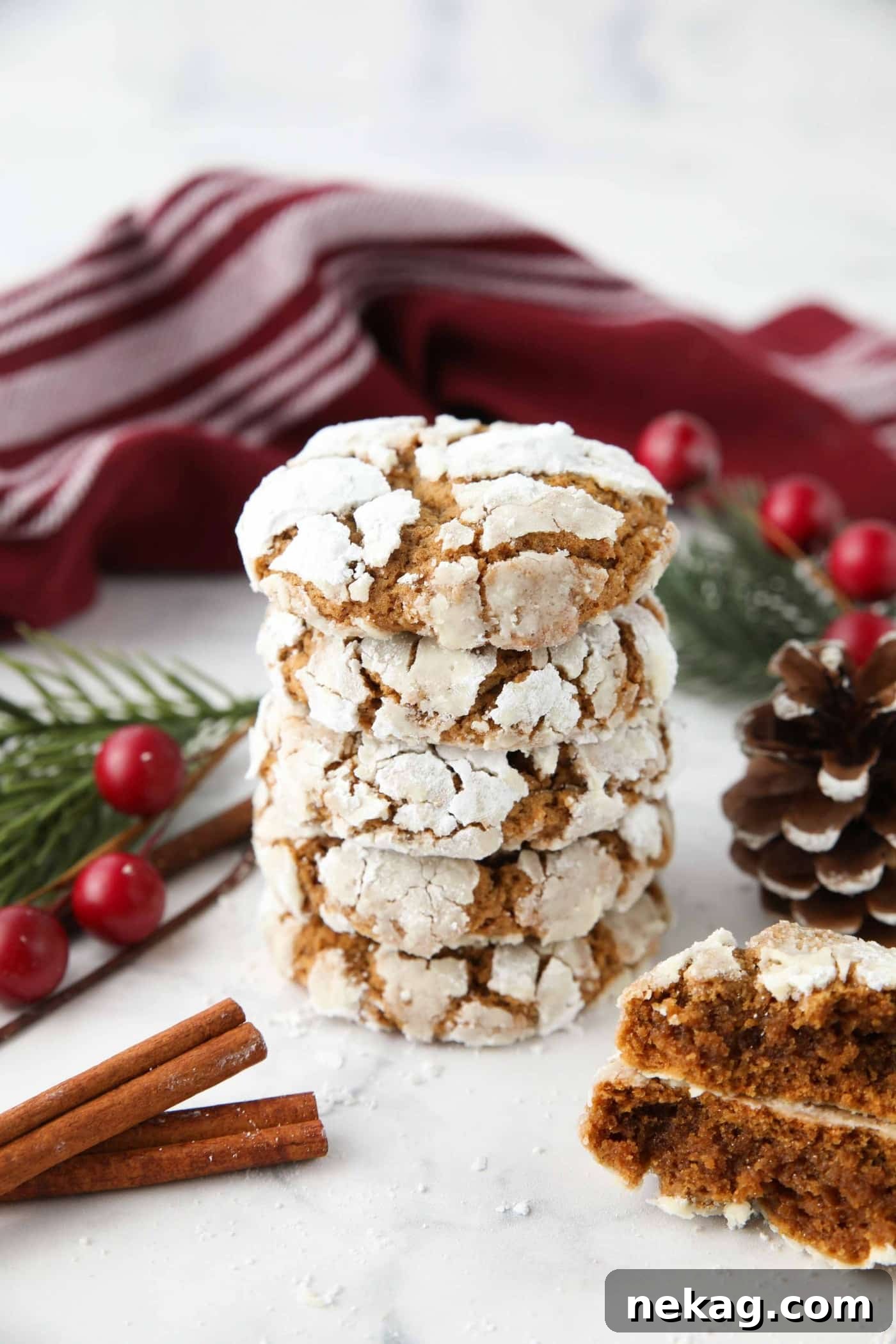
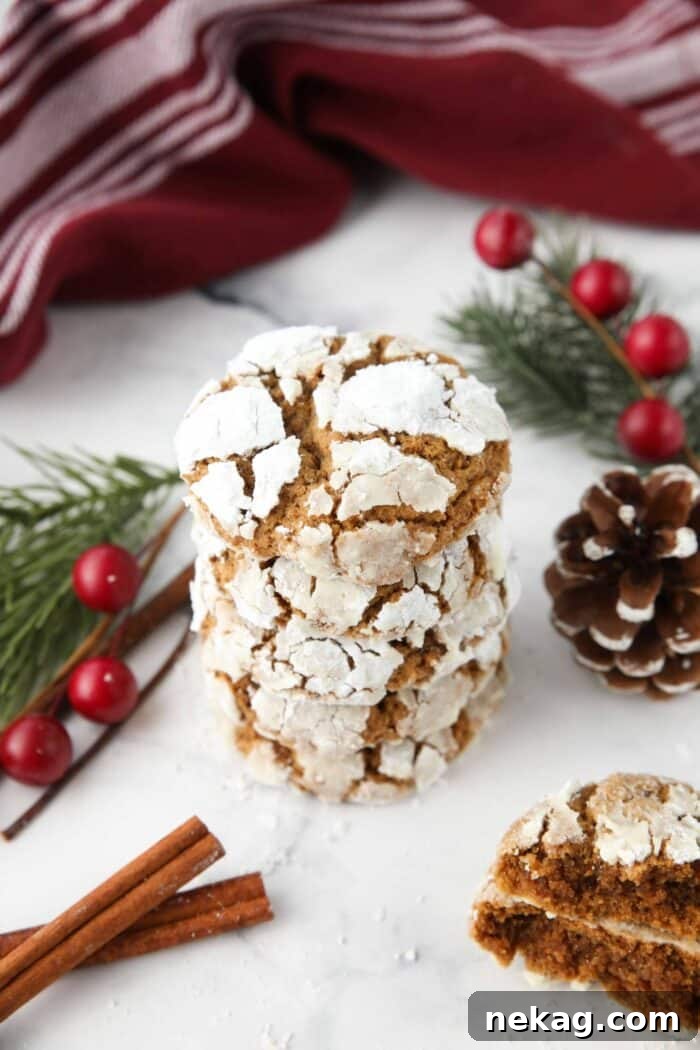
These gingerbread crinkle cookies are soft, chewy, and packed with warm holiday spices. Molasses gives them deep, rich flavor, and a dusting of powdered sugar creates the classic snow-kissed crinkle look. Perfect for cookie swaps, gift boxes, or cozy baking sessions, these easy Christmas crinkle cookies deliver festive flavor in every bite.
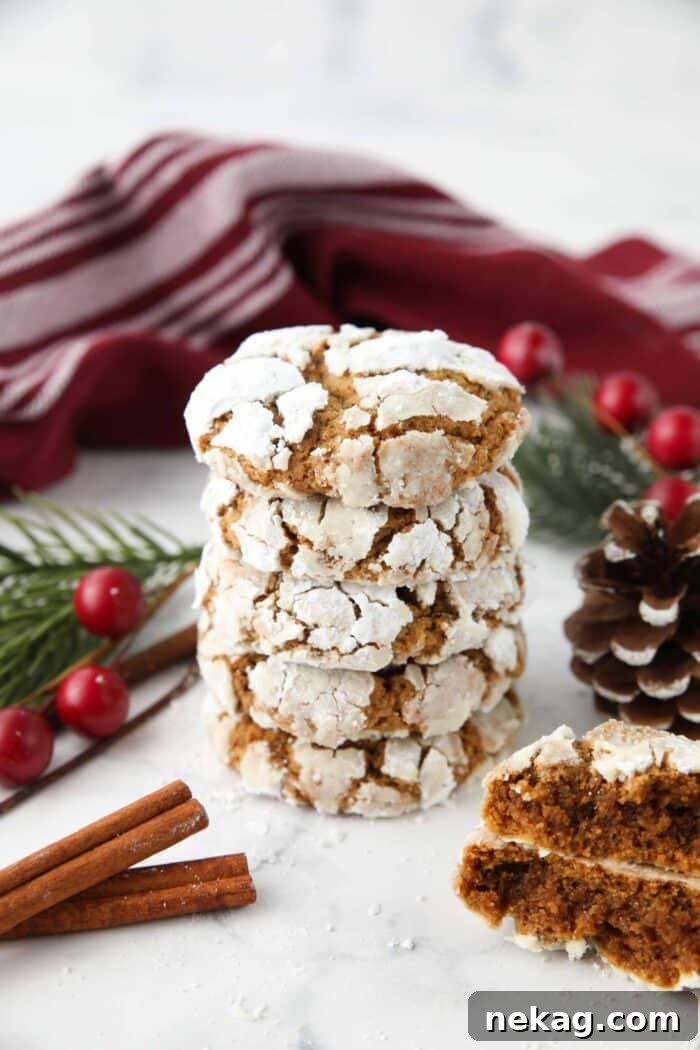
The Ultimate Christmas Crinkle Cookie Recipe
This recipe started from a soft-baked gingersnap base and was adjusted to create bright, beautiful cracks and retain a tender center. I tested the method multiple times to refine the steps that produce reliably dramatic crinkles without the powdered sugar soaking into the dough.
Below you’ll find streamlined instructions for gingerbread crinkle cookies that stay soft, bake evenly, and form that signature crinkle pattern every time.
Why You Will Love This Recipe
Gingerbread crinkle cookies combine the warming spices of classic gingerbread (ginger, cinnamon, cloves) with the soft, fudgy texture crinkle fans expect.
- Perfect holiday flavor: Warm spices, sweet molasses, and a touch of vanilla.
- Soft and chewy texture: Tender centers with slightly crisp edges.
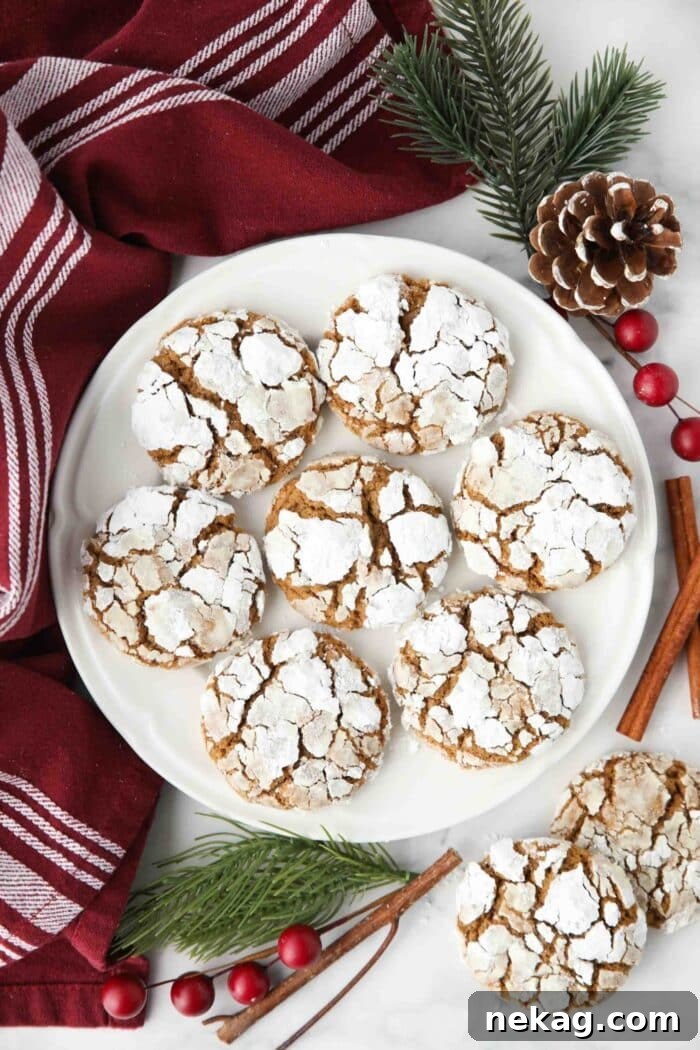
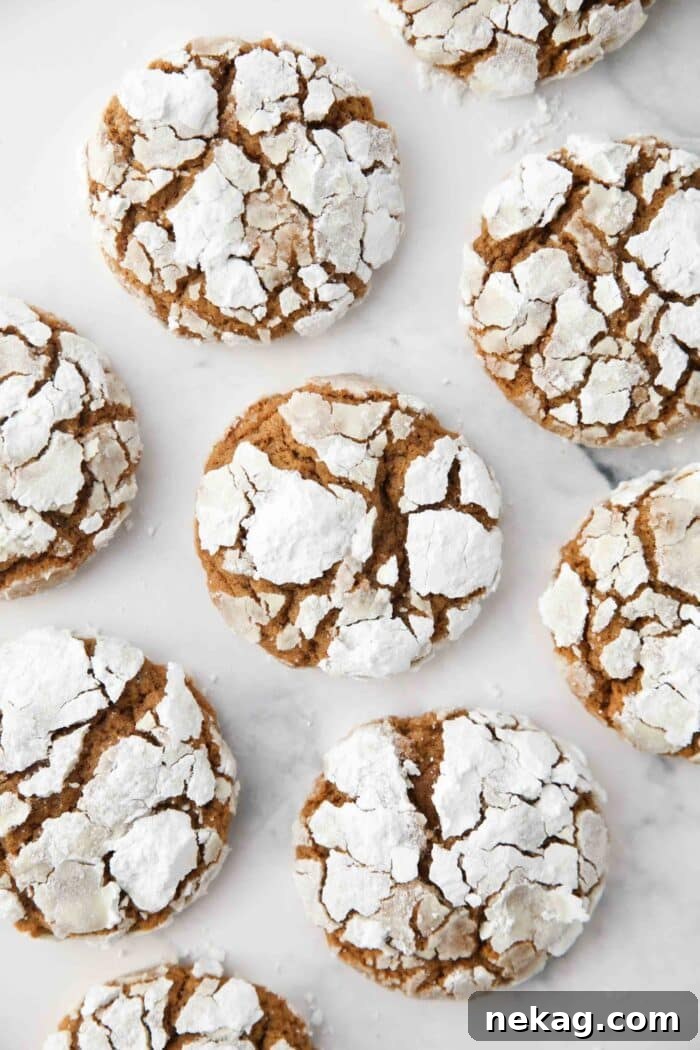
- Festive appearance: Powdered sugar produces a bright, snowy crackle.
- Make-ahead friendly: Scoop and freeze dough for easy baking later.
These cookies are ideal for Christmas cookie exchanges and holiday gift boxes—easy to make and sure to impress.
Ingredients You’ll Need
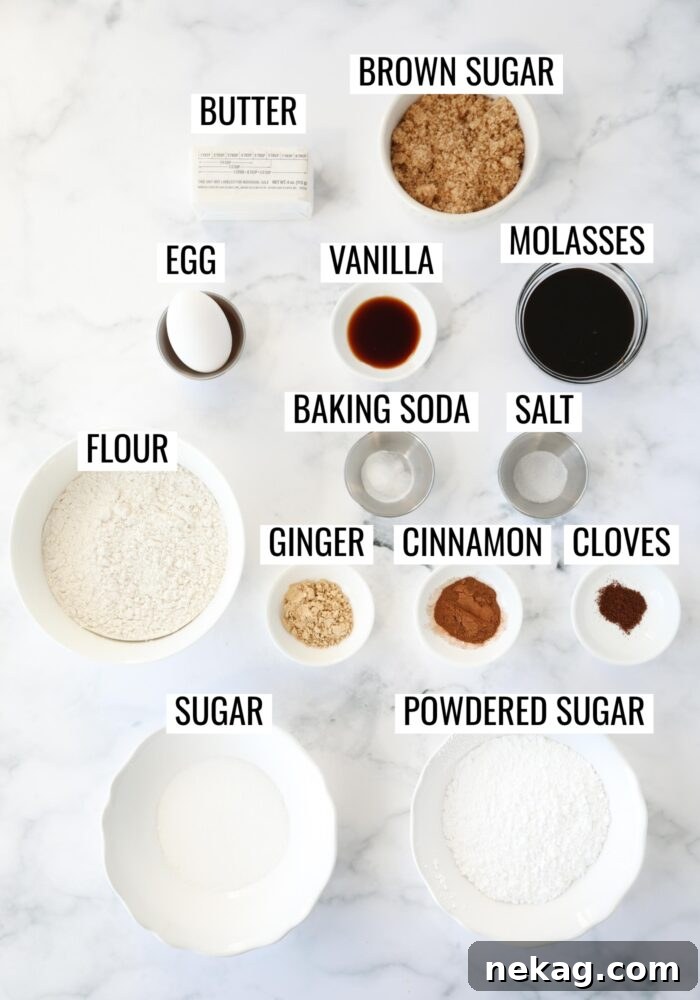
To make gingerbread crinkle cookies, gather:
- Unsalted butter (room temperature)
- Light brown sugar (gently packed)
- Large egg
- Vanilla extract
- Unsulphured molasses (not blackstrap)
- All-purpose flour
- Baking soda
- Salt
- Ground ginger
- Ground cinnamon
- Ground cloves
- Granulated sugar (for rolling)
- Powdered sugar (for the crinkle coating)
Step 1: Make the Ginger Cookie Dough
These concise steps will give you a dough that produces excellent cracks and rich gingerbread flavor:
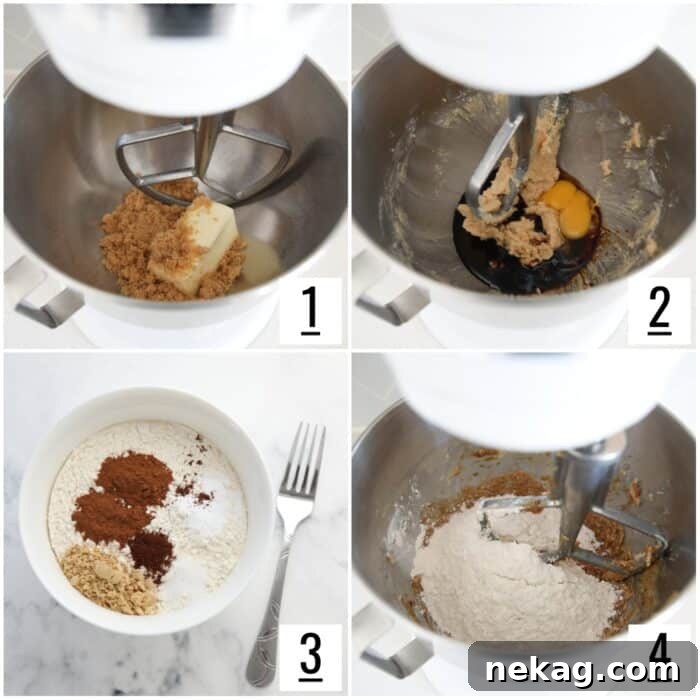
- Cream the butter and sugar: Using a stand mixer with the paddle attachment, beat the butter and brown sugar until combined.
- Add wet ingredients: Mix in the egg, vanilla, and molasses, scraping the bowl as needed. The mixture may look slightly curdled but will come together once dry ingredients are added.
- Combine dry ingredients: Whisk together flour, baking soda, salt, and spices in a separate bowl.
- Mix together: Add the dry ingredients to the wet and mix until just combined. The dough will be thick.
Step 2: Scoop and Chill the Dough
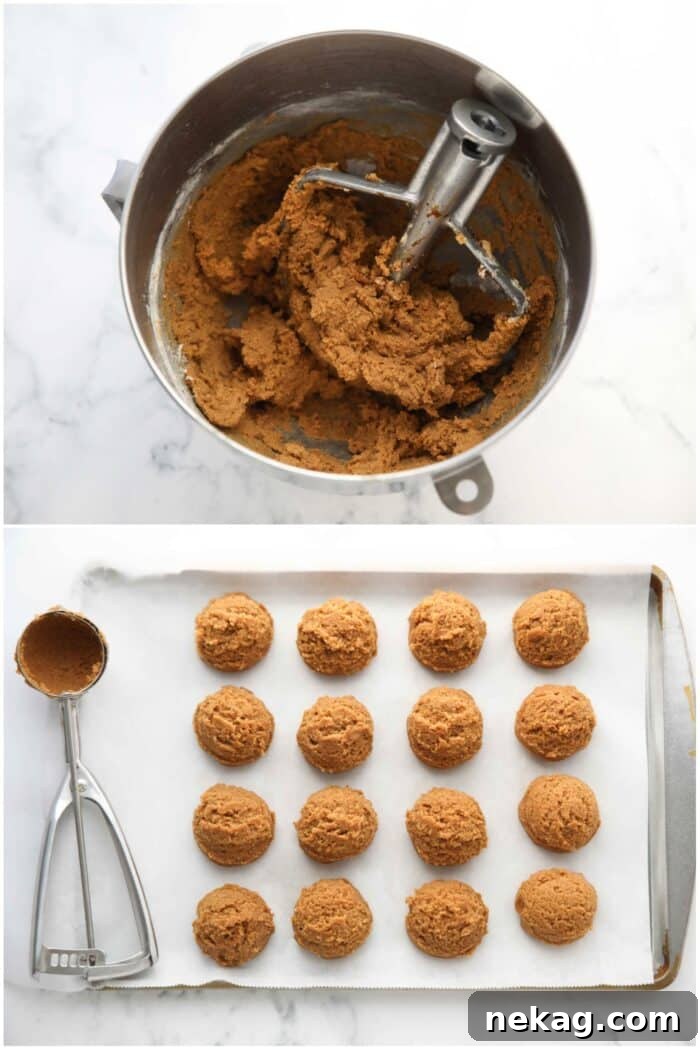
- Scoop & chill: Use a #30 cookie scoop (about 2 Tbsp) to portion dough onto a parchment- or silicone-lined tray. Place balls close together but not touching. Do not roll the dough between your hands—leaving a rough surface helps create more cracks. Freeze for 20–30 minutes until firm.
- Preheat oven: While the dough chills, preheat the oven to 350°F (177°C). Line half-sheet pans with parchment or silicone mats.
Step 3: Coat and Bake the Gingerbread Crinkle Cookies
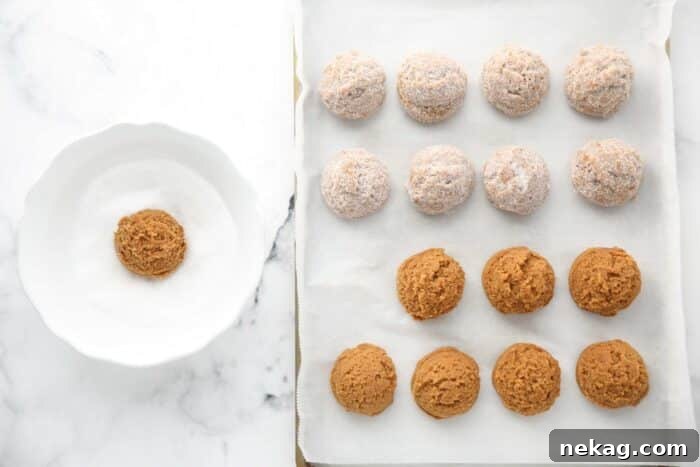
- Roll and coat: Roll chilled dough balls in granulated sugar first, then in powdered sugar. Place on prepared sheets 2–3 inches apart, no more than eight per tray. Keep extra dough chilled and only coat balls right before baking to maintain the brightest powdered sugar layer.
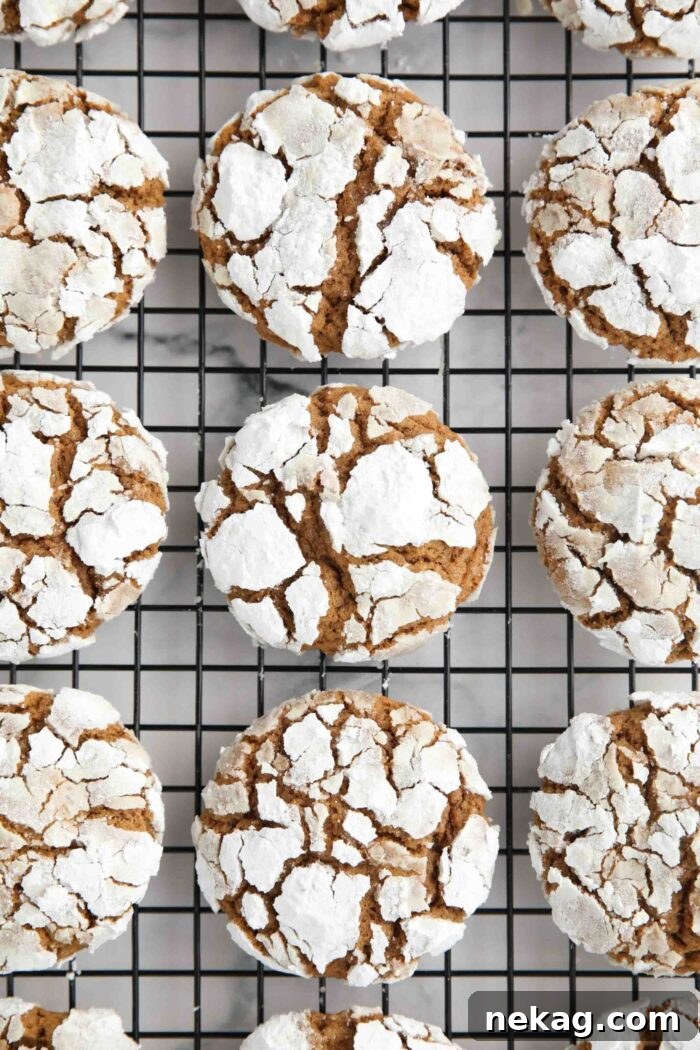
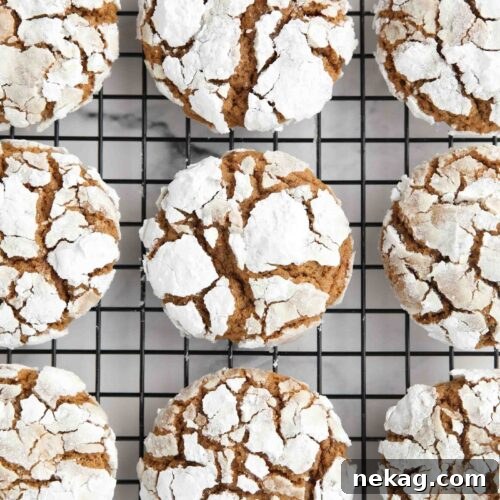
- Bake: Bake at 350°F for 12–14 minutes, watching for the cookies to spread and the cracks to look almost matte (slightly underbaked). Most of the cracking happens in the last 5 minutes. Let cookies rest on the baking sheet for 5 minutes, then transfer to a wire rack to cool completely.
Storing and Freezing
- TO STORE: Keep cookies in an airtight container or on a plate tightly wrapped with plastic for up to 5 days. Note: powdered sugar may gradually absorb into the cookie over time.
- TO FREEZE: Scoop dough onto a lined tray and freeze 1–2 hours until very firm. Transfer frozen dough balls to a freezer-safe bag for up to 3 months. Do not coat in sugars before freezing. Bake from frozen for 3–5 minutes longer, or let dough sit at room temperature 10–15 minutes before coating and baking as directed.
- NOTE: Freezing baked cookies is not recommended because the powdered sugar can be affected by freezer moisture.
Recipe Notes
Tips for perfect crinkle cookies
- Do not roll dough by hand: Smoothing reduces cracks. Scoop and release to keep a rough surface that produces more dramatic crinkles.
- Chill the dough: Chilling firms the exterior so the interior can expand in the oven, creating cracks. Scoop before chilling so the balls stay cold and are easier to handle.
- Double-coat: Roll in granulated sugar first, then powdered sugar. The granulated sugar helps keep the powdered sugar bright instead of absorbing into the dough.
- Slightly underbake: Pull cookies when cracks are matte and centers are still tender for a soft, chewy result.
FAQs
If the dough wasn’t cold enough or didn’t have a generous powdered sugar coating, the cracking may not develop. Chilling and double-coating help produce the cracks.
Yes—dough can be refrigerated up to 48 hours or frozen for longer storage. Scoop before chilling or freezing.
Unsulphured molasses is milder and sweeter from the first boiling. Blackstrap is darker and more bitter; avoid it for these cookies.
Granulated sugar adds structure and prevents powdered sugar from absorbing into the dough, preserving a bright white crinkle finish.
They are intended to be soft and chewy with a slightly crisp exterior from the sugar coating.
Gingerbread Crinkle Cookies
Ingredients
- ½ cup (113 g) unsalted butter, room temperature
- ½ cup (100 g) light brown sugar, gently packed
- 1 large egg
- 1 tsp vanilla extract
- ¼ cup (60 ml) unsulphured molasses
- 2 cups (250 g) all-purpose flour (stir, spoon & level)
- ½ tsp baking soda
- ¼ tsp salt
- 2 tsp ground ginger
- 1 tsp ground cinnamon
- ¼ tsp ground cloves
Coating
- ¼ cup (50 g) granulated sugar, for rolling
- ¾ cup (90 g) powdered sugar, for rolling
Instructions
- Using a stand mixer with the paddle attachment, cream the butter and brown sugar together. Mix in the egg, vanilla, and molasses until combined. (May look a little curdled but will come together with the dry ingredients.)
- In a separate bowl, whisk together the flour, baking soda, salt, and spices. Add to wet ingredients and mix until combined.
- Use a #30 cookie scoop (about 2 Tbsp) to portion dough into balls on a parchment- or silicone-lined tray. Do not roll with hands—leave a rough surface. Freeze 20–30 minutes until firm.
- Preheat oven to 350°F (177°C) and line half-sheet pans.
- Roll chilled balls in granulated sugar, then powdered sugar. Place 2–3 inches apart on prepared sheets, no more than 8 per tray. Bake 12–14 minutes until cookies spread and cracks look almost matte. Let rest 5 minutes on the tray, then transfer to a wire rack to cool.
Notes
- The dough is thick—use a stand mixer when possible. If using a hand mixer, finish mixing the dough by hand with a spoon or spatula.
- To store: airtight container up to 5 days. Powdered sugar may blend into the cookie over time.
- To freeze dough: freeze scooped balls 1–2 hours, then transfer to a freezer bag for up to 3 months. Do not coat with sugars until ready to bake. Bake from frozen 3–5 minutes longer or thaw 10–15 minutes before coating and baking.
- Freezing baked cookies is not recommended because powdered sugar can be affected by moisture.