
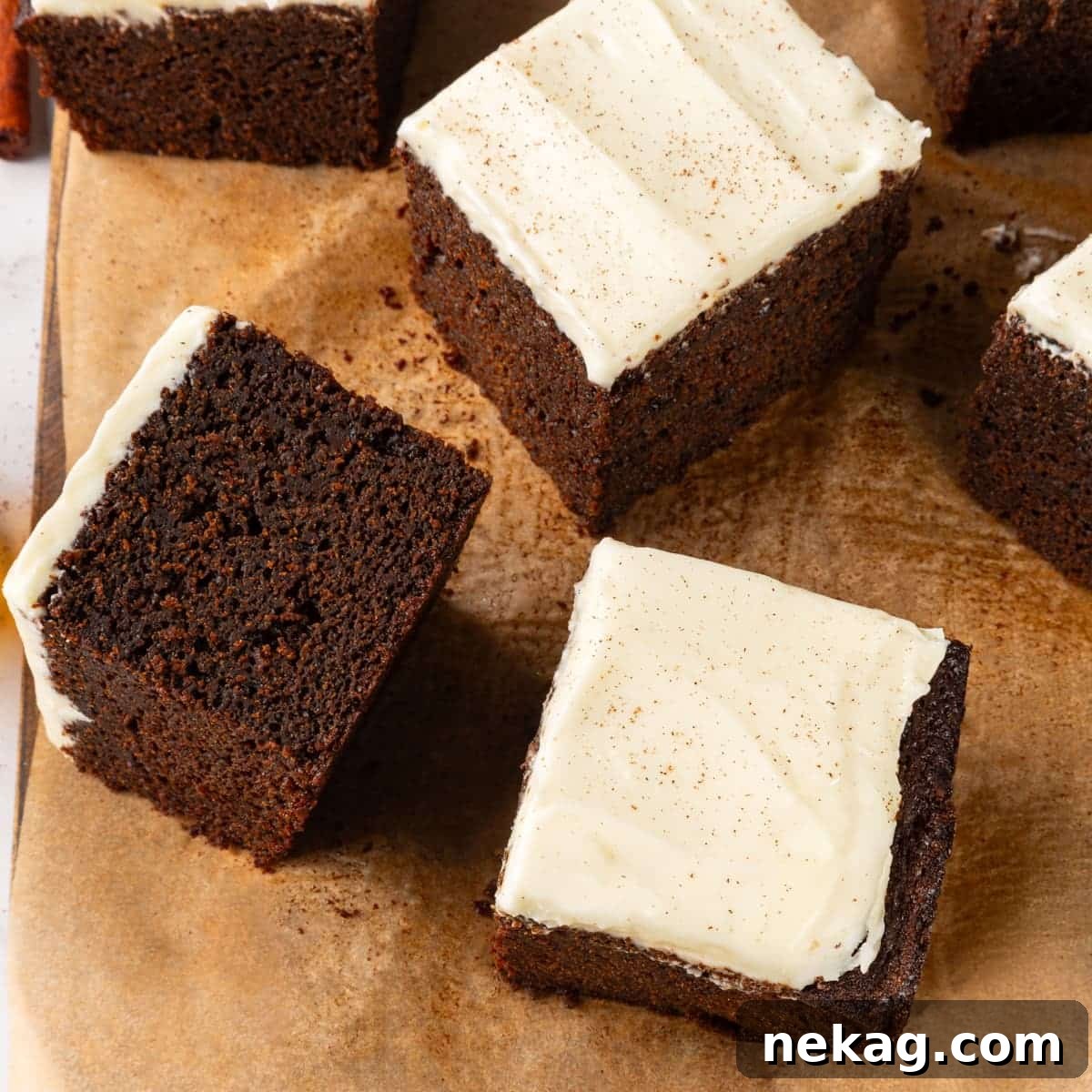
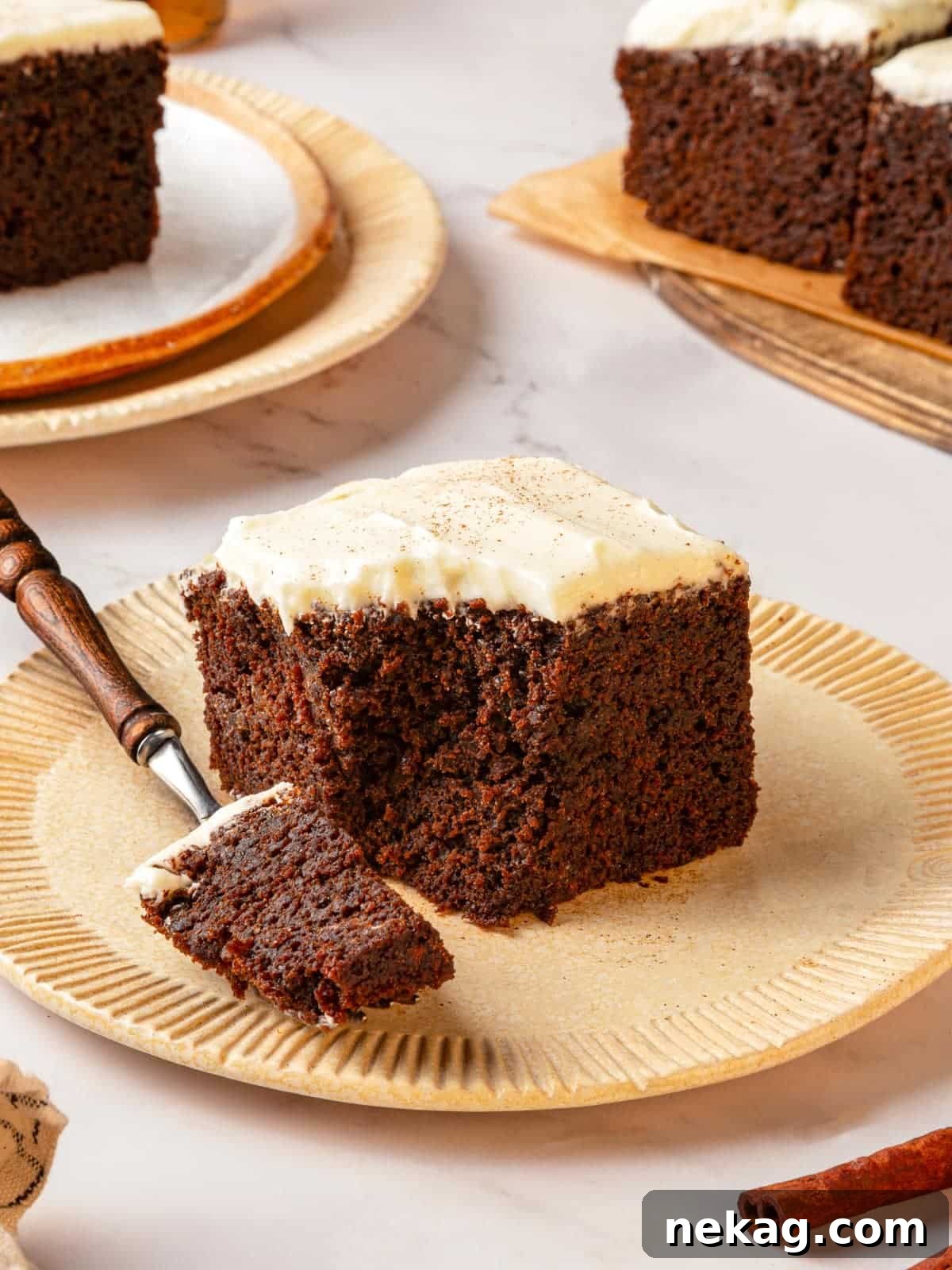
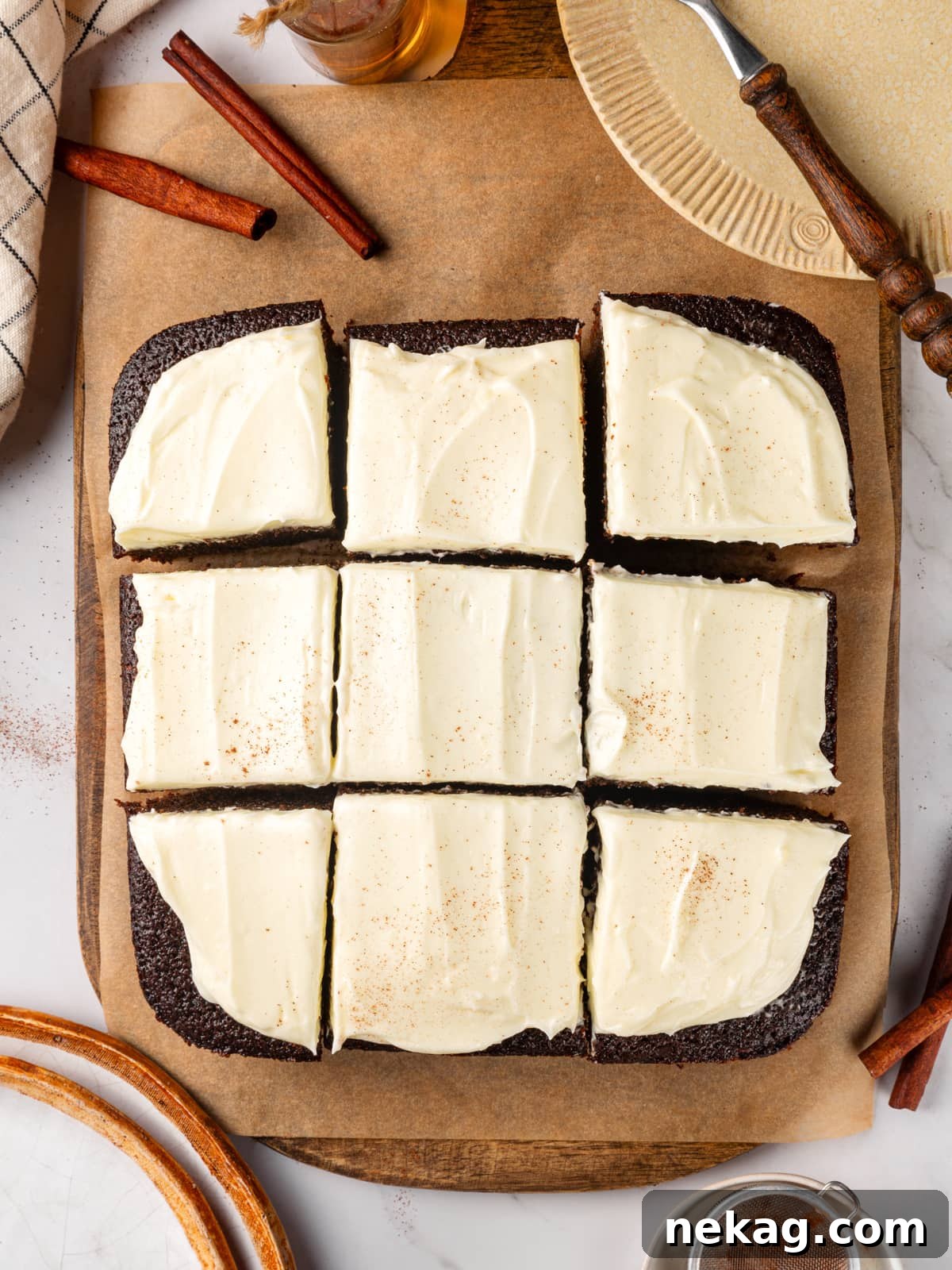
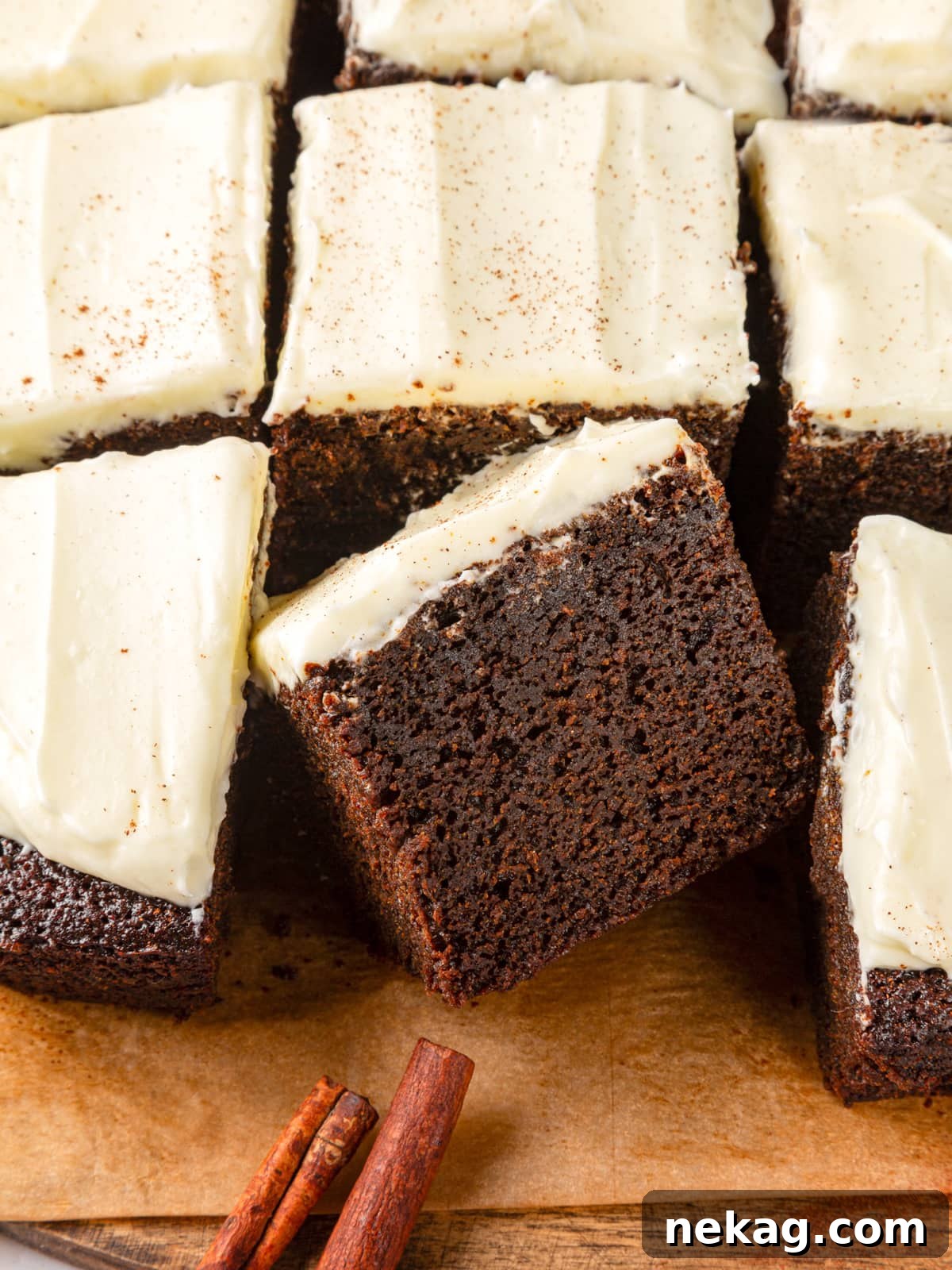
Step into a tradition as old as American cooking itself with this exquisite Gingerbread Cake. Sourced and perfected from the very first American Cookbook, this recipe delivers an authentic taste of history, wrapped in the comforting embrace of a classic holiday dessert. Prepare to experience a cake that is remarkably light, wonderfully fluffy, and perfectly moist, infused with just the right balance of warming spices. This is gingerbread in its purest, most delightful form, promising to become a cherished staple in your festive repertoire.
A Quick Look At The Recipe
This is a brief summary of the recipe. Jump to the recipe to get the full details.
Jump to Recipe
Prep Time
10 minutes
Cook Time
25 minutes
Total Time
35 minutes
Servings
12 slices
Difficulty
Easy, old-fashioned method.
Calories *
248 kcal per serving
Technique
Mix soda-salt blend with batter; bake until springy.
Flavor Profile
Warm molasses, balanced spice, and a tender crumb.
* Based on nutrition panel
Summarize & Save this content on
AI Tools
The mixing method is very interesting. […] The cake turned out so good I love topping it with the cream cheese frosting! ⭐⭐⭐⭐⭐
Mara
Why You Will Adore This Classic Gingerbread Cake Recipe
There are countless reasons why this American Gingerbread Cake deserves a prime spot in your baking repertoire, especially during the festive season. It’s more than just a dessert; it’s an experience rooted in history and flavor.
- A Taste of Timeless American Heritage: This isn’t just any gingerbread cake; it’s a direct descendant of one of the earliest recorded recipes in American culinary history. By adapting this antique recipe, we’ve ensured that its authentic charm and perfect texture are preserved for modern kitchens. Each bite offers a genuine connection to culinary traditions, making it a unique and conversation-starting dessert. You’re not just baking a cake; you’re reviving a piece of American culinary heritage.
- Bold, Yet Perfectly Balanced Flavors: The heart of this gingerbread cake lies in its exquisite flavor profile. It masterfully blends the deep, comforting notes of molasses with an invigorating medley of warming spices like ginger, cinnamon, and allspice. The result is a cake bursting with rich, complex aromas and tastes that are never overwhelming, always harmoniously balanced. It’s a symphony of flavors that evokes coziness and celebration, making it an irresistible treat that truly shines during the colder months and holiday festivities.
- Your Ultimate Holiday Baking Companion: Versatility is another hallmark of this magnificent gingerbread cake. Whether you prefer a simple, elegant dusting of powdered sugar, a decadent layer of spiced buttercream, or a luscious cream cheese frosting, this cake adapts beautifully to your preference. It’s robust enough to be the centerpiece of a decorative layer cake for a grand celebration, yet humble enough to be enjoyed with a simple dollop of whipped cream. Perfect for Thanksgiving, Christmas, or any winter gathering, it effortlessly elevates any occasion with its festive spirit and comforting appeal. Imagine serving it alongside a steaming cup of tea or coffee, creating memorable moments with loved ones.
Table of Contents
- Why You Will Adore This Classic Gingerbread Cake Recipe
- Essential Ingredients & Expert Substitutions
- Creative Variations for Your Gingerbread Cake
- Professional Baking Tips for Perfect Gingerbread
- Step-by-Step Guide: How to Make Gingerbread Cake
- Chef Lindsey’s Essential Recipe Tip
- Common Questions About Gingerbread Cake
- Delightful Recommended Holiday Recipes
- Full Gingerbread Cake Recipe Card
- Before You Go: Explore More Deliciousness
Embrace the cozy charm of winter with this exceptional American Gingerbread Cake. Whether you choose to crown it with a rich, tangy cream cheese buttercream frosting, as I often do, or serve it with more sophisticated accompaniments like elegantly red wine poached pears, a drizzle of warm salted caramel sauce, or a scoop of creamy vanilla bean ice cream, this cake promises pure culinary delight. It’s the kind of dessert that has the power to brighten even the greyest winter day, destined to become your go-to holiday staple for years to come.
If the captivating, bold flavors of gingerbread truly resonate with your palate, then you’re in for a treat with my other related recipes. Explore the comforting depths of my molasses cake, indulge in the soft, chewy goodness of these classic gingerbread cookies, or savor the irresistible texture of these chewy ginger bars. And to truly immerse yourself in the flavors of the season from dawn till dusk, start your day right with this incredibly easy and delicious gingerbread oatmeal!
Essential Ingredients & Expert Substitutions for Gingerbread Cake
Crafting the perfect gingerbread cake begins with understanding the role of each ingredient. Here’s a detailed look at what you’ll need and how to make smart substitutions if necessary.
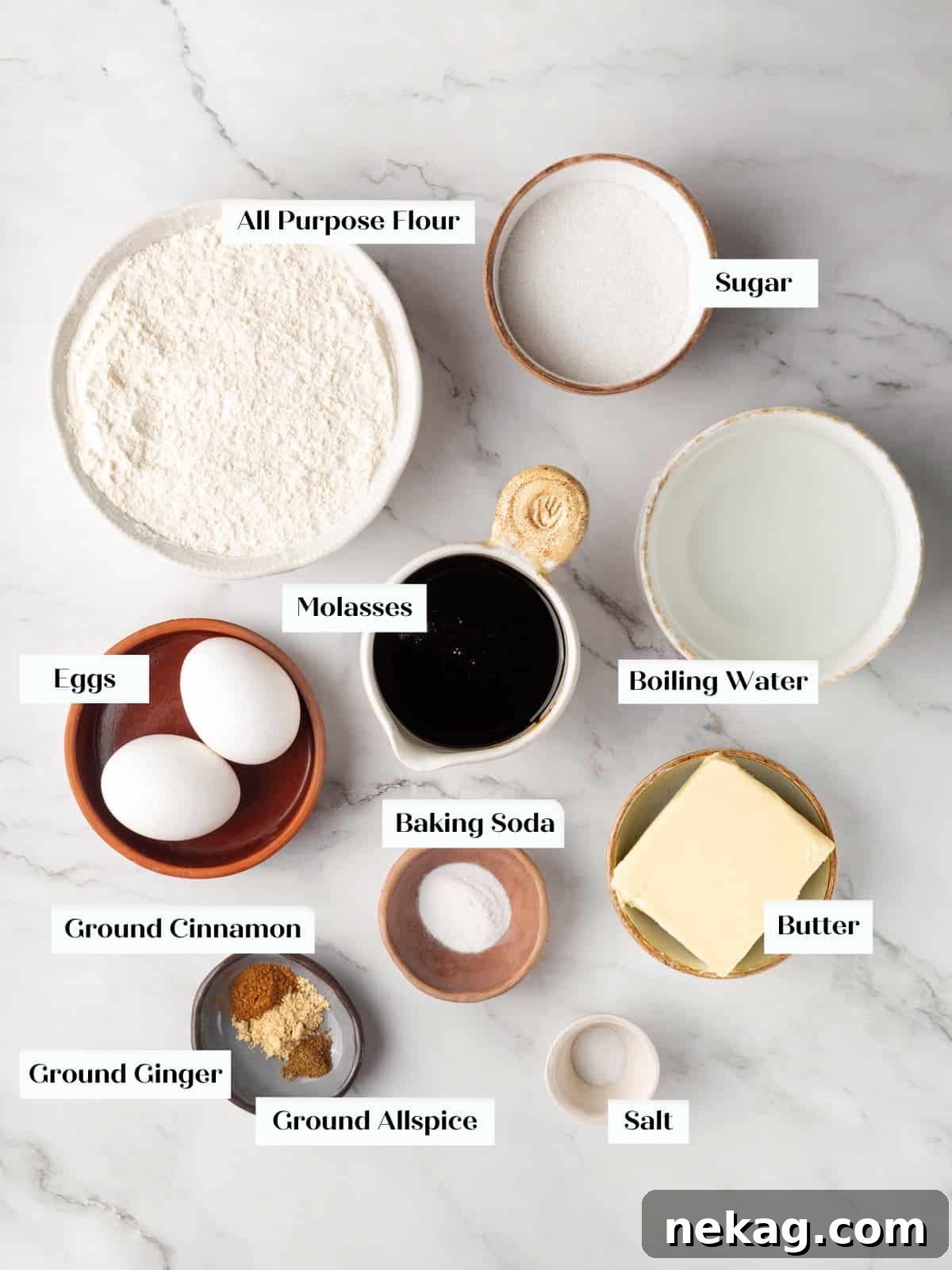
- Baking Soda: This is a crucial leavening agent in our recipe, working in harmony with the molasses to create the cake’s signature light and fluffy texture. The natural acidity in molasses reacts with the baking soda, producing carbon dioxide bubbles that make the cake rise. It’s vital to get the batter into the oven swiftly after mixing the soda to fully harness this reaction, ensuring maximum lift and tenderness.
- Large Eggs: Eggs serve multiple critical functions in baking. They act as an emulsifier, binding all the wet and dry ingredients into a cohesive, stable batter. Furthermore, eggs contribute significantly to the cake’s structure, richness, and overall moisture, ensuring that perfect, tender crumb we all crave.
- Molasses: For this historic recipe, I specifically recommend using unsulphured molasses, ideally light or dark (not blackstrap). Unsulphured molasses has a milder, sweeter flavor profile without the harsh, slightly bitter “bite” often associated with blackstrap molasses, which can overpower the delicate balance of spices. It’s the secret to those deep, warm, wintery notes and the cake’s characteristic dark hue and moisture.
- Butter: Unsalted butter is preferred as it gives you control over the overall saltiness of the cake. It is absolutely essential that your butter is at room temperature. Softened butter creams easily with sugar (or in this case, mixes smoothly with the molasses and sugar), incorporating air and creating a tender, fine-crumbed cake. Cold butter will result in a lumpy batter and a denser cake.
- Granulated Sugar: While molasses brings a unique sweetness, granulated sugar complements it beautifully, ensuring the cake isn’t overly robust. Beyond sweetness, sugar plays a vital role in achieving that desirable tender and moist crumb, and also contributes to the cake’s golden-brown crust through caramelization.
- Ground Ginger, Cinnamon, and Allspice: These three spices are the heart and soul of classic gingerbread flavor. They offer a warm, aromatic, and slightly piquant profile that is utterly irresistible. While you can opt for a store-bought gingerbread spice mix, I’ve found that these specific ratios create the most balanced and authentic gingerbread taste for this particular recipe. For an extra layer of complexity, you might consider adding a pinch of ground cloves or nutmeg.
Refer to the comprehensive recipe card below for precise measurements and full ingredient details.
Creative Variations for Your American Gingerbread Cake
While this classic gingerbread cake is perfect as is, it also serves as a fantastic canvas for your culinary creativity. Here are some delightful ways to customize it:
- Elevate with Flavored Buttercreams: Don’t limit yourself to just cream cheese frosting! Experiment with different buttercream variations to add another dimension of flavor. My caramel Swiss meringue buttercream offers a luxurious, silky topping, while a bright lemon buttercream frosting provides a refreshing contrast. For the chocolate lovers, this chocolate buttercream frosting recipe would be divine, or try the classic, fluffy ermine frosting for a less sweet alternative. A simple glaze made with powdered sugar and orange juice can also be wonderful.
- Transform into Sheet Cake or Cupcakes: This versatile recipe can easily be adapted for different presentation styles. For individual portions perfect for parties or lunchboxes, bake the batter as festive Christmas cupcakes. Simply reduce the baking time significantly (typically 18-22 minutes, or until a toothpick comes out clean). If you’re feeding a larger crowd, consider doubling the recipe and baking it in a sheet pan for an impressive, easy-to-serve sheet cake.
- Infuse with Delightful Mix-ins: Add texture and bursts of flavor by incorporating your favorite mix-ins. Drawing inspiration from my cherry orange molasses cookies, you could add toasted pecans or walnuts for a delightful crunch. Dried cranberries or chopped dried figs would lend a lovely chewiness and fruitiness. For a burst of freshness and tartness, fresh cranberries, as I use in my cranberry cake recipe, are an excellent seasonal addition. You could even fold in a handful of white chocolate chips for a sweet surprise.
- Amp Up the Spice Quotient: If you’re a fan of a bolder, spicier gingerbread, feel free to increase the amounts of the existing spices or introduce new ones. A touch of ground cloves will add a deeper, more pungent warmth, while a pinch of nutmeg provides a fragrant, earthy note. Cardamom, with its citrusy, floral undertones, can also introduce an intriguing complexity to the spice blend. Start with an extra ¼ teaspoon of each and adjust to your preference.
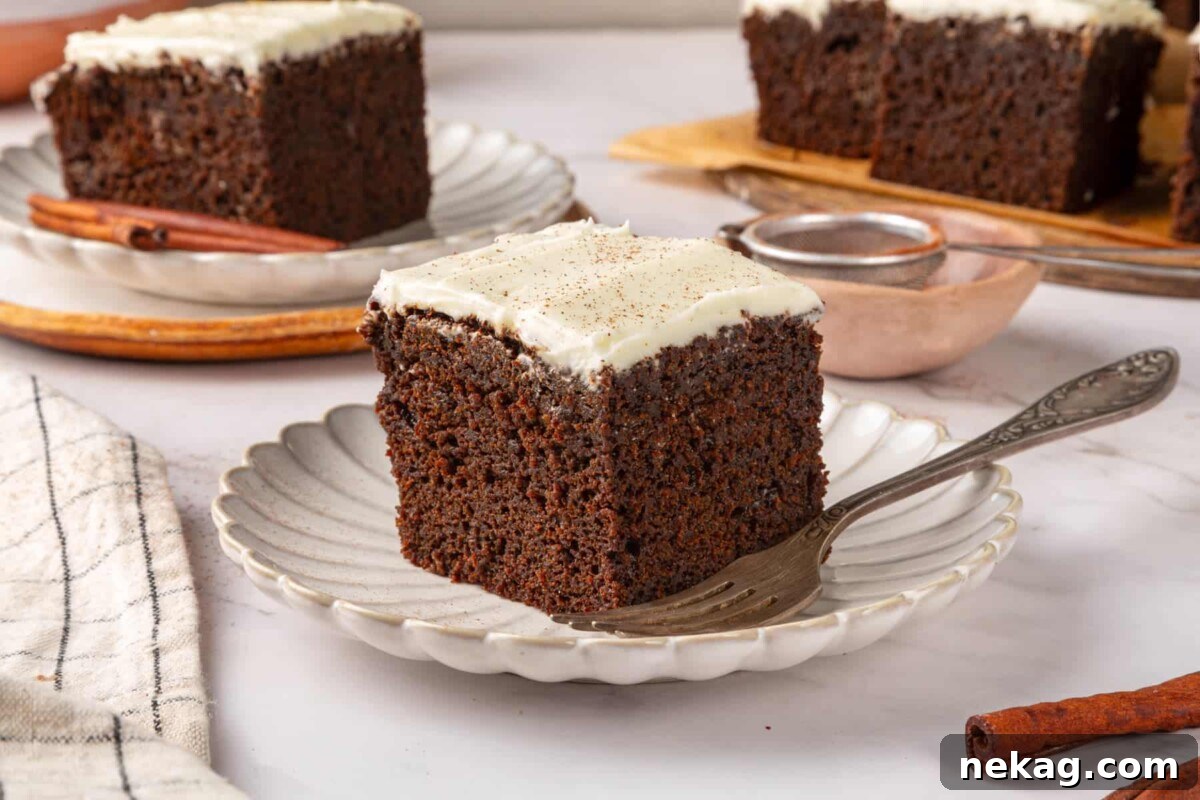
Professional Baking Tips for Perfect American Gingerbread Cake
Achieving a truly exceptional gingerbread cake involves a few key techniques and insights. These professional tips will guide you to a consistently moist, tender, and perfectly spiced result every time.
- Adhere to the Unique Mixing Method: This recipe utilizes a historic, somewhat unconventional mixing method, and it is crucial to stick to it for the best results. I’ve experimented with more common creaming methods, and they simply don’t yield the same ethereal fluffiness and moist crumb that this traditional approach does. It might seem a little different, but I promise, the extra care is entirely worth it. My adaptation of this method draws heavily from Anne Byrn’s meticulous research in her essential book, American Cake. Her work was instrumental in perfecting this classic. (Seriously, if you love baking history and incredible recipes, Anne’s cookbook is a treasure you need on your shelf!)
- Ensure Your Butter is Perfectly Softened: The temperature of your butter is non-negotiable for this recipe. It absolutely must be at room temperature – soft enough to make an indentation with your finger, but not melted or greasy. If your butter is too cold, it won’t emulsify properly with the other ingredients, leading to stubborn lumps and a less uniform batter. If you find your butter is straight from the fridge and you’re short on time, you can carefully soften it in the microwave in very short bursts (5-10 second intervals), flipping it each time, until it reaches the desired consistency.
- Avoid Overmixing the Batter: Once you begin adding the flour and water mixture, mix just until the ingredients are combined. Overmixing developed gluten in the flour, which can lead to a tough, dry cake. A few small streaks of flour are acceptable; they will disappear during baking. The goal is to mix efficiently and gently.
- Exercise Patience When Cooling Before Frosting: This step is critical, especially if you plan to adorn your gingerbread cake with a luscious cream cheese buttercream frosting. The cake must be completely cooled to room temperature before you apply any frosting. Even a hint of warmth will cause the delicate frosting to melt, slide off, and create a messy presentation. Allow ample time for cooling, either directly in the pan or on a wire rack for quicker cooling.
- Know Your Oven and Check for Doneness Accurately: Oven temperatures can vary significantly. While the recipe provides a temperature and time range, always trust your senses and a good cake tester. Bake until the top of the cake springs back gently when lightly touched, and a wooden skewer or toothpick inserted into the center comes out with moist crumbs clinging to it, but no wet batter. Overbaking is the enemy of a moist cake, so remove it promptly when it reaches this stage.
Step-by-Step Guide: How to Make Classic American Gingerbread Cake
Follow these detailed instructions to create a wonderfully moist, tender, and perfectly spiced gingerbread cake that will impress everyone. Further precise details and exact measurements can be found in the comprehensive recipe card below.
Part 1: Prepare the Cake Batter
Step 1: Dissolve the Salt and Baking Soda. Begin by boiling your water. Once hot, measure out 1 cup of boiling water into a small bowl. Carefully add the kosher salt and baking soda to the hot water, stirring until both are fully dissolved. Set this mixture aside to cool slightly; it should still be warm when you incorporate it into the batter, but not scalding hot.
Chef’s Tip: Boiling your water ahead of time ensures it’s ready. Remember to measure precisely after it’s boiled, then add the salt and baking soda. The warmth of this mixture is key to the cake’s unique texture.
Step 2: Prepare Your Baking Dish. Lightly grease or butter an 8-inch square baking dish. For easier removal, you can line the bottom with a strip of parchment paper, allowing it to overhang slightly on two sides like “wings,” which will help you lift the cake out after baking.
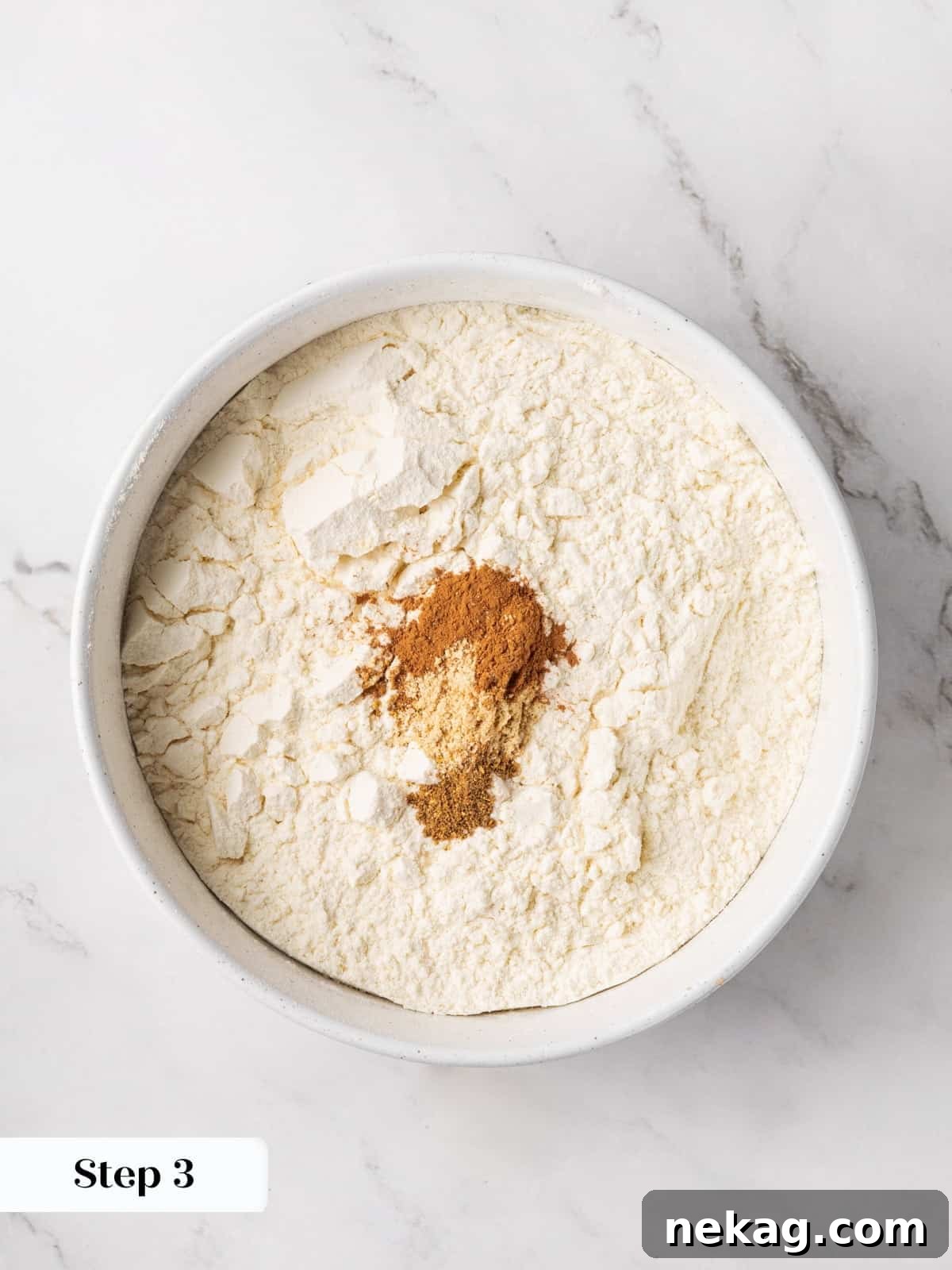
Step 3: Whisk Dry Ingredients. In a separate medium-sized bowl, combine the all-purpose flour, ground ginger, ground cinnamon, and ground allspice. Whisk them together thoroughly until all the spices are evenly distributed throughout the flour (photo 1). This prevents pockets of undissolved spice in your cake.
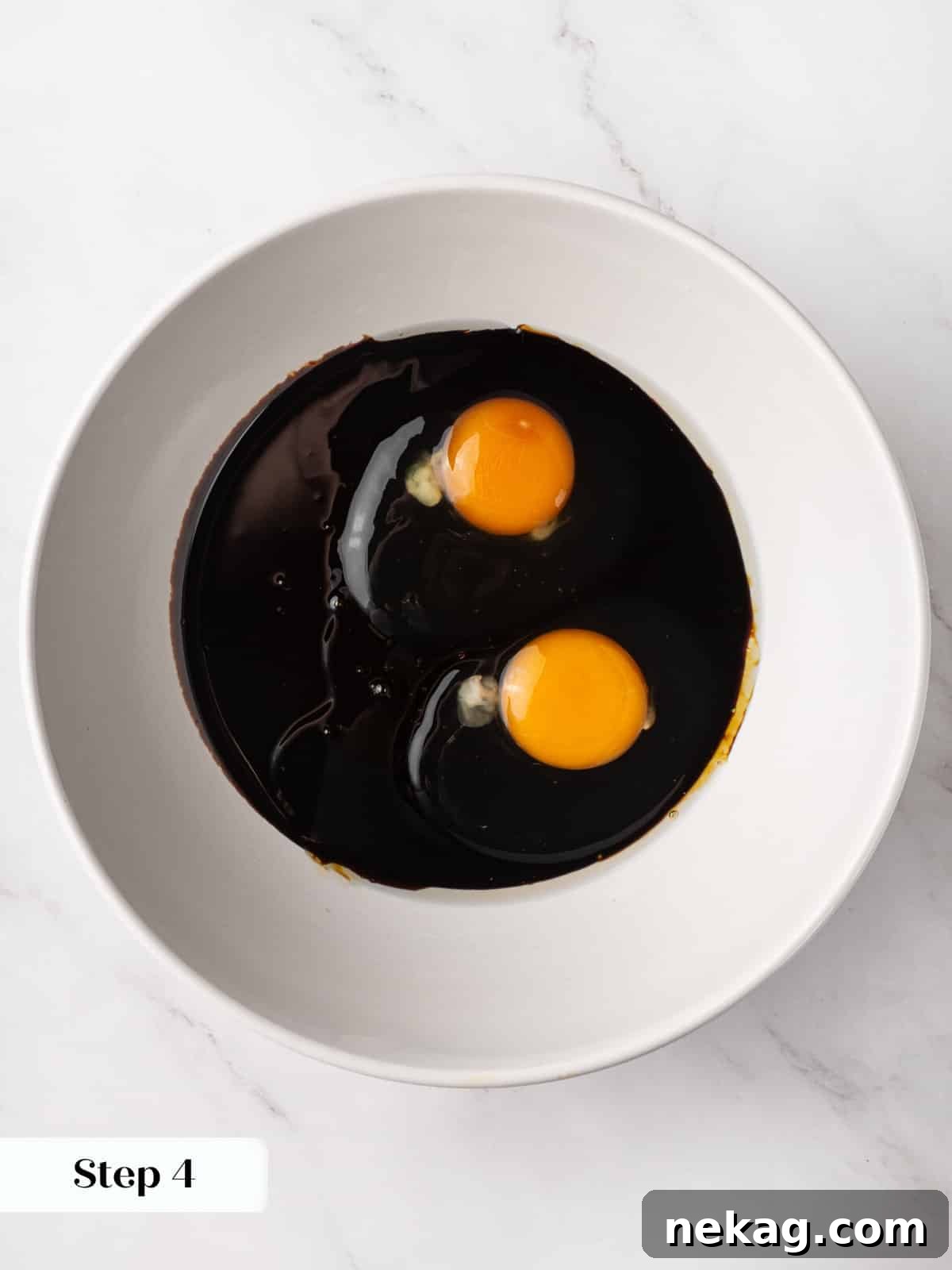
Step 4: Beat Molasses and Eggs. Using a stand mixer fitted with the paddle attachment, or a hand-held electric mixer, beat the molasses and eggs together in a large mixing bowl until the mixture is smooth and well combined (photo 2). It should have a uniform dark color.
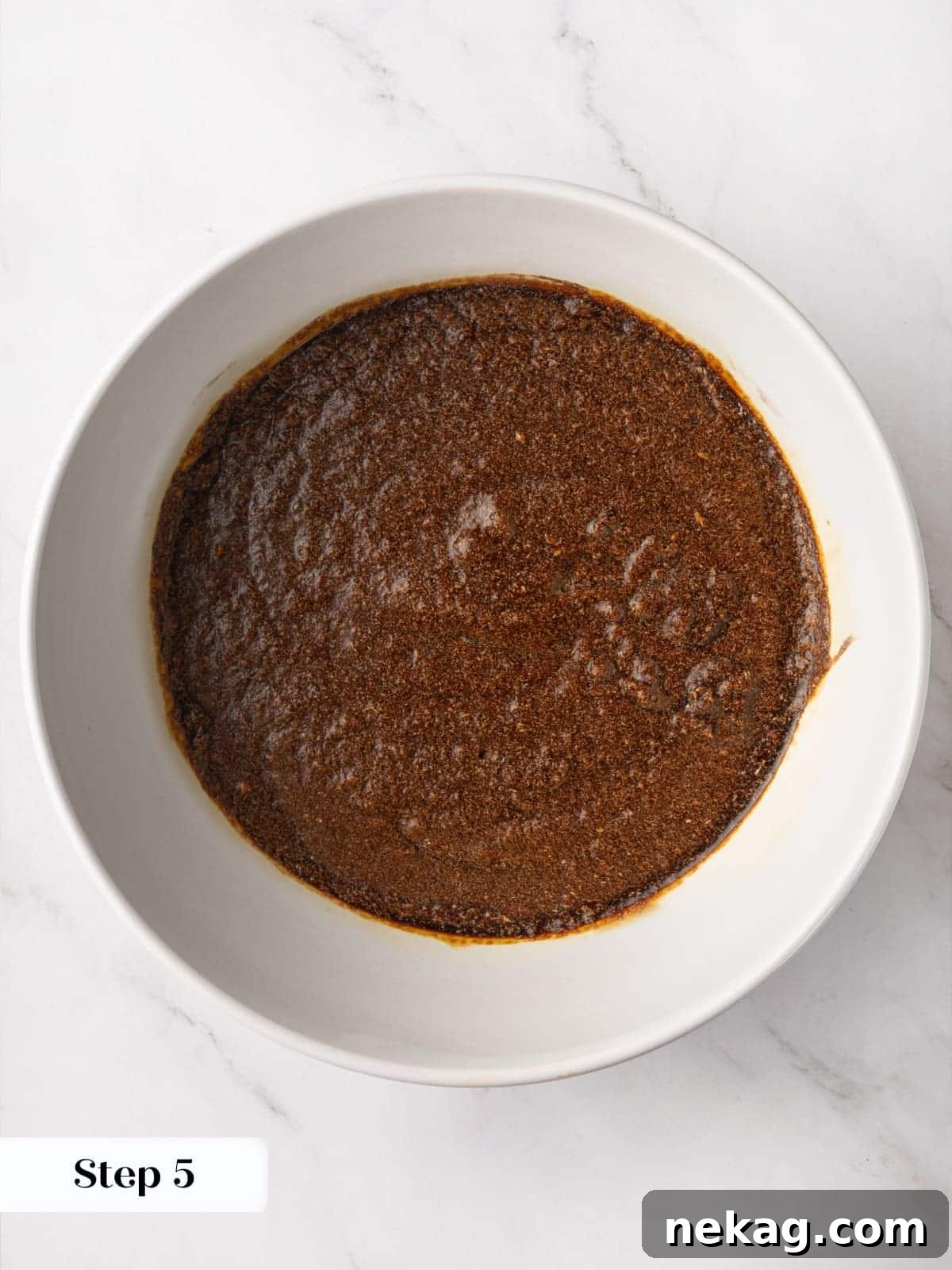
Step 5: Incorporate Butter and Sugar. Add the softened room-temperature butter and granulated sugar to the molasses and egg mixture. Beat on medium speed until the mixture is smooth and creamy (photo 3). Scrape down the sides of the bowl as needed to ensure everything is fully incorporated. The mixture should be lightened in color and texture.
Quick Note: It’s perfectly normal if you still observe a few faint streaks of butter at this stage. Given the specific mixing method, it’s almost impossible to achieve a completely homogenous blend until the dry ingredients and water are added.
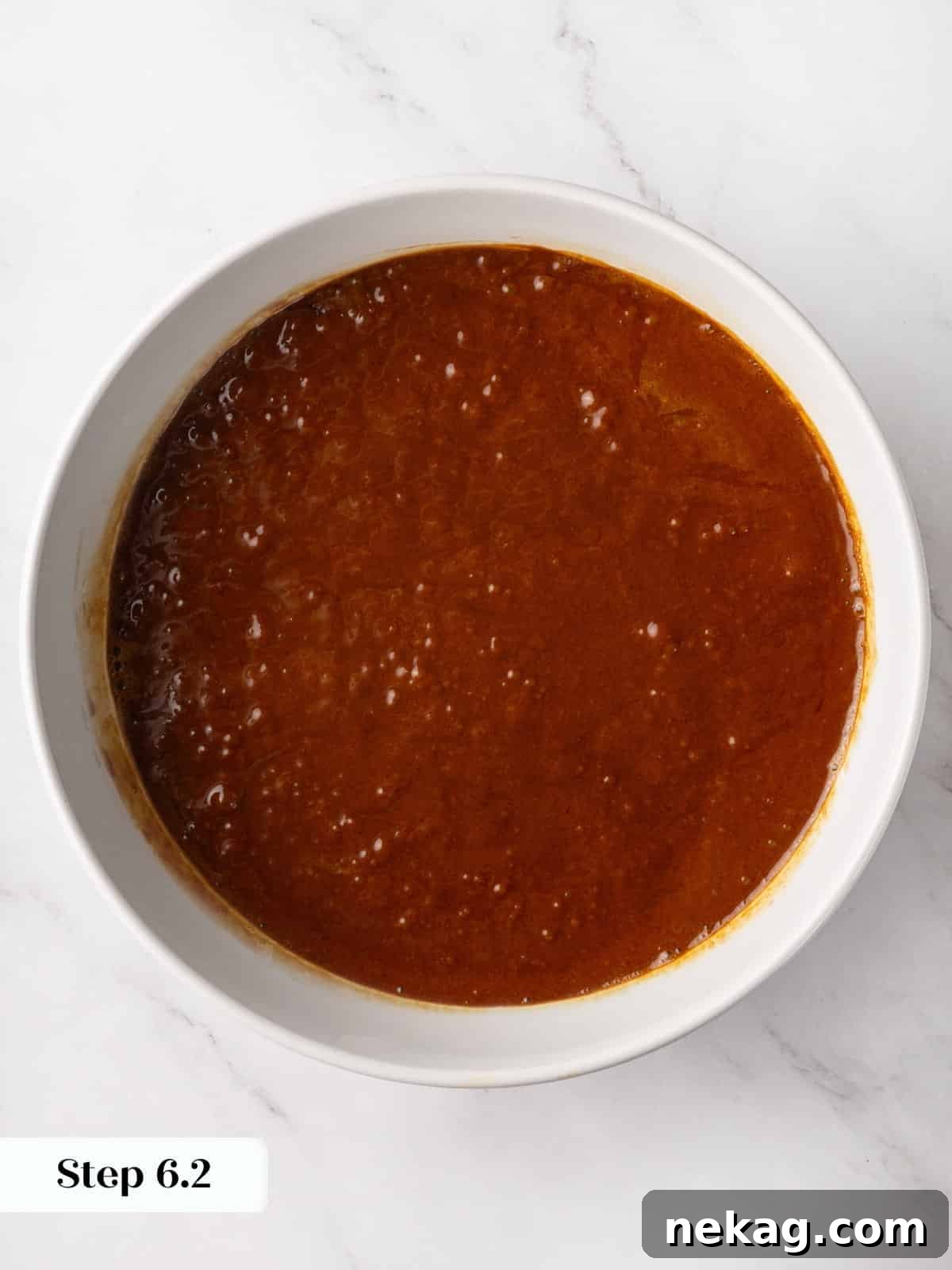
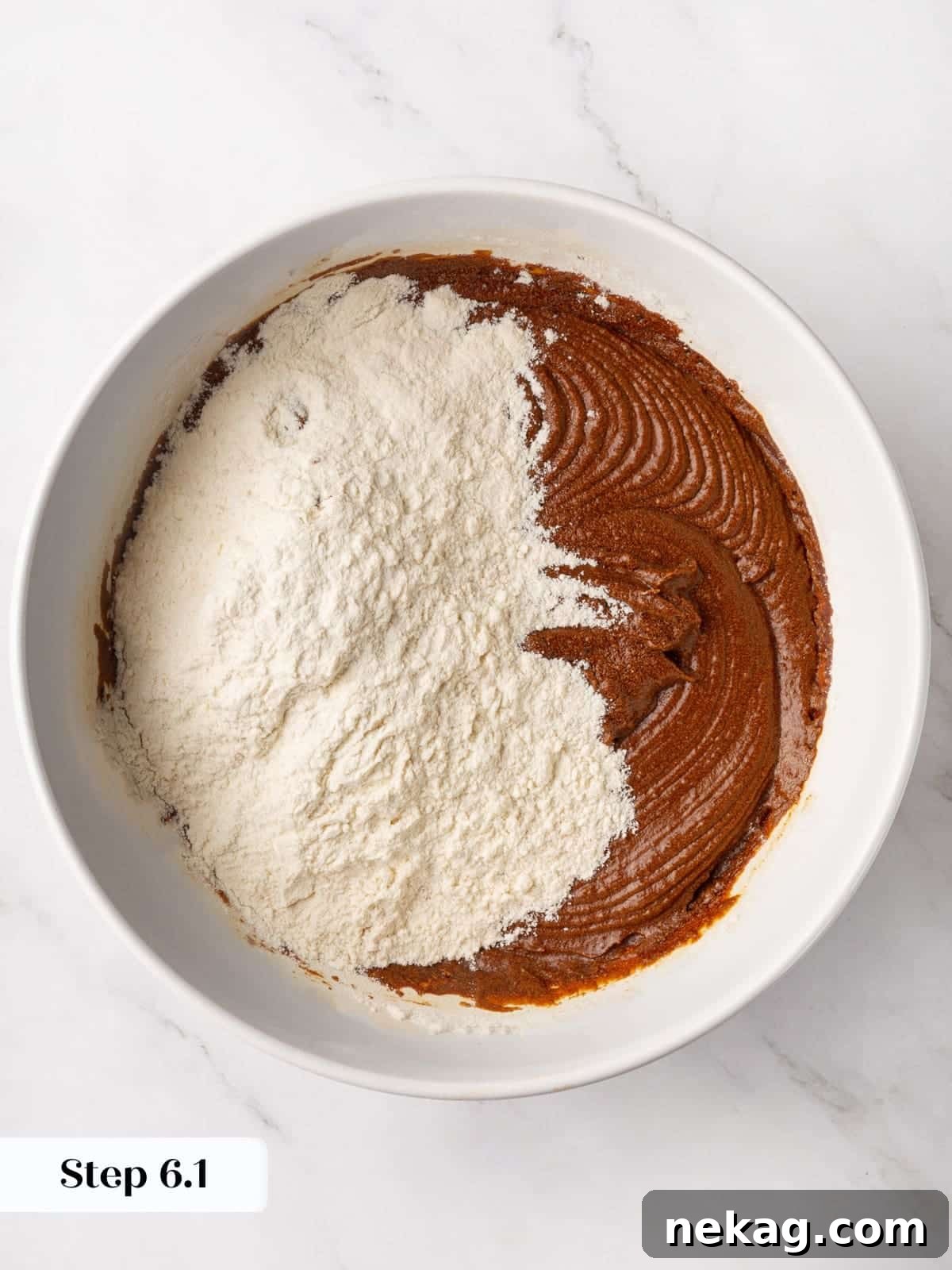
Step 6: Alternately Add Wet and Dry Ingredients. With the mixer on low speed, begin adding the flour mixture and the dissolved salt and baking soda water mixture to the molasses-butter-sugar mixture, alternating between the two. Always start and end with a portion of the water mixture. Add a third of the flour, mix until just combined, then add a third of the water. Repeat, ensuring all dry ingredients are fully incorporated before adding the final portion of water (photos 4 & 5). Mix only until the batter is smooth and no streaks of flour remain; avoid overmixing.
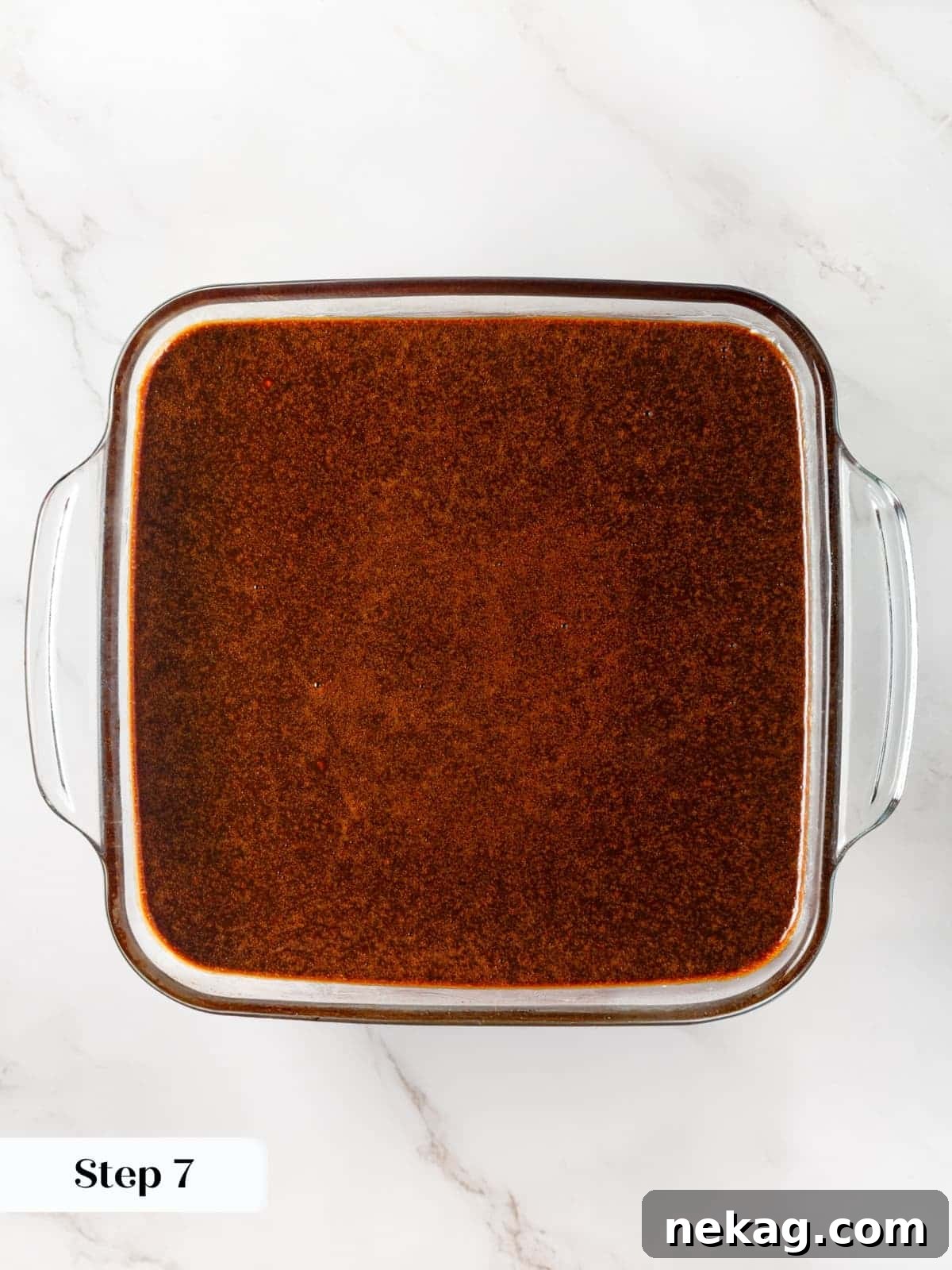
Step 7: Pour into Prepared Pan. Once the batter is smooth and uniform, pour it evenly into your prepared 8-inch square cake pan or baking dish (photo 6). Gently tap the pan on the counter a couple of times to release any large air bubbles.
Part 2: Bake the Cake
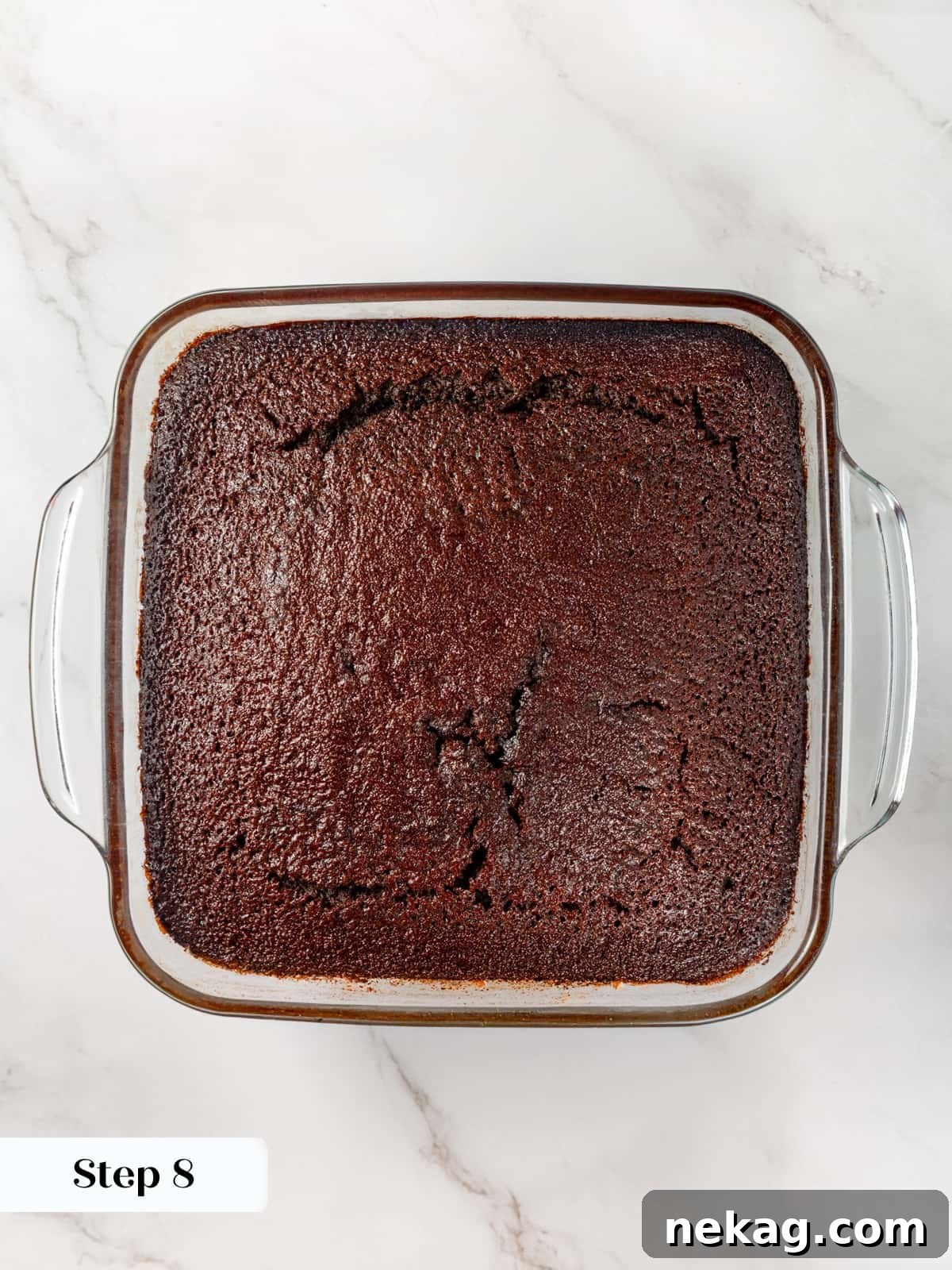
Step 8: Bake to Perfection. Preheat your oven to 350°F (175°C) if using convection, or 375°F (190°C) for a conventional oven. Bake the gingerbread cake for 20-25 minutes. The cake is done when the top springs back lightly to the touch, and a wooden skewer or toothpick inserted into the center comes out with a few moist crumbs attached, but no wet batter (photo 7).
Baking Insight: Don’t be alarmed if the center’s largest crack appears a bit wet. The true test is the toothpick. If it comes out clean or with moist crumbs, your cake is done. Baking until completely dry will lead to a dry cake.
Step 9: Cool Completely Before Frosting. This step is paramount for a beautifully finished cake. Allow the gingerbread cake to cool thoroughly in its baking pan, or carefully transfer it to a wire rack to cool completely (photo 8). Resist the urge to frost a warm cake, especially if using cream cheese frosting, as it will surely melt!
Chef Lindsey’s Essential Recipe Tip
The temperature of the water used to dissolve the salt and baking soda is more important than you might think. It should remain warm when it’s incorporated into the cake batter, not boiling hot. This warmth aids in the emulsification process, helping to smoothly integrate any remaining small pieces of butter into the batter, ensuring an incredibly uniform and tender crumb. It’s a subtle but significant detail that contributes to the cake’s perfect texture.
Common Questions About Gingerbread Cake
Storing your gingerbread cake properly will ensure its deliciousness lasts. An unfrosted cake can be kept at room temperature, tightly wrapped, for up to 3 days. For longer freshness, refrigerate it for up to 1 week, or freeze it for up to 2 months. Once the cake is frosted with cream cheese frosting, it should not be left at room temperature for more than a few hours. Store frosted cake in an airtight container in the fridge for up to a week, or freeze the frosted cake for longer preservation.
For this particular gingerbread cake, unsulphured light or dark molasses is definitely the best choice. It imparts that classic, deep gingerbread flavor and rich color without being too overpowering or bitter. Blackstrap molasses, while often used in very robust recipes, has a strong, highly bitter taste that can be too intense for this balanced cake, so it’s best to avoid it.
Absolutely! This recipe is wonderfully adaptable for a show-stopping layered cake. To create an 8-inch or 9-inch layered cake, simply double or even triple the recipe depending on how many layers you desire. Be sure to line the bottoms of your cake tins with parchment paper to prevent sticking. This batter is also fantastic for baking into individual cupcakes, requiring a reduced baking time.
Gingerbread cake pairs beautifully with a variety of accompaniments. For a classic touch, serve a slice with a spoonful of tangy cranberry chutney, a drizzle of smooth crème anglaise, or a generous dollop of homemade whipped cream. A spiced cream cheese frosting is always a winner, or simply finish with a dusting of powdered sugar for an elegant presentation. For a beverage pairing, consider a robust coffee, spiced tea, or even a glass of mulled wine.
Delightful Recommended Holiday Recipes
Yeasted Bread Recipes
The Best Stollen Recipe
Brownies & Bars Recipes
Gingerbread Blondies
Cake Recipes
Old Fashioned Fruit Cake
Cake Recipes
Sticky Toffee Pudding
If you tried this recipe and loved it, please leave a 🌟 star rating and let me know how it goes in the comments below. I love hearing from you; your comments make my day!
Gingerbread Cake
10
25
35
12 slices
Pin Recipe
Comment
Print Recipe
Ingredients
- ¼ teaspoon kosher salt
- 1 teaspoon baking soda
- 1 cup boiling water
- ¾ cup molasses
- 2 eggs
- ½ cup unsalted butter room temperature
- ½ cup sugar
- 2 cups all purpose flour
- ½ teaspoon ground ginger
- ½ teaspoon ground cinnamon
- ¼ teaspoon ground allspice
- cream cheese frosting optional
8
x
8
inch
rectangle
Instructions
Make cake batter:
-
Dissolve the salt and baking soda in 1 cup of boiling water, set aside.
-
Grease or butter an 8-inch square baking dish. You can prep with criss-crossing parchment if you prefer.
-
Whisk together the flour, ginger, cinnamon, and allspice.
-
In the bowl of a stand mixer fitted with the paddle attachment or with an electric mixer, beat together the molasses and eggs until smooth.
-
Add the butter and sugar to the molasses mixture and beat until smooth.
-
Alternately add the flour mixture and the water and salt mixture, starting and ending with the water. Allow all the dry ingredients to incorporate before you add the last bit of water.
-
Pour into the prepared cake pan or baking dish.
Bake the cake:
-
Bake at 350°F convection (375°F conventional) for 20-25 minutes, or until the top of the cake springs back to the touch.
-
Allow the cake to cool completely before frosting. You can cool the cake in the cake pan, or remove it and cool on a wire rack.
Video
Notes
Technique – The historic mixing method is unusual; follow it for the moistest, most tender cake.
Variations – Bake in a 9×9, quarter sheet, or 9×11 pan; it’ll be shorter and bake in 15–20 minutes.
Storage – Keep unfrosted cake wrapped at room temp 3 days, refrigerated 1 week, or frozen 2 months.
Nutrition
Carbohydrates: 40g |
Protein: 3g |
Fat: 9g |
Saturated Fat: 5g |
Polyunsaturated Fat: 1g |
Monounsaturated Fat: 2g |
Trans Fat: 0.3g |
Cholesterol: 48mg |
Sodium: 160mg |
Potassium: 344mg |
Fiber: 1g |
Sugar: 24g |
Vitamin A: 276IU |
Vitamin C: 0.02mg |
Calcium: 55mg |
Iron: 2mg
Like this? Leave a comment below!
Before You Go: Explore More Deliciousness
I sincerely hope you’ve enjoyed baking and savoring this incredible American Gingerbread Cake, a true testament to timeless flavors and culinary history. It’s a recipe designed to bring warmth and joy to your kitchen and your table. If you’re looking to continue your baking adventures with more delightful cake creations, I invite you to explore our other fantastic cake recipes. Dive into a piece of St. Louis’s culinary heart with the famously rich and indulgent gooey butter cake, or discover the rustic elegance of this beautifully caramelized pear upside down cake. Each recipe is crafted to inspire and delight, ensuring every baking project is a delicious success. Happy baking, and may your kitchen always be filled with the sweet scent of freshly baked treats!