
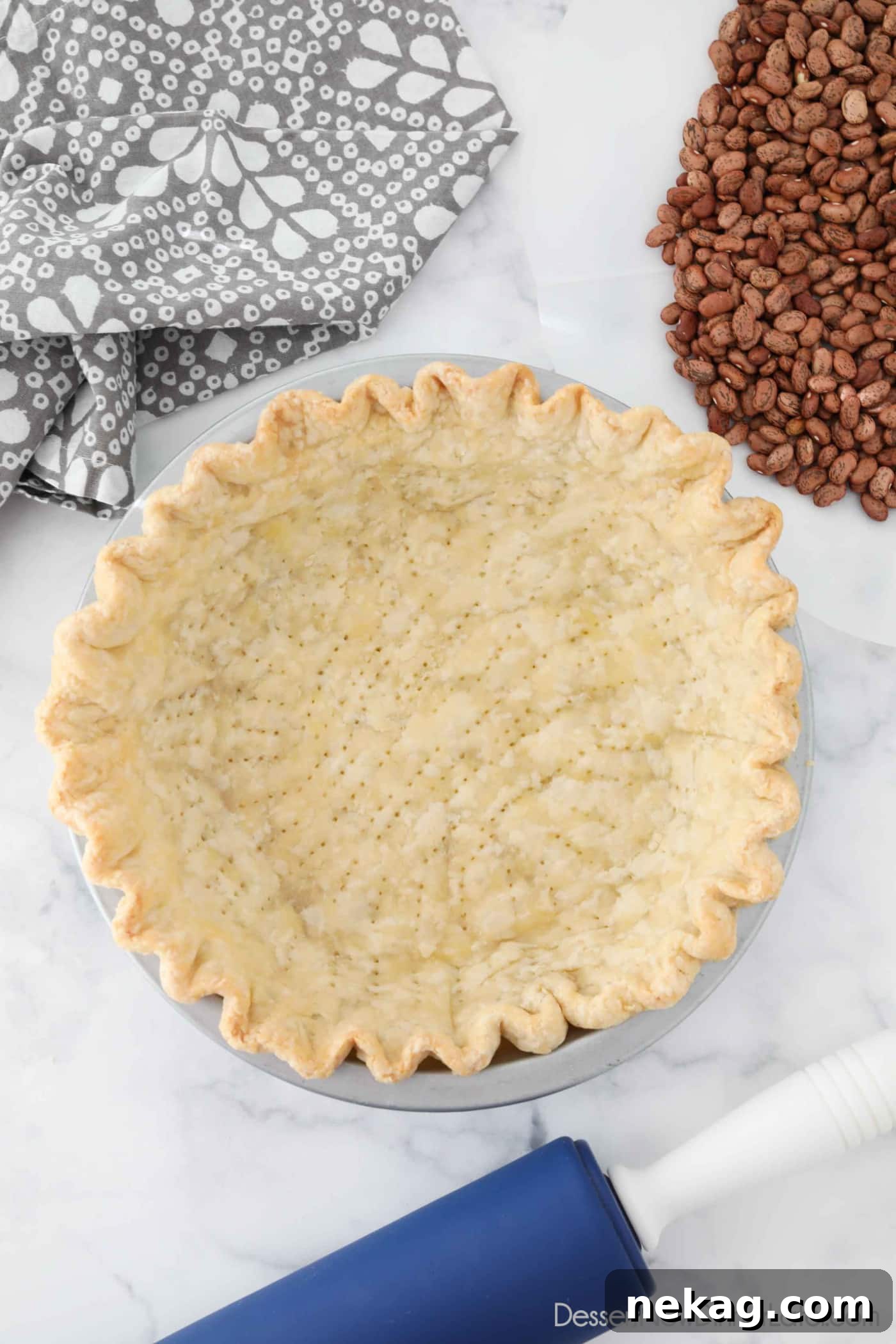
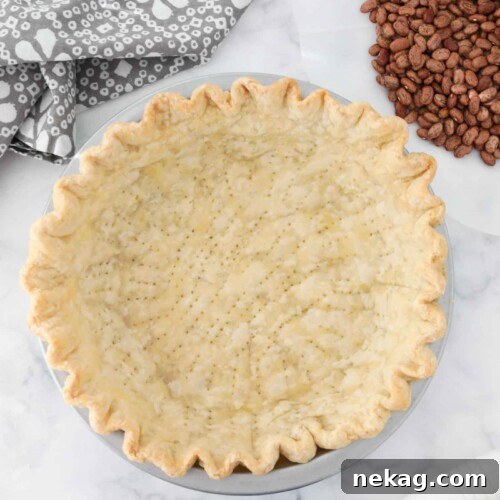
This photo tutorial shows how to blind bake a pie crust without weights causing shrinkage. Perfect for cream pies, fresh fruit tarts, pudding pies, or any soft-filling pie such as lemon meringue.
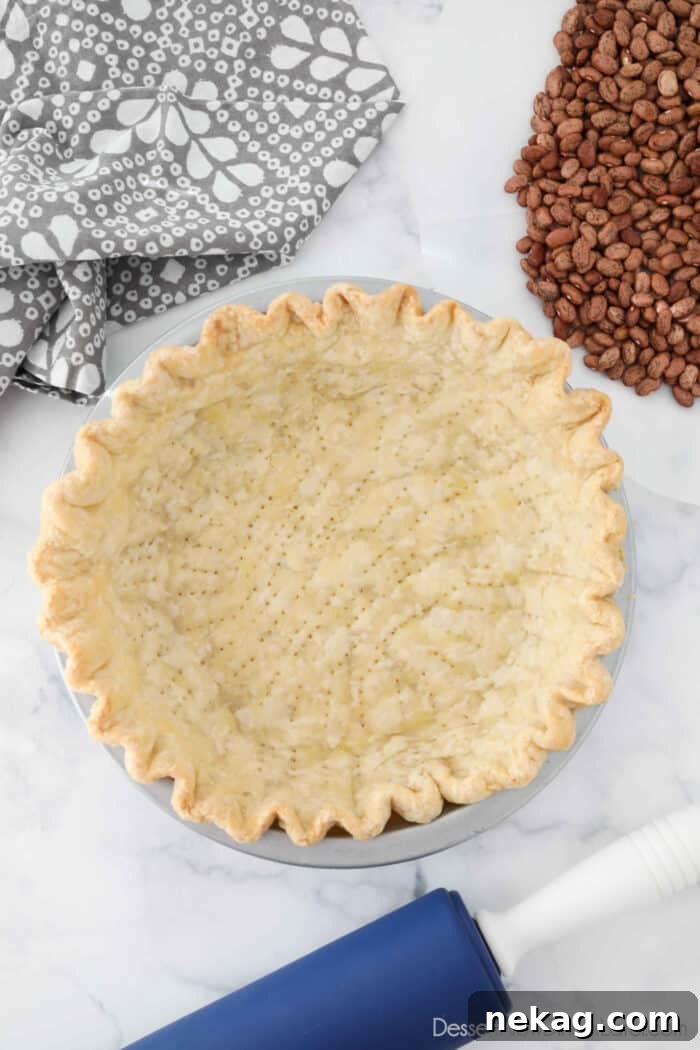
What is Blind Baking a Pie Crust?
Blind baking is the process of baking an empty pie shell before adding a filling. Many sweet and savory recipes call for either a partially baked (par-baked) or fully baked crust to prevent sogginess and ensure an evenly cooked base.
Do I Need to Blind Bake My Pie Crust?
You should blind bake when the filling is not baked with the crust or when a custard filling would release moisture that could keep the crust undercooked. In short: blind bake for custard pies and any pie with an unbaked filling.
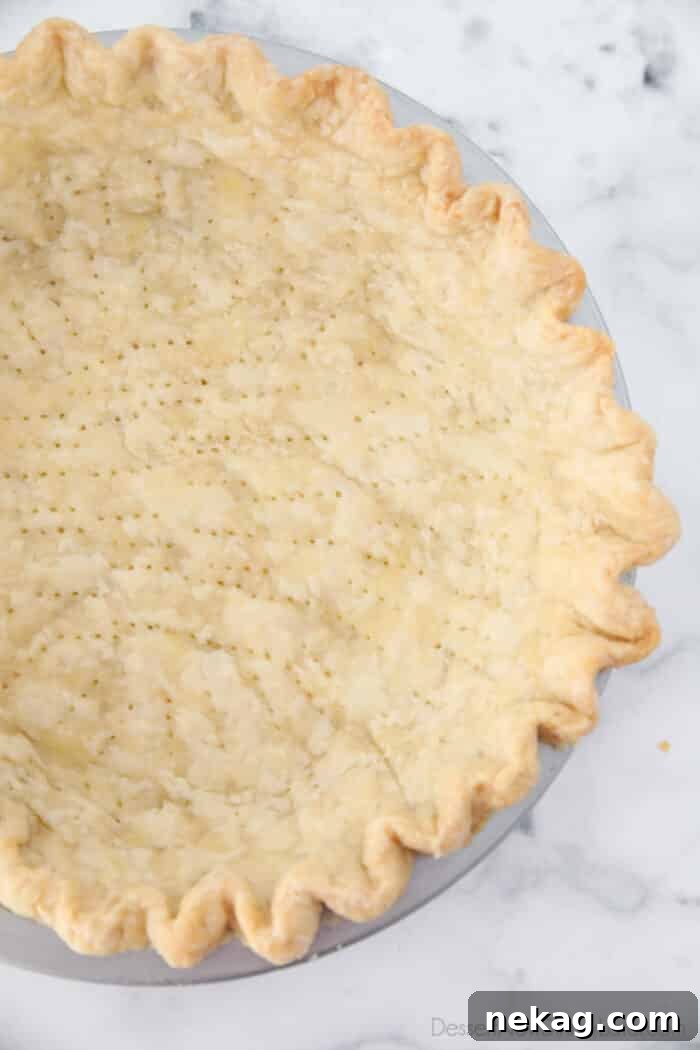
Par-Baked
For custard pies like pumpkin or sugar cream, par-baking the crust helps it set so the filling doesn’t make it soggy. Partially baking the crust before adding a wet filling ensures the bottom isn’t raw when the pie finishes baking. Par-baking also works well for quiche and other savory pies.
Completely Baked
Pies or tarts filled with pudding, fresh fruit, or cream require a fully baked crust because the filling won’t go back into the oven. A crisp, dry crust is needed so the filling sits nicely and the texture is balanced.
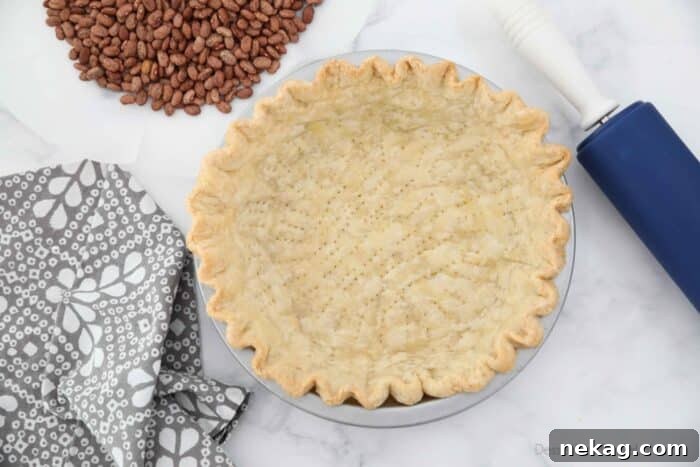
How to Blind Bake Without Weights
You don’t need specialized pie weights to blind bake, but the crust does need something to hold it in place so it won’t shrink or bubble. Common pantry items make excellent substitutes.
Options for Pie Weights
Dry beans or rice work well and are pantry staples. You’ll want enough to cover the bottom and come partway up the sides—about 1½ pounds is typical. Beans are often preferred because they’re easier to remove if they spill into the crust. Save and reuse them for blind baking only; they won’t be edible afterward.
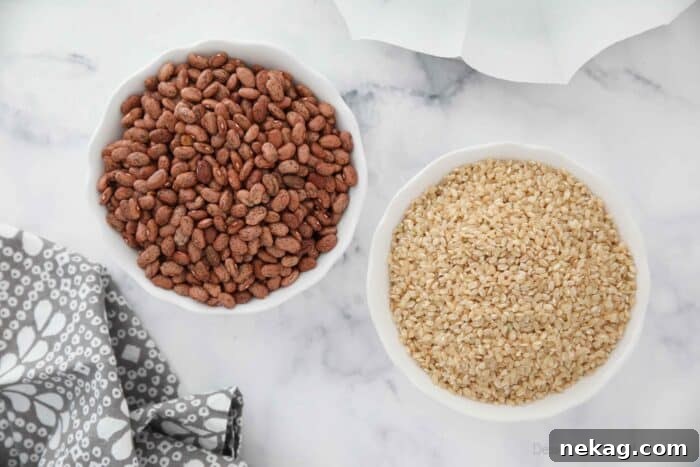
An increasingly popular method is to use granulated sugar as the weight and leave it in the crust while baking. Sugar distributes weight evenly, reduces shrinkage, and can be reused. It may lightly caramelize, adding flavor. While both methods work, the beans/rice technique is time-tested and reliable.
Parchment Paper vs. Foil for Lining Pie Crust
Use parchment paper or foil as a liner so your weights don’t bake into the dough. The classic double-bake method starts with weights to set the crust, then removes them for a final bake to crisp the bottom.
Foil is easy to shape and protects edges from over-browning, but it can tear and spill weights into the crust. If you use foil, choose heavy-duty, non-stick foil. Parchment paper lifts out cleanly and rarely tears, which is why it’s my preference. You can form a parchment circle to fit the pan for neat coverage.
How to Make a Parchment Paper Circle
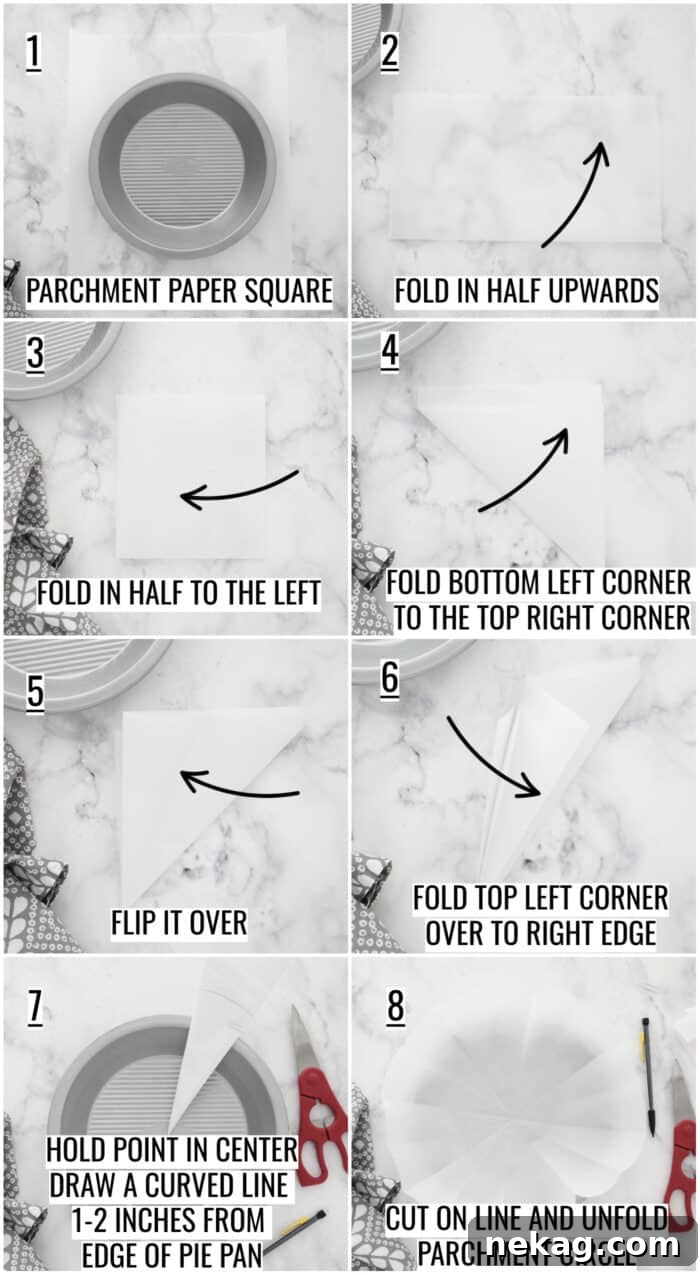
- Start with a square or nearly square piece of parchment larger than the pie dish.
- Fold the square in half.
- Fold in half again, bringing one side over the other.
- Fold a corner up to form a triangle.
- Adjust folds so you have a point centered above the pie dish.
- Draw a curved line about 1–2 inches from the pie edge.
- Cut along the line and unfold to create a parchment circle.
How to Blind Bake Pie Crust
With your weight and liner ready, follow the double bake method below to blind bake a homemade pie crust.
Roll out your favorite pie dough, fit it into a 9-inch pie dish, and trim and crimp the edges. For less shrinkage, trim the dough slightly farther from the rim and crimp the edge so it sits almost off the rim; this helps prevent the edges from collapsing inward.
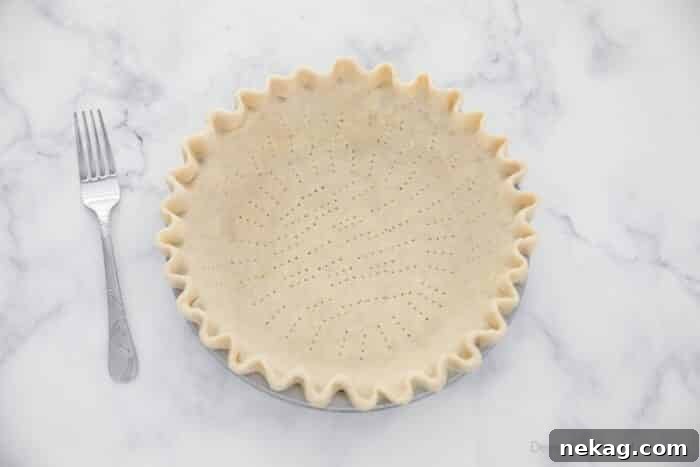
Dock (prick) the bottom and sides with a fork to allow steam to escape and prevent puffing. Optionally chill the crust in the freezer for 10 minutes to firm the edges before baking.
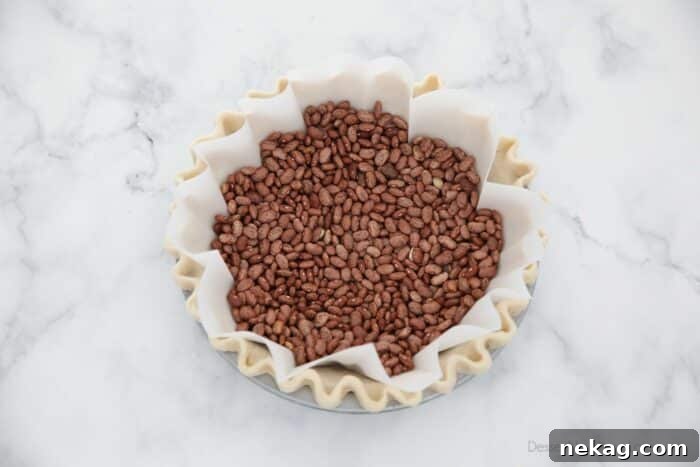
Place a parchment circle (or foil) inside the crust and fill it with dry beans or rice up to the rim to weigh the pastry down. This keeps the sides supported and prevents bubbling.
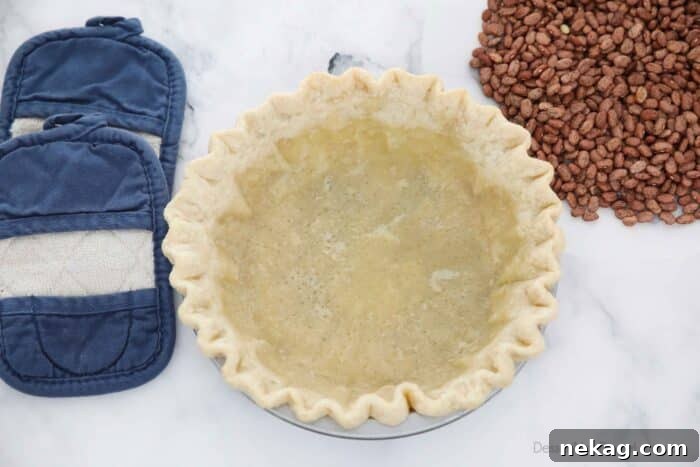
Bake at 350°F for 20–25 minutes, until the edges begin to brown. Carefully remove the parchment and weights and set them aside to cool; the beans or rice can be saved for future blind baking. If your recipe requires the filling to be baked (for example, pumpkin pie), add the filling now and continue baking as directed, protecting the crust edges as needed.
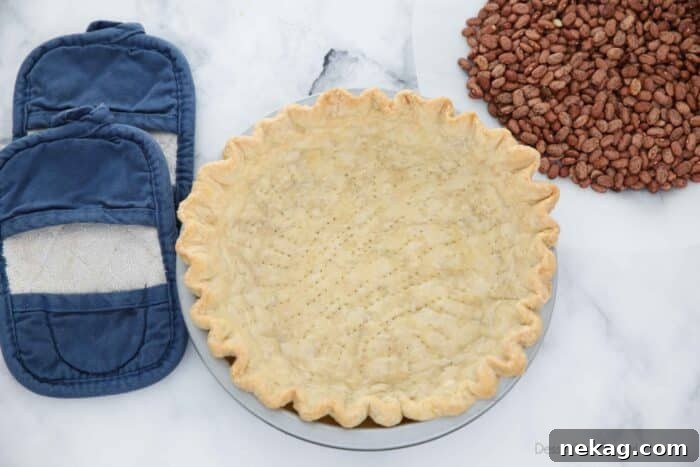
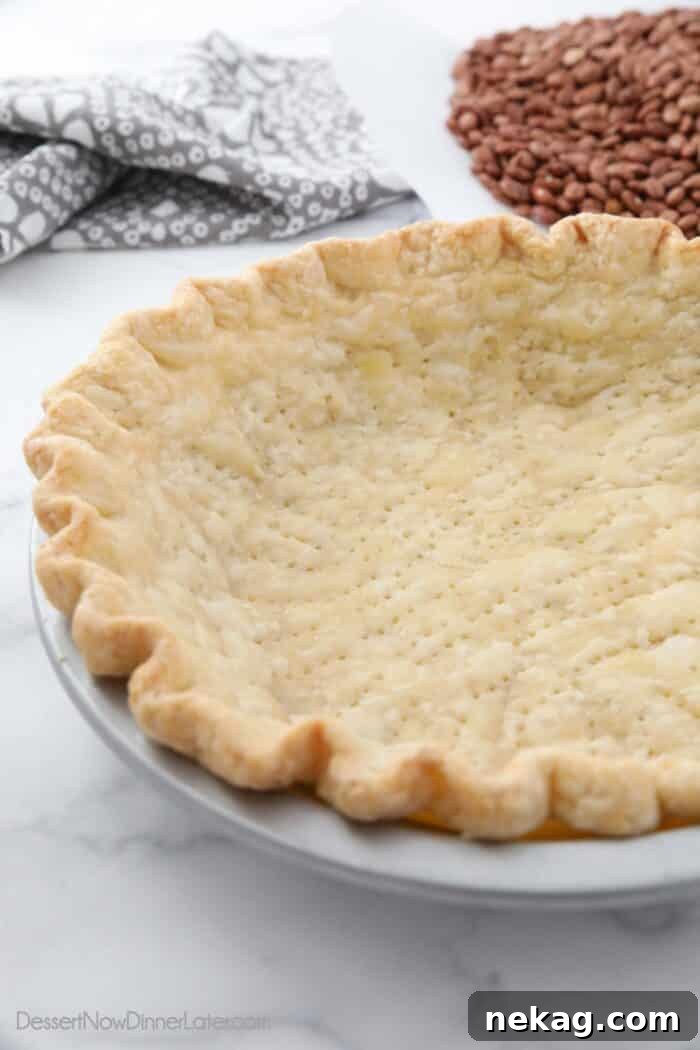
Return the crust to the oven and bake at 350°F for another 15–20 minutes, or until the crust is golden and baked through. The final crust should be dry and crisp, not wet or oily. Oily appearance usually indicates the fat was too soft before baking.
Blind Baking a Frozen Pie Crust
Store-bought crusts generally bake faster than homemade dough because they contain less fat and dough volume. For pre-made crusts, frozen is preferable to refrigerated. Follow the package instructions—typically thaw briefly, dock thoroughly, and bake at a higher temperature for a shorter time (for example, 400°F for 10–12 minutes) before finishing if needed.
Additional Blind Baking Tips
To reduce shrinkage and improve results:
- Trim dough a bit farther from the rim and crimp the edge so it sits slightly over the rim; this helps anchor the crust.
- Freeze the pie crust in the pan for 10 minutes before baking so the edges set before the fat melts.
- Fill the liner to the top with weights to press the sides and bottom evenly.
Recipes That Use a Blind-Baked Pie Crust
- Chocolate Cream Pie with instant pudding
- Blueberry Cream Cheese Pie
- Fresh Peach Pie
- Jello Coconut Cream Pie
- Strawberry Cream Pie
- Pink Lemonade Pie
- Chocolate Mint Pie
How To Blind Bake Pie Crust
Ingredients
- Homemade Butter Pie Crust
- OR
- Homemade Shortening Pie Crust
Equipment
- 9-Inch pie pan
- Rolling pin
- Parchment paper
- 9-inch glass pie dish
Instructions
- Make pie dough and chill it. Preheat oven to 350°F.
- Roll out the pie crust, place it in a pie dish, trim and crimp the edges. Trim the dough slightly farther from the rim and crimp the crust as far away from the inner sides as possible to reduce shrinkage.
- Dock the crust all over with a fork.
- Optional: Chill the crust in the freezer for 10 minutes.
- Line with parchment or foil and fill to the top with dry beans or rice.
- Bake at 350°F for 20–25 minutes until edges begin to brown. Remove parchment and weights and set aside to cool. If your recipe requires baking the filling, add it now and continue baking (cover edges if increasing oven temperature).
- Return crust to oven and bake at 350°F for another 15–20 minutes or until golden and baked through. It should be dry and crisp, not wet or oily.
- Cool completely, then fill with fresh fruit, pudding, cream, or other soft filling.
Notes
- A shortening-based crust holds its shape better than an all-butter crust, though butter offers more flavor.
- A store-bought refrigerated crust usually takes about 20 minutes with parchment and weights, then about 10 more minutes after removing the weights.
Nutrition
Sharing this recipe with a link is encouraged. Content and photographs are copyright protected.