
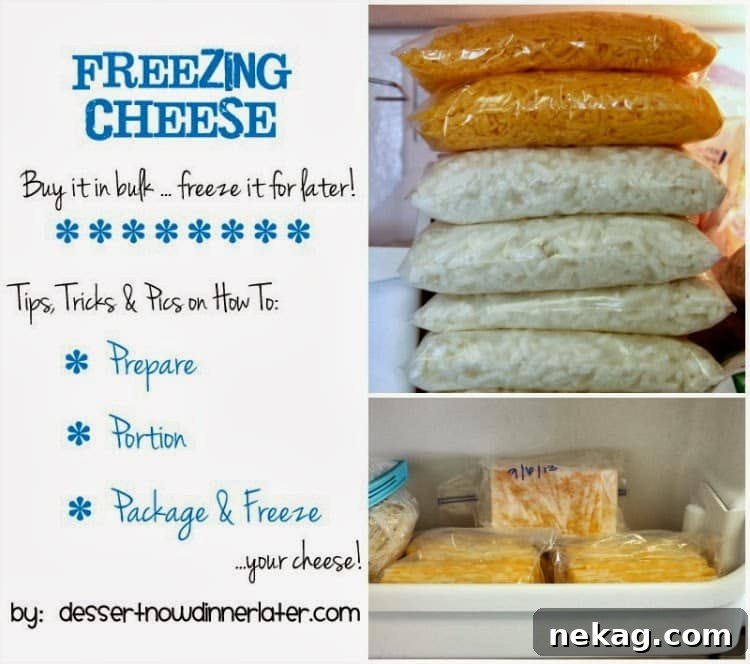
This post explains a simple, practical way to save money by buying cheese in bulk and freezing it for later use. Cheese is delicious but pricey, so when I see a deal—like a 2 lb block for $5 or less—I stock up and freeze it. Freezing works best if you prepare the cheese in the form you’ll use it later, because freezing a whole block changes its texture and makes it crumbly when thawed. Over the years I’ve successfully frozen mozzarella, cheddar, Colby Jack, and Parmesan, so these tips apply to most cheeses.
Key idea: prepare the cheese before freezing. If you freeze an intact block and then try to slice or shred it after freezing, the texture will be poor. Instead, shred or slice the cheese first, portion it, remove excess air, and then freeze.
Shredded Cheese
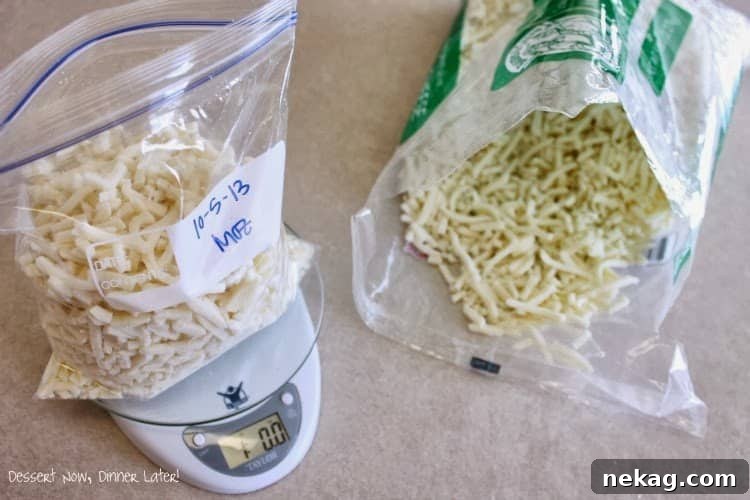
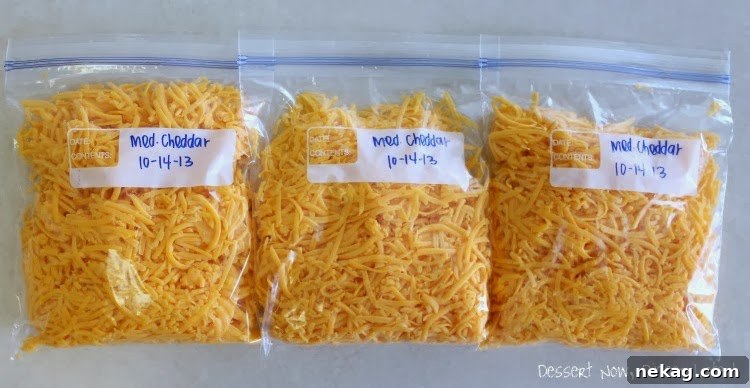
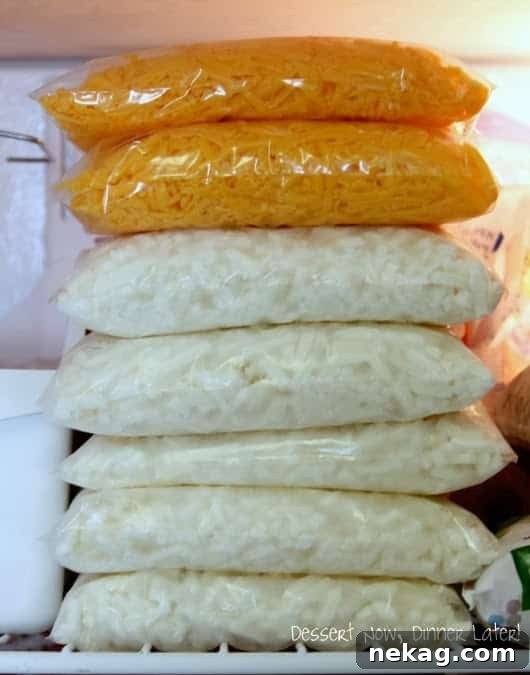
I often buy pre-shredded cheese because it usually has an anti-clumping coating and saves time. I buy the large 5 lb bag at the warehouse store when it’s a good price. When I get it home I divide it into portioned quart-size bags, label each bag with the date and the cheese type, then squeeze out as much air as possible before sealing. I usually portion into 1 lb bags, which is easy to weigh but you can also estimate by eye.
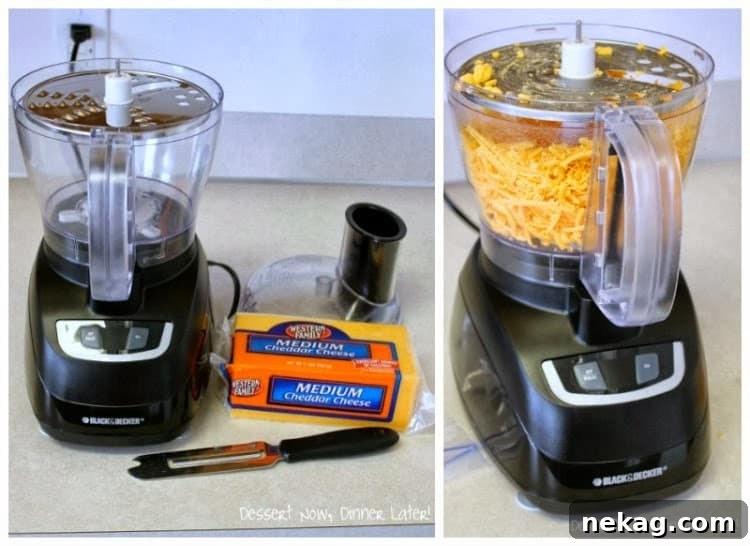
If you buy blocks on sale, shred them yourself. Cut a 2 lb block into manageable pieces and shred in a food processor or by hand. Don’t try to shred the entire block at once; smaller batches prevent packing and sticking. I typically split a 2 lb block into three quart bags to keep the cheese from compressing into one solid lump. Lay the prepared bags flat when freezing so they stack neatly and thaw quickly.
Sliced Cheese
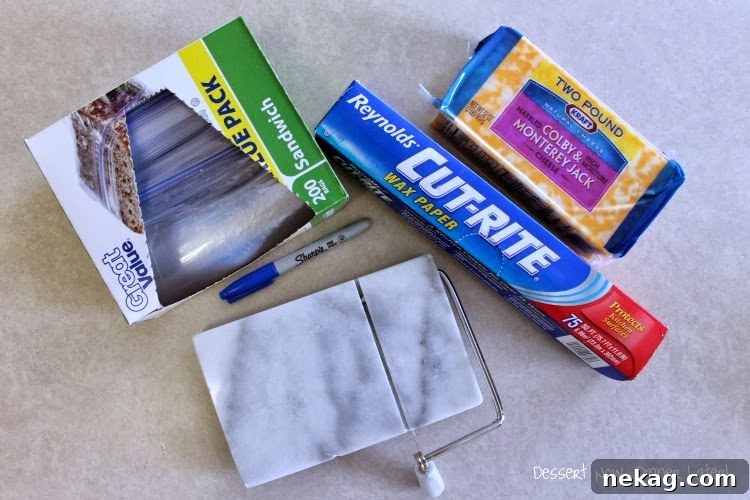
For sandwich slices, I prefer using a dedicated cheese slicer because it produces even, clean cuts and more slices than a knife. Softer marbled cheeses like Colby Jack separate easily; firmer cheddars work well too. When I stack slices for freezing, I stagger them so they don’t fuse into one piece. A thin piece of wax paper between slices works, but it’s extra work, so I usually stagger and rely on a butter knife to separate slices after thawing.
Label bags before filling and use simple sandwich bags for slices. Storing the bags in the freezer door or a flat compartment helps keep them organized and easy to access.
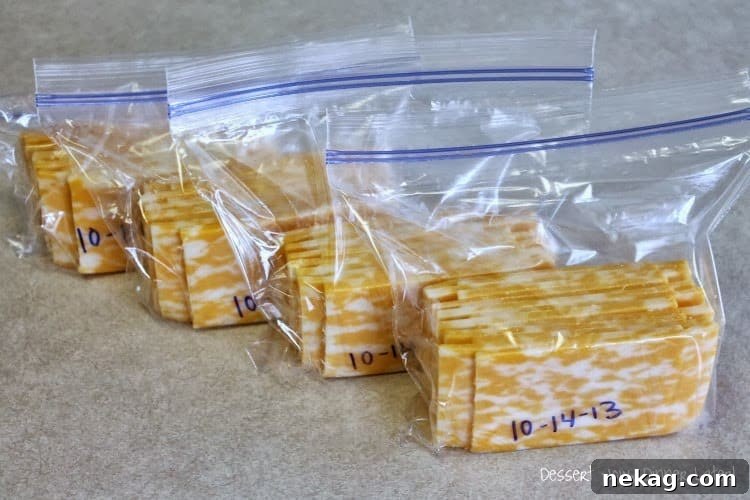
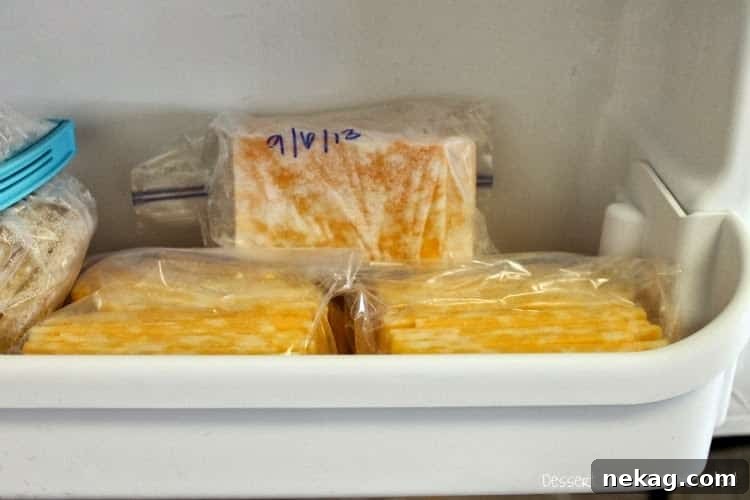
When you remove frozen cheese for use, thaw it in the refrigerator for best food safety and texture. In summary: prepare the cheese in the form you’ll use it, portion it into bags, squeeze out air, label, and freeze flat. Properly stored slices typically last about 2–3 months without freezer burn; shredded cheese often keeps well for around 4 months. Using freezer-grade bags can further reduce freezer burn, but with regular rotation we usually finish the cheese before issues arise.
Following these simple steps helps you take advantage of bulk deals and reduces waste—happy freezing!