
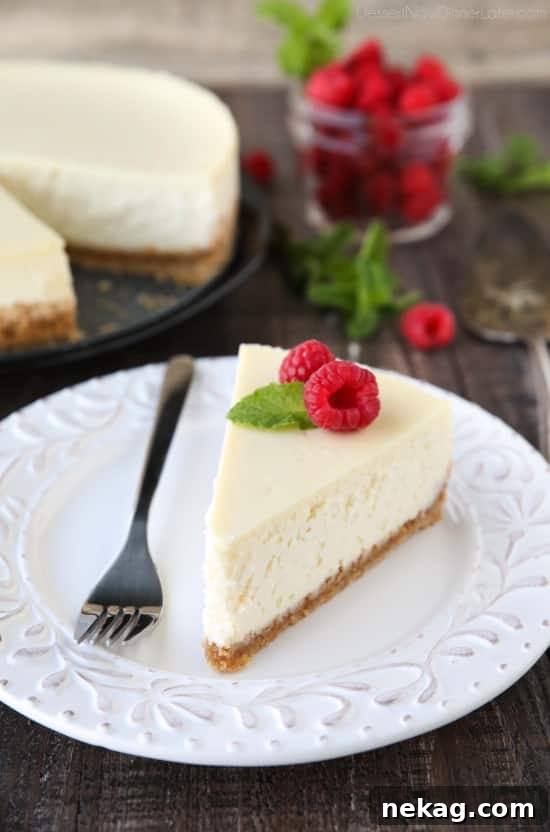
This Classic Cheesecake recipe is smooth, creamy, moist, and full of vanilla, built on a buttery graham cracker crust. Below are practical bakery-tested tips and a clear recipe to help you bake a perfect cheesecake without cracks—ideal for holidays or any special occasion.
Chelsea’s Comment
“I have made the recipe about a 100 times and given it out because everyone says it’s the best.”
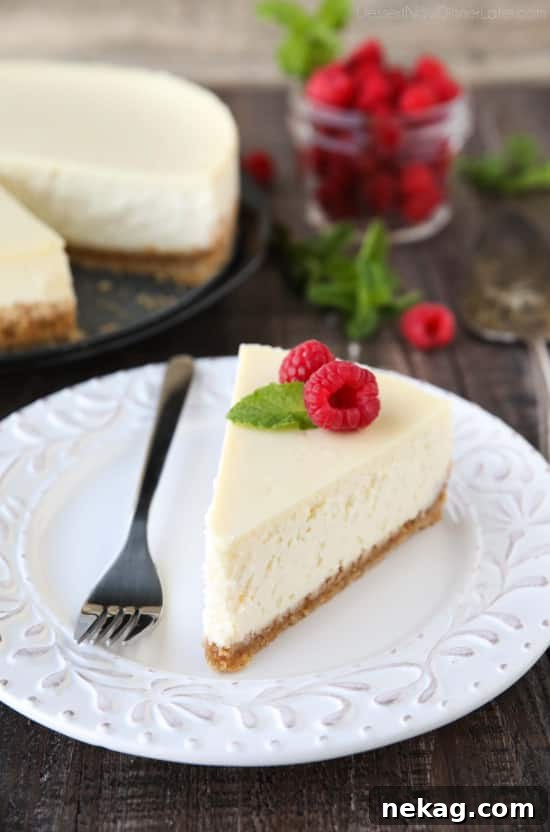
Cheesecake can feel intimidating because it is sensitive to temperature and handling, but with the right approach it’s straightforward. These clear, bakery-tested techniques will guide you through a reliable method for a smooth, crack-free cheesecake every time.
How to Make a Simple Cheesecake
A classic cheesecake uses cream cheese, sugar, eggs, and vanilla on a graham cracker crust. This version adds a small amount of flour for structure and sour cream for moisture and silkiness—both help prevent cracking and keep the texture tender and not dry.
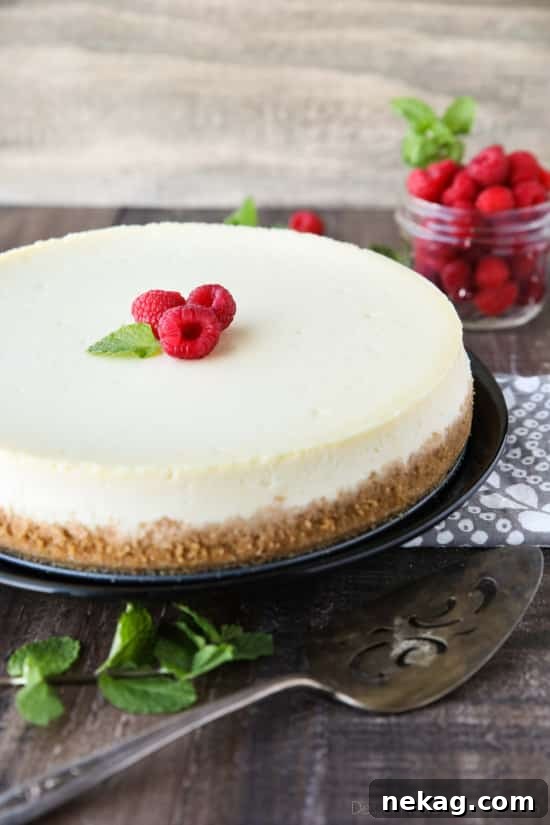
Five Keys to a Perfect, Crack-Free Cheesecake
Working in a bakery taught me how small details make a big difference. Follow these five essentials for consistently great results.
- 1) Use room temperature ingredients. Allow cream cheese, eggs, and sour cream to come to room temperature before mixing. This prevents lumps and reduces stress on the batter. To bring eggs to room temperature quickly, place them in warm water for 10 minutes.
- 2) Don’t over-mix the batter. Over-mixing incorporates excess air, which can make the cheesecake rise and then collapse, causing cracks. Beat the cream cheese and sugar until smooth, but mix gently once eggs and sour cream are added. After filling the pan, tap it lightly on the counter to release trapped air bubbles.
- 3) Use a water bath (bain-marie). A water bath promotes gentle, even baking so the edges don’t set much faster than the center. Wrap the outside of the springform pan well with heavy-duty foil, place the pan in a large roasting pan, and pour hot tap water into the roasting pan to reach about halfway up the springform.
- 4) Keep the oven door closed. Opening the oven causes temperature fluctuations that can lead to cracking. Bake until the top is matte/dull and slightly puffed in the center—this indicates the cheesecake is set.
- 5) Cool gradually in the oven. When baking finishes, turn the oven off and leave the cheesecake inside with the door closed for 2–3 hours. Gradual cooling prevents sudden temperature shifts, minimizes cracking, and prevents the center from sinking.
After cooling in the oven, remove the cheesecake, unwrap and discard the foil, then refrigerate for at least 4 hours to fully set. Chilling eliminates any remaining jiggle and makes slicing cleaner.
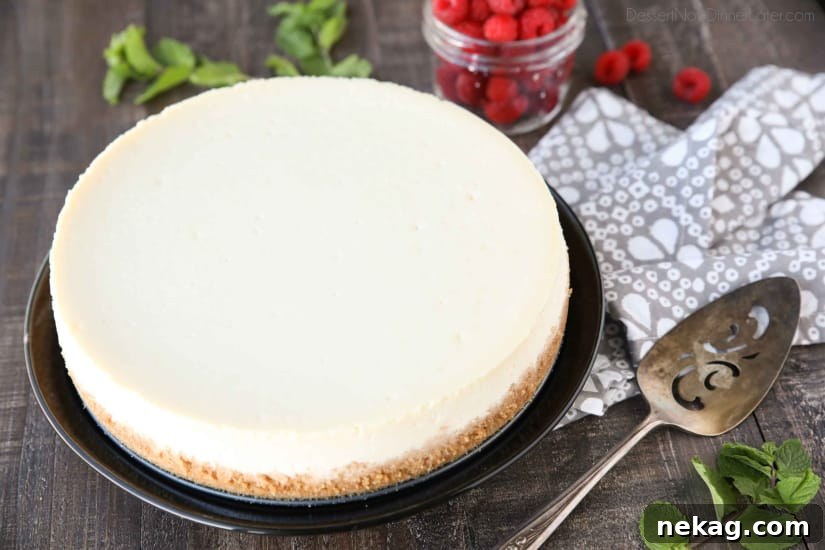
How to Freeze Cheesecake
Cheesecake freezes well for up to three months. After chilling, remove it from the springform pan and transfer to a freezer-safe plate or cardboard cake circle. Cover the top with wax or parchment paper, double-wrap tightly in plastic wrap, then add a layer of foil to protect against freezer burn.
With these tips and a straightforward process, you’re ready to bake a reliable classic cheesecake at home.
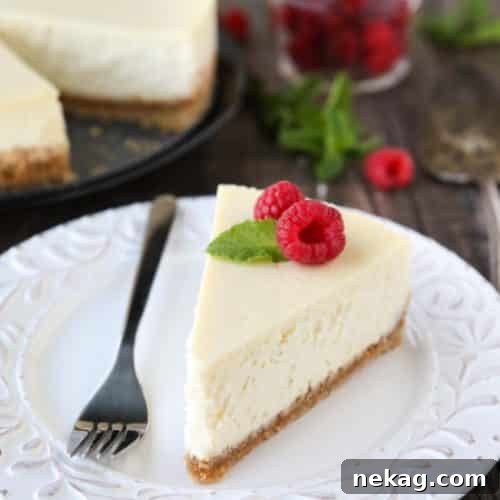
Classic Cheesecake Recipe
Pin
Rate
Ingredients
Crust:
- 2 cups (208 g) graham cracker crumbs (about 15 graham crackers)
- 5 Tbsp granulated sugar
- 6 Tbsp (85 g) butter, melted
Cheesecake Filling:
- 32 oz (904 g) block cream cheese, room temperature
- 1 ¼ cups (250 g) granulated sugar
- 3 Tbsp all-purpose flour
- 1 Tbsp vanilla extract
- 1 tsp lemon juice
- ¼ tsp salt
- 4 large eggs, room temperature
- 1 cup (240 g) sour cream, room temperature
Instructions
- Preheat oven to 350°F. Assemble a 9-inch nonstick springform pan with the raised side of the bottom facing down. Double or triple-wrap the outside of the springform pan with heavy-duty foil.
- Make crust: Mix graham crumbs, sugar, and melted butter until moistened. Press firmly into the bottom of the pan and bake 10–12 minutes until lightly browned. Set aside to cool.
- Make filling: In a stand mixer with the paddle attachment, beat cream cheese and sugar on low until smooth, scraping the bowl occasionally. Add flour and mix until just incorporated.
- Add vanilla, lemon juice, and salt; mix until just combined, scraping the bowl.
- Add eggs one at a time, mixing until each is just incorporated. Stir in sour cream and mix only until incorporated—do not over-mix.
- Pour filling over the cooled crust and smooth the top. Tap the pan lightly on the counter a few times to release air bubbles.
- Place the cheesecake in a large roasting pan, transfer to the oven, then pour hot tap water into the roasting pan so it comes about halfway up the springform. Reduce oven heat to 300°F.
- Bake 70–80 minutes at 300°F. The top should look dull/matte and be slightly puffed in the center. Do not open the oven during baking. After baking, turn the oven off and leave the cheesecake inside with the door closed for 2–3 hours to cool gradually.
- Remove the cheesecake from the oven and from the water bath, discard the foil, and cool completely at room temperature. Cover and refrigerate at least 4 hours, or overnight, until firm. Unmold before serving. For clean slices, use a hot knife and wipe it between cuts.
Notes
Sharing this recipe with a link is appreciated. Content and photographs are copyright protected.
Did you make this?
Don’t forget to leave a rating below and share your results!