
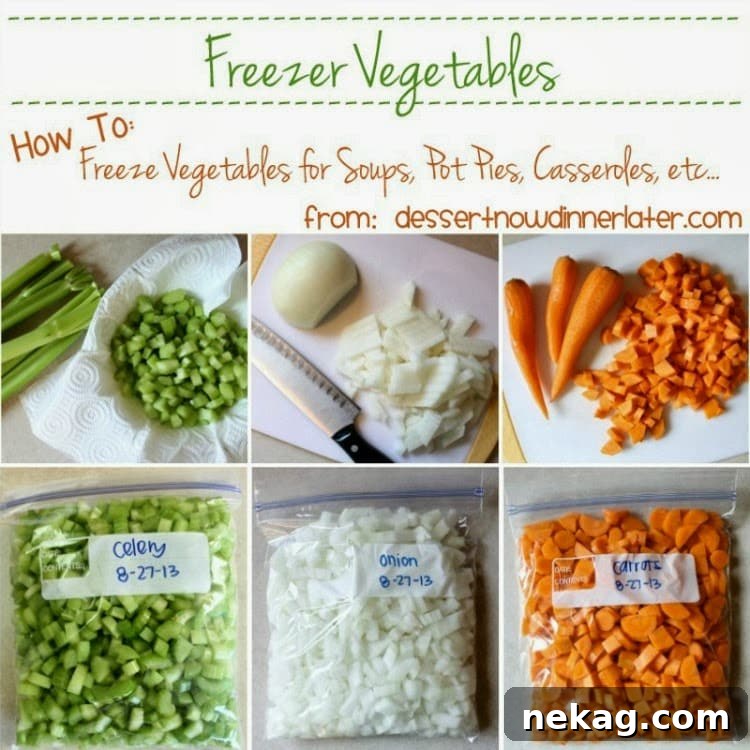
I’m a soup person — always have been. If you’ve read this blog for a while you’ve probably noticed, and if you’re new here you’ll see it soon: soup season is coming and I’m already sharing recipes. Soup is comforting, versatile, and often surprisingly simple to make for cool fall and winter days.
Some readers worry that soup requires constant chopping and that leftover vegetables spoil before they can be used. Here’s a practical solution I use all the time: freeze your prepped vegetables. This saves time and prevents waste, and those frozen veggies work great not only in soups but also in pot pies, pot roasts, casseroles, and other cooked dishes.
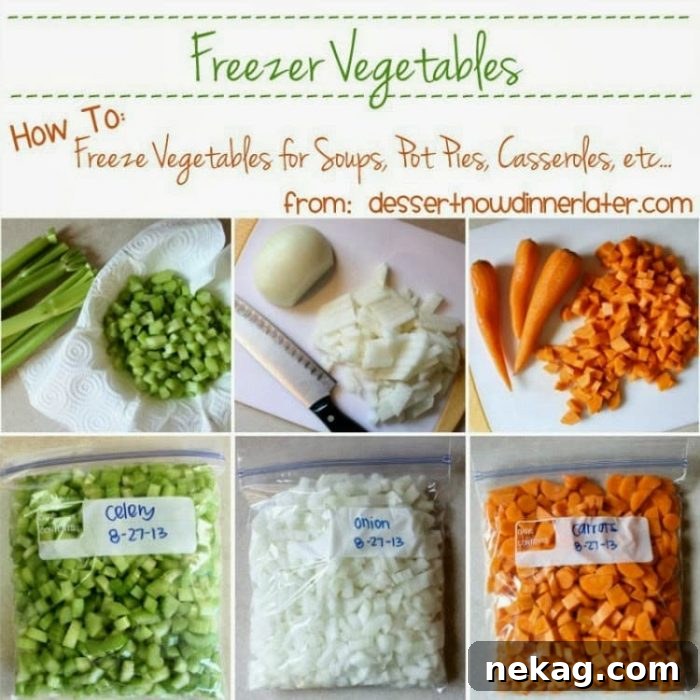
Most classic soup bases use mirepoix — a mix of onion, celery, and carrot. During cold months I keep bags of these three chopped vegetables in my freezer so I can pull them out and start cooking immediately. Below I’ll walk through how I prepare and freeze each one so they’re ready when you need them.
Ready to learn how? Here’s the simple process:
Celery
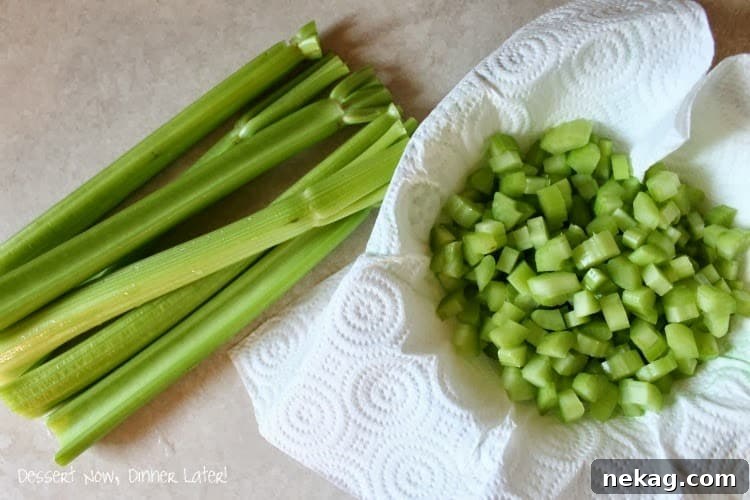
Rinse and dice the celery. After rinsing, pat the pieces dry with a paper towel to remove excess moisture; this helps prevent the pieces from sticking together when frozen.
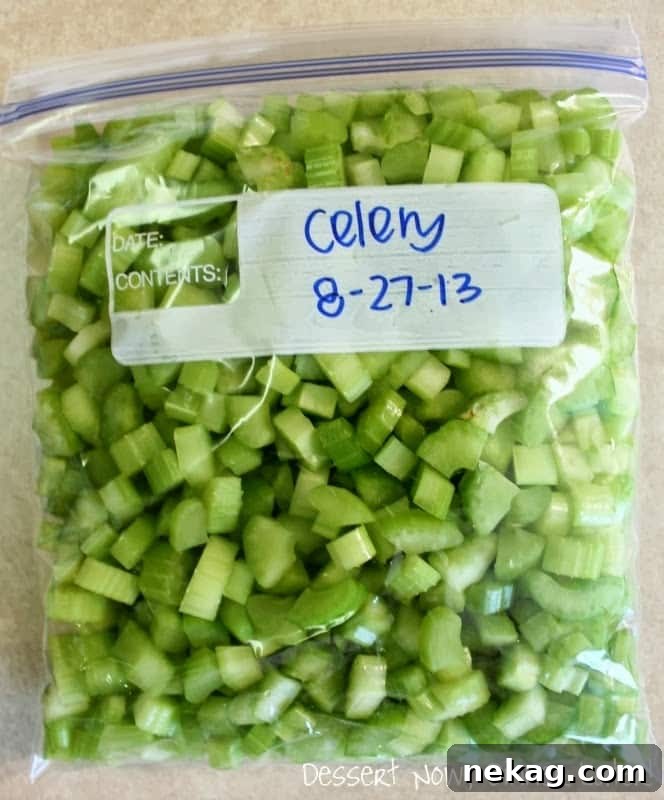
Place the diced celery into a labeled zip-top bag, press out as much air as possible, seal it, and store in the freezer.
Onion
Peel and dice the onion to your preferred size.
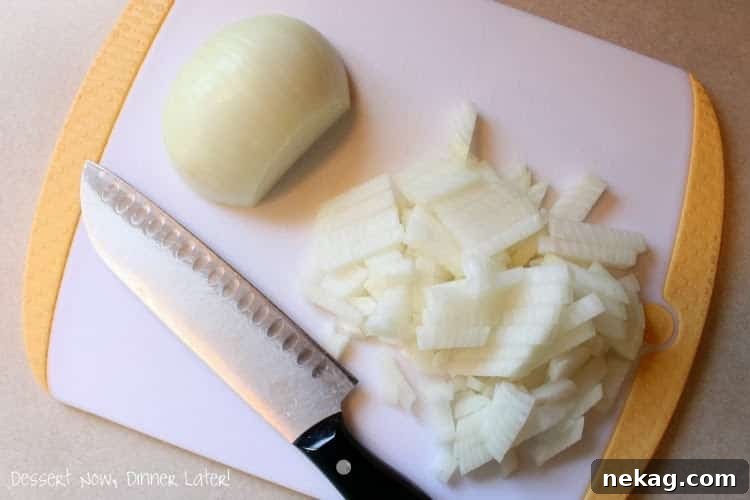
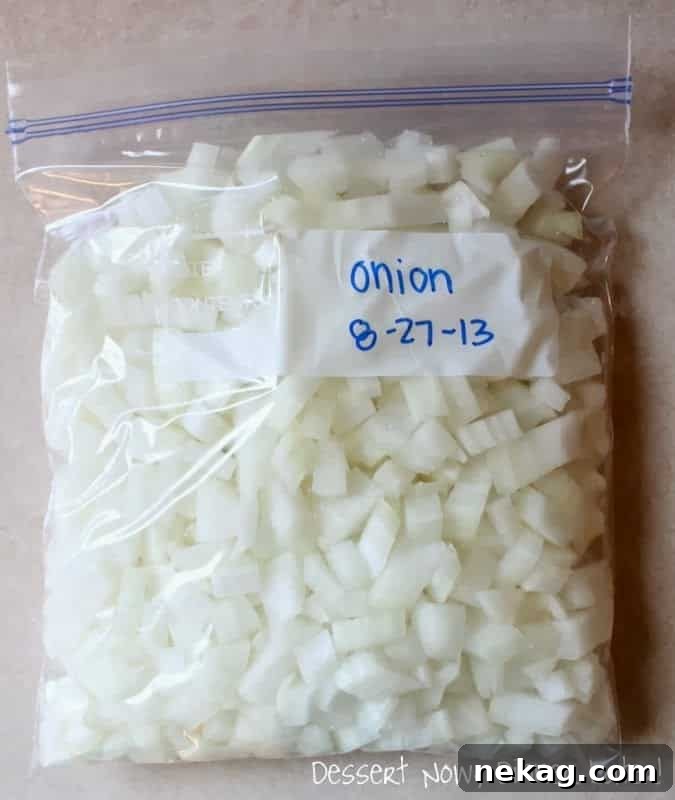
Put the diced onion into a labeled zip-top bag, remove excess air, and seal. Because raw onion can scent the freezer, you may want to double-bag it. Also try not to touch the outside of the bag with onion-covered hands to keep it cleaner and reduce odor transfer.
Carrots
Rinse, peel, and dice the carrots into the size you typically use in recipes.
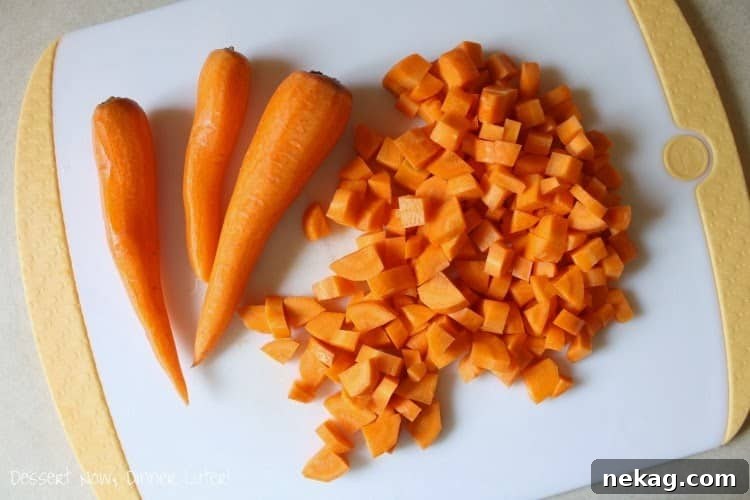
Place the diced carrots in a labeled zip-top bag, remove excess air, seal, and freeze. Labeling by date or portion size helps keep track of what you have on hand.
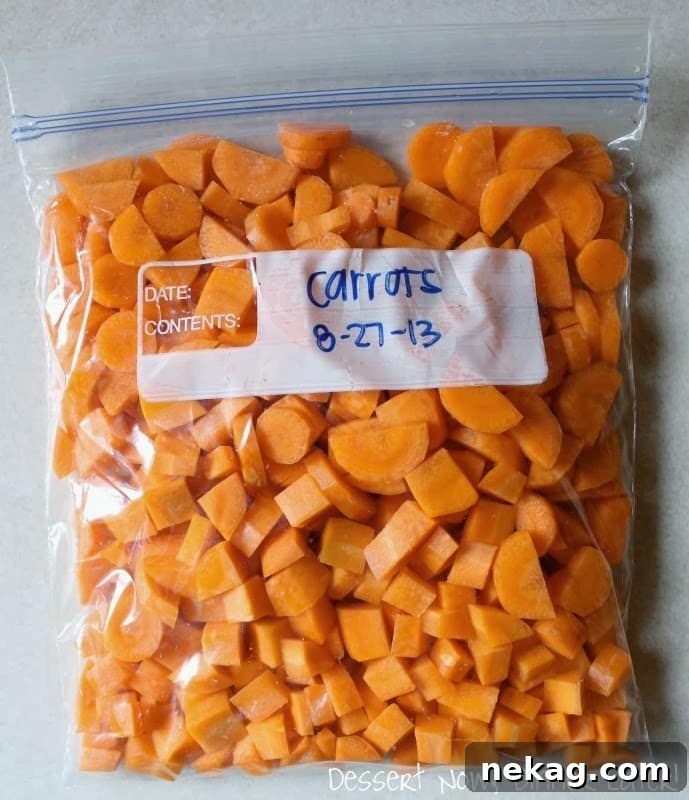
That’s it — your vegetables are prepped and ready for recipes whenever you need them.
To use: The frozen diced pieces may clump together in the bag. To measure or separate them, just break the bag apart on the counter or bang it gently against the edge to loosen the pieces before adding to your pot.
Important note
Freezing softens these vegetables, so they’re best used in dishes where they’ll be cooked: soups, stews, pot roasts, pot pies, casseroles, and similar recipes. Frozen celery will not remain crisp, so it’s not ideal for raw salads like chicken salad. Keep that in mind when planning how to use your frozen prep.