
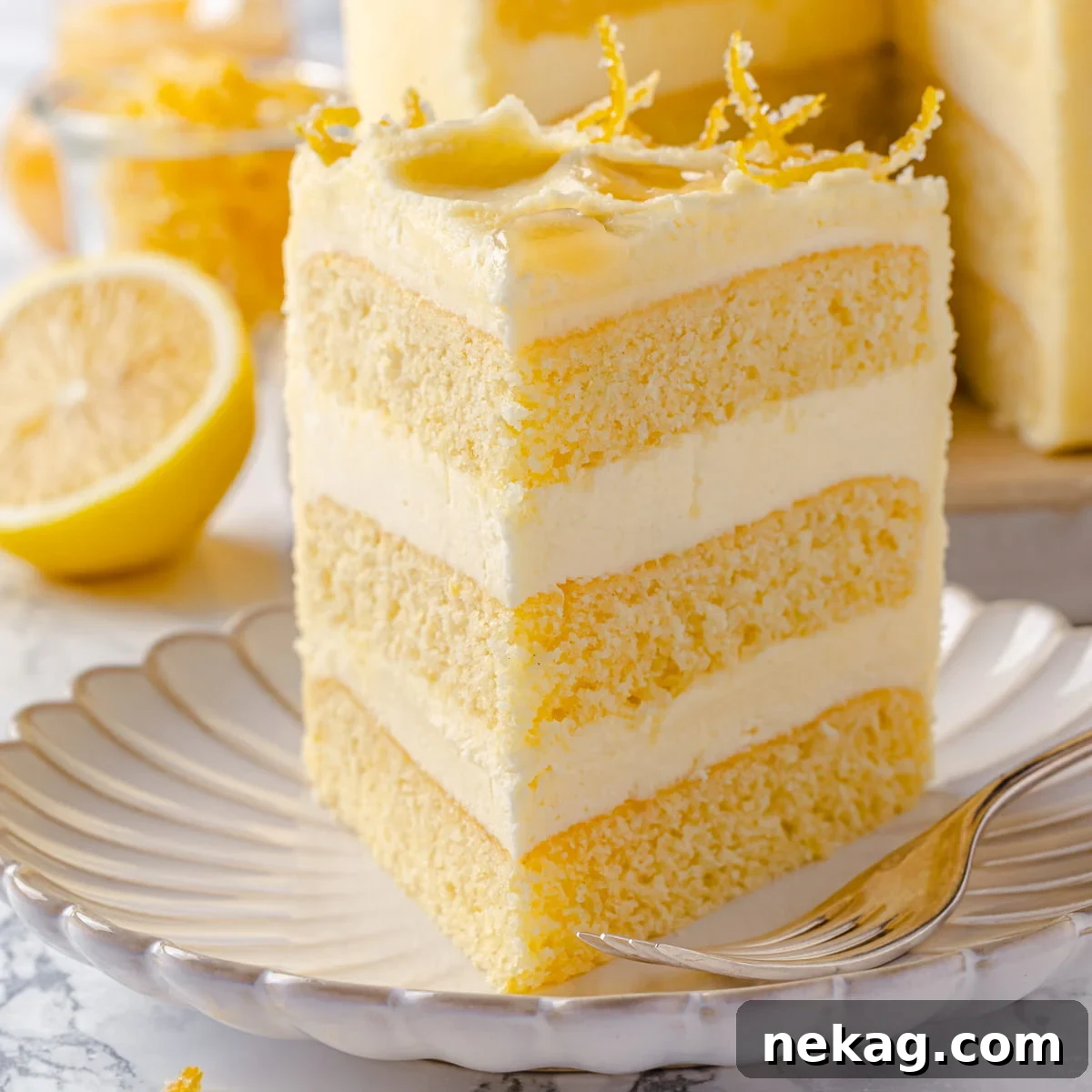
The Ultimate Bakery-Style Lemon Cake with Silky Lemon Buttercream
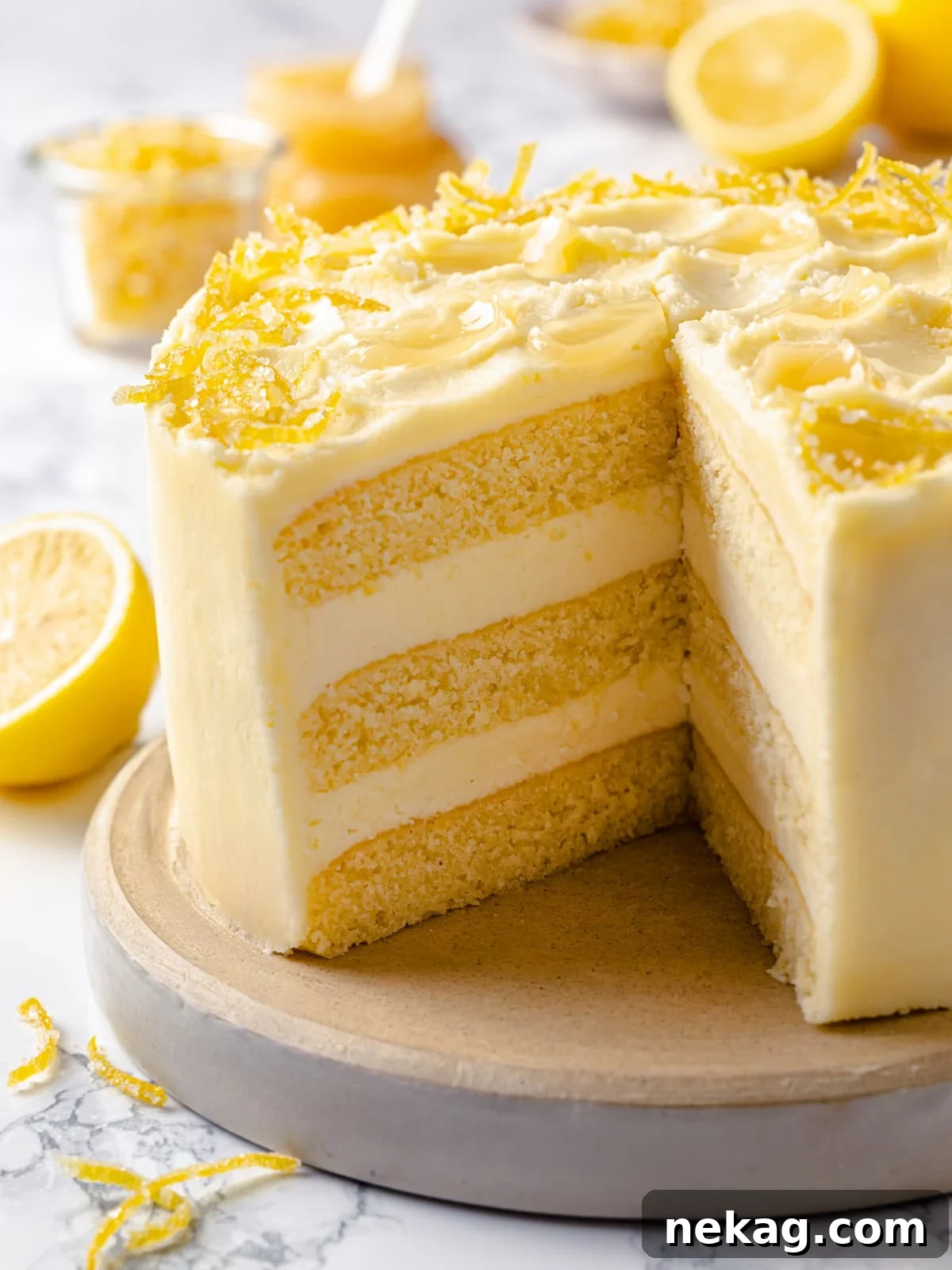
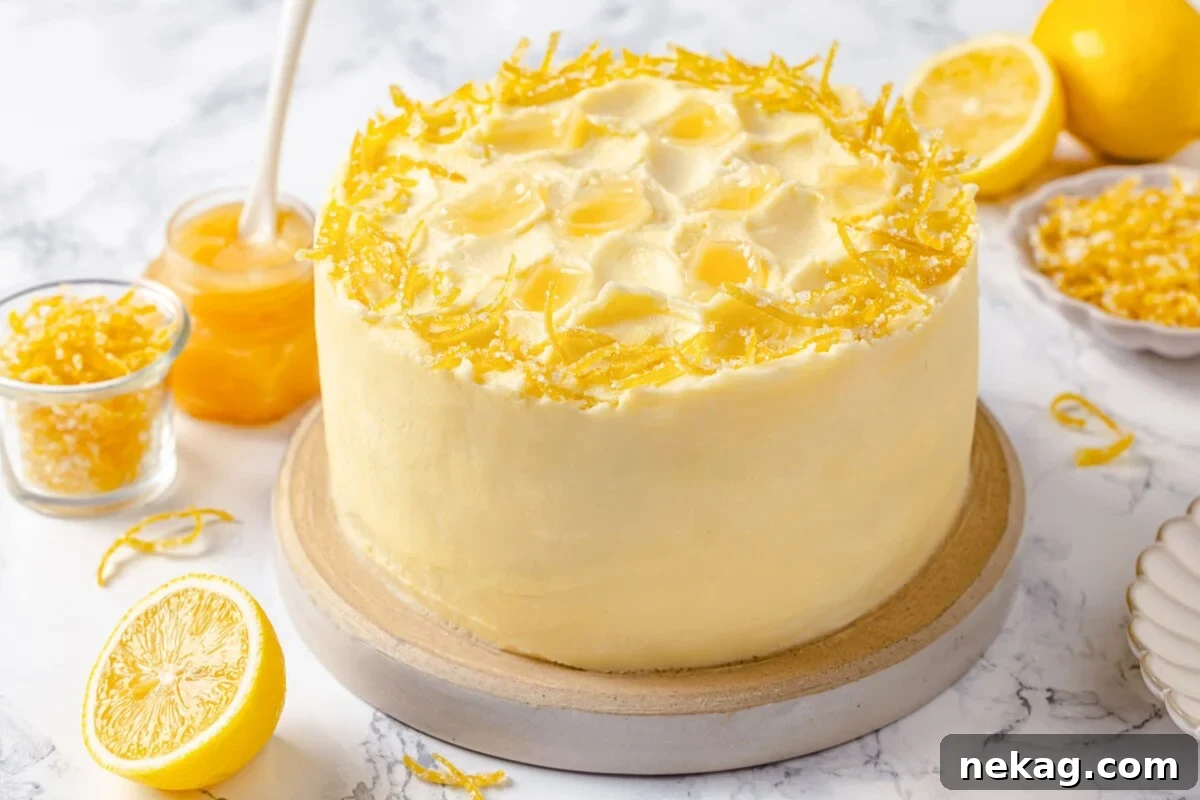
Prepare to bake the most exquisite Lemon Cake Recipe you’ve ever tasted. This recipe masterfully combines a spectacularly soft, intensely flavored lemon cake with an irresistibly silky lemon Swiss meringue buttercream, enriched by authentic lemon curd. Designed for both quick preparation and a professional, bakery-level finish, this cake stands out by delivering a bright, clean lemon flavor without the common pitfalls of being overly sharp or excessively sweet. It’s truly a celebration of citrus in every tender bite.
A Quick Look At The Recipe
This is a brief summary of the recipe. Jump to the recipe to get the full details.
Jump to Recipe
Prep Time
35 minutes
Cook Time
15 minutes
Total Time
50 minutes
Servings
16 servings
Difficulty
Intermediate (approachable with clear steps).
Calories *
543 kcal per serving
Technique
Creaming method for the cake; Swiss meringue buttercream finished with lemon curd.
Flavor Profile
Bright lemon, lightly tart, balanced sweetness, ultra-tender crumb.
* Based on nutrition panel
Summarize & Save this content on
google ai
perplexity
grok
“I loved the tip about rubbing the lemon zest into the sugar! It made the cake so fragrant before it even went into the oven. The buttercream was shockingly light for how lemony it was, and your timing cues for the meringue saved me from overcooking the whites!”⭐⭐⭐⭐⭐
Lauren
Why This Lemon Cake Recipe Works Wonders
This lemon cake isn’t just another dessert; it’s a testament to balanced flavors and perfected textures. Here’s why this particular recipe guarantees a show-stopping result:
- Bright but Balanced Lemon Flavor: Our secret lies in how we extract and integrate the lemon flavor. Lemon zest is vigorously rubbed into the sugar, a technique that coaxes out its fragrant oils, infusing every granule with intense citrus essence. Fresh lemon juice and buttermilk then introduce a clean acidity without any harsh bitterness. The result is a vibrant, fresh lemon flavor that sings through every single layer, never overwhelming, always refreshing.
- Exceptionally Tender, Moist Crumb: Achieving a perfectly moist and delicate crumb is crucial for any great cake. This recipe uses cake flour, known for its lower protein content, which results in a softer, finer texture. A slightly lower baking temperature also plays a vital role, allowing the cake to bake evenly without drying out, ensuring a consistently tender and succulent interior that melts in your mouth.
- Not-Too-Sweet, Silky Frosting: Forget cloyingly sweet frostings. Our lemon Swiss meringue buttercream is famously light, airy, and incredibly silky. The brilliance here is using homemade or high-quality store-bought lemon curd to impart rich lemon flavor. Unlike direct lemon juice, which can destabilize meringue-based buttercreams due to its acidity, lemon curd provides concentrated flavor while maintaining the buttercream’s perfect, stable emulsion. This ensures a frosting that complements the cake beautifully, offering a balanced sweetness and a burst of lemon.
- Professional Flexibility & Versatility: This isn’t just a recipe for a single kind of cake. Its robust and adaptable nature means it performs beautifully whether you’re baking a grand layer cake, a simple sheet cake for a crowd, or charming individual cupcakes. The core recipe scales and adapts with ease, making it a go-to for any occasion or presentation style, providing consistent, professional-grade results every time.
Table of Contents
- Why This Recipe Works
- Essential Ingredients & Smart Substitutions
- Exciting Variations for Your Lemon Cake
- Professional Baking Tips for Success
- How to Master This Lemon Cake Recipe
- Chef’s Special Recommendation
- Lemon Cake FAQs
- More Delightful Lemon Recipes
- Complete Lemon Cake Recipe Card
- Before You Go
This lemon cake is specifically crafted to deliver a truly lemony experience without veering into sharpness or excessive sweetness, which is precisely how lemon desserts should be. The technique of working lemon zest directly into the granulated sugar is paramount. This simple step helps to evenly distribute the vibrant citrus oils throughout the batter, mellowing any potential acidity and contributing to an incredibly tender crumb. It’s a foundational approach I also employ in my popular lemon olive oil cake, ensuring the lemon flavor remains bright yet soothingly calm.
When it comes to the luxurious buttercream, we ingeniously use lemon curd instead of raw lemon juice. This is a critical distinction, as the acidity in straight lemon juice can often cause meringue-based buttercreams to curdle or break their emulsion. Our easy lemon curd not only imparts a rich, concentrated lemon flavor but also keeps the frosting beautifully smooth and remarkably stable. This same clever method is perfectly showcased in my highly-rated lemon cupcakes. The resulting buttercream possesses the same wonderfully light and perfectly balanced texture as seen in my American flag cake, ensuring the lemon frosting perfectly enhances the cake without overpowering its delicate structure.
Essential Ingredients & Smart Substitutions for Your Lemon Cake
Crafting this delightful lemon cake starts with high-quality ingredients. Each component plays a specific role in achieving the perfect flavor and texture. Here’s what you’ll need and how to make smart substitutions if necessary:
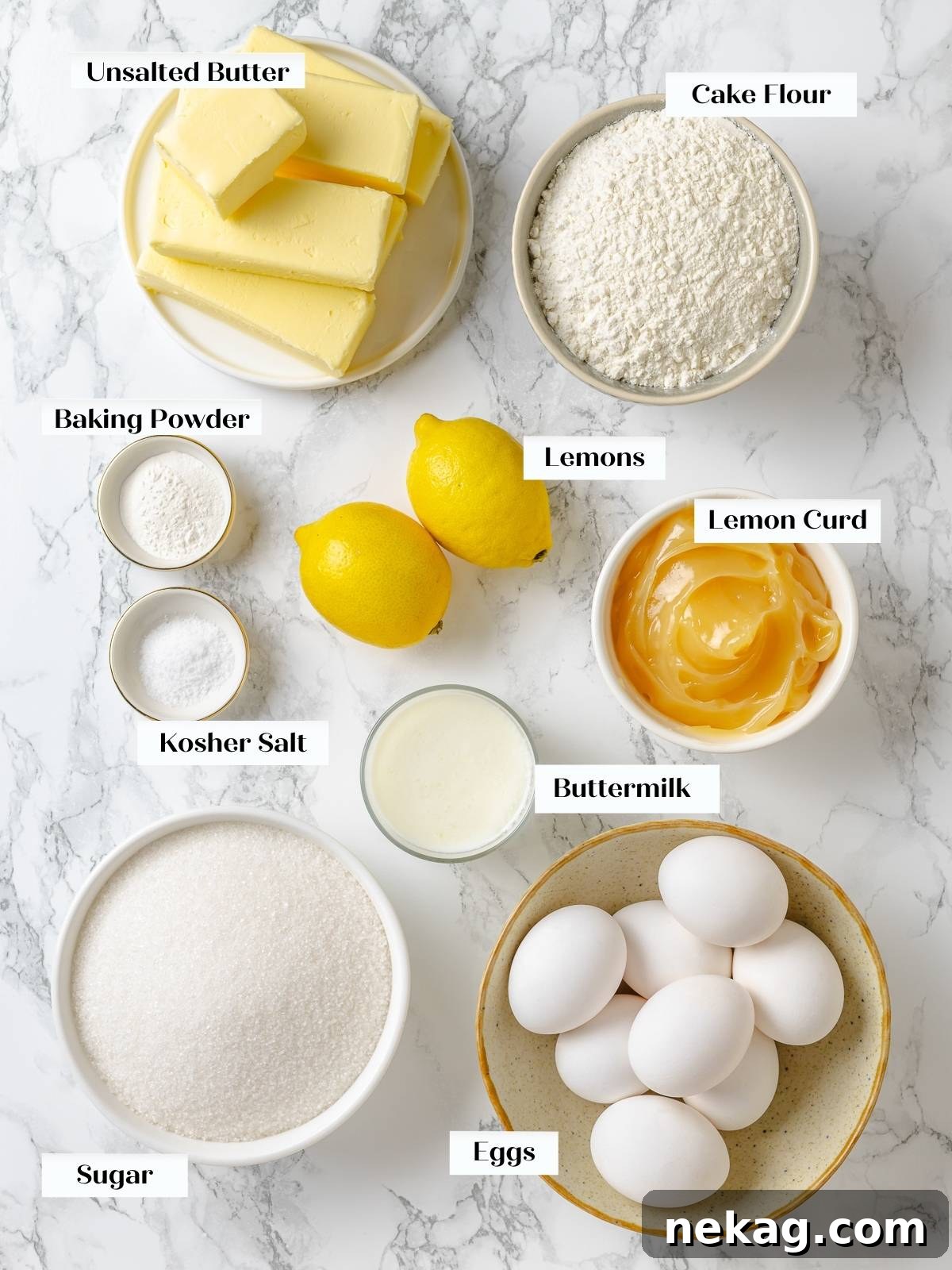
- Cake Flour: This specialized flour is the secret to a supremely fine, exceptionally tender crumb. Its lower protein content prevents excessive gluten development, resulting in a light, delicate cake. If cake flour is unavailable, you can substitute it by combining 2 ⅓ cups (280g) all-purpose flour with 4 ½ tablespoons cornstarch, then sifting thoroughly twice. However, be aware that the final texture may be slightly less delicate.
- Unsalted Butter: Butter provides richness, flavor, and contributes significantly to the cake’s structure and moistness. It is absolutely crucial for the butter to be at true room temperature (around 68-70°F or 20-21°C). This ensures proper creaming with the sugar, which incorporates air and creates a light, fluffy batter. Cold butter won’t cream correctly, leading to a dense cake, while overly soft butter can make the batter greasy.
- Granulated Sugar + Fresh Lemon Zest: This combination is where the magic begins. Rubbing the vibrant lemon zest into the granulated sugar with your fingertips doesn’t just mix them; it releases the aromatic essential oils from the zest, permeating the sugar with intense citrus flavor. This process infuses the flavor deeply into the cake batter, creating a fragrant and balanced lemon profile. Always use fresh zest for the best aroma and taste.
- Buttermilk: Buttermilk is a wonder ingredient that adds incredible moisture and a subtle, pleasant tang to the cake. Its acidity reacts with the baking powder, promoting a tender crumb and a gentle lift. If you don’t have buttermilk, you can create a decent substitute by adding 1 teaspoon of fresh lemon juice or white vinegar to regular milk, letting it sit for 5-10 minutes until it slightly curdles. While this works, the flavor might be slightly flatter than true buttermilk.
- Fresh Lemon Juice: Added to the batter, fresh lemon juice provides a burst of clean acidity that brightens and balances the overall flavor. Always measure the juice after squeezing, as the exact acidity is important for the cake’s chemistry and flavor balance. Avoid bottled lemon juice, which often contains preservatives and lacks the fresh, vibrant taste.
- Egg Whites (for buttercream): Egg whites form the foundational base of our stable and incredibly light Swiss meringue buttercream. Ensure they are free of any yolk contamination, as fat can prevent the whites from whipping properly. Using fresh egg whites will yield the best results for meringue stability.
- Lemon Curd (for buttercream): This is a game-changer for the buttercream. Lemon curd delivers concentrated, luxurious lemon flavor without compromising the stability of the Swiss meringue buttercream. Its cooked consistency and balanced acidity are perfect for incorporation. Both homemade lemon curd (like my perfect lemon curd recipe) or a high-quality store-bought version will work wonderfully.
See the recipe card below for full ingredients and precise quantities.
Exciting Variations for Your Lemon Cake
This lemon cake recipe is incredibly versatile, offering endless possibilities for customization to suit your taste or occasion. Get creative with these delicious variations:
- Amp it Up with Extra Lemon Curd Filling: For the ultimate lemon lover, consider adding an extra layer of tang and lusciousness. After spreading a layer of buttercream, pipe a small dam of buttercream around the edge of the cake layer and then fill the center with an additional spoonful of smooth, vibrant lemon curd. This intensifies the lemon experience with every slice.
- Explore Vanilla-Lemon Combinations: If you prefer a slightly softer flavor profile, you can pair this zesty lemon cake with different frostings. Try frosting with a classic vanilla American buttercream for a sweet contrast, or a tangy cream cheese frosting for a rich, creamy finish. For a simpler approach, a dusting of confectioners’ sugar or a light vanilla or lemon glaze can also be delightful.
- Transform into Delightful Cupcakes: This recipe easily converts into irresistible lemon cupcakes. Simply scoop approximately 54g (about ¼ cup) of batter into each cupcake liner. Reduce the oven temperature slightly to 325°F (160°C) on convection setting, and bake for about 18 minutes, or until a toothpick inserted comes out clean. These are perfect for parties or a mixed dessert table, pairing wonderfully with other bakes like carrot cake cupcakes when serving a large crowd.
- Adapt to Different Pan Sizes: The beauty of this scratch lemon cake is its adaptability. For a thinner cake, bake it as a ½-sheet cake (typically 13×18 inches) to about 2.2 cm thickness, baking for 15–18 minutes. Alternatively, bake it in a greased loaf pan at 325°F (160°C) until a skewer inserted into the center comes out clean. Always remember to adjust the bake time based on the pan size and depth to prevent over or under-baking.
Professional Baking Tips for Success
Achieving a truly professional-quality lemon cake at home is entirely within reach with these expert tips:
- Master the Creaming Method: The initial creaming of butter and sugar is more than just mixing; it’s about incorporating air. Cream the butter and lemon-infused sugar until the mixture dramatically lightens in color and becomes visibly fluffy. The sugar granules should no longer appear pasty but rather somewhat separated. This extensive creaming process is vital for creating lift and ensuring an exceptionally tender crumb, acting as the primary leavening agent for a delicate texture.
- Alternate Wet and Dry Ingredients Carefully: When adding flour and buttermilk, always begin and end with the dry ingredients. This sequence helps to establish the emulsion properly and prevents the batter from separating. More importantly, it minimizes gluten development from the flour, which can lead to a tough cake. Mix only until just combined, stopping as soon as the last streaks of flour disappear to maintain tenderness.
- Monitor the Bake, Don’t Overbake: Overbaking is the quickest way to a dry cake. The lemon cake layers are perfectly done when their edges are just barely golden, and the center gently springs back when lightly pressed with a fingertip. A toothpick inserted into the center should come out with a few moist crumbs, but not wet batter. Start checking a few minutes before the recommended bake time, as oven temperatures can vary significantly.
- Exercise Patience with Swiss Meringue Buttercream: This sophisticated frosting can sometimes be intimidating, but patience is key. During the butter incorporation phase, it’s common for the buttercream to appear “broken,” soupy, or curdled. Do not despair! Continue beating on medium speed with the paddle attachment. It will eventually emulsify and transform into a smooth, light, and silky consistency. This process can take several minutes, so keep mixing until it magically comes together.
How to Master This Lemon Cake Recipe
Follow these detailed steps to create a soft, wonderfully tender lemon cake, complemented by a perfectly balanced citrus flavor and a smooth, stable lemon Swiss meringue buttercream. Precision in each step ensures a bakery-quality result every time. Full ingredient amounts and precise quantities are meticulously listed in the comprehensive recipe card below.
Making the Tender Lemon Cake Layers
Step 1: Prepare Your Pans and Preheat the Oven. Begin by preheating your oven to 325°F (160°C) if using a convection setting, or 350°F (175°C) for a conventional oven. Lightly spray your chosen cake pans with a high-quality nonstick baking spray, then line the bottoms with parchment paper circles for easy release. This ensures your cake layers come out perfectly every time.
For this recipe, I utilized three 8-inch cake pans, which yield thinner, elegant layers. Should you opt for two pans, your layers will be thicker and require a slightly longer bake time. Adjust accordingly!
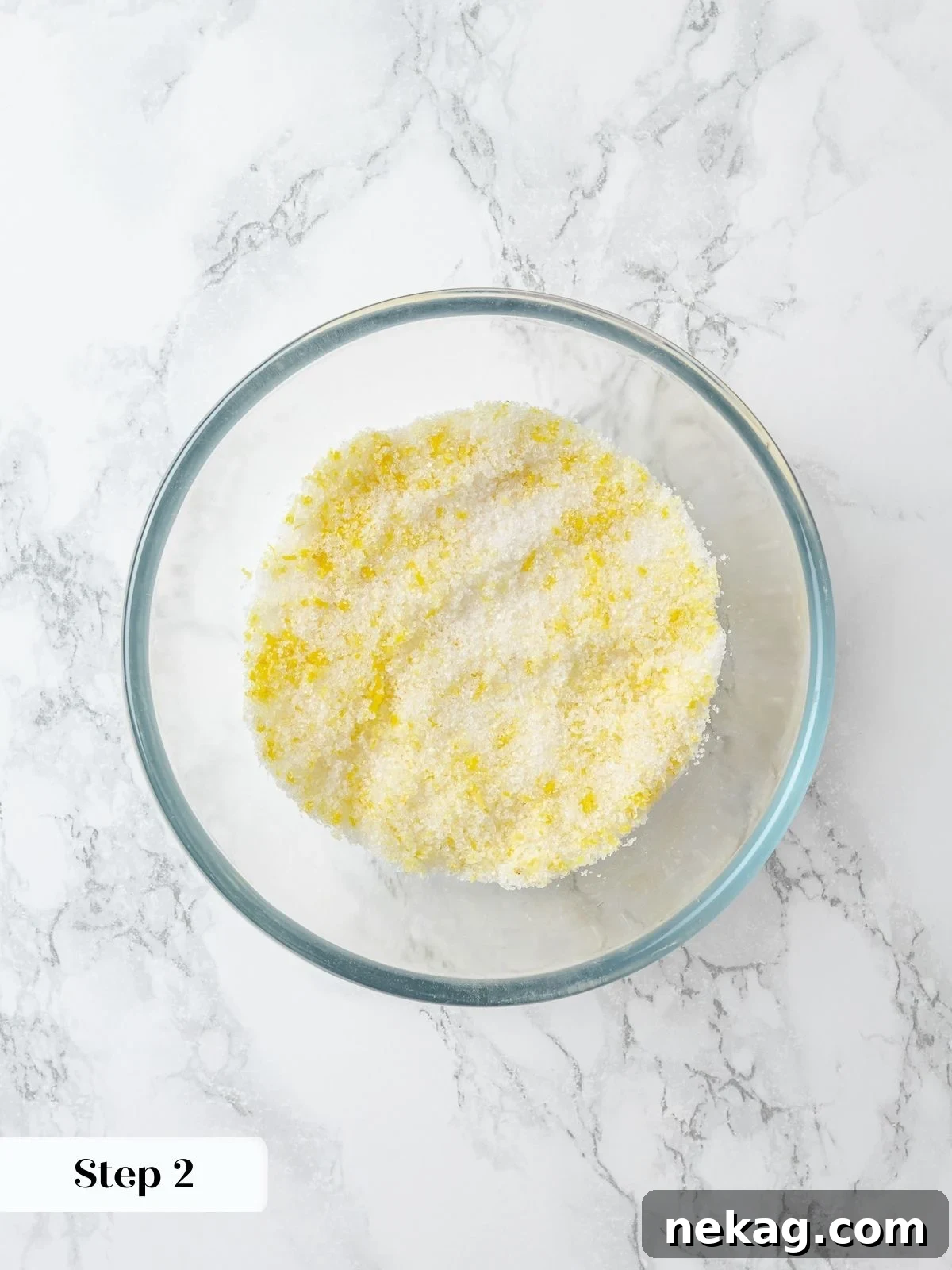
Step 2: Infuse the Sugar with Lemon Zest for Max Flavor. In a small, clean bowl, combine the granulated sugar with the finely grated lemon zest. Use your fingertips to thoroughly massage the zest into the sugar. This vital step helps to release the potent aromatic oils from the lemon zest, deeply infusing the sugar and making it wonderfully fragrant and slightly damp to the touch (photo 1). This ensures a consistent lemon flavor throughout the cake.
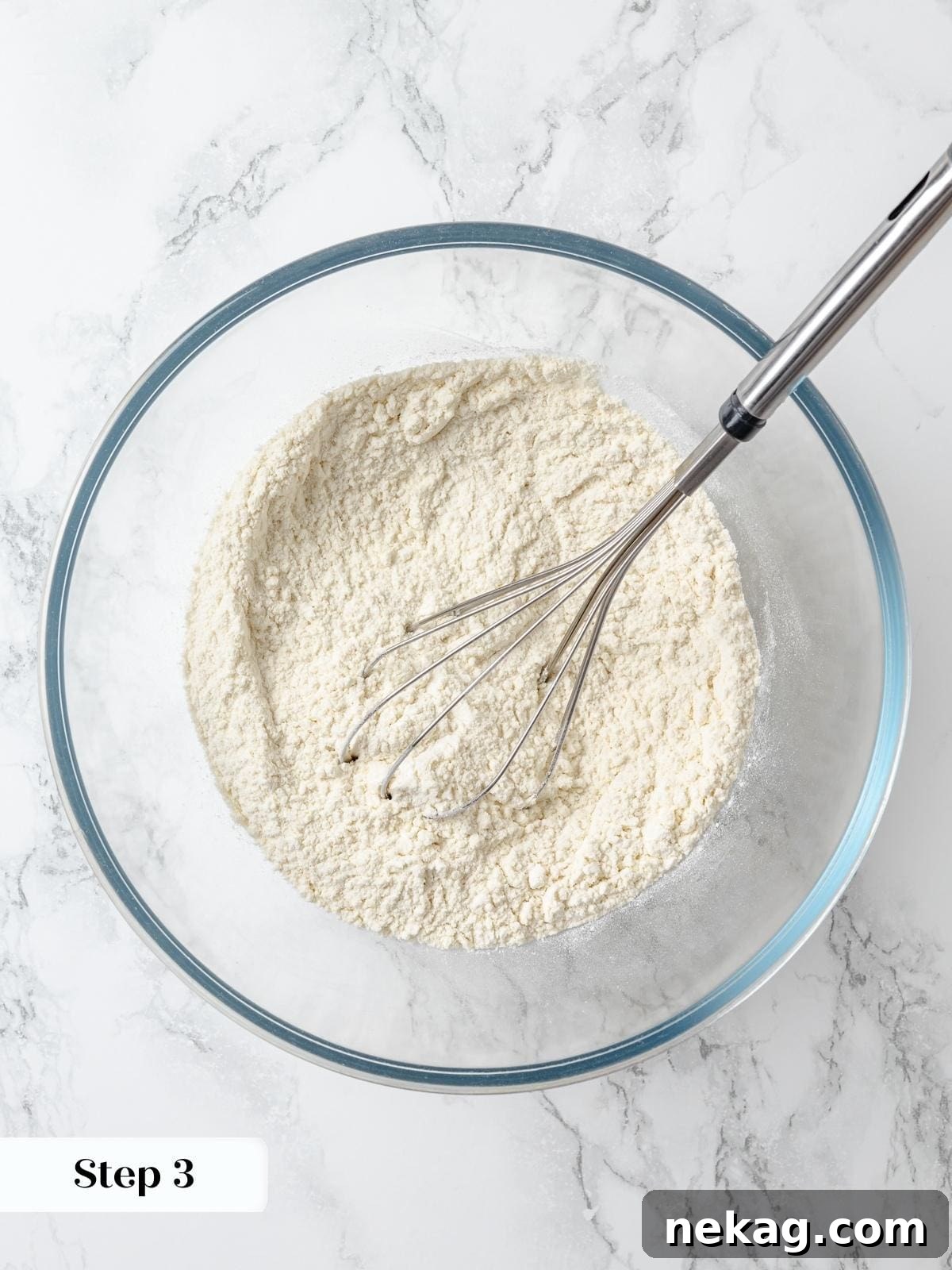
Step 3: Combine the Dry Ingredients. Sift together the cake flour, kosher salt, and baking powder. You can sift them onto a large piece of parchment paper or directly into a spacious bowl. Sifting ensures all leavening agents are evenly distributed and eliminates any lumps, leading to a smoother batter and consistent rise. Set this mixture aside as you prepare the wet components (photo 2).
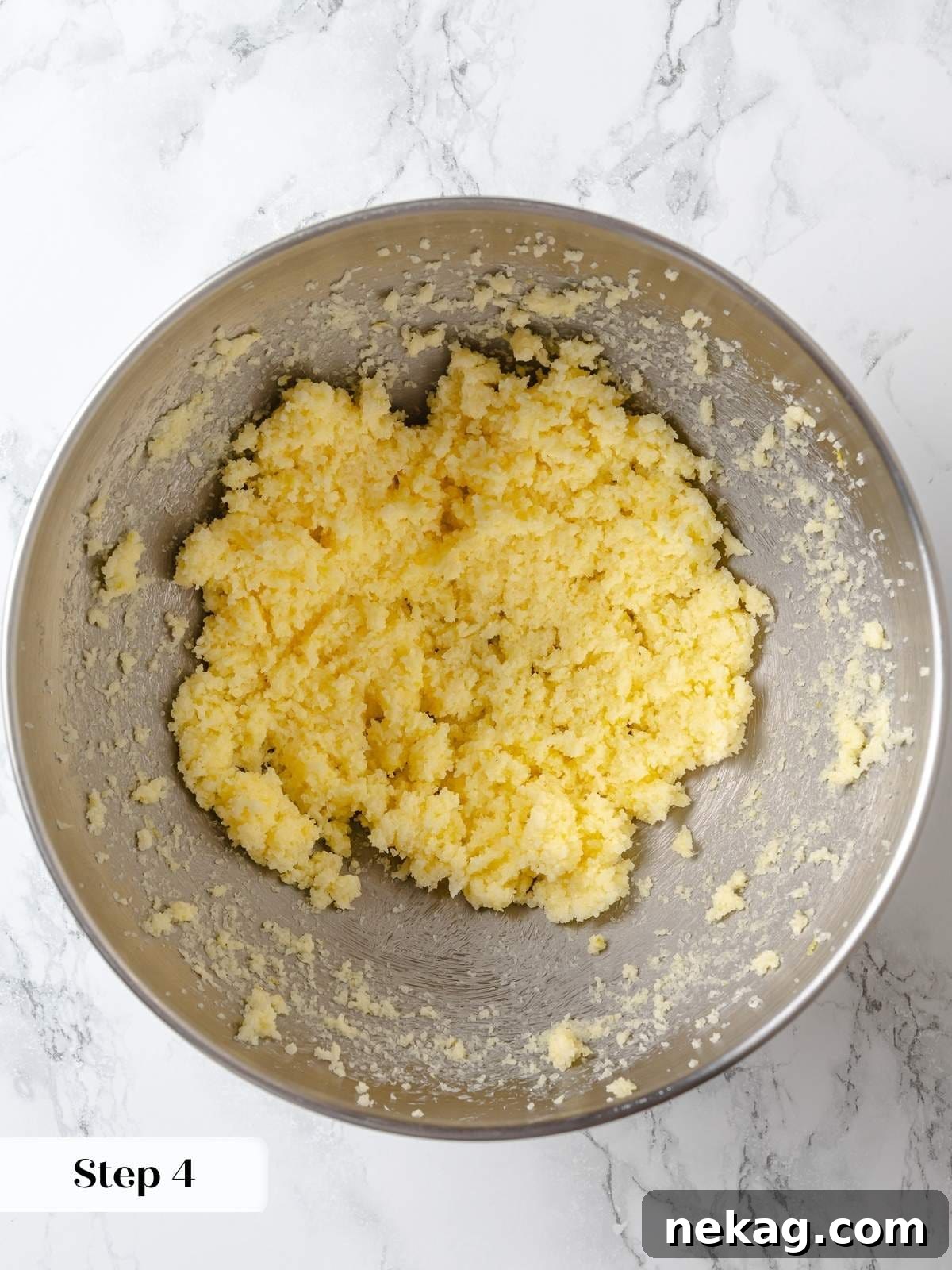
Step 4: Cream the Butter and Lemon-Infused Sugar. In the bowl of your stand mixer, fitted with the paddle attachment, combine the room-temperature unsalted butter with the lemon-infused sugar. Cream these ingredients together on medium-low speed for a full 3–4 minutes. The mixture should become noticeably lighter in color and fluffy, and the sugar granules should appear slightly separated rather than a thick, pasty consistency. This crucial step incorporates air, contributing to the cake’s light and tender texture (photo 3).
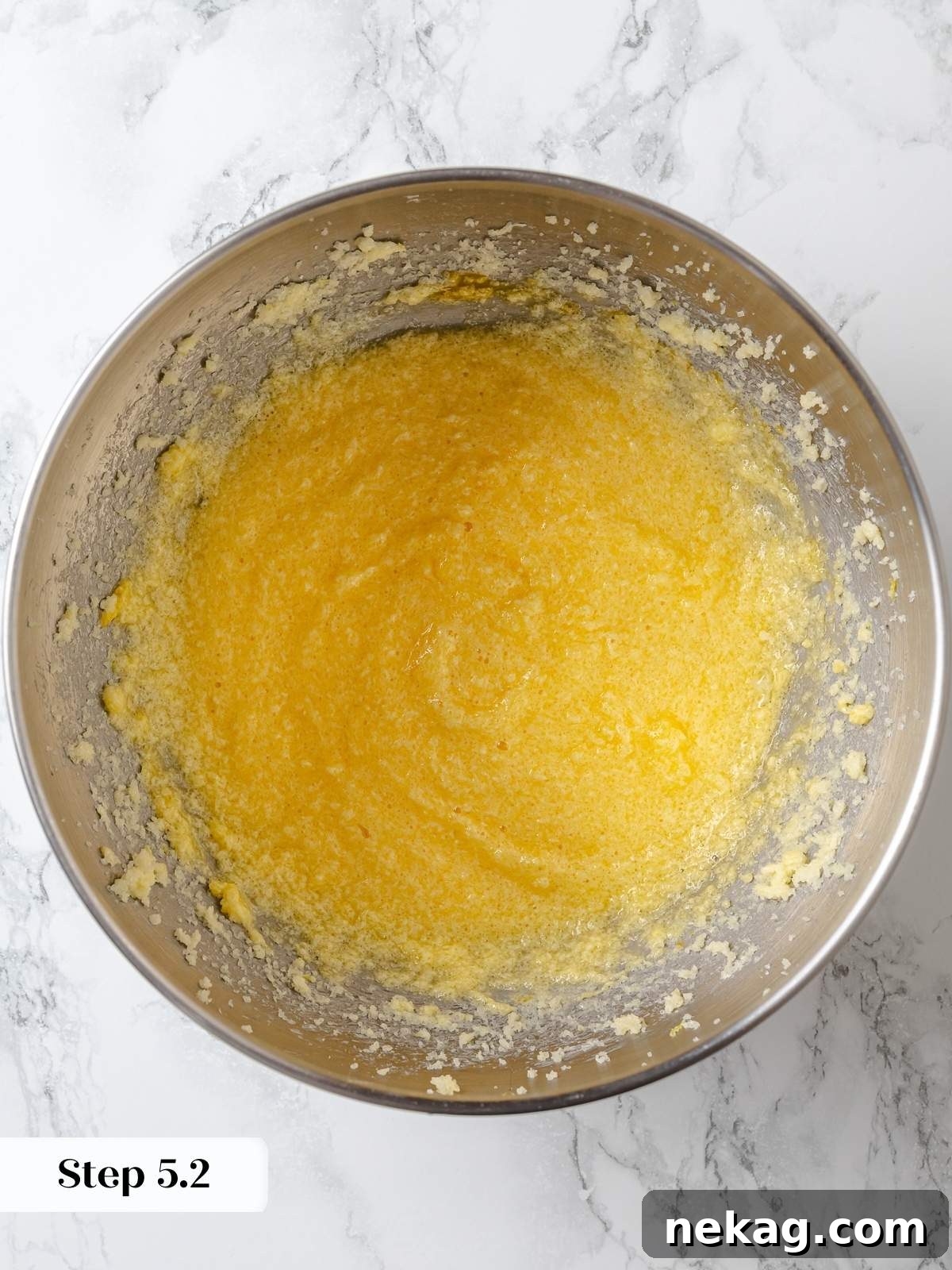
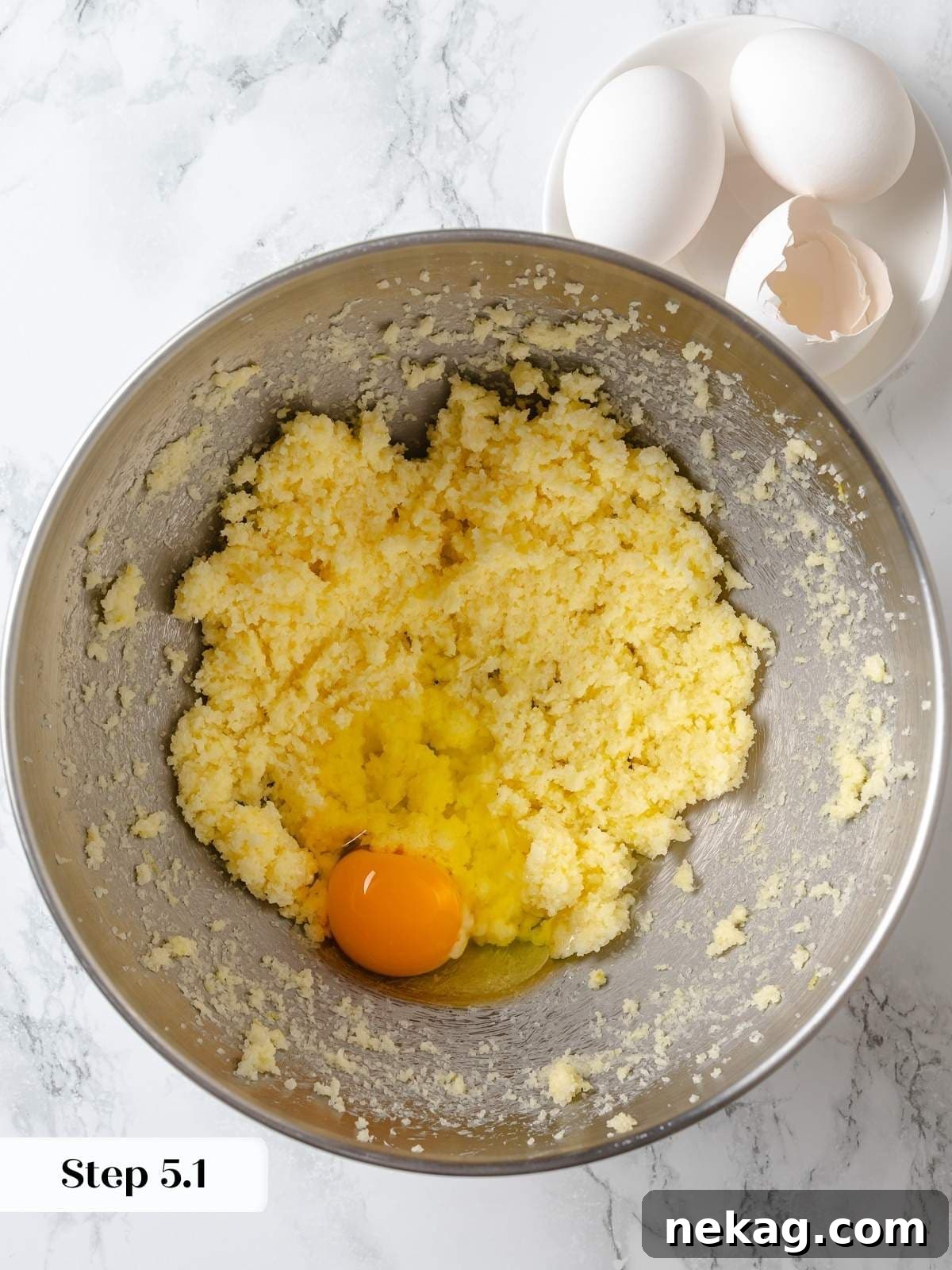
Step 5: Gradually Add the Eggs for a Stable Emulsion. With the mixer still running on medium speed, add the large eggs one at a time. Ensure each egg is fully incorporated into the butter mixture before adding the next (photos 4 & 5). This gradual addition ensures a stable emulsion, preventing the batter from curdling and creating a smooth, cohesive mixture.
Remember to scrape down the sides and bottom of the bowl thoroughly after every second egg. Butter and sugar have a tendency to hide at the bottom, and proper scraping ensures an evenly mixed batter.
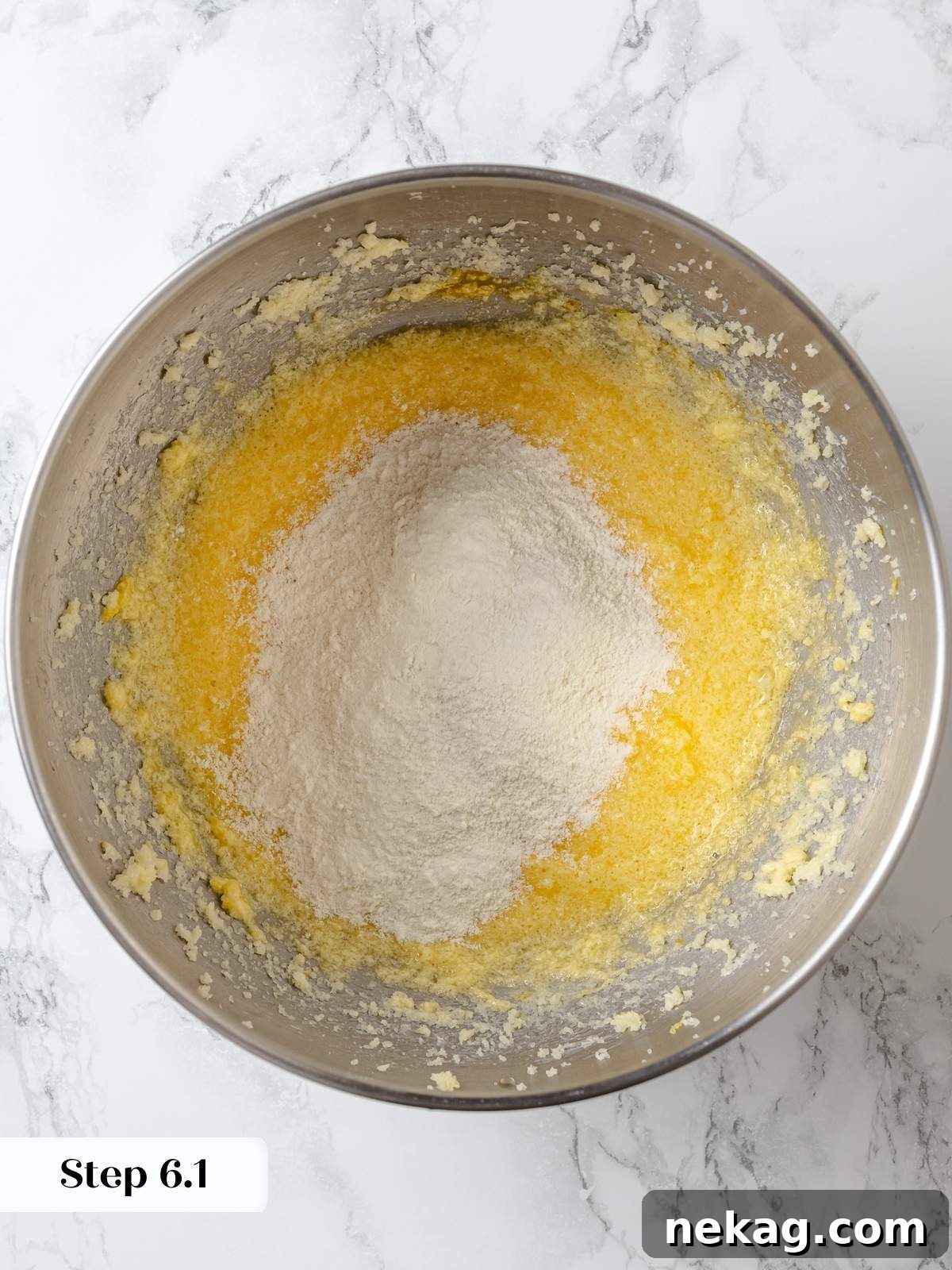
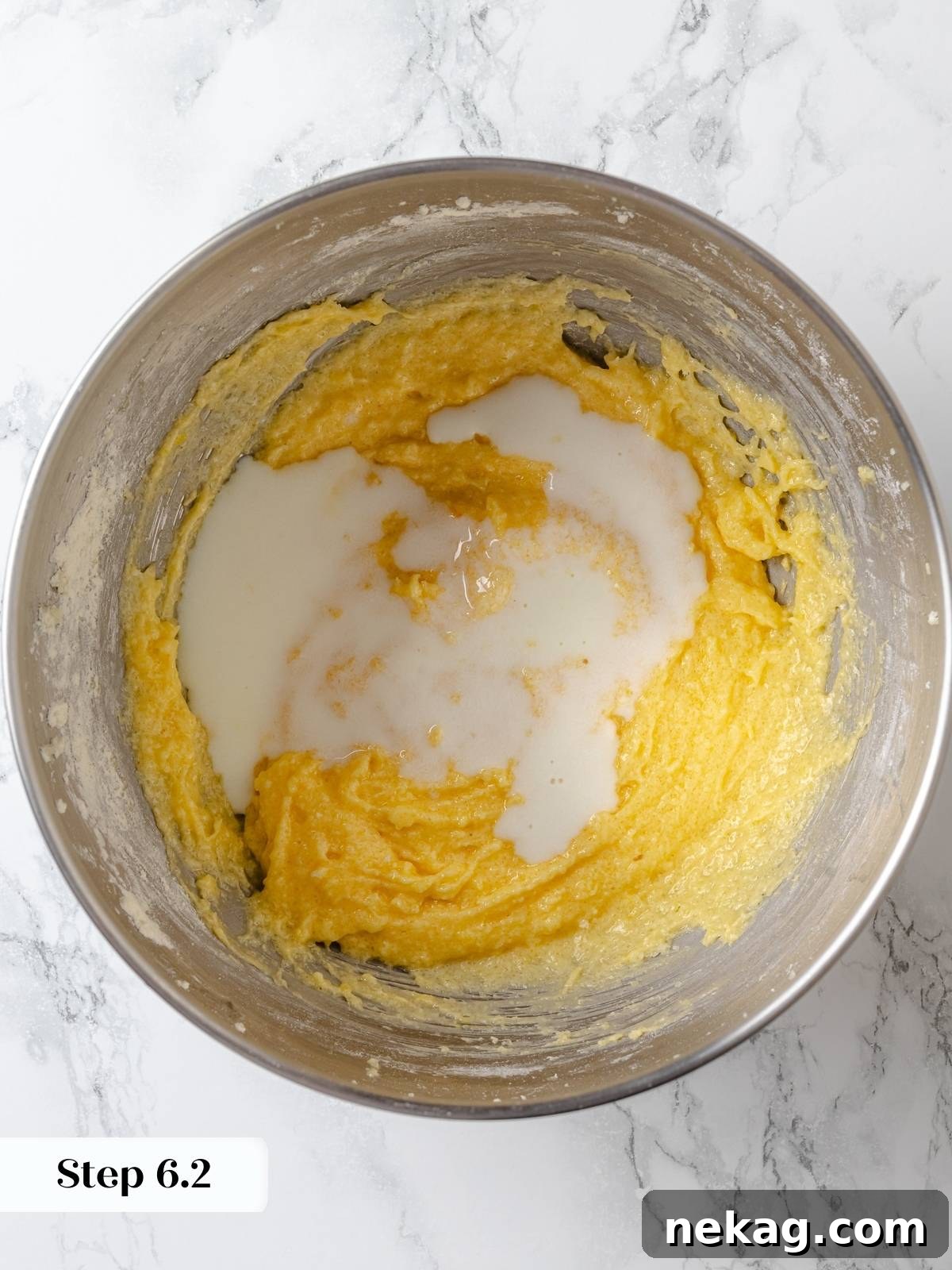
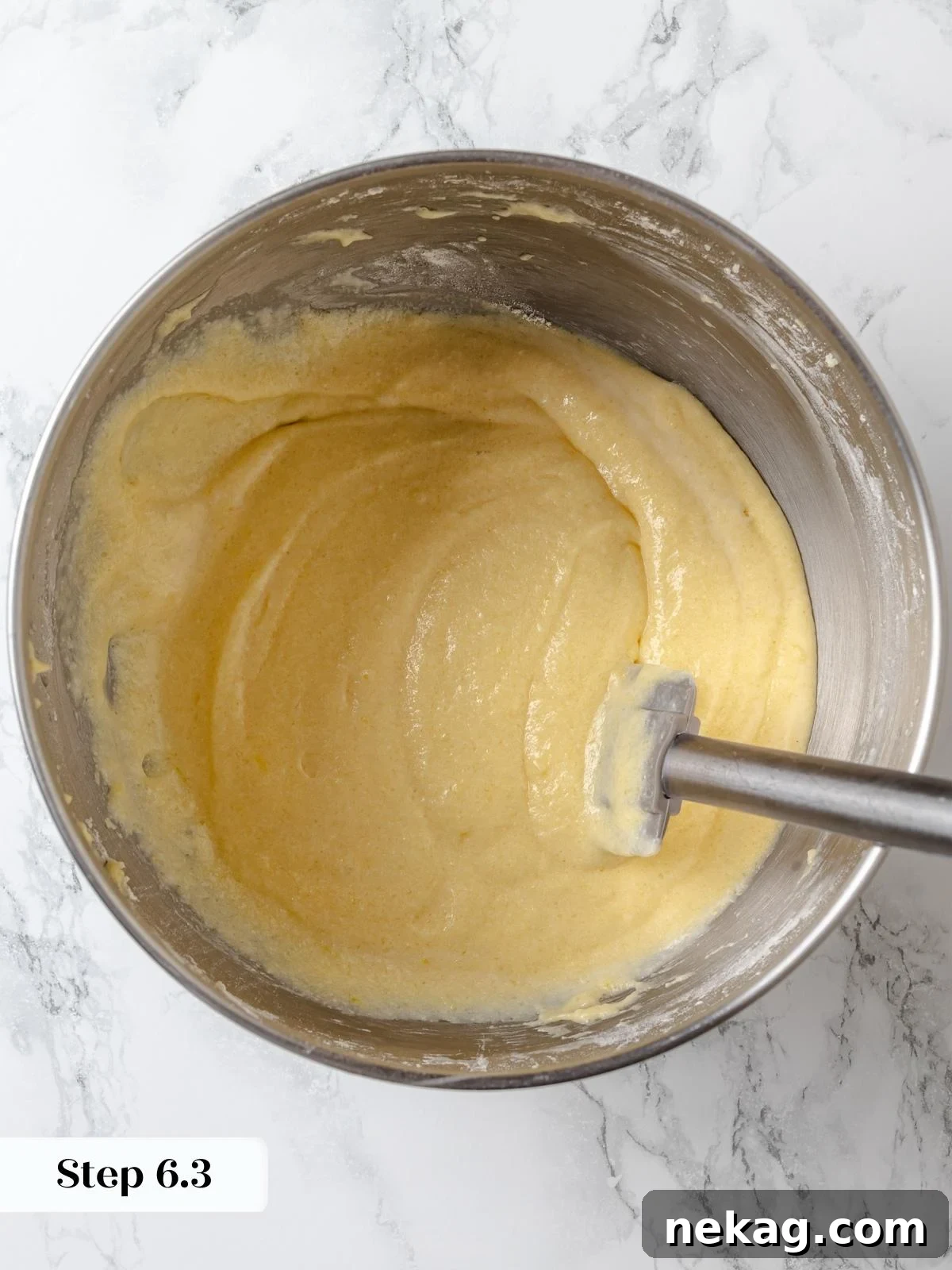
Step 6: Alternate Wet and Dry Ingredients with Care. Reduce the mixer speed to low. Begin by adding approximately one-third of the sifted flour mixture to the butter-egg mixture, mixing just until barely combined. Then, add half of the buttermilk mixed with fresh lemon juice. Continue to alternate, adding the dry ingredients in three additions and the wet ingredients in two additions, always starting and ending with the dry ingredients (photos 6-8).
It’s crucial to stop the mixer just before the last streaks of flour completely disappear. Finish the mixing gently by hand with a rubber spatula. This prevents overmixing, which can develop too much gluten and result in a tough, chewy cake rather than a tender one.
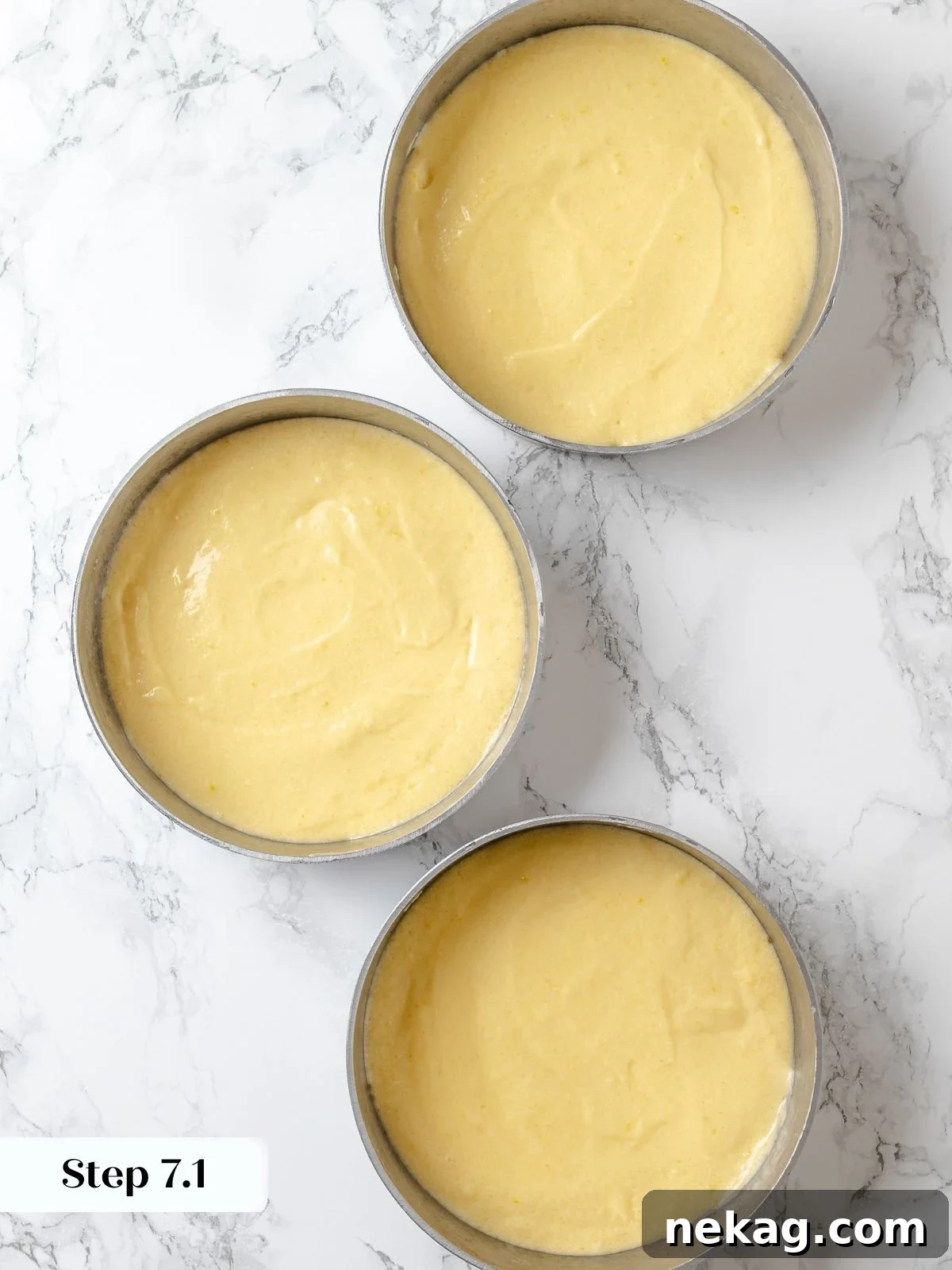
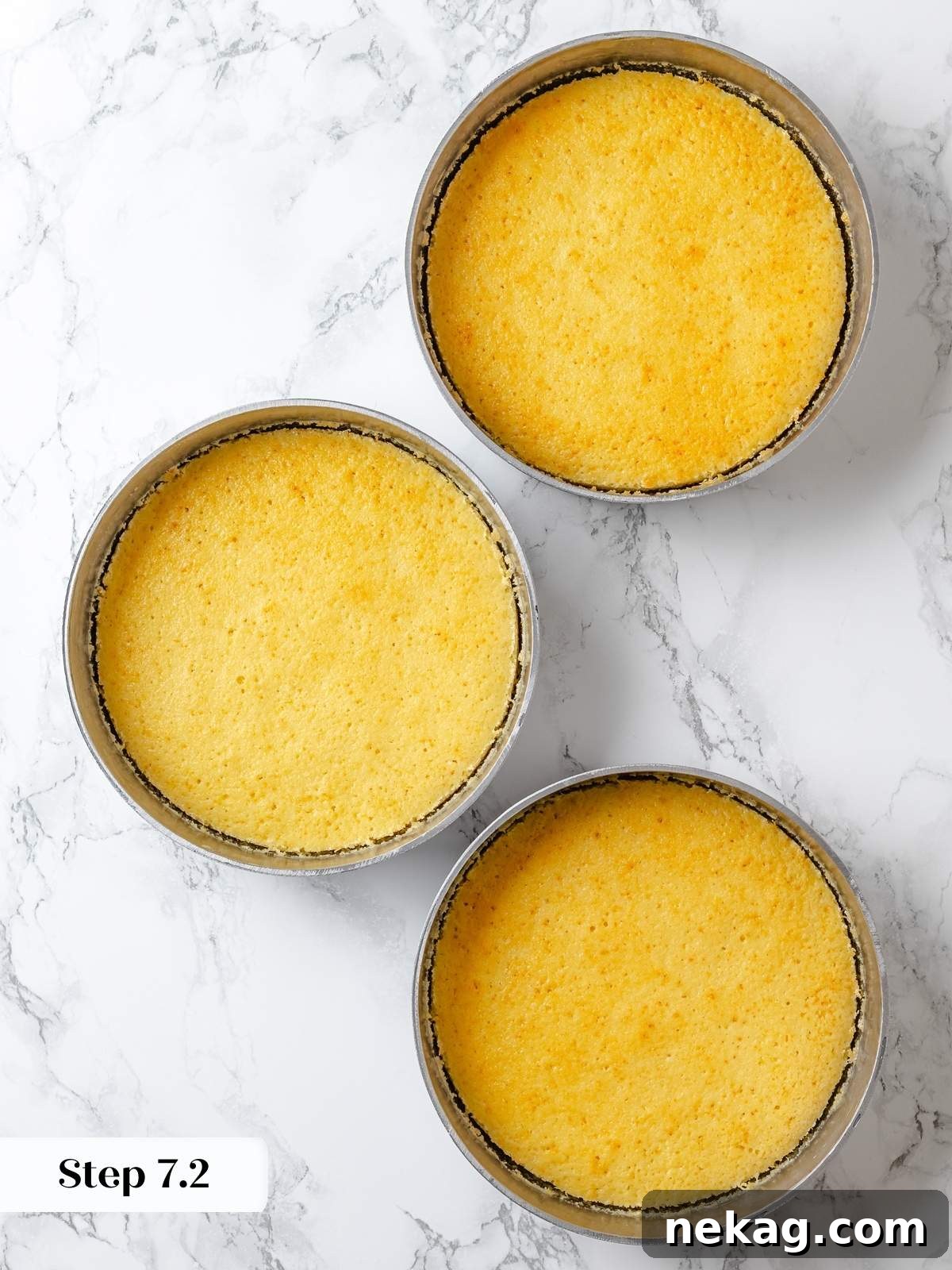
Step 7: Divide and Bake for Even Layers. Carefully divide the prepared lemon cake batter evenly among your prepared cake pans. For three 8-inch layers, this will be approximately 380 grams of batter per pan (photo 9). Gently smooth the tops with your spatula. Bake for 15–18 minutes, or until the edges are just lightly golden and the center of the cake springs back when gently pressed. Immediately transfer the hot pans to a wire rack to cool slightly for about 10-15 minutes before carefully inverting them to fully cool the cake layers (photo 10). Ensuring the layers are completely cool before frosting is essential for a stable cake.
Crafting the Silky Lemon Swiss Meringue Buttercream
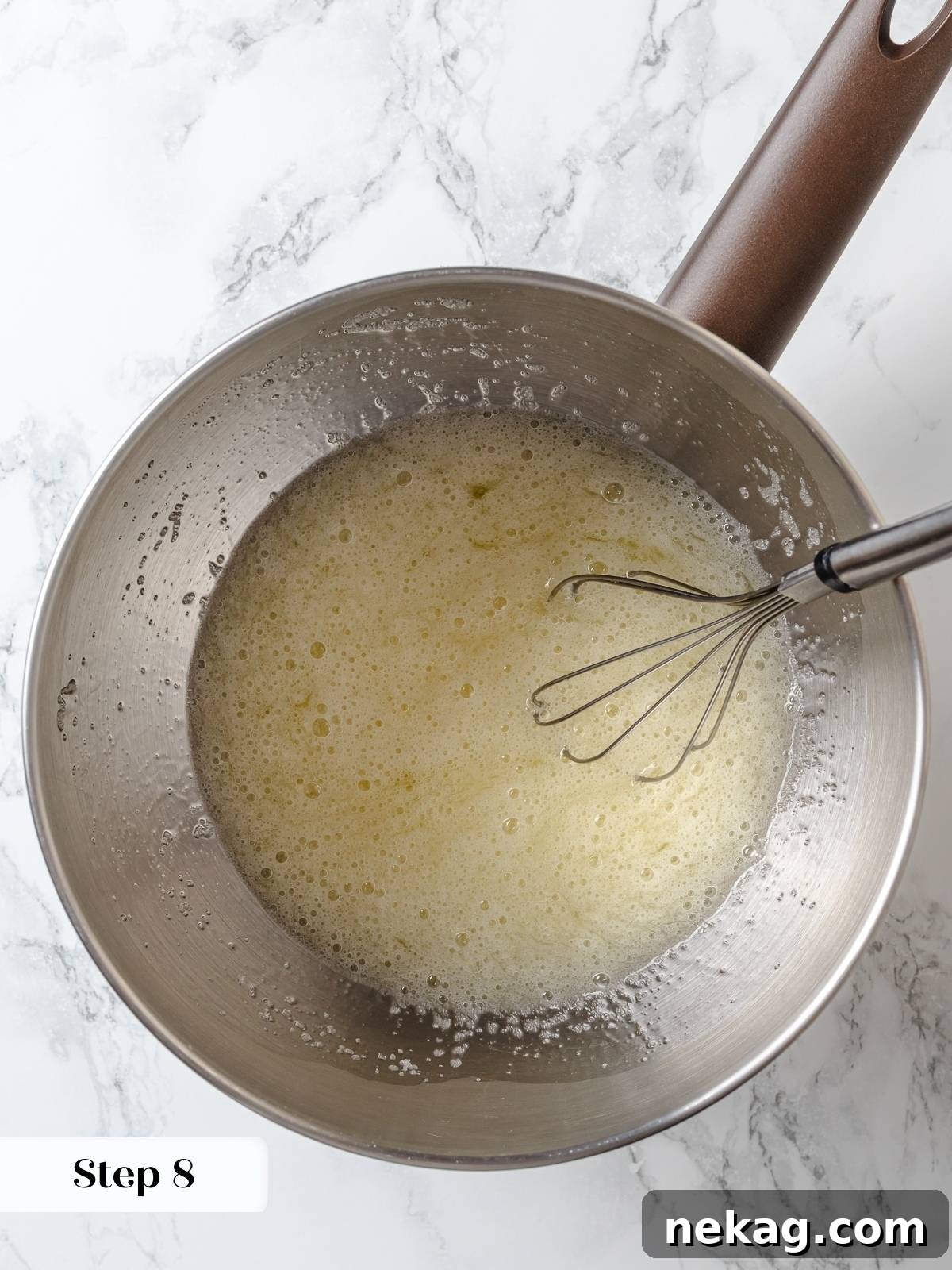
Step 8: Gently Heat Egg Whites and Sugar. In the bowl of a stand mixer, whisk together the egg whites, granulated sugar, and kosher salt. Place this bowl directly over a saucepan containing about an inch of gently simmering water, ensuring that the bottom of the mixer bowl does not touch the water itself. This creates a double boiler effect (photo 11).
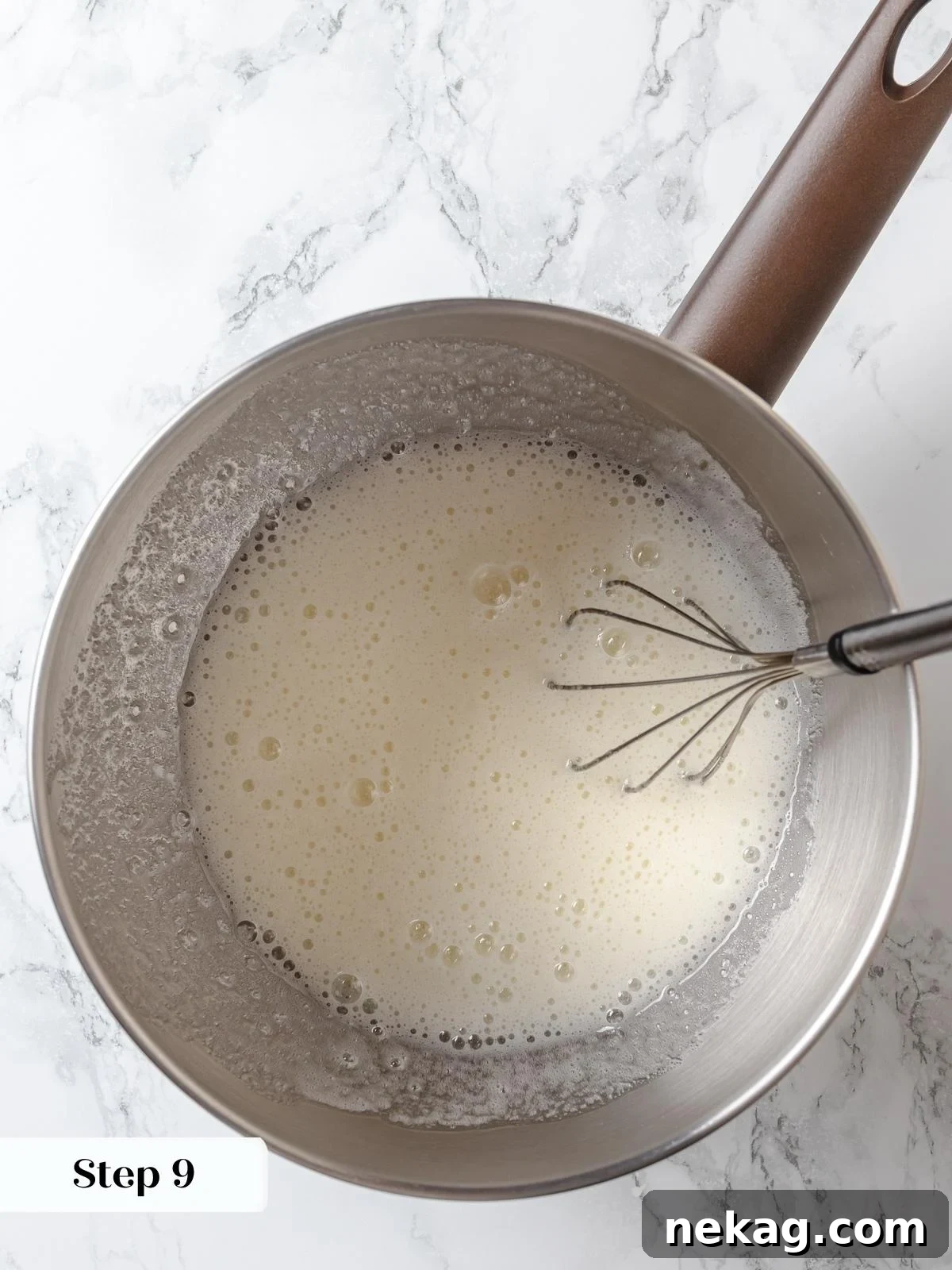
Step 9: Cook to Dissolve Sugar and Pasteurize Whites. Continue to whisk the mixture constantly over the simmering water. Heat the mixture until it reaches a temperature of 120–130°F (49–54°C). More importantly, rub a small amount between your fingers to ensure that the sugar is completely dissolved and the mixture feels smooth, without any gritty sugar crystals. At this point, the mixture should also look slightly foamy and have a lighter texture (photo 12).
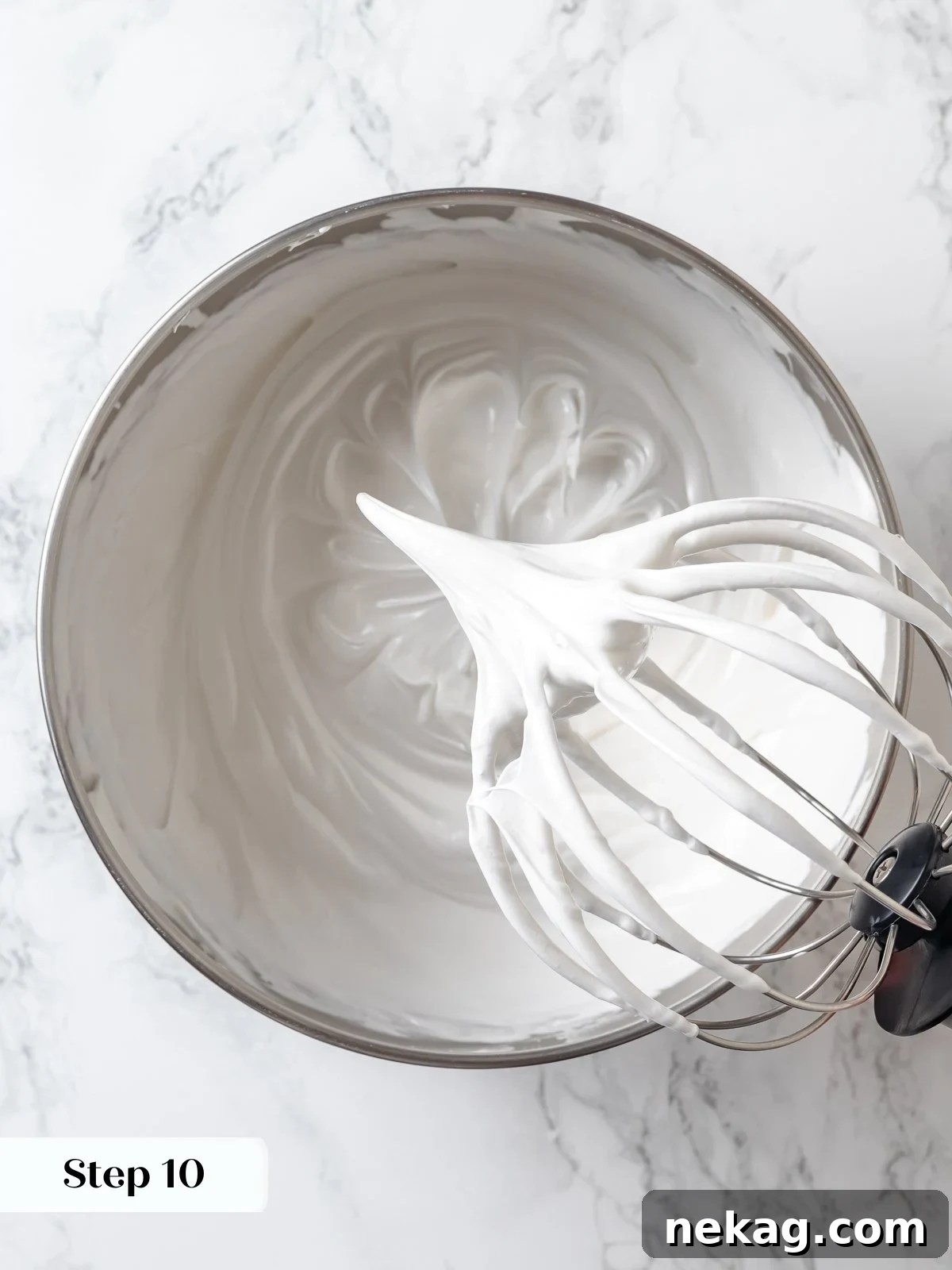
Step 10: Whip the Meringue to Stiff Peaks. Immediately remove the bowl from the heat and transfer it to your stand mixer. Fit the mixer with the whisk attachment. Beat on high speed for 5–7 minutes. Continue whipping until the meringue forms stiff, glossy peaks and the outside of the bowl feels only slightly warm to the touch, indicating it has cooled sufficiently (photo 13).
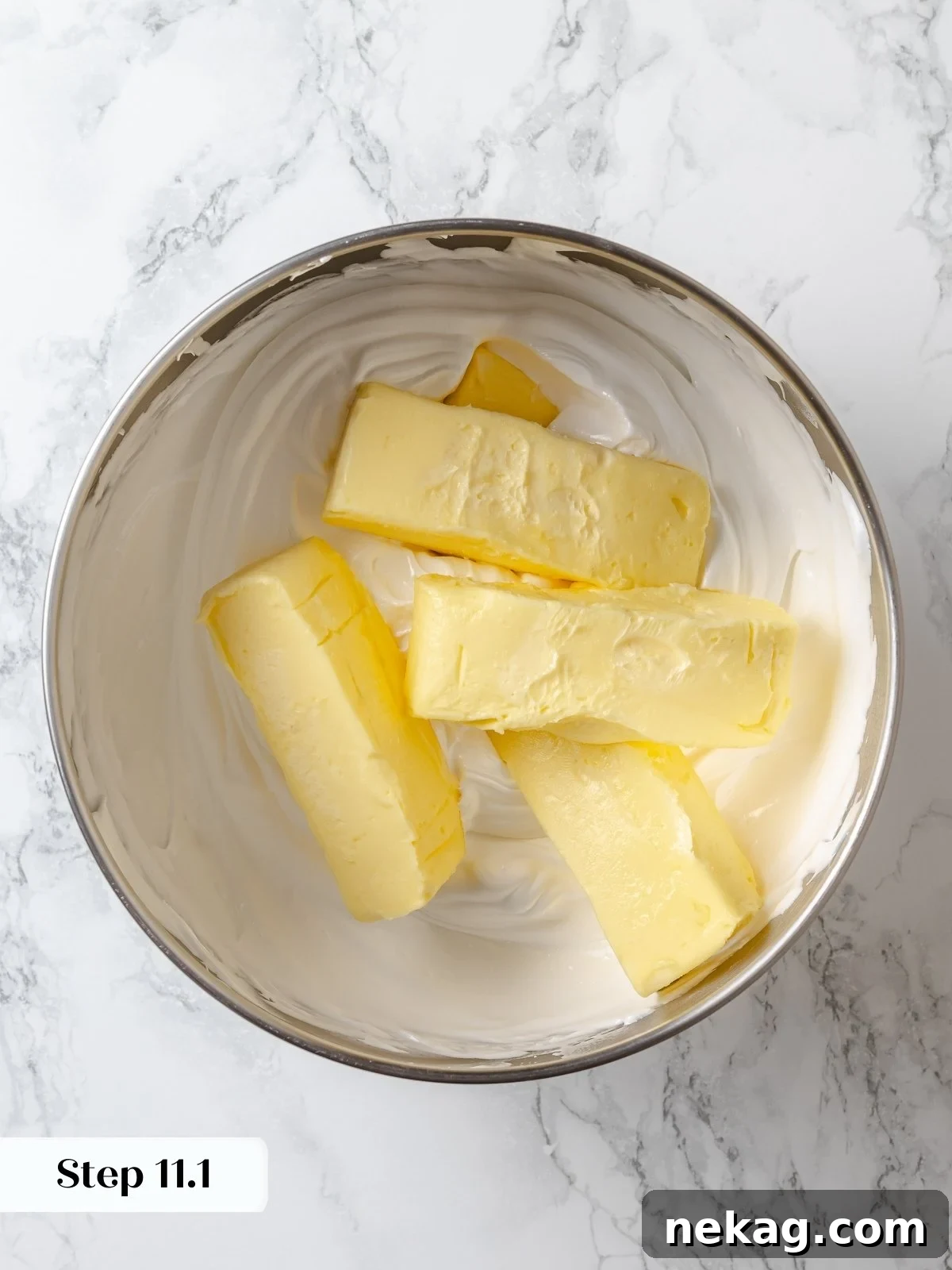
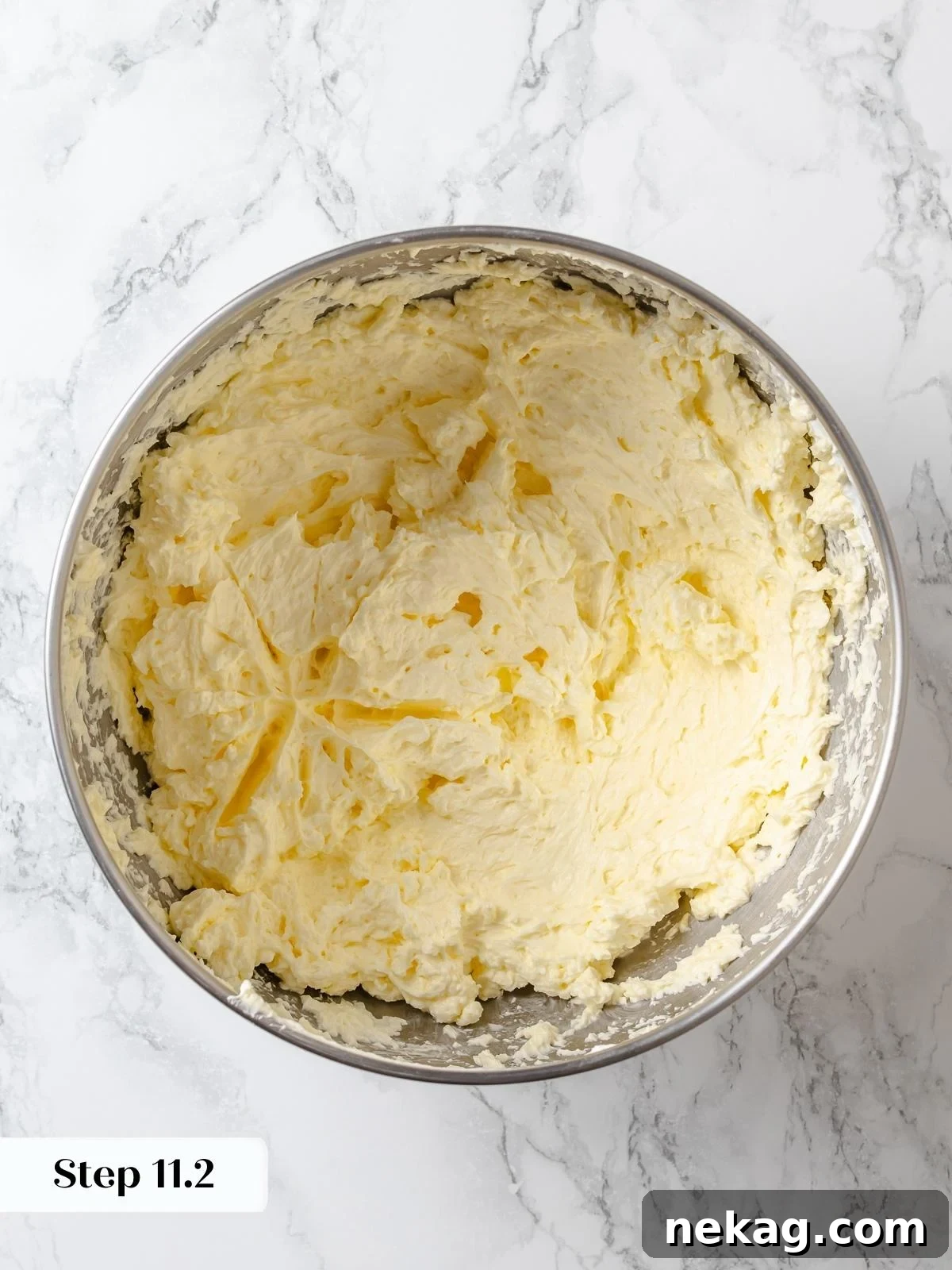
Step 11: Gradually Incorporate the Butter. Once your meringue is cooled and glossy, switch from the whisk attachment to the paddle attachment on your stand mixer. Add the unsalted butter, which should be cool but pliable, all at once. Begin beating on medium speed. This stage can be a test of patience, as the buttercream may look broken, curdled, or soupy at first (photos 14 & 15).
It’s perfectly normal for the buttercream to look separated or soupy during this phase. Do not stop! Keep mixing on medium speed; it will eventually emulsify and come together into a beautifully smooth, light, and silky consistency.
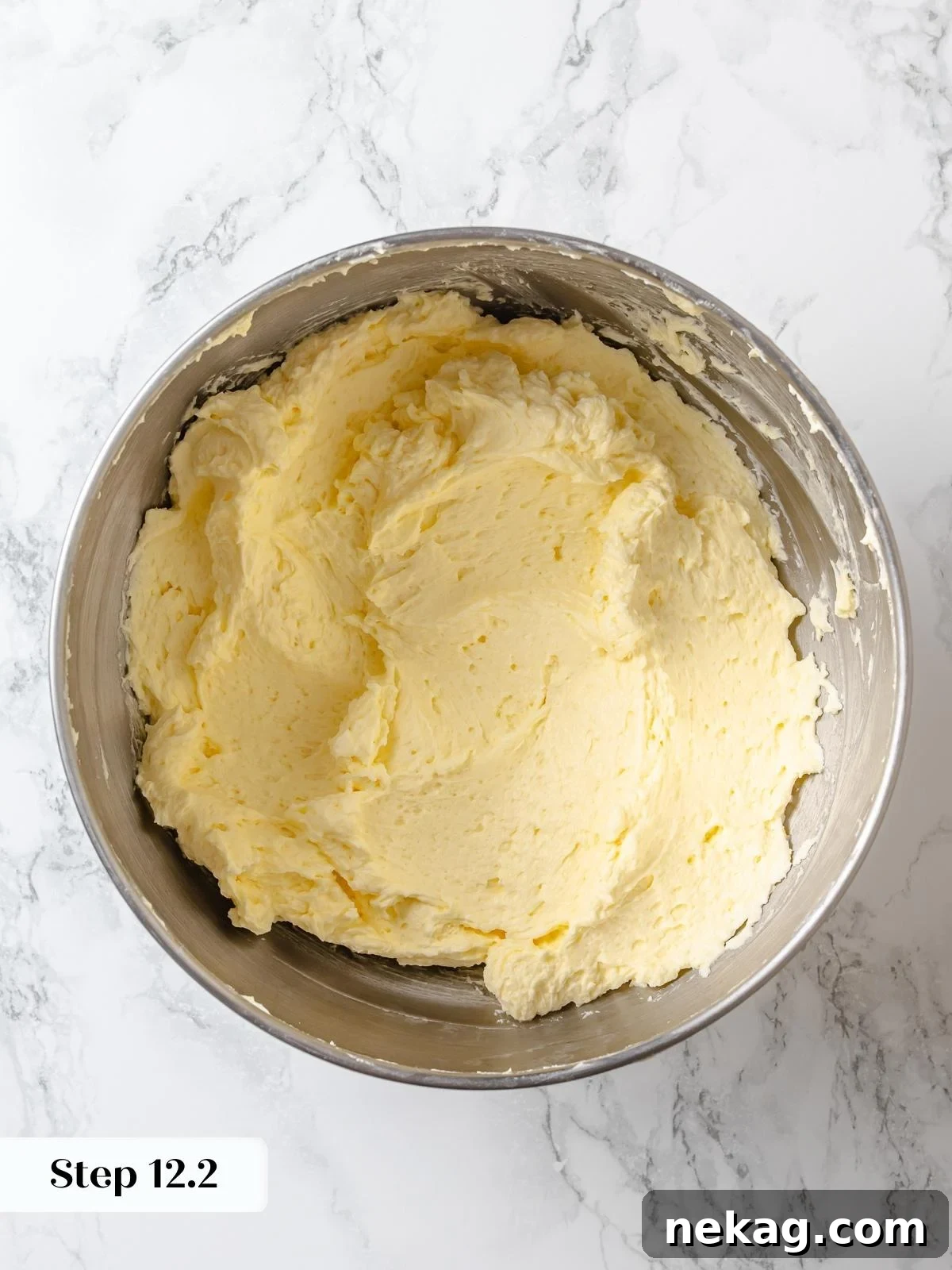
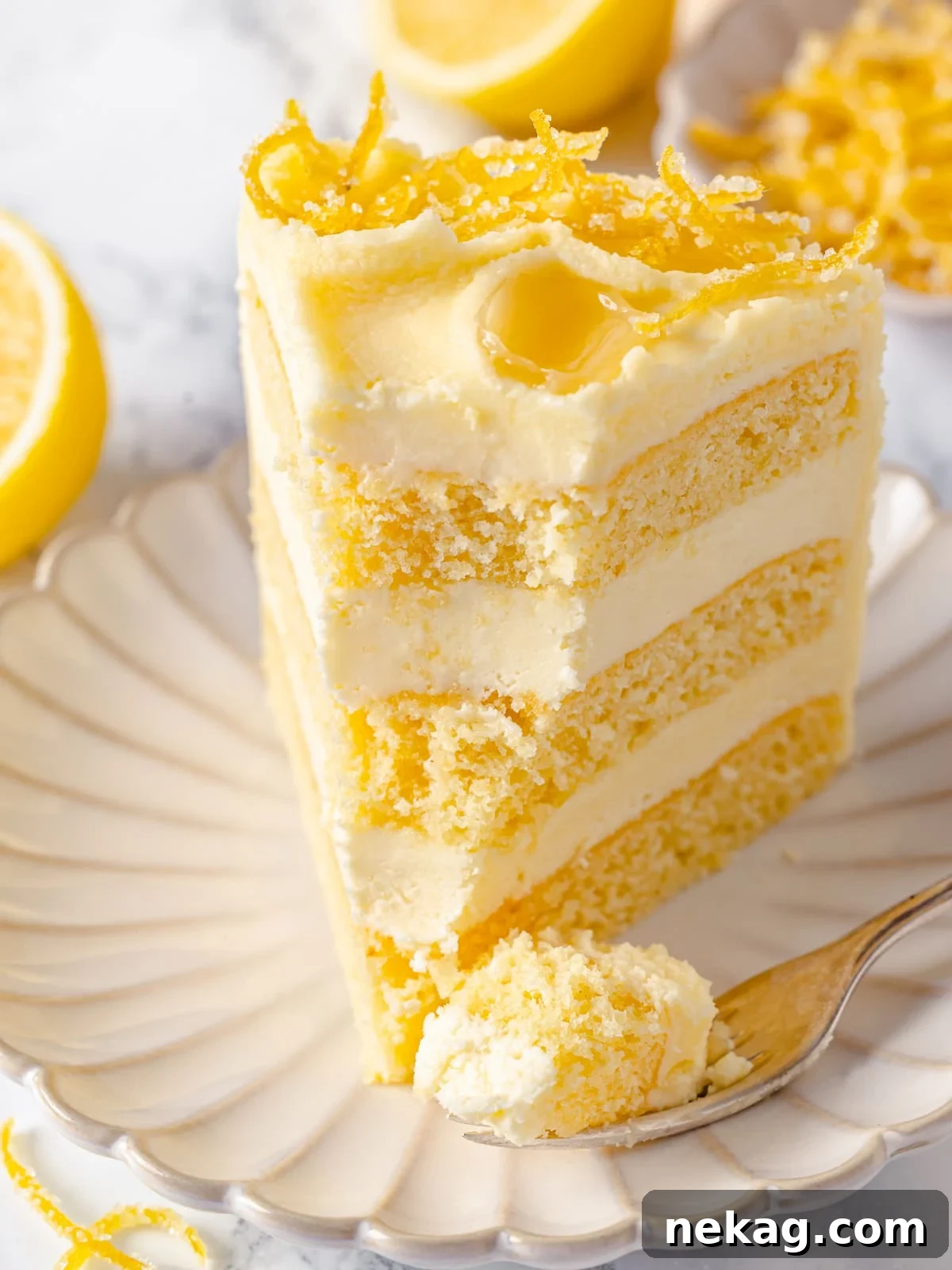
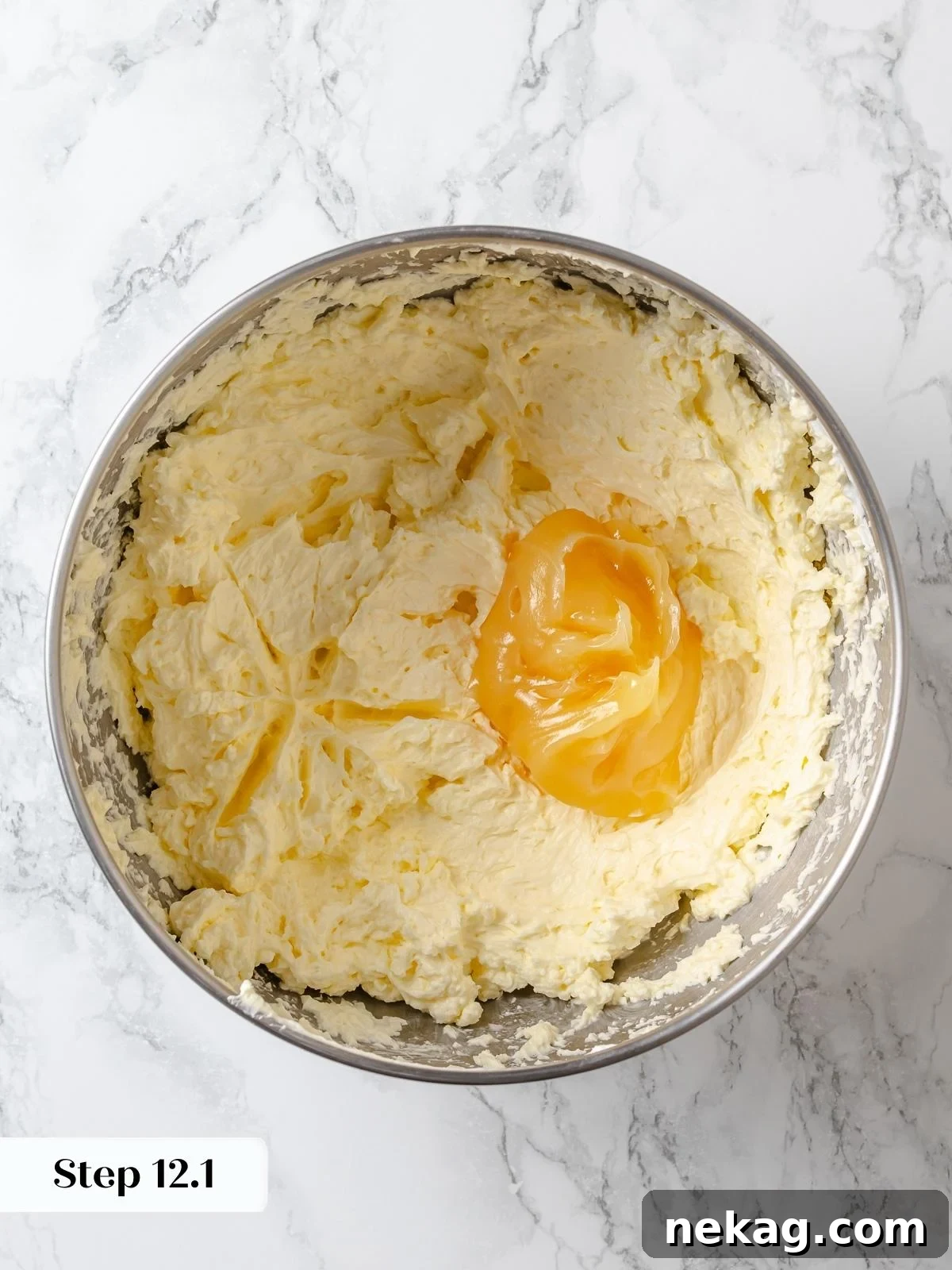
Step 12: Finish with Lemon Curd for Ultimate Flavor. Once the buttercream has become smooth and silky, add the prepared lemon curd to the bowl. Switch back to the whisk attachment and beat on medium-high speed for another 1–2 minutes. This final whip will make the buttercream wonderfully light, fluffy, and ensure the lemon curd is perfectly and evenly combined throughout, creating a luscious, intensely lemony frosting (photos 16 & 17).
Assembling Your Masterpiece Lemon Cake
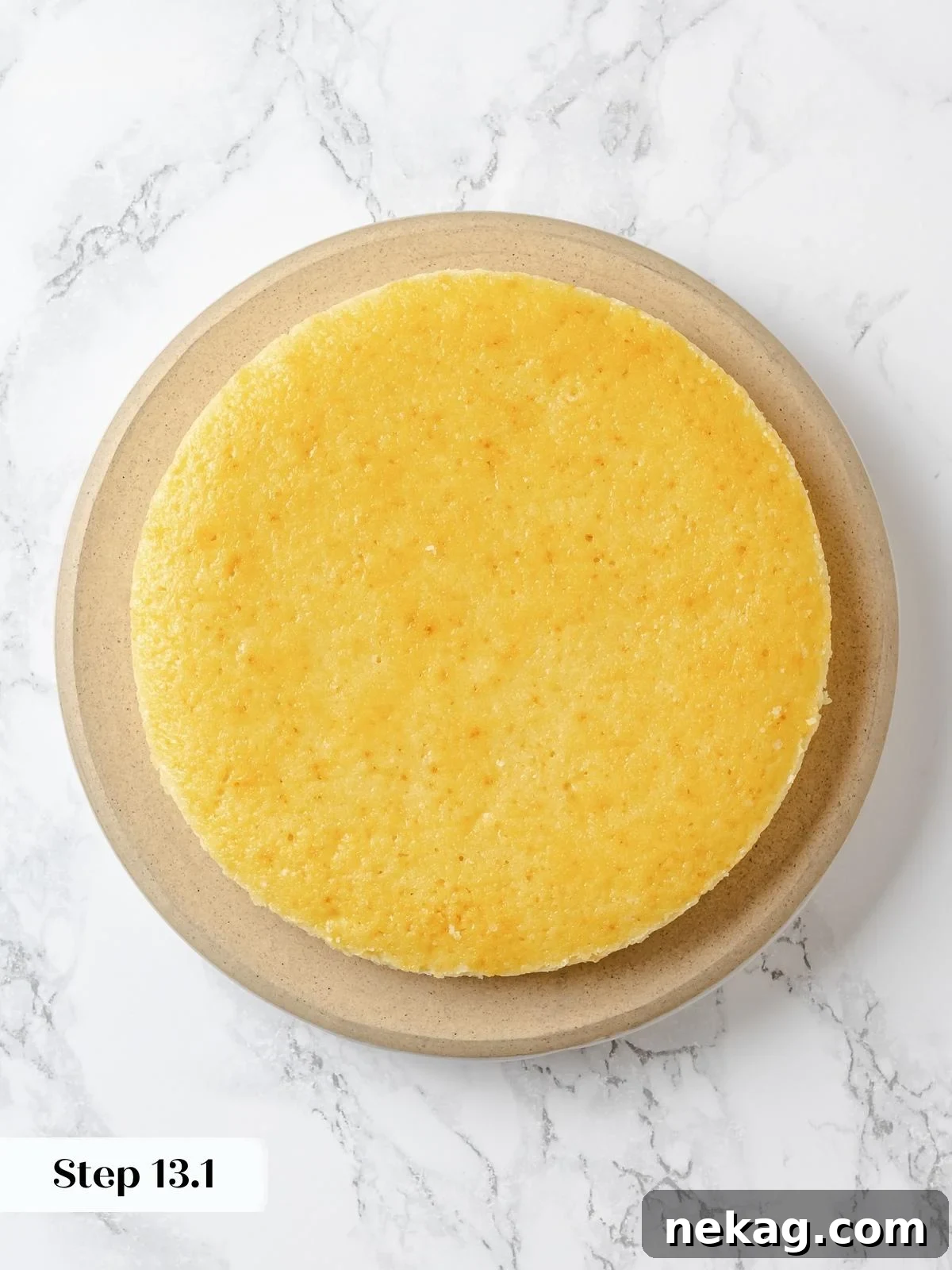
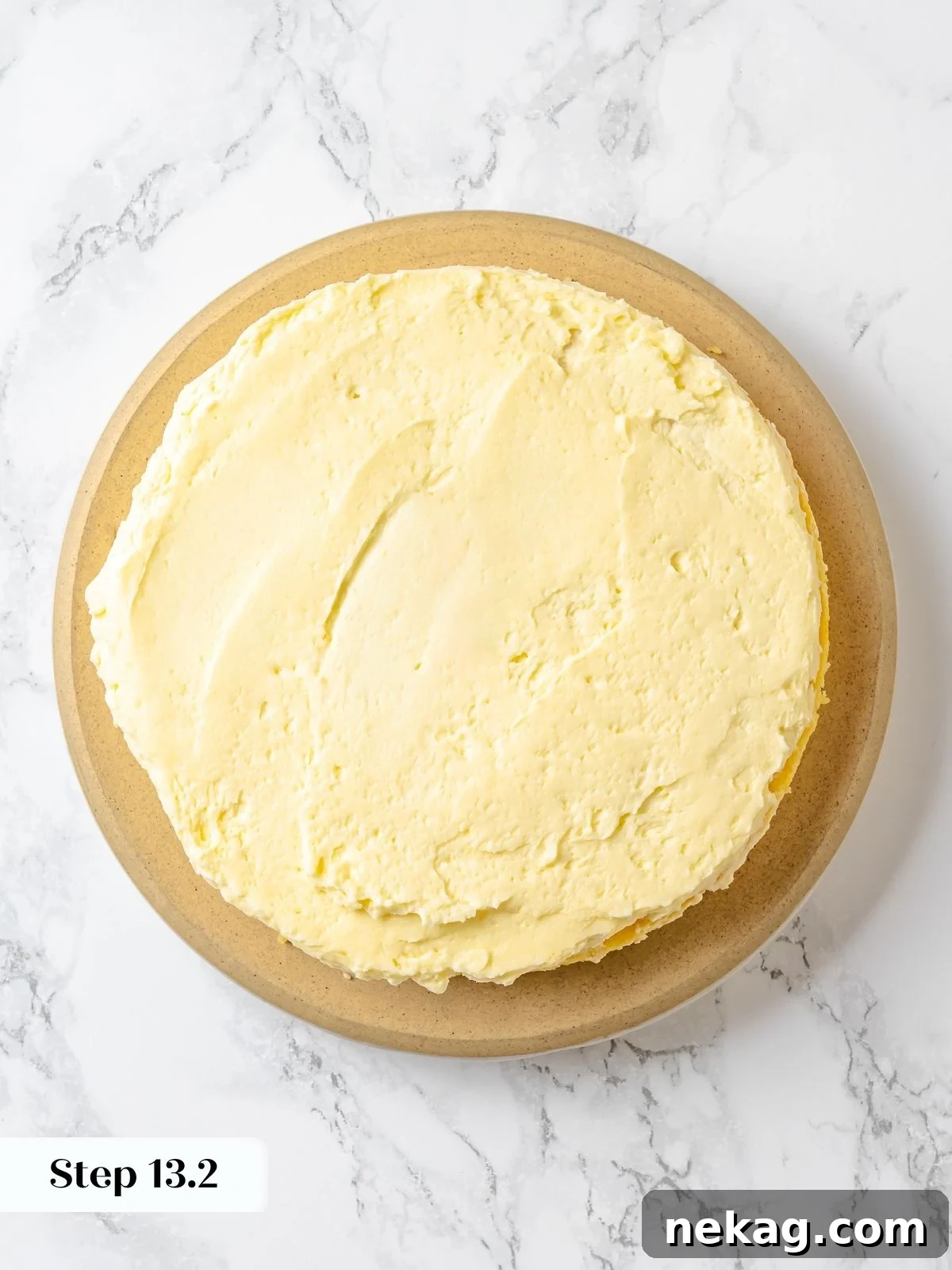
Step 13: Fill, Crumb Coat, and Finish. Place your first completely cooled cake layer onto a cake board or your chosen serving plate. Using an offset spatula, spread approximately 1 cup of the silky lemon buttercream evenly over the top surface (photos 18 & 19). Ensure an even layer for a beautiful finished cake.
For an extra boost of moisture and an intense citrus punch, you can lightly brush your cooled cake layers with a simple lemon syrup (equal parts lemon juice and sugar, briefly heated until sugar dissolves) before frosting. This step is optional but highly recommended!
Step 14: Repeat and Crumb Coat for Perfection. Place the next cake layer on top and repeat the frosting process. For the final layer, place it upside down. This provides a perfectly flat and smooth top surface, making the final frosting much easier. Apply a very thin, even layer of buttercream all over the cake – this is your “crumb coat.” Its purpose is to trap any loose crumbs. Chill the cake in the refrigerator for at least 30 minutes to allow the crumb coat to firm up. This crucial step creates a stable foundation for your final, flawless frosting layer.
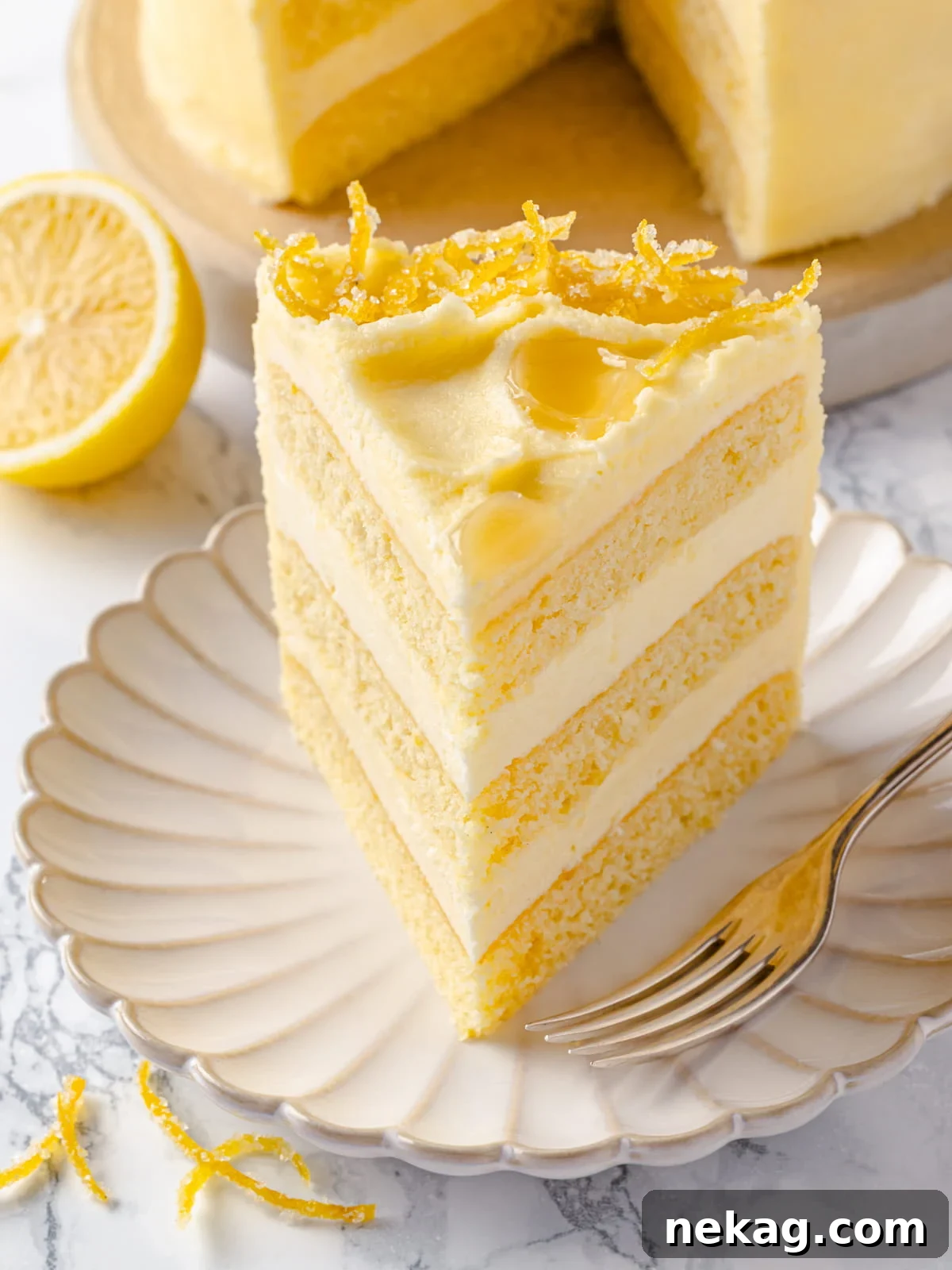
Step 15: Final Frosting and Serve. Once the crumb coat is firm, apply the remaining lemon buttercream in a generous, smooth, and even final coat around the entire cake. Decorate as desired with extra lemon zest, candied lemon slices, or simple swirls. Allow the cake to come to room temperature for about 15-20 minutes before serving. This allows the buttercream to soften slightly, ensuring the best flavor and texture experience (photo 20).
Professional Chef Tip
For an elevated plated dessert experience, consider serving a small spoonful of white chocolate mousse alongside a slice of this magnificent lemon cake. The gentle sweetness and creamy texture of the mousse provide a delightful balance to the bright, tangy citrus notes of the lemon cake, creating a harmonious and sophisticated flavor combination that will impress any guest.
Lemon Cake FAQs: Your Questions Answered
The primary secret to achieving a powerful yet balanced lemon flavor in cake lies in maximizing the use of lemon zest, rather than relying solely on excessive juice. Lemon zest contains the highly concentrated aromatic oils that are stable and flavorful even after baking. In contrast, too much lemon juice can thin the batter, disrupt the delicate balance of wet and dry ingredients, and ultimately weaken the cake’s structure, potentially leading to a dense or gummy texture. In this recipe, the zest is integrated directly into the sugar, ensuring its potent flavor permeates the entire cake, with lemon juice added judiciously for a bright, clean finish rather than for bulk flavor.
A truly moist lemon cake is the result of several key factors working in harmony: precise fat content, minimal gluten development through gentle mixing, and carefully controlled acidity. The ample use of butter provides essential richness and moisture, while buttermilk contributes both moisture and a tenderizing acidity. Using cake flour, with its lower protein content, further minimizes toughness. Crucially, overbaking is a common culprit for dry cakes; monitoring bake times carefully ensures the cake is cooked through but still retains its natural moisture. Excessive lemon juice can also interfere with the cake’s structure and lead to a drier result, highlighting the importance of recipe balance. Professional bakeries adhere to these fundamental principles – balanced formulas and accurate baking temperatures – rather than relying on any mystical “secret additives.”
For this particular lemon cake recipe, standard Eureka or Lisbon lemons are the optimal choice. These common varieties possess a higher acidity and a more assertive, classic lemon flavor compared to other types. This robust tartness is essential for ensuring the lemon taste remains bright, clear, and pronounced even after being combined with sugar, butter, and baked. Meyer lemons, while fragrant, are typically sweeter and less acidic. If used in this recipe, their delicate flavor can become muted and less impactful once baked into a cake, failing to deliver the vibrant lemon punch we aim for.
More Delightful Lemon Recipes to Try
If you’re enchanted by the bright, zesty flavors of lemon, you’ll love exploring these other chef-tested lemon-infused creations:
Date Night
Lemon Olive Oil Cake
Cake Recipes
Lemon Pound Cake
Summer Dessert Recipes
Lemon Berry Pavlova Cake
Cupcake Recipes
Lemon Cupcakes
If you tried this recipe and loved it, please leave a 🌟 star rating and let me know how it goes in the comments below. I love hearing from you; your comments make my day!
Lemon Cake
Chef Lindsey
35 mins
15 mins
50 mins
16 servings
Comment
Print Recipe
Ingredients (US Customary)
For the Lemon Cake
- 2 ⅓ cups cake flour
- 1 teaspoon kosher salt
- 2 ½ teaspoons baking powder
- ¾ cup unsalted butter, room temperature
- 1 ⅓ cups granulated sugar
- 2 lemons, zested and juiced
- 3 large eggs
- ¾ cup low-fat buttermilk
For the Lemon Swiss Meringue Buttercream
- 5 egg whites
- 1 ¼ cups granulated sugar
- ¼ teaspoon kosher salt
- 2 cups unsalted butter, cool but pliable
- 1 cup lemon curd, prepared or store-bought
Instructions
Make the Lemon Cake
- Preheat the oven to 325°F convection or 350°F conventional. Spray cake pans with nonstick spray and line bottoms with parchment.
- In a small bowl, rub the lemon zest into the granulated sugar until fragrant and slightly damp.
- Sift together cake flour, kosher salt, and baking powder; set aside.
- In a stand mixer fitted with the paddle attachment, cream the butter and lemon sugar on medium-low speed for about 3–4 minutes, until lightened and the sugar granules look slightly separated.
- Add eggs one at a time, mixing on medium speed after each addition until fully incorporated. Scrape the bowl well after every other egg.
- Reduce mixer speed to low. Add the dry ingredients in three additions, alternating with the buttermilk mixed with lemon juice in two additions, beginning and ending with the dry ingredients. Mix just until combined.
- Remove the bowl from the mixer and fold once or twice with a spatula to ensure a smooth batter.
- Divide batter evenly between prepared pans (about 380g per 8-inch pan for 3 layers). Bake 15–18 minutes, until the edges are just lightly golden and the center springs back when gently pressed. Cool completely before frosting.
Make the Lemon Swiss Meringue Buttercream
- Bring about 1 inch of water to a simmer in a medium saucepan.
- Whisk egg whites, sugar, and salt together in the bowl of a stand mixer. Place the bowl over the simmering water (water should not touch the bowl) and whisk constantly until the mixture reaches 120–130°F and the sugar is fully dissolved.
- Transfer the bowl to the stand mixer fitted with the whisk attachment. Beat on high speed for 5–7 minutes, until stiff peaks form and the bowl is just slightly warm to the touch.
- Switch to the paddle attachment. Add the butter all at once and beat on medium speed until the buttercream comes together and looks smooth and silky. This can take several minutes and may look broken before it emulsifies.
- Add the lemon curd and switch back to the whisk attachment. Beat on medium-high speed for 1–2 minutes until light, fluffy, and evenly combined.
Assemble the Cake
- Place one cooled cake layer on a cake board or serving plate.
- Spread about 1 cup of buttercream evenly over the top.
- Repeat with remaining layers, placing the final layer upside down for a flat top.
- Apply a thin crumb coat over the cake and refrigerate for at least 30 minutes.
- Frost with remaining buttercream and finish as desired. Serve at room temperature.
Notes
- Yield: One 8–9 inch layer cake; ~1 ½ quarts buttercream.
- Flavor Tip: Add more zest for extra lemon intensity, rubbing it into the sugar as instructed.
- Storage: Frosted cake keeps well for 3 days refrigerated. Unfrosted cake layers can be wrapped tightly and frozen for up to 1 month. Thaw at room temperature before frosting.
Nutrition
Calories: 543kcal
|
Carbohydrates: 56g
|
Protein: 5g
|
Fat: 34g
|
Saturated Fat: 21g
|
Polyunsaturated Fat: 1g
|
Monounsaturated Fat: 9g
|
Trans Fat: 1g
|
Cholesterol: 115mg
|
Sodium: 339mg
|
Potassium: 91mg
|
Fiber: 1g
|
Sugar: 42g
|
Vitamin A: 1028IU
|
Vitamin C: 7mg
|
Calcium: 71mg
|
Iron: 0.5mg
Dessert
American
543
Like this? Leave a comment below!
Before You Go: Explore More Chef-Tested Desserts
I sincerely hope you’ve enjoyed mastering this bright, exquisitely bakery-style lemon cake. It’s a recipe close to my heart, designed to bring joy and a touch of professional elegance to your kitchen. If you find yourself in the mood for more delightful, chef-tested desserts that promise fantastic results, I warmly invite you to explore the rest of my extensive collection of cake recipes. You’ll discover a world of flavors and techniques waiting to inspire your next memorable bake!