
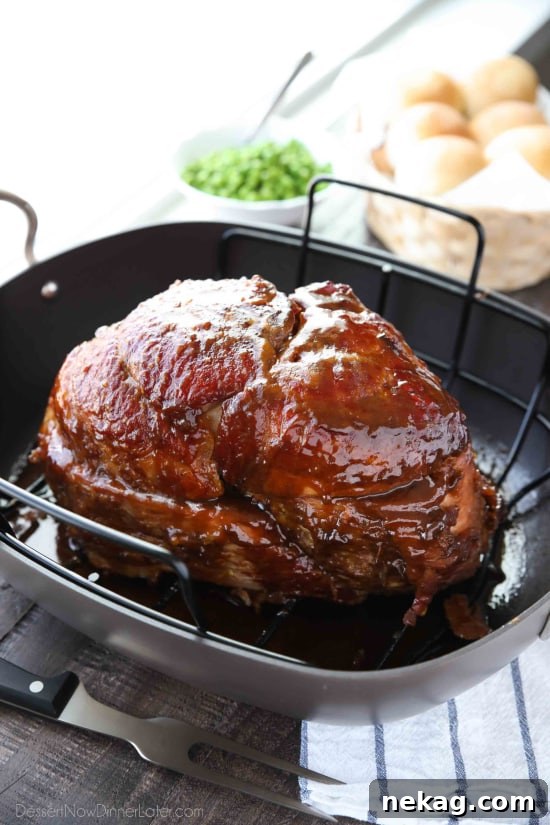
Brown Sugar Mustard Glazed Ham is incredibly simple to prepare using just a few pantry ingredients to make a thick, sticky glaze. No need to pre-cook the glaze — mix, slather, and bake. It’s an effortless holiday favorite.
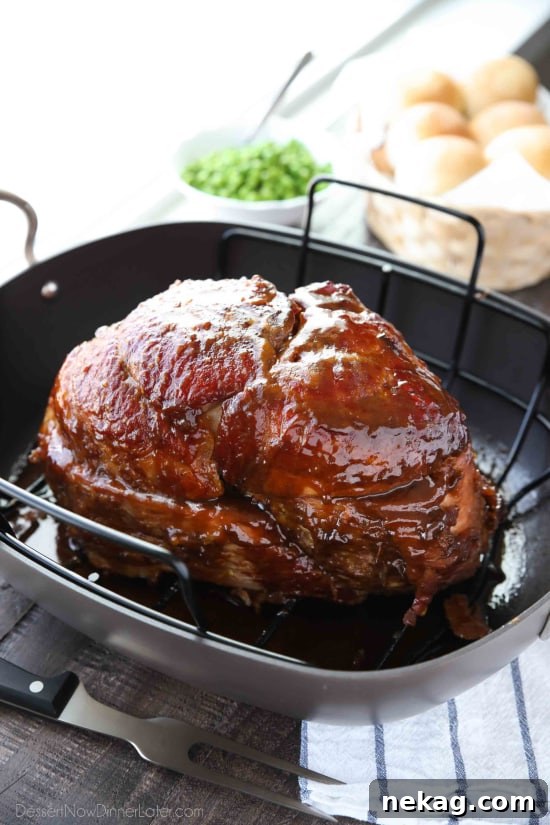
The brown sugar mustard glaze becomes almost like a gravy — thick, saucy, and full of flavor. It’s quick to make and pairs beautifully with a fully cooked ham.
I first learned this glaze from a college friend and it has become a family favorite. The kids always want seconds and leftovers reheat wonderfully in casseroles and soups.
Before we cover the glaze, a few tips on choosing the right ham will help ensure the best result.
What Kind of Ham Should I Buy?
For this recipe, choose a fully cooked, bone-in, spiral-cut ham.
Fully Cooked: Most hams sold in grocery stores are fully cooked and safe to eat cold. Confirm the label says “Fully Cooked” rather than “Cook Before Eating.”
Bone-in: Cooking with the bone generally improves flavor and helps retain moisture. Bone-in hams also have a firmer texture than many boneless hams, which can be pressed and a bit spongy.
Spiral Cut: Spiral-cut hams are pre-sliced around the bone for easy serving. They slice neatly but can dry out more quickly than an unsliced roast, so take care to keep the ham moist while reheating.
Tip: To keep the ham juicy, place it cut-side down in the pan and tent loosely with foil while baking.
How Much Ham Should I Buy?
Whole bone-in hams usually weigh 8–18 pounds. Plan for roughly 3/4 pound of bone-in ham per person to account for the bone and to leave room for leftovers. Leftover ham cubes freeze well for later use.
Brown Sugar Mustard Glazed Ham
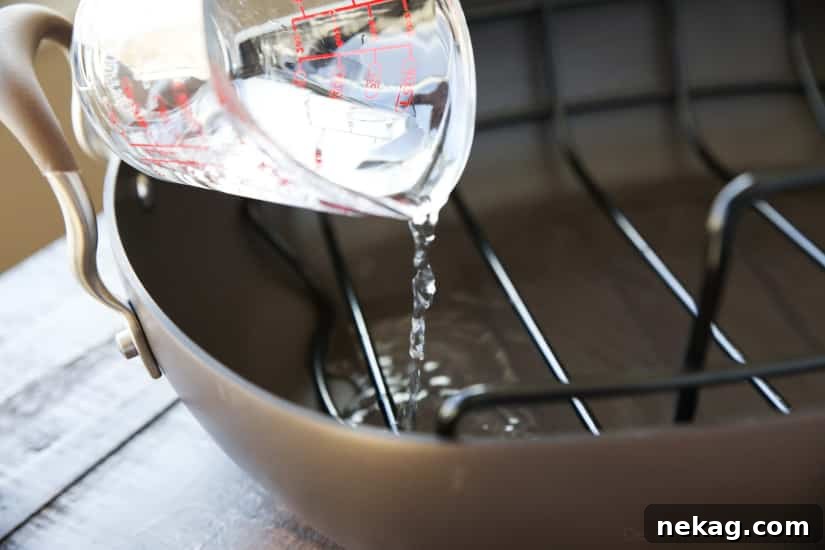
Set 1 cup of water in the bottom of a roasting pan and fit a rack inside if possible. A rack lets air circulate for even heating; if you don’t have one, prop the ham on onions or carrots so it isn’t sitting flat on the pan.
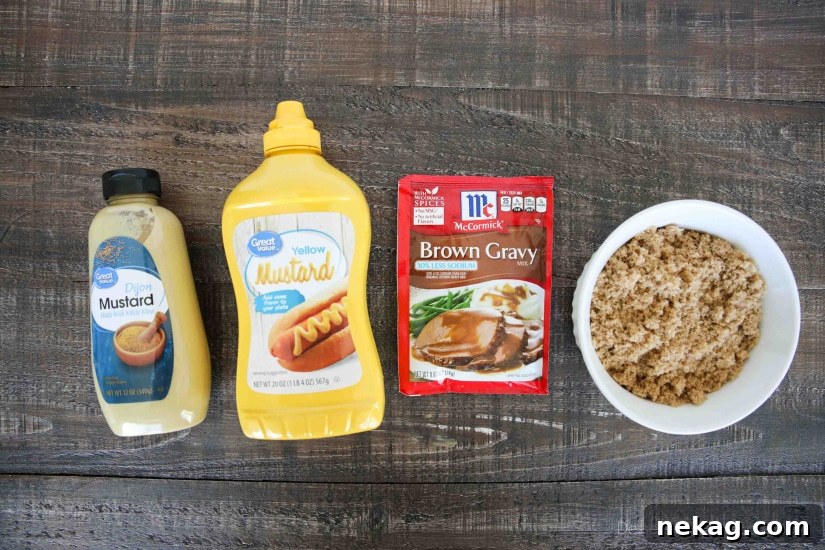
The glaze ingredients are straightforward: mustard (yellow, Dijon, or a mix), a packet of dry brown gravy mix, and packed brown sugar.
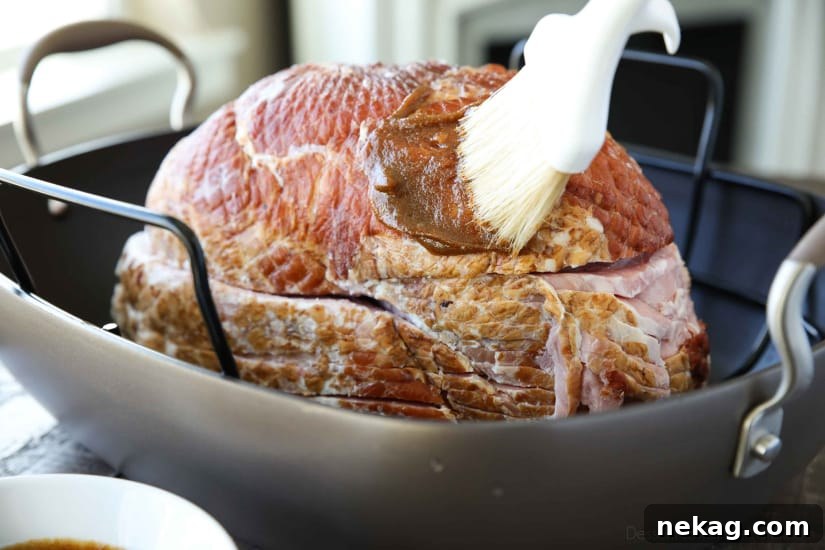
Stir the brown sugar, mustard, and gravy mix into a thick paste, then brush it over the outside of the ham, reserving about one-third of the glaze for later. Place the ham cut-side down on the rack or pan.
Cover the pan tightly with foil, sealing the edges so steam stays inside—this helps prevent drying and protects the glaze from burning. You can tent the foil slightly over the ham so the glaze doesn’t stick directly to it.
What Temperature to Cook Ham?
Because the ham is already fully cooked, you’re reheating it. Use a moderate oven temperature—325°F is ideal to warm the ham gently without drying it out.
Thaw frozen ham in the refrigerator 2–3 days before cooking (approximately 4–6 hours per pound). Remove the ham from the fridge and let it sit at room temperature for 1–2 hours before baking for even heating and better browning.
The recommended safe internal temperature for a reheated, fully cooked ham is 140°F. Many cooks remove the ham at about 135°F and let carry-over cooking bring it the rest of the way while it rests covered in the pan.
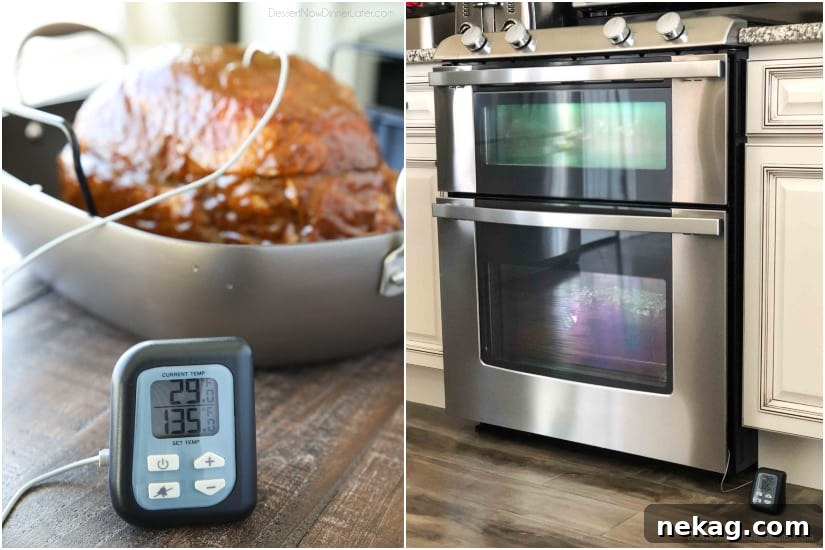
A programmable probe thermometer is useful: insert the probe near the bone but not touching it, run the cable out of the oven, and set the alarm for 135–140°F. This avoids repeatedly opening the oven to check temperature.
How Long to Cook Ham?
Reheating a fully cooked bone-in ham at 325°F typically takes about 10–15 minutes per pound. Keep the ham cut-side down and tented with foil to retain moisture.
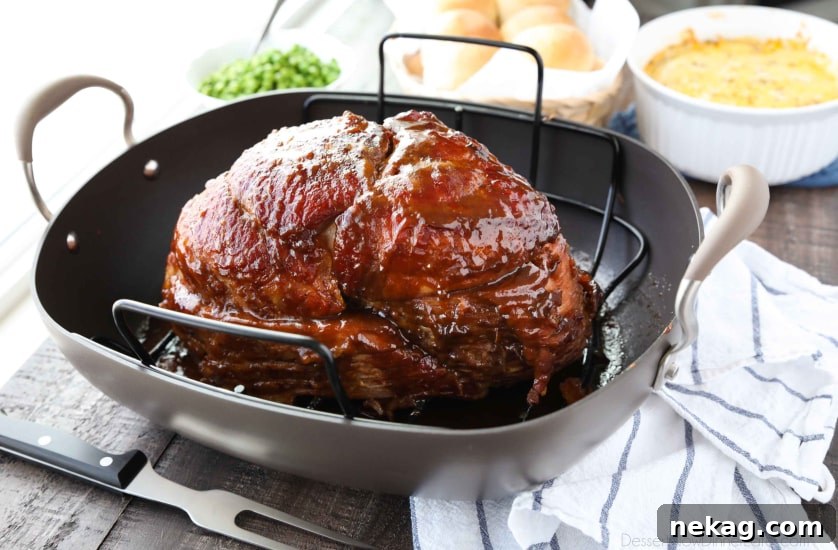
When the ham reaches about 100–115°F or with 30–45 minutes left of cook time, microwave the reserved glaze for 30–60 seconds to loosen it, then spoon it over the ham along with some pan juices. Re-cover and finish reheating until the internal temperature is reached.
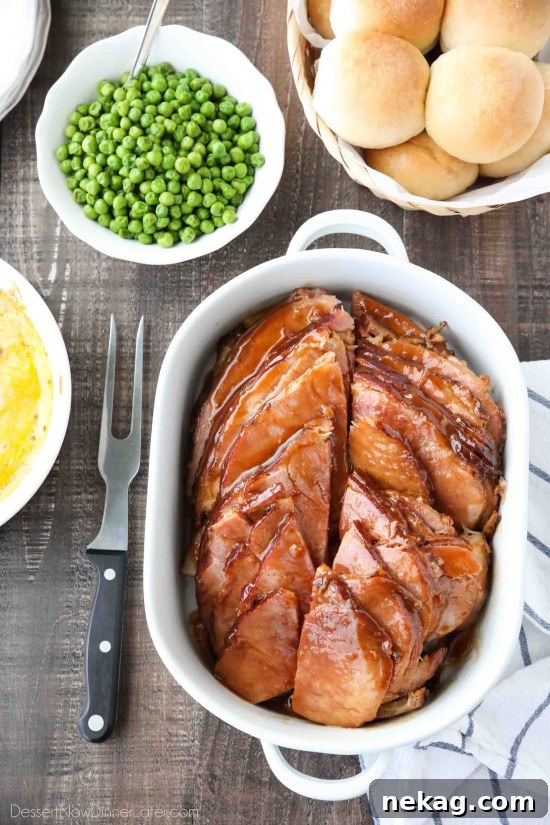
Allow the ham to rest for about 5 minutes before slicing. The bottom of the pan will have a thick, saucy glaze — pour some over the sliced ham to dress each serving lightly.
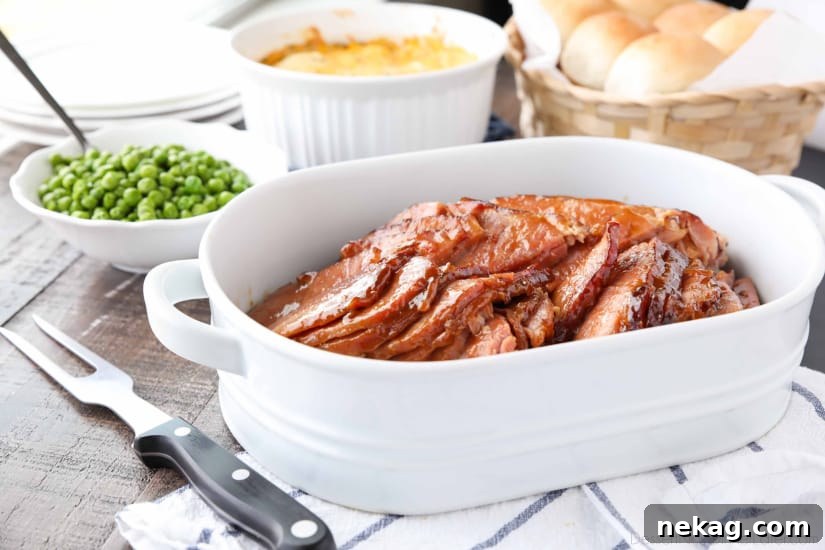
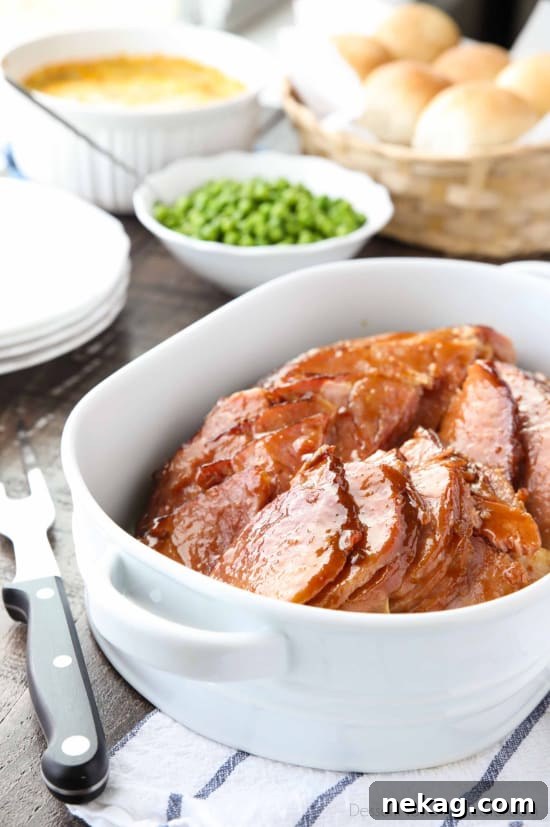
This brown sugar mustard glazed ham is simple, reliable, and perfect for holidays like Easter or Christmas. Serve with rolls, your favorite vegetables, and a light fruit salad for a complete meal. Enjoy!
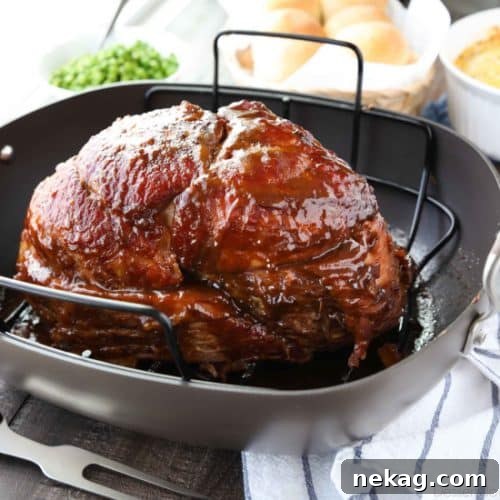
Brown Sugar Mustard Glazed Ham
Ingredients
- 8-11 lbs fully cooked, bone-in, spiral cut ham
- 1 cup brown sugar, packed
- ⅓ cup mustard, (yellow, dijon, or half of each)
- 0.87 oz packet brown gravy mix, dry
- 1 cup water
Instructions
-
Thaw frozen ham in the refrigerator 2–3 days before cooking (about 4–6 hours per pound).
-
Remove the ham from the refrigerator and let it rest at room temperature for 1–2 hours before baking for more even heating.
-
Preheat oven to 325°F and lower the oven rack if needed to fit the ham.
-
Add 1 cup water to a roasting pan with a rack. Remove the ham from packaging and place it cut-side down on the rack.
-
In a bowl, stir together brown sugar, mustard, and the dry brown gravy mix until a thick paste forms. Brush the glaze over the ham, reserving about one-third for later.
-
If using a probe thermometer, insert the probe into the thickest part of the ham near the bone without touching the bone.
-
Cover the pan tightly with foil, leaving the thermometer cable outside if using one. This traps steam to keep the ham moist and prevents the glaze from burning.
-
You can tent the foil slightly so the glaze doesn’t stick to it, or use extra loose foil on top.
-
Set the thermometer alarm for 135–140°F if using a programmable thermometer; it will alert you when the target temperature is reached.
-
If you don’t have a probe thermometer, estimate 10–15 minutes per pound and check the internal temperature with a digital thermometer to confirm it reaches 140°F.
-
Basting: When the ham reaches 100–115°F or with 30–45 minutes left, microwave the reserved glaze 30–60 seconds to loosen it, then spoon it over the ham with some pan juices.
-
Re-cover and continue cooking until heated through. Let the ham rest 5 minutes before slicing.
-
Spoon the thick pan glaze over slices when serving for an extra boost of flavor. Enjoy!
Notes
Sharing this recipe with a link is both encouraged and appreciated. Copying/pasting and/or screenshots of full recipes to any social media is strictly prohibited. Content and photographs are copyright protected.
Did you make this?
Don’t forget to leave a rating below and follow the author for more recipes. Enjoy your ham!