
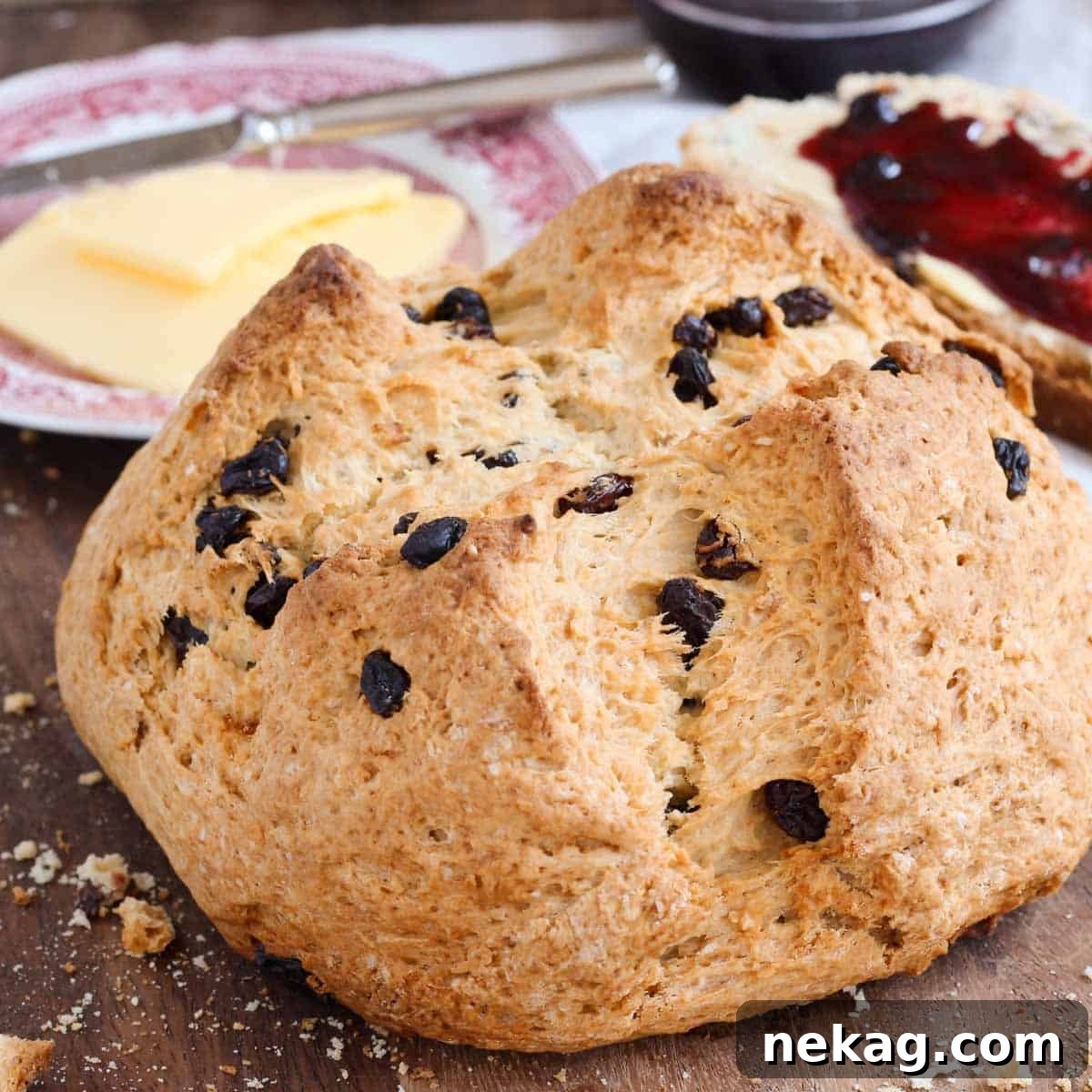
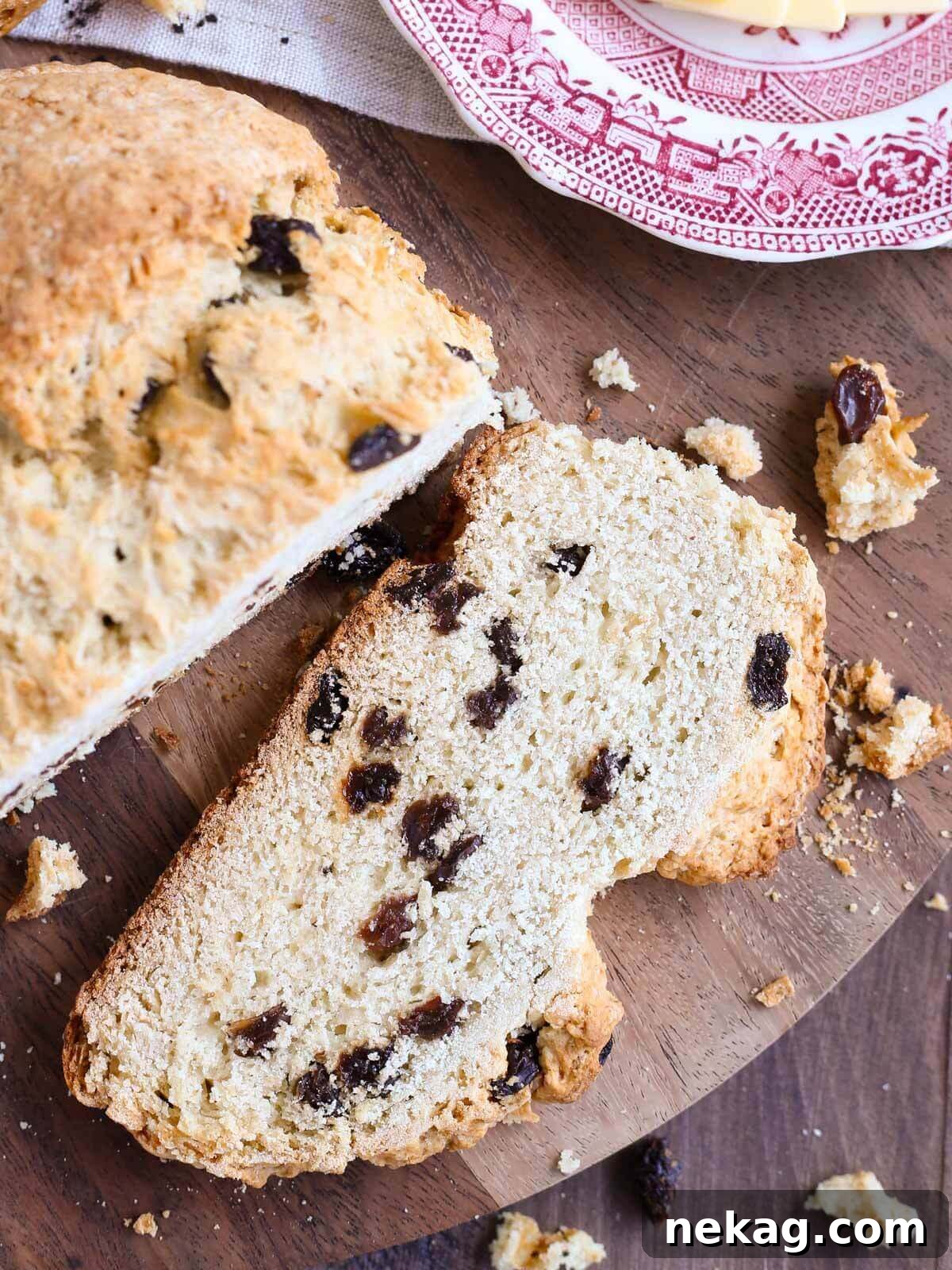
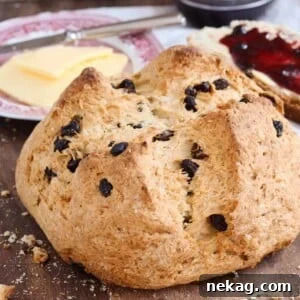
Experience the heartwarming taste of Ireland with this meticulously crafted **Traditional Irish Soda Bread with Raisins**. Forget dry, crumbly imitations; this recipe yields a loaf that is exceptionally soft and tender on the inside, beautifully complemented by a rustic, crusty exterior. Each bite offers a moist, dense texture that melts in your mouth, enhanced by the subtle sweetness of plump raisins.
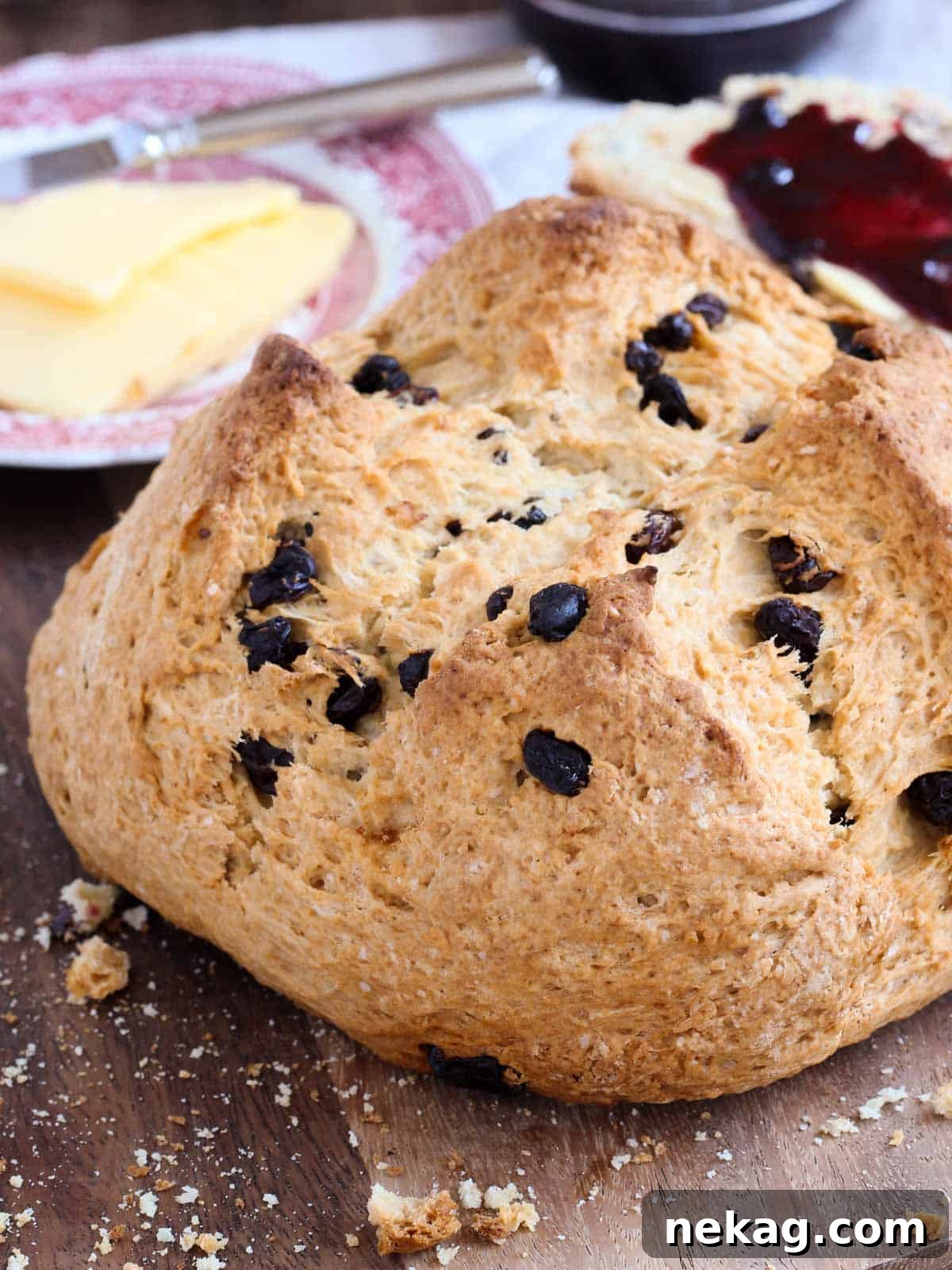
For many, Irish soda bread holds a special place, evoking memories of home and comfort. After years of searching for a recipe that captured the essence of my childhood memories – a bread that was tender, never dry, slightly sweet, and unequivocally **packed with raisins** – I realized I had to create my own. Even recipes from culinary school often missed the mark, frequently using too much baking soda which resulted in an unpleasant bitter aftertaste.
This recipe is the culmination of extensive testing and refinement, honed over the years in bustling NYC restaurant kitchens. It strikes the perfect balance, ensuring just the right amount of baking soda reacts harmoniously with the buttermilk to create an unparalleled tender texture and a perfectly balanced sweetness. Unlike many variations, this traditional soda bread remains free of eggs, adhering to a simpler, more authentic profile.
This versatile quick bread isn’t just for St. Patrick’s Day. Imagine using thick slices to sop up the rich gravy from a hearty Dutch oven beef stew or a savory lamb stew, providing a delightful alternative to potatoes. It also serves as an excellent side for dipping into a vibrant lemon chicken recipe, a comforting chicken shepherd’s pie, or the classic corned beef and cabbage. A generous slice, warm from the oven and slathered with Irish butter and your favorite fruit jam, is simply unbeatable.
Table of Contents
- Why This is the Best Irish Soda Bread Recipe
- A Brief History of Irish Soda Bread
- Key Ingredients for Perfect Soda Bread
- No Buttermilk? No Problem! (Substitution Guide)
- Creative Variations & Serving Suggestions
- Professional Baking Tips for Success
- How to Make Traditional Irish Soda Bread Step-by-Step
- Chef Lindsey’s Recipe Secret
- Irish Soda Bread Recipe FAQs
- Recommended St. Patrick’s Day Recipes
- Printable Recipe Card: Traditional Irish Soda Bread
- Explore More Recipes
Why This is the Best Irish Soda Bread Recipe
There are countless soda bread recipes out there, but this one stands out from the crowd. Here’s why this recipe delivers the best results every time, ensuring a truly authentic and delicious loaf:
- Optimal Baking Soda to Buttermilk Ratio: This is the cornerstone of great soda bread. Too much baking soda, and your bread will have a tell-tale bitter, metallic aftertaste due to unreacted soda. Our recipe uses the precise amount to react perfectly with the buttermilk, providing ideal leavening and a pure, clean flavor.
- Unbeatably Tender, Moist Texture: The secret to a tight, moist crumb lies in the careful inclusion of butter and sugar, which are cut into the flour. This not only enhances the richness of the flavor but also helps to shorten the gluten strands, preventing toughness and resulting in a wonderfully tender interior that stays moist for longer.
- Developed and Perfected by a Professional Pastry Chef: Dissatisfied with standard recipes that often fell short, I dedicated years to refining this formula. Through countless iterations in professional kitchen environments, this recipe has been meticulously honed to achieve consistent perfection, guaranteeing a superior loaf every time.
- Effortless Quick Bread: Irish soda bread is celebrated for its simplicity. As a quick bread, it requires no yeast, meaning no waiting for dough to rise. The leavening comes solely from baking soda, allowing this delightful bread to come together in under 10 minutes of active preparation. You can even mix it by hand, making it incredibly accessible for bakers of all skill levels.
A Brief History of Irish Soda Bread
Before diving into the recipe, it’s worth appreciating the humble origins of Irish soda bread. This iconic bread emerged in 19th-century Ireland, a time when many households had minimal access to ovens. Instead, it was often baked in a bastible (a cast-iron pot with a lid, placed over a fire with embers on top), or on a griddle. The key ingredient, baking soda (sodium bicarbonate), became readily available and, when combined with the acidic buttermilk – a byproduct of butter making – provided a natural and efficient leavening agent.
Traditionally, Irish soda bread contained only four essential ingredients: flour, baking soda, buttermilk, and salt. It was a staple, nourishing families with its dense, hearty crumb. Over time, variations emerged, with some adding a touch of sugar for sweetness or raisins and caraway seeds for flavor, particularly in wealthier households or for special occasions. While purists might argue, these additions have become beloved elements in many modern “traditional” recipes, creating a richer, more nuanced flavor profile that many have come to adore.
Key Ingredients for Perfect Soda Bread
Each ingredient in this recipe plays a crucial role in achieving the perfect balance of flavor and texture. Here’s a detailed look at what you’ll need and why:
- All-Purpose Flour: The foundation of our bread. All-purpose flour provides the ideal protein content for a tender, yet structured loaf.
- Baking Soda: This is the namesake ingredient! Baking soda requires an acid to react, producing carbon dioxide bubbles that give the bread its rise. Its reaction with buttermilk is immediate and efficient. Using too much will not only lead to an unpleasant metallic taste but also an overpowering “soapy” mouthfeel. This recipe ensures the perfect amount for optimal rise and flavor.
- Baking Powder: While baking soda does most of the work, a touch of baking powder provides a secondary boost of leavening, ensuring a consistently light yet dense crumb without compromising the flavor or causing bitterness.
- Kosher Salt: A fundamental flavor enhancer. Salt balances the sweetness and brings out the earthy notes of the flour, making every ingredient shine.
- Granulated Sugar: Just a quarter cup of sugar makes a significant difference. It contributes a delicate sweetness that elevates the bread from purely savory to wonderfully comforting. More importantly, sugar helps tenderize the crumb by interfering with gluten development, resulting in a softer texture. For a strictly savory loaf, you can omit it.
- Unsalted Butter: Cold, unsalted butter is crucial. When cut into the flour, it creates pockets of steam during baking, contributing to the bread’s tender, moist crumb and flaky texture. If you prefer, you can use a good quality salted Irish butter like Kerrygold and adjust the added kosher salt accordingly. Don’t forget to save extra for slathering on warm slices!
- Buttermilk: The essential acidic component. Buttermilk reacts with the baking soda to create the bread’s rise. I specifically developed this recipe using low-fat buttermilk, as full-fat versions can be too thick, requiring more liquid and potentially altering the dough consistency. Its tang also adds a subtle depth of flavor.
- Raisins or Currants: While optional for some, for me, these are non-negotiable! Raisins add wonderful bursts of sweetness and moisture that contrast beautifully with the bread’s earthy flavors. Feel free to use currants for a slightly tarter, smaller fruit addition. Any extra can be used in other delightful recipes like hermit cookies, sourdough raisin bread, or my dedicated raisin bread recipe!
Refer to the full recipe card below for precise measurements and quantities.
No Buttermilk? No Problem! (Substitution Guide)
Don’t let a lack of buttermilk stop you from making this delicious bread! While genuine buttermilk provides the best flavor and texture, a quick homemade substitute can work in a pinch. To create “soured milk,” simply add 1 tablespoon of lemon juice or white vinegar to a liquid measuring cup, then fill the rest of the cup with regular milk (dairy or non-dairy) until it reaches the 1-cup mark. Stir gently and let it sit for 5-10 minutes until it slightly thickens and curdles. While this won’t replicate the exact thickness and culture of true buttermilk, it will provide the necessary acidity to activate the baking soda and produce a reasonably similar result.
Creative Variations & Serving Suggestions
This traditional recipe is fantastic on its own, but it also serves as a wonderful base for creative variations. Feel free to experiment and make it your own!
- Bake Individual Rolls: For a quick and elegant side dish, divide the dough into 12 small pieces. Roll each piece into a ball, place on a baking sheet, and make a small cross cut on top with a sharp knife. Bake for 8-12 minutes, or until a cake tester comes out clean. Perfect for individual servings!
- Explore Sweet Add-ins: Instead of or in addition to raisins, try dried cranberries, chopped dried apricots, or even chocolate chips for a sweeter treat. Incorporate caraway seeds for a distinct, traditional Irish flavor, or finely grated orange or lemon zest into the sugar before mixing for a subtle, aromatic citrus note. A mix of candied ginger and pecans could also be a delightful twist.
- Craft a Savory Soda Bread: Transform this recipe into a savory delight. Mix in finely chopped fresh herbs like rosemary, thyme, chives, or sage. Add shredded low-moisture cheeses such as sharp cheddar, Parmesan, Swiss, or Gruyère for a rich, umami flavor. Sun-dried tomatoes or chopped olives could also add a Mediterranean twist.
- St. Patrick’s Day Feast: While soda bread is a St. Patrick’s Day classic, don’t stop there! Pair it with other festive treats like these decadent Guinness Chocolate Cupcakes with Baileys Buttercream, rich Baileys Irish Coffee Caramel Brownies, or a luscious Guinness Chocolate Cake for a truly memorable celebration.
Professional Baking Tips for Success
Achieving a truly outstanding Irish soda bread is simple with a few professional insights. These tips will help you master the technique and consistently bake a tender, flavorful loaf:
- Incorporate Butter Thoroughly: The key to a tender, melt-in-your-mouth texture is ensuring the cold butter is cut into the flour until the pieces are almost indiscernible, resembling coarse meal with a few pea-sized bits. This process, similar to making perfect blueberry scones, coats the gluten strands in the flour, shortening them and preventing the bread from becoming tough or chewy. The colder the butter, the better!
- Handle with Care (The “Love” Ingredient): Dough can sense your touch! When adding buttermilk and gently kneading, use your hands to truly feel the dough. Work it minimally and with a light touch, almost a caress. The dough will communicate when it has absorbed enough liquid and is just cohesive. Overworking develops too much gluten, which leads to a tough bread. This gentle approach is my personal “secret ingredient” and will yield a bread more tender than any other.
- Precision in Scoring the Cross: For that iconic, beautiful presentation, make sure the two cuts in the shape of a cross on top of the loaf are precisely ½ inch deep. Cuts that are too shallow will disappear into the crust as the bread bakes and rises, losing that traditional aesthetic. While it will still taste delicious, the visual appeal is part of the experience.
- Avoid Over-mixing: This is paramount for any quick bread, including Irish soda bread. Once the buttermilk is added, mix quickly and only until the ingredients are just combined and a cohesive dough forms. Just like with delicate chocolate chip scones, excessive kneading will overdevelop the gluten, resulting in a dense, rubbery texture instead of the desired tender crumb.
- Understand “Quick Bread” vs. “Yeast Bread”: Remember, traditional Irish soda bread is a quick bread. This means its leavening comes from chemical agents like baking soda (and baking powder in our recipe) reacting with an acid, rather than relying on yeast and fermentation. This fundamental difference is why it comes together so rapidly, making it an ideal choice for a delicious, freshly baked loaf tonight!
How to Make Traditional Irish Soda Bread Step-by-Step
Follow these detailed instructions to create the ultimate Irish soda bread with raisins. Full measurements and additional tips are provided in the comprehensive recipe card below.
Step 1: Prepare Your Oven and Pan. Preheat your oven to 375°F (190°C). Line a baking sheet with parchment paper or prepare a 12-inch (or larger) cast iron pan by lightly greasing it or lining it with parchment.
Step 2: Combine Dry Ingredients. In a large mixing bowl, whisk together the all-purpose flour, baking soda, baking powder, kosher salt, and granulated sugar until well combined. For traditionalists, you can also dump the flour mixture directly onto a clean counter or a large wooden cutting board to work with your hands.
Chef’s Note: Mixing can be done in a large bowl with a pastry blender, or for a truly hands-on experience, directly on a clean work surface.
Step 3: Cut in the Cold Butter. Sprinkle the cold butter cubes evenly over the flour mixture. Using a bench scraper, pastry blender, or your fingertips, swiftly cut or rub the butter into the flour until the pieces are almost indiscernible. The mixture should resemble coarse crumbs with only a few pea-sized butter pieces remaining. The goal is to keep the butter as cold as possible.
Step 4: Incorporate the Buttermilk. Gradually add the buttermilk to the flour-butter mixture. If working on a counter, gently scoop the flour mixture over the buttermilk and lightly press to incorporate. Do this with a gentle hand, working the liquid in just until a shaggy dough begins to form. You can start with a wooden spoon or bench scraper, then switch to your hands to gently knead until a cohesive dough comes together. The dough should not have any dry patches but should also not be overly sticky.
Texture Check: The dough should be soft and moist, but manageable. If it feels too dry, add a tiny bit more buttermilk; if too wet, a sprinkle of flour.
Step 5: Add the Raisins. At this stage, gently and quickly knead in the raisins until they are evenly distributed throughout the dough. Remember the golden rule for quick breads: knead as little as possible to prevent the bread from becoming tough. The goal is just enough mixing to bring everything together.
Stand Mixer Method: For a less hands-on approach, combine the dry ingredients and cubed cold butter in the bowl of a stand mixer fitted with the paddle attachment. Mix on low speed until the butter is nearly invisible, resembling coarse meal. With the mixer still on low, slowly pour in the buttermilk until a cohesive dough forms. Be extremely careful not to overmix! Turn the dough out onto a clean counter and gently knead in the raisins by hand.
Step 6: Shape and Score the Loaf. Gently shape the dough into a round, slightly flattened loaf. Using a sharp knife or serrated knife, make two deep cuts across the top of the dough, forming a cross. Ensure these cuts are approximately ½ inch deep; this helps the bread bake evenly and creates the signature traditional appearance.
Step 7: Bake to Golden Perfection. Place the shaped loaf into your prepared cast iron skillet or onto the parchment-lined baking sheet. Bake in the preheated oven for 45-50 minutes, or until the crust is a deep golden brown and a wooden skewer or cake tester inserted into the center comes out clean. Be mindful not to over-bake, as this can dry out the bread. If the crust is browning too quickly, you can loosely tent it with aluminum foil.
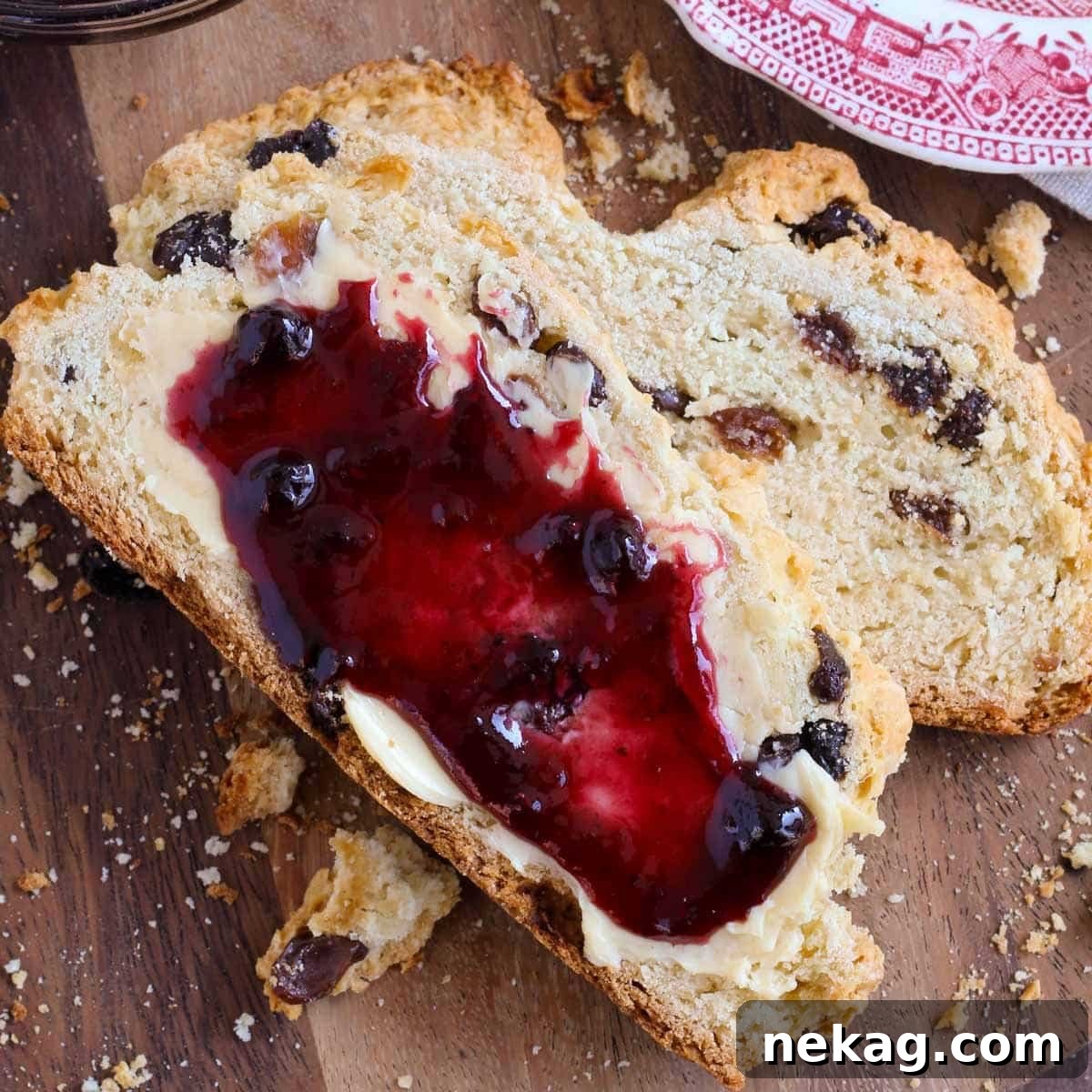
Serve your warm, homemade Irish soda bread immediately with generous lashings of Irish salted butter and your favorite jam (homemade quick strawberry jam is highly recommended for extra bonus points)!
Chef Lindsey’s Recipe Secret
Many recipes suggest flouring your hands or dusting the outside of the dough with extra flour. I strongly advise against this! A slight stickiness is a small price to pay for superior flavor and texture. Raw flour on the exterior of your baked bread can create an unpleasant taste and appearance. Embrace the natural stickiness – it’s a sign of a perfectly hydrated and tender dough!
Irish Soda Bread Recipe FAQs
Irish soda bread is undeniably at its best on the day it’s baked, or the following day. To keep it fresh for longer, store the loaf in an airtight container or a tightly sealed plastic bag at room temperature for up to 3 days. For extended storage, the bread freezes beautifully. Wrap it tightly in plastic wrap and then in aluminum foil, and freeze for up to 3 months. When ready to enjoy, thaw at room temperature. Slices can be lightly toasted to revive their fresh taste and texture after a couple of days in storage. Serve it either at room temperature or gently warmed.
Historically, the most traditional Irish soda bread was a simple affair, made with just four core ingredients: flour, baking soda, buttermilk, and salt. These “lean” versions were a daily staple. However, over time, recipes evolved, and modern “traditional” recipes very commonly include additions like butter, sugar, and dried fruits such as raisins or currants, and sometimes caraway seeds. These enrichments were often added for special occasions or when ingredients were more plentiful. So, while not part of the *absolute* earliest forms, raisins are now a beloved and widely accepted component of what many consider traditional Irish soda bread today.
A bitter, metallic, or soapy taste in Irish soda bread is almost always a sign of too much baking soda. Baking soda needs an acid (in this case, buttermilk) to fully react and neutralize. If there’s an excess of baking soda relative to the buttermilk, some of the soda will remain unreacted, leaving behind its inherent unpleasant flavor. This unreacted soda can also cause a lingering metallic aftertaste. This common issue is precisely why achieving the perfect ratio, as in this recipe, is so crucial for a clean, delicious flavor.
Recommended St. Patrick’s Day Recipes
Looking for more delicious ways to celebrate St. Patrick’s Day or simply enjoy hearty Irish-inspired flavors? Explore these other chef-tested recipes:
Cupcake Recipes
St. Patrick’s Day Cupcakes (Guinness Chocolate with Baileys Buttercream)
Cake Recipes
Rich Guinness Chocolate Cake with Ganache
Soup and Stew Recipes
Classic Dutch Oven Beef Stew
Soup and Stew Recipes
Hearty Rosemary Lamb Stew Recipe
If you tried this recipe and loved it, please consider leaving a 🌟 star rating and sharing your experience in the comments below. Your feedback truly makes my day and helps other bakers discover this wonderful recipe!
Traditional Irish Soda Bread with Raisins
Chef Lindsey
5 minutes
40 minutes
45 minutes
12
slices
Comment
Print Recipe
Ingredients
-
2 ½
cups
all-purpose flour -
1
teaspoon
baking soda -
1
teaspoon
baking powder -
¾
teaspoon
kosher salt -
¼
cup
granulated sugar -
¼
cup
unsalted butter
cold, cubed -
1
cup
buttermilk -
¾
cup
raisins
or currants
Instructions
-
Preheat your oven to 375°F (190°C). Line a baking sheet with parchment paper or prepare a cast iron pan (at least 12 inches) by lightly greasing or lining.
-
In a medium bowl, whisk together the flour, baking soda, baking powder, salt, and sugar. For a traditional hands-on method, you can dump this mixture onto a clean counter or large wooden cutting board. Alternatively, use a large bowl with a pastry blender or your hands.
-
Sprinkle the cold, cubed butter over the flour mixture. Using a bench scraper or pastry blender, cut the butter into the flour until the pieces are almost indiscernible, resembling coarse meal. If using your hands, rub the butter into the flour quickly to keep it cold.
-
Slowly add the buttermilk, scooping the flour mixture over the buttermilk and gently working it in. Work gently and with a light hand. Initially, you can use a bench scraper or wooden spoon to mound the flour onto the buttermilk until it’s mostly absorbed. Once a shaggy dough begins to form, switch to your hands to gently knead just until a cohesive dough comes together. The dough should not have any dry patches, but it shouldn’t be overly sticky either. At this point, gently but quickly knead in the raisins. Remember to knead as little as possible to ensure a tender bread. You may use slightly more or less buttermilk depending on your flour and environment.
-
Stand Mixer Method: For convenience, you can also prepare the dough in a stand mixer. Add the dry ingredients to the mixer bowl, fitted with the paddle attachment, along with the cubed cold butter. Mix on low speed until no large pieces of butter remain and the mixture resembles coarse crumbs. With the mixer still on low, slowly pour in the buttermilk until a cohesive dough forms. Be very careful not to overmix. Turn the dough out onto a clean counter and gently knead in the raisins by hand.
-
Shape the dough into a round loaf. Using a sharp knife, make two cuts in the shape of a cross on the top of the dough. Ensure these cuts are ½ inch deep for the most attractive, traditional loaf. Place the loaf in your prepared cast iron skillet or on the parchment-lined baking sheet. Bake in the preheated oven for 45-50 minutes, or until the crust is golden brown and a wooden skewer or cake tester inserted into the center comes out clean. Watch carefully to prevent over-baking.
Notes
Presentation Tip: Make sure the two cross cuts on the top of the loaf are ½ inch thick to ensure they remain visible and create the classic aesthetic after baking.
Technique Reminder: As with all quick breads, it’s crucial not to over-mix the dough. Overworking will develop too much gluten and result in a tough, dense bread rather than a tender crumb.
Creative Variations: Feel free to experiment with different dried fruits (cranberries, chopped apricots) or nuts for a sweet twist. For a savory option, incorporate chopped fresh herbs (rosemary, chives) and low-moisture shredded cheese (Parmesan, cheddar).
Storage & Serving: Irish soda bread is best enjoyed fresh on the day it’s made or the following day. Store any leftovers in an airtight container at room temperature for up to 3 days. For longer preservation, it can be frozen. Serve at room temperature or gently warmed for the best experience!
Nutrition Information (per slice)
Calories:
180
kcal
|
Carbohydrates:
32
g
|
Protein:
4
g
|
Fat:
4
g
|
Saturated Fat:
3
g
|
Polyunsaturated Fat:
1
g
|
Monounsaturated Fat:
1
g
|
Trans Fat:
1
g
|
Cholesterol:
11
mg
|
Sodium:
305
mg
|
Potassium:
134
mg
|
Fiber:
1
g
|
Sugar:
5
g
|
Vitamin A:
128
IU
|
Vitamin C:
1
mg
|
Calcium:
50
mg
|
Iron:
1
mg
*Nutrition information is an estimate and will vary based on exact ingredients and portion sizes.
Bread, Breakfast, Snack
Irish
180
Enjoyed this recipe? Share your thoughts below!
Explore More Chef-Tested Recipes
Thank you for trying this professional chef-tested recipe for Traditional Irish Soda Bread with Raisins. I hope it brought a touch of Irish comfort to your kitchen!
If you enjoyed the simplicity and deliciousness of quick breads, be sure to explore our other delightful easy quick bread recipes. Or, if you’re ready to venture into the rewarding world of yeast-leavened baking, consider trying your hand at this beloved classic: our recipe for a rich and aromatic Panettone. Happy baking!