
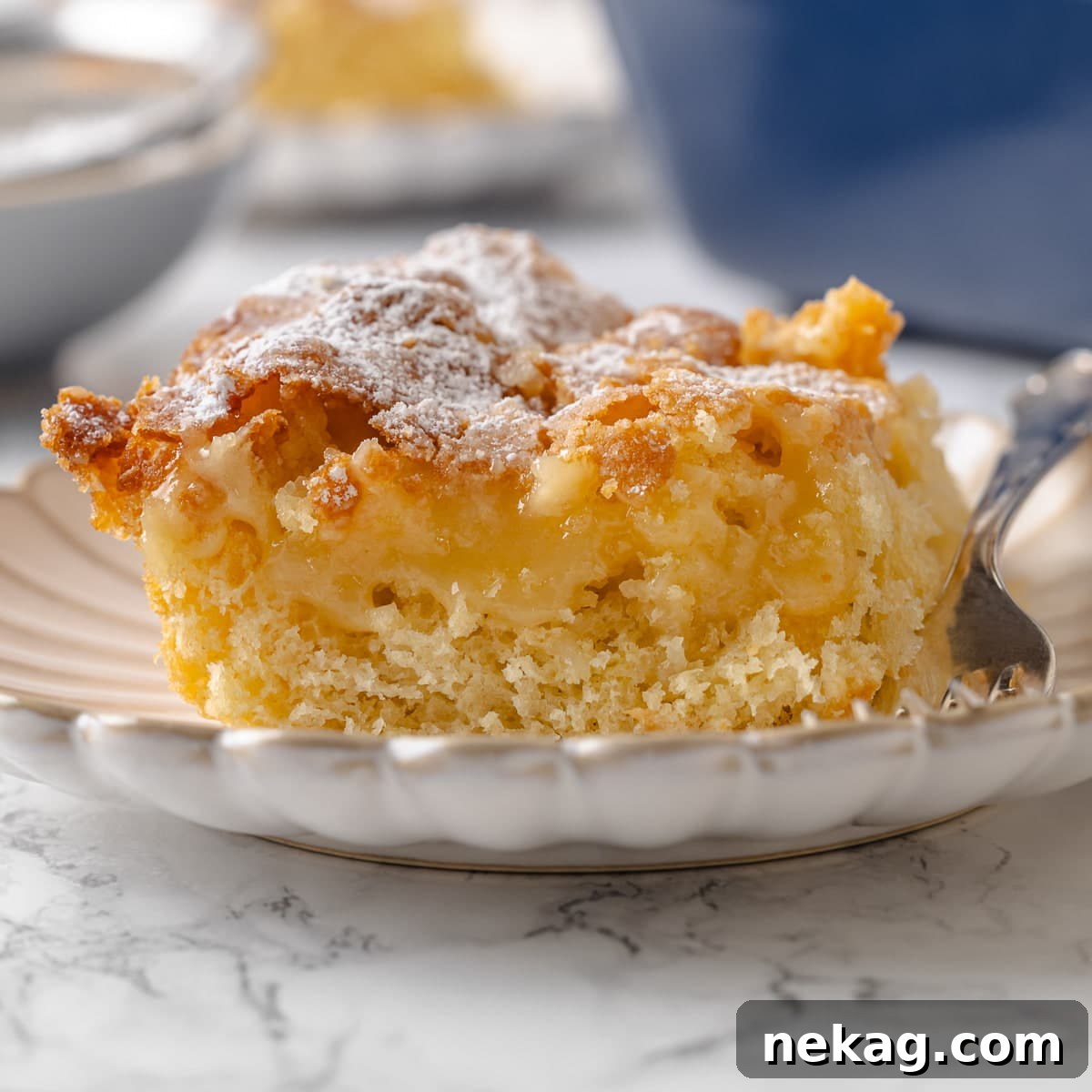
Authentic St. Louis Gooey Butter Cake: A Timeless Yeasted Recipe
Prepare to indulge in the true St. Louis classic: an authentic gooey butter cake recipe featuring a delectable yeasted cake bottom and a rich, vanilla-infused gooey topping. This isn’t just any butter cake; it’s the iconic, melt-in-your-mouth experience that St. Louis locals cherish. Get ready to master the art of this beloved confection and dig into that irresistibly gooey layer!
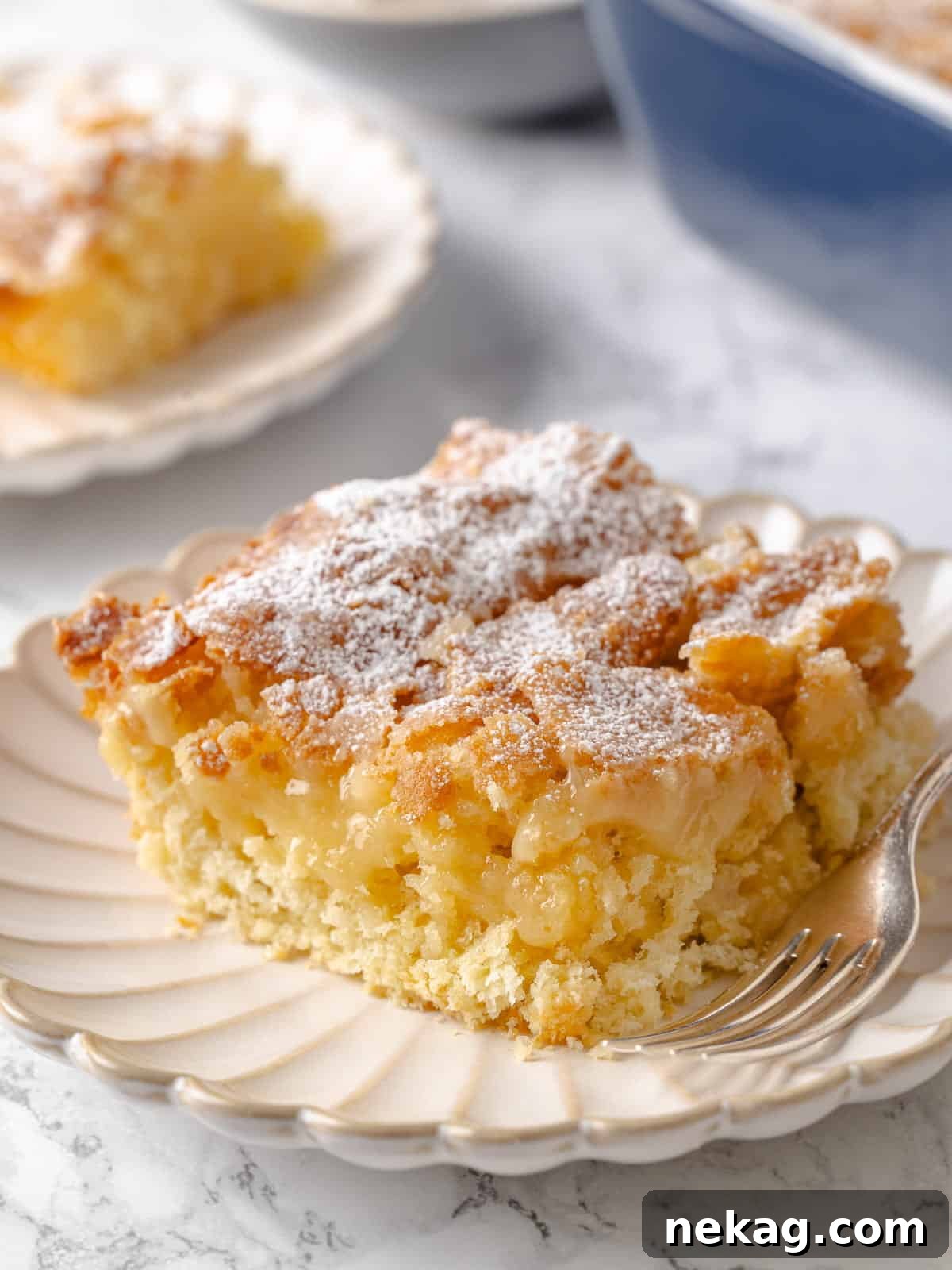
As a proud native of St. Louis, I consider myself a true connoisseur of the finest gooey butter cakes. While many home cooks opt for the simpler variation using yellow cake mix and cream cheese, finding an authentic recipe that calls for a traditional yeasted cake base and a genuinely gooey butter topping can be quite a challenge. This particular recipe stands out because both the tender yeasted cake base and the rich topping are expertly mixed in a stand mixer with a paddle attachment, much like a classic cake batter or a soft cookie dough, ensuring perfect consistency and flavor.
Imagine this gooey butter cake as a delightful alternative to your usual sweet breakfast pastries. It rivals the comfort of a warm pumpkin coffee cake, the charm of cinnamon flop, or even the sugary bliss of jelly donuts. With its incredibly soft and tender cake base crowned by a thick, sweet, and undeniably gooey topping, this dessert achieves a harmonious balance of sweetness and textures that is simply irresistible.
Why You Will Adore This Authentic Gooey Butter Cake Recipe
- Surprisingly Simple to Prepare: While it demands a bit more love than a pumpkin dump cake made with shortcuts, the process for both the cake base and topping is remarkably straightforward. Utilizing a stand mixer or an electric hand mixer with a paddle attachment makes light work of mixing, similar to preparing a simple cookie dough or cake batter. No complex techniques are required to achieve bakery-quality results!
- Light Texture, Exquisitely Balanced Sweetness: The inclusion of yeast is the secret to this cake’s wonderfully light and airy texture, setting it apart from denser versions. By preparing both the cake base and topping from scratch, you gain complete control over the sweetness level, allowing for a perfectly balanced flavor profile that avoids the often cloying sweetness found in cake mix alternatives. Each bite is a delicate dance of buttery richness and subtle sweetness.
- Versatile for Any Occasion: This gooey butter cake is a true all-rounder! It makes for an exceptional sweet breakfast cake, a delightful coffee cake to share with friends, or a comforting dessert that truly satisfies. Its unique blend of textures and flavors ensures it’s a hit no matter when or how it’s served.
Table of Contents
- Why You Will Adore This Authentic Gooey Butter Cake Recipe
- What is St. Louis Gooey Butter Cake? Understanding the Two Main Types
- The Sweet History Behind Authentic Gooey Butter Cake
- Essential Ingredients & Smart Substitutions
- Expert Tips for Traditional Gooey Butter Cake Success
- Step-by-Step Guide: How to Make St. Louis Gooey Butter Cake
- Chef Lindsey’s Recipe Tip
- Frequently Asked Questions About Gooey Butter Cake
- Recommended Irresistibly Gooey Dessert Recipes
- St. Louis Gooey Butter Cake [Yeasted] Recipe
- Before You Go: More Breakfast & Dessert Inspiration
What is St. Louis Gooey Butter Cake? Understanding the Two Main Types
The world of gooey butter cakes primarily consists of two beloved variations. The first, and arguably the more common for home bakers, uses a simple cake mix crust topped with a rich cream cheese spread. This version is celebrated for its ease and speed. However, the second variation, which features a distinctive yeasted cake bottom, is widely considered to be the closest descendant of the original St. Louis classic. While both offer a delightful experience, they present unique characteristics.
The cake mix version tends to be sweeter and results in a flatter, denser cake, often with a pronounced tang from the cream cheese. In contrast, the yeasted variety offers a taller, lighter, and more airy texture, reminiscent of a sophisticated coffee cake. Some purists even reserve the term “ooey gooey butter cake” specifically for the cream cheese-laden, cake mix version, while the original, yeasted, cream cheese-free iteration is simply known as “gooey butter cake.” This distinction highlights the unique heritage and composition of each style, making our yeasted recipe a true authentic experience.
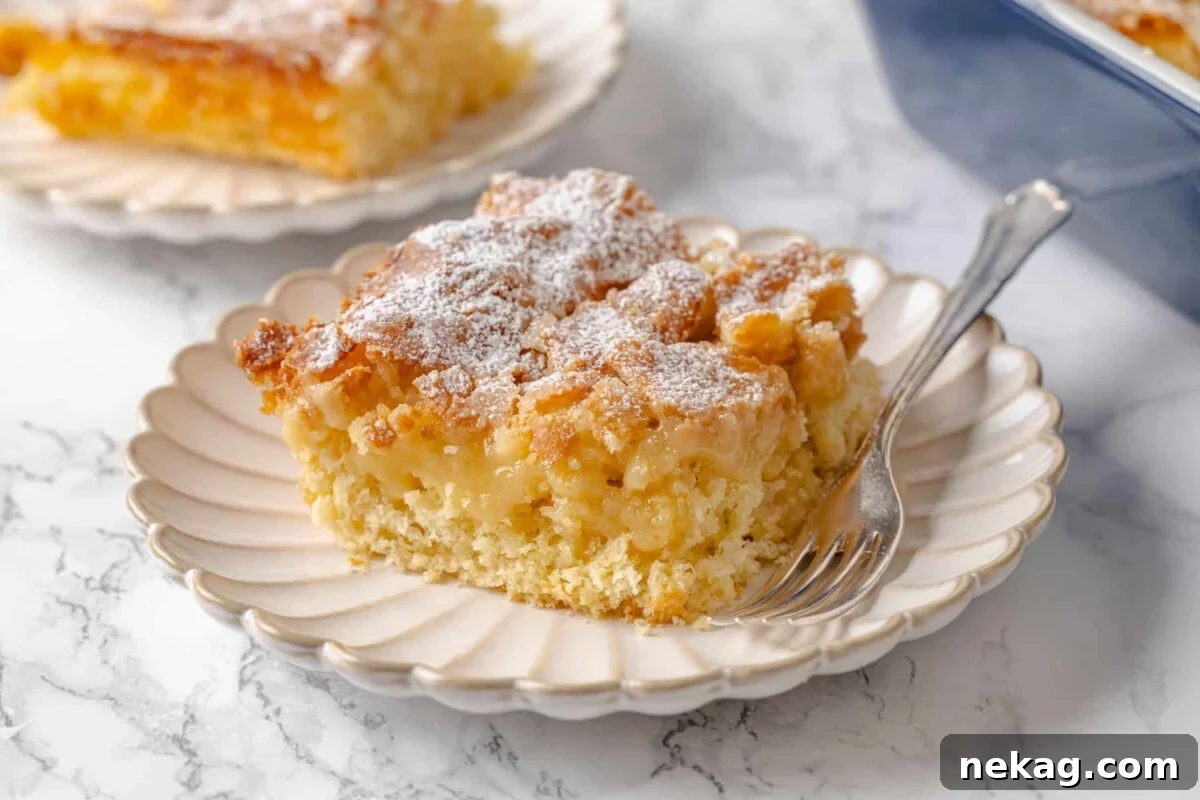
The Sweet History Behind Authentic Gooey Butter Cake
The intriguing origin of gooey butter cake is a beloved piece of St. Louis folklore, a tale as rich and sweet as the cake itself. The most widely accepted story dates back to the 1930s, a period of economic hardship that inadvertently led to this iconic creation. Legend has it that at a small German-American bakery owned by John Hoffman in St. Louis, Missouri, a new baker made a serendipitous mistake. Instead of using the usual “deep butter smear” for a coffee cake, he accidentally applied a different, much gooier butter mixture—one intended for a different pastry and containing a significantly higher butter content—to the coffee cake base.
Rather than discarding the misprepared cake, John Hoffman, with a keen sense for opportunity, decided to bake and sell it. To his delight, and to the surprise of many, this “mistake” became an instant local sensation. Customers were captivated by its unique, gooey texture and rich flavor, and thus, the gooey butter cake was born. The variation that incorporates commercial yellow cake mix and cream cheese was developed much later, designed to offer home cooks an easier and quicker method to recreate this local favorite, albeit deviating from the original yeasted tradition.
Essential Ingredients & Smart Substitutions for the Perfect Gooey Butter Cake
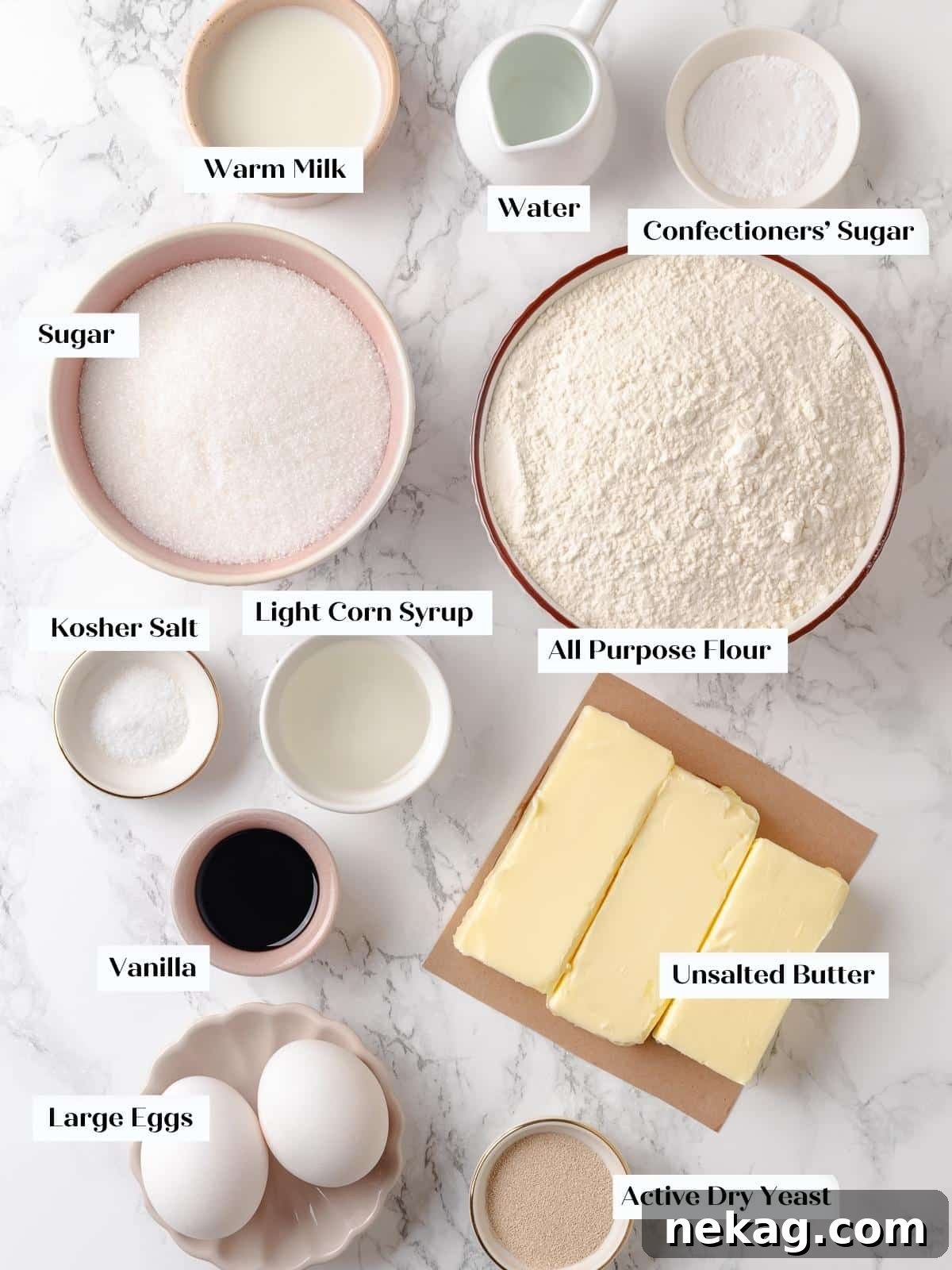
Crafting the perfect gooey butter cake from scratch relies on a few key ingredients, each playing a crucial role in achieving that signature texture and flavor. Here’s a detailed look at what you’ll need and potential substitutions:
- Milk: For the cake base, I always recommend using whole milk. Its higher fat content contributes significantly to the moisture and richness of the cake, resulting in a more tender crumb. While lower-fat milk can be used, it may slightly affect the cake’s texture.
- Active Dry Yeast: This is fundamental for the airy, light texture of the traditional yeasted base. If you’re short on time, you can substitute active dry yeast with instant yeast. Instant yeast typically cuts the proofing time in half, offering a quicker path to your delicious cake. Just remember to adjust your proofing schedule accordingly.
- Light Corn Syrup: A hero ingredient in the topping, light corn syrup is essential for achieving that characteristic gooey, non-crystallized texture. It helps maintain the topping’s soft, pliable consistency even after baking, preventing it from becoming hard or brittle. Do not substitute with high fructose corn syrup or dark corn syrup, as these will alter the flavor and texture.
- Vanilla Extract: The gooey topping is heavily flavored with vanilla, making the quality of your extract paramount. Opt for a pure vanilla extract to ensure the best, most aromatic flavor permeates every luscious bite. Artificial vanilla extract simply won’t yield the same depth of taste.
- Confectioners’ Sugar: No gooey butter cake is complete without a generous dusting of confectioners’ sugar. This final flourish is not just for aesthetics; it contributes to the cake’s perfectly balanced sweetness, especially in the yeasted variety. In my experience, this delicate sweetness contrasts beautifully with the richness of the butter, providing a far more enjoyable experience than the sometimes overwhelming sweetness of cake-mix versions.
- Unsalted Butter: Both the cake and topping rely heavily on butter for their rich flavor and tender texture. Ensure your butter is at proper room temperature for creaming, as this affects the final consistency of your batters. Using unsalted butter allows you to control the total salt content in the recipe.
- Granulated Sugar: Used in both the cake base and the topping, granulated sugar provides essential sweetness and helps with caramelization during baking.
- All-Purpose Flour: The structural backbone of both layers. Ensure you measure it correctly, preferably by weight, to avoid a dense cake.
- Large Eggs: Eggs act as binders and add richness to both the cake and topping. Always use large eggs for consistent results.
- Kosher Salt: A pinch of salt enhances all the other flavors, balancing the sweetness and richness.
Refer to the complete recipe card below for precise measurements and quantities for each ingredient.
Expert Tips for Baking the Perfect Traditional Gooey Butter Cake
- Relax About the Mixing Process: Don’t let the idea of a yeasted cake intimidate you. The yeasted cake layer in this recipe behaves more like a thick batter than a traditional, kneaded kugelhopf dough. It’s designed to be mixed with the paddle attachment of your stand mixer, much like a Sally Lunn bread. Just ensure it’s mixed for about 2-3 minutes until smooth, and don’t fret over achieving a “perfect” dough; a simple, cohesive batter is what you’re aiming for.
- Proofing: Err on the Side of Less Rather Than More: Unlike many other yeasted bread recipes where maximum rise is desired, with gooey butter cake, it’s safer to slightly under-proof than to over-proof. Over-proofing the bottom layer can lead to an unpleasantly thick and dry base by the time the rich, gooey topping has fully cooked through in the oven. Aim for *almost* doubled in size, not excessively puffed.
- Bake It Like a Cheesecake – Puffed but Still Jiggly: This is a crucial tip for achieving the signature gooey texture. Many bakers stress about underbaking, but remember, the name “gooey” is there for a reason! Your cake should emerge from the oven puffed and golden brown, especially around the edges, but the center should still have a slight jiggly movement, similar to a perfectly set cheesecake. This ensures the topping remains soft and lusciously gooey. The caramelized sugary edges are a highly sought-after delicacy, often the subject of playful disputes!
- Baking Dish Material Affects Bake Time: The material of your baking dish significantly impacts the cooking time. Metal and glass pans conduct heat more efficiently and will bake faster than ceramic baking dishes. Always keep a close eye on your cake, especially if using a new pan, to prevent overbaking. A visual check and the “jiggle test” are your best indicators of doneness.
Step-by-Step Guide: How to Make St. Louis Gooey Butter Cake
Get ready to bake a true St. Louis masterpiece! Follow these detailed steps to create your own authentic gooey butter cake. Further details and precise measurements can be found in the comprehensive recipe card below.
To Make the Yeasted Cake Base:
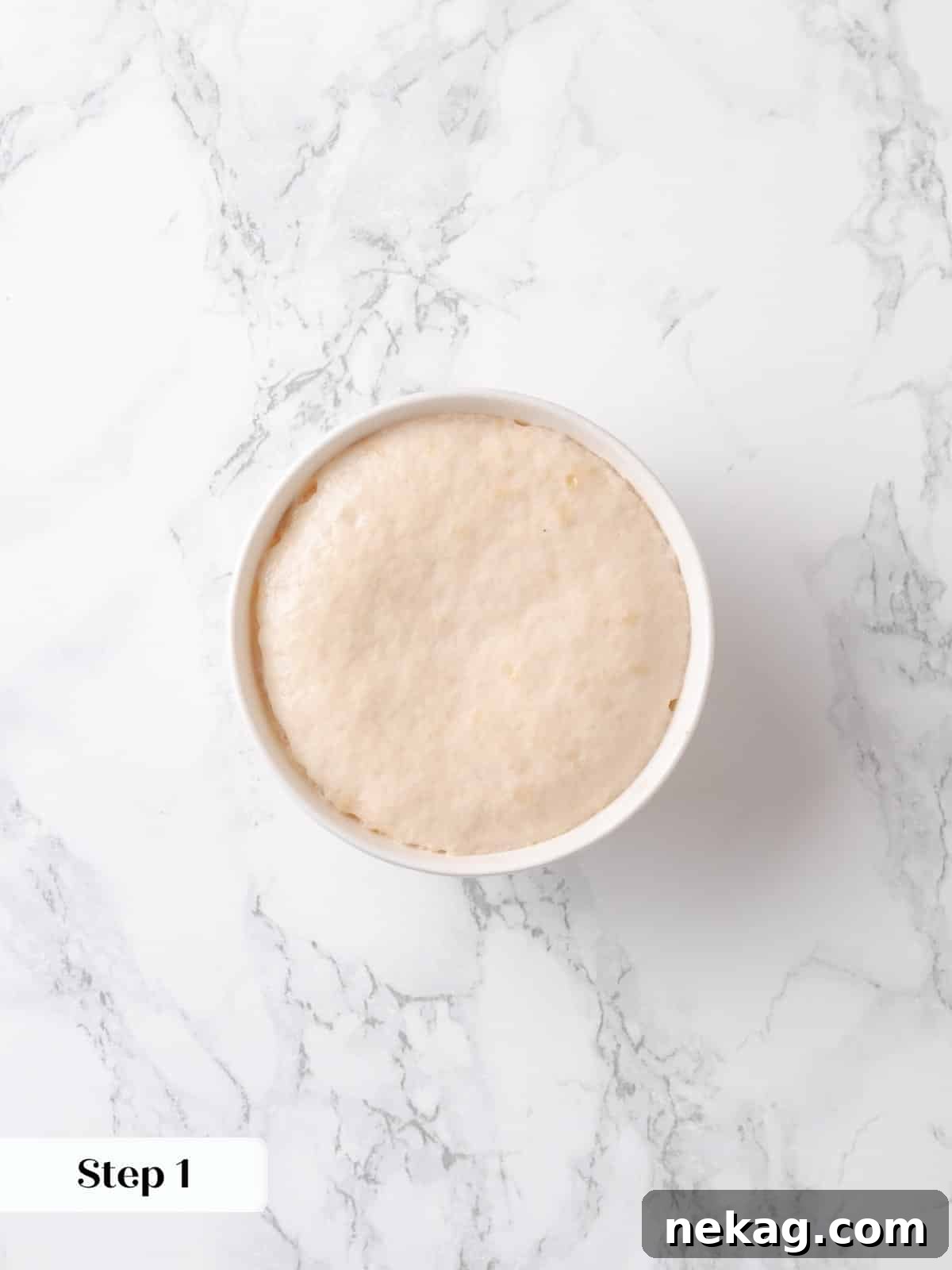
Step 1: Activate the Yeast. In a small, separate bowl, gently dissolve the active dry yeast in the warm water and milk. You can add a pinch of the granulated sugar from the recipe to help activate it, though it’s not strictly necessary. Allow this mixture to sit undisturbed for 5-10 minutes, or until a light, frothy foam appears on the surface, indicating the yeast is active and ready to work its magic (photo 1). While the yeast is blooming, prepare a 9×13 inch baking dish by thoroughly buttering it or spraying it with a non-stick cooking spray. I typically use about 1 tablespoon of softened butter to ensure the pan is well-greased, especially in the corners. Set the prepared dish aside.
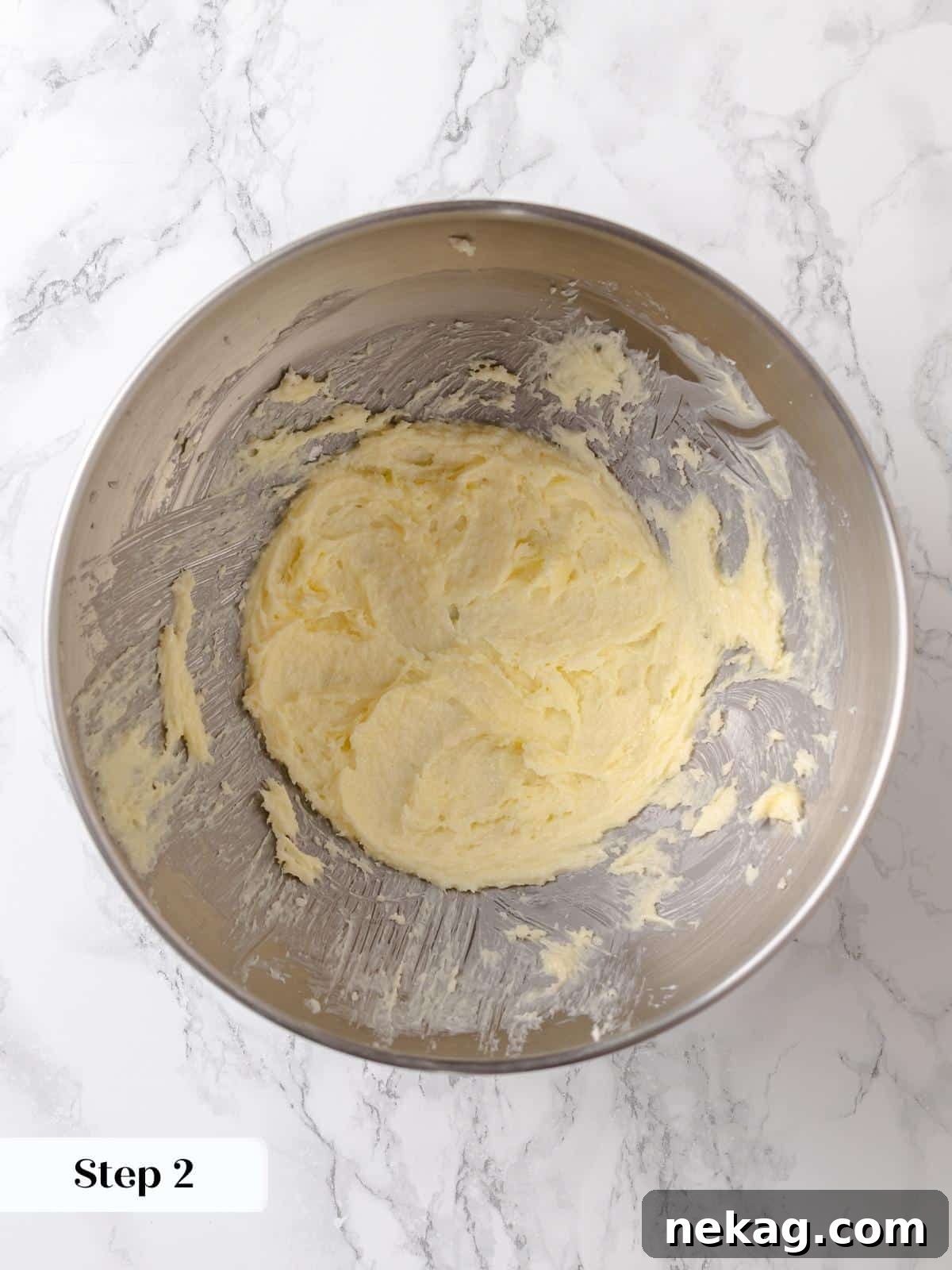
Step 2: Cream Butter and Sugar. In the bowl of a stand mixer fitted with the paddle attachment, combine the softened butter, granulated sugar, and kosher salt. Beat on medium speed until the mixture appears noticeably lightened in color and well combined (photo 2). Don’t expect it to become “light and fluffy” like a typical cake batter due to the modest amount of sugar in this base.
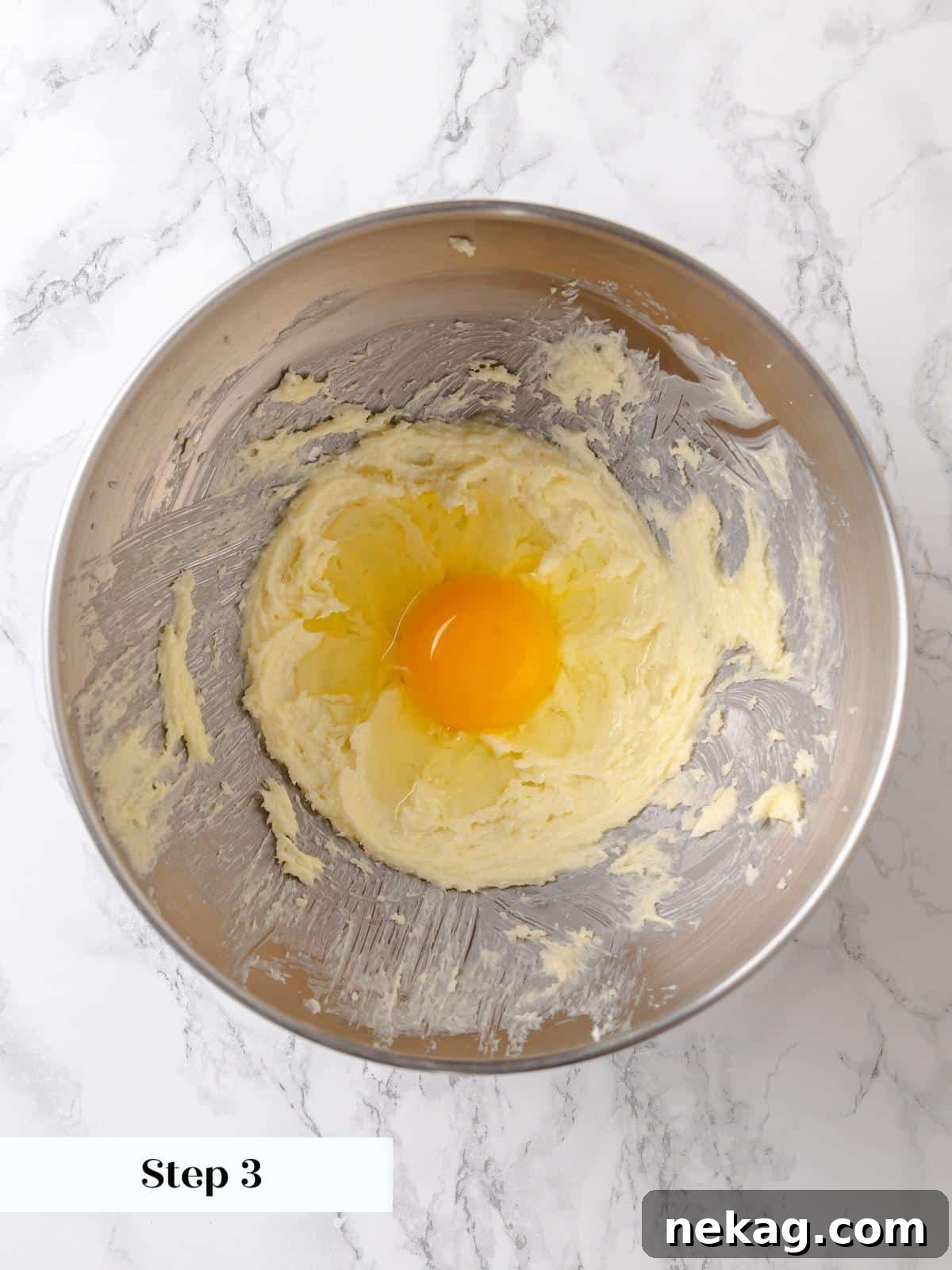
Step 3: Incorporate the Egg. Add the large egg to the creamed butter and sugar mixture, and beat it in thoroughly until fully incorporated (photo 3). Using truly room-temperature, softened butter will make this step significantly easier and help achieve a smooth emulsion. On occasion, if my butter is a little too cool, I might still have a few tiny lumps after this step. Don’t worry if this happens; these small butter pieces will melt into the batter during baking, so don’t stress over achieving absolute perfection at this stage.
Pro Tip: For the softest butter, take it out of the fridge at least an hour before you plan to bake. If you’re short on time, you can gently microwave it for 10-15 seconds, flipping halfway, but be careful not to melt it entirely!
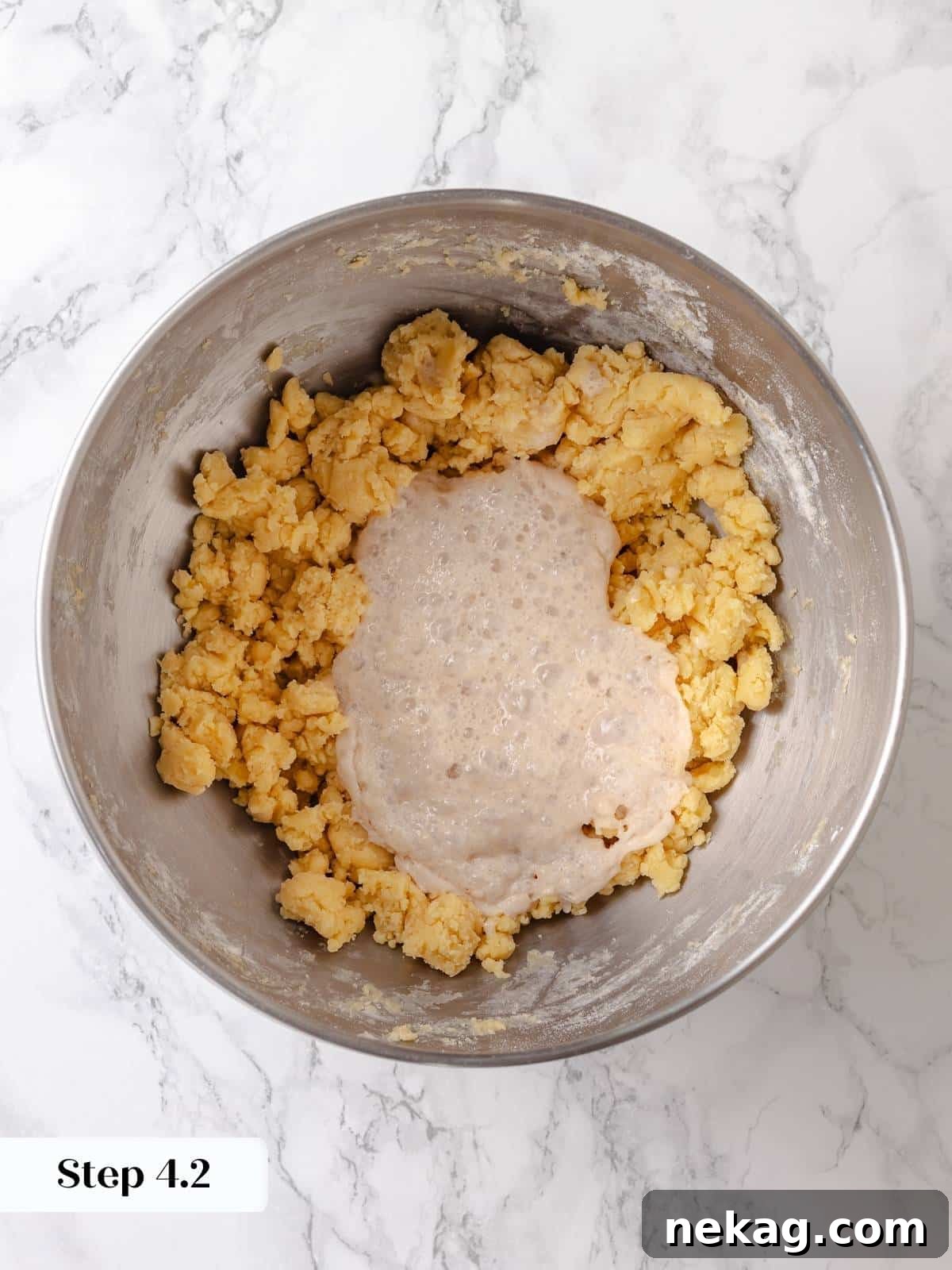
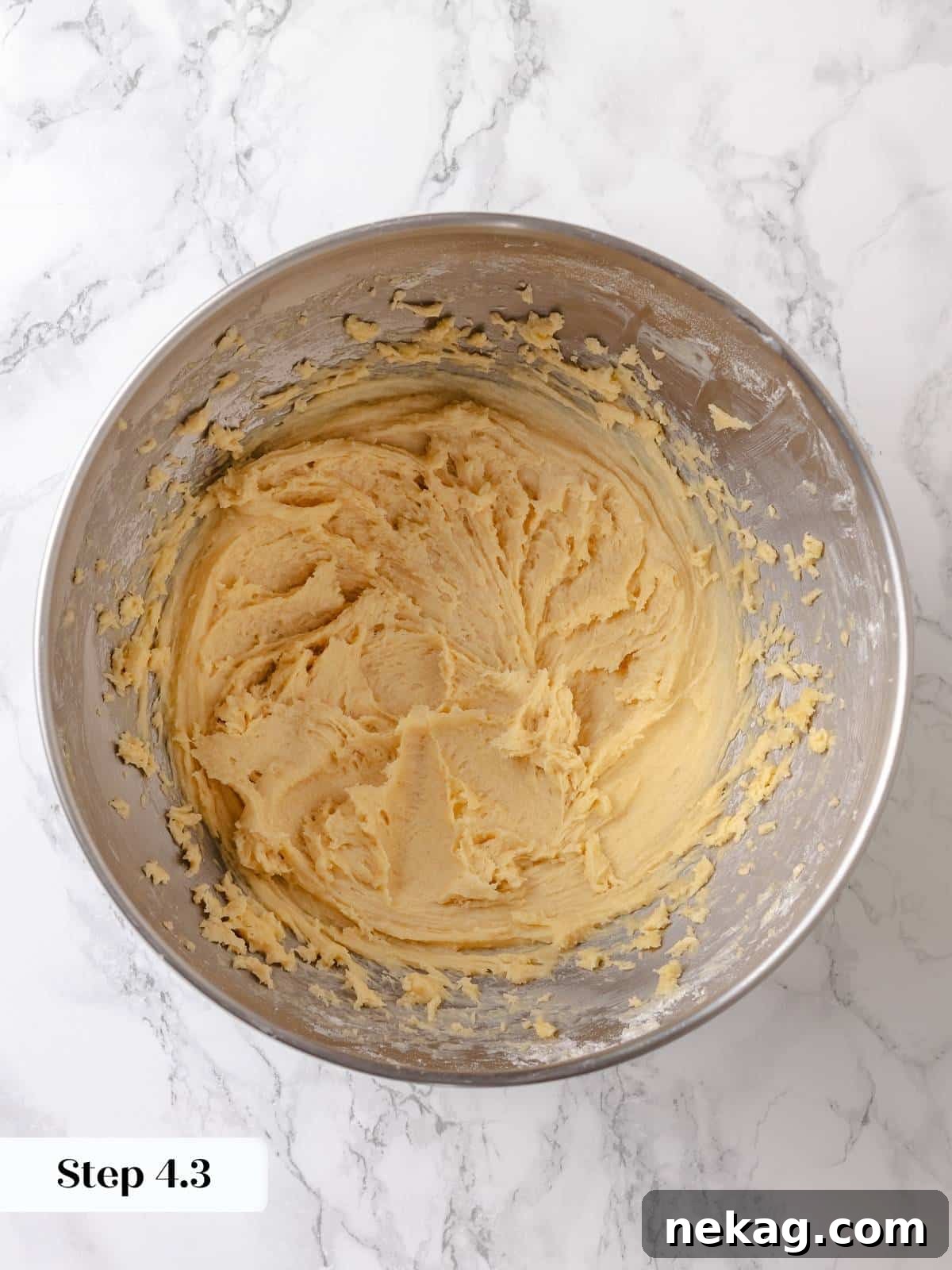
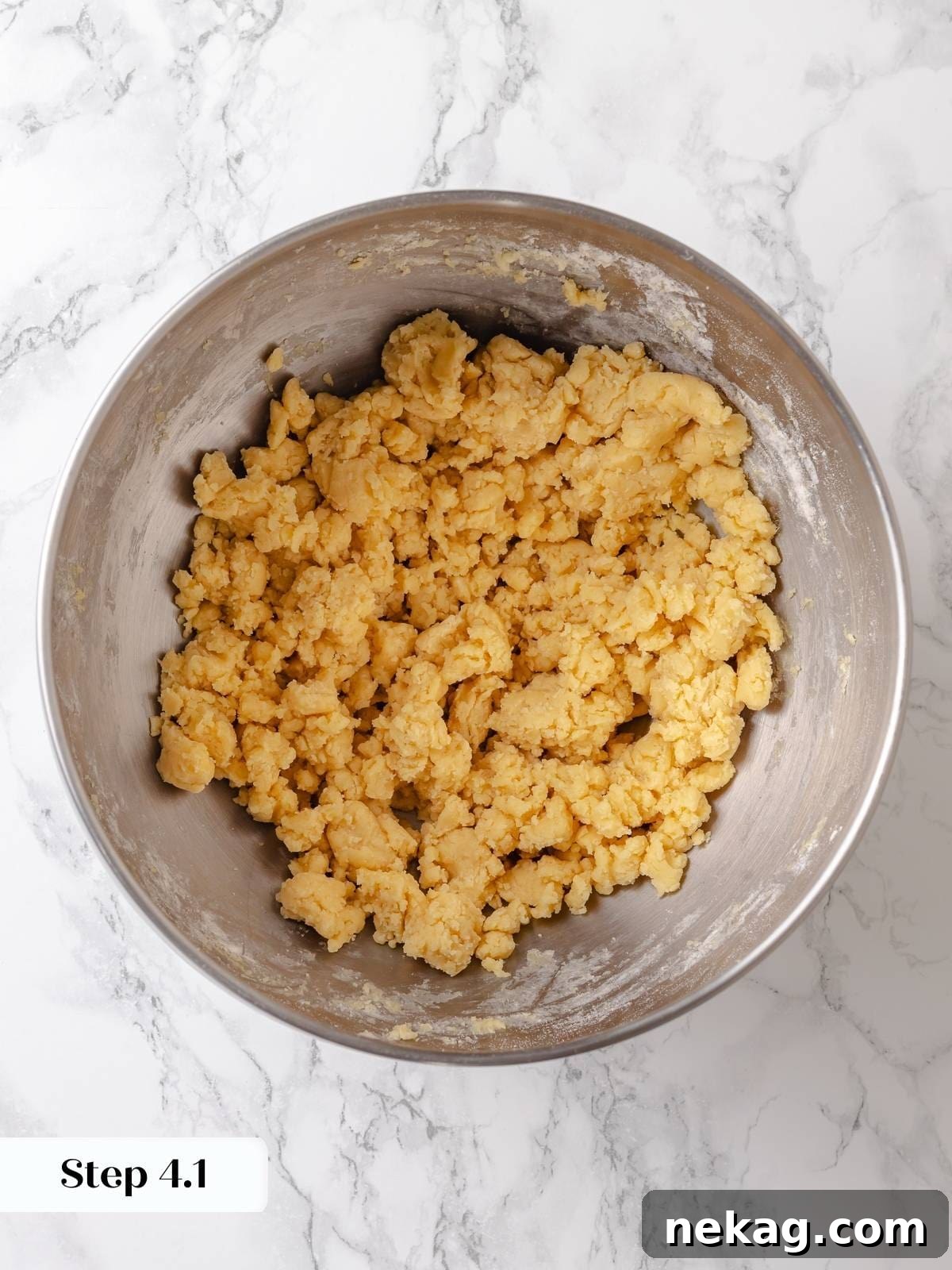
Step 4: Combine Dry and Wet Ingredients. With the mixer running on low speed, slowly add the all-purpose flour to the butter mixture (photo 4). Once partially incorporated, pour in the bloomed yeast mixture (photo 5). Increase the mixer speed to medium-high and continue to beat for 2-3 minutes. The goal is for the dough to become smooth and begin to pull away from the sides of the bowl (photo 6). Keep in mind, this won’t form a stiff “dough” like bread, but rather a thick, sticky batter that develops elasticity and pulls away in strands before mixing back in. Again, don’t overthink it; achieving a smooth, cohesive batter is the main objective.
Baker’s Note: The batter might still seem soft and sticky, which is perfectly normal for a yeasted cake base. This consistency is what allows for its unique texture. As long as it’s uniform, you’re on the right track.
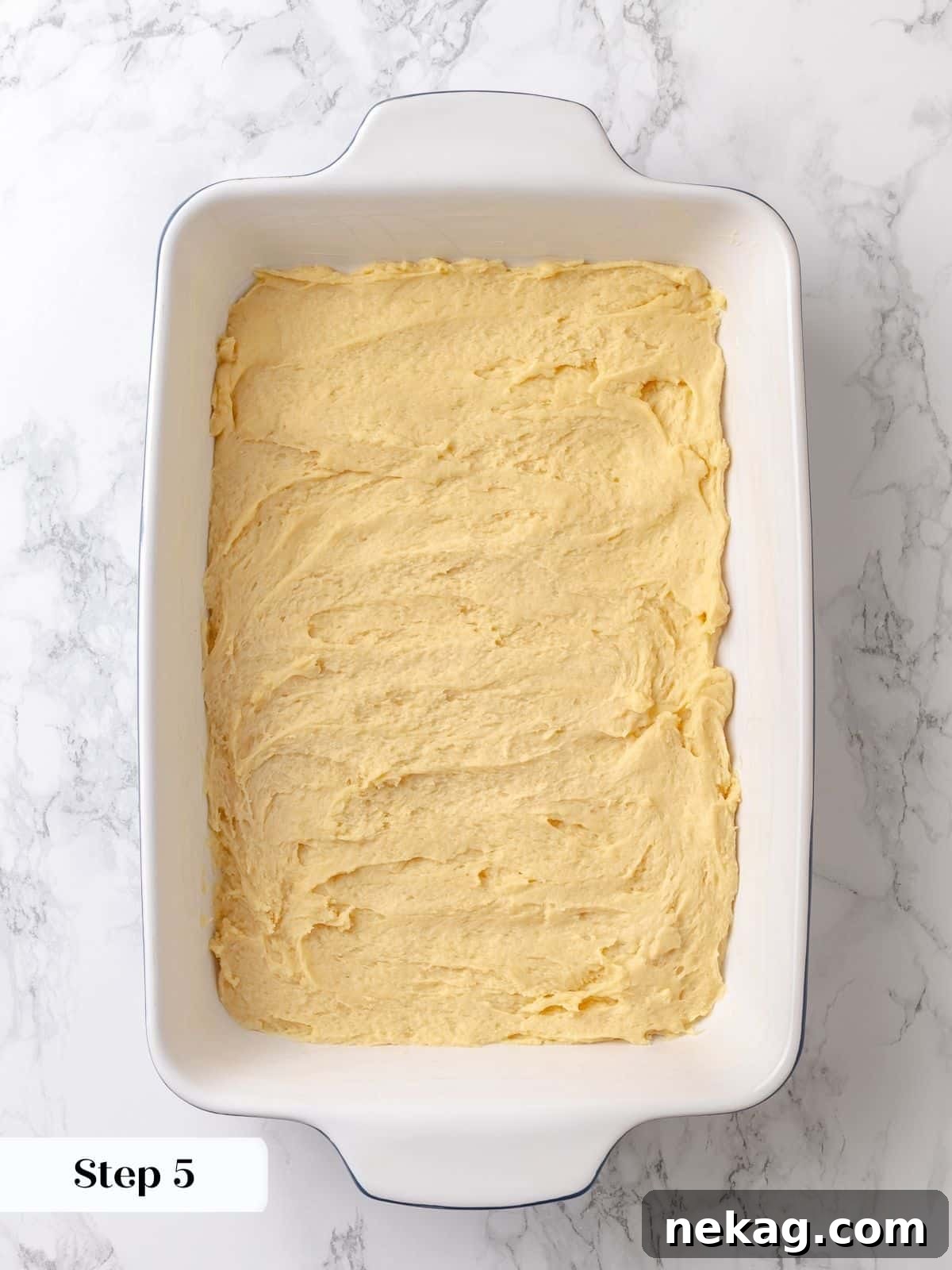
Step 5: Spread the Dough. Transfer the soft dough into your prepared 9×13 inch baking dish. To achieve an even layer, I find it easiest to spray both sides of a small offset spatula with non-stick cooking spray. Use the spatula to gently press and spread the dough evenly across the bottom of the pan, making sure it reaches all the edges and corners (photo 7). This creates a uniform base for your gooey topping.
Step 6: Proof the Cake Base. Cover the baking dish loosely with plastic wrap or a clean kitchen towel. Place it in a warm, draft-free spot to proof until the dough has almost doubled in size (photo 8). The exact time can vary: with active dry yeast, this typically takes about 1 ½ to 2 hours, while instant yeast might only require about 1 hour. It’s often hard to gauge an exact “doubled” state, but you’re looking for a noticeable puffiness. During the last 20 minutes of the proofing time, preheat your oven to 375°F (190°C).
Preparing the Signature Gooey Topping:
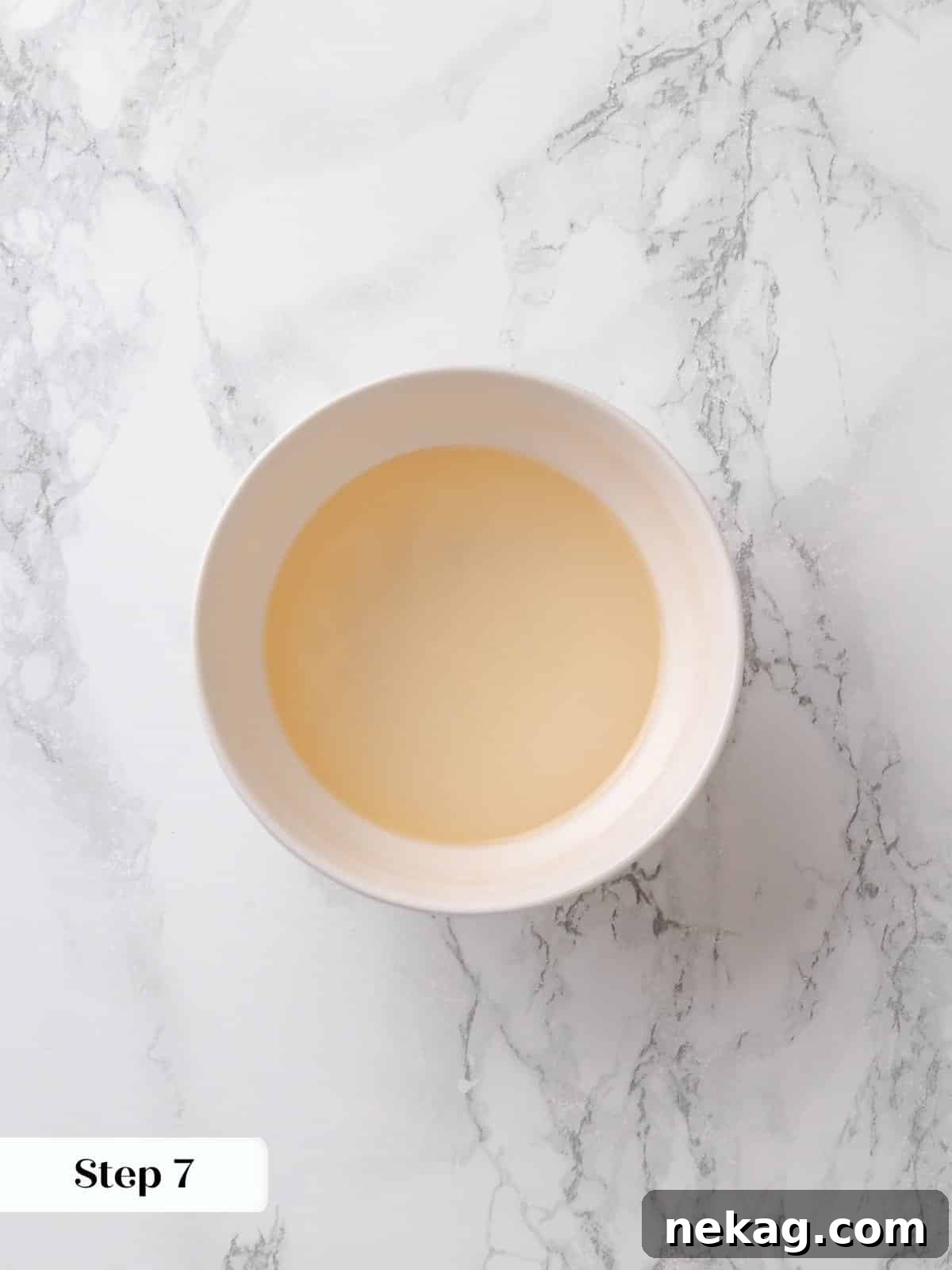
Step 7: Whisk the Syrup Mixture. In a small bowl, whisk together the light corn syrup, warm water, and vanilla extract until thoroughly combined. Using warm water helps the corn syrup integrate smoothly. Set this mixture aside (photo 9).
Flavor Tip: Using warm water ensures that the corn syrup easily blends into a smooth, consistent liquid, preventing any clumping in the final topping mixture.
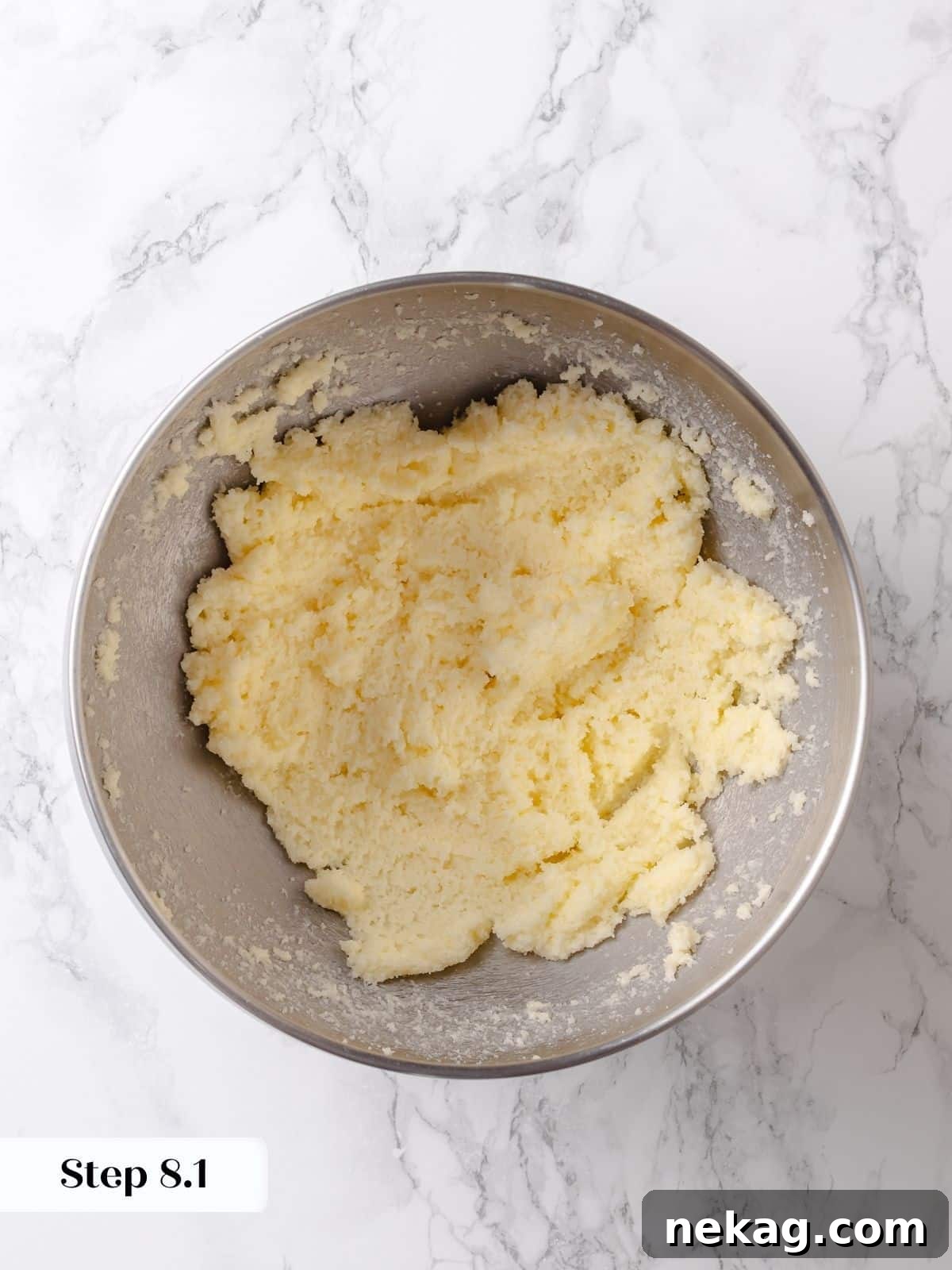
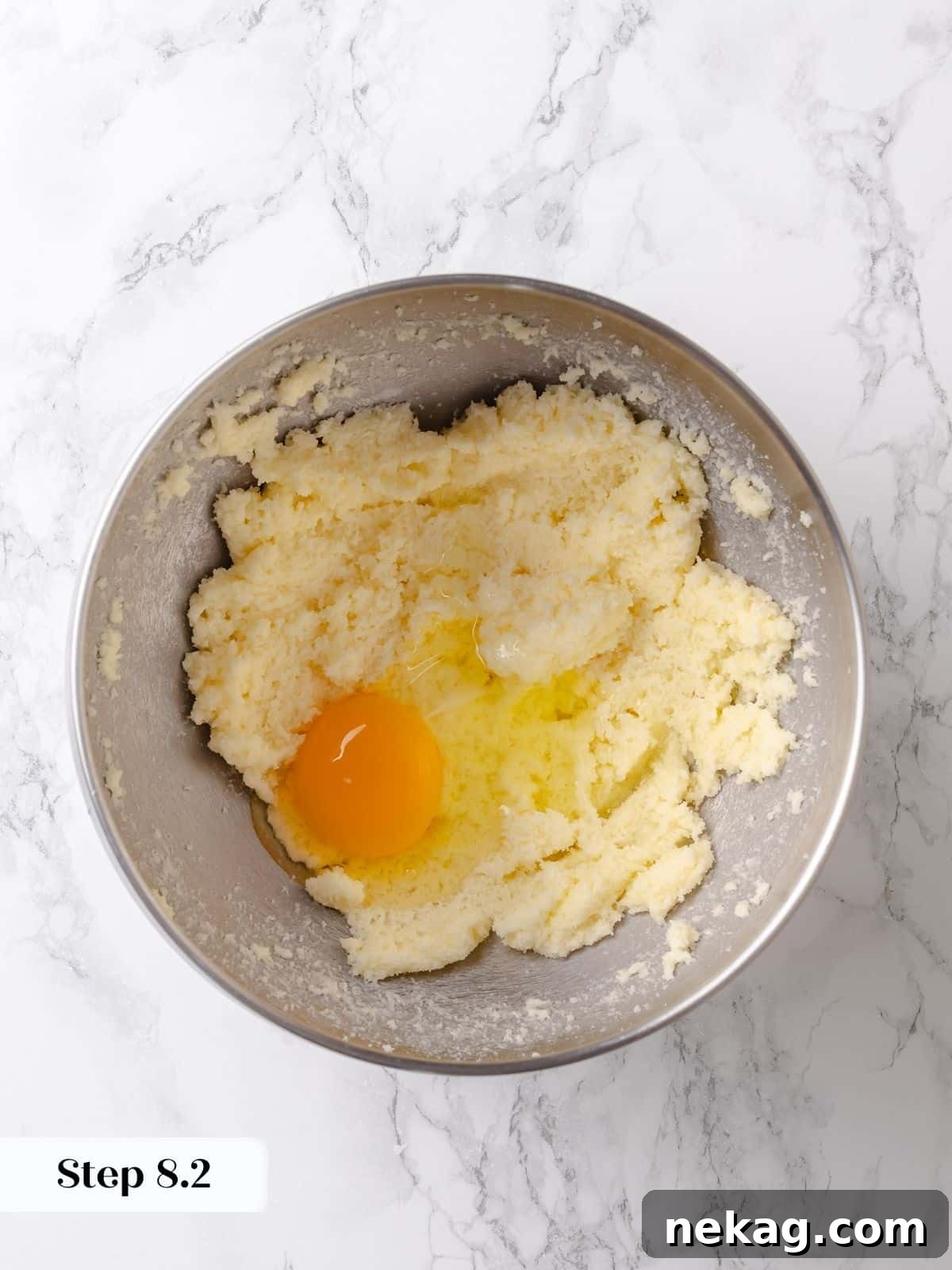
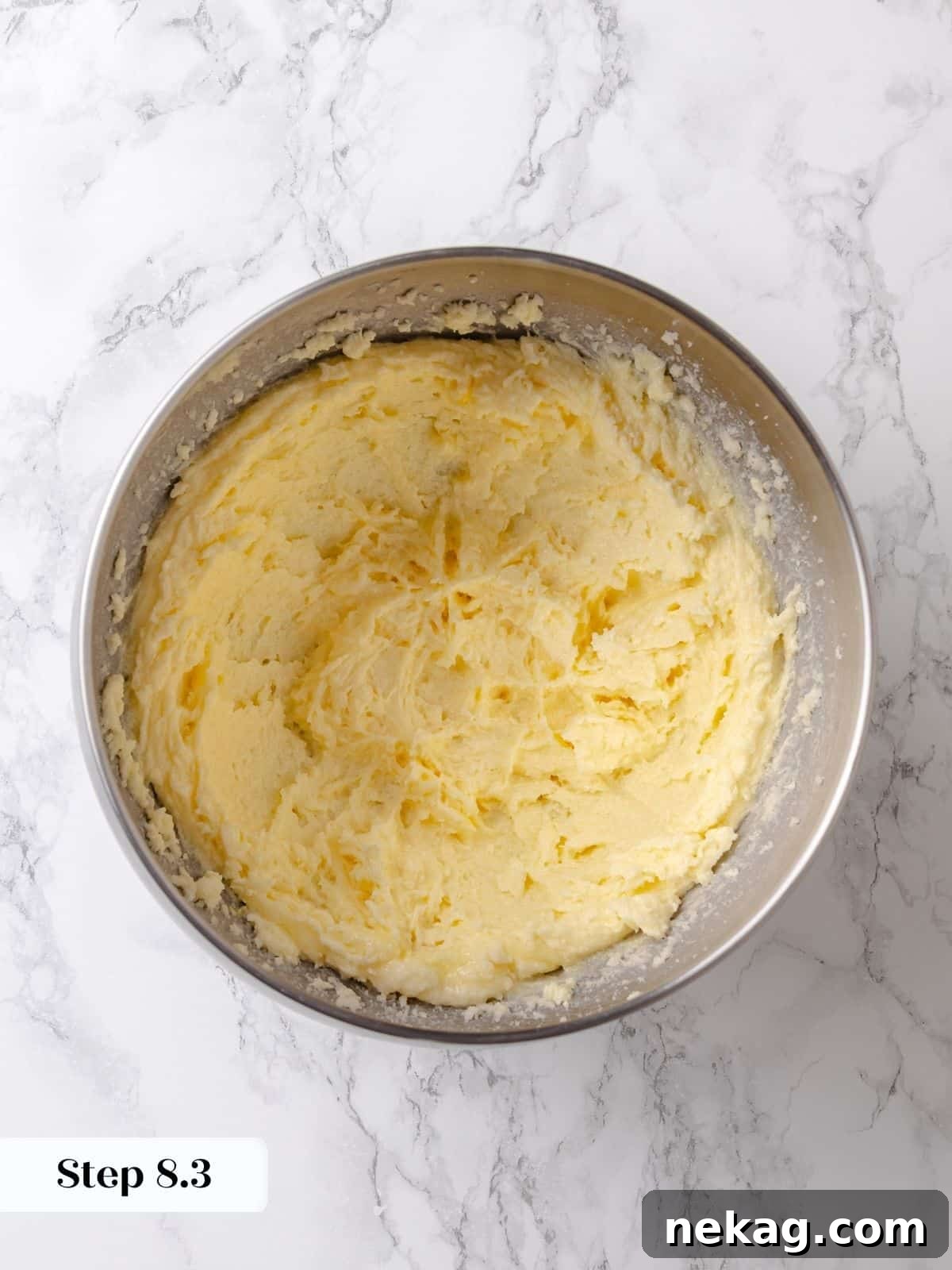
Step 8: Cream Butter and Sugar for Topping. In the clean bowl of a stand mixer fitted with the paddle attachment (or a large bowl with an electric hand mixer), cream together the softened butter and granulated sugar until they form a thick, pale paste (photo 10). Next, add the large egg and continue beating on medium speed until the mixture is lightened in color, fluffy, and the egg is fully incorporated (photo 11).
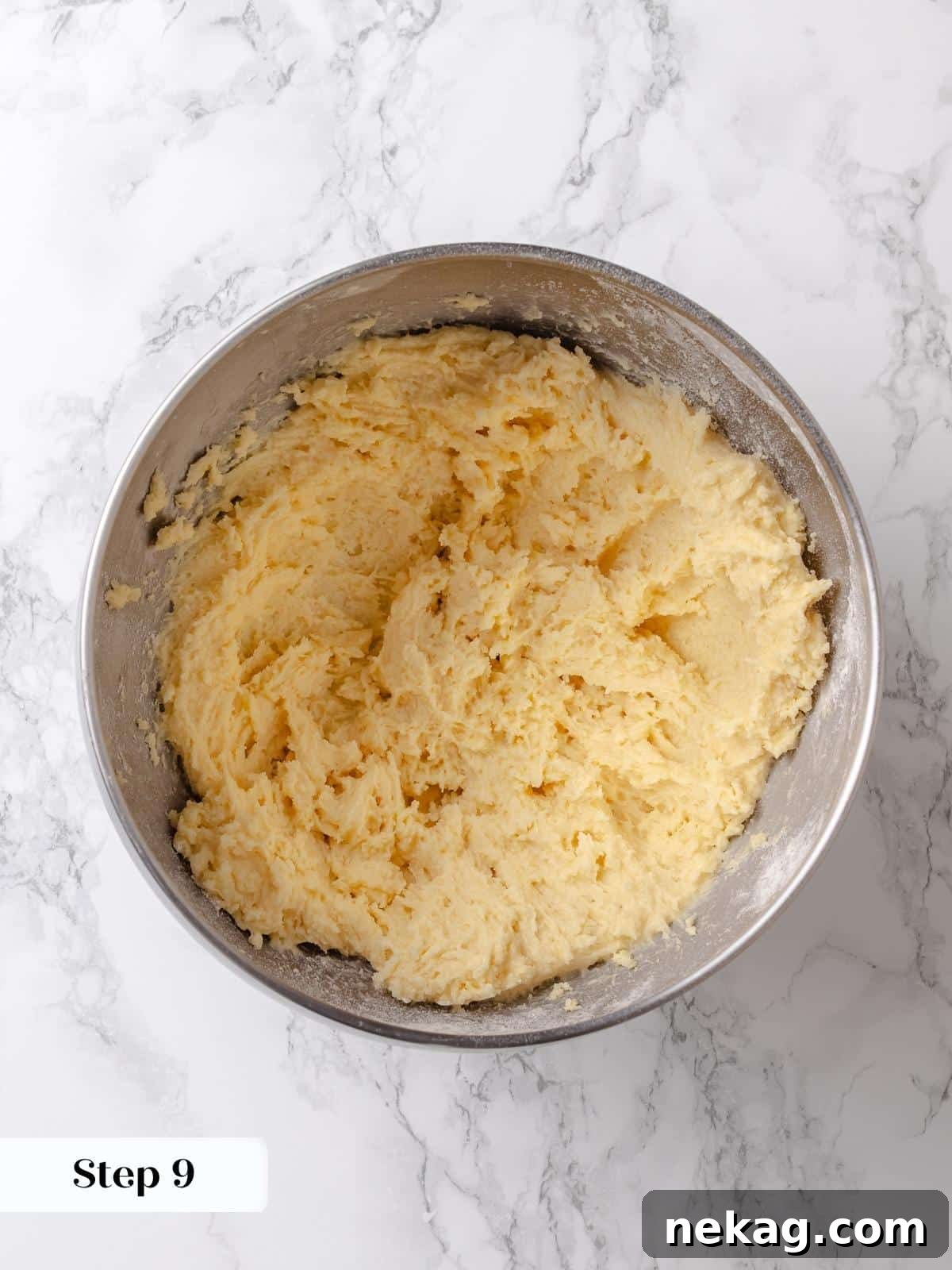
Step 9: Add Dry Ingredients to Topping. Reduce the mixer speed to low and gradually add the all-purpose flour and kosher salt to the butter mixture. Continue mixing until just combined. At this stage, the consistency and even the taste of this mixture will strikingly resemble a rich sugar cookie dough (photo 12)!
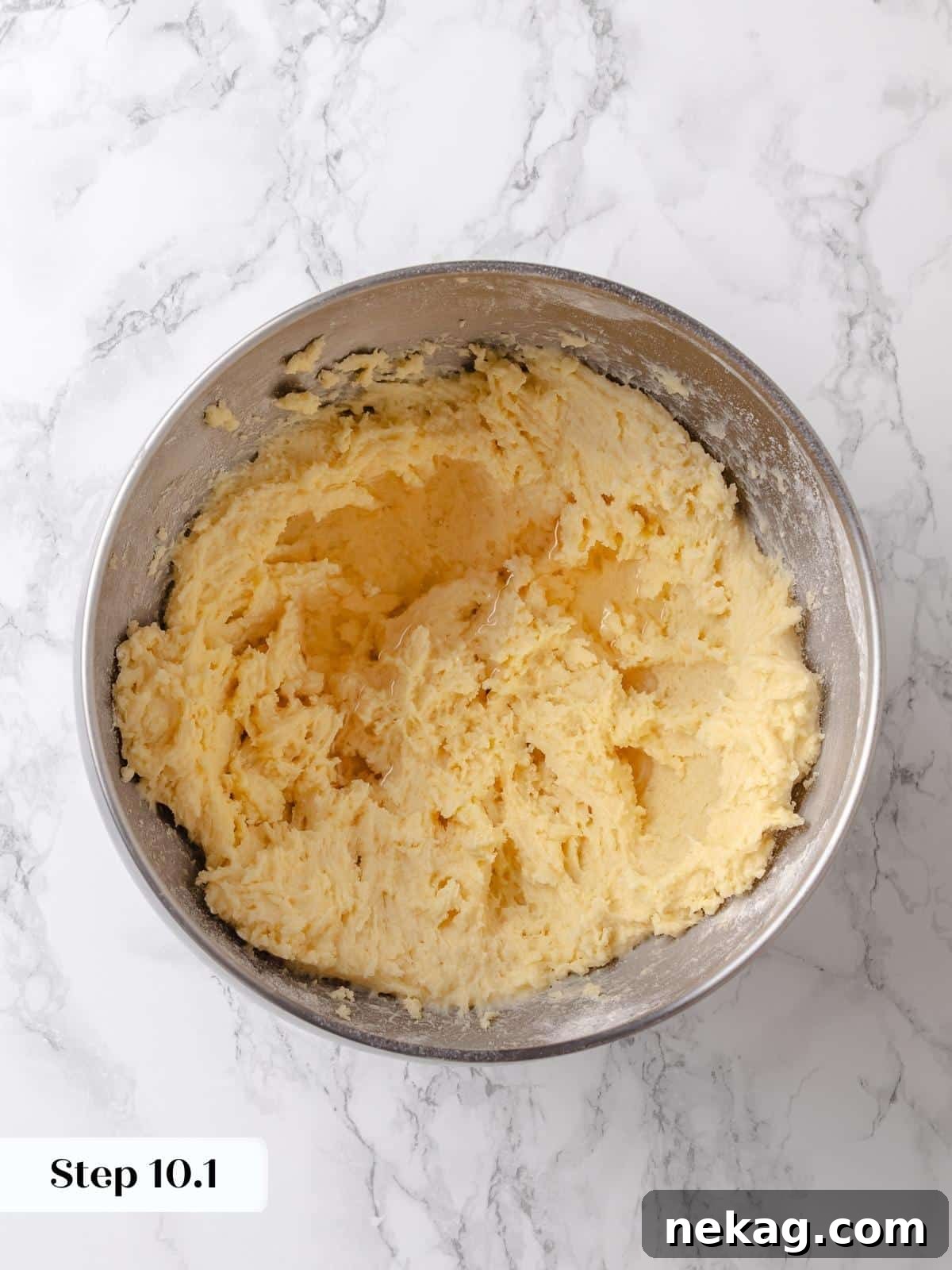
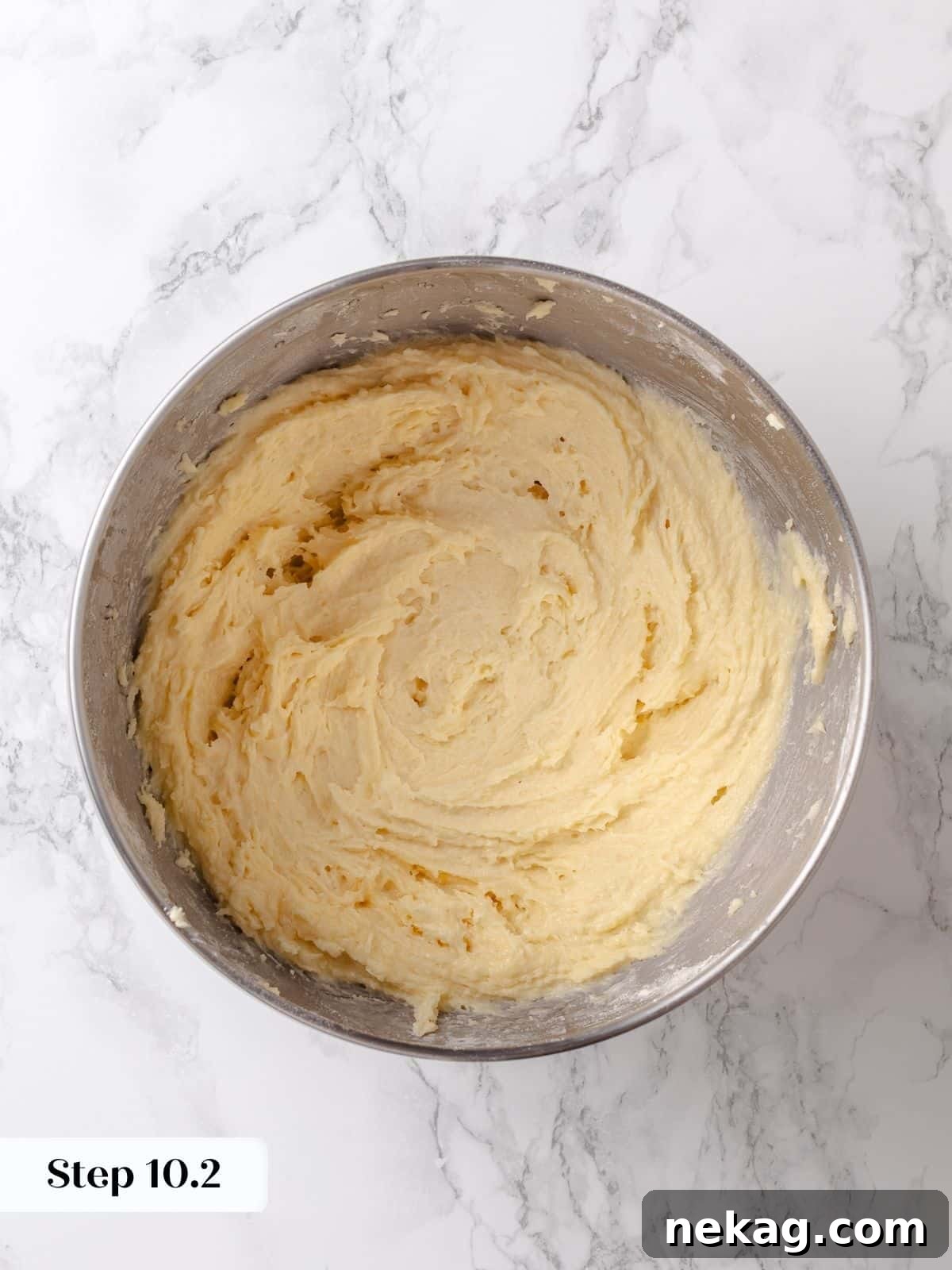
Step 10: Finalize the Topping. Once the flour and salt are completely incorporated into the butter mixture, add the corn syrup mixture (photo 13). Increase the mixer speed to medium-high and beat until the entire topping mixture is smooth, cohesive, and fully incorporated (photo 14). It will be thick and wonderfully gooey.
Assemble & Bake for Golden Perfection:
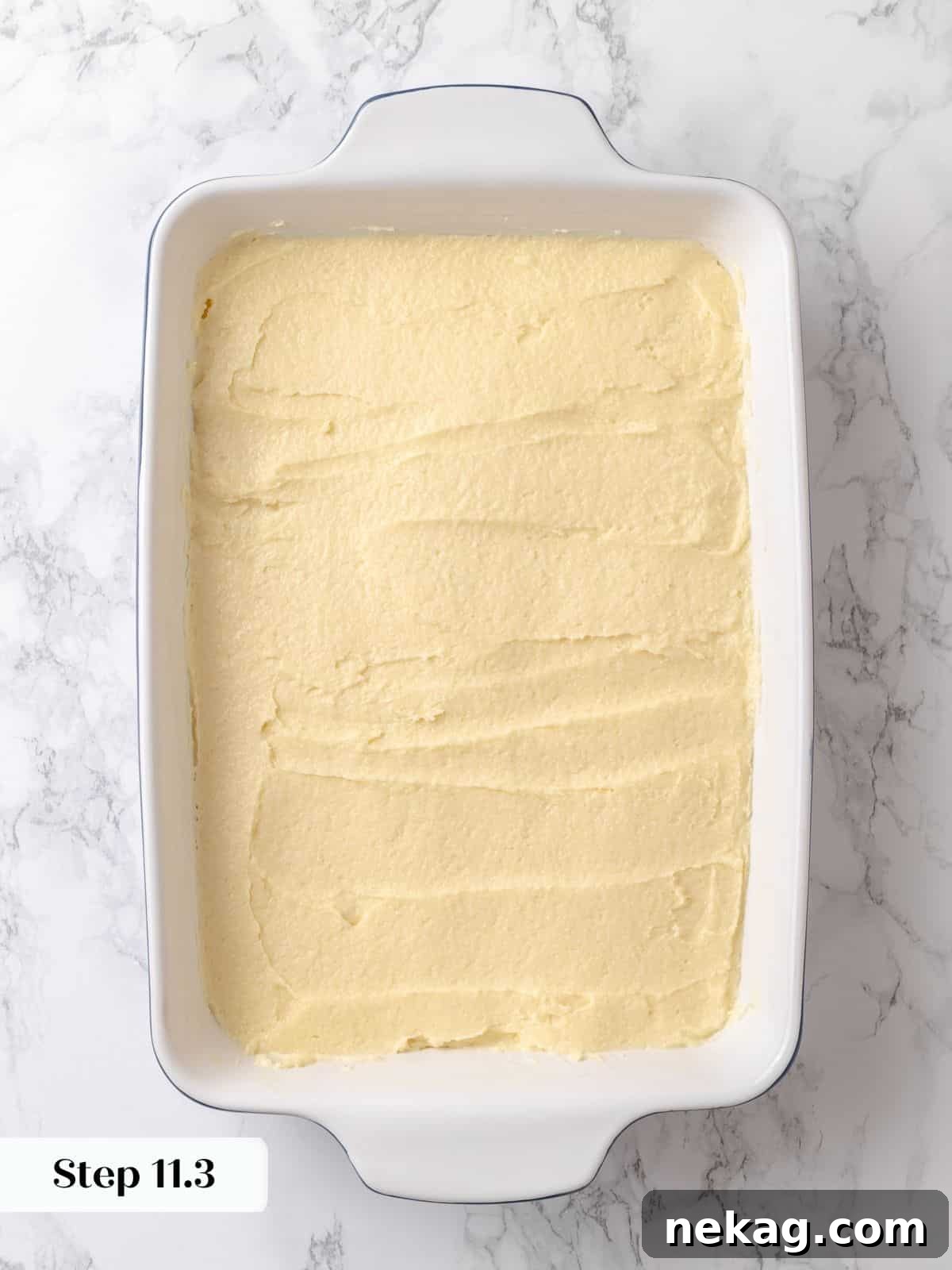
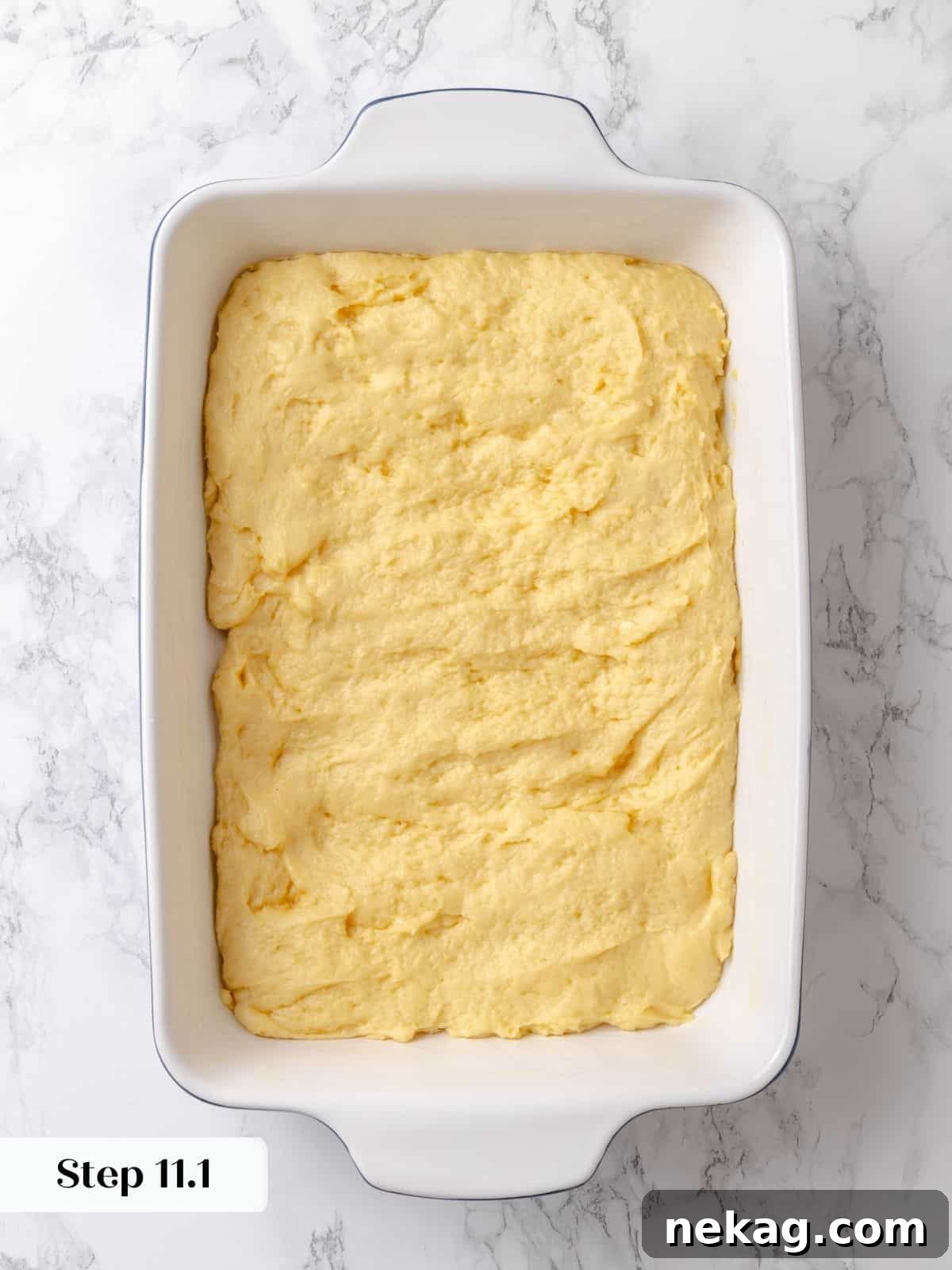
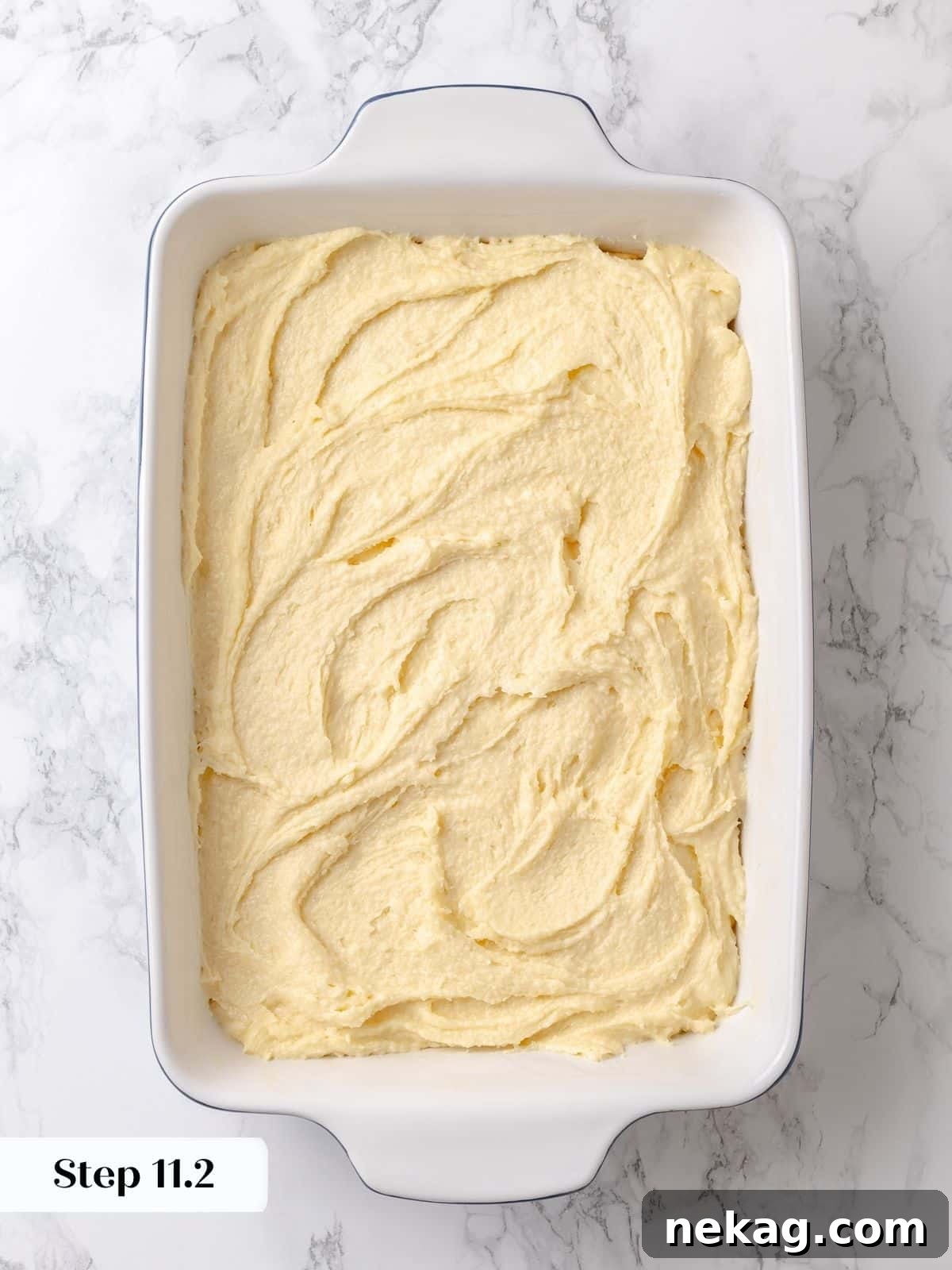
Step 11: Apply the Topping. Gently dollop spoonfuls of the prepared sugar batter over the entire surface of the risen cake dough (photos 15 & 16). You’ll notice there’s enough batter to almost completely cover the base even before spreading. Then, using a small offset spatula or the back of a spoon, carefully and evenly spread the thick sugar mixture over the top, ensuring full coverage to create that signature gooey layer (photo 17).
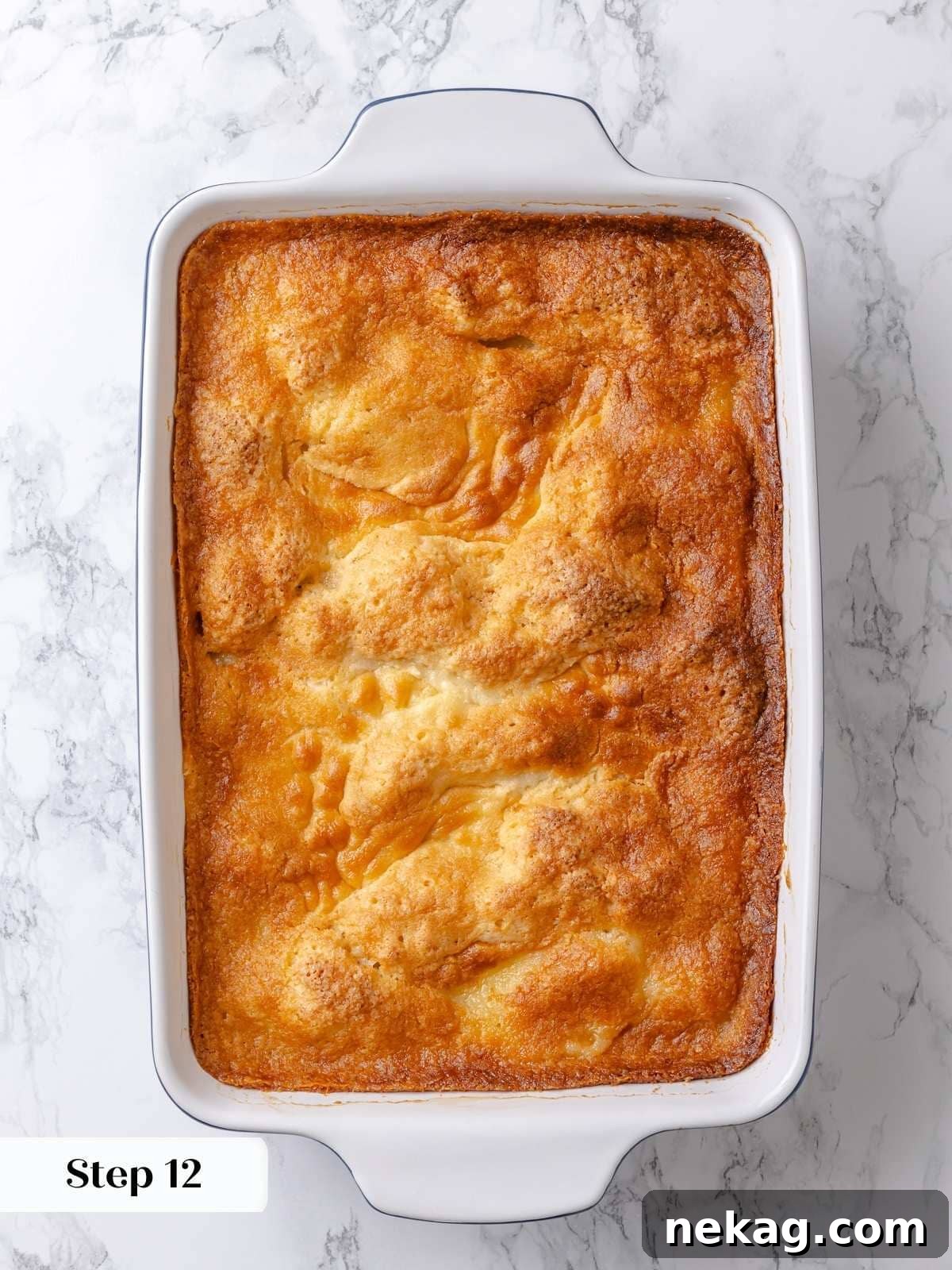
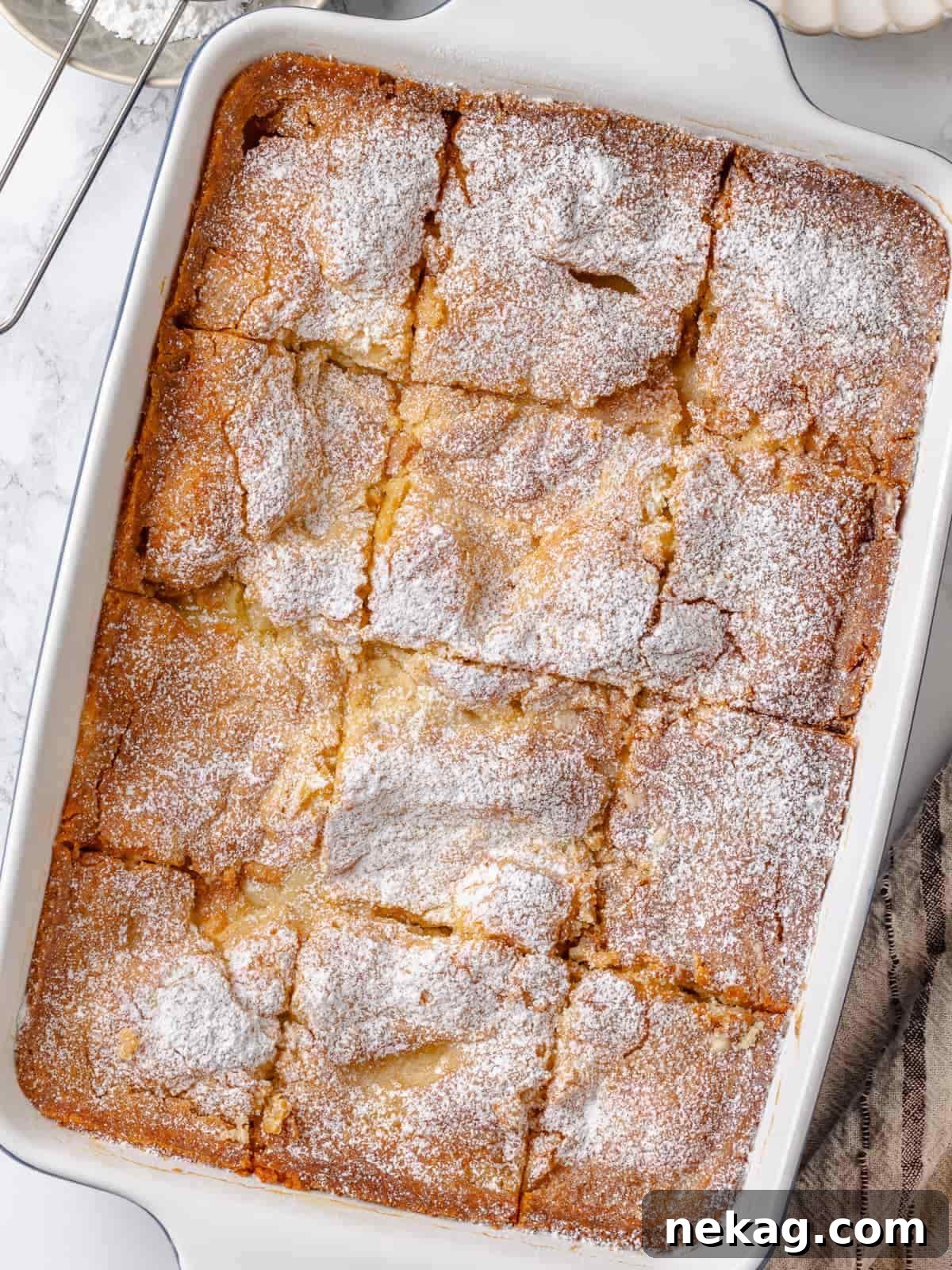
Step 12: Bake to Golden Perfection. Place the cake in your preheated 375°F (190°C) oven and bake for 30-35 minutes, or until the top is a beautiful light golden brown. To ensure even baking, rotate the pan halfway through, around the 20-minute mark. The cake should appear golden brown, with slightly darker, caramelized edges and a hint of bubbling in the center. It will puff up during baking and begin to set (photo 18). Crucially, the center should still exhibit a slight, cohesive wobble, much like a baked cheesecake, indicating its delightful gooiness. This means it’s perfectly done!
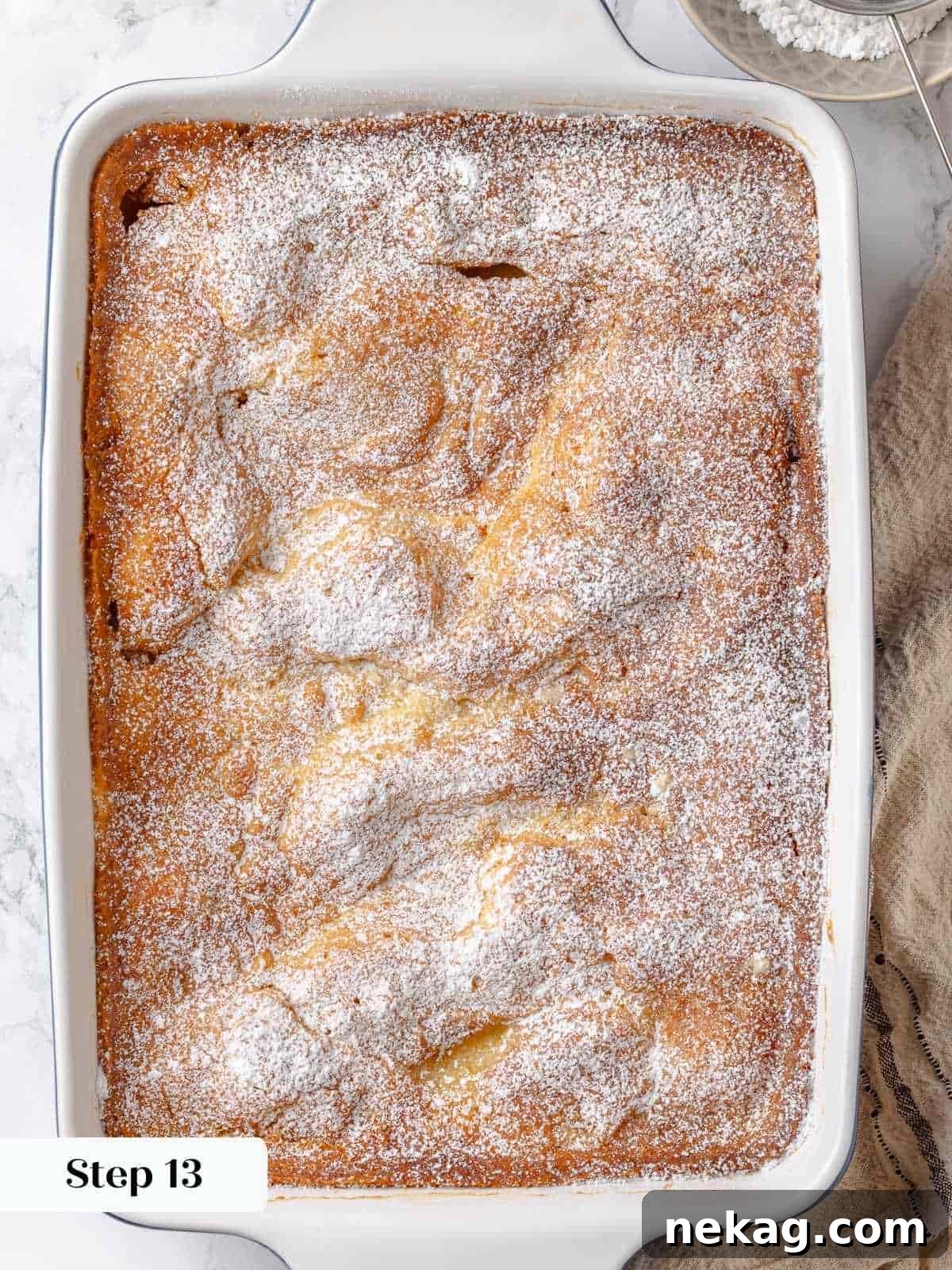
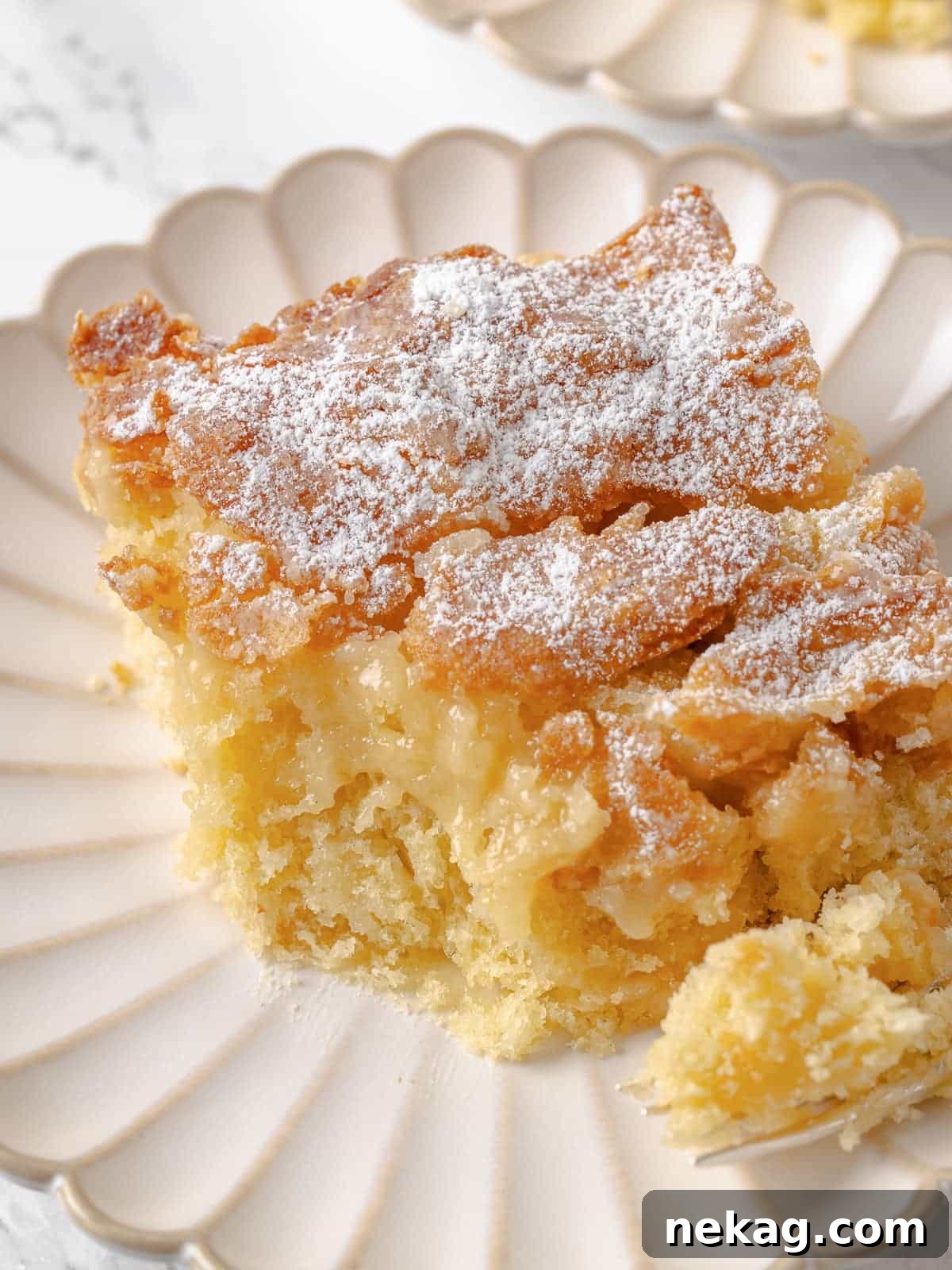
Step 13: Cool and Finish. Once baked, remove the gooey butter cake from the oven and allow it to cool almost completely in the pan on a wire rack. This cooling period is vital for the gooey topping to fully set and achieve its proper consistency. Once cooled, generously dust the entire top of the cake with confectioners’ sugar for that classic, inviting finish (photos 19 & 20). Then, slice, serve, and savor!
Chef Lindsey’s Recipe Tip
To streamline your baking day, you can prepare the gooey topping batter in advance. It stores beautifully in an airtight container in the refrigerator for up to a week. Just remember to take it out several hours before you plan to assemble the cake, allowing it to soften to room temperature. This crucial step ensures the topping is pliable enough to spread easily over the risen cake base.
Frequently Asked Questions About St. Louis Gooey Butter Cake
For optimal freshness and flavor, store your gooey butter cake covered tightly with plastic wrap, a lid, or in an airtight container at room temperature. It will maintain its best quality for up to 3 days. While it won’t spoil after this period, the cake will noticeably dry out, losing some of its signature gooeyness. Much like freshly baked glazed chocolate donuts, it is truly at its peak deliciousness on the day it’s made.
While you have the freedom to experiment in your kitchen, I generally don’t recommend baking the entire cake completely ahead of time for the best quality. The yeasted base is most tender and the topping most gooey when freshly baked. However, you can significantly simplify your preparation by making the topping batter up to a week in advance. Store it in an airtight container in the refrigerator. Just remember to remove it from the fridge several hours before you intend to use it, allowing it to soften completely to room temperature, which will make spreading effortless.
To revive that wonderful warmth and gooiness, you can reheat slices of butter cake wrapped in foil in a preheated oven (around 300°F/150°C for 10-15 minutes). Alternatively, for a quicker option, place a slice in an airtight container and warm it in the microwave for 15-30 seconds. The microwave method tends to retain more moisture, ensuring a delightfully soft and gooey center, though the oven method will crisp up the edges slightly.
Gooey butter cake is traditionally best served either slightly warm from the oven or at room temperature. A generous dusting of confectioners’ sugar is always the finishing touch! Similar to its Danish cousin, Brunsviger coffee cake, it shines brightest when enjoyed freshly baked. While it’s commonly served as a coffee cake for breakfast or brunch, don’t hesitate to elevate it into a decadent dessert. Serve it warm with a scoop of creamy vanilla bean ice cream or a dollop of crème anglaise. For an extra fruity twist, pair it with my easy blueberry sauce, a vibrant strawberry sauce, or a bright and zesty lemon curd made with fresh lemon juice and zest. Each accompaniment adds a delightful layer of flavor and texture!
More Irresistibly Gooey Dessert Recipes You’ll Love
Brownies & Bars Recipes
Ooey, Gooey S’mores Bars
Cookie Recipes
Thick & Chewy Chocolate Chip Cookies
Breakfast Pastry Recipes
Irresistible Pecan Sticky Buns
Cookie Recipes
Giant Skillet Cookie (Pizookie)
If you tried this recipe and absolutely loved it, please consider leaving a 🌟 star rating and share your experience in the comments section below. I truly value your feedback; your comments brighten my day!
St. Louis Gooey Butter Cake [Yeasted]
Chef Lindsey
30
30
1
30
2
30
12
slices
Comment
Print Recipe
Ingredients (US Customary, 1x Servings)
For the cake:
- 3 tablespoons milk warm
- 2 tablespoons water
- 1 ¾ teaspoons active dry yeast
- 6 tablespoons unsalted butter room temperature
- 3 tablespoons granulated sugar
- 1 teaspoon kosher salt
- 1 large egg
- 1 ¾ cup all-purpose flour
For the topping:
- 3 ½ tablespoons light corn syrup
- 2 tablespoons water
- 2 ½ teaspoons vanilla extract
- 12 tablespoons unsalted butter room temperature
- 1 ½ cups granulated sugar
- ½ teaspoon kosher salt
- 1 large egg
- 1 cup all-purpose flour plus 3 tablespoons
- confectioners’ sugar
Instructions
To make the cake base:
-
In a small bowl, dissolve yeast in water and warm milk. You can add a pinch of sugar while measuring if desired.
-
In the bowl of a stand mixer fitted with the paddle attachment, cream butter, sugar, and salt until lightened. The mixture will not become “light and fluffy” due to the low sugar content.
-
Add the egg and beat until fully incorporated. Softened butter will simplify this step. If your butter is slightly cool, small lumps might remain, which is acceptable and won’t affect the final cake.
-
Slowly add the flour with the mixer running on low, then add the yeast mixture. Increase speed to medium-high and beat for 2-3 minutes until the dough is smooth and begins to pull away from the bowl in strands before mixing back in. Do not overmix.
-
Press or spread the dough evenly into a greased 9×13 inch baking pan. Grease the pan with about 1 tablespoon of softened butter or non-stick spray, and use a cooking spray-coated offset spatula to spread the dough to the edges and corners.
-
Cover the pan and proof in a warm place until the dough has almost doubled in size. This will take approximately 1 ½ – 2 hours with active dry yeast, or about 1 hour with instant yeast.
-
During the last 20 minutes of proofing, preheat your oven to 375°F (190°C).
To prepare the topping:
-
In a small bowl, whisk together corn syrup, warm water, and vanilla extract. Set aside.
-
In the bowl of a stand mixer fitted with the paddle attachment, cream butter and sugar until a thick paste forms.
-
Add the egg and continue to beat until the mixture is lightened and fully incorporated.
-
Reduce the mixer speed to low and slowly add the flour and salt. The mixture will resemble sugar cookie dough.
-
Once the dry ingredients are completely incorporated, add the corn syrup mixture. Increase the speed to medium-high and beat until the topping is fully incorporated and smooth.
-
Dollop the sugar batter generously over the surface of the risen cake dough. Use a small offset spatula or the back of a spoon to gently spread the topping mixture evenly across the entire surface.
-
Bake in the preheated oven for 30-35 minutes, or until the top is light golden brown. Rotate the pan after 20 minutes for even baking. The cake should be golden, with darker edges and a slightly bubbly center, puffed and set, but still with a cohesive jiggle like a cheesecake.
-
Cool the cake almost completely in the pan on a wire rack. Once cooled, dust generously with confectioners’ sugar before slicing and serving.
Notes
Presentation – For a traditional and inviting look, generously dust the top of the cooled cake with confectioners’ sugar.
Variations – For an aromatic twist, you can incorporate lemon zest into the cake batter. Alternatively, bake the recipe in 12 individual muffin tins, ensuring they are well-buttered, for single-serving gooey butter cakes!
Storage – Store gooey butter cake covered tightly with plastic wrap, a lid, or in an airtight container at room temperature for up to 3 days. For the best experience, it is highly recommended to serve this delightful cake freshly baked and still slightly warm from the oven.
Nutrition Information (Approximate)
Serving:
1
square
|
Calories:
397
kcal
|
Carbohydrates:
55
g
|
Protein:
4
g
|
Fat:
18
g
|
Saturated Fat:
11
g
|
Polyunsaturated Fat:
1
g
|
Monounsaturated Fat:
5
g
|
Trans Fat:
1
g
|
Cholesterol:
73
mg
|
Sodium:
310
mg
|
Potassium:
58
mg
|
Fiber:
1
g
|
Sugar:
33
g
|
Vitamin A:
570
IU
|
Vitamin C:
0.002
mg
|
Calcium:
20
mg
|
Iron:
1
mg
Breakfast, Dessert
American
397
Like this? Leave a comment below!
Before You Go: More Breakfast & Dessert Inspiration
I hope you thoroughly enjoyed preparing and tasting this authentic yeasted gooey butter cake recipe, a true culinary gem from my hometown of St. Louis! It’s a dish that carries generations of tradition and a whole lot of deliciousness.
If you’re looking for more ways to start your day on a sweet note or to finish a meal with an unforgettable dessert, be sure to explore our other delicious breakfast recipes and delectable dessert options. Happy baking!