
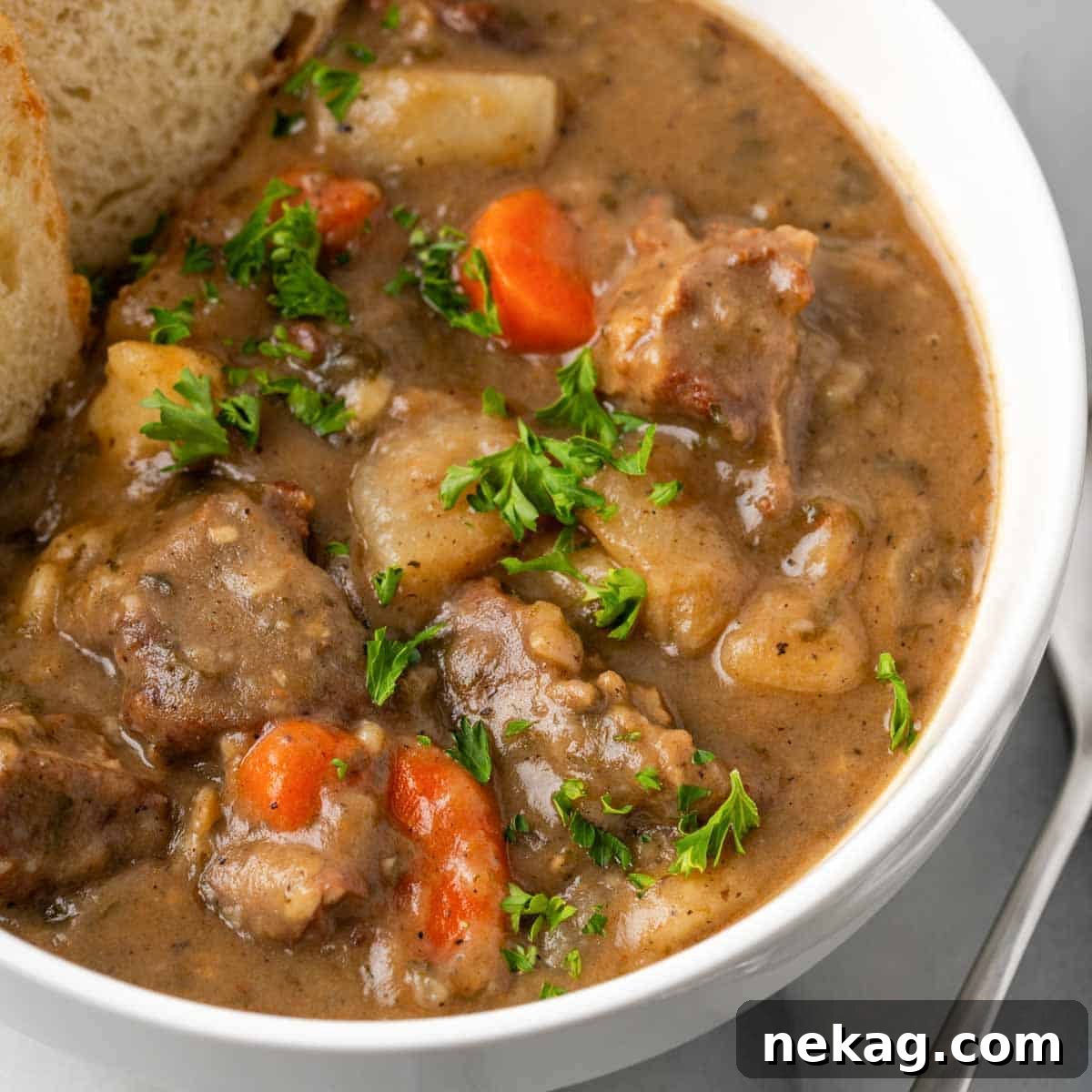
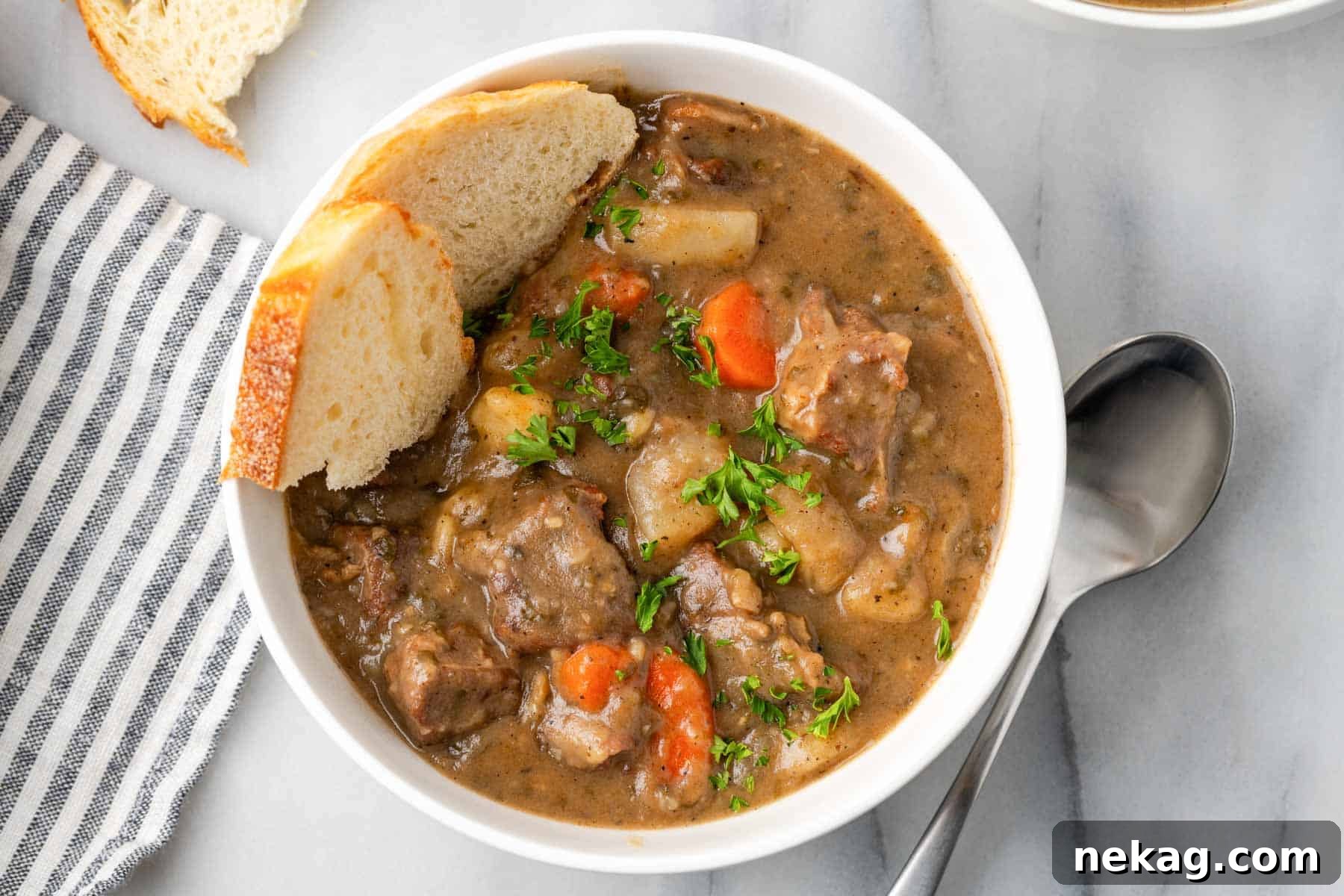
Discover the ultimate comfort food with this magnificent Dutch oven beef stew. A true winter classic, this recipe promises melt-in-your-mouth tender beef and a rich, velvety broth, all simmered patiently over low heat for hours. Infused with a symphony of savory vegetables, aromatic herbs, and carefully selected spices, this hearty dish is destined to become a cherished favorite in your culinary repertoire. Perfect for chilly evenings, it delivers warmth and satisfaction in every spoonful, transforming simple ingredients into an extraordinary meal.
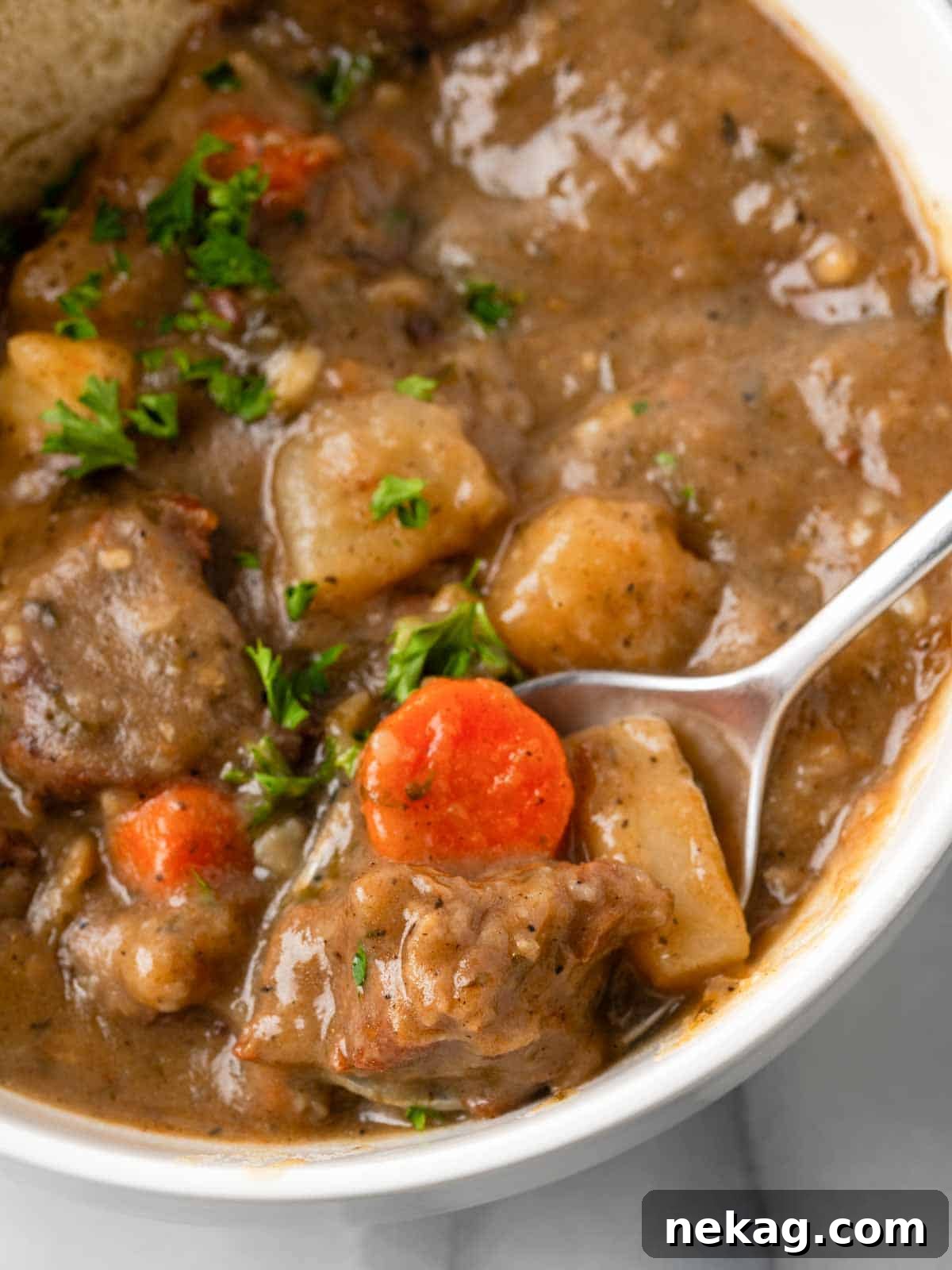
What truly sets this classic beef stew apart is its unique thickening agent: a touch of Irish soda bread. While unconventional, this addition introduces a delightful hint of sweetness and creates an incredibly hearty, stick-to-your-ribs texture that is both comforting and deeply satisfying. For those preferring an alternative, the stew can also be luxuriously thickened with creamy mashed potatoes, a technique borrowed from delightful recipes like this lamb stew recipe, ensuring a rich and robust consistency.
This exquisite recipe is a proud adaptation from the esteemed Better Homes and Gardens Heritage cookbook. Its origins trace back to the Monroe Family Cookbook, a historical collection believed to contain the cherished family recipes of President James Monroe. Such a legacy lends an authentic, time-honored charm to every bowl of this comforting beef stew, connecting modern kitchens to centuries of culinary tradition.
Table of Contents
- Why You Will Love This Dutch Oven Beef Stew Recipe
- Professional Tips For Making Classic Beef Stew
- Ingredients
- Variations
- How to Make Beef Stew
- Chef Lindsey’s Recipe Tip
- Frequently Asked Questions
- Dutch Oven Beef Stew Recipe
- Before You Go
Why You Will Love This Dutch Oven Beef Stew Recipe
- A Hearty, Filling, and Soul-Satisfying Meal. This Dutch oven beef stew is far more than just a meal; it’s a comforting experience, designed to nourish both body and soul. Each spoonful is packed with tender, succulent beef, earthy turnips, sweet carrots, and creamy potatoes, creating a harmonious blend of flavors and textures. This dish isn’t just delicious; it’s deeply filling, making it the perfect centerpiece for family dinners or a comforting antidote to a long day. Remember to serve it with crusty bread to ensure no drop of the incredible broth goes to waste – it’s a dish meant to be savored completely.
- Incredibly Tender Beef Bathed in a Rich Broth. The secret to the best beef stew lies in patient, low-and-slow cooking. This method guarantees that the beef emerges extraordinarily tender and succulent, literally falling apart with the gentlest touch. The accompanying broth is equally magnificent – thick, rich, and brimming with complex flavors derived from a thoughtful selection of herbs and spices. It’s a broth that doesn’t just complement the meat; it elevates the entire dish, creating a culinary masterpiece that will impress even the most discerning palates.
- Layers of Flavor Through Searing, Deglazing, and Slow Cooking. The unparalleled depth of flavor in this stew is built through a series of essential culinary techniques. Searing the beef develops a beautiful brown crust, locking in juices and creating a rich foundation of flavor. Deglazing the pan then captures all those caramelized bits, dissolving them into the broth and adding incredible complexity. Finally, the long, slow stewing process allows all the ingredients to meld and mature, transforming simple components into a deeply satisfying whole. The vibrant acidity of wine perfectly balances the richness of the meat, adding brightness and enhancing every aromatic note.
Professional Tips For Making Classic Beef Stew
- Achieve Uniform Knife Cuts for Even Cooking and Presentation. One of the hallmarks of a professionally prepared stew is consistency. Ensure that all your vegetables – potatoes, carrots, and turnips – are cut into pieces of approximately the same size. This not only guarantees they will cook at the same rate, preventing some from becoming mushy while others remain undercooked, but also contributes to a visually appealing and satisfying texture in every bite. If you’re cutting your own beef from a larger roast, apply the same principle to ensure uniform cubes that cook evenly and maintain their tender integrity.
- Select the Ideal Cut of Beef for Unrivaled Tenderness. The choice of meat is paramount for a truly tender beef stew. Opt for cuts of beef with a good amount of connective tissue, such as chuck roast, bottom round, or pre-packaged beef stew meat. This connective tissue, primarily collagen, slowly breaks down during the long, gentle cooking process, transforming into rich, silky gelatin. This not only makes the meat incredibly tender and succulent but also enriches the stew’s broth with a luxurious mouthfeel and deeper flavor. Avoid leaner cuts, as they tend to dry out and become tough when stewed for extended periods.
- Never Skip the Deglazing Step for Maximum Flavor. Deglazing the pan after searing the beef and sautéing the aromatics is a critical step that unlocks an immense amount of flavor. Those browned bits, known as “fond,” stuck to the bottom of your Dutch oven are concentrated pockets of deliciousness. Pouring in wine (or vinegar) and scraping them up with a wooden spoon allows them to dissolve into the liquid, adding incredible depth and complexity to your stew’s broth. This simple technique transforms a good stew into an unforgettable one. If dry wine isn’t available, a few tablespoons of red or white wine vinegar make an excellent substitute, providing the necessary acidity to lift the fond.
Ingredients for the Perfect Dutch Oven Beef Stew
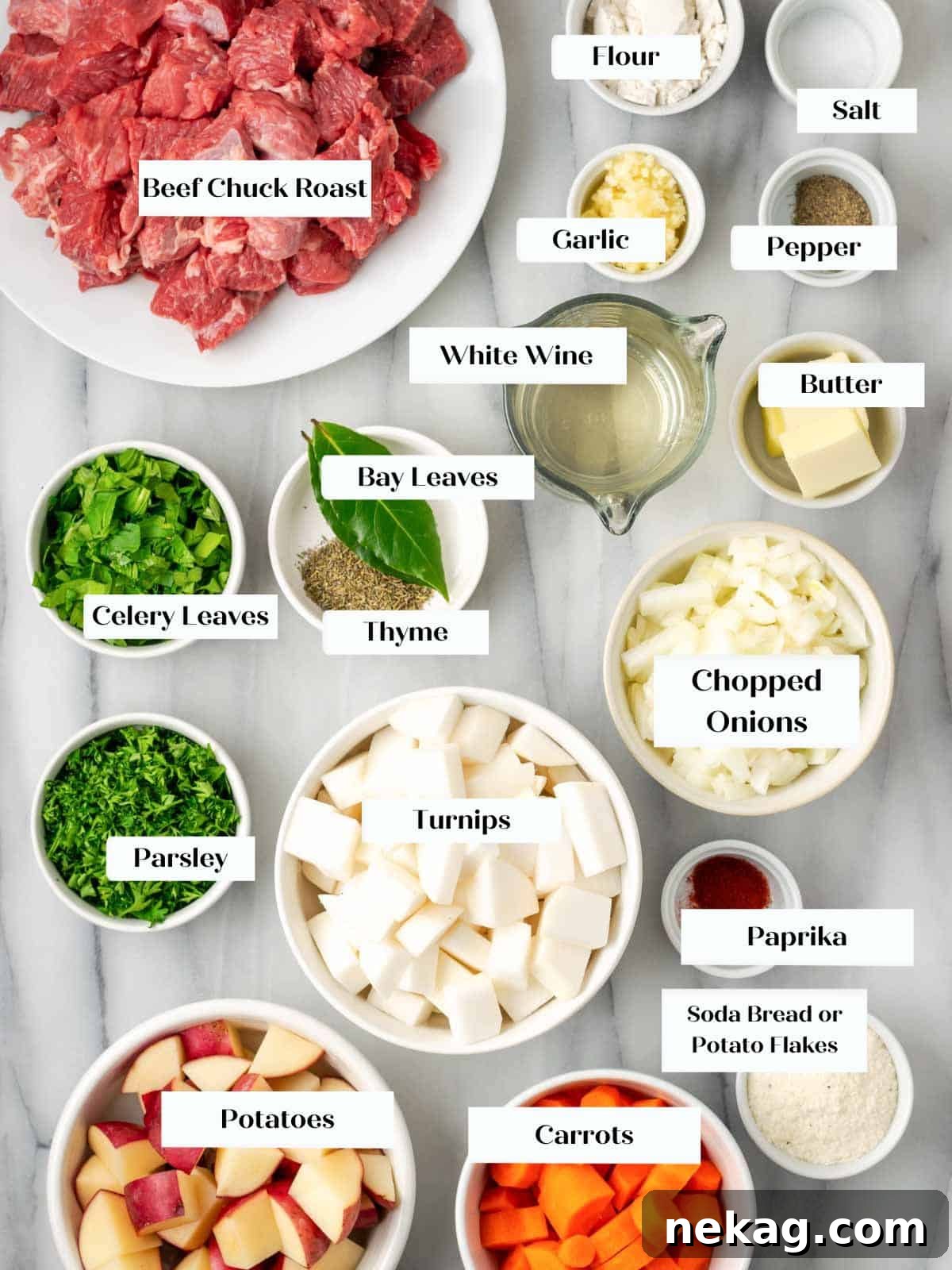
- Beef: For the most control over size and quality, I highly recommend using beef chuck roast and cutting it into uniform 1 to 1.5-inch cubes yourself. This ensures even cooking and ideal texture. Alternatively, pre-cut beef stew meat is a convenient option, but always check for consistent piece size.
- Flour: Standard all-purpose flour is essential for coating the beef before browning. It helps create a beautiful crust and also contributes to thickening the stew. For a gluten-free version, rice flour or millet flour are excellent alternatives that perform similarly.
- Pepper: Freshly ground black pepper adds a pungent, spicy kick that complements the rich beef beautifully. Adjust to your personal taste preference.
- Salt: Kosher salt is preferred for its pure taste and easy control over seasoning. It enhances all the natural flavors in the stew.
- Butter: Unsalted butter is used for searing the beef and sautéing the aromatics, providing rich flavor and assisting in achieving a golden-brown crust.
- Wine: A dry white wine, such as Sauvignon Blanc or Pinot Grigio, is ideal for deglazing and adding a bright, acidic balance to the stew. Choose a wine you genuinely enjoy drinking, as its flavor will concentrate in the dish. A dry red wine can also be used for a deeper, more robust flavor profile.
- Garlic: Fresh garlic is irreplaceable for its pungent, aromatic depth. Minced fresh cloves impart a far superior flavor compared to garlic powder. If fresh heads are unavailable, seek out jarred chopped garlic stored in water, as it retains more of its natural essence.
- Bay Leaves: Just a couple of dried bay leaves contribute a subtle yet distinctive aromatic foundation to the stew. Their flavor is often described as a complex blend of eucalyptus, savory notes, sweetness, and a hint of floral earthiness, enriching the overall bouquet of the dish.
- Thyme: Dried thyme is a kitchen staple and works wonderfully in this recipe, lending a classic herbaceous flavor. If you have fresh thyme sprigs on hand, feel free to use them for an even brighter, more fragrant result.
- Celery Leaves: Often discarded, celery leaves are an underutilized culinary gem. They impart a slightly peppery, vibrant herbaceous flavor that mirrors the stalks but with a more concentrated aroma, adding an unexpected layer of freshness.
- Parsley: Fresh parsley, coarsely chopped, is added at the end to provide a burst of freshness and a touch of color, lifting the richness of the stew. Experiment with other fresh herbs like basil or cilantro if you’re looking to introduce a unique twist to the traditional flavor profile.
- Water: Ensure you have at least 5 cups of fresh, cold water ready. While water works perfectly, using beef broth (as I do in my Easy Beef Stroganoff) will deepen the savory notes and create an even richer foundation for your stew.
- Turnips: Incorporating fresh turnips makes this stew exceptionally hearty and satisfying. They offer a mild, slightly sweet, and earthy flavor that harmonizes beautifully with the carrots and potatoes, adding textural interest.
- Carrots: Large carrots are recommended for this recipe as they are easier to dice into substantial, uniform pieces. Avoid baby carrots, as maintaining consistent sizing with the turnips and potatoes is key for even cooking and presentation.
- Onion: Approximately one cup of diced onion is needed. I suggest using a yellow onion or a sweet onion to provide a foundational sweetness and aromatic depth to the stew.
- Potatoes: Red potatoes are excellent for stew as they hold their shape well during simmering, offering a creamy texture without completely disintegrating.
- Paprika: A small pinch of paprika can add a lovely smoky undertone and a vibrant color to the stew. You can choose between sweet, hot, or smoked paprika depending on your preference and desired flavor intensity.
- Dried Currants: If you’ve enjoyed my Irish soda bread or simply have dried currants available, they make a surprisingly delicious and delightful addition to this stew. They introduce a wonderful, subtle note of sweetness that brightens each savory bite.
- Soda Bread: A fist-sized hunk of day-old soda bread is my preferred secret ingredient for thickening this stew, imparting a unique flavor and texture. If soda bread isn’t available, potato flakes can be used as a convenient alternative to achieve a similar rich consistency.
Refer to the complete recipe card below for precise measurements and detailed ingredient quantities.
Exciting Variations for Your Beef Stew
- Slow Cooker Method: For a convenient, hands-off approach, convert this recipe for your slow cooker. Begin by browning the beef and sautéing the onions and garlic on the stovetop to develop those crucial foundational flavors. Deglaze the pan with wine to capture all the delicious fond. Then, transfer all the browned ingredients and remaining stew components to your slow cooker. Cook on low for approximately 8 hours, or on high for 4 hours, until the beef is incredibly tender and the vegetables are perfectly soft.
- Enhance with Tomato Paste: Adding a tablespoon or two of tomato paste can introduce a delightful tangy sweetness and a richer umami depth to the final dish. Stir the tomato paste into the pot after sautéing the onions and garlic, allowing it to cook for a minute or two to deepen its flavor before deglazing with the wine. This small addition can significantly impact the overall complexity of the broth.
- Explore Different Root Vegetables: While carrots and potatoes are classic, feel free to customize your stew with a variety of other root vegetables. Parsnips offer a sweet, slightly peppery flavor, while sweet potatoes can add a comforting sweetness and vibrant color. Rutabagas or celery root are also excellent choices, each bringing its own unique earthy notes and textures to the rich stew.
How to Make the Ultimate Dutch Oven Beef Stew
Follow these detailed instructions to create a flawless and flavorful beef stew every time. For precise measurements and further specifics, please refer to the comprehensive recipe card located below.
Step 1: Prepare your beef by thoroughly drying the cubes on paper towels. This crucial step ensures optimal browning. Once patted dry, transfer the beef to a medium-sized bowl. I prefer to cut my own stew meat from a larger roast to guarantee uniform pieces, which are essential for even cooking and consistent tenderness throughout the dish.
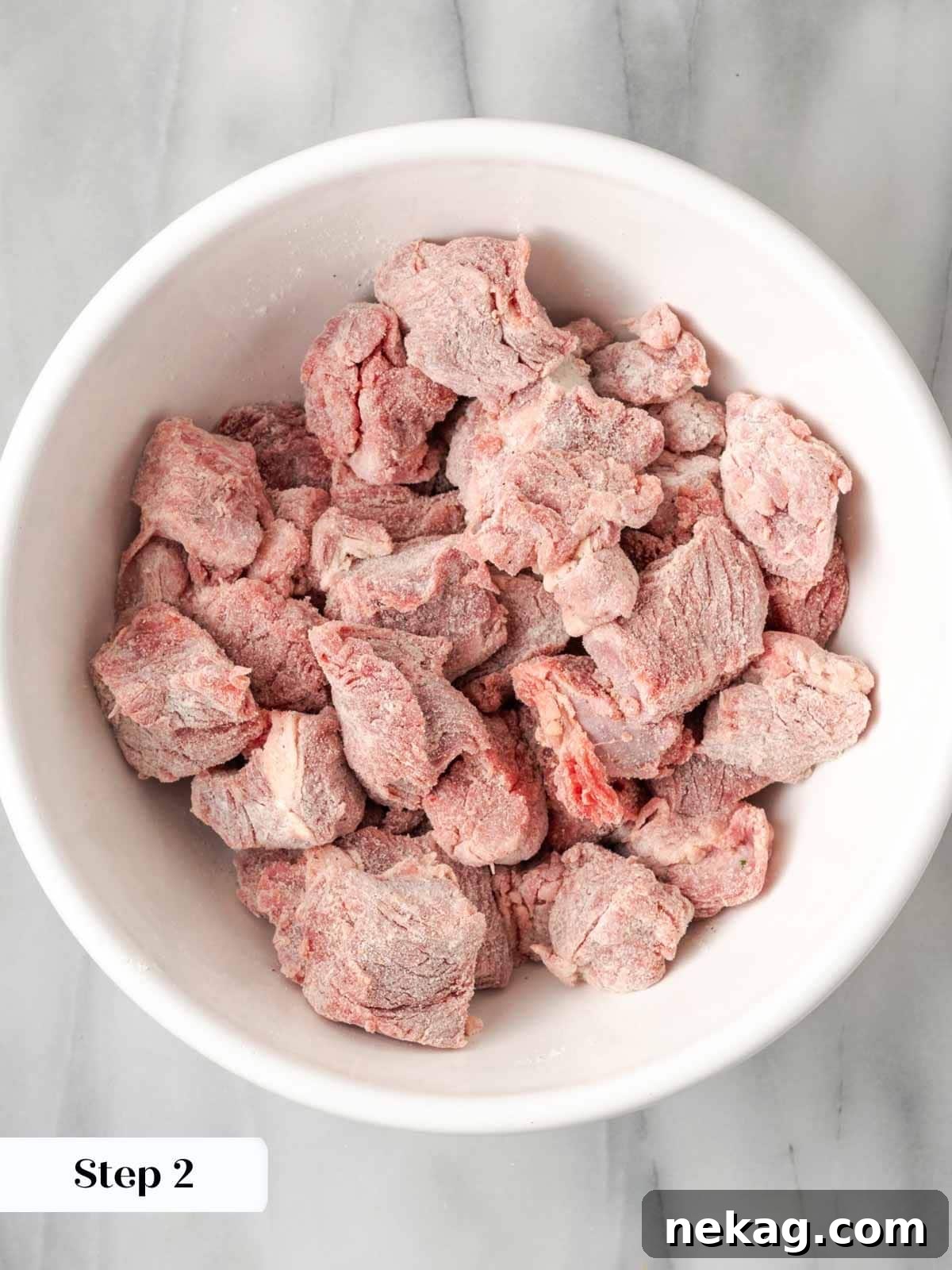
Step 2: In a separate small bowl, combine the all-purpose flour with ½ teaspoon of salt and ½ teaspoon of freshly ground black pepper. Sprinkle half of this seasoned flour mixture over the beef cubes in the medium bowl, tossing gently to ensure each piece is lightly coated. Then, sprinkle the remaining flour mixture over the meat and toss again, making sure all surfaces are evenly covered. This coating not only aids in browning but also helps to thicken the stew later.
Step 3: Heat a large, heavy-bottomed Dutch oven or saucepan over medium-high heat until it is searing hot. Add 1 tablespoon of unsalted butter and allow it to melt and lightly brown. Working in small batches to avoid overcrowding the pan, add about one-third of the flour-coated beef. Brown the meat thoroughly on at least three sides, aiming for a deep, golden-brown crust. This searing process is fundamental for developing a rich, complex flavor in your stew.
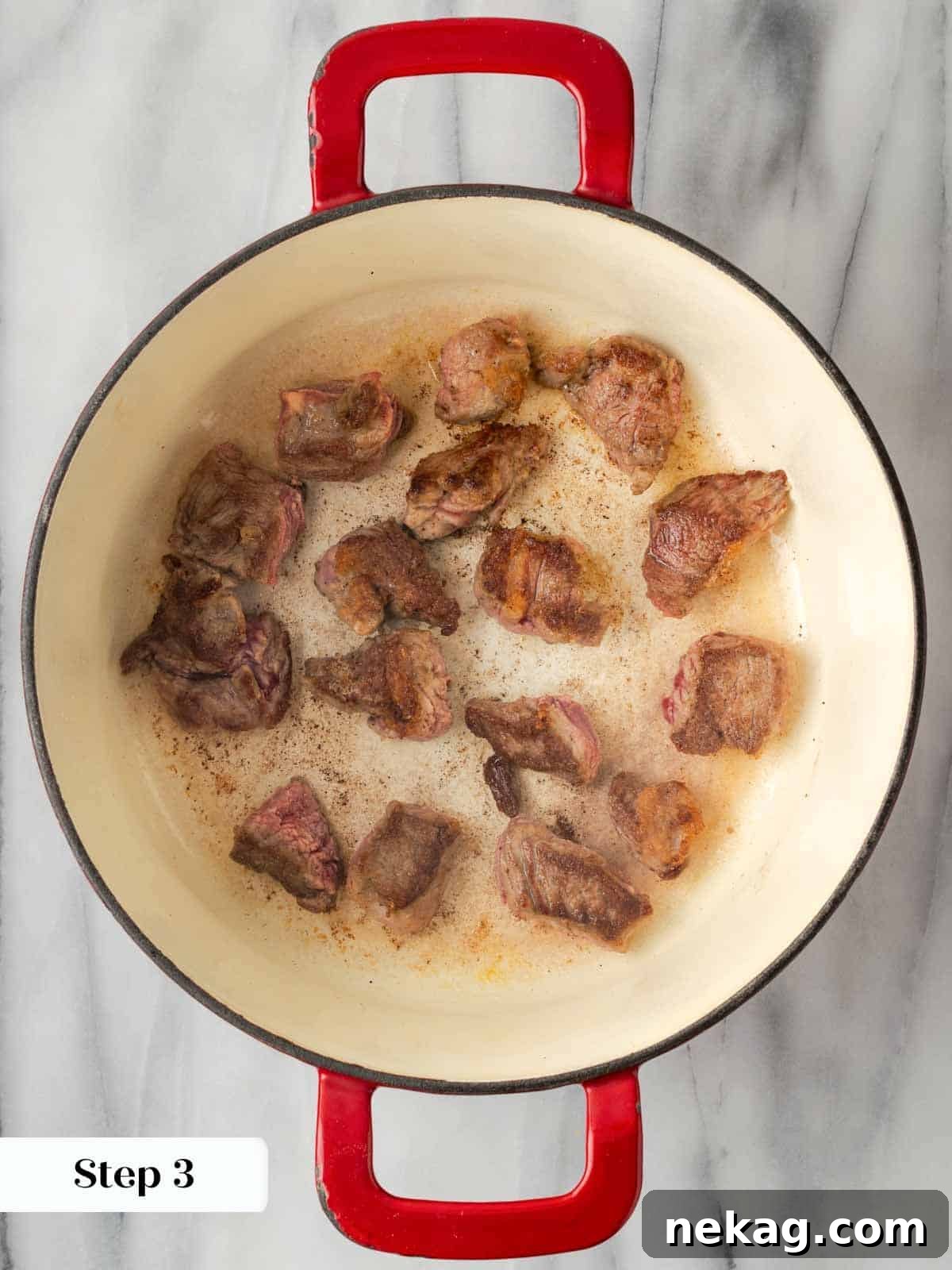
Important Browning Tip: It is crucial not to overcrowd the beef in the pot. If the pan is too full, the meat will steam instead of searing, resulting in a pale and less flavorful crust. Work in batches, removing each batch of browned beef to a separate bowl before adding the next. Add more butter or a neutral oil as needed between batches to maintain proper searing conditions and prevent sticking.
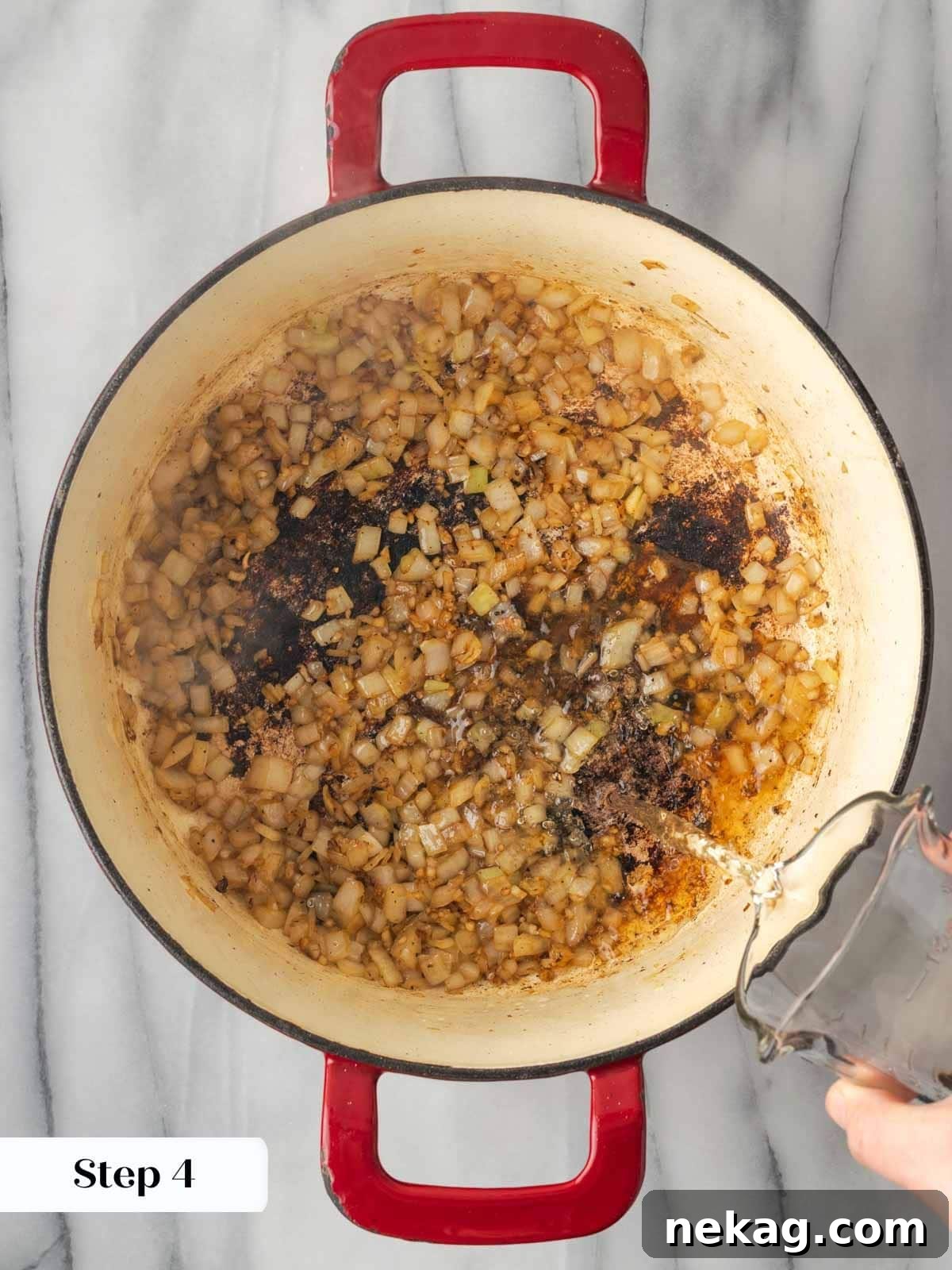
Step 4: Once all the beef has been beautifully browned and set aside, return the Dutch oven to medium heat. Add the diced onions and minced garlic to the pot, sautéing them gently until the onions become translucent and begin to develop a light golden-brown color. Next, carefully pour in the dry white wine. Immediately begin to stir and scrape the bottom of the pot vigorously with a flat, wooden spoon. Ensure you dislodge all the caramelized, browned bits (fond) from the bottom of the pan – these are packed with flavor! Allow the wine to boil for approximately two minutes, stirring continuously, to thicken slightly and fully incorporate the fond.
This critical deglazing step not only thickens the wine but also captures and integrates all the rich, caramelized meat and vegetable flavors from the bottom of the pot, intensifying the overall taste of your stew.
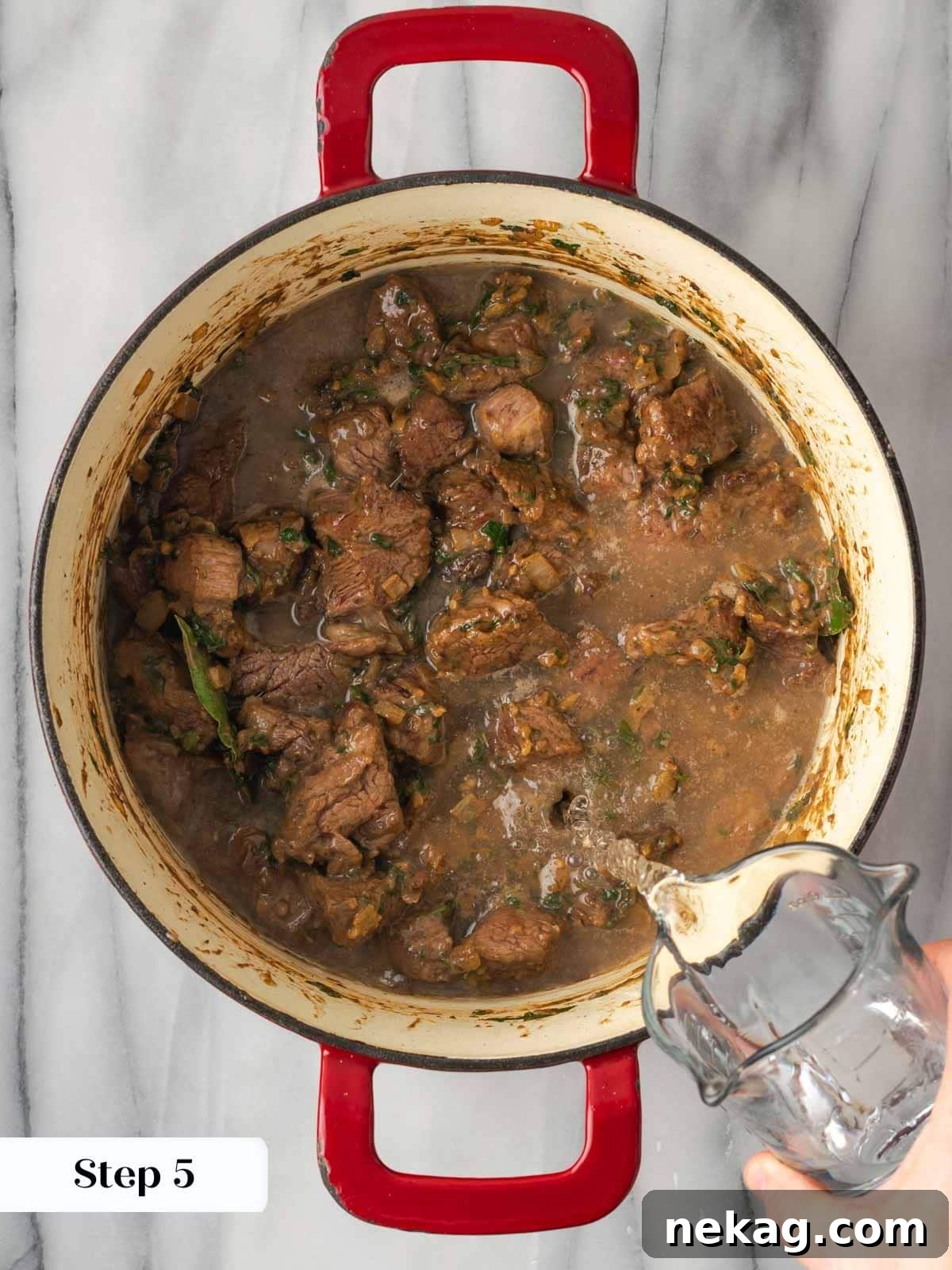
Step 5: Return all the browned beef to the pot. Stir in the fresh parsley, celery leaves, bay leaves, and dried thyme, ensuring they are well distributed. Pour in 5 cups of fresh water, or enough to completely cover all the meat and vegetables. Now, add the diced carrots, potatoes, turnips, the remaining diced onion, paprika, a pinch of salt, and a dash of pepper. Bring the mixture to a gentle simmer, then cover the Dutch oven tightly. Allow the stew to simmer slowly for about 1 hour and 30 minutes, stirring occasionally to prevent sticking and ensure even cooking. Continue cooking until the beef is fall-apart tender and the vegetables, especially the potatoes, are beginning to soften and slightly break down, contributing to the stew’s comforting thickness.
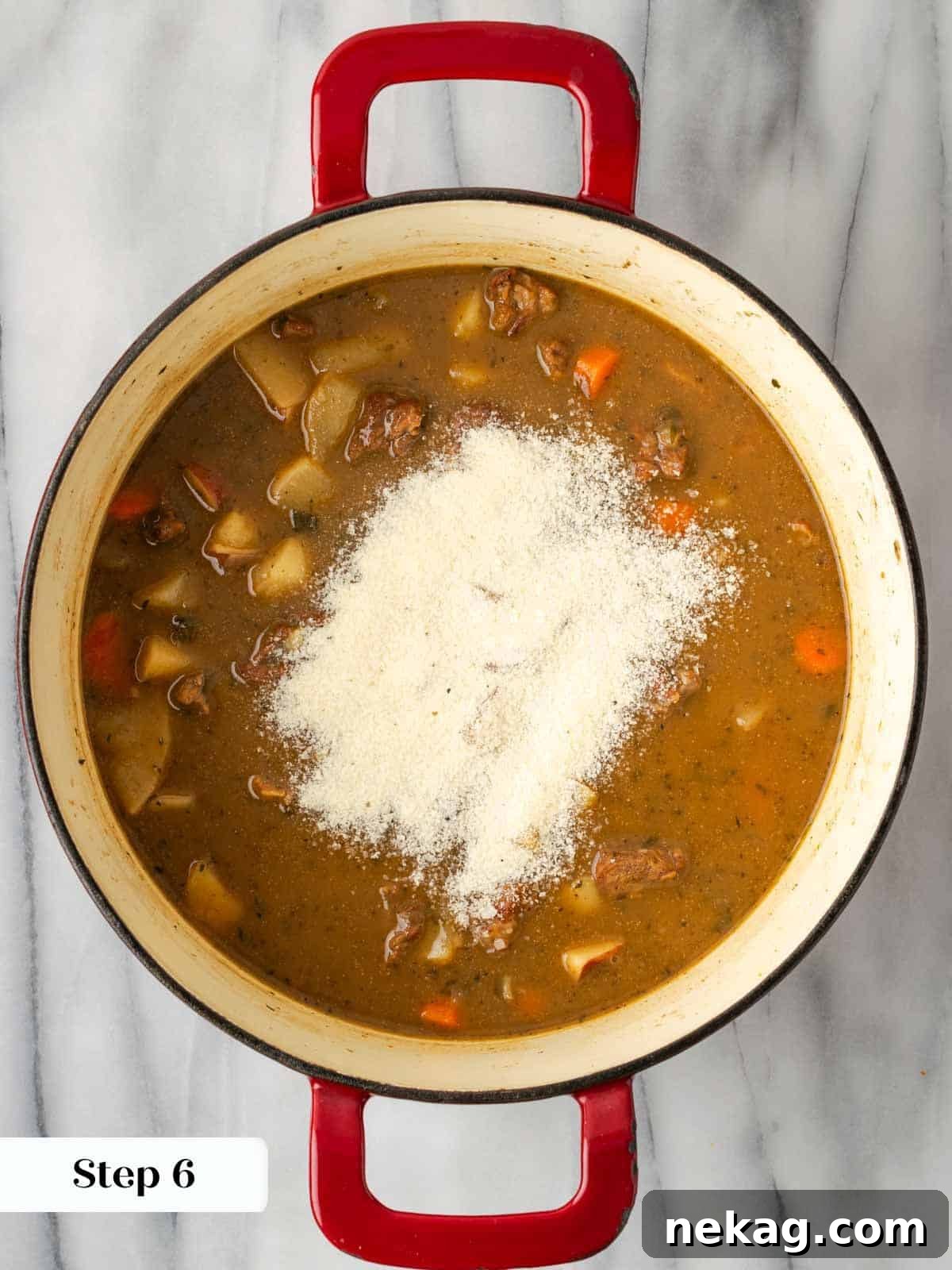
Step 6: Carefully remove and discard the bay leaves from the stew. Now, add your fist-sized hunk of soda bread (or potato flakes, if using) to the pot. Stir it gently into the simmering stew. Continue to cook for an additional 10 minutes, allowing the soda bread to fully integrate and further thicken the stew to a rich, luscious consistency. Taste and adjust seasoning as needed, adding more salt or pepper if desired. Serve hot and enjoy the fruits of your patient labor!
Chef Lindsey’s Expert Recipe Tip: The Art of Browning Beef
The secret to an exceptionally flavorful beef stew lies unequivocally in the proper browning of the beef. This initial searing creates what chefs call “fond” – those rich, caramelized bits stuck to the bottom of your pot – which are the cornerstone of the dish’s deep, savory flavor. To ensure this crucial step is executed perfectly, make sure your Dutch oven is screaming hot before adding the meat. More importantly, do not overcrowd the pan. Give your beef cubes ample space to allow the moisture to evaporate and the surfaces to develop a beautiful, golden-brown crust. Resist the urge to stir constantly; instead, let the beef cook undisturbed on each side until a desirable crust forms. This patience will be richly rewarded with a stew that boasts unparalleled depth and richness.
Frequently Asked Questions About Dutch Oven Beef Stew
Leftover Dutch oven beef stew stores exceptionally well. Allow the stew to cool completely before transferring it to an airtight container. It can be safely stored in the refrigerator for 3 to 5 days. For longer preservation, freeze the stew in a freezer-safe container or resealable plastic bags for up to 3 months. Thaw overnight in the fridge before reheating gently on the stovetop.
Absolutely! Beef stew is one of those magical dishes that often tastes even better the next day as the flavors have more time to meld and deepen. You can prepare this recipe 3 to 4 days before you plan to serve it. When you’re ready to enjoy, simply remove it from the refrigerator, place it in a Dutch oven or a sturdy stockpot, and reheat it slowly over medium heat on the stove until it is warmed through.
The tenderness of beef stew is primarily achieved through a prolonged cooking period over low heat. Using cuts of meat rich in connective tissue, such as chuck roast, allows this tissue to slowly break down into gelatin during the long simmer. This process not only makes the beef incredibly tender and succulent but also enriches the stew’s broth, creating a luxurious mouthfeel. Patience is key to transforming tougher cuts into fall-apart perfection.
Yes, within a certain range and under the right conditions, beef will indeed become more tender the longer it cooks. When prepared over low, gentle heat, the collagen in the beef has ample time to break down. However, there’s a point of diminishing returns; excessively long cooking can eventually cause the meat to become stringy and dry. For optimal tenderness in beef stew, aiming for at least 2 to 2.5 hours of simmering time is recommended to achieve that desirable fall-apart texture.
Hearty beef stew pairs wonderfully with a variety of accompaniments. Crusty bread or warm Irish soda bread is essential for soaking up every last drop of the delicious broth. Other excellent choices include creamy mashed potatoes (if not already used as a thickener), fluffy rice, a simple green salad with a light vinaigrette to balance the richness, or even a side of roasted root vegetables for added texture.
If your beef stew turns out thinner than desired, there are a few easy fixes. You can create a slurry by mixing a tablespoon of cornstarch or flour with an equal amount of cold water, then slowly whisking it into the simmering stew until it thickens. Alternatively, you can mash a few of the cooked potatoes from the stew against the side of the pot or add a handful of instant potato flakes. Simmer for a few more minutes, and your stew will reach the perfect consistency.
If you tried this recipe and absolutely loved it, please take a moment to leave a 🌟 star rating and share your thoughts in the comments section below. Your feedback truly brightens my day and helps others discover this wonderful dish!
Dutch Oven Beef Stew
Pin Recipe
Comment
Print Recipe
Ingredients
- 2 lbs beef chuck roast, cut into 1 to 1.5-inch cubes
- 3 tablespoons all-purpose flour
- ½ teaspoon freshly ground black pepper
- ½ teaspoon kosher salt
- 3 tablespoons unsalted butter
- ½ cup dry white wine (e.g., Sauvignon Blanc, Pinot Grigio)
- 1 ½ tablespoons fresh garlic minced
- 2 bay leaves
- 1 teaspoon dried thyme or fresh sprigs if preferred
- ½ cup celery leaves
- ½ cup fresh parsley coarsely chopped
- 5 cups water or beef broth
- 2 turnips diced into 1-inch pieces
- 2 large carrots diced into 1-inch pieces
- 1 cup yellow or sweet onion diced
- 2 red potatoes cubed into 1-inch pieces
- ½ teaspoon paprika (sweet, hot, or smoked)
- additional salt and pepper to taste
- 1 tablespoon dried currants optional, for sweetness
- fist sized hunk day-old soda bread optional, to thicken, or use potato flakes
Instructions
-
Dry beef cubes thoroughly on paper towels, then place them in a medium bowl. Cutting your own meat ensures uniform pieces for even cooking.
-
Combine flour, ½ teaspoon salt, and ½ teaspoon of freshly ground pepper in a small bowl. Sprinkle half the mixture over the beef, toss to coat. Sprinkle the remaining over the meat, and toss again to coat evenly.
-
Heat a large Dutch oven or saucepan over medium-high heat until searing hot. Working in batches, melt 1 tablespoon of butter and add about 1/3 of the flour-coated beef. Brown the meat thoroughly on at least 3 sides until a deep crust forms. Remove browned beef to a separate bowl and repeat with remaining butter and beef batches.
-
Once all beef is browned, return the Dutch oven to medium heat. Sauté the diced onions and minced garlic until translucent and lightly browned. Pour in the wine, stirring and scraping the bottom of the pot with a flat wooden spoon to release all the browned bits (fond). Let the wine boil for about two minutes, stirring constantly, allowing it to thicken slightly.
-
Return the browned meat to the pot. Stir in parsley, celery leaves, bay leaves, and thyme. Add 5 cups of water or enough to cover all the ingredients. Stir in carrots, potatoes, turnips, the remaining onion, paprika, pepper, and a pinch of salt. Cover and simmer over low heat until the meat and vegetables are very tender and the potatoes begin to break down, approximately 1 hour and 30 minutes, stirring occasionally.
-
Remove and discard the bay leaves. Add your fist-sized hunk of soda bread (or potato flakes) to the stew. Continue to cook for an additional 10 minutes, allowing the bread to fully dissolve and thicken the stew to your desired consistency. Taste and adjust seasoning as needed before serving.
Notes
Variations – Slow Cooker: For a more hands-off approach, brown the meat and sauté aromatics on the stovetop, deglaze with wine, then transfer all ingredients to a slow cooker. Cook on low for about 8 hours or high for 4 hours.
Storage – Store leftover beef stew in an airtight container in the refrigerator for 3-5 days. It can also be frozen in a freezer-safe container for up to 3 months.
Nutrition
Before You Go: More Hearty Recipes to Explore
I sincerely hope you savored every comforting bite of this professional chef-tested Dutch oven beef stew recipe. It’s a dish designed to warm you from the inside out and bring joy to your table. If you’re looking for more delicious and expertly developed recipes, I invite you to explore our other fantastic soups and stews, perfect for any season. Alternatively, for another deeply satisfying and flavorful meal cooked in your Dutch oven, why not try our Classy Pot Roast next? Happy cooking!