
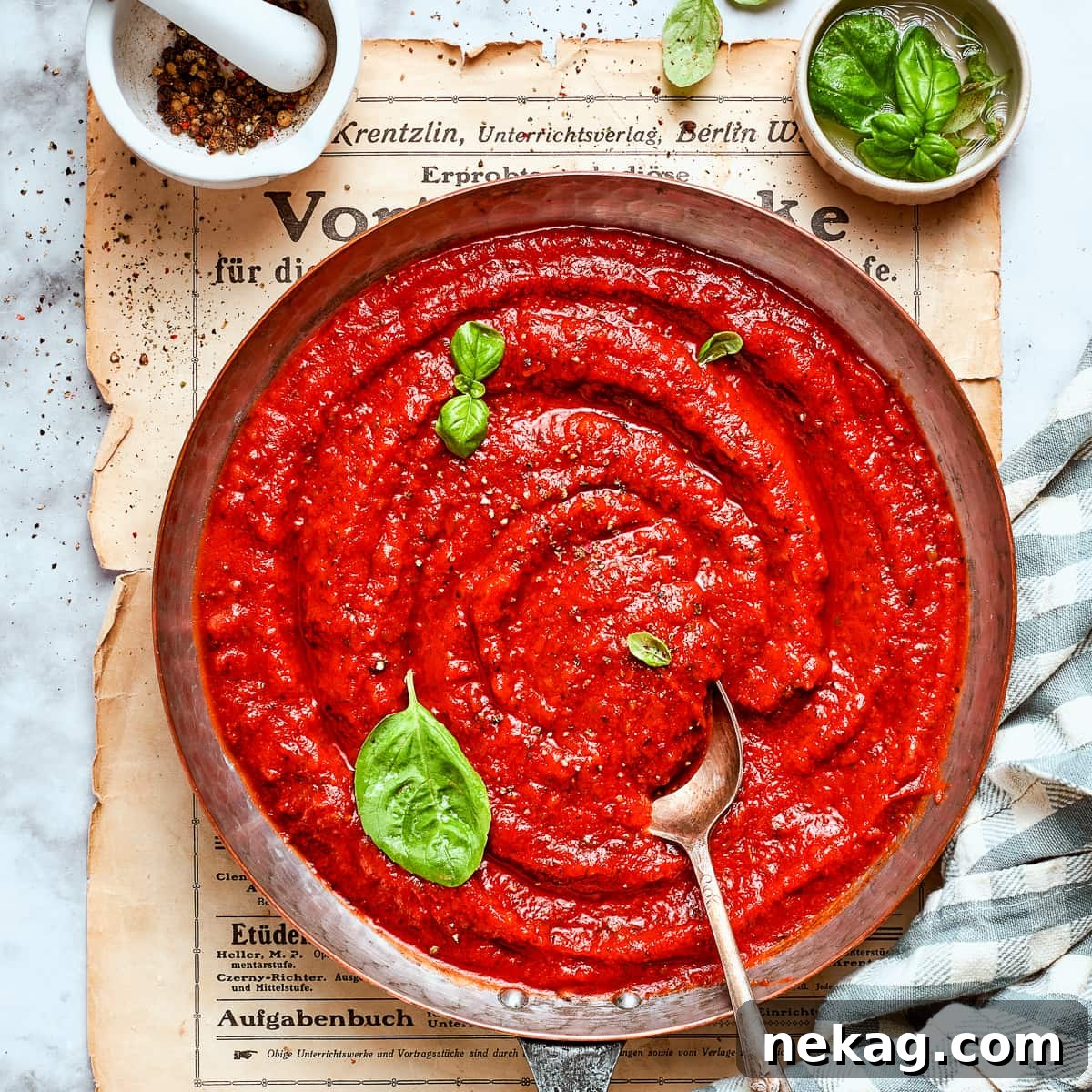
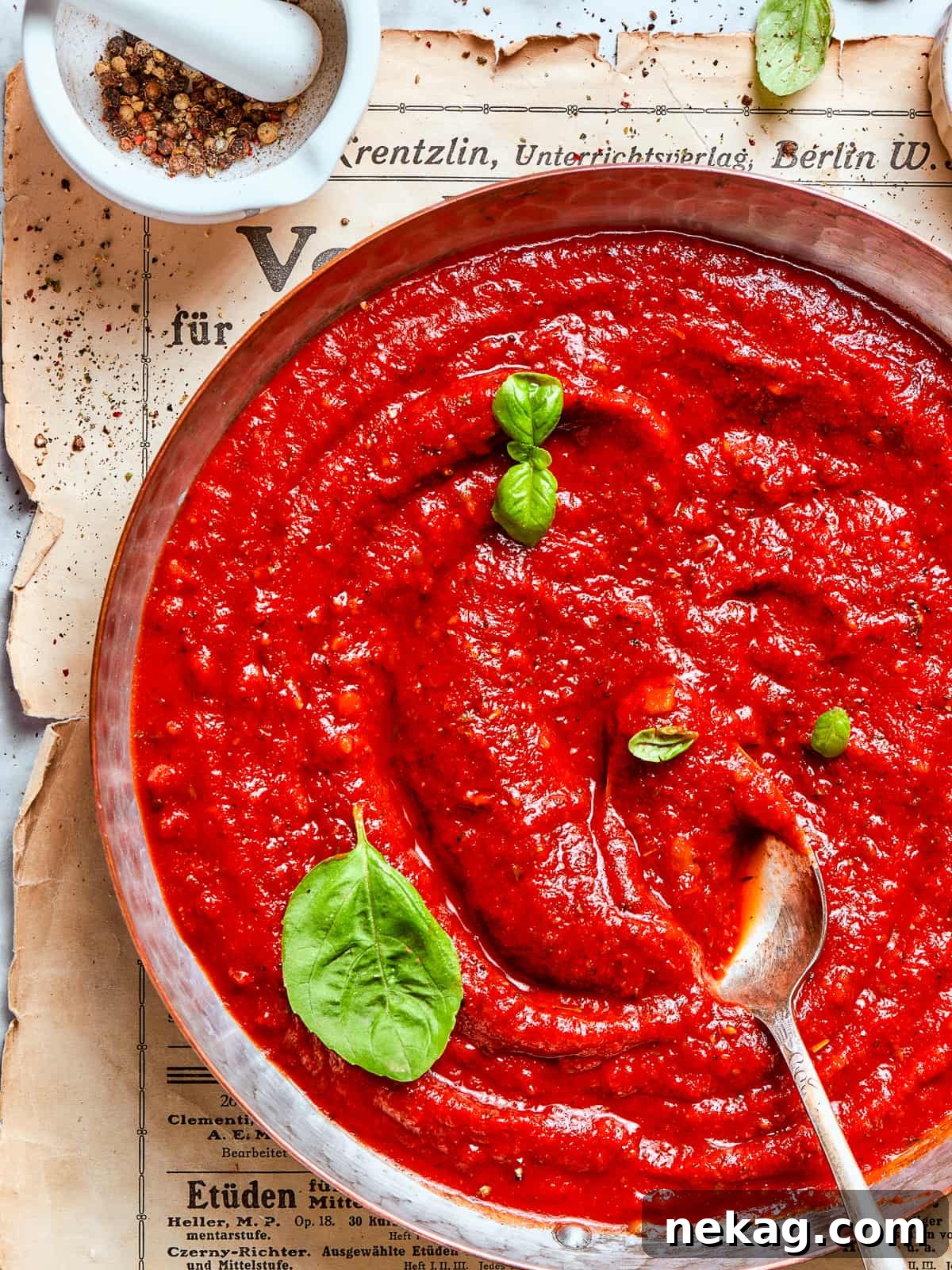
Unlock the secret to pizzeria-quality flavor right in your own kitchen with the best homemade pizza sauce recipe. Crafted using readily available pantry staples and robust dried herbs, this sauce promises a taste experience that rivals, if not surpasses, your favorite takeout spot. Imagine transforming your pizza nights with a vibrant, flavorful sauce that comes together in just 15 minutes. It’s not just a recipe; it’s an upgrade to your entire homemade pizza experience, delivering incredible depth and authentic Italian flair effortlessly.
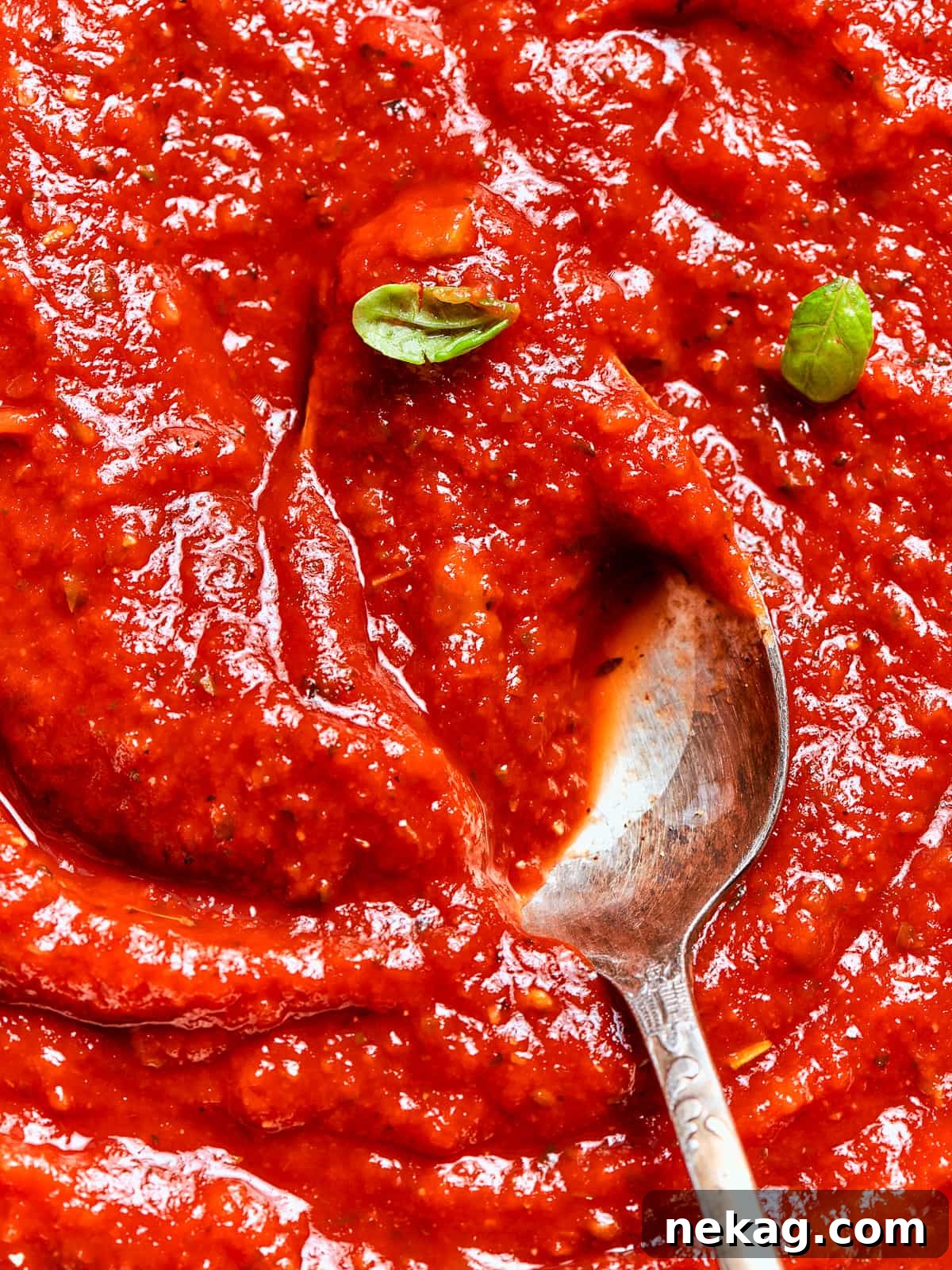
Achieving that coveted authentic pizzeria taste is surprisingly simple when you have the right foundation. This meticulously balanced sauce features a subtle sweetness from a touch of sugar and concentrated tomato paste, a combination expertly designed to counteract the natural bitterness and acidity often found in tomatoes. This careful balance ensures a smooth, rich flavor profile that acts as the perfect canvas for all your favorite toppings. The beauty of this recipe lies in its adaptability: you are empowered to customize it to your precise preferences, adjusting flavors to your heart’s content. Whether you prefer a generous layer of sauce or just enough to peek tantalizingly from beneath a blanket of melted cheese, this versatile recipe is your ultimate guide to pizza perfection.
This incredibly easy homemade pizza sauce is the ideal partner for a variety of crusts, whether you’re working with a rustic sourdough pizza dough or any other beloved homemade pizza crust. One of its most significant advantages is its exceptional freezer-friendliness. For optimal convenience, I highly recommend doubling the recipe to ensure a ready supply of fresh, homemade pizza sauce throughout the month. This sauce consistently ranks among the top requests from my family and friends, joining other cherished recipes like my savory BBQ chicken, hearty stuffed shells with meat, and the truly special pizza rustica when we’re in the mood for an authentic Italian feast.
Table of Contents
- What Makes This the Best Pizza Sauce Recipe?
- Professional Tips for Perfect Pizza Sauce
- Essential Ingredients for Your Pizza Sauce
- Exciting Variations to Customize Your Sauce
- Creative Ways to Use Your Homemade Pizza Sauce
- Step-by-Step: How to Make Pizza Sauce
- Chef Lindsey’s Expert Recipe Tip
- Frequently Asked Questions
- The Ultimate Homemade Pizza Sauce Recipe
- Before You Go: Explore More Chef-Tested Recipes
What Makes This the Best Pizza Sauce Recipe?
This recipe isn’t just another pizza sauce; it’s a game-changer for your homemade pizza nights. Here’s why it stands out as the absolute best:
- Effortless Excellence with Pantry Staples: Forget expensive gourmet ingredients. This recipe leverages simple, everyday items likely already in your pantry, yet delivers a taste that far surpasses any store-bought alternative. The magic comes from combining these familiar ingredients in a way that creates a complex and deeply satisfying flavor profile, making homemade pizza sauce truly superior.
- Flavor Without the Fuss – No Fresh Herb Chopping: We all love the aroma of fresh herbs, but on busy weeknights, who has time for meticulous chopping? This recipe brilliantly uses dried herbs, which offer concentrated flavor and incredible convenience. They infuse the sauce with a rich, aromatic essence without any extra prep work, making this a truly “secret sauce” for those who value both taste and time.
- Speedy Preparation for Busy Weeknights: From start to finish, this exceptional pizza sauce can be ready in a mere 15 minutes. This quick cooking time makes it an ideal choice for spontaneous pizza nights or when you need a delicious meal on the table in a flash. Imagine enjoying a gourmet-tasting pizza without the long wait, all thanks to this lightning-fast recipe. It’s perfect for simplifying your meal routine without compromising on quality.
- Customizable to Your Liking: The beauty of making your own sauce is the freedom to adjust it. Prefer it spicier? Add some red pepper flakes. Want it sweeter? A little more sugar does the trick. This recipe provides a fantastic base that you can easily tweak to match your family’s unique taste preferences, ensuring every pizza is a personalized masterpiece.
- Seriously Freezer-Friendly: Meal prepping just got easier! This sauce freezes beautifully, allowing you to whip up a large batch and store it in convenient portions. Having a stash of homemade pizza sauce ready in your freezer means you’re always just a step away from an incredible homemade pizza, making meal planning and execution a breeze.
Professional Tips for Perfect Pizza Sauce
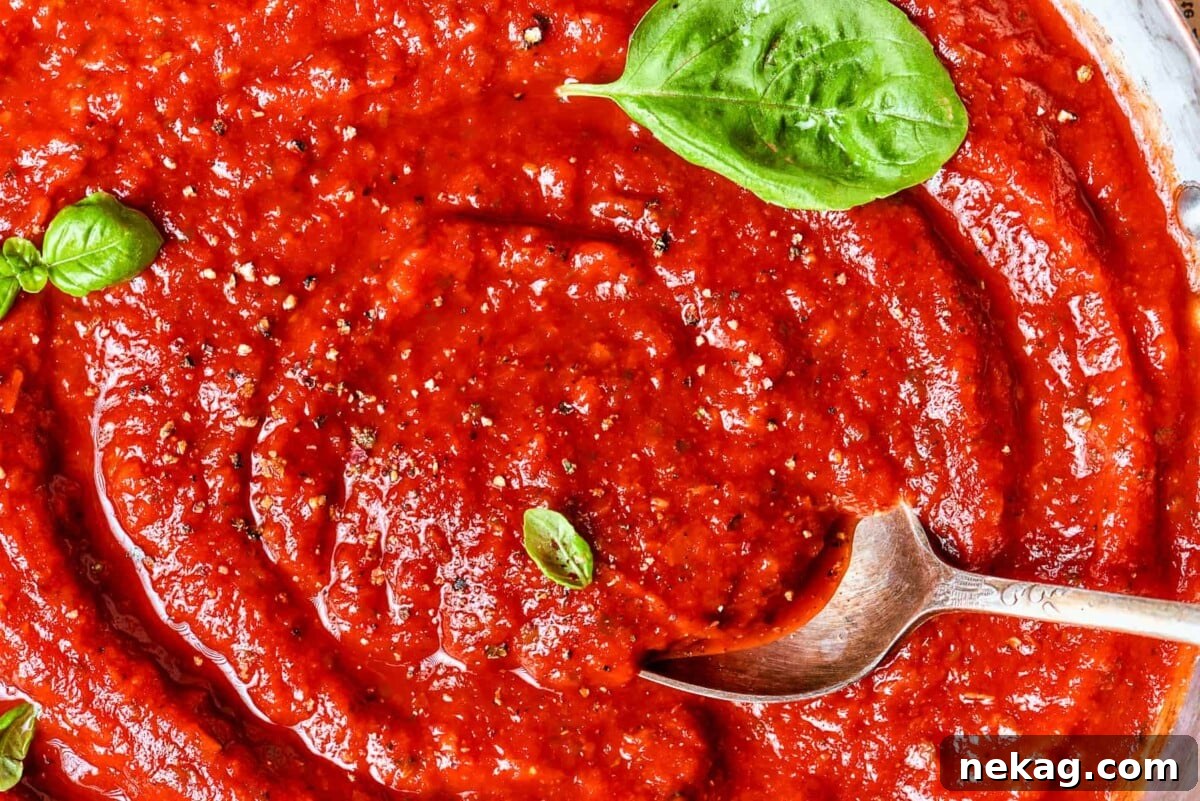
Even a simple recipe can benefit from a few expert insights. Follow these professional tips to ensure your homemade pizza sauce turns out flawless every time, delivering that authentic flavor and perfect consistency:
- Taste and Adjust as You Go: This is perhaps the most crucial tip in any cooking endeavor. When adding salt, do so gradually. The objective is not to make the sauce salty, but to enhance the natural richness of the tomatoes until their flavor truly shines. You should taste “tomato,” not just salt. This iterative process ensures a perfectly balanced sauce that complements your pizza, rather than overpowering it.
- Allow the Sauce to Cool Before Using: Patience is a virtue when it comes to pizza making. For best results, I highly recommend letting your freshly made sauce cool completely to room temperature, or even chilling it in the refrigerator, before spreading it on your dough. Applying warm sauce to raw pizza dough can introduce excess moisture, leading to a dreaded soggy crust. A cool sauce adheres better and helps maintain the crispness of your base.
- Simmer for Enhanced Depth of Flavor: While this recipe is quick, a slightly longer simmer can dramatically deepen the flavors. If time allows, cover your saucepan and let the sauce cook on the lowest possible heat setting for an additional 15-30 minutes. This extended simmer allows the dried herbs to fully rehydrate and meld with the tomatoes, creating a more complex, mellow, and integrated flavor profile. The flavors will continue to develop and become even richer as the sauce cools.
- Scrape the Bottom Frequently: To prevent scorching and ensure even cooking, stir the sauce occasionally with a flat wooden spatula, making sure to scrape the bottom of the saucepan. This technique prevents sticking and ensures all the ingredients are well incorporated, contributing to a consistently smooth texture.
- Quality Matters for the Base: The foundation of any great sauce is its main ingredient. Investing in a good quality canned tomato sauce will make a noticeable difference in the final taste of your pizza sauce. Look for brands that use ripe, flavorful tomatoes, as this will directly translate to a more delicious and authentic sauce.
Essential Ingredients for Your Pizza Sauce
Crafting the perfect pizza sauce begins with a selection of key ingredients, each playing a vital role in building its rich, balanced flavor. Here’s a closer look at what you’ll need:
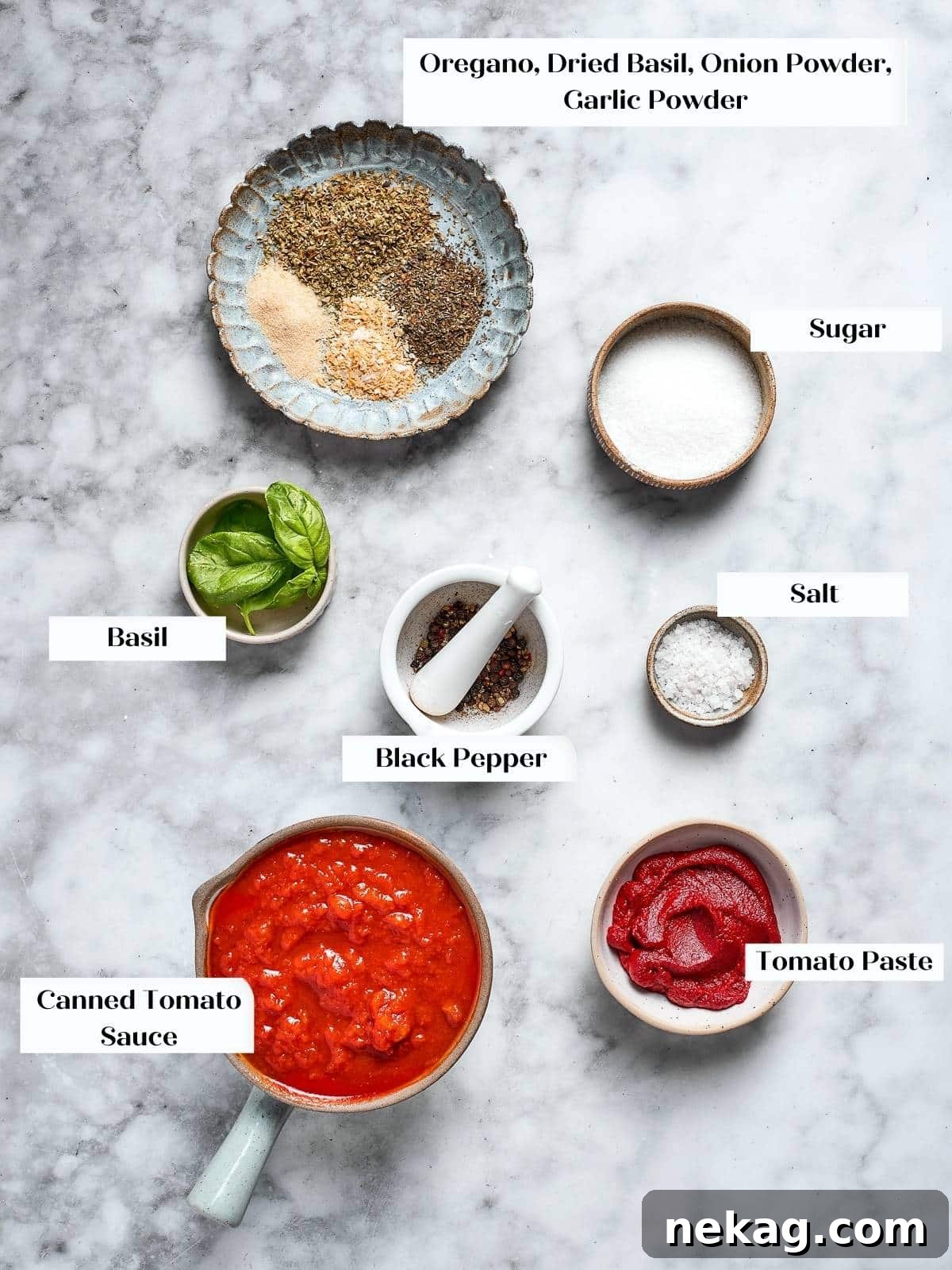
- Kosher Salt: As a professional chef, Kosher salt is my go-to for cooking. Its coarse texture makes it easy to measure and control, dissolving evenly without over-salting. Beyond seasoning, salt is crucial for balancing and neutralizing the inherent bitterness and acidity found in tomatoes, allowing their natural sweetness to shine through.
- Granulated Sugar: A small amount of granulated sugar is essential in this recipe. It’s not just for sweetness; it plays a critical role in cutting through the acidity of the canned tomatoes, creating a well-rounded and more palatable flavor profile that mimics the best pizzeria sauces.
- Tomato Paste: This concentrated tomato product is a powerhouse of flavor. Tomato paste adds an incredible depth of umami and a rich, robust tomato flavor that cannot be achieved with sauce alone. It also acts as a natural thickener, ensuring your sauce has the perfect consistency to cling to the pizza crust without making it soggy.
- Canned Tomato Sauce: The base of our sauce, canned tomato sauce, provides the smooth liquid consistency and vibrant tomato flavor. While you could technically use crushed tomatoes, a good quality tomato sauce offers a smoother texture and saves you a blending step. Always remember, the higher the quality of your canned tomatoes, the more exquisite your final sauce will taste. Look for brands with minimal additives.
- Dried Oregano: A quintessential herb in Italian cuisine, dried oregano brings a warm, earthy, and slightly peppery note to the sauce. Its concentrated flavor stands up well to cooking and is a cornerstone of classic pizza sauce taste.
- Freshly Ground Black Pepper: While pre-ground pepper works, freshly ground black pepper offers a superior aroma and a more vibrant, nuanced flavor. A few turns from a peppermill adds a subtle warmth and a gentle bite that enhances the overall spice blend.
- Dried Basil: Complementing the oregano, dried basil contributes a sweet, aromatic, and slightly minty flavor that is indispensable for an authentic Italian profile. Together, basil and oregano form the herbaceous heart of this pizza sauce.
- Onion Powder: For convenience and consistent flavor without the texture or water content of fresh onions, onion powder provides a foundational savory sweetness. It integrates seamlessly into the sauce, offering a subtle allium background note.
- Garlic Powder: Similar to onion powder, garlic powder delivers a potent and aromatic garlic punch without the need for mincing. It ensures a smooth sauce while infusing it with that essential garlicky warmth characteristic of delicious Italian sauces.
Refer to the comprehensive recipe card below for precise measurements and detailed quantities of each ingredient.
Exciting Variations to Customize Your Sauce
One of the joys of cooking at home is the freedom to experiment and tailor recipes to your personal taste. This homemade pizza sauce serves as an excellent base for a myriad of delicious variations. Don’t hesitate to get creative and make it your own:
- Turn Up the Heat: For those who appreciate a fiery kick, incorporate a pinch or two of red pepper flakes into the sauce. Add them during the simmering process to allow their capsaicin to infuse thoroughly, creating a delicious hint of heat that awakens the palate. Adjust the quantity to achieve your desired level of spiciness.
- Achieve Ultimate Smoothness: If you prefer a velvety smooth sauce without any hint of texture, an immersion blender (also known as a stick blender) is your best friend. After the sauce has finished cooking and has cooled slightly, carefully blend it directly in the saucepan until all chunks are completely pureed. For an added layer of richness and a beautiful sheen, drizzle in a tablespoon of high-quality extra-virgin olive oil after blending.
- Mix Up Your Herbs and Aromatics: Don’t feel limited to the specified herbs. If you’re missing individual dried herbs, a pre-blended Italian herb blend can be a fantastic substitute, often containing a harmonious mix of oregano, basil, thyme, and rosemary. For a bolder, fresher garlic flavor, swap out the garlic powder for 1-2 cloves of finely minced fresh garlic, sautéing them gently in a tablespoon of olive oil before adding the other sauce ingredients.
- Boost Umami with Mushrooms: For an earthy depth, consider adding finely minced mushrooms (like cremini) to the sauce. Sauté them until golden brown before adding the tomato products. This adds a fantastic savory layer, especially appealing to mushroom lovers.
- Roasted Garlic Infusion: Elevate the garlic flavor by using roasted garlic instead of powder. Roast a head of garlic until soft and caramelized, then squeeze the cloves into the sauce before simmering. This creates a sweeter, milder, and more complex garlic note.
- Smoky Paprika Touch: A pinch of smoked paprika can introduce a wonderful smoky undertone to your sauce, perfect for a BBQ chicken pizza or a more robust, rustic flavor profile.
Creative Ways to Use Your Homemade Pizza Sauce
While this sauce is undeniably perfect for pizza, its rich, versatile flavor means it’s destined for much more than just your favorite pie. Explore these creative ways to incorporate your delicious homemade pizza sauce into other meals:
- Beyond the Classic Pizza: Obviously, this sauce is ideal for a classic pepperoni pizza, a gourmet veggie pizza, or any custom creation on your homemade crust. However, think outside the pizza box!
- A Delectable Dipping Sauce: This robust sauce makes an outstanding dipping companion. Serve it warm alongside your favorite savory snacks like crispy stuffed cheesy breadsticks, fluffy garlic knots, or cheesy pretzel calzones. It adds an authentic Italian touch to any appetizer spread.
- Quick Kid-Friendly Lunches: For a fast and fun lunch that kids (and adults!) will adore, whip up individual English muffin pizzas. Toast the English muffin halves, spread a spoonful of this sauce, add cheese and mini pepperoni, then broil until bubbly. It’s an instant hit!
- Savory Pasta Topping: While technically a pizza sauce, its thick texture and concentrated flavor can be fantastic on certain pasta dishes. Use it as a hearty sauce for baked ziti or lasagna, offering a denser, richer alternative to traditional pasta sauce.
- Eggplant or Chicken Parmesan Base: This sauce serves as an excellent foundational layer for classic Italian baked dishes like eggplant parmesan or chicken parmesan. Its robust flavor stands up beautifully to breaded and baked ingredients.
- Mini Pizzas on the Go: Use it to make mini pita bread pizzas, tortilla pizzas, or even bell pepper pizzas for a low-carb option. It’s perfect for meal prepping healthy, portion-controlled pizza snacks.
- Calzones and Stromboli: Fill homemade calzones or strombolis with this sauce, cheese, and your favorite fillings for a delicious, portable Italian meal.
Step-by-Step: How to Make Pizza Sauce
Creating this flavorful homemade pizza sauce is incredibly straightforward. Follow these simple steps to achieve a perfectly balanced and aromatic sauce in no time:
Further details and precise measurements can be found in the comprehensive recipe card below!
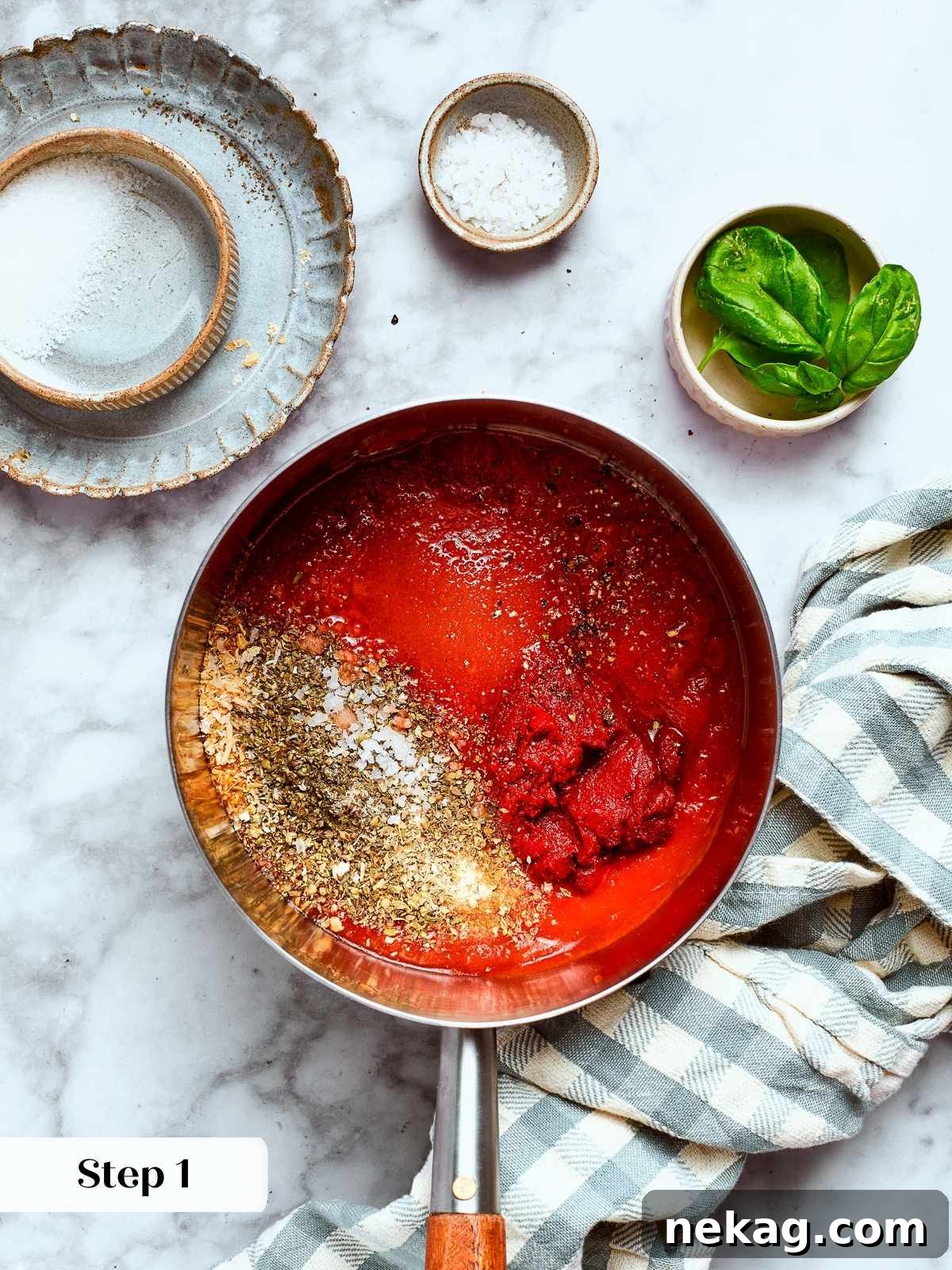
Step 1: Combine the Base Ingredients
In a small to medium-sized saucepan, combine the canned tomato sauce, rich tomato paste, aromatic dried oregano, fragrant dried basil, savory onion powder, pungent garlic powder, and a touch of granulated sugar. Stir these ingredients thoroughly to ensure they are well combined. At this point, add half of the recommended kosher salt (approximately ½ teaspoon). This initial seasoning helps to begin balancing the flavors.
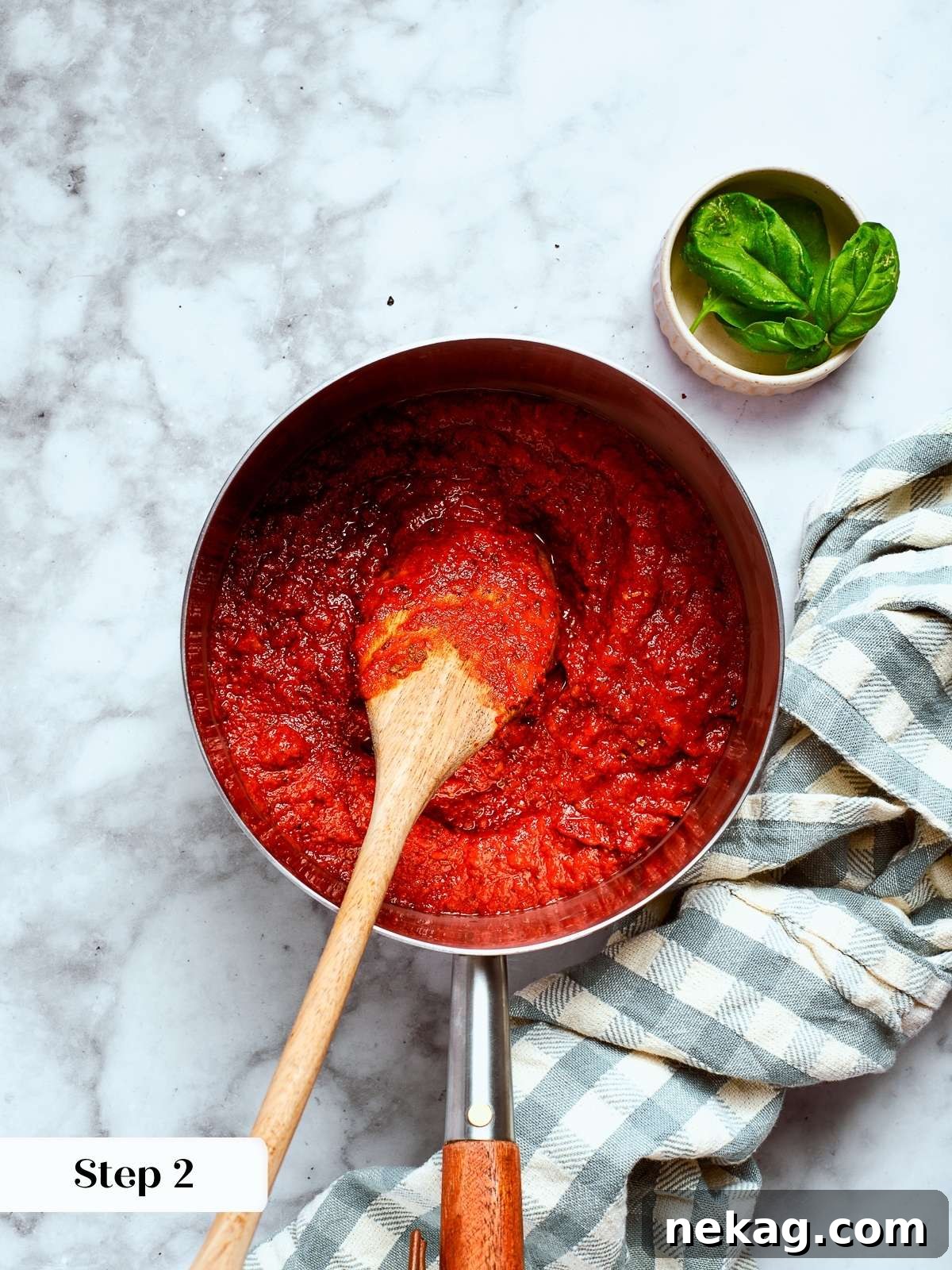
Step 2: Gentle Simmer for Flavor Development
Place the saucepan over medium-low heat and gradually bring the mixture to a gentle boil, stirring occasionally to prevent sticking. Once it reaches a boil, reduce the heat to the absolute lowest setting. Cover the saucepan and allow the sauce to simmer for 5-10 minutes. This simmering period is crucial as it allows the dried herbs to rehydrate and infuse their concentrated flavors into the tomatoes, creating a cohesive and aromatic sauce.
Throughout the simmering process, stir the sauce with a flat wooden spatula, making sure to scrape the bottom of the pan. This prevents any ingredients from settling and scorching, ensuring an even cook and smooth texture.
Step 3: Taste, Adjust, and Finalize Seasoning
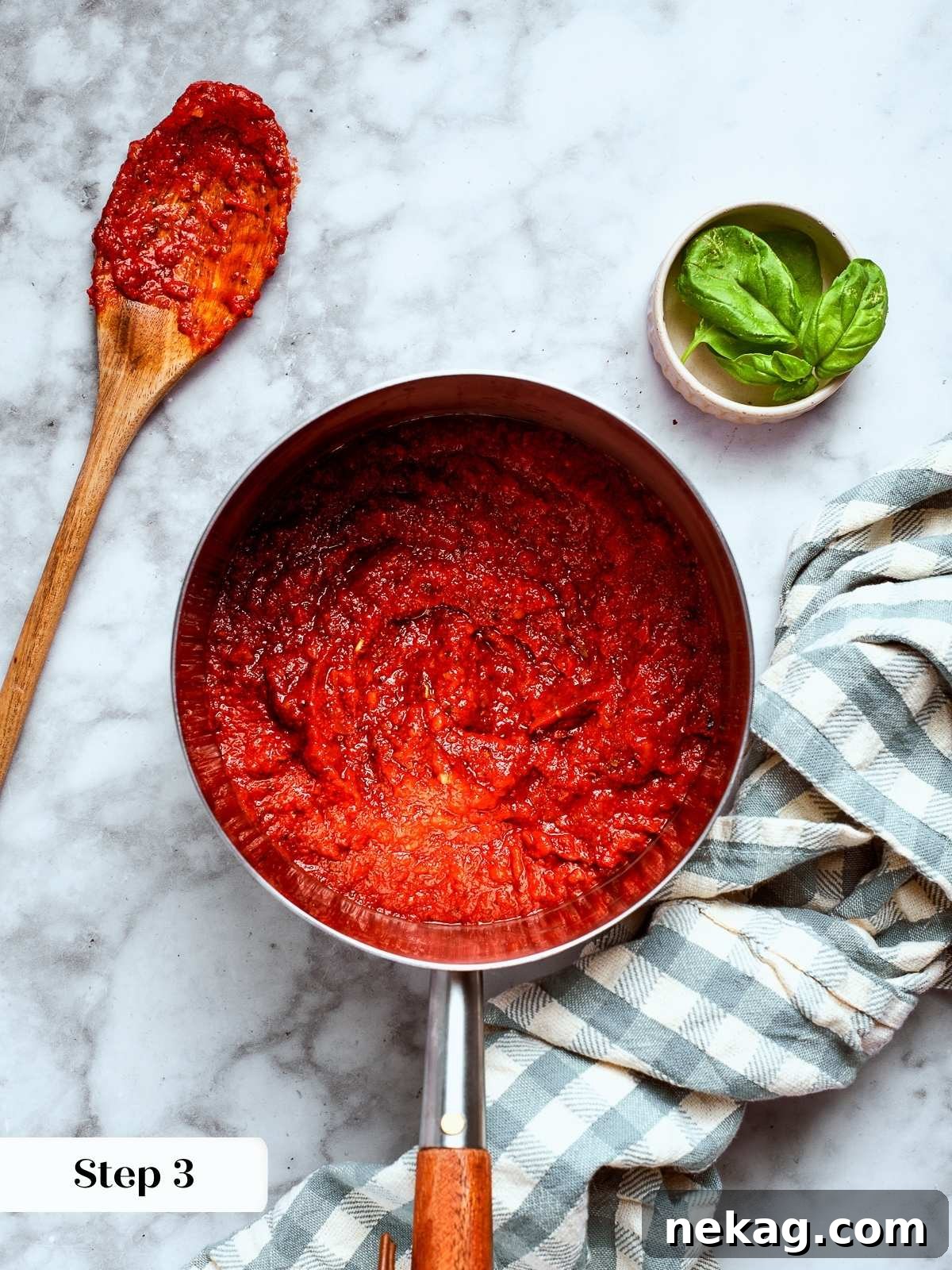
After the initial simmer, remove the lid and carefully taste a small spoonful of the sauce. This is your opportunity to fine-tune the flavors. Add additional kosher salt to taste, aiming for a point where the tomato flavor is vibrant and balanced, not overly salty. Incorporate a few generous grinds of fresh black pepper to add a subtle warmth and aroma. Cover the saucepan once more and continue to cook for another 5 minutes, allowing the newly added seasonings to fully integrate. Taste again and make any final adjustments to the salt. Remember, the goal is a harmonious blend where all ingredients enhance the natural goodness of the tomatoes.
If, after tasting, the sauce still has a pronounced acidic bite, you can add 1 additional tablespoon of granulated sugar. The level of acidity can vary significantly between different brands of canned tomatoes, so adjusting the sugar content is a common and effective way to achieve perfect balance.
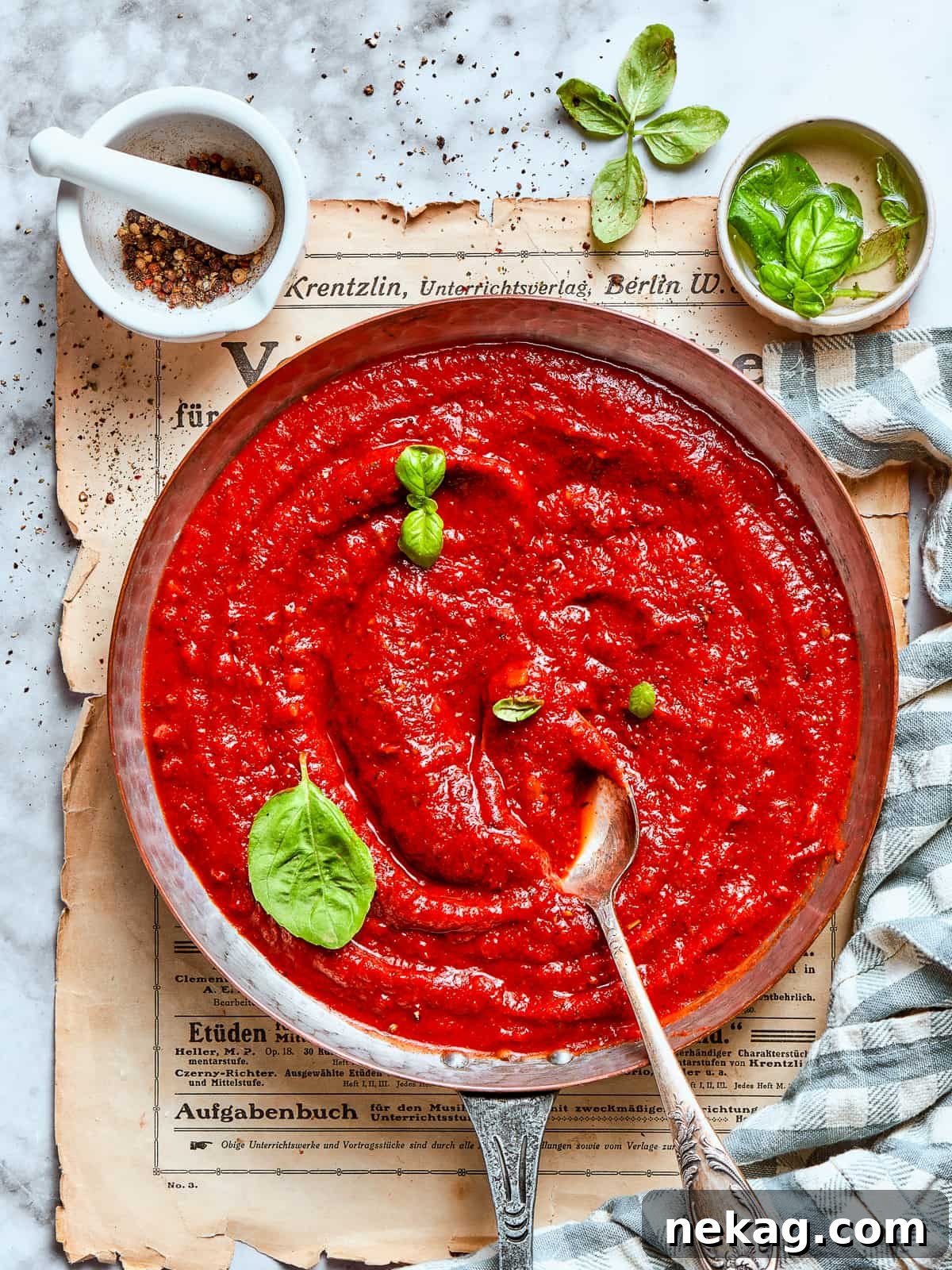
Step 4: Your Perfect Pizza Sauce is Ready
Once seasoned to perfection and simmered to a beautiful consistency, your homemade pizza sauce is complete and ready to use! Allow it to cool completely before spreading on your pizza dough to prevent a soggy crust. You can also store it for future use, knowing you have a batch of restaurant-quality sauce at your fingertips.
Chef Lindsey’s Expert Recipe Tip
Accidentally over-salted your sauce? Don’t despair! There are a couple of effective ways to salvage it. The quickest fix is to add more sugar, which helps to counteract the saltiness. A better, more flavorful solution is to stir in an additional tablespoon or two of tomato paste; its concentrated tomato flavor and slight sweetness can rebalance the sauce beautifully. If you have the ingredients on hand and a larger batch is feasible, simply double the recipe by adding another set of all the other ingredients (minus the excess salt) and simmer it down. This will dilute the saltiness and create an even larger batch of delicious sauce for future pizzas.
Frequently Asked Questions About Homemade Pizza Sauce
Here are answers to some of the most common questions about making and storing this delicious homemade pizza sauce:
Absolutely! This homemade pizza sauce is wonderfully freezer-friendly, making it perfect for meal prep. It will maintain its quality and flavor in the freezer for up to 3 months. I highly recommend doubling the recipe and freezing it in ¾ cup portions – this amount is typically sufficient for two medium-sized pizzas, which is perfect for my family. While the sauce remains safe to eat beyond three months, its peak flavor will begin to diminish. To use, simply thaw overnight in the refrigerator or gently defrost using the microwave.
Proper storage is key to extending the life of your homemade pizza sauce. Any leftover sauce should be transferred to an airtight container and stored in the refrigerator. When stored correctly, it will stay fresh and delicious for 3 to 5 days, ready for your next pizza craving or other culinary uses.
While both are tomato-based, pizza sauce and pasta sauce have distinct characteristics. Pizza sauce, like this recipe, is typically much thicker and often only briefly simmered. Its primary purpose is to cling to the pizza crust without making it soggy, providing concentrated flavor. Pasta sauces, such as my 15-minute pasta sauce or rich red wine pasta sauce, are generally thinner, often simmered for longer periods to develop deeper flavors, and may include fresh herbs, vegetables, or wine for added complexity. Pizza sauce is usually too thick to serve optimally on pasta, as it’s designed for adhesion rather than coating individual strands.
While you can use fresh tomatoes, this recipe is specifically designed for the convenience and concentrated flavor of canned tomatoes. If using fresh, you would need to blanch, peel, seed, and crush them, then simmer for a much longer time (at least 30-60 minutes) to achieve the desired consistency and depth of flavor, similar to a traditional marinara. The water content of fresh tomatoes is also much higher, requiring more reduction.
To add more heat, incorporate more red pepper flakes during the simmering stage. You can also add a pinch of cayenne pepper for a different type of warmth. Remember to taste as you go, adding small amounts until you reach your preferred level of spiciness.
If you tried this recipe and loved it, please take a moment to leave a 🌟 star rating and share your thoughts in the comments below. I truly value your feedback and love hearing about your culinary successes; your comments brighten my day!
The Ultimate Homemade Pizza Sauce
Comment
Print Recipe
Ingredients
- 15 ounces canned tomato sauce
- ⅓ cup tomato paste
- 2 teaspoons dried oregano
- ½ teaspoon dried basil
- ½ teaspoon onion powder
- ¼ teaspoon garlic powder
- 1 tablespoon granulated sugar
- 1 teaspoon kosher salt more to taste
- black pepper to taste
Instructions
-
In a small or medium saucepan, combine canned tomato sauce, tomato paste, oregano, basil, onion powder, garlic powder and sugar. Add half the salt ( ½ teaspoon).
-
Gradually bring to a boil over medium-low heat, stirring occasionally. Reduce heat as low as possible and simmer, covered, for 5-10 minutes.
-
Taste and add additional salt, a few grinds of black pepper. Continue to cook, covered, for 5 minutes. Taste and make final adjustments to salt.
-
Your pizza sauce is now ready to use!
Notes
Flavor Tips – If your sauce is too salty, you can balance it by adding more sugar or, preferably, more tomato paste. If you have the ingredients, consider making another half batch of the sauce (excluding the added salt) to dilute the overall saltiness.
Variations – For a hint of heat, stir in a pinch of red pepper flakes during the simmering process.
Storage – Store any leftover pizza sauce in an airtight container in the refrigerator for 3 to 5 days. For longer storage, freeze in individual portions for up to 3 months.
Nutrition Information (per serving, estimated)
Before You Go: Explore More Chef-Tested Recipes
I sincerely hope you savored crafting and tasting this professional chef-tested pizza sauce recipe. It’s truly a delight to bring restaurant-quality flavors into your home with such ease. Don’t let your culinary journey end here! I invite you to explore our extensive collection of other delicious, chef-developed sauce and condiment recipes, each meticulously created to inspire and simplify your cooking. Happy cooking!