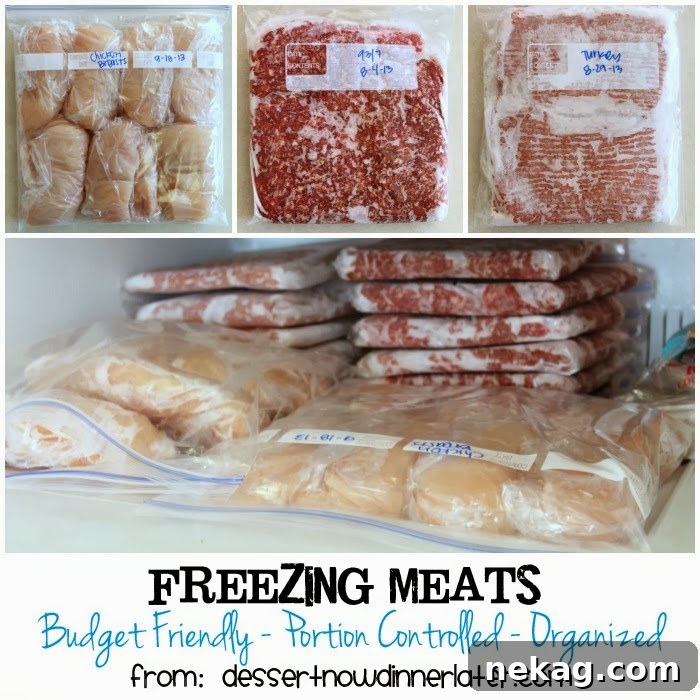
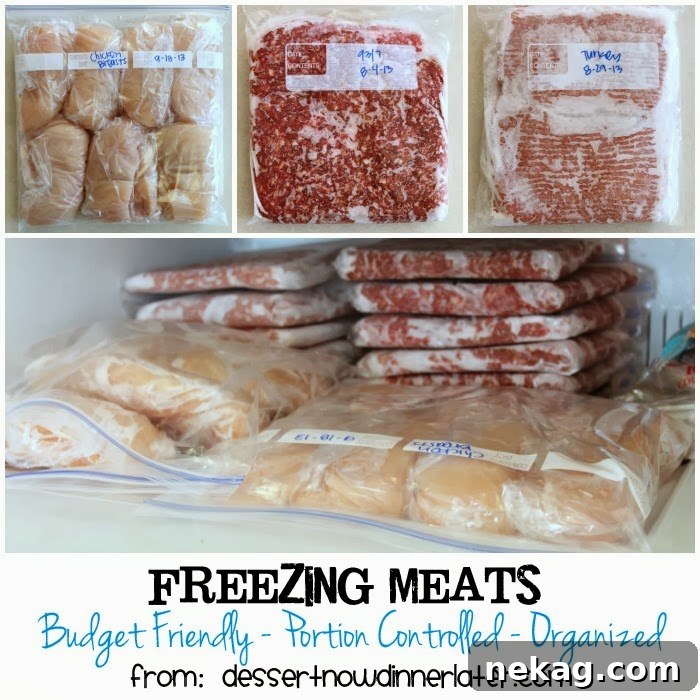
Here’s a simple, budget-friendly kitchen tip: how to buy and freeze meat so you save money and reduce waste.
I always buy meat on sale and stock up when prices drop. Running out and purchasing meat at full price makes me cringe. I aim to pay around $2 or less per pound for chicken and ground beef, and pork is often even cheaper. The first rule is to buy in bulk when meat goes on sale. Family-size packages and lower per-pound prices—around $1.99–$2.25/lb—are the best time to stock your freezer.
Once you bring the meat home, the question becomes how to store it so it lasts and portions sensibly. Let’s start with chicken.
Chicken
Frozen chicken breasts can be costly per pound and are frequently oversized, which encourages overeating. I prefer buying fresh chicken breasts—Walmart tends to have breasts that are better trimmed than other bulk retailers—so even if I pay around $2.09/lb, I save time and waste because there’s less fat and trimming to discard.
Even with a good package, you’ll need to trim a little. Pre-trimmed packages often cost more, so doing a bit of trimming yourself saves money.

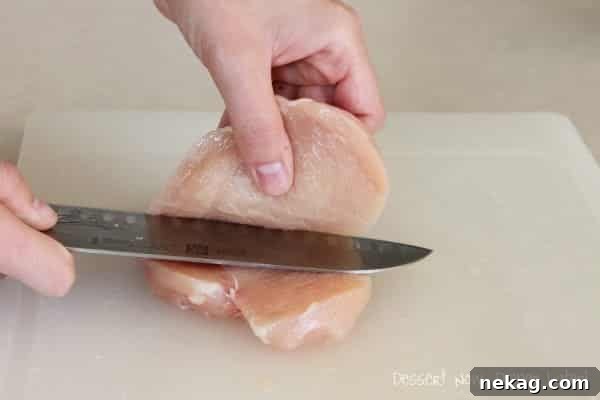
After trimming, I cut each breast in half width-wise to create two thinner portions from one large breast. This is like butterflying but cutting completely through. It helps with portion control—especially when breasts are oversized. Smaller breasts are easier to portion and some brands or organic options will be smaller, but I generally buy conventional chicken to save money.

Cutting the breast this way stretches your meat further. Use a sharp knife and avoid sawing back and forth—make swift slicing motions and lift the top of the breast slightly as you cut through to get a clean slice.
Stack the two halves together before freezing, but remember there are two portions when you defrost. A single portion of meat is roughly the size of a deck of cards, or about 4 ounces—so splitting large breasts helps you keep servings appropriate.

To package, wash your hands and use a regular fold-top sandwich bag flipped inside out. Place a chicken portion inside and fold the bag around it so the meat is contained without direct hand contact. This technique is quick and minimizes contamination if you work methodically.

Repeat for each breast. My routine: trim and halve each breast, set the finished pieces aside on a clean part of the cutting board, then wash hands and slip each portion into a sandwich bag. Move efficiently with a system so the process goes fast.
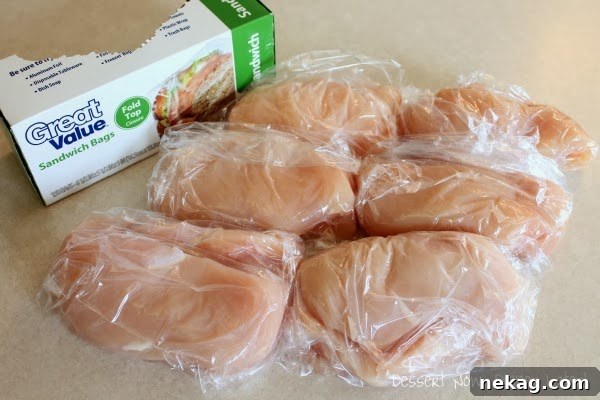
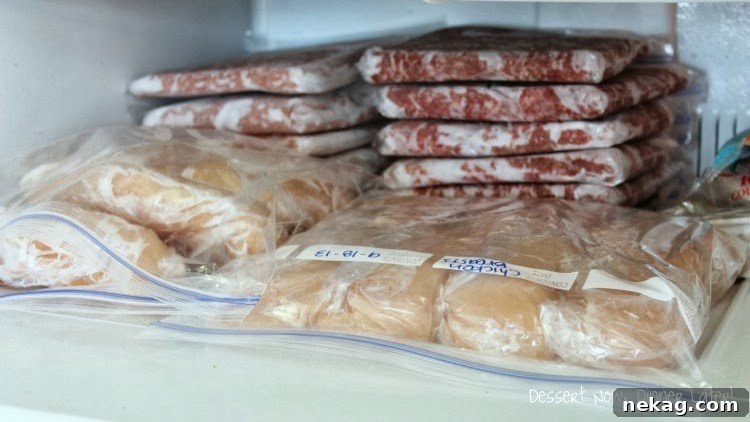
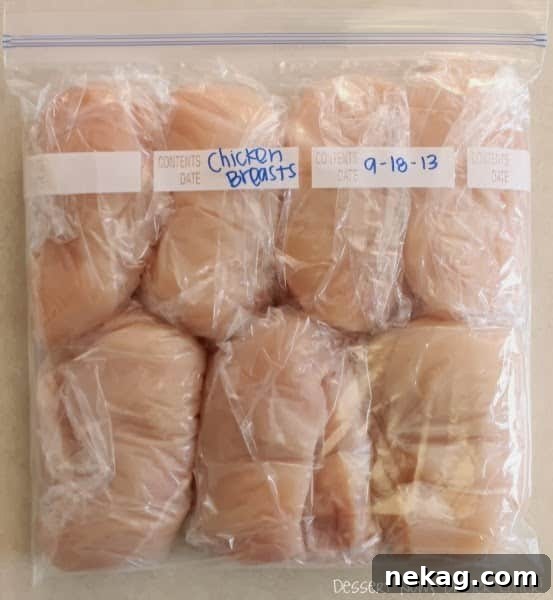
Label and date a gallon-sized zip-top bag. I usually use regular gallon bags rather than specialty freezer bags because I rotate my stock regularly and rarely get freezer burn. Lay the individually wrapped breasts flat in the gallon bag and freeze the bag flat. When you need chicken, remove the number of portions you want and thaw them in the refrigerator on a plate overnight (keeping them in the sandwich bag) or defrost in the microwave right before cooking. Be sure to separate the two pieces before cooking.
Ground Beef
The method for ground beef or ground turkey is similar. I buy 5–10 lb packages when on sale, then weigh out roughly 1 lb portions using a kitchen scale. Press each portion flat into a quart-sized zip-top bag.
I avoid freezer-specific bags to save money, but if you don’t rotate your freezer often or you tend to forget items, consider spending a little more for freezer bags to reduce the risk of freezer burn.
A few notes: don’t overwork the meat when shaping portions—excessive handling can make it dense. Press it just enough to flatten, remove as much air as you can, and seal. Label the bags clearly before filling them so you don’t forget which is which.
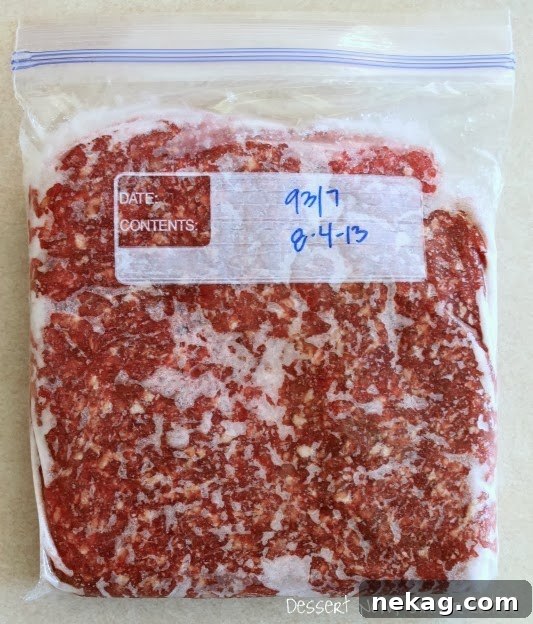
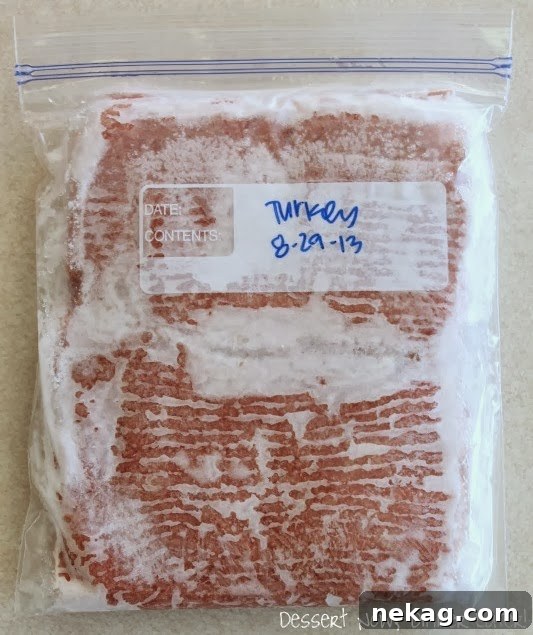
Stored this way, ground meat should keep well for about six months with minimal freezer burn if you squeeze out excess air before sealing. Ground turkey sometimes looks crystallized because it contains more moisture than beef, but that doesn’t necessarily mean it’s freezer burned. Thaw in the refrigerator overnight on a plate or use the microwave right before cooking if needed.
Those are my practical tips for freezing meat: buy on sale, trim and portion for better control, wrap individually, and freeze flat in labeled bags. Your freezer will be more organized, you’ll stretch your grocery budget farther, and meal planning becomes easier when you can see exactly what you have.