
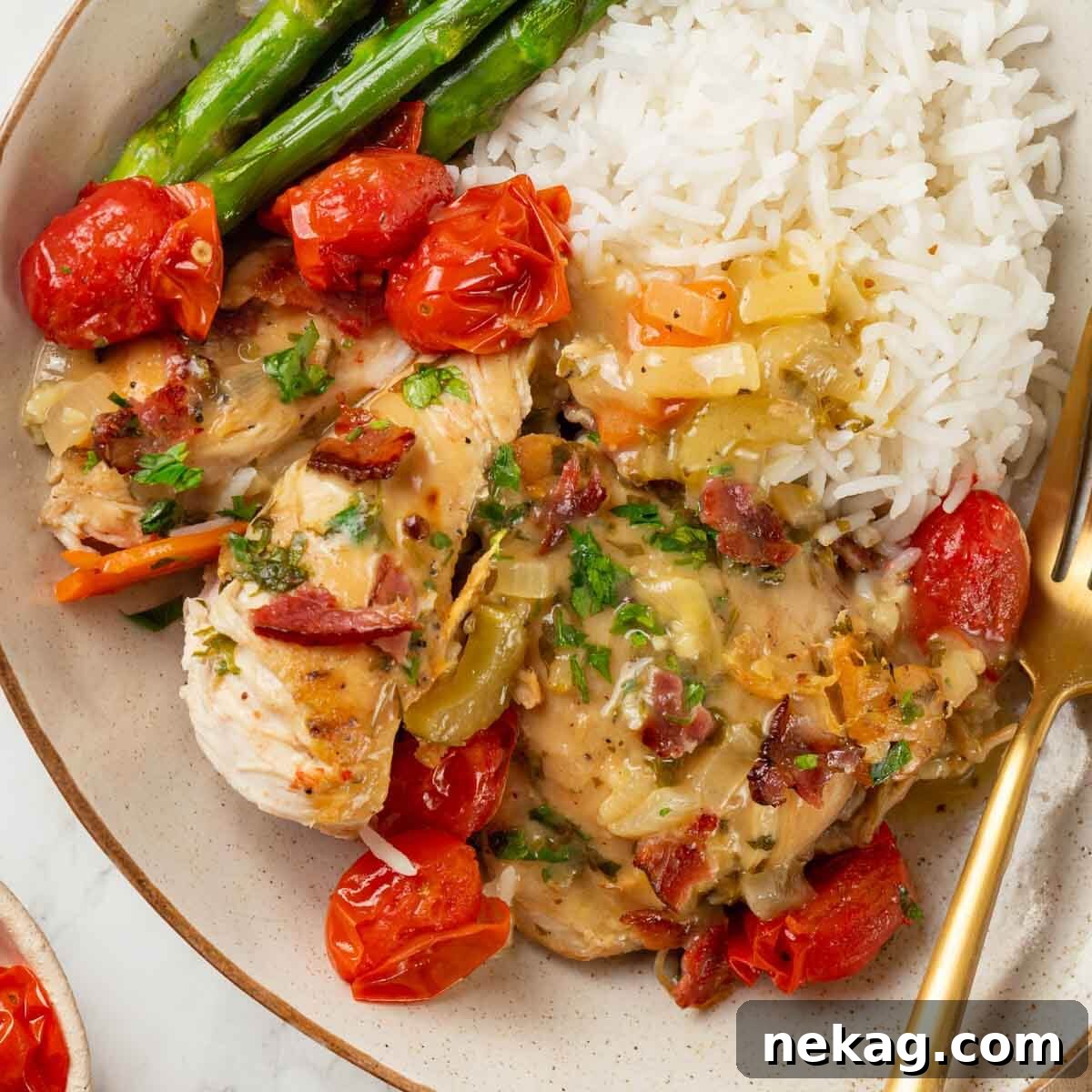
Exquisite One-Pan Chicken in White Wine Sauce with Blistered Tomatoes
Discover the secret to a truly unforgettable meal with this exquisite chicken in white wine sauce. This dish brings together tender, perfectly cooked chicken with a luscious, aromatic white wine sauce, beautifully complemented by the sweet burst of blistered tomatoes and a medley of fresh herbs. It’s a balanced, flavorful, and impressively elegant meal that comes together effortlessly in just one pan, typically in under an hour.
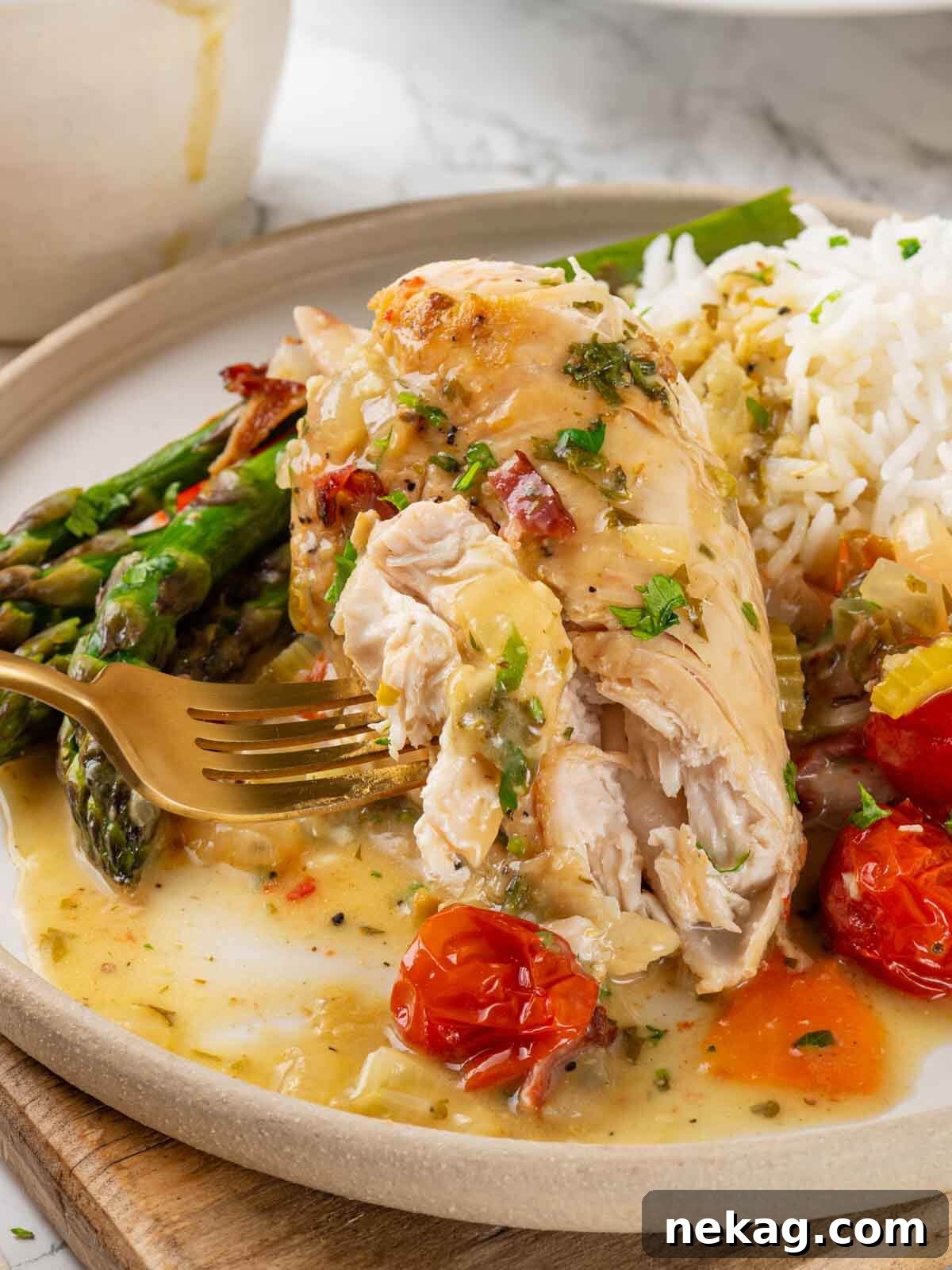
Inspired by a classic recipe, this dish transcends the ordinary, making it ideal for both a comforting Sunday dinner with family and an impressive main course for a sophisticated dinner party. Each element – from the beautifully browned chicken pieces to the crisp white wine reduction, savory chicken stock, and vibrant fresh herbs – harmonizes with the sweet, tangy burst of blistered cherry tomatoes. This is more than just a meal; it’s a culinary experience that promises to become a new favorite in your repertoire, standing proudly alongside cherished recipes like lemon chicken and baked chicken marinara.
Why You’ll Love This Chicken and White Wine Sauce Recipe
This isn’t just another chicken dish; it’s a testament to simple elegance and incredible flavor. Here’s why this recipe deserves a prime spot in your kitchen:
- Unforgettable Flavor Profile: The symphony of crisp dry white wine, rich chicken stock, tangy Dijon mustard, and aromatic fresh herbs creates a complex and deeply satisfying flavor. This combination is both sophisticated and incredibly balanced, making every bite a delight. The sauce itself is a culinary marvel, promising to tantalize your taste buds.
- Effortless One-Pan Wonder: Imagine a gourmet meal with minimal cleanup! This entire dish is prepared in a single pan, from browning the chicken to simmering the sauce and finishing in the oven. This streamlines the cooking process, making it perfect for busy weeknights yet impressive enough for special occasions.
- Customizable for Every Palate: This recipe encourages culinary creativity. Easily adapt it to your preferences by swapping bone-in chicken thighs for boneless varieties for faster cooking, or even omitting the bacon for a lighter, more classic chicken in wine sauce. We’ll explore more variations later to inspire your inner chef.
- Chef-Approved Excellence: Developed and rigorously tested multiple times by a professional chef, you can trust that these instructions are precise and reliable. The result is a restaurant-quality dish that you can confidently recreate in your own home, impressing guests and delighting your family.
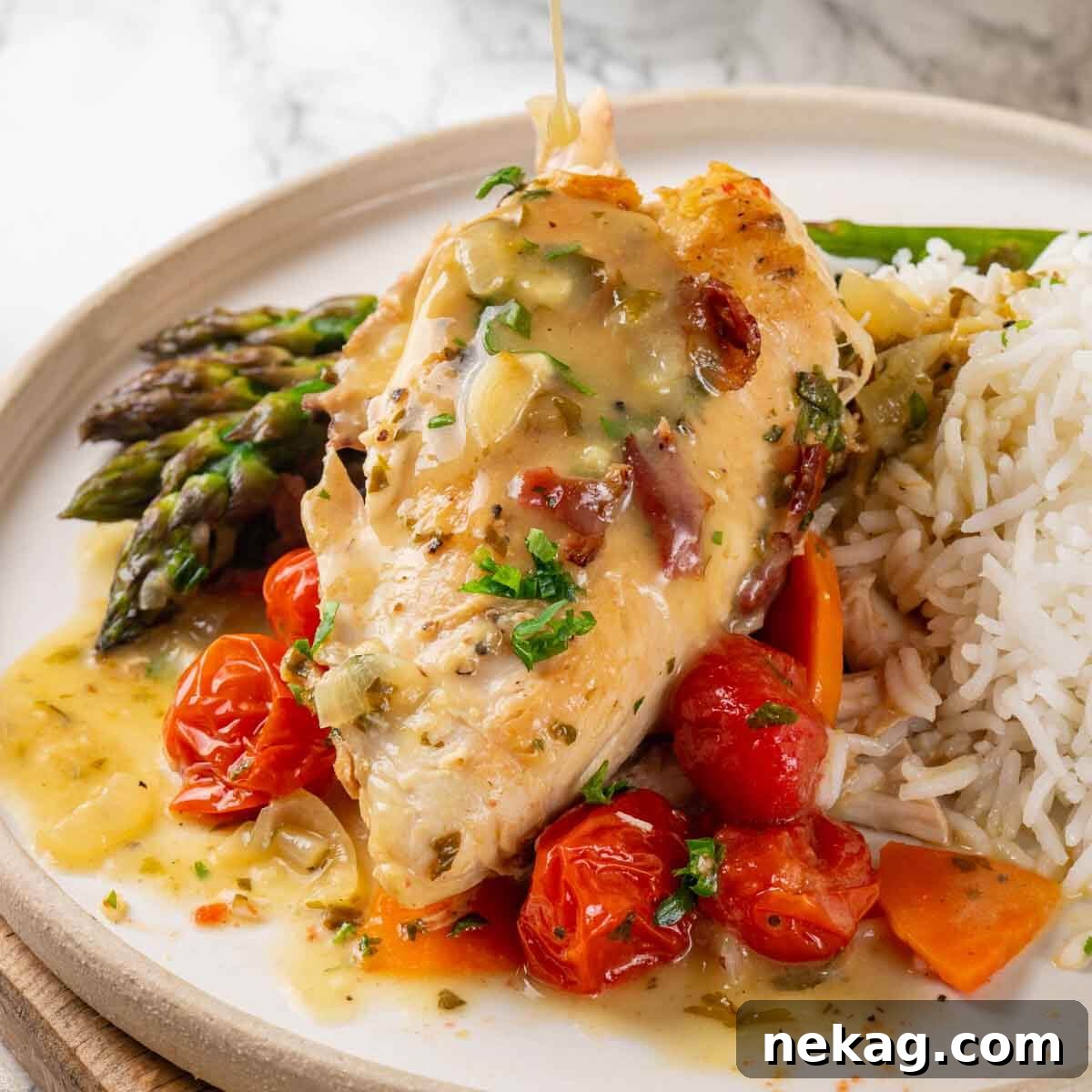
Mastering the Sauce: Professional Tips for Perfection
Crafting a truly exceptional white wine sauce is key to this dish’s success. Follow these professional tips to elevate your culinary game and ensure a flawless result every time:
- Achieving Velvety Sauce Reduction: Patience is a virtue when it comes to reducing your sauce. This crucial step intensifies the flavors, concentrating the wine and stock into a rich, complex elixir. It also creates that desirable velvety texture that perfectly coats the chicken. Allow the sauce sufficient time to simmer and reduce until it reaches a beautiful, slightly thickened consistency. Don’t rush it – a properly reduced sauce is the heart of this dish.
- The Power of Quality Ingredients: The quality of your ingredients directly impacts the final taste. This is especially true for your choice of chicken stock and white wine. For the best depth of flavor, consider using homemade chicken stock if time permits – it makes a noticeable difference. When selecting wine, opt for a dry white wine you genuinely enjoy drinking, such as a crisp Pinot Grigio or a bright Sauvignon Blanc. A good quality wine will lend a nuanced complexity to the sauce, while a sub-par wine can detract from it.
- Seasoning to Your Sensation: Never underestimate the importance of tasting as you cook. Before the dish goes into the oven and again after the sauce has reduced, taste and adjust the seasoning. Your personal preferences are paramount. Feel free to add more salt, pepper, or a pinch of extra fresh herbs to fine-tune the flavors to your liking. A perfectly seasoned dish truly sings on the palate.
- The Art of Deglazing for Depth: As a professional chef’s secret, deglazing is non-negotiable for maximizing flavor. After browning the chicken and sautéing the vegetables, you’ll notice delicious brown bits (known as “fond”) stuck to the bottom of the pan. When you add the wine and scrape these bits loose with a wooden spoon, you’re incorporating a concentrated burst of savory flavor back into your sauce. Don’t leave these precious bits behind!
Essential Ingredients for Your Culinary Masterpiece
Each ingredient in this recipe plays a vital role in creating its balanced and delicious flavor profile. Here’s a breakdown of what you’ll need and why:
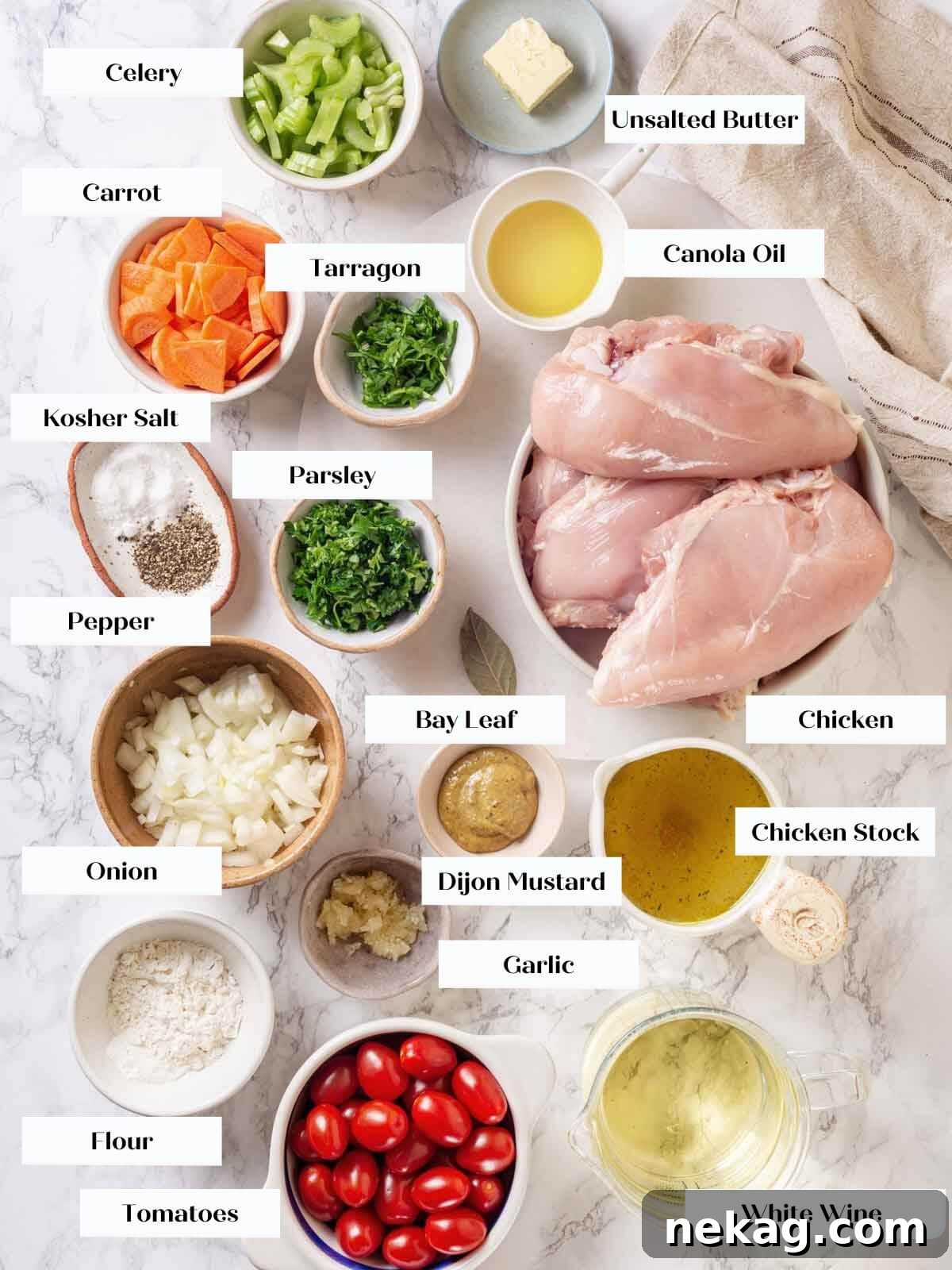
- Bone-in Chicken Thighs: We start with bone-in chicken thighs, typically with the skin removed. The bone adds significant flavor and helps keep the meat moist during cooking. If you prefer, boneless chicken thighs are an excellent alternative and will cook in roughly half the time.
- Bone-in Chicken Breasts: Complementing the thighs, bone-in chicken breasts offer a different texture. If bone-in breasts are hard to find, boneless, skinless chicken breasts can be used; just be mindful of their shorter cooking time to prevent them from drying out.
- Kosher Salt & Freshly Ground Black Pepper: These foundational seasonings are crucial for enhancing the natural flavors of the chicken and the sauce. We’ll use them at various stages to build layers of taste.
- Canola Oil: A neutral oil with a high smoke point, canola oil is perfect for browning the chicken and sautéing the vegetables without imparting unwanted flavors.
- Onion: Approximately 1 cup of chopped onion (about 1 medium onion) forms the aromatic base. Sweet or yellow onions are preferred for their balanced flavor, adding sweetness and depth as they caramelize.
- Carrot: Thinly sliced carrots add a touch of sweetness and earthy notes to the aromatic base. Thin slices ensure they cook evenly and meld seamlessly into the sauce. Peeling is optional.
- Celery: Together with onion and carrot, thinly sliced celery completes the classic French mirepoix, providing a crucial aromatic foundation for the sauce.
- Garlic: About 1 tablespoon of minced garlic (roughly 3 cloves) adds pungent, savory depth. You can use a head of fresh garlic or convenience jarred minced garlic.
- Dry White Wine: This is a star ingredient! A dry white wine like Pinot Grigio, Sauvignon Blanc, or a unoaked Chardonnay is essential. Its crisp acidity and subtle fruit notes brighten the sauce and contribute profound depth of flavor through deglazing. Avoid sweet wines, as they will alter the balance of the dish. If you have a dry red you love, you could try a different recipe like red wine pasta sauce!
- Low-Sodium Chicken Stock: This forms the bulk of the sauce. Using unsalted or low-sodium stock allows you to control the seasoning precisely. For the absolute best flavor, consider making homemade chicken stock by simmering bones and vegetables.
- All-Purpose Flour: Unlike dredging, the all-purpose flour in this recipe is used to thicken the sauce, creating a silky, luxurious texture. For a gluten-free version, rice flour or almond flour are excellent alternatives.
- Fresh Tarragon: Chopped fresh tarragon offers a unique floral, anise-like flavor that is distinctly elegant and pairs beautifully with chicken and white wine. Fresh tarragon has a much more vibrant flavor than dried, so it’s highly recommended.
- Fresh Flat-Leaf Parsley: Used both in the sauce and as a vibrant garnish, fresh flat-leaf parsley provides a fresh, peppery counterpoint, lifting the richness of the dish.
- Whole-Grain Dijon Mustard: A spoonful of whole-grain Dijon mustard adds a crucial tang and acidity to the sauce, cutting through the richness and enhancing the overall balance of flavors. The whole grains also provide a subtle textural element.
- Bay Leaf: A single bay leaf infuses the sauce with a delicate, earthy aroma, hinting at notes of eucalyptus and pepper. Remember to remove it before serving.
- Unsalted Butter: Swirled in at the end, unsalted butter enriches the sauce, adding a glossy finish and a luxurious mouthfeel.
- Cherry Tomatoes: Sweet cherry tomatoes or grape tomatoes, blistered under the broiler, provide bursts of juicy sweetness and acidity that beautifully contrast the savory chicken and sauce.
- Bacon (Optional): For an extra layer of savory, smoky flavor, crispy crumbled applewood-smoked bacon is a fantastic optional addition. It introduces a delightful saltiness and crunch. You can even make some loaded mashed potatoes with the extra bacon while you’re at it!
Refer to the complete recipe card below for precise quantities and additional details.
Creative Variations to Personalize Your Dish
While this chicken in white wine sauce recipe is perfect as is, it’s also incredibly versatile. Feel free to experiment and tailor it to your preferences or whatever ingredients you have on hand:
- Creamy Indulgence: For a richer, more decadent sauce, stir in a splash of heavy cream at the very end. It’s best to prepare the creamy white wine sauce separately on the stovetop and then spoon it over the chicken, as baking cream sauce in the oven can sometimes cause it to break or curdle.
- Different Cuts of Chicken: This recipe is adaptable to various chicken cuts. If you prefer, use entirely boneless, skinless chicken breasts or thighs. Simply adjust the baking time, as boneless cuts will cook much faster. You could even use drumsticks or a combination of your favorite pieces, much like you would with this Chicken Marsala recipe! Always ensure the chicken reaches an internal temperature of 165°F (74°C).
- Herbaceous Adventures: While tarragon and parsley are classic choices, don’t hesitate to explore other fresh herbs. Sprigs of fresh thyme or rosemary add a beautiful aromatic depth that complements the white wine sauce wonderfully. A hint of fresh oregano or chives could also introduce interesting nuances.
- Vegetable Boosters: Enhance the nutritional value and texture by adding more vegetables. Sliced mushrooms can be sautéed with the onions and carrots, absorbing the sauce’s flavors beautifully. Fresh spinach can be stirred in at the end to wilt, or small broccoli florets can be added to the pan for the last 15-20 minutes of baking.
- A Touch of Spice: For those who enjoy a little heat, a pinch of red pepper flakes added with the garlic can provide a subtle warmth that complements the savory sauce without overpowering it.
- Non-Alcoholic Alternative: If you prefer to cook without alcohol, you can substitute the dry white wine with an equal amount of non-alcoholic white wine, or use additional chicken stock with a splash of white grape juice or white wine vinegar to mimic the acidity.
Step-by-Step Guide: Crafting Your White Wine Chicken
Follow these detailed instructions to create the perfect chicken in white wine sauce every time. Precise measurements and further notes can be found in the comprehensive recipe card below.
Step 1: Prepare Your Oven. Preheat your oven to 325°F (160°C). This ensures it’s ready when the chicken and sauce are prepared for baking.
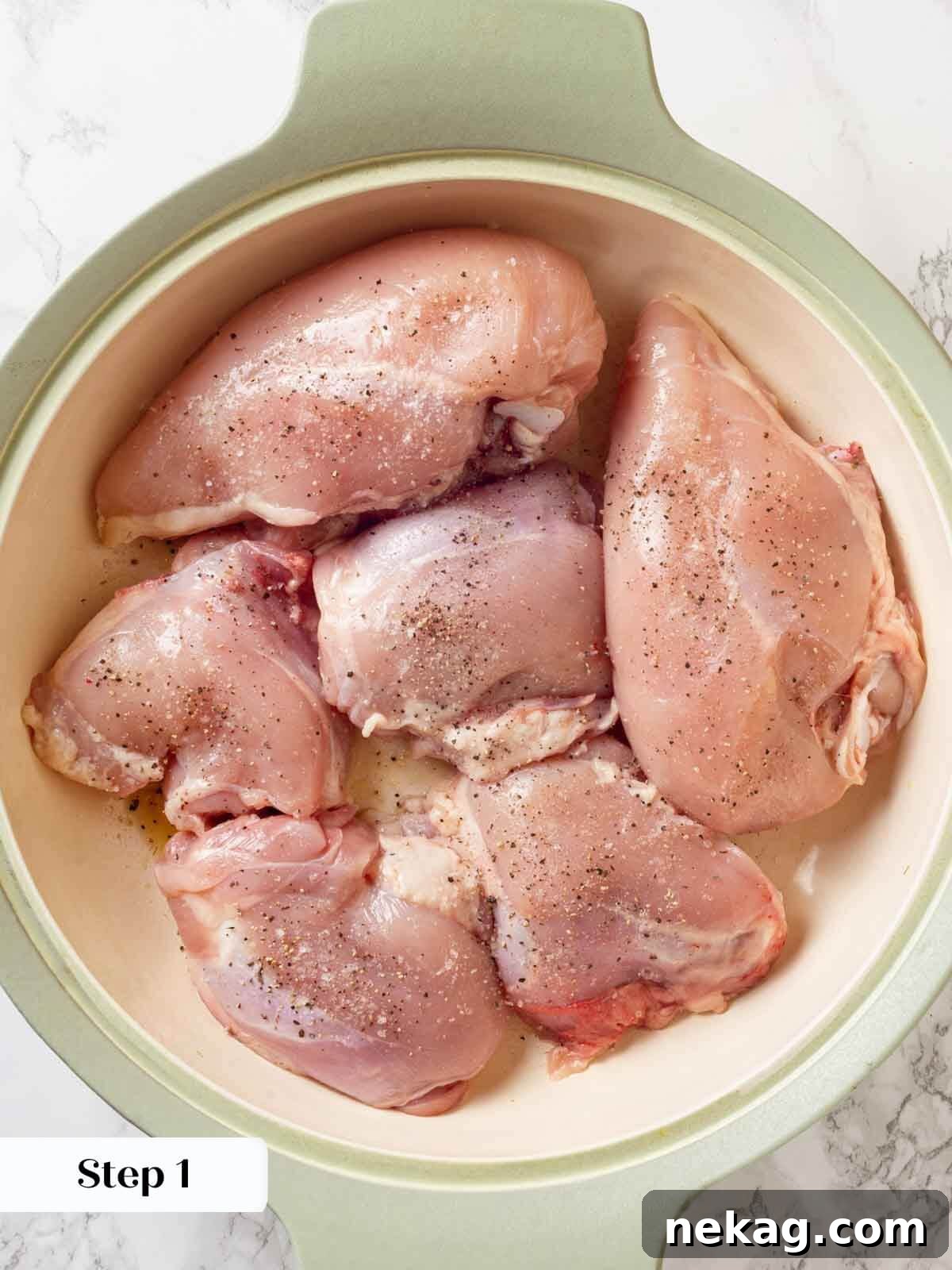
Step 2: Season and Sear the Chicken. Heat a Dutch oven or a large, oven-safe pan with a lid over medium heat. While the pan heats, pat your chicken pieces thoroughly dry with paper towels – this is key for achieving a good sear. Sprinkle the chicken evenly with ¼ teaspoon of salt and ¼ teaspoon of pepper. Add canola oil to the hot skillet and swirl to coat the bottom.
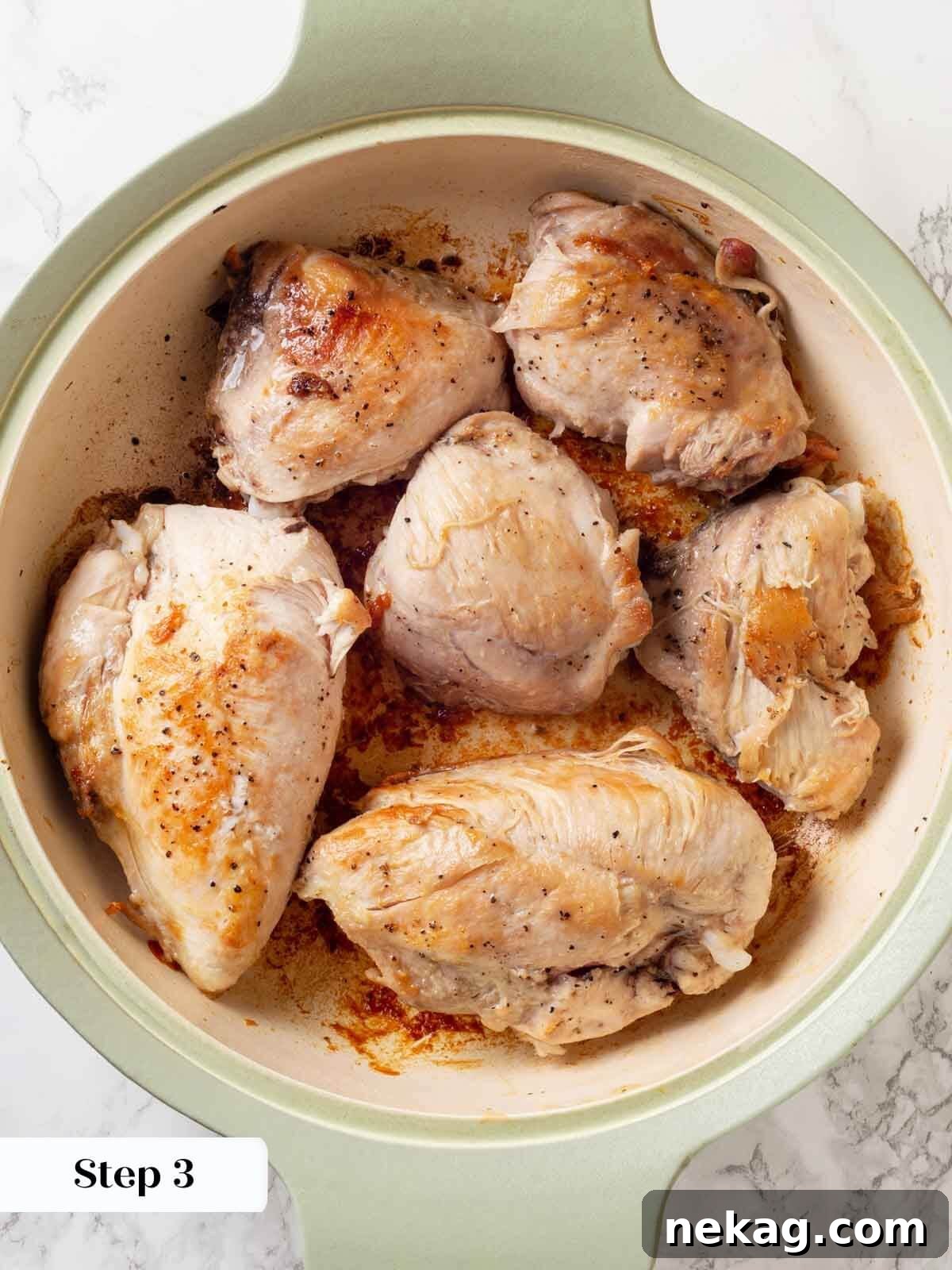
Step 3: Brown the Chicken. Carefully place the seasoned chicken into the hot pan, skin-side down (if using skin-on pieces). Brown the chicken on both sides until golden brown and beautifully caramelized, about 4-5 minutes per side. If using a Dutch oven, you may need to do this in two batches to avoid overcrowding the pan, which can steam the chicken instead of browning it. Once browned, remove the chicken from the pan and set it aside on a plate.
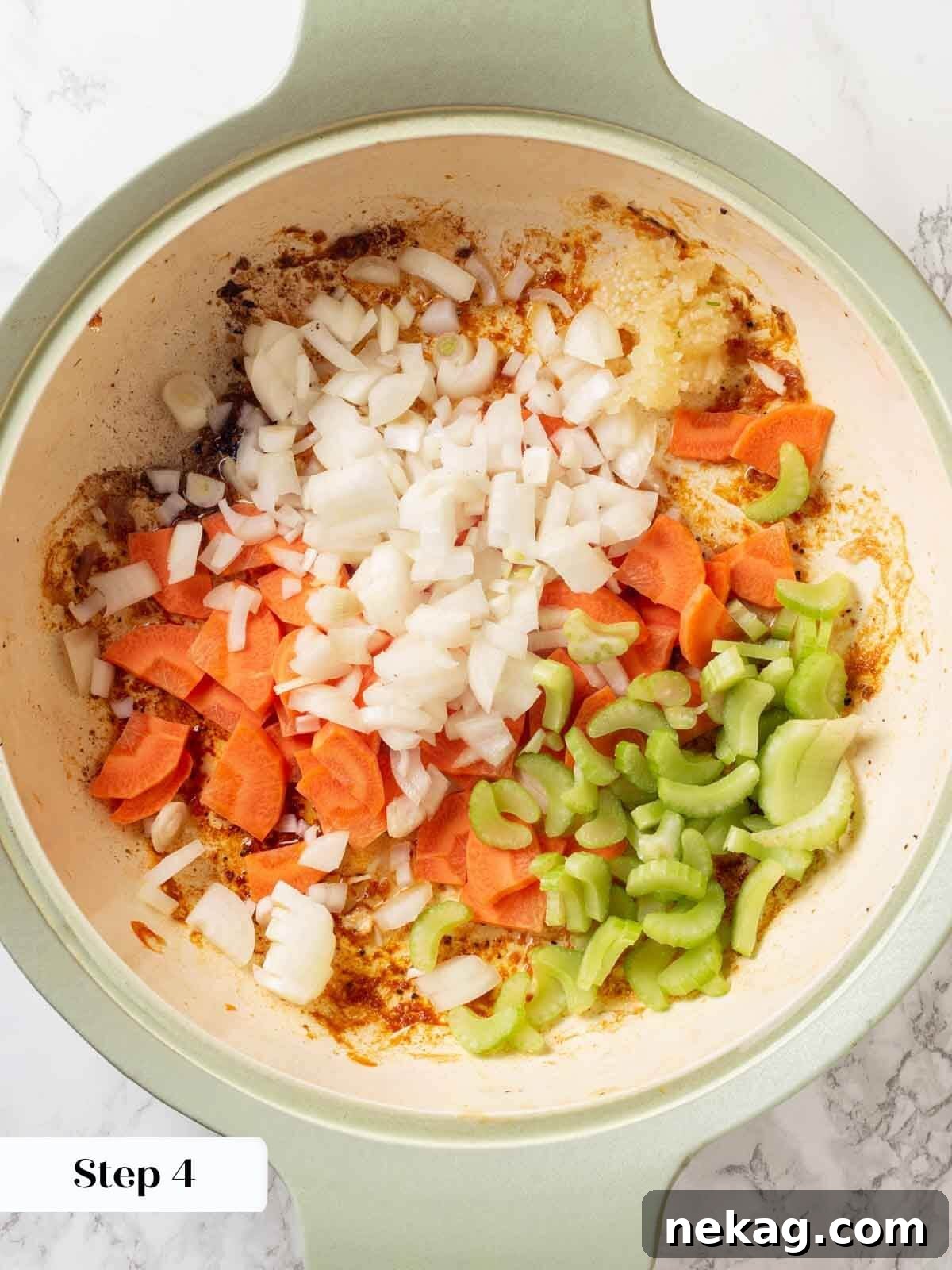
Step 4: Sauté the Aromatics. To the same pan (without cleaning it – those brown bits are flavor!), add the chopped onion, thinly sliced carrot, thinly sliced celery, and minced garlic. Cook these vegetables for about 6 minutes over medium heat, stirring occasionally, until they soften and become fragrant. The goal is to cook them evenly, so ensure your vegetables are cut to a similar size.
Pro Tip: Even Vegetable Cuts. Always cut your vegetables as evenly as possible. This ensures they cook at roughly the same rate, preventing some pieces from being undercooked while others are overcooked, leading to a more consistent flavor and texture in your sauce.
Step 5: Deglaze with Wine. Pour the dry white wine into the pan. Immediately scrape the bottom of the pan with a wooden spoon, loosening all those flavorful brown bits (fond) that developed during the chicken browning and vegetable sautéing. Cook for 2 minutes, allowing the alcohol to evaporate and the wine to reduce slightly. Return the browned chicken pieces to the pan, nestling them among the vegetables.
Step 6: Thicken the Sauce. In a separate bowl, whisk together the chicken stock and all-purpose flour until completely smooth, ensuring no lumps remain. Pour this mixture into the pan with the chicken and vegetables.
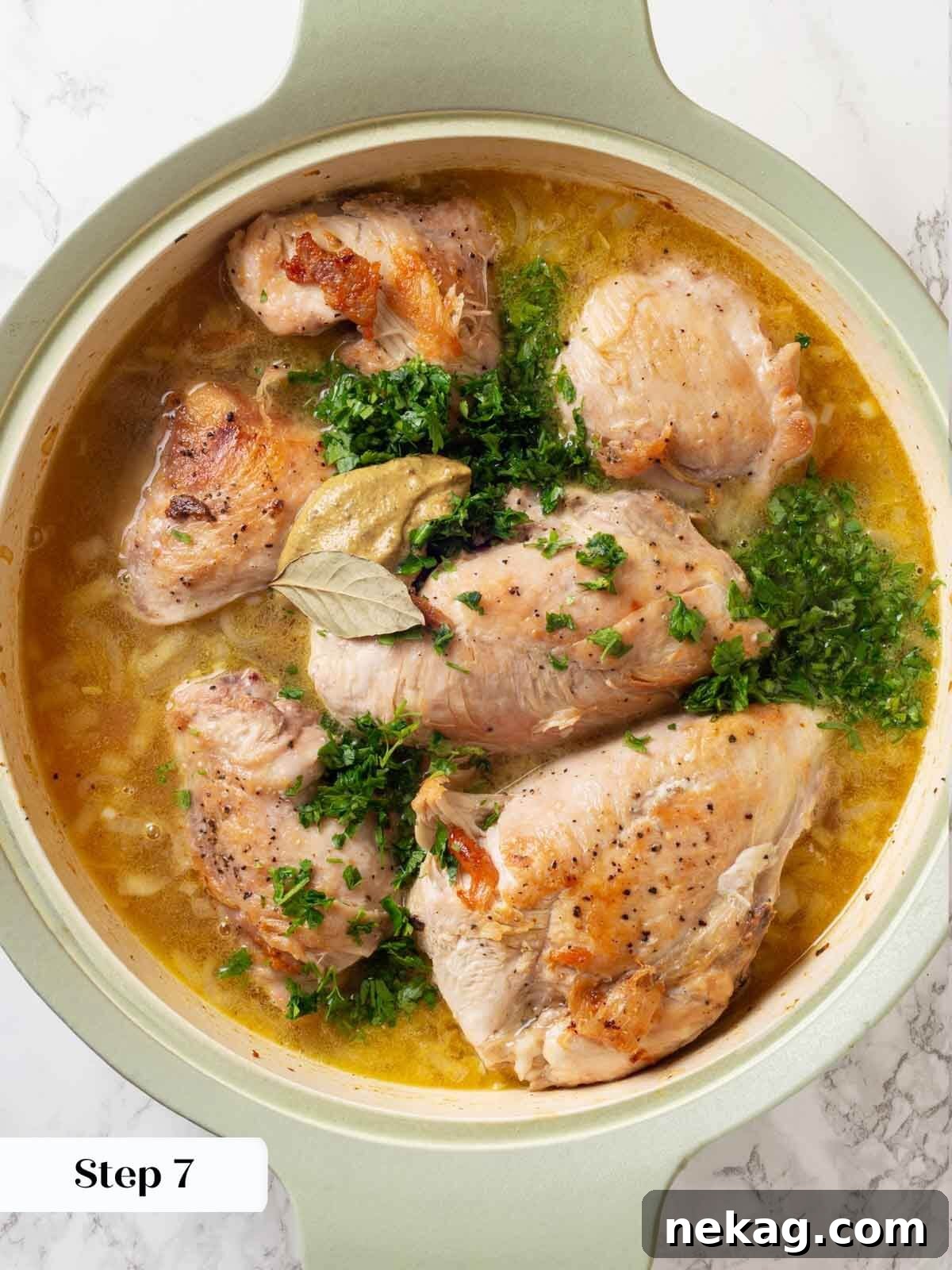
Step 7: Simmer and Bake. Stir in the fresh tarragon, 2 tablespoons of chopped parsley, whole-grain Dijon mustard, and the bay leaf. Bring the mixture to a gentle boil over medium heat, then reduce the heat to a simmer. Cover the pan with its lid. Carefully transfer the covered pan to your preheated oven and bake for 45 minutes, or until the chicken is cooked through and incredibly tender, easily shredding with a fork. The internal temperature of the chicken should reach 165°F (74°C).
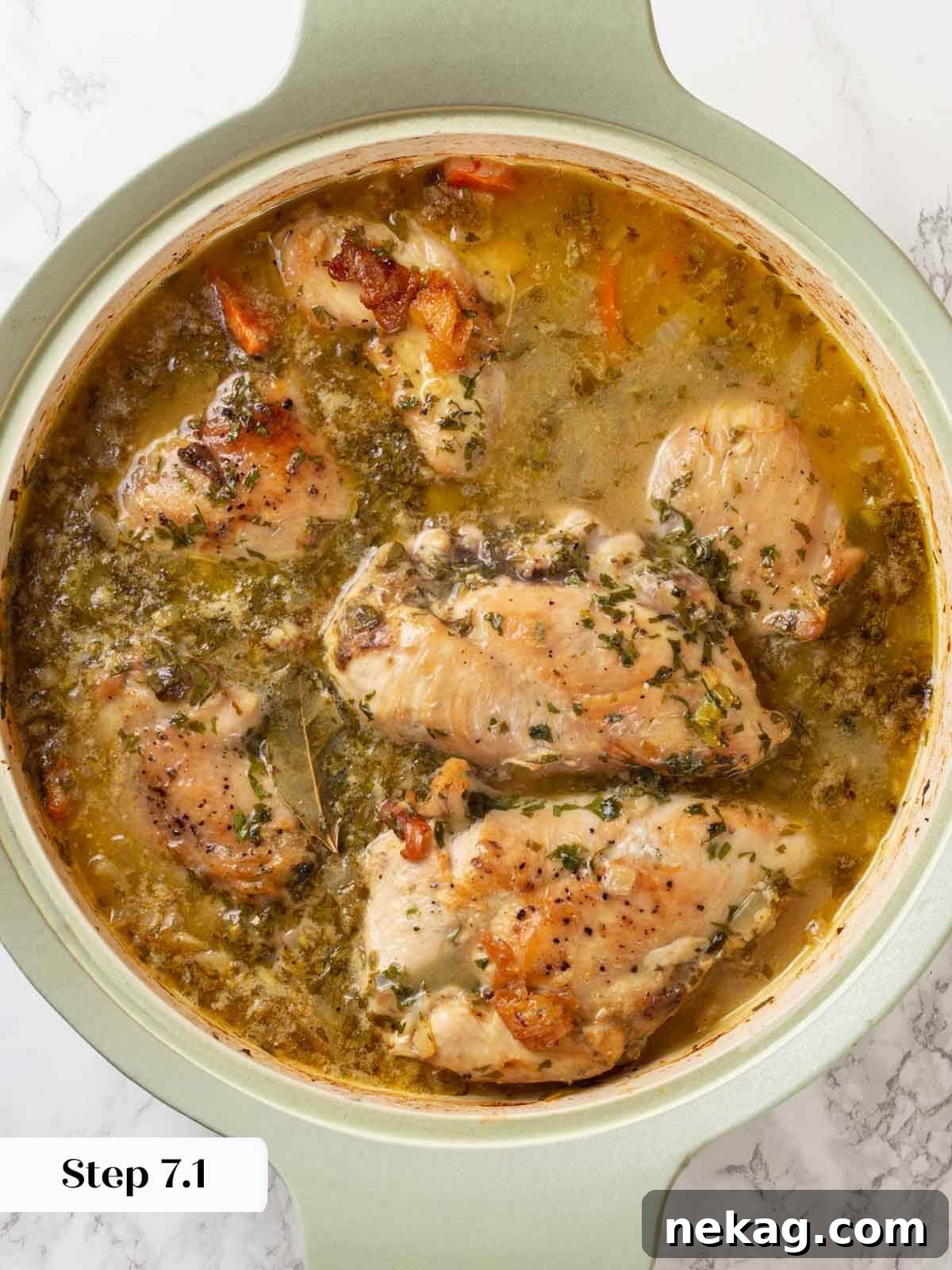
Step 8: Rest the Chicken. Once baked, carefully remove the pan from the oven. Gently transfer the cooked chicken pieces from the pan to a separate platter. Spoon about ¼ cup of the cooking liquid over the chicken to keep it moist and flavorful. Cover loosely with foil to keep warm while you finish the sauce and tomatoes.
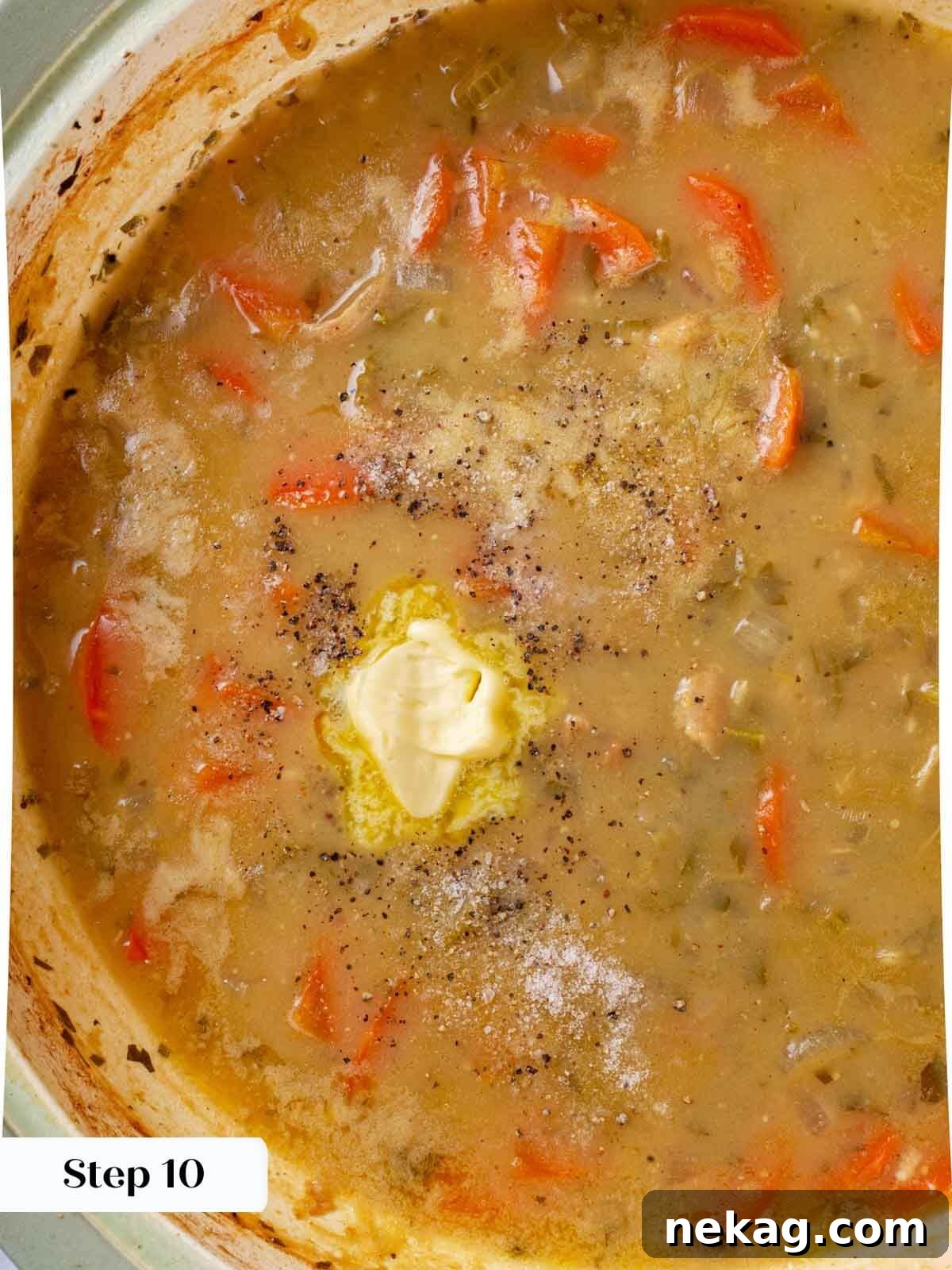
Step 9: Reduce the Sauce. Place the pan with the remaining sauce back on the stovetop over medium-high heat. Bring the sauce to a rolling boil. Continue to boil vigorously for about 5 minutes, or until the mixture has reduced and thickened to approximately 3 cups. This further concentrates the flavors and achieves the perfect consistency.
Step 10: Finish the Sauce. Remove the pan from the heat. Whisk in the tablespoon of unsalted butter until it’s fully melted and incorporated, adding a rich, glossy finish to the sauce. Stir in the remaining ¼ teaspoon of salt and ¼ teaspoon of pepper, adjusting to taste. Discard the bay leaf before serving.
Step 11: Broil the Tomatoes. While the sauce is reducing, preheat your broiler on high. Toss the cherry tomatoes with a teaspoon of olive oil and arrange them in a single layer on a jelly-roll pan or baking sheet. Broil for about 6 minutes, or until the tomatoes are beautifully blistered and slightly softened. Keep a close eye on them to prevent burning!
Broiler Vigilance. Broilers can cook very quickly! Watch your tomatoes closely throughout the 6 minutes to ensure they blister and develop a lovely roasted flavor without becoming charred. A little char is good; burnt is not!
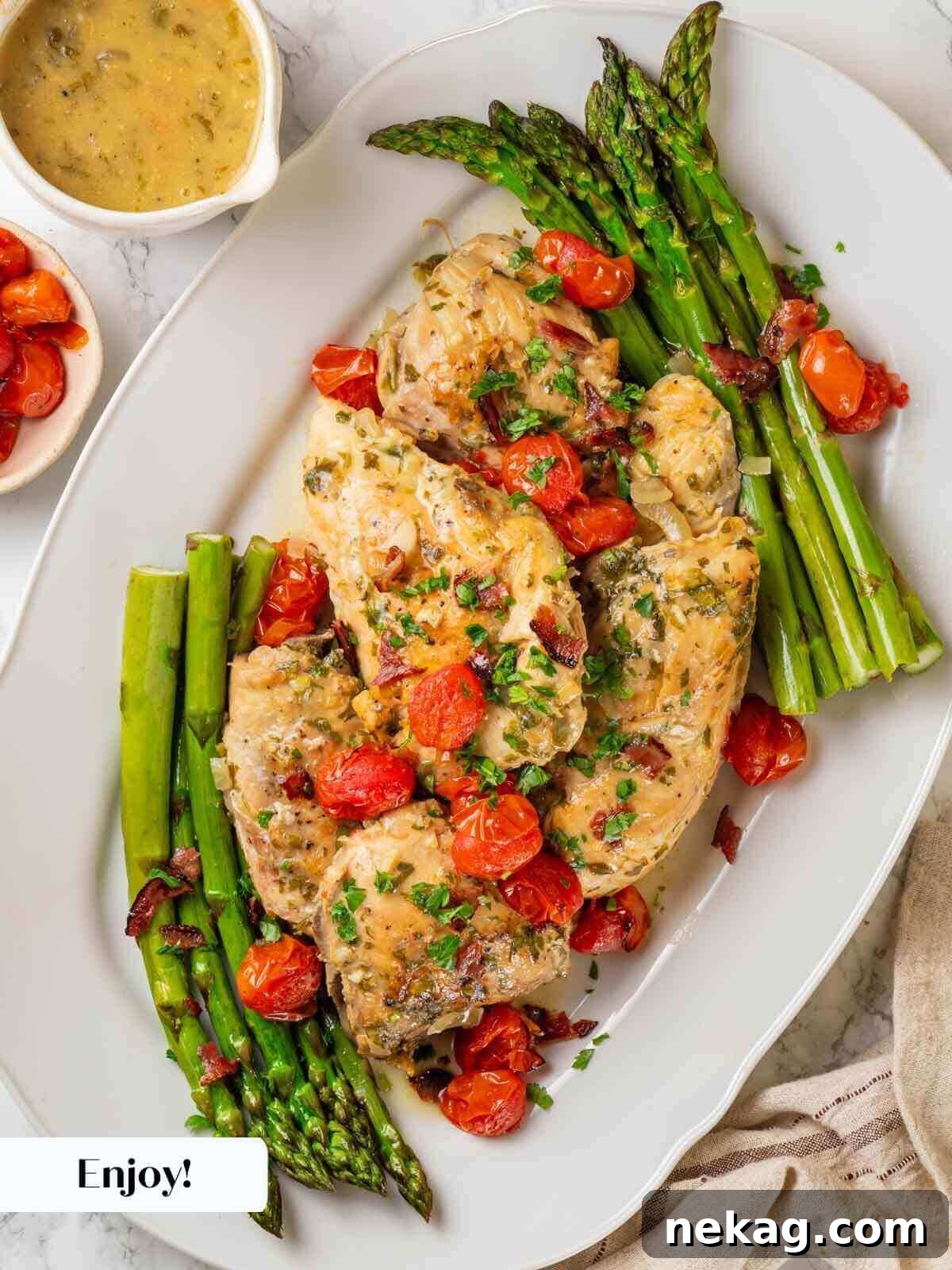
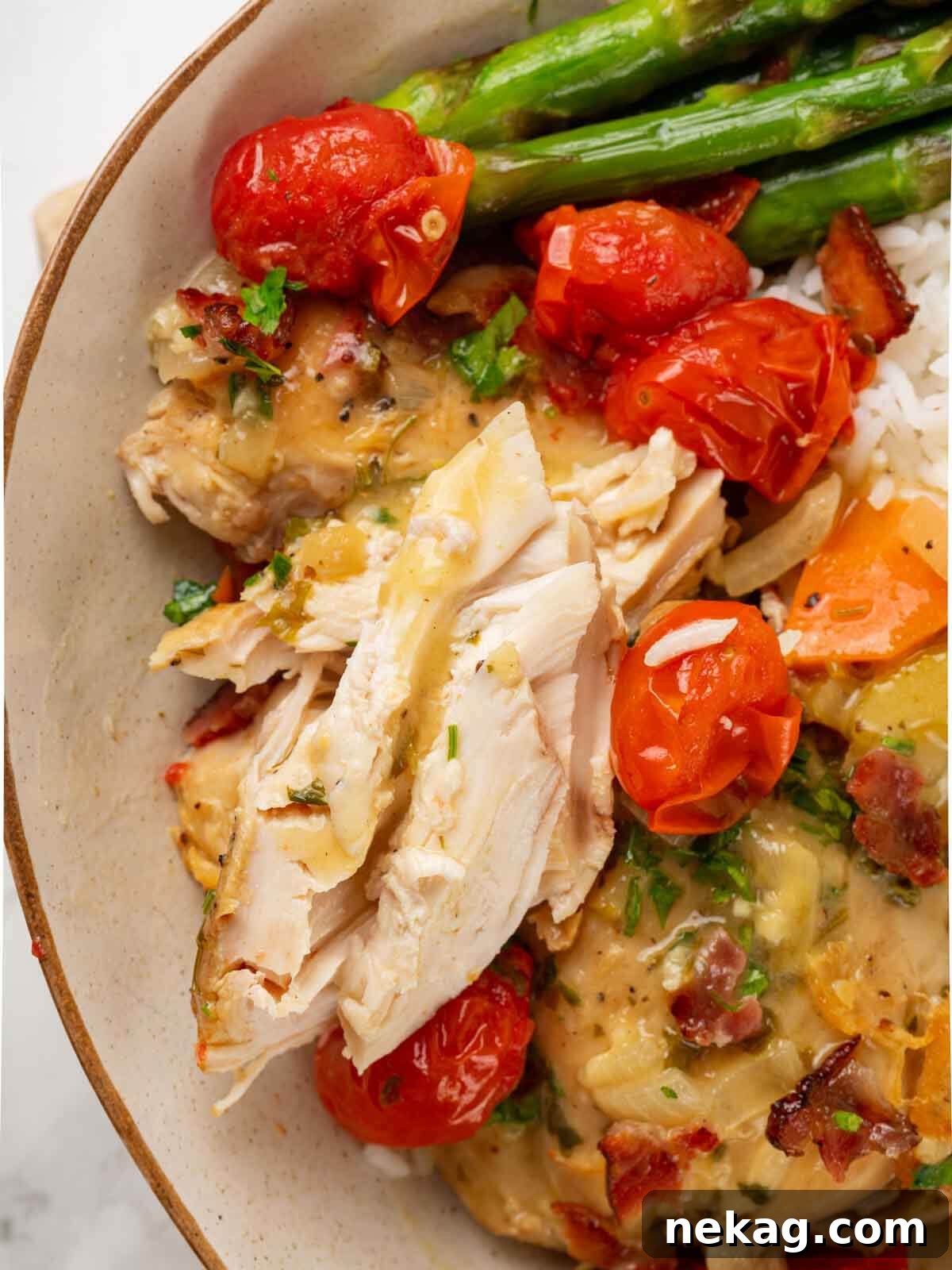
Step 12: Assemble and Serve. Arrange the tender chicken pieces on serving plates. Sprinkle generously with the blistered tomatoes, crumbled bacon (if using), and the remaining 1 tablespoon of fresh chopped parsley for a final burst of color and flavor. Serve immediately with the luscious white wine sauce spooned generously over the chicken.
Chef Lindsey’s Recipe Tip: The Art of Deglazing
Deglazing your pan is one of the simplest yet most impactful techniques in cooking, especially for building rich sauces. When you sear chicken and sauté vegetables, delicious browned bits, known as ‘fond,’ develop on the bottom of the pan. These bits are packed with concentrated flavor. When you add liquid, such as white wine, and vigorously scrape the bottom of the pan with a wooden spoon, you loosen these flavorful morsels, dissolving them into your sauce. This process, called deglazing, imparts an incredible depth and complexity to the entire dish. Never skip this step – it’s where much of the magic happens, transforming simple ingredients into a gourmet experience.
Frequently Asked Questions About White Wine Chicken
To maintain freshness and flavor, store any leftover chicken in an airtight container in the refrigerator. It will remain delicious for 3 to 4 days. For longer storage, this dish freezes exceptionally well. Place cooled chicken and sauce in a freezer-safe container and freeze for up to 3 months. Thaw overnight in the refrigerator before reheating gently on the stovetop or in the oven.
This versatile chicken dish pairs wonderfully with a variety of sides designed to soak up its delectable sauce. Consider serving it with fluffy white or brown rice, creamy mashed potatoes, or a crusty piece of French bread. For pasta lovers, buttered noodles or a light spring pea and asparagus pasta would be fantastic. Vegetable accompaniments like roasted asparagus, steamed green beans, or sautéed broccoli also create a balanced and complete meal.
For cooking chicken in a white wine sauce, a dry white wine is always recommended. Wines like Pinot Grigio, Sauvignon Blanc, or a dry (unoaked) Chardonnay are excellent choices. These wines possess a crisp acidity, subtle fruit notes, and a lower sugar content compared to sweeter varieties. This complexity adds depth to the sauce without overwhelming the delicate flavors of the chicken. Avoid anything labeled “sweet” or “dessert” wine, as their high sugar content will create an unbalanced sauce.
In this recipe, we use all-purpose flour to effectively thicken the white wine sauce. Flour contains starch granules that, when mixed with liquid and heated, absorb moisture and expand, creating a velvety consistency. We combine the flour with chicken stock beforehand to create a smooth slurry, preventing lumps in the final sauce. Other options include cornstarch slurries (often preferred for a glossier finish) or a beurre manié (a paste of equal parts butter and flour kneaded together) added at the end.
Yes, this dish can be partially prepared ahead of time. You can brown the chicken and sauté the aromatics, then prepare the sauce up to the point of baking (Step 7). Store the chicken and sauce separately in airtight containers in the refrigerator. When ready to serve, combine them in an oven-safe pan and proceed with the baking instructions. You can also prepare the bacon and blister the tomatoes just before serving for optimal freshness and texture.
If you prefer to cook without alcohol, you have several excellent alternatives. You can substitute the dry white wine with an equal amount of good quality, low-sodium chicken stock combined with a tablespoon of white wine vinegar or lemon juice. This combination mimics the acidity and depth that wine provides. Alternatively, some grocery stores offer non-alcoholic white cooking wines that can be used. Just ensure the replacement doesn’t add unwanted sweetness.
If you tried this recipe and loved it, please leave a 🌟 star rating and let me know how it goes in the comments below. I love hearing from you; your comments make my day!
Chicken in White Wine Sauce Recipe

By: Chef Lindsey
This skillet chicken in white wine sauce is seared to perfection. Easy enough for a weeknight meal, it’s also elegant enough for company.
Prep Time: 30 mins
Cook Time: 45 mins
Total Time: 1 hr 15 mins
Servings: 6 people
Comment
Print Recipe
Ingredients
- 4 bone-in chicken thighs, skinned
- 2 bone-in chicken breasts, skinned
- ½ teaspoon kosher salt, divided
- ½ teaspoon freshly ground black pepper, divided
- 2 teaspoons canola oil
- 1 cup chopped onion
- ½ cup carrot, thinly sliced
- ½ cup celery, thinly sliced
- 1 tablespoon minced garlic
- 2 cups dry white wine
- 1 cup low sodium chicken stock (bonus points for homemade chicken stock)
- 2 tablespoons all-purpose flour
- 3 tablespoons fresh tarragon, chopped
- 3 tablespoons flat-leaf parsley, chopped, divided
- 1 tablespoon whole-grain Dijon mustard
- 1 bay leaf
- 1 tablespoon unsalted butter
- 2 cups cherry tomatoes
- Optional: 2 slices applewood-smoked bacon, cooked and crumbled
- Optional: 1 teaspoon olive oil for tomatoes
Instructions
- Preheat the oven to 325°F (160°C).
- Heat a Dutch oven or large oven-safe pan with a lid over medium heat. Pat chicken dry and sprinkle evenly with ¼ teaspoon salt and ¼ teaspoon pepper. Add oil to the skillet and swirl to coat.
- Brown chicken on both sides until golden. In a large pan, you can brown all of the chicken at one time. In a Dutch oven, you will need to brown the chicken in two batches. Set chicken aside.
- Add onion, carrot, celery, and garlic to the pan. Cook for 6 minutes, stirring occasionally, until softened.
- Add the wine and cook for 2 minutes, scraping the pan to loosen the brown bits (fond). Return the chicken to the pan.
- In a bowl, combine chicken stock and flour, stirring with a whisk until smooth and lump-free. Add the stock mixture to the pan.
- Stir in tarragon, 2 tablespoons parsley, mustard, and bay leaf. Bring to a boil, then reduce to a simmer. Cover the pan. Transfer to the oven and bake at 325°F (160°C) for 45 minutes or until chicken is cooked through and very tender (internal temperature 165°F/74°C).
- Remove the dish from the oven and carefully transfer the chicken from the pan to a platter. Top with ¼ cup of the cooking liquid. Keep warm, covered loosely with foil.
- Place the pan back on the stovetop over medium-high heat and bring the sauce to a boil. Boil for 5 minutes, or until the mixture is reduced to about 3 cups and has thickened to your desired consistency.
- Whisk in the butter, remaining ¼ teaspoon salt, and remaining ¼ teaspoon pepper. Taste and adjust seasoning as needed. Discard the bay leaf.
- While the sauce is reducing, preheat the broiler on high. Toss cherry tomatoes with a teaspoon of olive oil and arrange in a single layer on a jelly-roll pan. Broil for 6 minutes or until blistered, watching closely to prevent burning.
- To serve, sprinkle the chicken with the blistered tomatoes, crumbled bacon (if using), and the remaining 1 tablespoon of chopped parsley. Serve immediately with the reduced white wine sauce.
Notes
- Technique – Sauce Reduction: Be sure to adequately reduce your sauce. This process intensifies the flavors of the dish and creates a velvety texture that perfectly coats the chicken. Be patient and allow it time to reach the correct consistency.
- Variations – Creamy Option: To make a creamy chicken in wine sauce, add heavy cream to the sauce just before serving. It is recommended to cook the creamy white wine sauce separately on the stovetop rather than in the oven to prevent the cream from splitting.
- Storage – Leftovers: Store leftover chicken in the fridge in an airtight container for 3-4 days. This dish can also be frozen for about 3 months.
Nutrition
Calories: 464kcal | Carbohydrates: 13g | Protein: 31g | Fat: 26g | Saturated Fat: 7g | Polyunsaturated Fat: 5g | Monounsaturated Fat: 10g | Trans Fat: 0.2g | Cholesterol: 138mg | Sodium: 374mg | Potassium: 755mg | Fiber: 2g | Sugar: 4g | Vitamin A: 2566IU | Vitamin C: 19mg | Calcium: 90mg | Iron: 3mg
Recipe Details
Course: Dinner, Main Course
Cuisine: American
Calories: 464
Before You Go
We hope you thoroughly enjoyed preparing and savoring this professional chef-tested recipe for chicken in white wine sauce. It’s a dish designed to bring gourmet flavors to your home kitchen with ease. If you loved this culinary journey, we encourage you to explore our other delicious, chef-developed chicken recipes. Or, if you’re ready for a different adventure, consider switching gears and cooking up a fragrant Shrimp Curry tonight! Happy cooking!