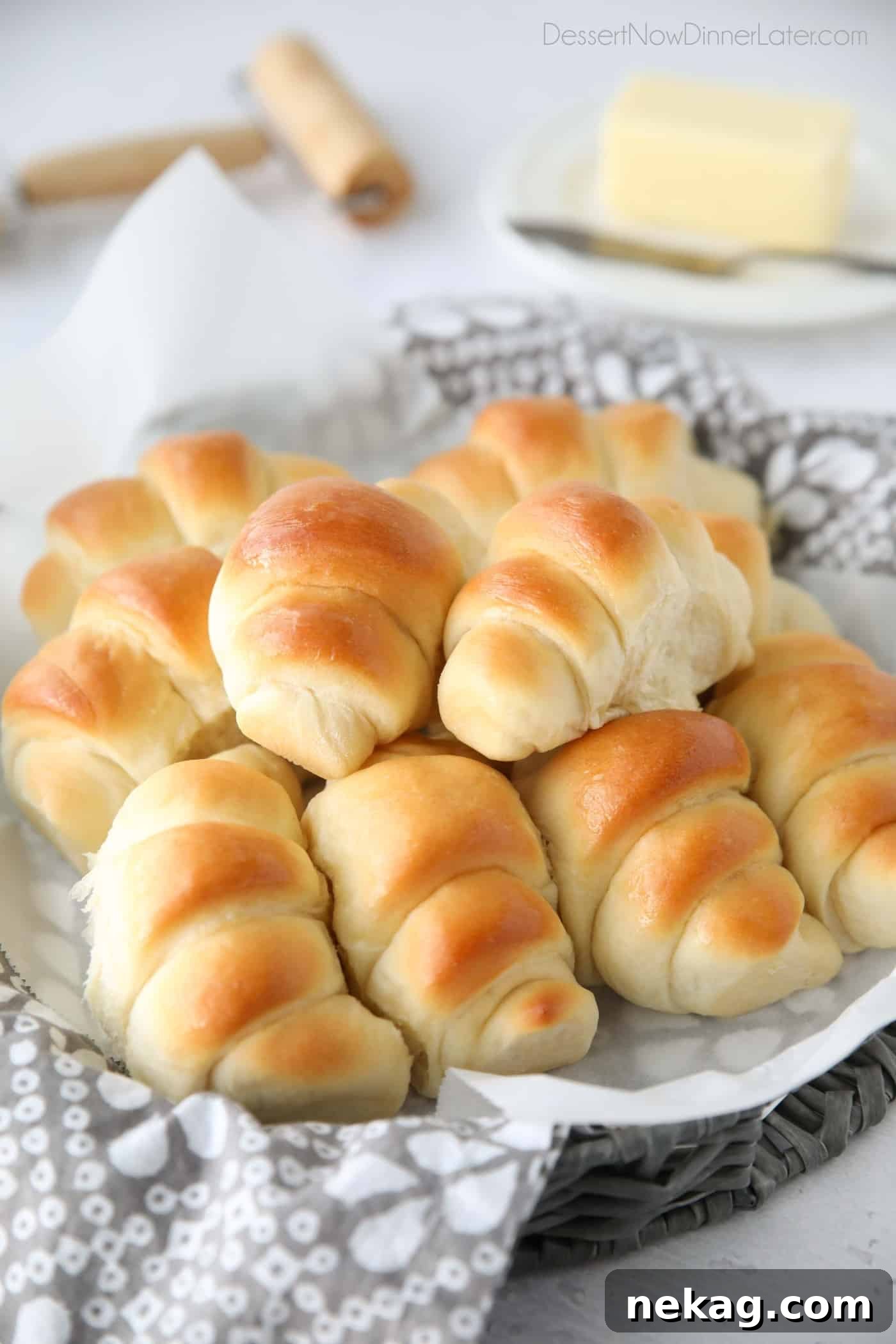
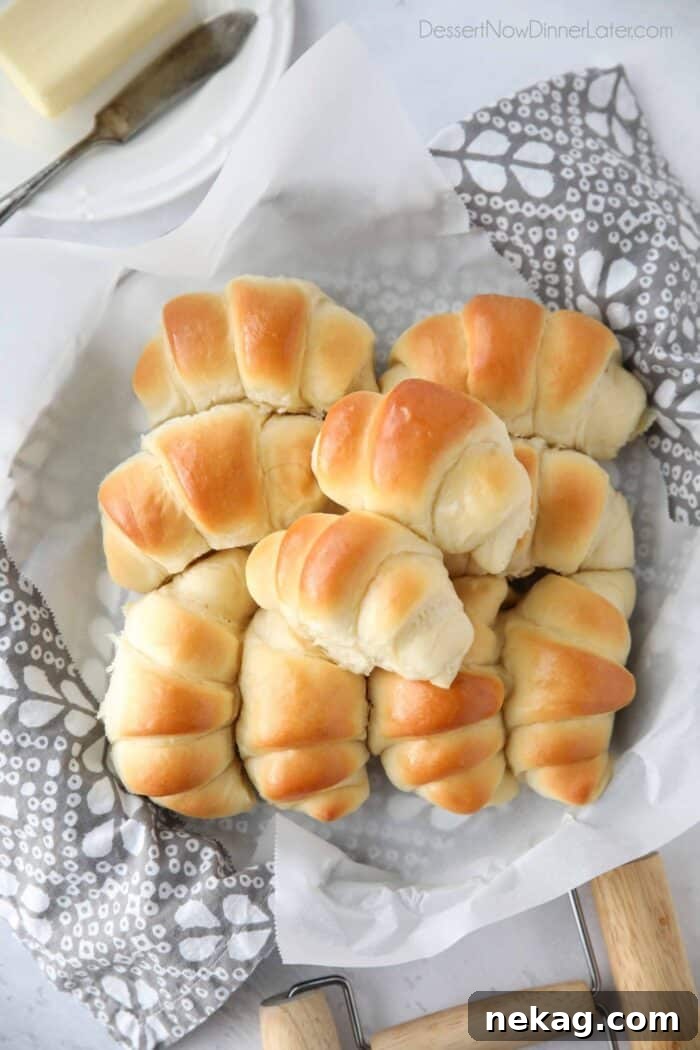
Step into the comforting world of homemade baking with this incredible recipe for Homemade Crescent Rolls. Imagine biting into a dinner roll that’s not just soft and fluffy but also tender, rich, and perfectly buttery. These aren’t just rolls; they’re an experience, designed to elevate any meal from a casual Sunday dinner to a grand holiday feast. Easy to make and always impressive, these crescent rolls are poised to become your new family favorite, bringing warmth and a touch of magic to your table.
The joy of baking lies in the creation, and there’s nothing quite like the aroma of freshly baked bread filling your home. While these crescent rolls are a standout, our versatile dough can also be shaped into classic dinner rolls. For those seeking a heartier option, our whole wheat rolls offer a wholesome twist. If you’re ready to advance your bread-making skills, challenge yourself with our elegant butterflake rolls. And for beginners eager to dive into yeast baking, these easy yeast rolls for beginners are the perfect starting point.
Croissant vs. Crescent Rolls: Unveiling the Differences
It’s a common misconception that croissants and crescent rolls are one and the same, often due to their signature curved shape. However, while they share a similar aesthetic, their preparation and resulting textures are distinctly different. Understanding these differences will deepen your appreciation for both delightful pastries.
Croissants are a marvel of French pastry-making, renowned for their incredibly light, airy, and distinctively flaky layers. This exquisite texture is achieved through a painstaking process called lamination, where chilled butter is repeatedly folded and rolled into yeast-leavened dough. This creates numerous thin layers of butter separated by thin layers of dough, which puff up in the oven as the butter melts and creates steam. The result is a crisp exterior that shatters upon biting, revealing a tender, honeycomb interior. They are essentially a yeasted version of puff pastry.
In contrast, crescent rolls, particularly these homemade versions, are crafted from a rich, buttery enriched dough. This dough typically contains milk, eggs, sugar, and a generous amount of butter, contributing to its tender crumb and rich flavor. While crescent rolls do exhibit some layering, these layers are formed solely through the simple rolling of the dough during the shaping process, rather than the intricate lamination of butter found in croissants. The outcome is a wonderfully soft, fluffy, and slightly chewy bread roll with a delicate, buttery taste, making them perfect for accompanying meals rather than serving as a standalone pastry.