
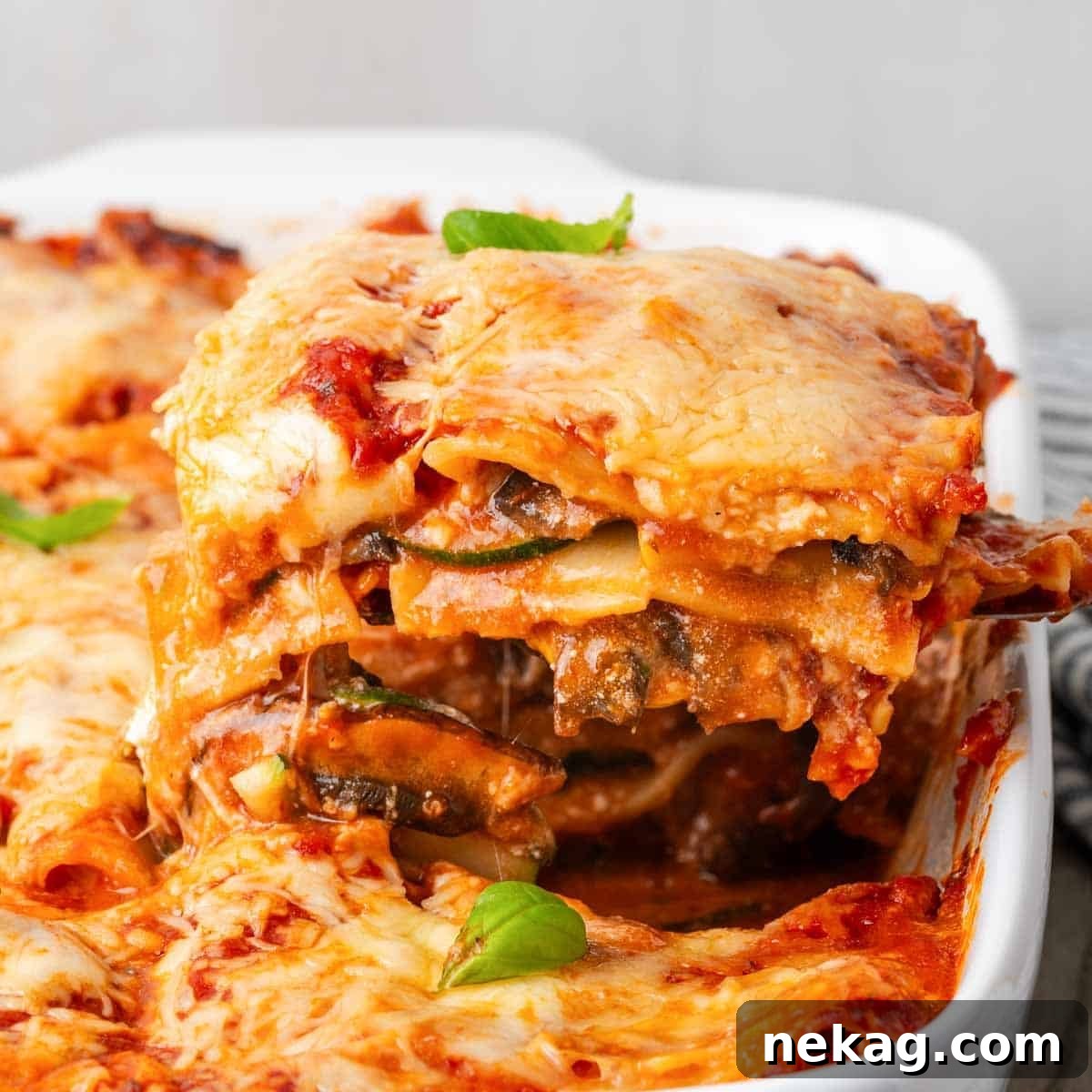
Indulge in the comforting embrace of our signature Vegetarian Lasagna, a truly wholesome and satisfying meal designed to delight every member of your family. This culinary masterpiece features layers of vibrant, seasonal vegetables, a rich and savory homemade tomato sauce, and a luxurious blend of creamy ricotta, melted mozzarella, and sharp Parmesan cheese. It’s more than just a meal; it’s an experience, promising warmth, flavor, and nourishment in every hearty slice.
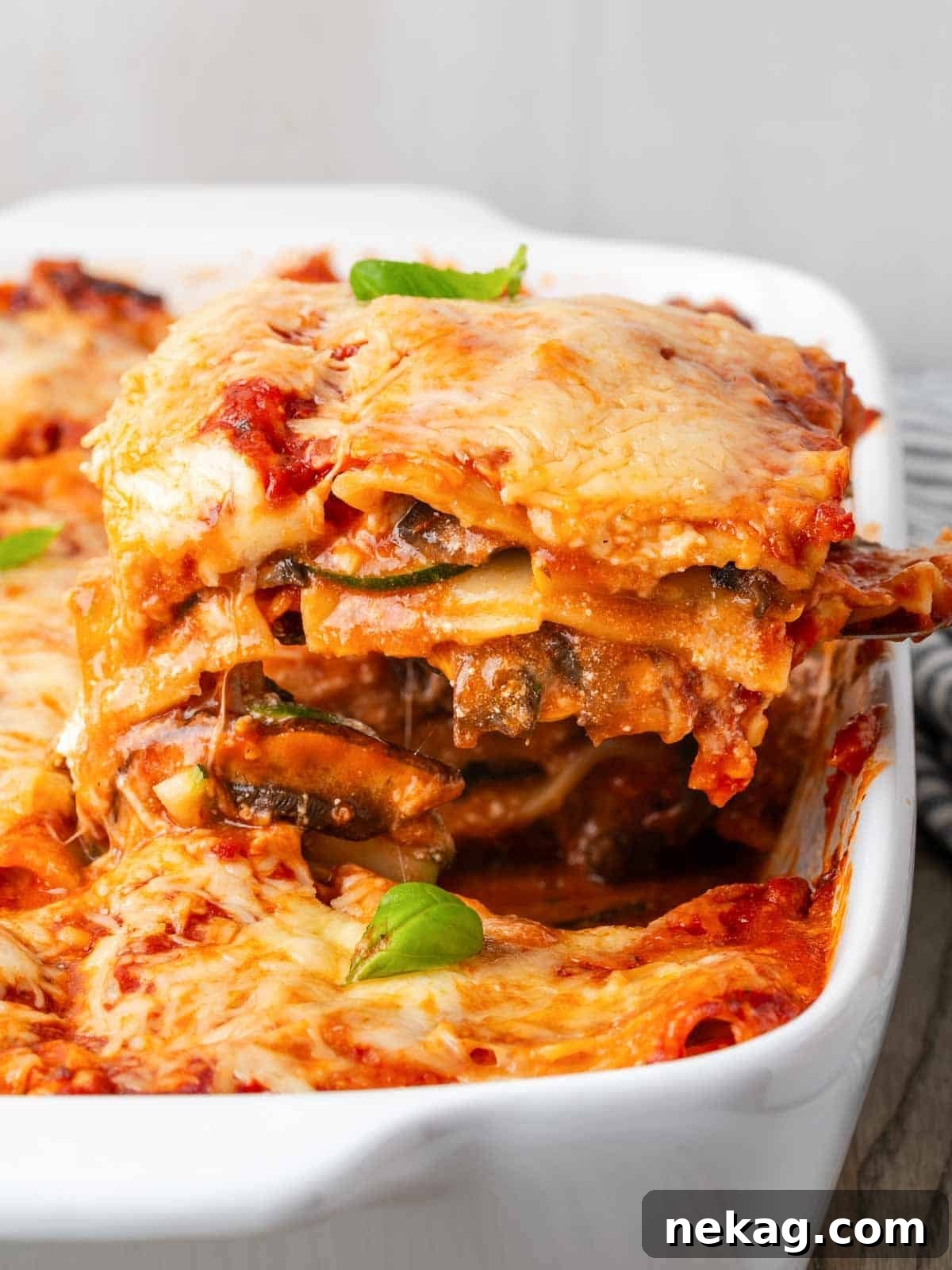
If you’re seeking a genuinely comforting, deeply filling, and incredibly satisfying vegetarian meal, your search ends here. This vegetable lasagna recipe stands out with its meticulously thinly sliced, lightly crisp vegetables that add both texture and freshness. We achieve the perfect balance with a generous ratio of rich, melty cheeses, a robust and hearty marinara, and a bright mix of fresh herbs that elegantly lighten what can often be a heavy dish. Much like our popular Quinoa Vegetarian Meatballs, the irresistible Zucchini Fritters, or the savory Butternut Squash Chili, this lasagna is so flavorful and substantial, you won’t even notice the absence of meat.
Table of Contents
- Why This Vegetable Lasagna is a Must-Try
- Expert Tips For a Flawless Vegetarian Lasagna
- Essential Ingredients For Your Lasagna
- Delicious Variations to Customize Your Lasagna
- Step-by-Step Guide: How to Make This Recipe
- Chef Lindsey’s Secret Tip
- Frequently Asked Questions
- Full Vegetable Lasagna Recipe
- Explore More Chef Lindsey Recipes
Why This Vegetable Lasagna is a Must-Try for Your Family
Our vegetable lasagna isn’t just another recipe; it’s a culinary solution that brings joy and health to your dinner table. Here are compelling reasons why this dish will become a treasured part of your family’s meal rotation:
- An Ingenious Way to Boost Veggie Intake: This lasagna is a masterclass in culinary camouflage. It’s the perfect vehicle to incorporate a significant amount of healthy vegetables into a hearty, delicious dish without anyone even suspecting. The tender, flavorful veggies blend seamlessly with the cheeses and sauce, making it incredibly appealing even to the pickiest eaters. Prepare for requests for second and third servings!
- Unapologetically Hearty and Fulfilling: Don’t let the “vegetarian” label fool you. This isn’t a light or insubstantial dish. It’s robust, deeply comforting, and incredibly satisfying, thanks to its dense layers of colorful, nutritious vegetables, rich cheeses, and robust sauce. Each forkful delivers a comforting embrace, making it an ideal meal for chilly evenings or when you crave something truly substantial. The freshness of the vegetables adds a vibrant counterpoint to the classic richness of lasagna.
- Remarkably Versatile and Adaptable: One of the standout features of this vegetarian lasagna is its incredible flexibility. It’s designed to adapt to your preferences, what’s in season, and what you have on hand. Don’t have zucchini? No problem! Incorporate more summer squash, or try thinly sliced bell peppers. Feel free to add leafy greens like spinach or kale for an extra nutritional boost. Experiment with different combinations of fresh herbs to alter the flavor profile, and choose between a convenient store-bought sauce or a deeply flavorful homemade marinara. This recipe is your canvas for culinary creativity.
- Perfect for Meal Prep and Freezing: This lasagna is a fantastic option for batch cooking. Prepare a large pan, enjoy a portion, and then easily store the rest in the refrigerator for quick weeknight meals or freeze it for future convenience. Its flavors deepen and meld beautifully upon reheating, making it a meal that truly keeps on giving.
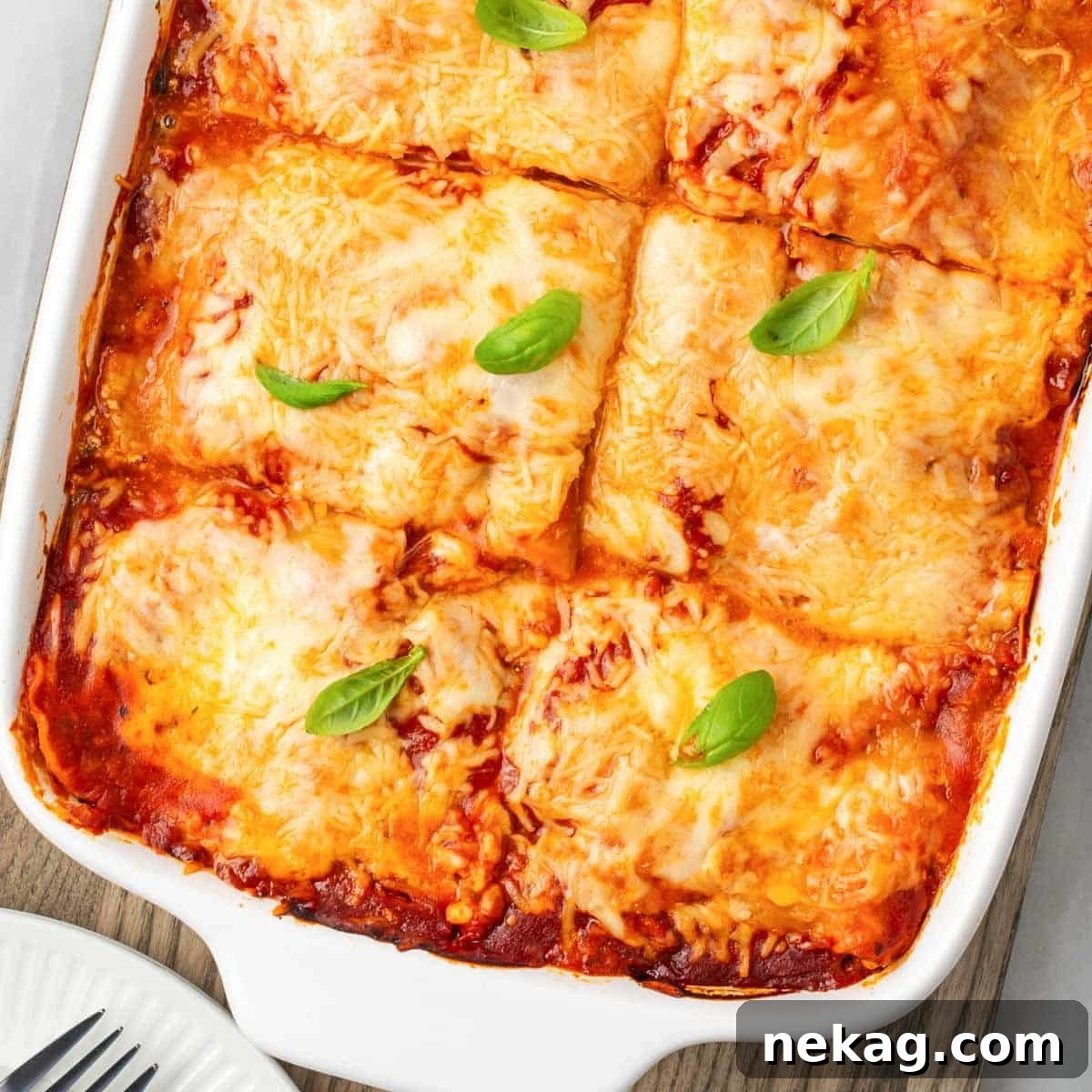
Expert Tips For a Flawless Vegetarian Lasagna Every Time
Achieving the perfect vegetable lasagna requires a few insider tricks. Follow these professional tips to ensure your lasagna is consistently delicious, beautifully layered, and never watery:
- Embrace Flat Lasagna Noodles for Superior Layering: I highly recommend using flat lasagna noodles, whether they are traditional or no-boil varieties. Their design allows for more uniform and compact layering, enabling you to incorporate a greater abundance of vegetables without making the dish too tall or unstable. If you opt for no-boil noodles, as in my easy lasagna recipe, you’ll achieve an even thicker, more satisfying dish with less pre-prep. If only wavy noodles are available, you might only fit two full layers of vegetables comfortably.
- Achieve the Ideal Sauce Consistency: The secret to a cohesive vegetable lasagna lies in a thick, hearty tomato sauce. Vegetables naturally contain more water than meat, so a thinner sauce can lead to a soggy lasagna. To combat this, I specifically thicken my tomato pasta sauce by adding an extra can of diced tomatoes and simmering it down until it reaches the consistency of a thick stew. This concentrated sauce, similar to my easy pasta sauce, acts as a robust binder, ensuring your lasagna holds together beautifully.
- Master the Art of Thinly Slicing Vegetables: This is a crucial step to prevent a watery lasagna. Because vegetables have a high water content, cutting them thinly (ideally 1/8 inch thick) allows them to cook through evenly and release their moisture without creating pockets of liquid in the final dish. This also ensures a tender bite and prevents any raw crunch in your baked lasagna. For best results, consider salting your sliced zucchini and squash and letting them sit for 15-20 minutes, then gently patting them dry before layering. This draws out excess moisture.
- Give Your Lasagna Time to Rest: Patience is a virtue, especially with lasagna. After baking, resist the urge to cut into it immediately. Allowing the lasagna to rest for at least 15-20 minutes (or even longer if you can) lets the layers set, the cheeses firm up slightly, and the juices redistribute. This resting period is key to achieving clean, beautiful slices that won’t fall apart on the plate.
Essential Ingredients For Your Perfect Vegetable Lasagna
Crafting a truly exceptional vegetable lasagna begins with selecting the right, fresh ingredients. Here’s a detailed look at what you’ll need to create this comforting masterpiece:
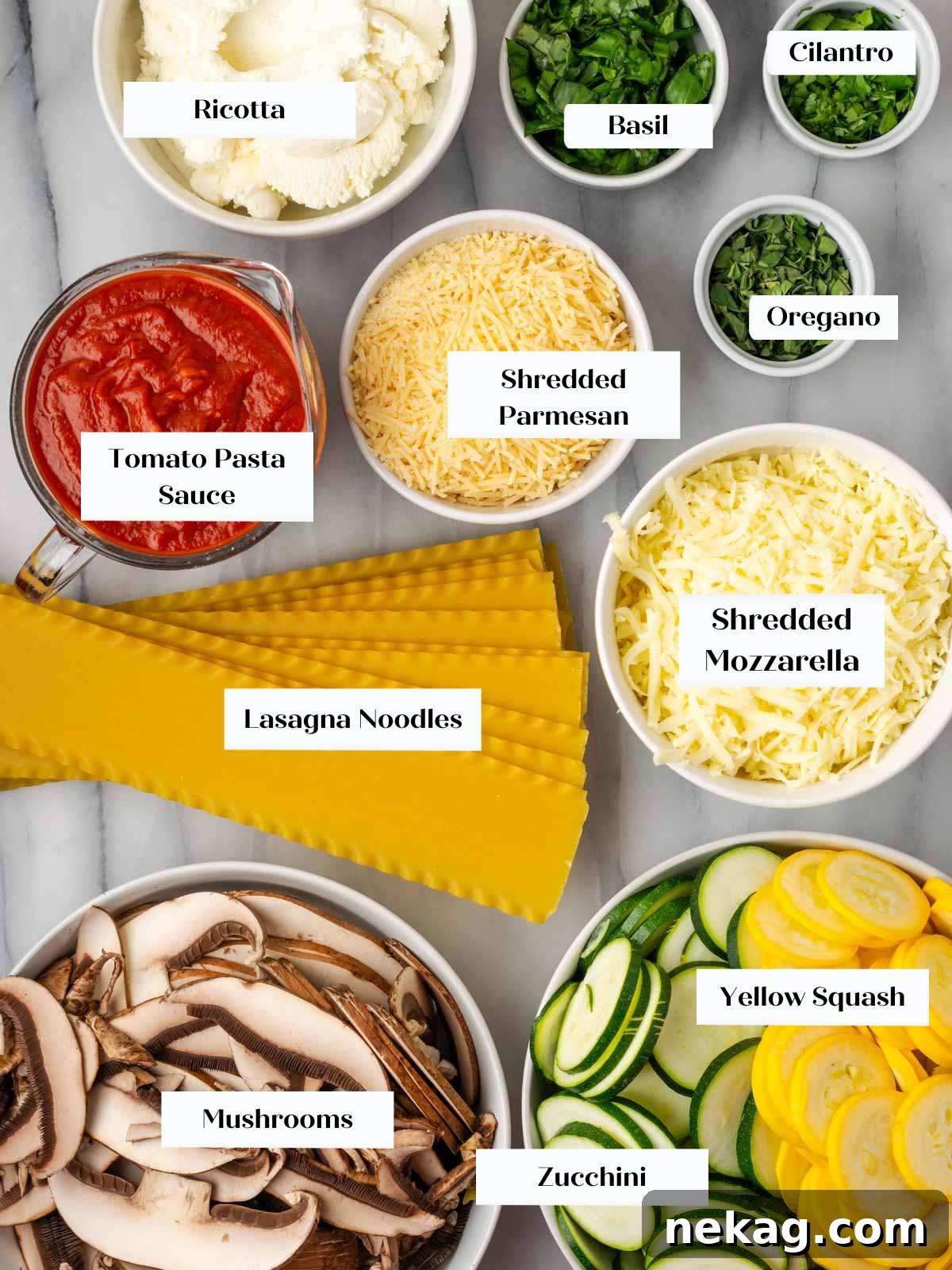
- Lasagna Noodles: Standard regular lasagna noodles are an excellent foundation for this recipe. For added nutrition and a slightly different texture, you might consider whole wheat lasagna noodles. Alternatively, no-boil lasagna noodles are a fantastic option for absorbing extra moisture from the vegetables, making for an even firmer lasagna without the need for pre-cooking.
- Ricotta Cheese: I highly recommend using whole milk ricotta cheese. Its rich, creamy texture is unparalleled and contributes significantly to the luxurious mouthfeel of the final dish. While whole milk offers the best results, a good quality low-fat ricotta will also yield a delightful lasagna.
- Fresh Herbs: A generous mix of fresh herbs elevates this dish from good to extraordinary. Think basil, parsley, oregano, or even a touch of thyme. Fresh herbs infuse the ricotta mixture and sauce with bright, aromatic flavors that cut through the richness and add a delightful freshness.
- Parmesan Cheese: Freshly shredded Parmesan cheese is non-negotiable here. It’s always best to shred your own cheese; pre-shredded or grated varieties often contain anti-caking agents that can affect both the melting quality and the overall texture of the cheese, making it less smooth and creamy.
- Mozzarella Cheese: Just like Parmesan, shredding your own fresh mozzarella will make a significant difference. Freshly shredded mozzarella melts more beautifully and yields that coveted, gooey cheese-pull effect that makes lasagna so irresistible, far surpassing the performance of pre-shredded bags.
- Zucchini: You’ll need about 4 small zucchini for this recipe. Remember the golden rule: slice them thinly (1/8 inch thick) to manage their moisture content effectively. Any leftover zucchini can be creatively used in recipes like a delicious Baked Zucchini and Ricotta Casserole!
- Summer Squash: Complementing the zucchini, 4 small summer squash (about 6 inches long or shorter) add a delicate sweetness and vibrant color. Like zucchini, these should be thinly sliced for optimal texture.
- Mushrooms: Earthy mushrooms, such as portobello, shiitake, or cremini, contribute a wonderful depth of umami flavor and a satisfying “meaty” texture. Sliced in 1/8 inch thick pieces, they integrate perfectly into the layers.
- Tomato Sauce: The foundation of any great lasagna. You can either select a high-quality, thick variety of store-bought tomato sauce or prepare an excellent homemade marinara sauce. If making your own, consider adding some diced tomatoes and simmering longer to achieve a thicker, more robust consistency ideal for lasagna.
For precise measurements and additional details, please refer to the comprehensive recipe card below.
Delicious Variations to Customize Your Vegetable Lasagna
This vegetable lasagna recipe is incredibly flexible, allowing you to tailor it to your taste, dietary needs, or the ingredients you have on hand. Here are some exciting variations to inspire your next culinary creation:
- Roasted Vegetables for Enhanced Flavor and Texture: For an even more intensely flavorful and less watery lasagna, consider pre-roasting your vegetables. Thinly slice the summer squash, zucchini, and any other chosen vegetables (like eggplant) and spread them on baking sheets. Season lightly with dried Italian seasoning and a touch of salt and pepper, then roast until tender and slightly caramelized. This method cooks out excess moisture, concentrating the flavors and creating a firmer lasagna. It’s the same technique I utilize in my popular zucchini lasagna!
- Incorporate Extra Vegetables for a Healthier Boost: Feel free to load up your lasagna with additional vegetables to make it even more nutrient-dense. Options like thinly sliced eggplant (which benefits greatly from pre-roasting to remove moisture), fresh spinach (sautéed briefly to wilt and remove water), or finely chopped kale can be layered alongside or in place of existing vegetables. If using eggplant, pre-salting and pressing out moisture, then roasting, will yield the best, non-soggy results. While you’re at it with eggplant, why not whip up some homemade baba ganoush as a delightful appetizer?
- Experiment with Different Cheese Blends: While ricotta, mozzarella, and Parmesan form the classic trio, don’t hesitate to explore other cheeses. Adding a layer of creamy cottage cheese (starting with substituting half the ricotta) can lend an extra richness and slightly different texture to the dish. A touch of provolone, fontina, or even smoked mozzarella could introduce unique flavor dimensions. For a bolder taste, sprinkle in some crumbled goat cheese or feta in one of the layers.
- Make it Gluten-Free or Low-Carb: Easily adapt this recipe by using gluten-free lasagna noodles. For a low-carb alternative, you can omit the noodles entirely and create “noodle” layers using extra-thin slices of zucchini or eggplant, or even large cabbage leaves, ensuring they are pre-roasted or blanched to reduce moisture.
- Spice It Up: If you enjoy a bit of heat, consider adding a pinch of red pepper flakes to your tomato sauce or to the ricotta mixture. A dash of smoked paprika can also add a delightful smoky depth.
Step-by-Step Guide: How to Make This Irresistible Vegetable Lasagna
Follow these detailed instructions to craft a perfectly layered and delicious vegetable lasagna every single time. More precise measurements and ingredient quantities can be found in the recipe card below.
Step 1: Prepare Your Oven. Begin by preheating your oven to 350°F (175°C). This ensures the oven is at the correct temperature for even baking as soon as your lasagna is assembled.
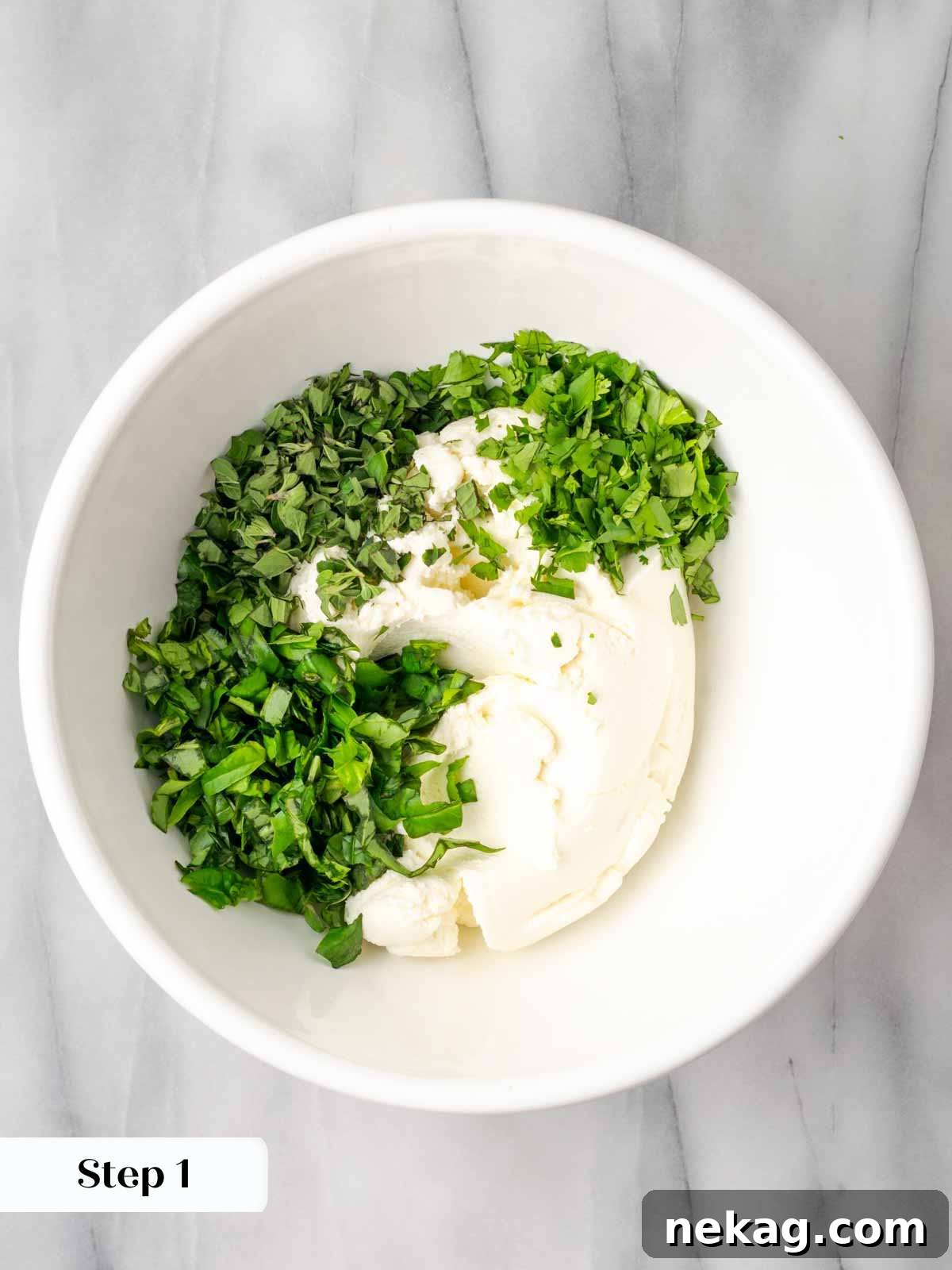
Step 2: Create the Herb-Ricotta Mixture. In a medium-sized bowl, gently combine the fresh, finely chopped herbs with the creamy ricotta cheese. Mix until just combined. Set this flavorful mixture aside to allow the herbs to infuse the ricotta.
Pro Tip: Herb Combinations! Feel free to experiment with different combinations of fresh herbs, such as basil and oregano, or parsley and chives, for unique and flavorful variations on this recipe.
Step 3: Prepare Noodles and Vegetables. Thinly slice all your vegetables (zucchini, summer squash, mushrooms) as uniformly as possible, about 1/8 inch thick. Set them aside. If you are using dried lasagna noodles (not no-boil), cook them according to package directions until they are al dente – meaning they still have a slight chew to the center. Drain the cooked noodles and immediately rinse them in cold water to stop the cooking process. Drizzle them with a little olive oil to prevent them from sticking together. Arrange all your prepped ingredients around your 12x7x4 inch baking dish to create an efficient assembly line. You are now ready to build your masterpiece!
Assemble Your Lasagna Layers:
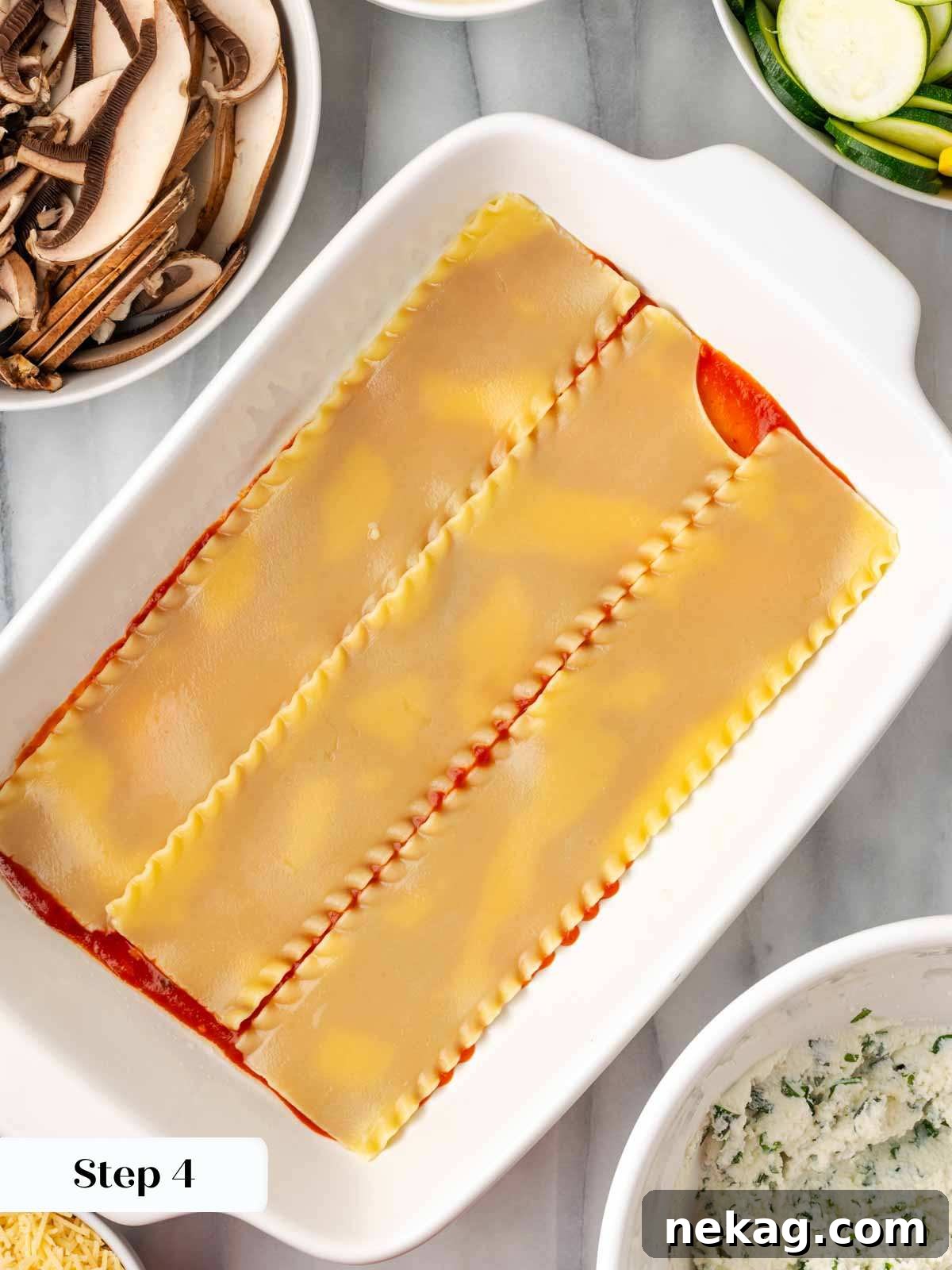
Step 4: Begin with the Base. Spread a thin, even layer of your rich tomato sauce across the bottom of your baking dish. This prevents the noodles from sticking and adds foundational flavor. Next, carefully place 3 overlapping lasagna noodles in the bottom of your dish, ensuring they cover the sauce layer.
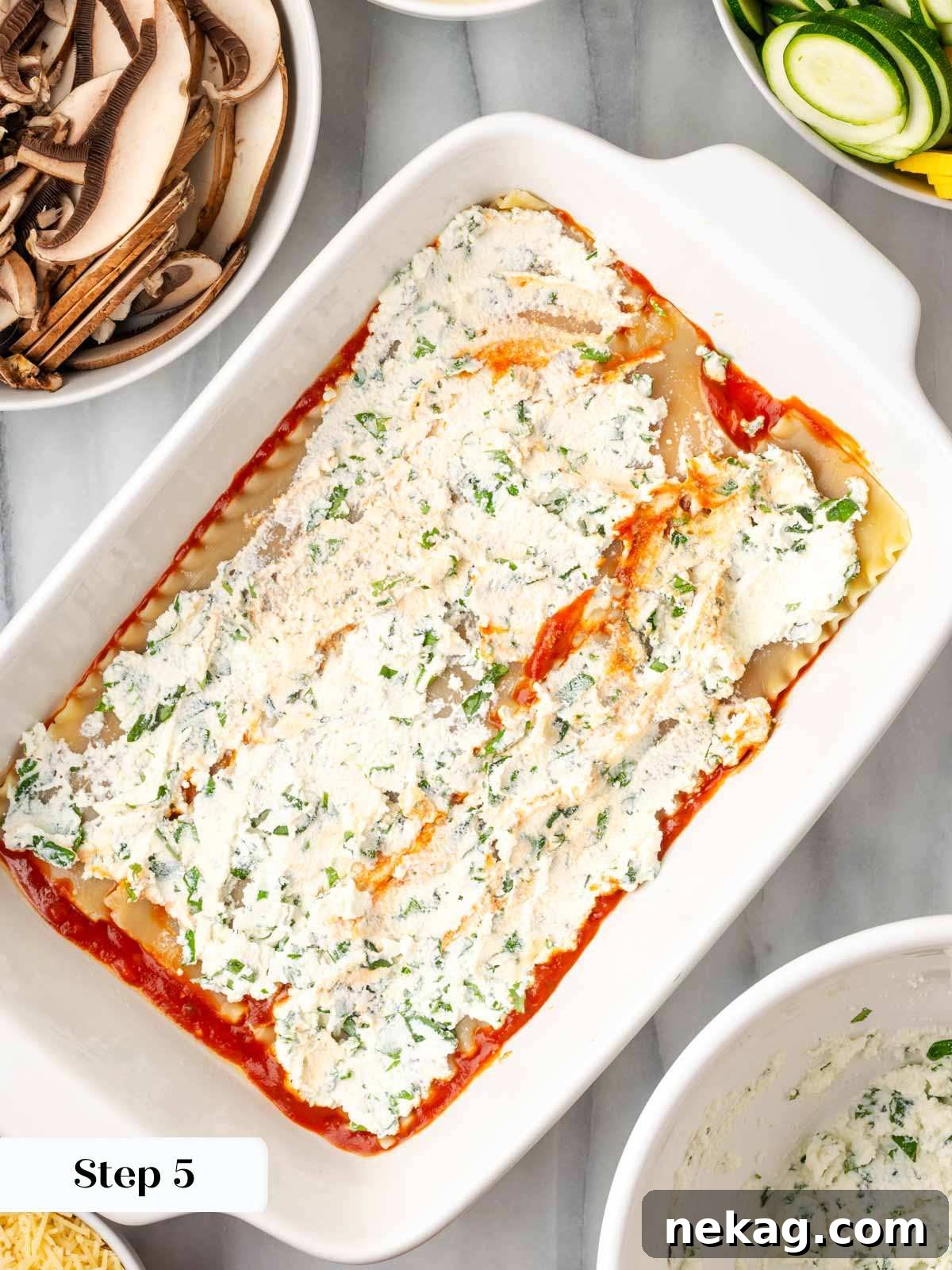
Step 5: Add the Ricotta Layer. Carefully spread about a third of the prepared ricotta and herb mixture evenly over the lasagna noodles using a rubber spatula. This creates a creamy, flavorful layer.
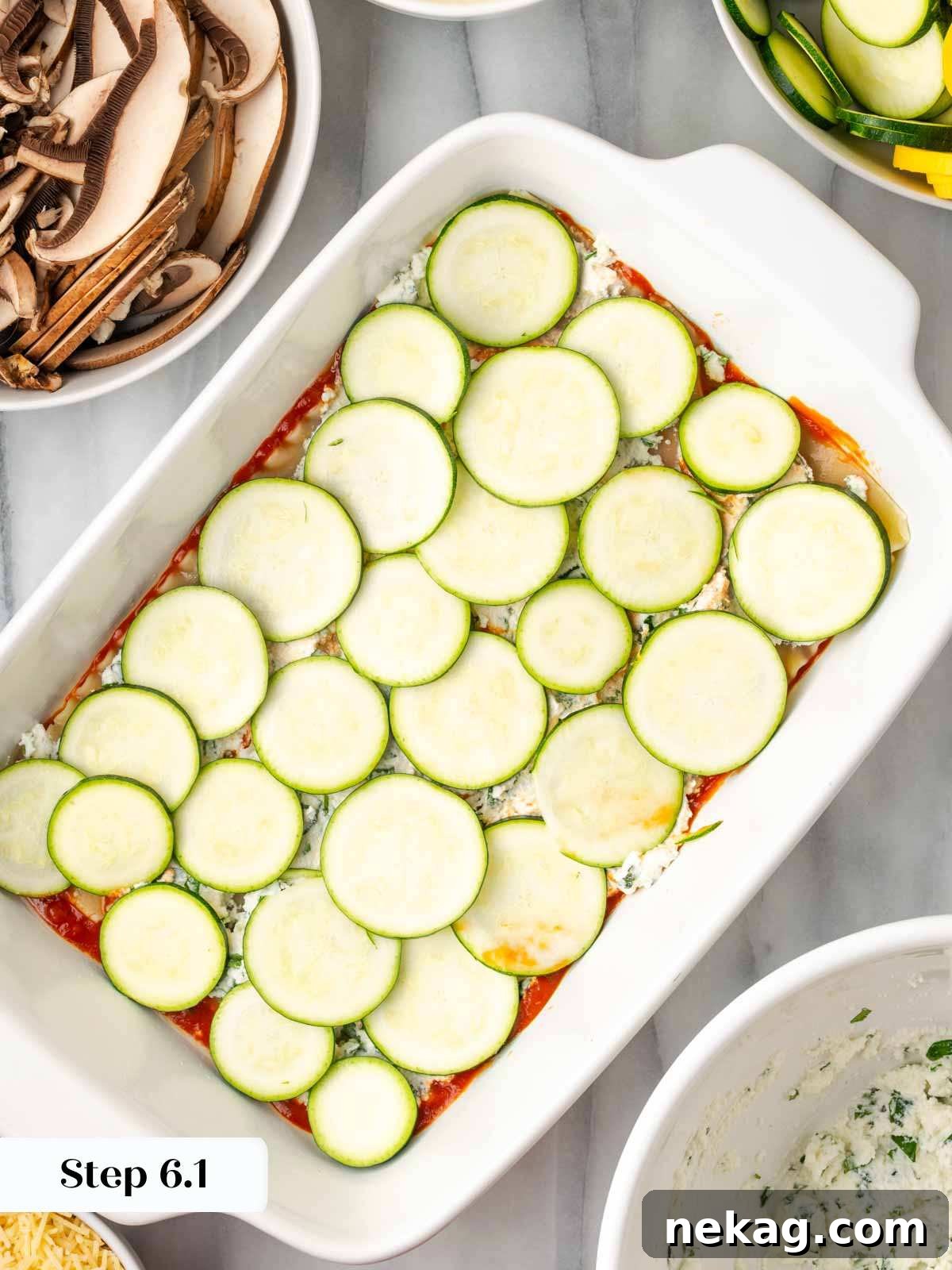
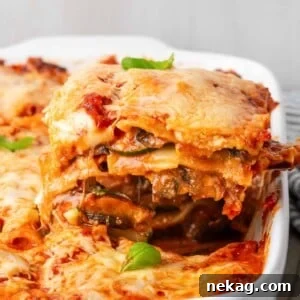
Step 6: Layer the Fresh Vegetables. Now, arrange your thinly sliced zucchini, summer squash, and portobello mushrooms in three consecutive, even layers over the ricotta. Ensure good coverage to get a taste of vegetables in every bite.
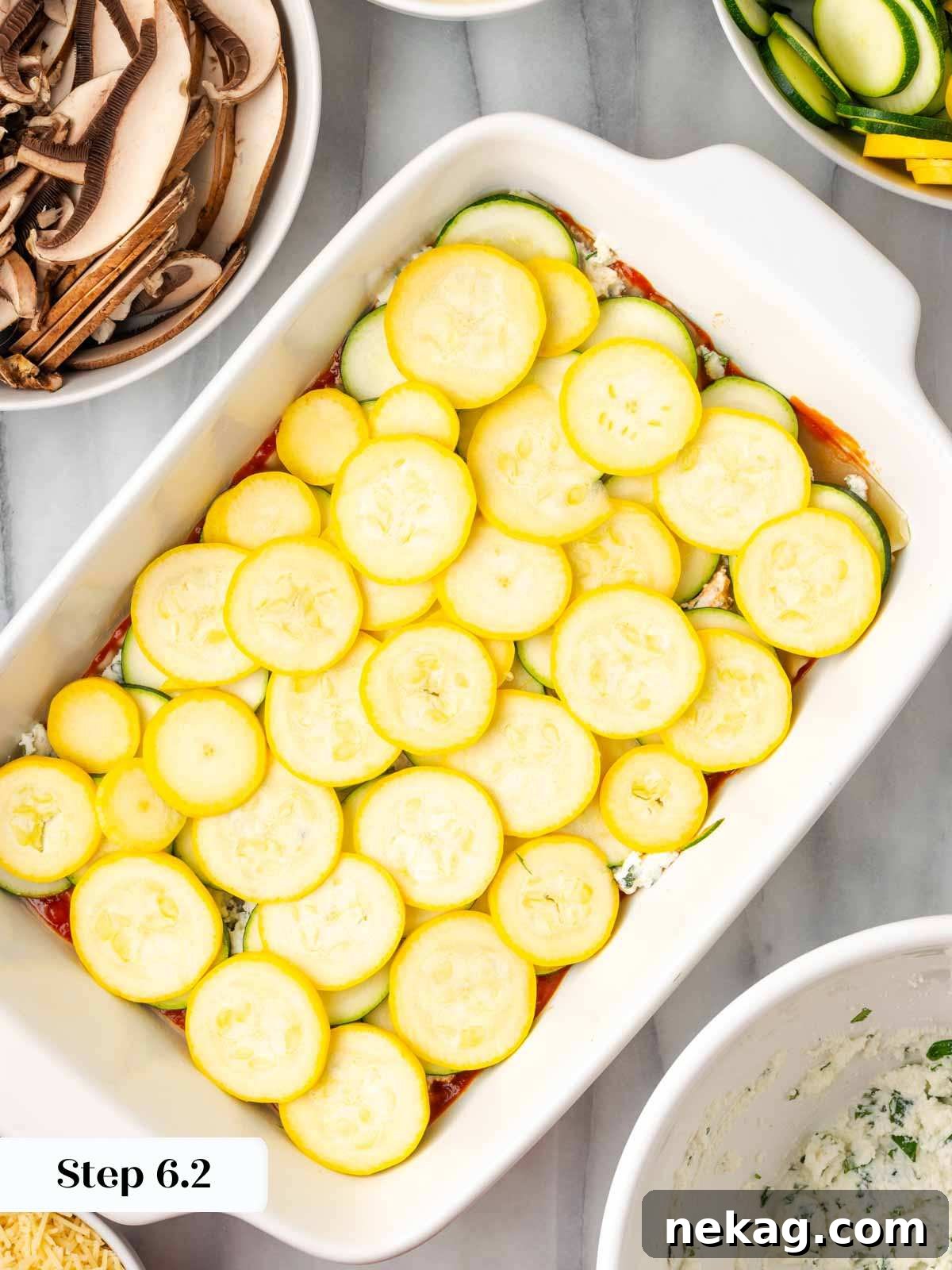
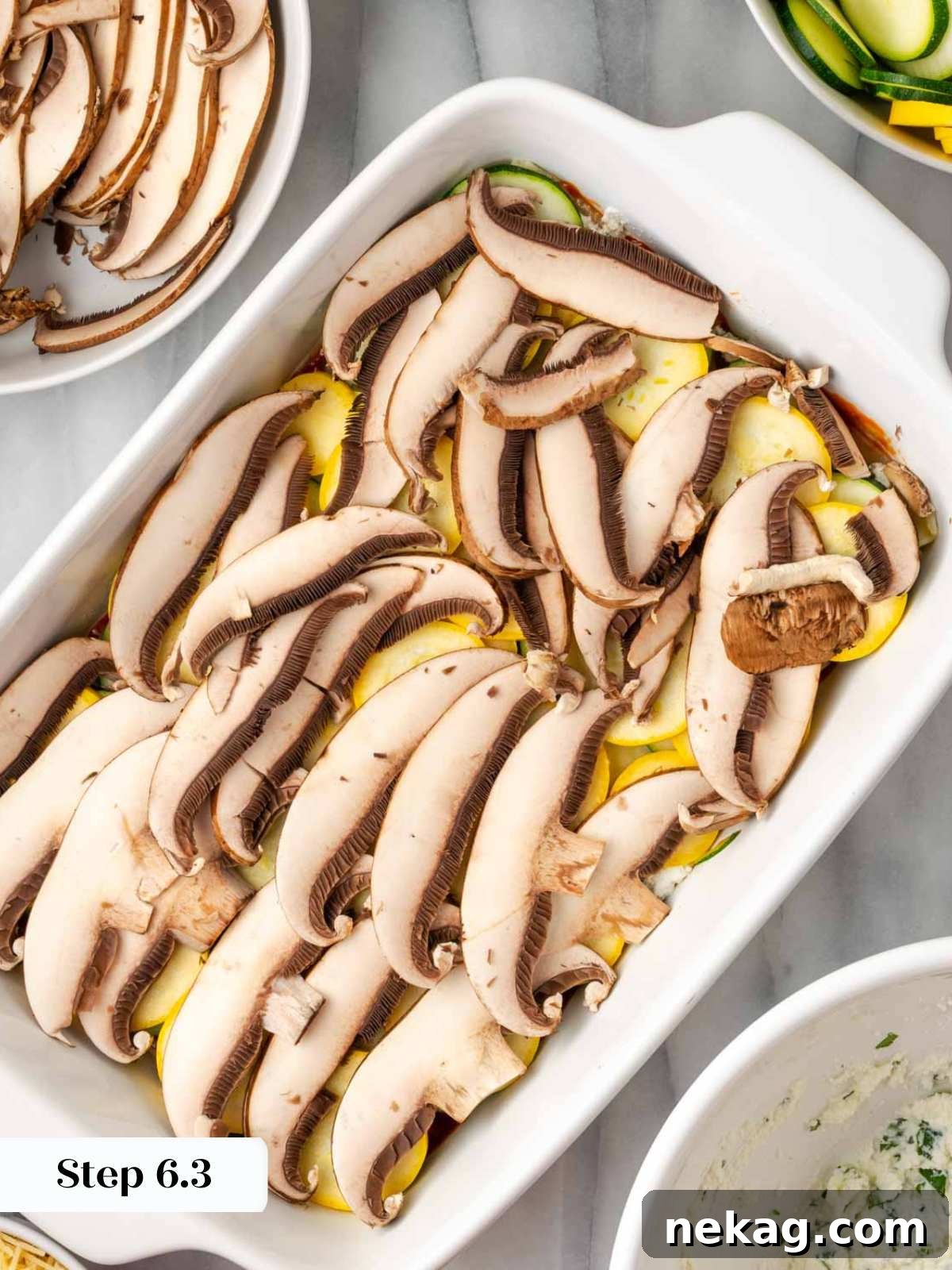
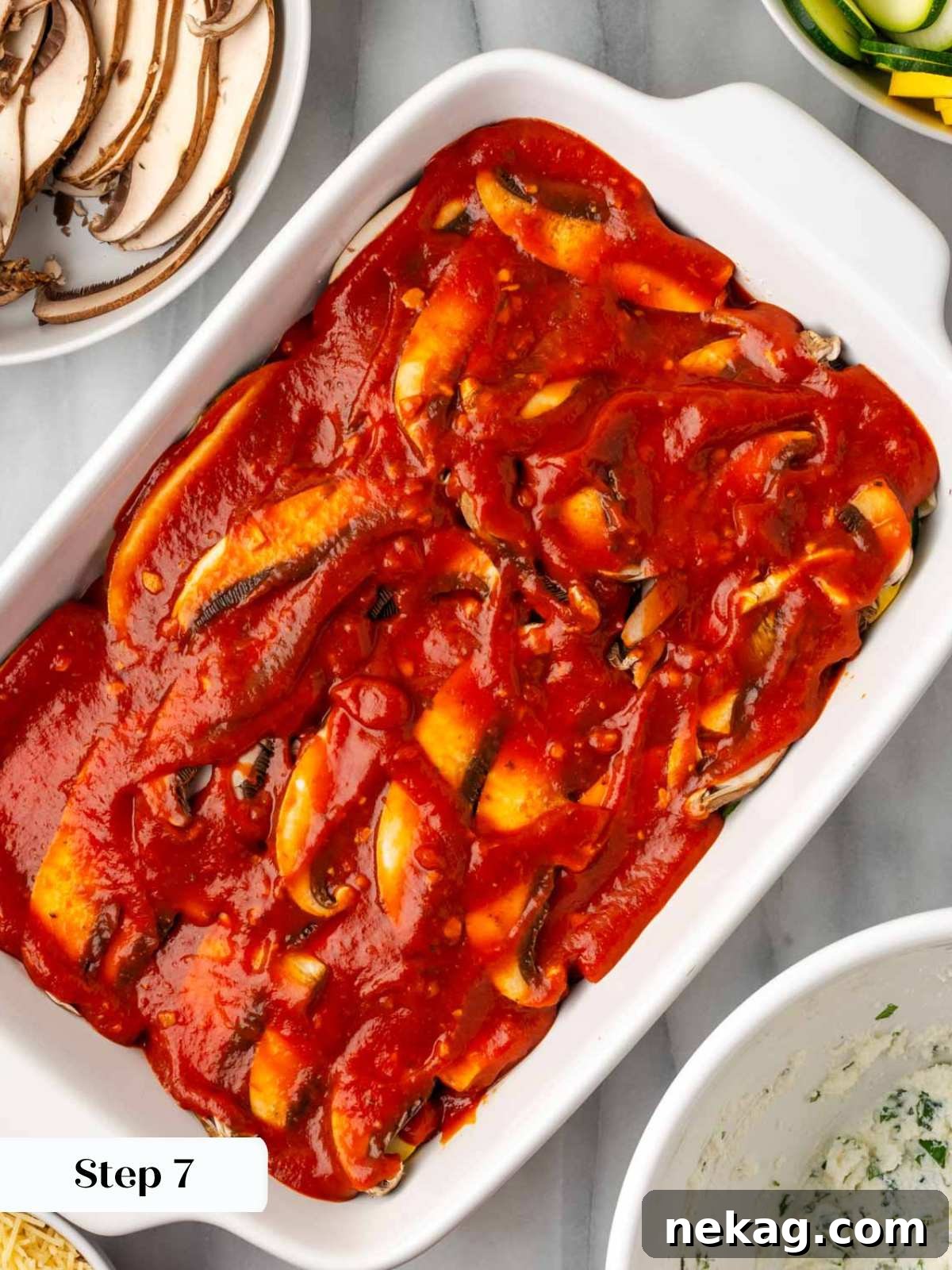
Step 7: Drizzle with Sauce. Generously top the vegetable layers with more of your delicious tomato sauce. This moistens the vegetables and provides another layer of rich flavor.
Step 8: Add the Cheesy Topping. Finally, sprinkle a generous layer of freshly shredded mozzarella cheese, followed by a lighter dusting of Parmesan cheese mixture over the sauce. This combination will create a perfect cheesy crust.
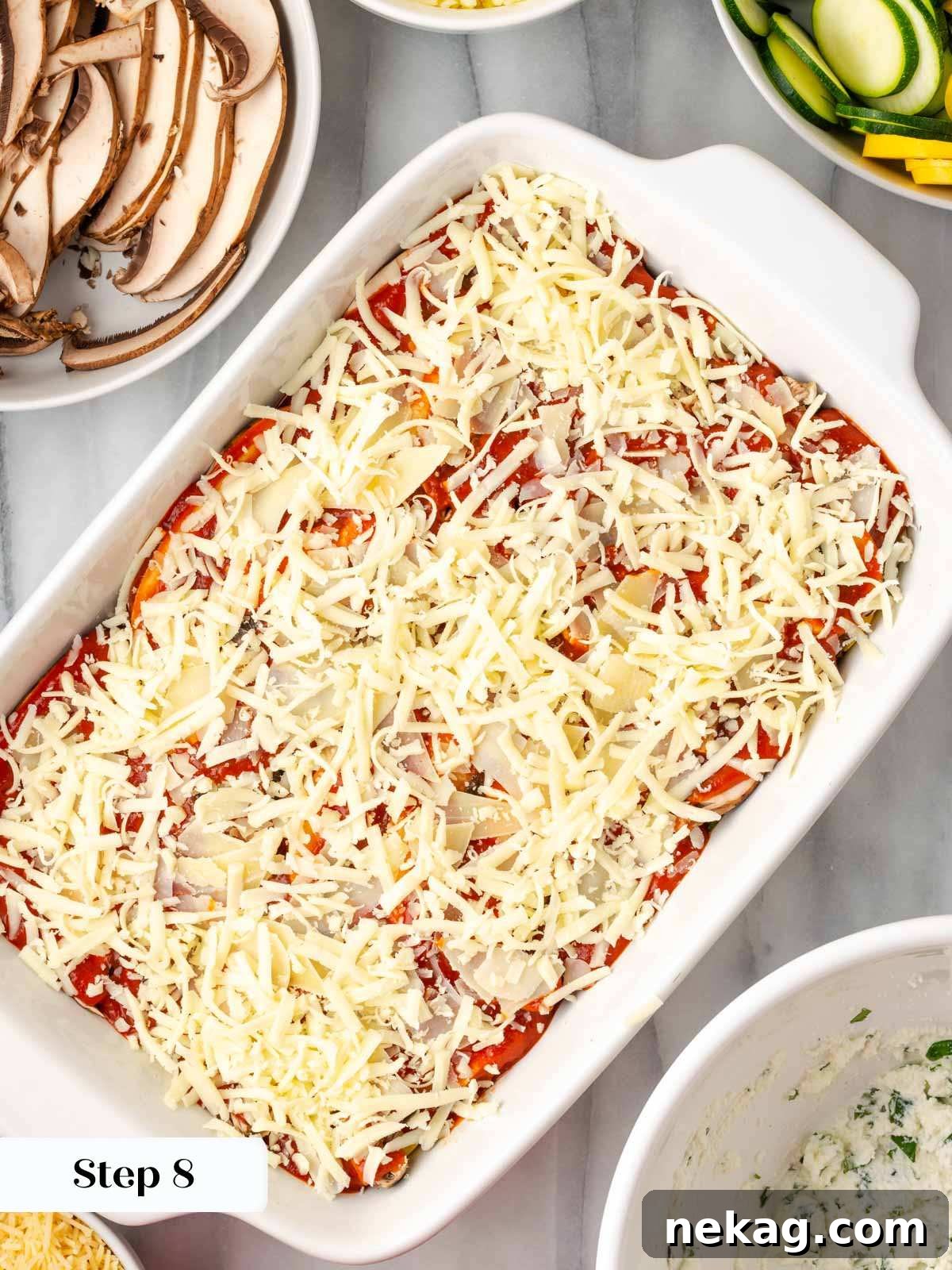
Step 9: Repeat and Finish. Continue repeating Steps 4 through 8 until your baking pan is filled. Always ensure you end with a top layer of cheese, with an extra sprinkle of Parmesan for a golden, crispy crust.
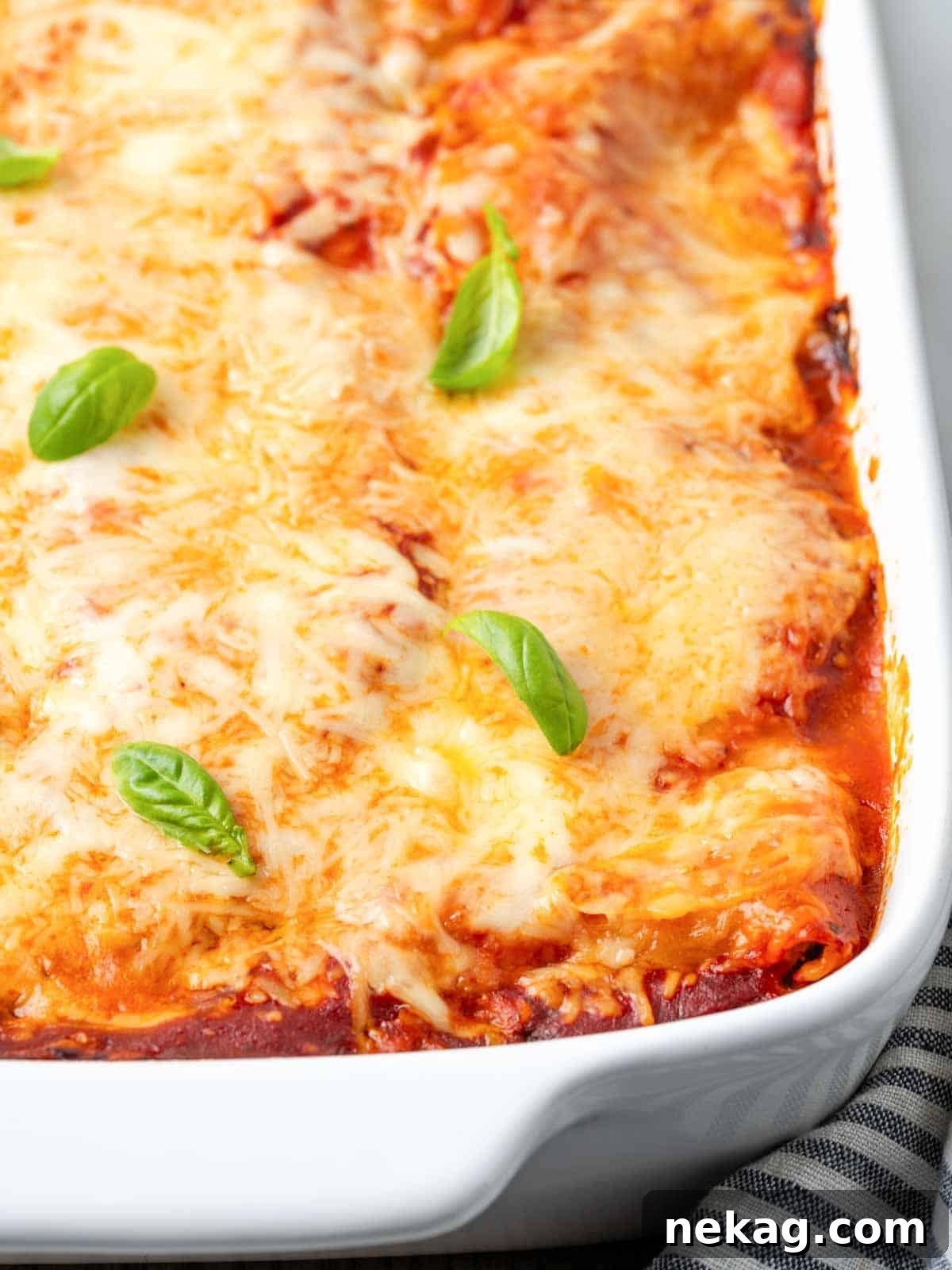
Step 10: Bake to Golden Perfection. Place the lasagna in your preheated oven and bake for approximately 50 minutes, or until the sauce is bubbling merrily, and the top is golden brown and beautifully melted. If the top starts to brown too quickly, you can loosely tent it with aluminum foil.
For the Most Impressive Presentation: To truly wow your guests, serve this lasagna tableside! Everyone will adore watching the long, enticing strands of melty cheese as you cut each piece. For that ultimate, Instagram-worthy cheese-pull, always use freshly shredded fresh mozzarella rather than the pre-shredded, low-moisture variety.
Chef Lindsey’s Secret Tip for Efficient Slicing
For achieving uniformly thin and consistent slices of zucchini and yellow squash with remarkable speed and ease, I highly recommend using a mandoline. This kitchen tool ensures every slice is perfect, promoting even cooking and an elegant presentation. If you don’t have a mandoline, be sure to allocate a little extra time to meticulously slice your vegetables either with a sharp chef’s knife or a vegetable peeler for equally thin strips.
Frequently Asked Questions About Vegetable Lasagna
To store leftover veggie lasagna, first allow it to cool completely to room temperature. Then, transfer it to an airtight container and refrigerate for 3-5 days. For longer storage, leftover lasagna freezes beautifully. Once completely cool, cover the lasagna tightly with heavy-duty aluminum foil or plastic wrap and freeze for up to 3 months. When reheating from frozen, it’s best to thaw it in the refrigerator overnight first, then bake until heated through.
The most crucial step to prevent soggy vegetable lasagna is to slice your vegetables thinly (about 1/8 inch thick). This allows them to cook thoroughly and release their moisture without making the dish watery. For an extra safeguard against sogginess, you can lightly salt the sliced vegetables and let them sit for 15-20 minutes, then pat them dry with paper towels before layering. Even better, consider pre-roasting the sliced vegetables on baking sheets until tender and slightly browned; this method dramatically reduces their water content and concentrates their flavor.
Absolutely! This vegetable lasagna is an excellent make-ahead meal. You can assemble the entire dish according to the recipe instructions, then cover it tightly and store it in the refrigerator for up to 2 days before baking. Alternatively, you can freeze the assembled (but unbaked) lasagna for up to 3 months. When ready to bake from frozen, simply add about 30-45 minutes to the baking time, covering it with foil for the first part of the cooking to ensure it heats through evenly without burning the top.
Yes, making this vegetable lasagna gluten-free is very simple. Just substitute traditional lasagna noodles with a high-quality brand of gluten-free lasagna noodles. Many excellent options are available that hold up well during baking. For a completely noodle-free, low-carb version, you can create layers using thinly sliced and pre-roasted zucchini or eggplant instead of pasta.
Vegetable lasagna is a hearty meal on its own, but it pairs wonderfully with a light side salad dressed with vinaigrette, crusty garlic bread for soaking up any extra sauce, or steamed green vegetables like asparagus or green beans. A simple glass of red wine, such as a Chianti or Merlot, would also complement its rich flavors beautifully.
If you’ve tried this delightful recipe and absolutely loved it, please take a moment to leave a 🌟 star rating and share your thoughts in the comments section below. I cherish hearing from you, and your feedback truly brightens my day!
The Best Vegetable Lasagna
Chef Lindsey
25
50
1
15
8 people
Comment
Print Recipe
Ingredients
- 8 lasagna noodles (fresh noodles or 9 cooked, dried lasagna noodles)
- 16 oz whole milk ricotta
- ½ cup chopped fresh basil
- ¼ cup chopped fresh cilantro
- ¼ cup chopped fresh oregano
- 8 oz shredded parmesan cheese
- 10 oz shredded fresh mozzarella
- 4 small zucchini (sliced 1/8 inch thick)
- 4 small yellow squash (sliced 1/8 inch thick)
- 3 portabella mushrooms (sliced in 1/8 wide slices)
- 3½ cups thick tomato pasta sauce
Instructions
-
Preheat the oven to 350°F (175°C).
-
Mix fresh, chopped herbs with the ricotta in a medium bowl and set aside.
-
Slice your vegetables thinly (1/8 inch thick) and set aside. If using dried noodles, cook until al dente, then drain, rinse in cold water, and drizzle with olive oil.
-
Arrange all your ingredients around your 12x7x4 inch baking dish for easy assembly.
-
Assemble the lasagna: Start by spreading a thin layer of sauce on the bottom of the dish. Place 3 overlapping lasagna noodles in the bottom.
-
Spread about a third of the ricotta mixture on the noodles with a rubber spatula.
-
Next, layer your zucchini, squash, and portobello mushrooms in three consecutive, even layers.
-
Top the layered vegetables generously with tomato sauce.
-
Finally, add a generous layer of mozzarella cheese and a sprinkle of parmesan cheese mixture.
-
Repeat the layering process until the pan is filled, ensuring the top layer is finished with cheese (I like a bit extra!).
-
Bake the lasagna for 50 minutes, or until bubbling and golden brown. Let it rest for 15-20 minutes before serving for best results.
Notes
Variations – Different Noodles: You can easily use no-boil lasagna noodles or whole wheat lasagna noodles for this recipe based on your preference. For a low-carb option, thinly slice and pre-roast zucchini or eggplant to use as noodle layers.
Storage – Store leftover veggie lasagna in an airtight container in the fridge for 3-5 days. For longer storage, allow it to cool completely, then cover with heavy-duty tin foil and freeze for up to 3 months.
Pro-Tip for No Soggy Lasagna: To further prevent sogginess, consider salting your thinly sliced vegetables (zucchini, squash, eggplant) and letting them sit for about 15-20 minutes. This process draws out excess moisture. Pat them thoroughly dry with paper towels before layering. Alternatively, pre-roasting the vegetables until tender and lightly browned achieves the same goal with added depth of flavor.
Nutrition Information (per serving)
Calories: 464 kcal |
Carbohydrates: 33 g |
Protein: 31 g |
Fat: 24 g |
Saturated Fat: 14 g |
Polyunsaturated Fat: 1 g |
Monounsaturated Fat: 7 g |
Trans Fat: 0.001 g |
Cholesterol: 76 mg |
Sodium: 739 mg |
Potassium: 828 mg |
Fiber: 4 g |
Sugar: 7 g |
Vitamin A: 1244 IU |
Vitamin C: 35 mg |
Calcium: 696 mg |
Iron: 2 mg
Enjoyed this recipe? Leave a comment below!
Explore More Chef Lindsey Recipes!
I sincerely hope you savored every bite of this professional chef-tested vegetable lasagna recipe. It’s a true labor of love designed to bring wholesome joy to your kitchen. Don’t stop here – I invite you to delve into our collection of other delicious and filling vegetarian dinner recipes, perfect for any occasion. Or, if you’re ready to explore the sweeter side of cooking, treat yourself to a slice of our decadent chocolate zucchini cake – it’s a delightful surprise!