
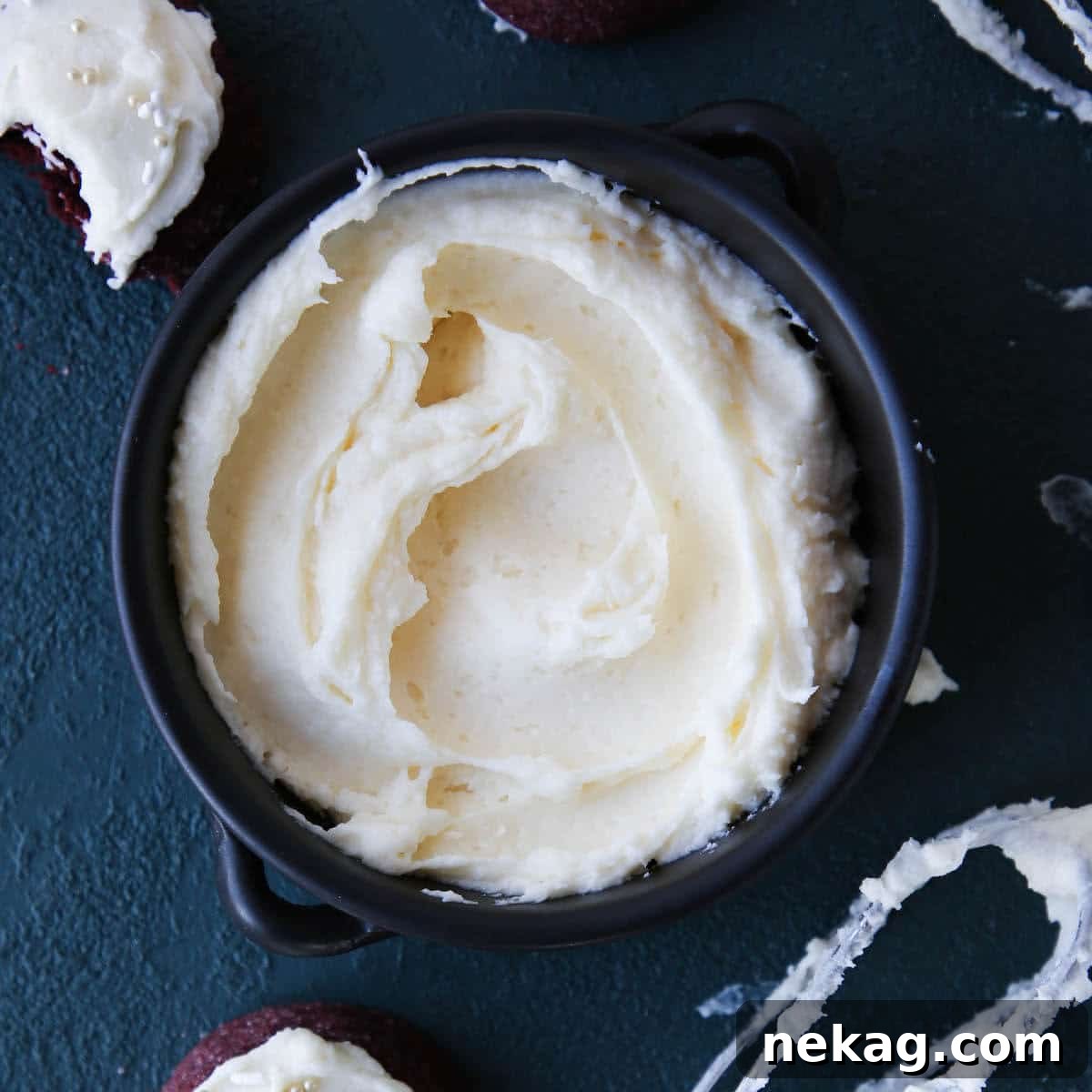
The Best Cream Cheese Frosting for Cookies: Thick, Not-Too-Sweet & Perfectly Set
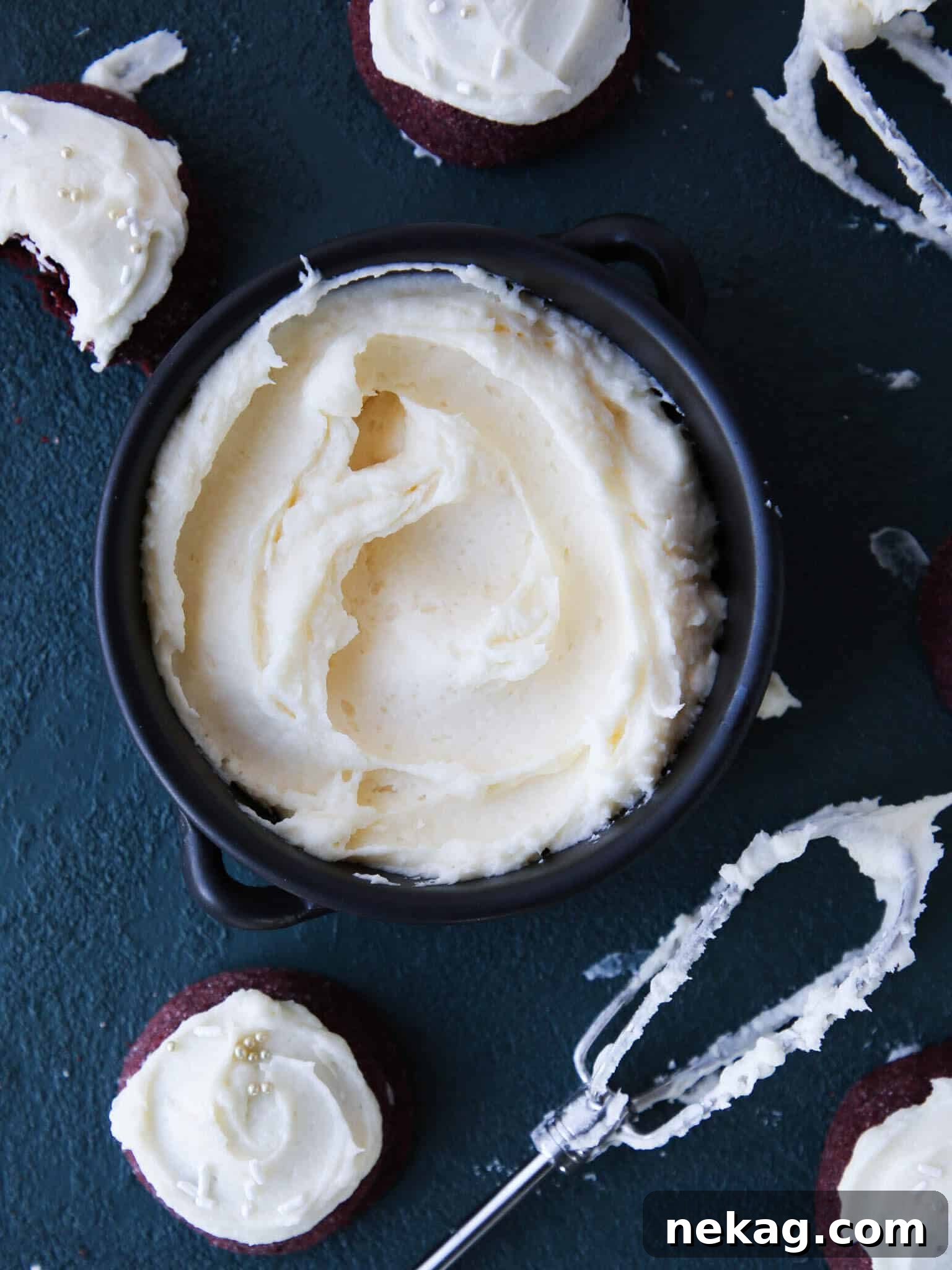
Craving a frosting that strikes the perfect balance between richness and delicate sweetness? Look no further! This is truly the best Cream Cheese Frosting for Cookies recipe you’ll ever encounter. It’s engineered to be thick enough to spread beautifully without tearing your delicate cookies, subtly sweet without overwhelming their flavor, and it hardens just enough to be stable yet creamy. Whether you’re decorating classic sugar cookies, decadent red velvet cookies, or comforting pumpkin cookies, this recipe delivers an unparalleled texture and flavor that will elevate your baking to new heights.
A Quick Look At The Recipe
This is a brief summary of the recipe. Jump to the recipe for full details.
Jump to Recipe
Prep Time
5 minutes
Total Time
5 minutes
Yields
Enough for 24 cookies
Difficulty
Easy, quick, and beginner-friendly.
Calories *
90 kcal per serving
Technique
Cream butter + cream cheese, add sugar + vanilla, whisk in cream until fluffy.
Flavor Profile
Light, creamy, gently tangy frosting with balanced sweetness and soft-set texture.
* Based on nutrition panel for approx. 24 cookies.
I needed a frosting that wasn’t overly sweet for a batch of sugar cookies. This spread easily without tearing them! My family said it tasted like a lighter version of cheesecake topping and they already asked me to put it on the next batch of cookies I’m making tomorrow. ⭐⭐⭐⭐⭐
Lauren
Table of Contents
- Why This Cream Cheese Frosting is the Best
- Choosing the Right Icing for Cookies
- Essential Ingredients for Perfect Frosting
- Smart Substitutions
- Creative Variations on Cream Cheese Frosting for Cookies
- How to Make Cream Cheese Frosting for Cookies: Step-by-Step
- Chef Lindsey’s Expert Tips
- Troubleshooting Cream Cheese Frosting Consistency
- Recipe FAQs
- Cookie Recipes for Your Cream Cheese Frosting
- Cream Cheese Frosting for Cookies Recipe Card
- Before You Go
Why This Cream Cheese Frosting is the Best
Cream cheese frosting holds a special place in my heart – it’s undeniably my favorite! While I have an ultimate cream cheese frosting recipe for cakes, this particular formula is meticulously crafted to be the ideal companion for cookies. Its unique characteristics make it stand out:
- Perfect Thickness: Unlike many cream cheese frostings that can be too soft or runny for cookies, this recipe achieves a delightful thickness. It spreads smoothly over various cookie textures, from soft-baked to firm, without tearing or crumbling.
- Balanced Sweetness: Many frostings are overly sweet, masking the flavor of the cookie itself. This recipe is intentionally less sweet, allowing the tangy notes of cream cheese and the underlying cookie flavors to shine through. A touch of kosher salt helps to cut the sweetness and enhance overall flavor balance.
- Just Enough Hardness: It sets up beautifully, forming a slight crust that prevents smudging, making your frosted cookies stackable and easy to transport. Yet, it remains wonderfully creamy and melt-in-your-mouth when you take a bite.
- Incredible Versatility: While it’s the perfect cream cheese frosting for frosted red velvet cookies, its applications are endless! Imagine it generously spread on cut-out sugar cookies, providing a smooth canvas for decorations. It’s equally divine on chocolate sugar cookies, where its tanginess provides a wonderful contrast. Don’t stop there—it’s phenomenal on chewy pumpkin cookies, or even sandwiched between two chewy chocolate chip cookies for an elevated dessert experience.
Icing cookies demands a frosting with a specific consistency – thicker than what you’d typically use for cakes. The amount of powdered sugar directly influences the thickness, requiring a delicate balance between achieving the desired consistency and managing the sweetness level. This recipe masters that balance, ensuring your cookies are not just beautiful, but incredibly delicious too.
Choosing the Right Icing for Cookies
When it comes to decorating cookies, the choice of icing is paramount. Different icings offer distinct textures, flavors, and setting properties, making them suitable for various types of cookies and occasions. For the best results, always choose an icing that is thick enough to spread evenly and maintain its shape, yet remains delightfully palatable. This cream cheese frosting is an exceptional choice because of its inherent thickness, rich flavor, and balanced sweetness. However, it’s worth exploring other popular options:
- Royal Icing: Known for its hard, crisp finish, royal icing is made from egg whites (or meringue powder), powdered sugar, and sometimes lemon juice. It’s ideal for intricate piping work and creating a smooth, durable surface on cookies that need to be stacked or shipped. The downside is its very firm texture and often intense sweetness.
- American Buttercream: A simple and common choice, American buttercream is made from butter, powdered sugar, milk or cream, and flavorings. It’s fluffy, sweet, and easy to make. While versatile, it can sometimes be too soft for intricate cookie designs or tend to be overly sweet if not balanced carefully. An easy vanilla buttercream is also a good option if you prefer a less tangy flavor.
- Glaze (Powdered Sugar Glaze): Often a thin mixture of powdered sugar and liquid (milk, lemon juice, or water), glazes create a translucent, shiny coating that sets softly. They are great for a quick, simple finish but lack the body for piping or intricate details.
- Fondant: Primarily used for decorative purposes, rolled fondant creates a perfectly smooth, often sculptural finish. It has a distinctive chewiness and is generally less about flavor and more about visual impact.
Our cream cheese frosting stands out from these alternatives by offering a unique combination of creaminess and stability. It’s significantly less sweet than most buttercreams or royal icings, with a pleasant tang from the cream cheese that cuts through the richness, making it incredibly enjoyable to eat. Its ability to firm up slightly makes it practical for handling and storage, without sacrificing that beloved soft, yielding texture that melts in your mouth. This makes it a superior choice for cookies where both taste and presentation are equally important.
Essential Ingredients for Perfect Frosting
Crafting the perfect cream cheese frosting begins with understanding the role each ingredient plays. High-quality ingredients, properly prepared, are the foundation for a flawless, delicious result.
- Unsalted Butter: For all my frostings and general baking, I consistently use unsalted butter. This gives you complete control over the salt content, allowing you to fine-tune the flavor balance. In frostings and buttercreams, butter is crucial for stability and structure. When chilled, it firms up, helping the frosting set and hold its shape. Always ensure your butter is softened to room temperature—not melted, not cold—to ensure it creams smoothly with the cream cheese, preventing lumps and ensuring a cohesive texture.
- Cream Cheese: The star of the show! I always recommend using original full-fat Philadelphia Cream Cheese. It delivers the signature tangy flavor and rich creaminess that makes this frosting so irresistible. Full-fat cream cheese also provides essential structure. Avoid reduced-fat or whipped cream cheese; these varieties have a higher water content and air whipped into them, which will result in a much softer, less stable frosting that won’t hold its shape or firm up properly. Like butter, ensure your cream cheese is softened to room temperature before mixing for optimal smoothness.
- Confectioner’s Sugar (Powdered Sugar): This finely milled sugar is indispensable for frostings. Its powdery texture dissolves easily, creating a smooth, silky buttercream without the need for heat. It also provides the bulk and sweetness, contributing significantly to the frosting’s thickness and ability to set. Sifting your confectioner’s sugar beforehand can help prevent lumps, ensuring an even smoother finish.
- Vanilla Extract: A splash of quality vanilla extract is essential for enhancing the overall flavor profile. It adds a beautiful aromatic depth and warmth. When combined with the heavy cream, vanilla extract evokes a delightful, creamy, ice cream-like essence. For the best flavor, opt for pure vanilla extract over imitation.
- Heavy Cream: I prefer using full-fat heavy cream, often labeled as “heavy whipping cream.” This ingredient plays a critical role in achieving the light, fluffy texture that sets this frosting apart. When whipped, the high-fat content in heavy cream incorporates air, resulting in a cloud-like consistency that is both rich and airy. It also helps to achieve the desired spreadable consistency without making the frosting too stiff.
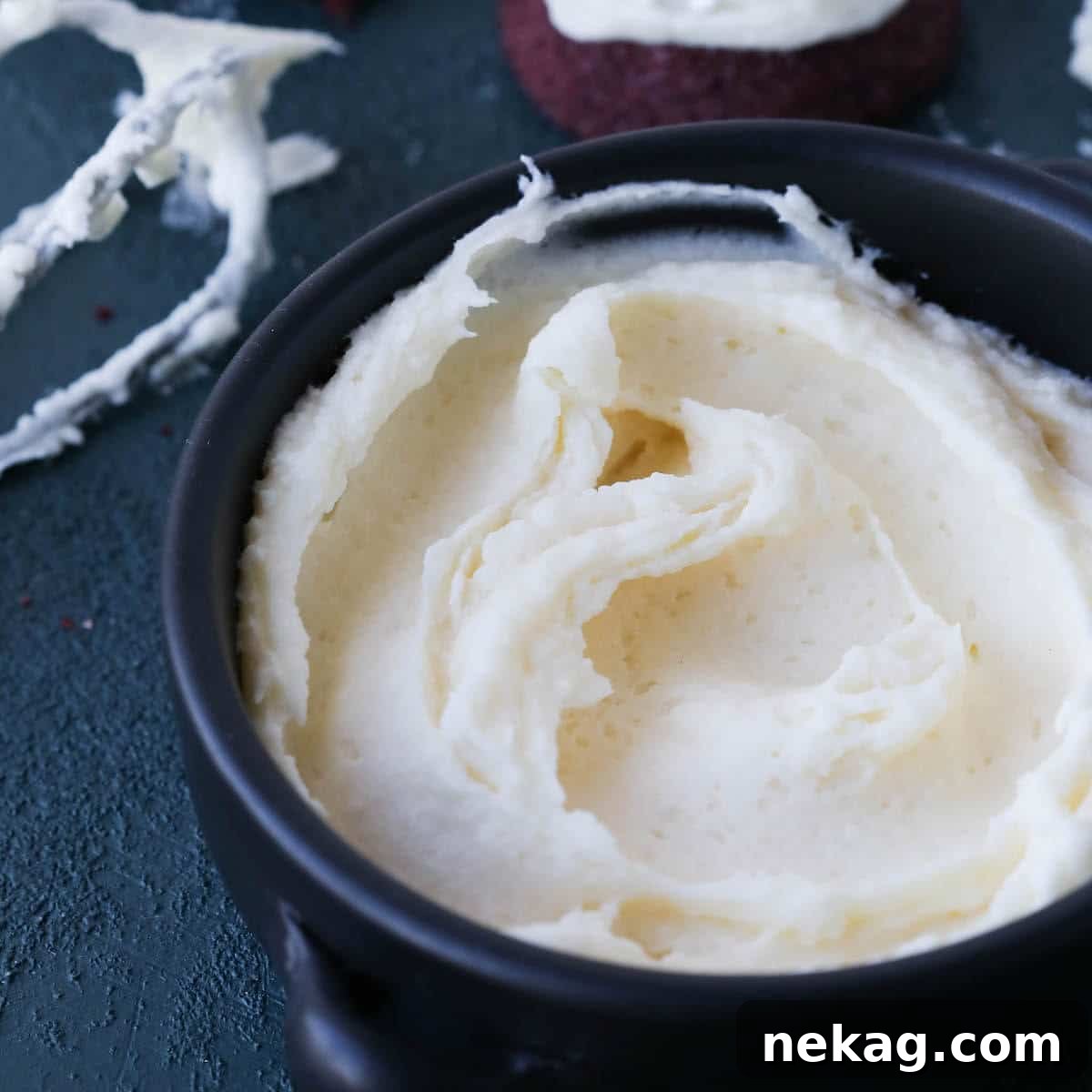
Smart Substitutions
While the recipe calls for specific ingredients to achieve the perfect balance, some thoughtful substitutions can be made if needed. Keep in mind that altering ingredients might slightly change the final texture or flavor, but these options can still yield delicious results.
- Cream Cheese Alternatives: As mentioned, for optimal structure and flavor, I strongly recommend full-fat cream cheese. However, if you’re seeking a dairy-free option, there are several high-quality vegan cream cheese brands available on the market. Ensure you choose a firm, block-style vegan cream cheese, as whipped or spreadable versions will likely be too soft for a stable frosting. Test a small batch first to ensure it holds up.
- Butter Alternatives: You can absolutely substitute vegan butter or vegetable shortening for the unsalted butter in this recipe. Both options will provide the necessary fat and structure. When using vegan butter, choose a stick variety designed for baking, as tub varieties can be too soft. Shortening will result in a slightly whiter frosting and can be more stable in warmer temperatures, though it may lack the rich flavor complexity that butter provides.
- Heavy Cream Alternatives: For a dairy-free version of the heavy cream, full-fat canned coconut milk (chilled overnight, then scoop out the thick cream) or a high-quality dairy-free heavy cream alternative can be used. Ensure it has a high-fat content to whip up properly.
- Sweetener Alternatives: While confectioner’s sugar is best for texture, if you need a sugar-free alternative, there are powdered erythritol or monk fruit blends available. Be aware that these might have a slightly different taste and could impact the frosting’s setting properties.
Creative Variations on Cream Cheese Frosting for Cookies
This cream cheese frosting is a fantastic base, incredibly versatile, and can be customized to suit any occasion or preference. Don’t be afraid to experiment and make it your own!
- Colored Frosting: Bring a pop of color to your cookies! Add a few drops of gel food dye (gel colors are concentrated and won’t thin your frosting) to liven up any cookie top. For a fun, artistic touch, divide your frosting into several bowls, color each a different shade, and then swirl them together in a piping bag for a marbled effect, or pipe distinct designs with each color.
- Frosting Flavors:
- Fruity: Incorporate dehydrated fruit powders (like strawberry, raspberry, or blueberry) for natural color and intense fruit flavor. Start with a tablespoon and add more to taste.
- Chocolate: Sift in a few tablespoons of unsweetened cocoa powder for an easy and delicious chocolate cream cheese frosting variation. Adjust to your desired depth of chocolate flavor.
- Citrus Zest: Add the finely grated zest of a lemon, orange, or lime for a bright, refreshing twist. This pairs wonderfully with sugar cookies or lighter-flavored treats.
- Spices: For fall or winter cookies, mix in a pinch of cinnamon, nutmeg, or pumpkin spice. This is especially delightful on pumpkin cookies or gingerbread.
- Coffee/Espresso: A teaspoon of instant espresso powder can deepen the flavor of chocolate frosting or add a sophisticated note to vanilla.
- Nutty: A tablespoon of finely ground pistachios or almonds can add a subtle texture and flavor.
- Pipe or Spread: This cream cheese frosting is wonderfully adaptable for various application methods. Its thick consistency makes it perfect for spreading with an offset spatula for a rustic, homemade look. Alternatively, it’s firm enough to hold its shape beautifully for piping. Grab your favorite piping tips – whether you prefer star tips for classic swirls, round tips for elegant dots and borders, or even specialty tips to decorate cookies like a miniature St. Honoré cake – and let your creativity flow!
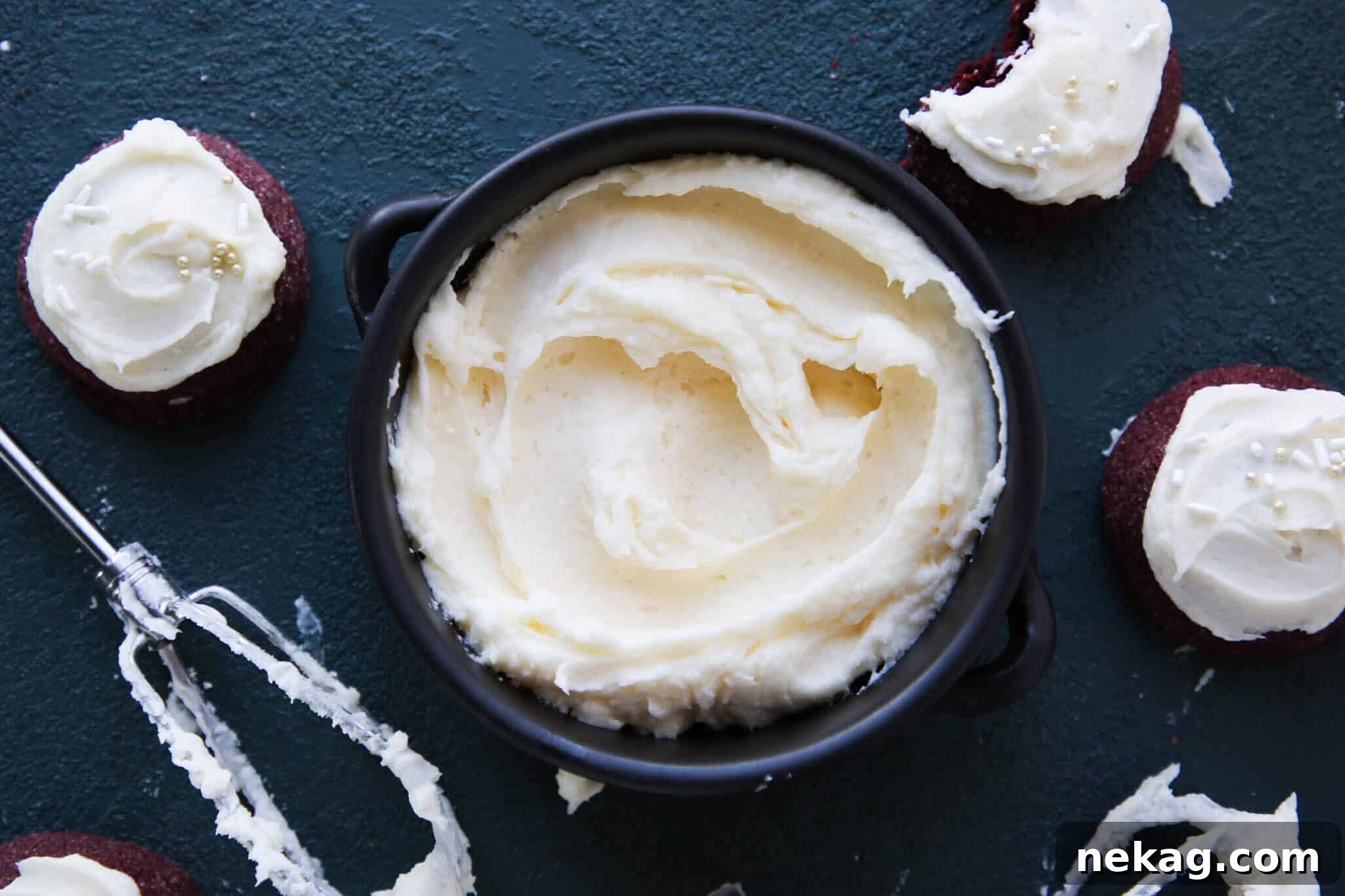
How to Make Cream Cheese Frosting for Cookies: Step-by-Step
Making this exceptional cream cheese frosting is straightforward, but paying attention to each step ensures the perfect consistency and flavor. Here’s a detailed guide:
Step 1: Cream Butter and Cream Cheese
In the bowl of a stand mixer fitted with the paddle attachment, combine your softened unsalted butter and softened full-fat cream cheese. Beat them together on medium speed until the mixture is light, fluffy, and completely smooth, with no lumps of butter or cream cheese remaining. This initial creaming step is crucial for achieving a uniform and airy base. Scrape down the sides of the bowl periodically to ensure everything is fully incorporated.
Step 2: Incorporate Powdered Sugar and Vanilla
With the mixer on low speed, gradually add the confectioner’s sugar, one cup at a time, allowing each addition to be fully incorporated before adding more. Once all the sugar is added, slowly pour in the vanilla extract. Increase the speed to medium and continue beating until the frosting is light, smooth, and lump-free. The powdered sugar adds sweetness and structure, building the body of your frosting.
Step 3: Switch Attachments and Add Heavy Cream
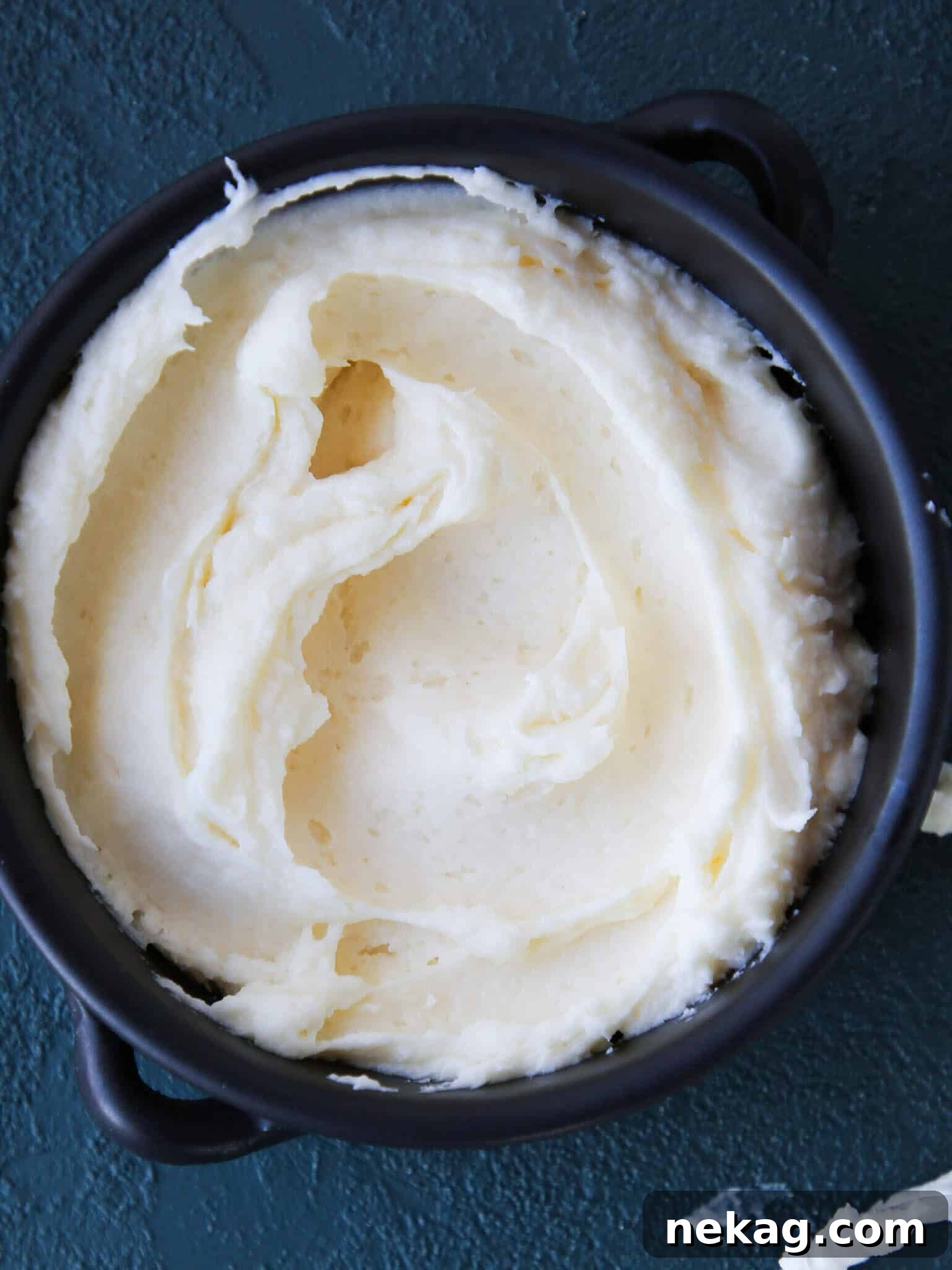
Remove the paddle attachment and switch to the whisk attachment. This change is key for incorporating air and achieving the signature light and fluffy texture. With the mixer running on low, slowly add the heavy cream. Once added, increase the mixer speed to high and whisk continuously until the frosting becomes notably lighter in color, significantly fluffier, and holds soft peaks. Be careful not to over-whip, as this can sometimes cause the frosting to separate. You’re looking for a smooth, cloud-like consistency that is easy to spread or pipe.
Chef Lindsey’s Expert Tips
For an even thicker, more robust frosting, ideal for intricate piping or very firm setting, you can adjust or even omit the heavy cream. Start by adding just one tablespoon and assess the consistency. If you desire maximum stiffness, leave the heavy cream out entirely. This will result in a denser, richer frosting that sets very firmly. Remember, the consistency can be slightly adjusted with small additions of more powdered sugar for thickness or a tiny splash of milk/cream for thinning, should you need to fine-tune it after preparation.
Troubleshooting Cream Cheese Frosting Consistency
Achieving the perfect consistency for cream cheese frosting is crucial for successful cookie decorating. Here are common issues and how to address them:
How do you get cream cheese frosting to harden on cookies?
To encourage your cream cheese frosting to harden or set more firmly on cookies, several factors come into play:
- Increase Powdered Sugar: The most direct method is to gradually add more confectioner’s sugar. Powdered sugar acts as a thickener and stabilizer. Add it slowly, a tablespoon at a time, mixing well after each addition until you reach your desired stiffness.
- Adjust Butter to Cream Cheese Ratio: A higher proportion of butter to cream cheese will generally yield a firmer frosting, especially once refrigerated. Butter contains less water than cream cheese and solidifies more when cold, contributing to a more stable structure.
- Chill the Frosting: After making the frosting, if it feels too soft, chill it in the refrigerator for 20-30 minutes. The fats in the butter and cream cheese will firm up, making the frosting easier to work with. If it becomes too stiff after chilling, let it sit at room temperature for a few minutes and re-whip it briefly to restore its creamy texture.
- Use Room Temperature Ingredients (but not too warm): Ensure your butter and cream cheese are softened, but not warm or greasy. Overly soft ingredients will result in a loose frosting. If your kitchen is very warm, try cooling your mixing bowl or ingredients slightly.
Why is my cream cheese frosting not stiff?
Several reasons can contribute to a cream cheese frosting that is too loose or not stiff enough:
- Ingredients Too Soft/Warm: If your butter and cream cheese were excessively soft or warm when you started mixing, the frosting will likely be too loose. Ensure they are just softened to room temperature.
- Over-Beating: While whipping is necessary for fluffiness, over-beating, especially after adding the heavy cream, can sometimes cause the emulsion to break, leading to a thinner, almost curdled texture.
- Insufficient Powdered Sugar: Not enough confectioner’s sugar will result in a thin frosting. It’s the primary thickening agent in this recipe.
- Using Light or Whipped Cream Cheese: These varieties have higher water content and less fat, which weakens the frosting’s structure and prevents it from stiffening. Always use full-fat block cream cheese.
- Too Much Liquid: Adding too much heavy cream (or milk, if you’re adapting a recipe) will thin out the frosting significantly. Add liquids sparingly and adjust to desired consistency.
- Warm Environment: If you’re working in a very warm kitchen, the frosting can quickly soften. Chill the bowl and frosting as needed.
Recipe FAQs
Store any unused cream cheese frosting in an airtight, clean container in the refrigerator for up to 2 weeks. For longer storage, it can be frozen. Once cookies have been iced, they can typically be kept at room temperature for up to three days before the cream cheese component might begin to spoil. For extended freshness and to prevent spoilage, store iced cookies in the refrigerator.
Unused cream cheese frosting is quite stable. It will keep for up to 3 hours at room temperature, up to 2 weeks when stored properly in the refrigerator, or for up to 3 months if frozen. Always ensure it’s in an airtight container to prevent it from absorbing odors or drying out.
Absolutely! This cream cheese frosting freezes beautifully. You can freeze the buttercream itself in an airtight container for future use. Additionally, you can freeze your iced cakes or frosted cookies in their entirety. For cookies, freeze them on a baking sheet until solid, then transfer to an airtight container with parchment paper between layers to prevent sticking.
To thaw frozen cream cheese frosting, transfer it from the freezer to the refrigerator overnight. Once thawed, if it appears a bit stiff or separated, re-whip it with a stand mixer or hand mixer on medium-high speed for a few minutes until it regains its light and fluffy consistency. To speed up the thawing process, you can break the block of buttercream into smaller pieces with a knife and spread them on a parchment-lined sheet pan at room temperature, stirring occasionally until soft enough to re-whip.
Yes, you can easily scale this recipe to make as large a batch of cream cheese frosting for cookies as you need! You are primarily limited by the capacity of your stand mixer. Just ensure you maintain the proper ratios of ingredients to achieve the desired consistency and flavor.
While cream cheese is a dairy product, the high sugar content in this recipe acts as a preservative, allowing frosted cookies to be kept at room temperature for up to 3 days without spoiling. However, for maximum freshness and to extend shelf life, especially in warmer climates, it’s always best practice to store iced cookies in the refrigerator. Prior to frosting cookies, any unused icing should always be stored in the refrigerator.
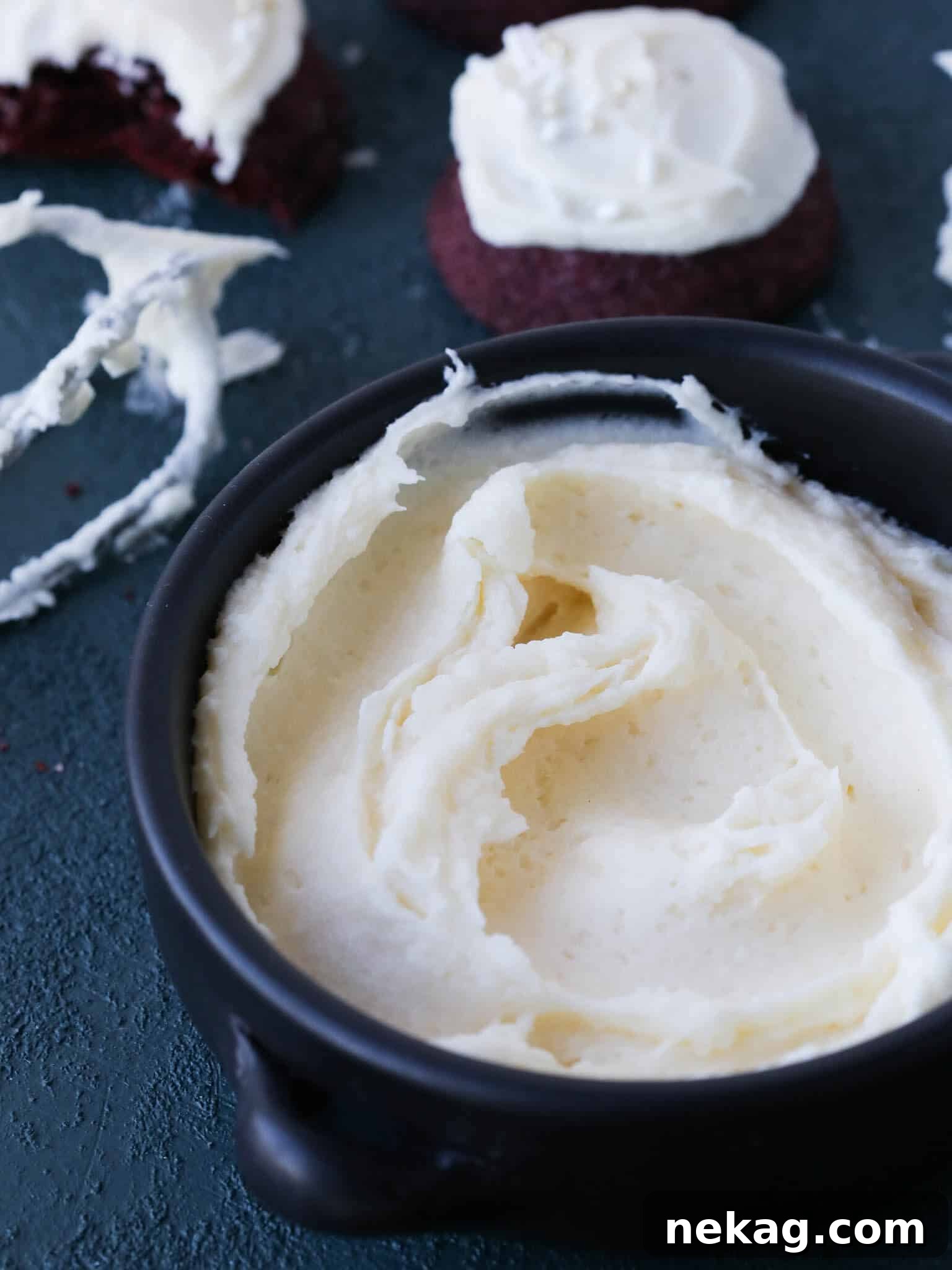
Cookie Recipes for Your Cream Cheese Frosting
Cookie Recipes
Funfetti Cookies
Cookie Recipes
Fruitcake Cookies with Brandy Cream Cheese Frosting
Cookie Recipes
Cream Cheese Chocolate Chip Cookies
Date Night
Red Velvet Cookies
If you tried this recipe and loved it, please leave a 🌟 star rating and let me know how it goes in the comments below. I love hearing from you; your comments make my day!
Cream Cheese Frosting for Cookies
Comment
Print Recipe
Ingredients
- ½ cup unsalted butter (softened)
- 6 tablespoons cream cheese (full-fat, softened)
- 2 cups confectioner’s sugar
- 1 teaspoon vanilla extract
- 2 tablespoons heavy cream
- (Optional: Pinch of kosher salt for flavor balance)
Instructions
-
In the bowl of a stand mixer fitted with the paddle attachment, cream together the softened unsalted butter and full-fat cream cheese on medium speed until the mixture is light, fluffy, and completely smooth. Scrape down the sides of the bowl as needed.
-
With the mixer on low speed, slowly add the confectioner’s sugar, one cup at a time, until fully incorporated. Mix in the vanilla extract. Continue beating on medium speed until light and smooth.
-
Switch to the whisk attachment. On low speed, add the heavy cream. Increase speed to high and whisk until the frosting is light, fluffy, and white, holding soft peaks. For a thicker frosting, you can reduce or omit the heavy cream.
Video
Notes
Yield: Approximately 24 cookies, depending on size and frosting thickness.
You can add a small pinch of kosher salt to the frosting to help balance the sweetness of the confectioner’s sugar and enhance the overall flavor, especially if the destined cookies are already sweet.
Nutrition
Carbohydrates: 10g
Protein: 0.3g
Fat: 6g
Saturated Fat: 3g
Polyunsaturated Fat: 0.2g
Monounsaturated Fat: 1g
Trans Fat: 0.2g
Cholesterol: 15mg
Sodium: 42mg
Potassium: 8mg
Sugar: 10g
Vitamin A: 185IU
Vitamin C: 0.01mg
Calcium: 6mg
Iron: 0.01mg
Like this? Leave a comment below!
Before You Go
Now that you’ve mastered the art of making the best cream cheese frosting for cookies, your baking adventures are truly limitless! Don’t stop here. Continue your culinary journey by exploring our other delicious, chef-developed Cookie Recipes to find the perfect canvas for your new frosting skills. Or, if you’re feeling adventurous, try using this incredible frosting on our gingerbread blondies for a festive and flavorful treat. Happy baking!