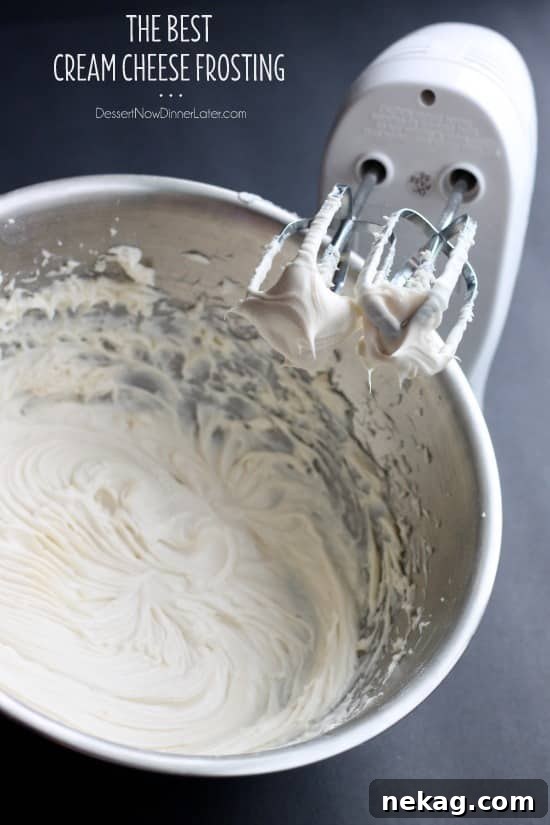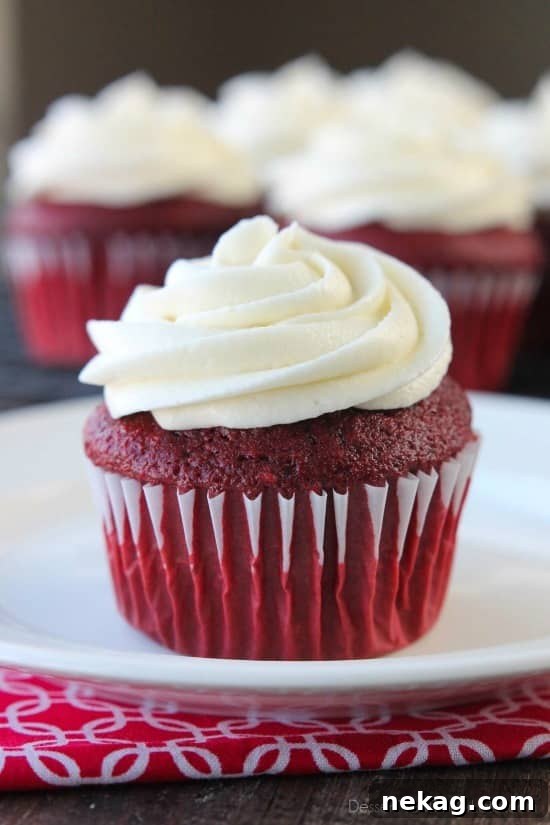
Discover the ultimate recipe for Cream Cheese Frosting – a truly exceptional creation that stands out from the rest. This frosting boasts a superior texture: it’s wonderfully thick, remarkably sturdy, and perfectly pipeable, making it ideal for all your decorating needs. What’s more, it achieves a delightful, lightly sweet flavor profile with just a single cup of powdered sugar, ensuring the rich, tangy essence of cream cheese shines through without being overwhelmed.
Its versatility is unmatched, ready to elevate an array of desserts. Imagine it elegantly piped onto classic red velvet cake or plush cupcakes, generously swirled atop a moist carrot cake, or even embraced within delightful sandwich cookies and lush cake rolls. Don’t forget to slather it generously on warm, freshly baked cinnamon rolls for an unforgettable breakfast treat. The creative possibilities are truly boundless with this perfect frosting.
Why This Is Your New Go-To Cream Cheese Frosting Recipe
When we declare this is truly the BEST Cream Cheese Frosting recipe available, we do so with complete confidence. Many home bakers and professional chefs alike have struggled with cream cheese frostings that often turn out too soft, runny, or disappointingly stringy. Such textures lead to frustrating decorating experiences and a less-than-perfect finish for your delicious desserts. This recipe, however, delivers consistently exceptional results, proving its worth time and again since its inception in 2014.
Our unique cream cheese frosting stands apart. It’s not just firm; it’s genuinely stiff and sturdy, making it effortlessly pipeable for intricate designs and perfectly spreadable for smooth, elegant finishes. Beyond its impeccable structure, this frosting offers a critical advantage: it’s not overly sweet. Unlike many other recipes that rely on excessive powdered sugar, masking the distinct taste of cream cheese, our version strikes a harmonious balance. It celebrates the natural tanginess of cream cheese, allowing that delightful flavor to truly shine through. While some buttercreams can be overpoweringly sweet, even our vanilla buttercream uses a more judicious amount of sugar, underscoring our commitment to balanced flavor.
The Secret to Its Perfect Consistency: A Unique Balance
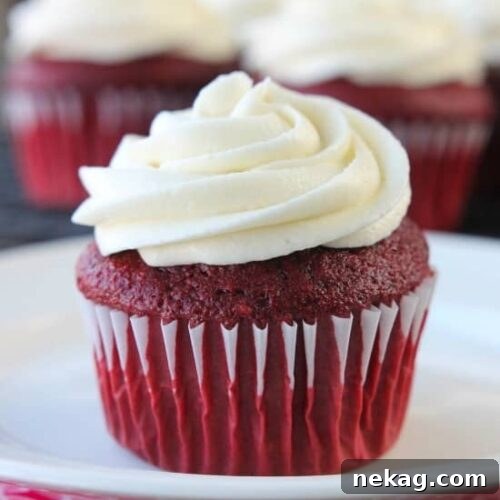
Observe the beautiful ripples and defined peaks in the frosting showcased in our images. This visual proof immediately demonstrates its superior stiffness, indicating it’s robust enough for intricate piping and elegant decorations. The fundamental difference that sets this recipe apart from countless others found across the internet lies in its carefully calibrated ratio: it incorporates more butter and notably less powdered sugar than conventional recipes.
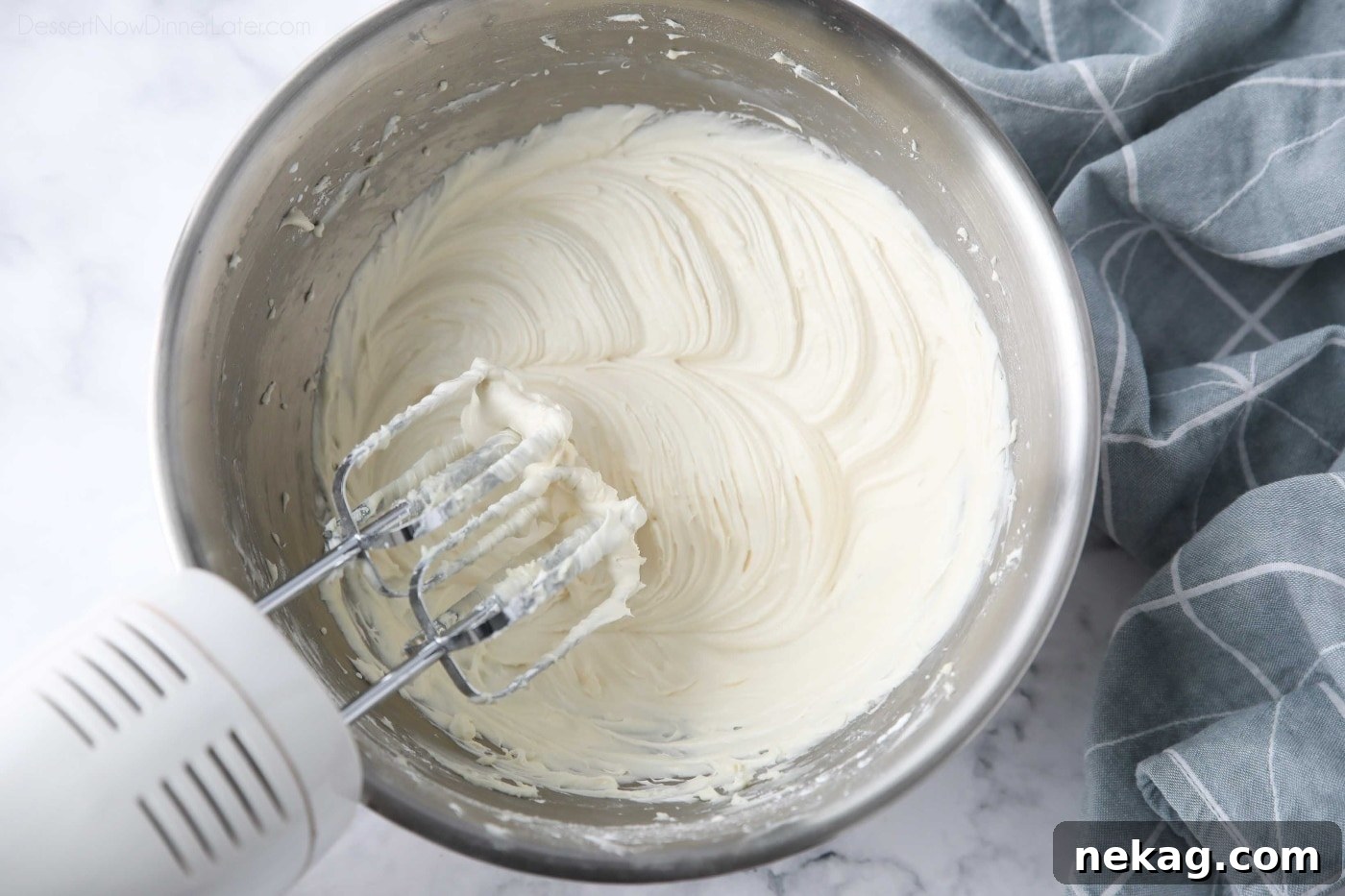
This adjusted ingredient balance is key to achieving its signature qualities. By increasing the butter content, the frosting develops a wonderfully buttery, incredibly creamy texture. Simultaneously, the reduced amount of powdered sugar ensures that the vibrant, tangy cream cheese flavor remains at the forefront, rather than being overshadowed by sweetness. This precise balance is what gives our frosting its depth of flavor and luxurious mouthfeel.
Furthermore, using less powdered sugar actively helps prevent the common issue of stringy frosting. The butter, when properly incorporated, works wonders in lightening and fluffing up the mixture, contributing to that desirable airy yet sturdy consistency. It’s a common misconception that more powdered sugar always leads to thicker frosting. In fact, an excess of powdered sugar can paradoxically result in a stringy, difficult-to-manage texture. It’s a delicate culinary dance to achieve the perfect balance.
To obtain a thick, stable consistency, you typically face two options: either significantly reduce the powdered sugar, or drastically increase it. Many recipes err on the side of using 3-4 cups of powdered sugar to achieve thickness, often at the expense of flavor and an overly sweet profile. Our recipe brilliantly simplifies this by using only 1 cup of powdered sugar. This smart approach yields a frosting that is not only perfectly thick and stable but also pleasantly lightly sweet, allowing the authentic taste of cream cheese to shine through beautifully. We believe a lightly sweet, flavorful frosting is always preferable to a ridiculously sweet one.
Yield and Versatility: How Much Frosting You’ll Get
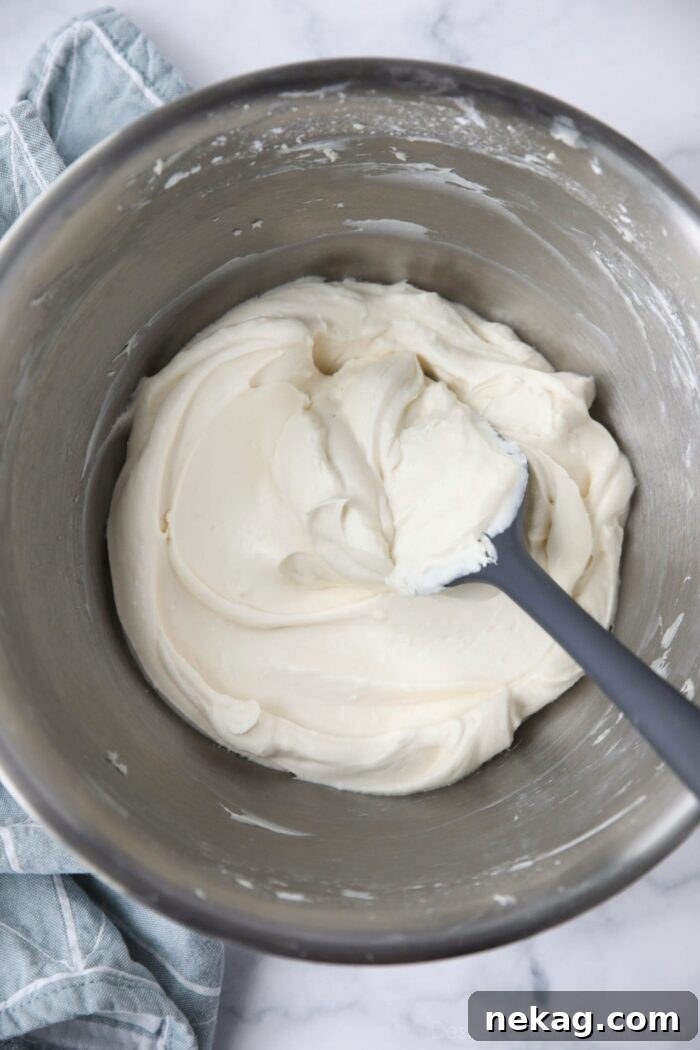
This meticulously crafted cream cheese frosting recipe yields approximately 1 ½ cups of decadent frosting. This quantity is perfectly sufficient for piping a generous topping onto 12-14 standard-sized cupcakes, making each one a delightful treat. It’s also enough to beautifully cover a single round or rectangular cake layer, providing a luscious finish. For those ambitious baking projects involving a layered cake, we highly recommend doubling the recipe to ensure ample coverage and a truly grand presentation.
Should you find yourself in need of a larger batch or prefer a slightly different texture, we offer another fantastic alternative: our whipped cream cheese frosting. This recipe yields a generous 4 cups of frosting, offering a lighter, airier texture while maintaining that coveted slightly sweet and incredibly tasty balance. It’s an excellent choice for larger gatherings or when you desire an even more delicate feel to your dessert toppings.
Essential Ingredients for Perfect Cream Cheese Frosting
Crafting this exceptional cream cheese frosting requires just a few high-quality ingredients, carefully selected for optimal results. Each component plays a vital role in achieving the desired texture, flavor, and stability. Here’s what you’ll need to gather:
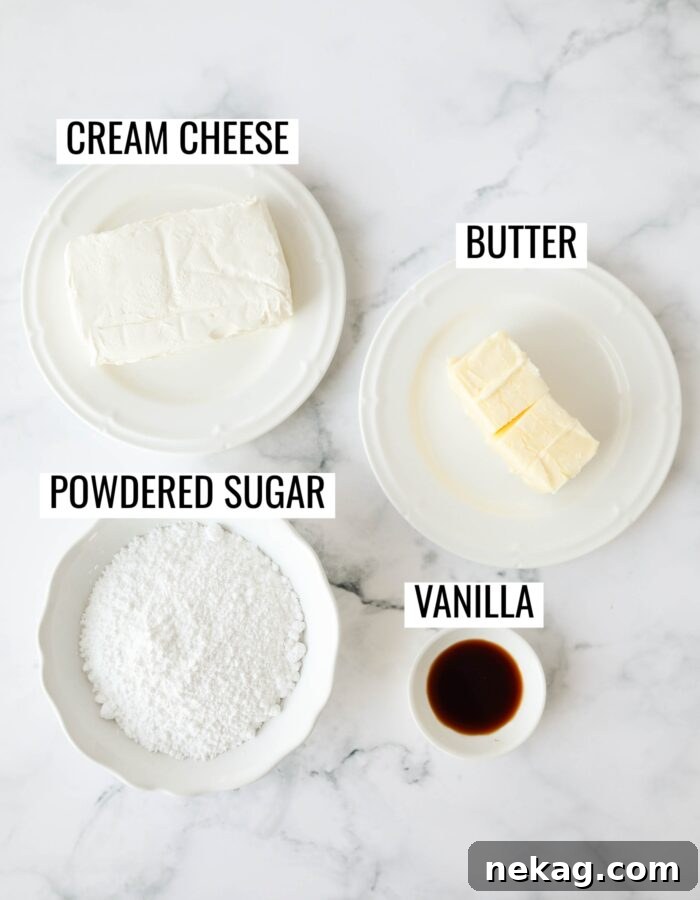
- 8 oz (226 g) brick-style cream cheese, COLD: The cold temperature is crucial for the structure of this frosting, helping it maintain its stiffness. Ensure you use full-fat, brick-style cream cheese for the best results, avoiding any tub or spreadable varieties.
- ½ cup (113 g) unsalted butter, (1 stick) room temperature: Room temperature butter incorporates smoothly, contributing to the creamy, airy texture. Unsalted butter allows you to control the overall saltiness of your frosting.
- 1 cup (120 g) powdered sugar: This precise amount ensures a lightly sweet frosting that highlights the cream cheese tang, rather than masking it.
- 1 tsp pure vanilla extract: A touch of pure vanilla extract enhances the overall flavor, adding warmth and depth to the frosting.
Simple Steps to Craft the Best Cream Cheese Frosting
Achieving this remarkably stable and delicious cream cheese frosting is surprisingly straightforward. Follow these easy steps to create a frosting that will impress every time:
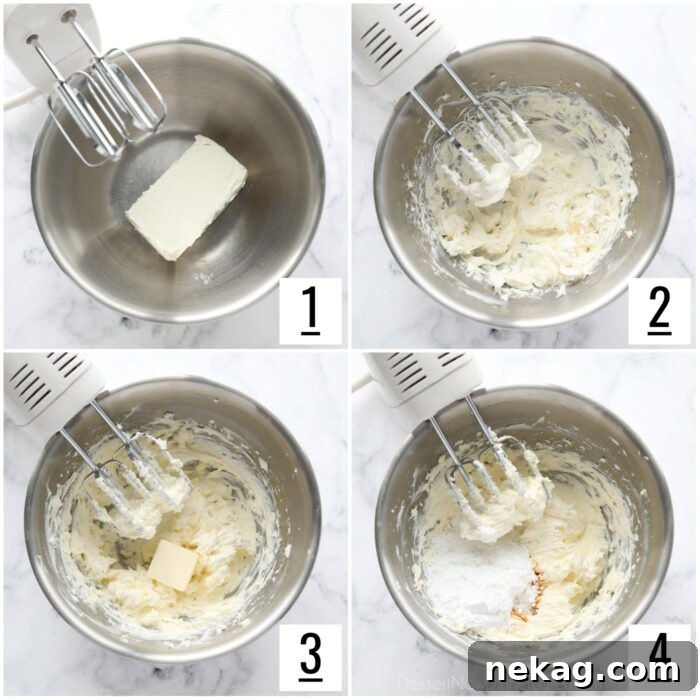
- Prepare the Cream Cheese: Begin by placing your cold, brick-style cream cheese directly into a large mixing bowl.
- Beat Until Smooth: Using an electric hand mixer, beat the cream cheese on medium speed until it is entirely smooth and free of any lumps. This initial step ensures a silky base for your frosting.
- Gradually Incorporate Butter: Add the room temperature unsalted butter to the cream cheese, two tablespoons at a time. Continue beating after each addition until the butter is thoroughly blended and the mixture is consistently smooth. This gradual addition is essential; it helps to lighten and fluff up the frosting, creating excellent volume and ensuring a perfect emulsification with the cream cheese.
- Add Sugar and Vanilla: Introduce the powdered sugar and pure vanilla extract into the bowl all at once.
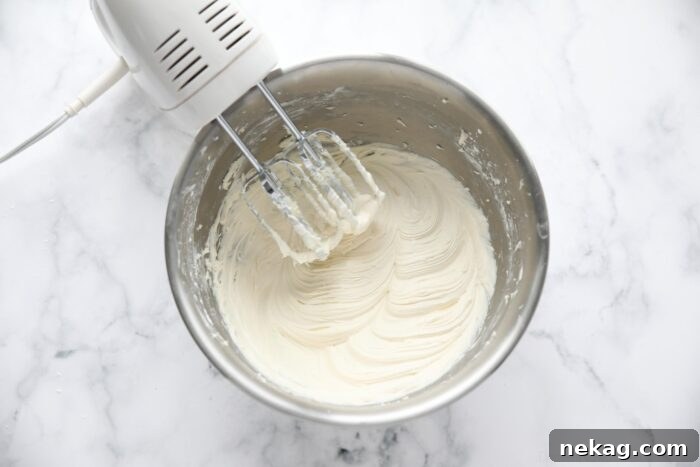
- Blend to Perfection: Mix on low speed until the powdered sugar is just combined, then increase the speed to medium and beat until the frosting is completely smooth and cohesive. Be careful not to overbeat at this stage, as excessive mixing after the sugar is added can make the frosting too soft to pipe effectively. If you notice the frosting becoming too soft, simply place it in the refrigerator for 15-30 minutes, or the freezer for 5-10 minutes, until it firms up again. Your perfect cream cheese frosting is now ready to adorn any dessert!
Expert Tips for Achieving Flawless Cream Cheese Frosting
To ensure your cream cheese frosting turns out perfectly every single time, keep these expert tips in mind. They address common challenges and provide insights into the optimal techniques for success:
- Choosing the Right Cream Cheese: Always opt for brick-style cream cheese. Whether it’s full-fat or Neufchatel, the brick form is crucial for a firm texture. Avoid cream cheese tubs or spreads, as these have a higher water content and softer consistency, which will lead to a runny frosting that won’t hold its shape.
- The “Cold Cream Cheese” Paradox: This is perhaps the most unconventional yet critical tip: use COLD cream cheese straight from the refrigerator. While it seems counterintuitive for smooth blending, the cold cream cheese combined with room temperature butter helps create an incredibly stable emulsion. The firmness of the cold cream cheese provides the necessary structure, preventing the frosting from becoming too soft too quickly when mixed with the butter.
- Mixer Matters: While a stand mixer can work, a quality electric hand mixer, particularly one with flat beaters, often yields superior results for this recipe. Flat beaters tend to scrape the sides of the bowl more effectively, ensuring all ingredients are evenly incorporated and lumps are thoroughly removed, leading to a smoother, airier frosting.
- Mastering the Beating Process: You have the flexibility to beat the cold cream cheese and room temperature butter together for as long as needed to achieve a perfectly smooth, lump-free mixture *before* adding the powdered sugar and vanilla. This extended initial beating helps aerate the fats and integrate them fully. However, once the powdered sugar is introduced, avoid overbeating. Excessive mixing after the sugar is added can break down the cream cheese structure, making the frosting soft and difficult to pipe. If this occurs, a quick chill in the refrigerator or freezer will help it firm up again.
- Butter Type and Temperature: Unsalted butter is preferred, as it gives you complete control over the frosting’s seasoning. If only salted butter is available, simply omit any additional salt you might consider adding. Crucially, the butter must be at true room temperature (soft enough to indent with a finger but not melted) to cream properly with the cold cream cheese, contributing to the frosting’s ideal texture and preventing a lumpy consistency.
Adding Color to Your Cream Cheese Frosting
Yes, absolutely! This sturdy cream cheese frosting is perfectly suitable for coloring, allowing you to customize your desserts for any occasion or theme. To achieve vibrant hues without compromising the frosting’s delightful consistency, we strongly recommend using gel food colorings. Liquid food colorings can introduce too much moisture into the frosting, potentially thinning it out and making it less stable for piping. Gel colors, on the other hand, are highly concentrated, meaning you need only a small amount to achieve rich, beautiful shades, preserving the frosting’s thick and pipeable texture.
Storing Your Delicious Cream Cheese Frosting
Proper storage is essential to maintain the freshness and safety of your cream cheese frosting, given its dairy content. With a few simple guidelines, you can enjoy this delectable topping for days or even months:
Refrigeration: Once prepared, transfer your cream cheese frosting to an airtight container and store it in the refrigerator. It will remain fresh and delightful for up to 2 weeks. This makes it an excellent make-ahead component for your baking projects, allowing you to prepare it in advance and assemble your desserts closer to serving time.
Serving Frosted Desserts: Cakes or cupcakes adorned with cream cheese icing can be safely left at room temperature for a maximum of 2 hours. Beyond this timeframe, they should be refrigerated to prevent spoilage. If you prefer your cake not to be cold when serving, simply remove your frosted desserts from the refrigerator 20-30 minutes before you plan to enjoy them. This allows the frosting and cake to come to a more palatable room temperature, enhancing their flavors and textures.
Freezing for Long-Term Storage: For extended preservation, cream cheese frosting freezes beautifully. Place the frosting in a freezer-safe, airtight container or a heavy-duty zip-top freezer bag. It can be stored in the freezer for up to 2-3 months without significant loss of quality. When you’re ready to use it, simply thaw the frosting in the refrigerator overnight. Before applying, you may wish to give it a gentle stir or re-whip it briefly with a hand mixer to restore its original smooth and airy texture, bringing it back to life.
Explore More Cream Cheese Frosting Variations
Once you master this classic recipe, you’ll be delighted to know that its adaptable nature lends itself to a myriad of delicious flavor variations. We’ve developed several exciting takes on this base recipe, perfect for pairing with different desserts or satisfying specific cravings. Dive into these delightful options and discover your next favorite frosting:
- Chocolate Cream Cheese Frosting: A rich, decadent twist for chocolate lovers.
- Lemon Cream Cheese Frosting: Bright and zesty, perfect for spring and summer treats.
- Whipped Cream Cheese Frosting: A lighter, airier version for those who prefer a less dense topping.
- Strawberry Cream Cheese Frosting: Fruity and fresh, a delightful complement to vanilla or white cakes.
- Coconut Cream Cheese Frosting: Tropical notes for an exotic dessert experience.
- Cinnamon Cream Cheese Frosting: Warm and spicy, an absolute dream on apple or pumpkin desserts.
The BEST Cream Cheese Frosting
This is the BEST Cream Cheese Frosting recipe that you will ever make! It’s thick, sturdy, pipeable, and lightly sweet with only 1 cup of powdered sugar!
Pin Recipe
Ingredients
- 8 oz (226 g) brick-style cream cheese, COLD
- ½ cup (113 g) unsalted butter, (1 stick) room temperature
- 1 cup (120 g) powdered sugar
- 1 tsp pure vanilla extract
Equipment
- Electric Hand Mixer
- 6-Quart Steel Mixing Bowl
Instructions
- Place the cream cheese in a mixing bowl.
- Using a hand mixer, beat until smooth.
- Gradually add the butter 2 Tablespoons at a time, and continue beating until smooth and well blended.
- Add powdered sugar and vanilla all at once. Blend until combined and smooth. (Don’t beat too long or the frosting will be too soft to pipe. If this happens, place the frosting in the refrigerator or freezer until it firms back up.) Use for any recipe that calls for cream cheese frosting.
Video
Video demonstrating the steps to make the cream cheese frosting.
Notes
- YIELD: 1 ½ cups frosting, which will frost about 12-14 cupcakes
- STORAGE: Store this frosting in an airtight container in the fridge for up to 2 weeks.
- Any cakes/cupcakes that have been frosted with cream cheese icing can be left out at room temperature for up to 2 hours. If you don’t like cold cake, simply remove the cake/cupcakes from the fridge and bring them to room temperature for 20-30 minutes before consuming.
- TO FREEZE: Place cream cheese frosting in a freezer-safe container or zip-top bag and freeze for up to 2-3 months. Thaw in the refrigerator overnight. You may want to stir/re-whip it gently to freshen it up.
Nutrition
Calories: 107 kcal |
Carbohydrates: 10 g |
Protein: 1 g |
Fat: 7 g |
Saturated Fat: 4 g |
Polyunsaturated Fat: 2 g |
Cholesterol: 20 mg |
Sodium: 63 mg |
Sugar: 10 g
Disclaimer: Nutritional values were calculated using a third-party tool and are provided as an estimation only.
Sharing this recipe with a link is both encouraged and appreciated. Copying/pasting and/or screenshots of full recipes to any social media is strictly prohibited. Content and photographs are copyright protected.
Made this delicious frosting?
We’d love to hear about your experience! Don’t forget to leave a rating below and connect with us on Pinterest and Instagram for more inspiring dessert ideas and baking tips!
(This post was originally published with extra pictures and video on 4/1/17 and updated with detailed step-by-step photos in January 2024 for an even better user experience.)