
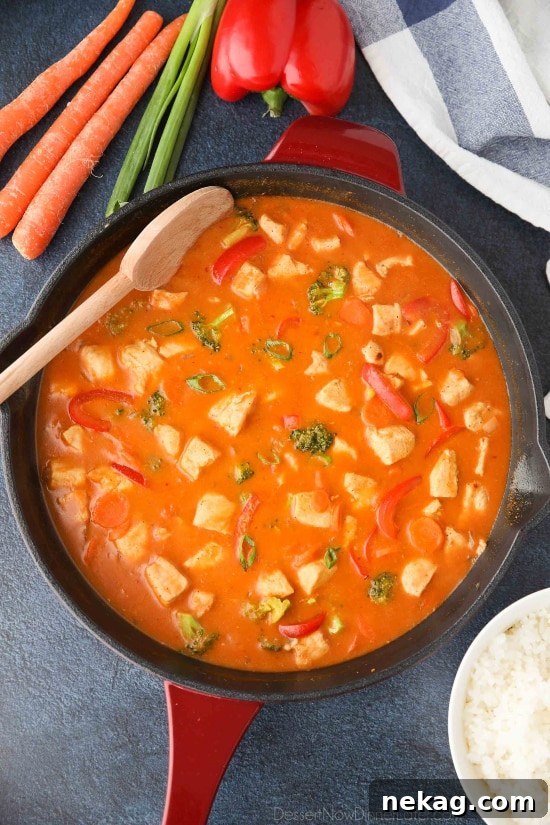
Easy 30-Minute Homemade Thai Red Curry with Chicken and Vegetables
Craving the vibrant, aromatic flavors of Thai cuisine without the wait or the takeout price tag? This Thai Red Curry with succulent chicken and fresh vegetables is your answer. Designed for ease and maximum flavor, this dish comes together in just 30 minutes, making it an ideal weeknight dinner solution. It’s not only quicker and more convenient than ordering in, but also a healthier alternative you can tailor perfectly to your taste, whether you prefer it fiery hot or pleasantly mild.
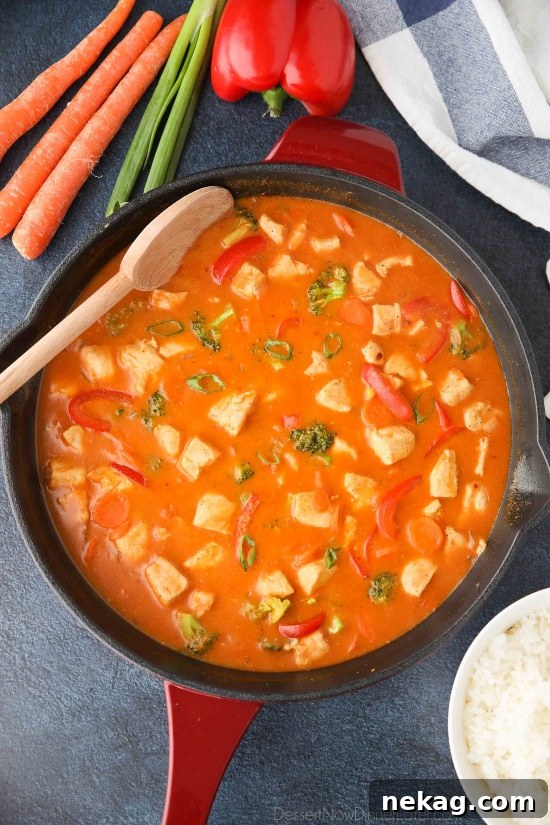
My family and I have always shared a deep appreciation for authentic Thai food. Our local spot, a charming family-owned restaurant called Thai House in Cache Valley, has long been a favorite. Their house special curry, often paired with crispy potstickers, is a dish we’ve returned to countless times – a testament to its deliciousness and affordability. While there’s undeniable joy in dining out and supporting local businesses, a desire eventually sparked within me to recreate that beloved Thai curry experience right in my own kitchen.
Why Make Thai Red Curry at Home? A Healthier, Quicker Alternative
Beyond the simple satisfaction of cooking, there are several compelling reasons to embrace homemade Thai Red Curry. Firstly, it offers unparalleled control over ingredients. You can select the freshest vegetables, leanest proteins, and adjust sodium and fat content to your dietary preferences, ensuring a healthier meal for you and your family. Secondly, customization is key. Want more broccoli? Less spice? A different protein like tofu or shrimp? At home, you’re the chef! You can easily adapt the recipe to suit allergies or picky eaters. Lastly, it’s often more economical than regular takeout, allowing you to enjoy gourmet flavors without breaking the bank. Plus, the delightful aroma filling your kitchen is an added bonus, making your home feel cozy and inviting.
My culinary journey into Thai flavors often gravitates towards dishes featuring rich peanut sauce or zesty sweet chili sauce, much like these incredible Thai Turkey Burgers or the delightful Thai Chicken Enchiladas. This particular red curry recipe beautifully combines the creamy depth of peanut butter with the exotic richness of coconut milk – two ingredients that are cornerstones of authentic Thai cuisine and absolute favorites of mine. This blend creates a sauce that is both comforting and vibrantly flavorful, a true testament to the culinary artistry of Thailand.
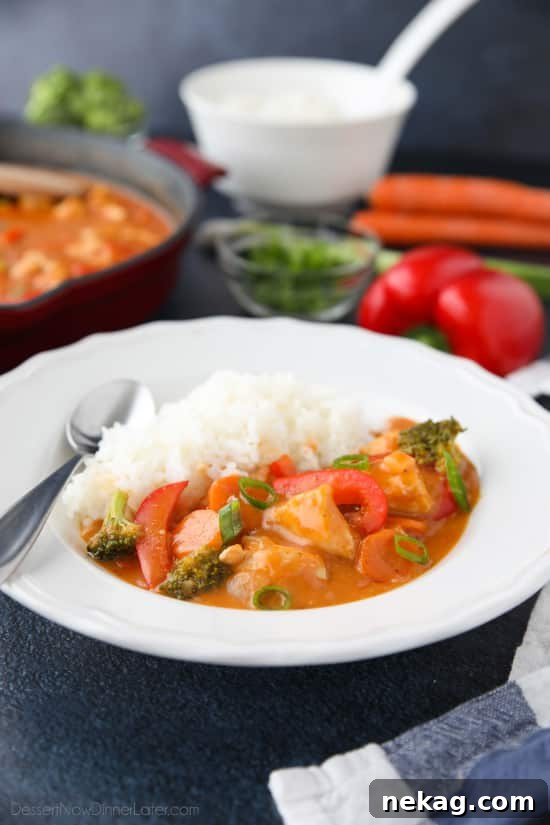
While classic Thai red curry often presents a more soupy consistency, my family, especially the kids, prefers a slightly thicker, saucier texture. This recipe achieves that perfect balance with a simple cornstarch slurry, creating a dish that clings beautifully to rice and vegetables without compromising its authentic flavor profile. If you prefer the traditional, thinner curry, feel free to omit the cornstarch slurry entirely; the sauce will naturally reduce and thicken slightly as it simmers. We’ve also successfully adapted this recipe for the slow cooker, offering a convenient hands-off approach to meal prep for those busy days when you need dinner ready with minimal fuss. You’ll find specific slow cooker tips detailed in the recipe notes section below.
The Magic of Thai Red Curry: A Culinary Overview
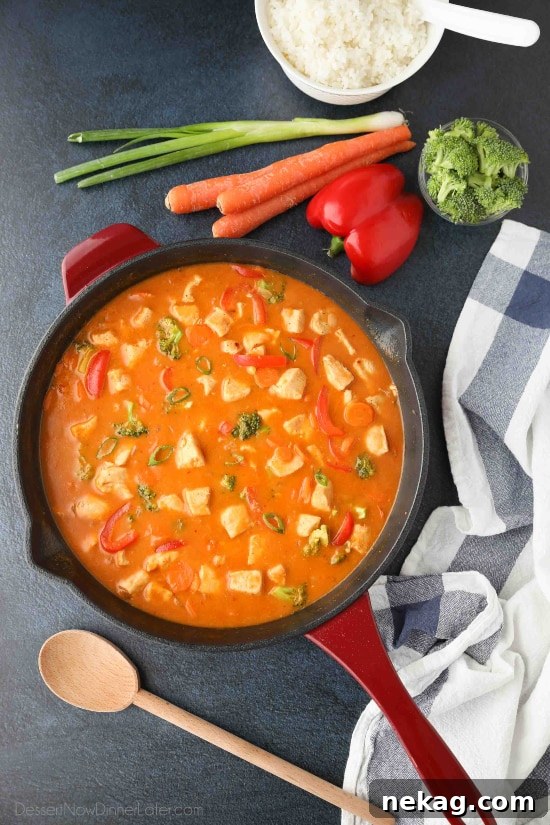
At its heart, Thai Red Curry is a symphony of flavors that delights the palate. It’s a beloved traditional Thai dish celebrated for its complex yet harmonious taste, primarily stemming from a rich, aromatic red curry paste cooked down in creamy coconut milk. Typically, it’s served with tender meat or tofu and an assortment of fresh, colorful vegetables, making it a complete and satisfying meal. The beauty of this dish lies in its ability to deliver a punch of exotic flavor – a perfect balance of sweet, savory, spicy, and tangy notes – while remaining incredibly easy to prepare at home, even for novice cooks.
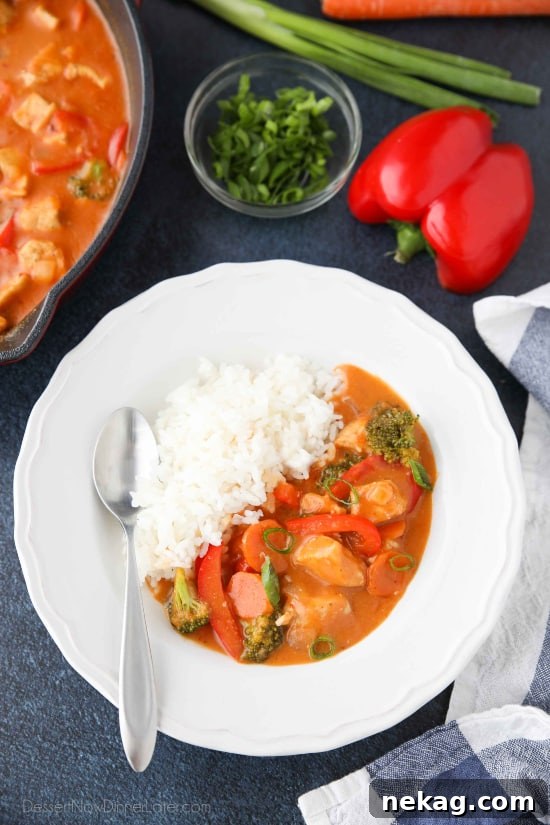
Essential Ingredients for an Authentic & Easy Thai Red Curry
Don’t be daunted by the ingredient list; while it may seem extensive at first glance, each component plays a crucial role in building the layered, authentic flavors of this exquisite Thai Red Curry. The good news is that most of these ingredients are readily available at your local grocery store, making this gourmet meal surprisingly accessible. Here’s a detailed breakdown of the key elements that marry together to create this wonderful, aromatic dish, ensuring every bite is a culinary delight:
Aromatics: The Foundation of Flavor
The true foundation of any great curry begins with its aromatics. Freshly diced onion, fragrant minced garlic, and pungent ginger (whether paste or freshly grated) are sautéed until fragrant. This crucial first step releases their essential oils and deepens their flavors, creating a warm, inviting, and complex base for the entire curry sauce. These three ingredients are non-negotiable for achieving the authentic depth of flavor that defines Thai cuisine.
Sweet & Creamy: The Heart of the Sauce
To counteract any subtle spice and provide a luxurious body to the curry, this recipe carefully incorporates elements that are both sweet and creamy. Rich, full-fat (or light, for a healthier option) coconut milk is absolutely essential for its velvety texture and distinct tropical flavor, which is a hallmark of Thai curries. A touch of packed brown sugar adds a nuanced sweetness, perfectly harmonizing with the savory and spicy notes. Crucially, creamy peanut butter contributes an unparalleled richness, a subtle nutty undertone, and an indulgent depth, making the sauce truly irresistible.
Savory & Acidic: Balancing the Palate
Achieving the perfect balance in Thai cooking means hitting all taste receptors – sweet, sour, salty, bitter, and umami. Low-sodium soy sauce and a dash of chicken broth provide savory notes and necessary liquid for the sauce. However, the true game-changer for umami here is fish sauce. Please, do NOT skip this ingredient! Despite its name, good quality fish sauce doesn’t make the dish taste fishy; instead, it provides a vital, irreplaceable depth of savory umami and saltiness that is fundamental to authentic Thai flavors. Pair this with the bright tang of fresh lime juice or mild rice vinegar (or a thoughtful combination of both) to cut through the richness, brighten the flavors, and lift the overall profile of the curry.
Spices & Heat: Customizing Your Kick
The undisputed star of the show for its distinctive flavor and color is, of course, the red curry paste. While its name suggests intense heat, many widely available store-bought varieties are actually quite mild, which is a fantastic advantage as it allows you to control the heat level precisely. For those who enjoy an extra fiery kick, a touch of sriracha and a pinch of aromatic crushed red pepper can be added to personal preference. Experiment with these additions to find your perfect balance of warmth and spice, transforming the dish into your ideal culinary experience.
Protein and Vegetables: Hearty & Nutritious Additions
This recipe thoughtfully features lean chicken breast, cut into convenient bite-sized pieces, as its primary protein. Chicken cooks quickly and absorbs the rich curry flavors beautifully. For vegetables, we’ve included crisp carrots for sweetness and texture, vibrant red bell pepper for color and a mild crunch, and healthy broccoli florets. The true beauty of curry lies in its incredible versatility: feel free to customize with your favorite vegetables like tender snap peas, earthy mushrooms, crisp bamboo shoots, or leafy spinach. Just remember to consider their different cooking times to ensure everything is perfectly tender-crisp and not overcooked.
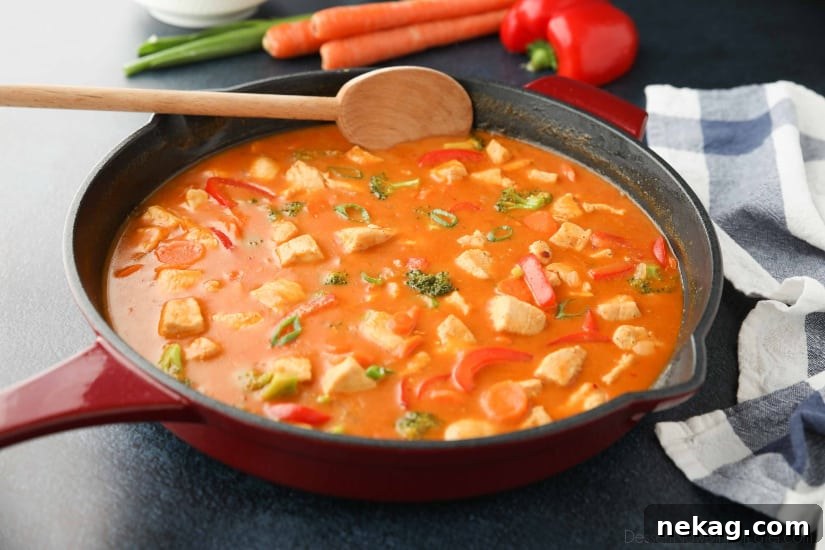
A One-Pot Wonder: Quick Cooking & Expert Serving Tips
One of the most appealing aspects of this Thai Red Curry is that it’s a true one-pot meal. This means significantly less cleanup and more time for you to savor your delicious creation! From start to finish, you’re looking at a dish that miraculously comes together in 30 minutes or less, making it the perfect solution for busy evenings when you crave a homemade, flavorful meal without the typical kitchen fuss.
For the ultimate authentic experience, have your fluffy white rice (or brown rice for added fiber, or cauliflower rice for a low-carb option) ready to serve alongside the curry. The rice acts as a perfect canvas, soaking up the rich, aromatic sauce beautifully. To elevate your presentation and add an extra layer of flavor and delightful texture, don’t forget the garnishes! Sliced fresh green onions add a mild, pungent bite, chopped cilantro brings a burst of herbaceous freshness, and crunchy crushed peanuts provide a delightful textural contrast. A generous sprinkle of all three transforms your simple weeknight meal into a restaurant-quality feast that’s sure to impress.
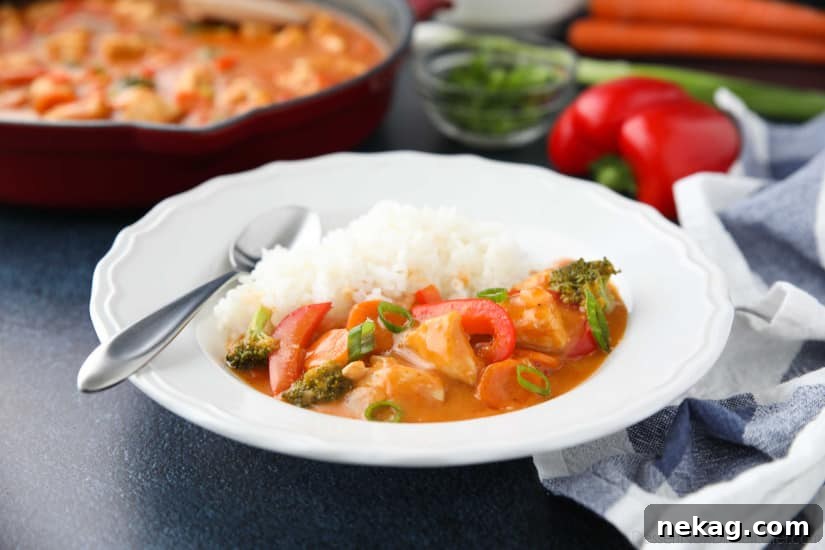
Thai Red Curry Recipe Card: Your Guide to a Delicious Meal
Here’s the full recipe for your homemade Thai Red Curry, designed for convenience and incredible flavor. Gather your ingredients, follow these simple steps, and get ready to cook a meal that will impress your taste buds and leave you feeling satisfied!
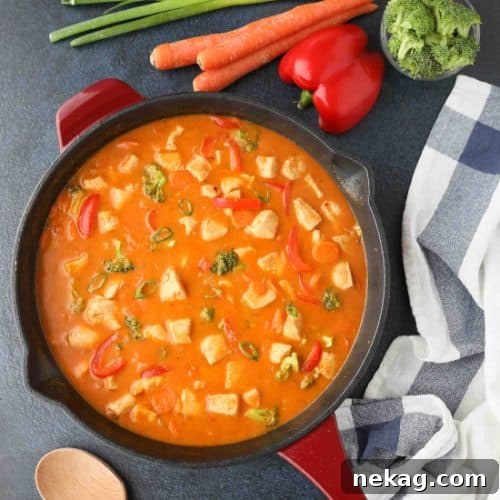
Average Rating: 4.84 out of 5 stars (based on 6 ratings)
Thai Red Curry
Created by Amber Brady
Prep Time: 10 mins
Cook Time: 20 mins
Total Time: 30 mins
This Thai Red Curry with chicken and vegetables is easy, flavorful, and dinner ready in 30 minutes or less. It’s healthier than takeout, and easy to make spicy or mild.
Print Recipe | Pin Recipe | Rate This Recipe
Yields: 4 servings
Ingredients
- 1 Tbsp coconut oil
- ½ cup onion, diced
- 1 cup carrots, thinly sliced
- 2 chicken breasts, cut into 1-inch pieces
- Salt and pepper, to taste
- 1 tsp minced garlic
- 1 Tbsp ginger paste
- ½ red bell pepper, thinly sliced
- 3 Tbsp brown sugar, packed
- 2 Tbsp creamy peanut butter
- 2 Tbsp red curry paste
- 2 Tbsp lime juice/rice vinegar (or 1 Tbsp each)
- 1 ½ Tbsp fish sauce
- 1 Tbsp low-sodium soy sauce
- 1 can lite coconut milk (14oz)
- ½ cup chicken broth
- ¼ tsp (+) sriracha, to taste (adjust for desired heat)
- ¼ tsp (+) crushed red pepper, to taste (adjust for desired heat)
- 1 cup fresh broccoli florets
- 1 Tbsp cornstarch + 1 Tbsp COLD water (optional, for thickening)
- Cooked rice, for serving
- Optional garnishes: sliced green onions, chopped cilantro, crushed peanuts
Instructions
- Heat a large (cast iron) skillet or Dutch oven over medium heat. Once hot, melt the coconut oil across the bottom of the pan. Add the diced onion, thinly sliced carrots, and cubed chicken pieces. Season generously with salt and a little pepper. Cook for approximately 3 minutes, stirring occasionally, until the chicken begins to brown slightly.
- Next, add the minced garlic, ginger paste, and thinly sliced red bell pepper to the skillet. Continue to cook for another 3-5 minutes, stirring frequently, until the chicken is no longer pink on the outside and the vegetables have softened slightly, releasing their aromatics.
- Pour in the brown sugar, creamy peanut butter, red curry paste, lime juice/rice vinegar, fish sauce, low-sodium soy sauce, the full can of coconut milk, and chicken broth. Stir well to thoroughly combine all ingredients, ensuring the peanut butter and curry paste are fully dissolved into the liquid to create a smooth sauce.
- Bring the mixture to a gentle simmer and let it cook for 10 minutes. During this simmering time, the rich flavors will meld beautifully, the carrots will become tender, and the sauce will naturally begin to reduce and thicken a little. For perfectly tender-crisp broccoli, add the florets during the LAST 4-5 minutes of this simmering time to ensure they retain their vibrant green color and texture.
- If you prefer a thicker, richer sauce, prepare a cornstarch slurry: mix 1 Tbsp of cornstarch with 1 Tbsp of COLD water in a small bowl until completely smooth. Whisk this slurry into the simmering curry during the final minute of cooking. The sauce will thicken almost immediately. Taste the curry and adjust seasonings as needed; add more salt, sriracha, or crushed red pepper to achieve your desired flavor and heat level.
- Serve your homemade Thai Red Curry immediately and hot with freshly cooked rice. Garnish generously with optional toppings such as sliced fresh green onions, finely chopped fresh cilantro, or crunchy crushed peanuts for added texture, color, and an authentic burst of flavor.
Notes for Success & Variations
- Thai Red Curry Paste: You’ll typically find this essential ingredient in the Asian section of your grocery store. Popular brands like Thai Kitchen are widely available and produce excellent, consistent results.
- Fish Sauce: Also located in the Asian aisle. This ingredient is absolutely fundamental for developing authentic Thai flavor. It imparts a deep, savory umami rather than a fishy taste – it’s crucial for the dish’s complexity, so don’t omit it!
- Ginger Paste: For ultimate convenience, I highly recommend using a store-bought ginger paste, such as the Gourmet Garden brand, usually found in the produce section near fresh herbs. Alternatively, freshly grated ginger works just as well and provides a potent flavor.
- Slow Cooker Adaptation: To convert this delicious recipe into a convenient slow cooker meal, simply omit the coconut oil from the initial steps. Combine all ingredients (except for the broccoli florets and the cornstarch slurry) directly in your slow cooker. Cook on low for 3-4 hours, or until the chicken is thoroughly cooked and the carrots are perfectly tender. Add the broccoli florets and the cornstarch slurry (if desired for thickening) during the last 30 minutes of cooking to ensure the broccoli is cooked through but still has a nice bite.
- Vegetable Customization: Feel free to swap or add other quick-cooking vegetables like snap peas, mushrooms, bamboo shoots, spinach, or zucchini. Add tougher vegetables earlier and softer ones later to prevent overcooking.
- Protein Alternatives: While chicken is classic, this curry is also fantastic with shrimp (add in the last 5 minutes of simmering), firm tofu (pressed and cubed), or thinly sliced beef.
Disclaimer: Nutritional values were calculated using a third-party tool and are provided as an estimation only. These values can vary based on specific brands and ingredient preparations.
Sharing this recipe with a link is both encouraged and appreciated. Copying/pasting and/or screenshots of full recipes to any social media platform is strictly prohibited. All content and photographs are copyright protected.
Did you make this amazing Thai Red Curry?
We’d love to hear about it! Don’t forget to leave a rating below and share your experience. For more delicious recipes and culinary inspiration, make sure to follow us on Pinterest and Instagram!